Rice
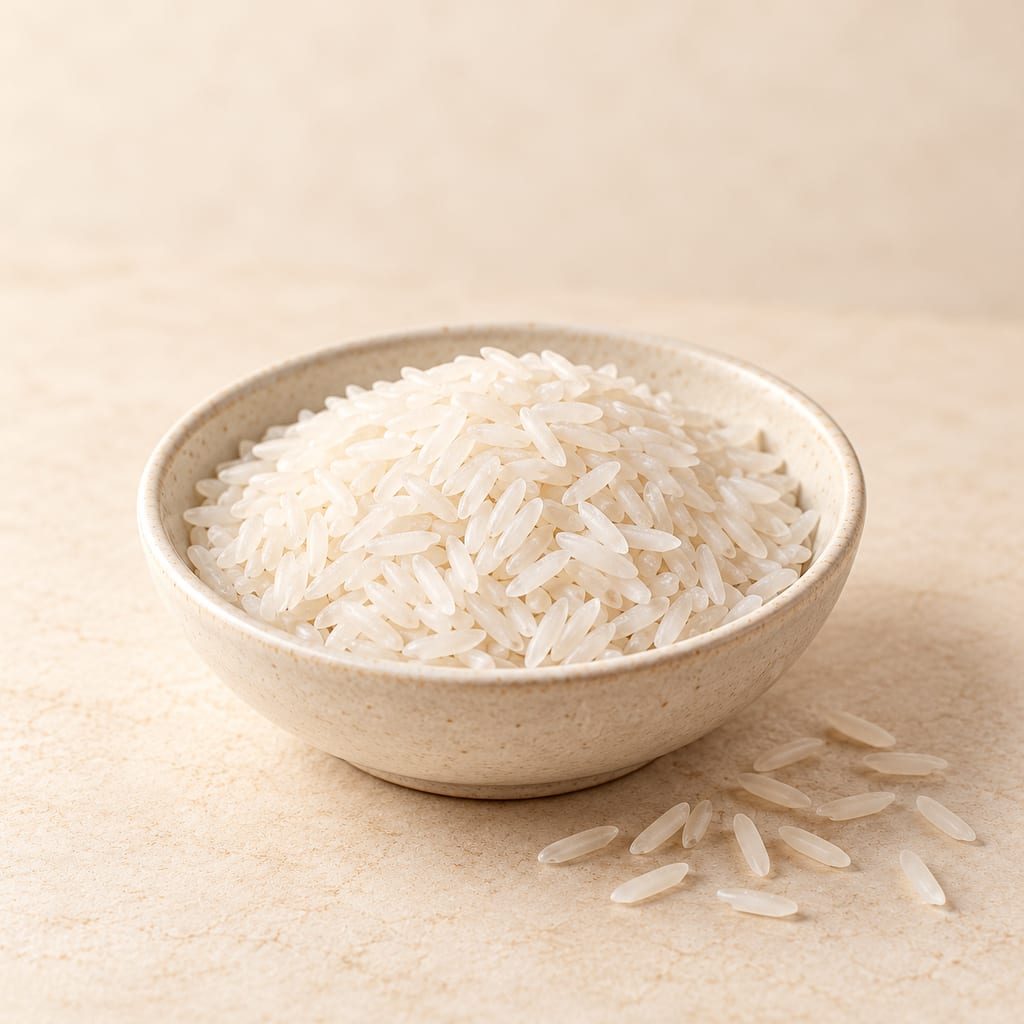
Rice contributes starch to flatbreads, steamed breads, batters and many distinct fermentations. Its species, milling and starch character shape how it cooks, binds, expands and feeds enzymes.
 FermenteaWhere food goes to change
Equipment · Cold stores and coolers
An industrial individual-quick-freezing system freezes small food pieces separately so they remain pourable and portionable. One commercial design moves product across a fluidized bed, where controlled air separates pieces during freezing.
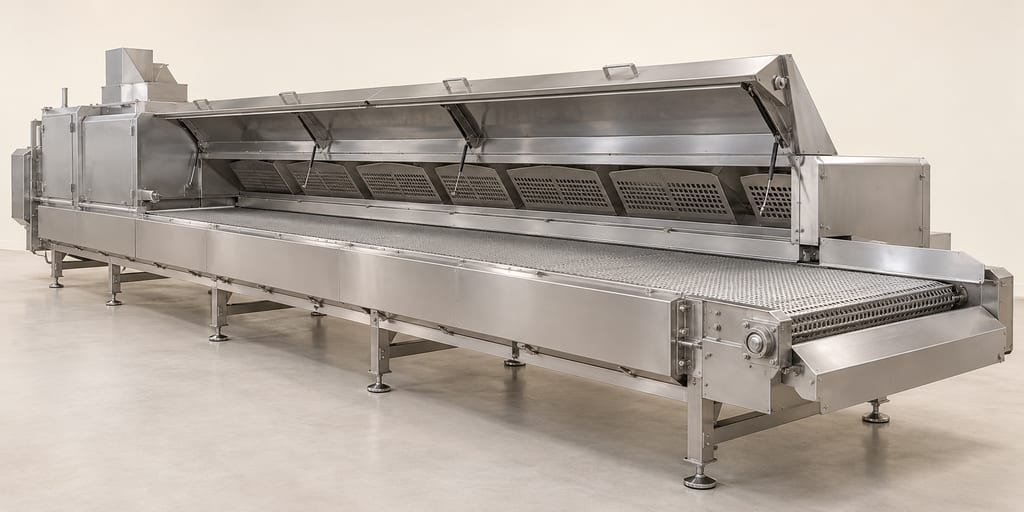
Individual quick freezing, usually called IQF, freezes small food pieces so they remain separate rather than setting into a single block. The intended result is separable pieces that can be handled and portioned apart after freezing. Manufacturers describe commercial IQF applications ranging from peas, berries and prawns to rice, pasta and prepared foods. Fluidized-bed airflow is one way to reach that result; other freezer designs may use a different layout.
A documented commercial design is the Frigoscandia FLoFREEZE fluidized-bed linear freezer. Product travels across an open conveyor bed as high-velocity air passes through and around it. The airflow lifts and separates pieces while they freeze. This is one engineering solution, not the definition of every IQF machine; equipment layouts and freezing mechanisms vary. A processor must match belt, airflow and process settings to the product's size, shape, weight and tendency to stick.
The manufacturer dates its first IQF freezer on a process line to Sweden in 1962. That date documents the Frigoscandia commercial lineage and should not be generalized into a single origin date for every rapid-freezing method. Its current product information describes different track and tray configurations, with airflow and agitation features intended for different products and production needs. Published capacity figures apply to specified models or products rather than to the category as a whole.
An IQF freezer normally sits inside a processing line: prepared product enters the freezing section, then goes onward to packing and frozen storage. Fruit, vegetables, herbs, shrimp, small seafood, rice, pasta, prepared foods and diced proteins appear among the manufacturer's listed applications. These examples show range, not that one machine handles every material equally well. The photographed equipment gives a useful view of an industrial enclosure, conveyor and airflow assembly; exact dimensions, refrigerant and throughput must come from the installed model's specification.
Freezing holds much of a food's water as ice and restricts microbial growth while it remains frozen. Rapid freezing can help control ice-crystal development and preserve texture, but it is not a universal pathogen kill step. FDA guidance says freezing stops bacterial growth but does not kill most bacteria, so thawing and cooking remain important parts of safe handling.
Vegetables may receive a separate blanching step before freezing. Blanching can inactivate enzymes that otherwise contribute to loss of flavor, color and texture; the appropriate time depends on the vegetable and its size. An IQF freezer does not perform blanching unless a processing line includes separate equipment for it. Packaging, hygienic handling and reliable frozen storage all contribute to the result; the freezer alone does not establish safety or shelf life.
Separated pieces are useful when a processor needs to portion product without first breaking up a frozen mass. Choosing a system depends on the product, production rate, plant layout, refrigeration and sanitation requirements, and the packaging line. The public product information does not provide one capacity, dimension, refrigerant or cleaning schedule that applies to every IQF freezer.
Use the manufacturer's instructions for cleaning, sanitation, defrosting, inspection and service. Keep the cold chain intact after freezing and follow the frozen product's handling and cooking directions. For vegetables, use crop-specific blanching guidance where applicable; under- or over-blanching can both damage quality.
A manufacturer-reported Swedish installation in 1962 anchors the documented Frigoscandia IQF product line.
Freezing stops bacterial growth but does not kill most bacteria; thawing and cooking still require safe handling.
Source →IQF equipment does not replace blanching when blanching is needed to control vegetable enzyme activity.
Source →Documented for international use, with no single place of origin assigned.
Rice contributes starch to flatbreads, steamed breads, batters and many distinct fermentations. Its species, milling and starch character shape how it cooks, binds, expands and feeds enzymes.

Soft, spreadable Calabrian pork sausage made with a great deal of red chilli and fatty pork, stuffed into natural casings, sometimes smoked and matured while staying soft.

A way to add independent temperature logging to an existing food dehydrator without changing its built-in controls or protections. It is a monitoring method, not a rewiring plan.

Pleurotus cystidiosus is the abalone mushroom, a cultivated oyster-type fungus with dark brown caps that grows more slowly and is more demanding than other Pleurotus species.

A dark, balanced vinegar from Emilia-Romagna made by combining cooked or concentrated grape must with wine vinegar, then acetifying and refining it in wood under a protected specification.

A living dairy inoculum that starts controlled cream fermentation, developing acidity and aroma before sour cream or cultured butter is finished.

A small electric incubator holds jars at a selected temperature for yogurt and other documented warm food preparations. Controls, capacity and vessel arrangement vary by model.

Adygean salt is a seasoned table salt associated with Adygea and the wider North Caucasian culinary tradition. Salt is blended with garlic and a variable selection of herbs and spices; the exact mix depends on the named style and maker.

The African Caesar-group mushroom, Amanita masasiensis, is a wild ectomycorrhizal species of central and southern African woodlands, eaten locally. The genus contains deadly poisonous species, so identification needs care.
No community contributions have been published for this entry yet.
Sign in to contribute. Published comments and photos are free to read.
JBT MarelDesign · History · Care
Frigoscandia FLoFREEZE IQF FreezerFLoFREEZE is a linear fluidized-bed freezer that uses airflow to separate and freeze pieces.
The manufacturer dates its first IQF freezer on a process line to Sweden in 1962.
The page discusses IQF Track and IQF Tray variants and cleanability.
Cited in: How IQF keeps pieces separate; A commercial history and changing designs; Choosing and maintaining a system
JBT MarelDesign · Applications
Industrial IQF Freezer for True FluidizationThe manufacturer describes fluidized airflow separating individual pieces.
Applications listed include fruits, berries, vegetables, herbs, shrimp, small seafood, rice, pasta, prepared foods, toppings and diced or cubed proteins.
Cited in: How IQF keeps pieces separate; A commercial history and changing designs; Choosing and maintaining a system
U.S. Food and Drug AdministrationFood safety
Are You Storing Food Safely?Freezing at 0°F (-18°C) stops bacterial growth but does not kill most bacteria.
Cited in: Quality and food safety; Choosing and maintaining a system
National Center for Home Food Preservation, University of GeorgiaQuality
Blanching VegetablesBlanching inactivates enzyme action that can degrade vegetable flavor, color and texture; times vary by crop and size.
Cited in: Quality and food safety; Choosing and maintaining a system