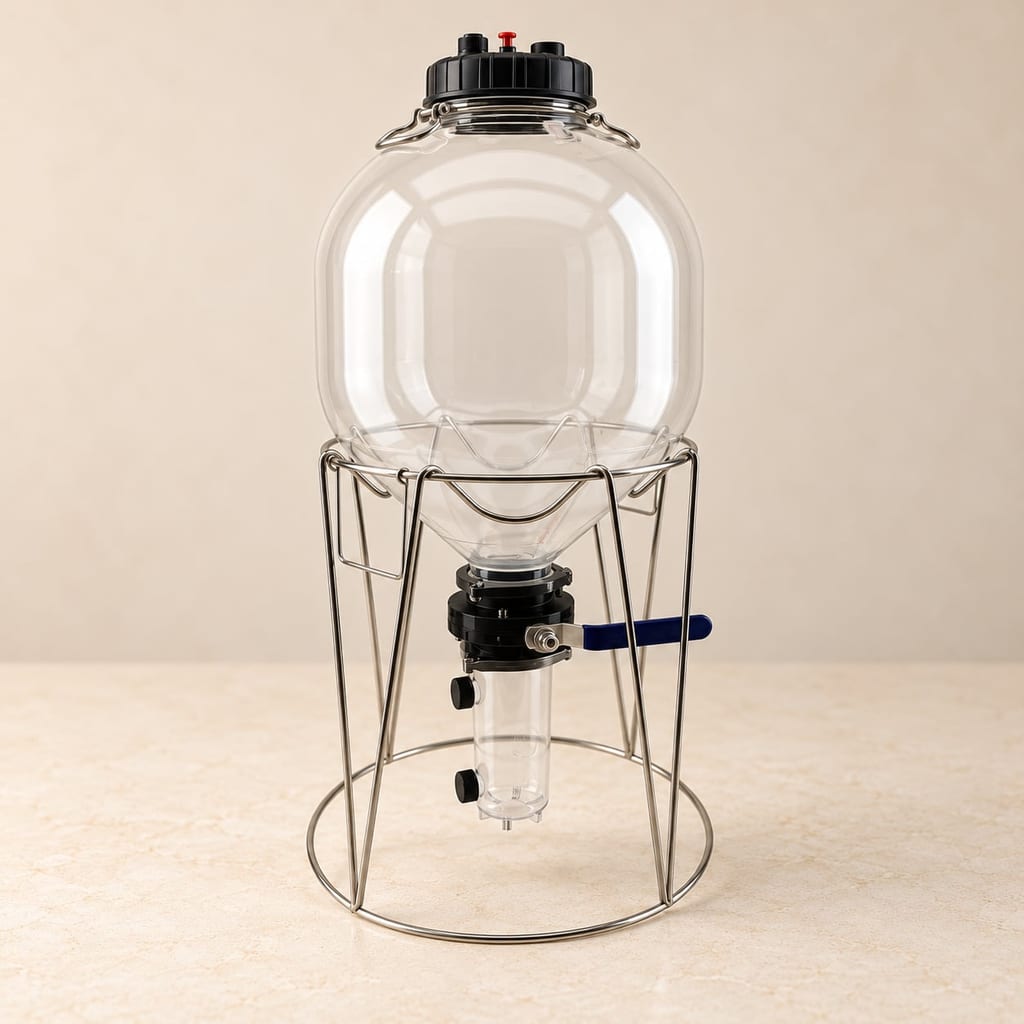
Pressure-rated PET fermenter
A purpose-built PET fermenter is engineered for a specific pressure range, closure and fittings. The FermZilla Tri-Conical is one modern example; its rating does not extend to ordinary PET bottles or other vessels.
 FermenteaWhere food goes to change
Equipment · Lids, seals and airlocks
pressure relief valve · PRV
A mechanical pressure-relief valve is an automatic safety device for a pressure-capable vessel. It opens to release excess pressure at its own threshold; it is not a gauge, airlock or fermentation pressure controller.
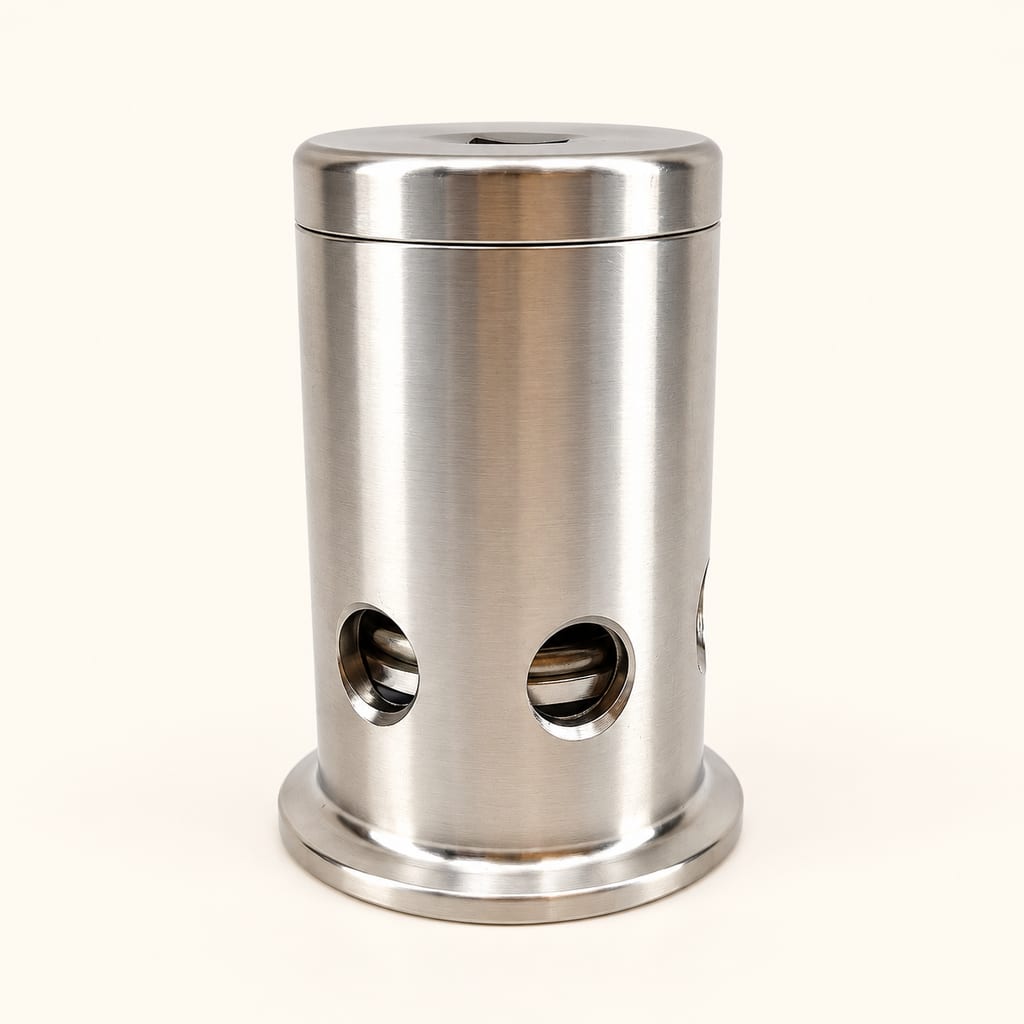
Mechanical pressure relief is a valve fitted to a vessel or its closure so that excess pressure has a defined route out. In a spring-loaded design, internal pressure acts against a spring; when the device's own opening threshold is reached, the valve opens and releases gas. The threshold belongs to that exact valve and the vessel it is intended to protect. Product names, colors, threads, clamp sizes and ratings are model-specific details, not a general standard for fermentation equipment.
Brewing examples range from compact valves attached to keg or fermenter fittings to larger sanitary fittings mounted on tank lids. Some devices also admit air when the vessel is under vacuum, but pressure-only and combined pressure/vacuum designs are different products. A photograph of one model should not be read as a universal design.
A gauge reports pressure; it does not open a release path. An airlock provides an outlet for gas from a vessel designed for open or atmospheric fermentation, usually while limiting backflow. It is not a substitute for a pressure-rated vessel's relief device. A pressure-relief valve is an automatic safety component, not a pressure regulator for fermentation.
A spunding valve is a separate adjustable device used to control the pressure at which gas leaves a fermenting vessel. KegLand explicitly distinguishes its PRV from a spunding valve, and Spike says its listed PRV is not intended for spunding. That distinction matters: a safety valve set for a vessel's protection does not necessarily control fermentation at the desired operating pressure. An electronic pressure sensor can report a condition, but measurement alone cannot release pressure.
Closed fermentation can build pressure as carbon dioxide accumulates. The valve therefore belongs to a system: the vessel, ports, seals, fittings and release path must all be compatible with the manufacturer's design. The pressure rating of one valve is not a rating for a different fermenter or a complete system. SK Škrlj describes pressure tanks as requiring an appropriate safety mechanism and distinguishes those from atmospheric tanks fitted with vent valves to prevent overpressure or vacuum.
The same safety guidance cannot be copied from one brand to another. KegLand's FermZilla documentation says not to alter the supplied PRV and warns that the separate spunding valve is required during its pressure-fermentation use. Spike's guidance and product page describe its own equipment and limits. These are examples of model-specific directions; this page does not prescribe pressures, hardware combinations or a pressure-fermentation procedure.
A relief valve can only work if its moving parts and opening remain clear. KegLand warns that wort or krausen contacting its FermZilla PRV can compromise operation and directs users to clean that component before pressurizing the model again. The company also warns that a PRV alone is not enough for its pressure-fermentation setup. Those cautions illustrate why the exact valve manual matters; they are not a general cleaning recipe for every valve.
No pressure-relief accessory makes an unpressurized jar, bottle or fermenter safe for sealed fermentation. Nor does the presence of a relief valve prove that a vessel is suitable for pressure, that a pressure path is correctly sized, or that a process has been validated. Use the specified equipment and its instructions, and treat unfamiliar or damaged equipment as unresolved rather than inferring safety from a gauge, a vent or a similar-looking valve.
KegLand and Spike Brewing document pressure-relief valves in their brewing equipment lines, and the Slovenian manufacturer SK Škrlj describes pressure-control valves for beer fermentation and maturation tanks. Their products show that the same broad safety function appears in different contemporary fittings. The examples do not identify a single place of origin, historical invention date or universal standard form, so this record treats the valve as a modern, internationally marketed component rather than a traditional vessel.
Manufacturer documentation describes pressure-relief valves as current components of pressure-capable brewing vessels. The sources reviewed do not establish when the device was invented.
A blocked or malfunctioning relief path can leave a pressurized vessel exposed to failure; brewing manufacturers warn of injury risk when pressure cannot escape.
Hazard sourceUse only the relief device and operating instructions specified by the pressure-vessel manufacturer; do not modify or substitute it based on a generic rating.
Control sourceA pressure-relief valve does not make a vessel pressure-capable and does not replace the vessel manufacturer's pressure controls.
Some manufacturers require a separate spunding valve for pressure fermentation; the PRV alone is not a pressure regulator.
A valve that is fouled, blocked, altered or incompatible with the vessel may not protect it as intended.
Documented for international use, with no single place of origin assigned.
A purpose-built PET fermenter is engineered for a specific pressure range, closure and fittings. The FermZilla Tri-Conical is one modern example; its rating does not extend to ordinary PET bottles or other vessels.

Soft, spreadable Calabrian pork sausage made with a great deal of red chilli and fatty pork, stuffed into natural casings, sometimes smoked and matured while staying soft.

A way to add independent temperature logging to an existing food dehydrator without changing its built-in controls or protections. It is a monitoring method, not a rewiring plan.

Pleurotus cystidiosus is the abalone mushroom, a cultivated oyster-type fungus with dark brown caps that grows more slowly and is more demanding than other Pleurotus species.

A dark, balanced vinegar from Emilia-Romagna made by combining cooked or concentrated grape must with wine vinegar, then acetifying and refining it in wood under a protected specification.

A living dairy inoculum that starts controlled cream fermentation, developing acidity and aroma before sour cream or cultured butter is finished.

A small electric incubator holds jars at a selected temperature for yogurt and other documented warm food preparations. Controls, capacity and vessel arrangement vary by model.

Adygean salt is a seasoned table salt associated with Adygea and the wider North Caucasian culinary tradition. Salt is blended with garlic and a variable selection of herbs and spices; the exact mix depends on the named style and maker.

The African Caesar-group mushroom, Amanita masasiensis, is a wild ectomycorrhizal species of central and southern African woodlands, eaten locally. The genus contains deadly poisonous species, so identification needs care.
No community contributions have been published for this entry yet.
Sign in to contribute. Published comments and photos are free to read.
U.S. Occupational Safety and Health AdministrationFunction · Mechanism
OSHA Technical Manual: Pressure-Relief and Flare SystemsDefines pressure relief as an automatic planned release when operating pressure reaches a predetermined level.
Describes spring-operated safety relief valve operation and the importance of maintenance.
Cited in: An automatic safety release; Different from a gauge, airlock or spunding valve
KegLandExample · Form · Function
1.5 Inch TC – Pressure and Vacuum Relief ValveDescribes a specific sanitary tri-clamp pressure/vacuum relief valve for BrewBuilt tanks.
States that this model relieves pressure and admits air under vacuum; the model-specific threshold is omitted from reader guidance.
The linked manufacturer photograph shows a stainless valve housing with side ports and a tri-clamp base.
Cited in: An automatic safety release; Current commercial examples
KegLandFunction · Distinction · Maintenance
Why you should never use a Pressure Relief Valve (PRV) as a Spunding ValveDescribes PRVs as spring-based safety devices that release gas at a specific pressure to protect a vessel.
Distinguishes an adjustable spunding valve from a PRV.
Warns that wort contamination can impair PRV opening and that a PRV is not a spunding valve.
Cited in: An automatic safety release; Different from a gauge, airlock or spunding valve; Cleanliness and limits
KegLand Product DocumentationSafety · Model specific use · Maintenance
FermZilla Tri-Conical 27L & 55L: Important Information and WarningsWarns users not to tamper with the PRV supplied for the specific FermZilla model.
States the PRV must be cleaned if krausen or wort contacts it.
Says a PRV alone is not sufficient for that manufacturer's pressure-fermentation setup and directs the user to a separate spunding valve.
Cited in: Different from a gauge, airlock or spunding valve; A component in a pressure-rated system; Cleanliness and limits
Spike BrewingExample · Form · Safety
15psi Pressure Relief ValveDescribes a manufacturer-specific PRV for Spike fermenters, with a pull ring for manual pressure release.
States that the listed PRV is not intended as a spunding valve.
The product photograph shows a threaded stainless valve with a pull ring.
Cited in: An automatic safety release; Different from a gauge, airlock or spunding valve; A component in a pressure-rated system; Current commercial examples
SK ŠkrljFermentation vessel use · Function · Distinction
Pressure control valvesDescribes vent valves for atmospheric tanks and suitable safety mechanisms for pressure tanks used in beer fermentation and maturation.
Cited in: A component in a pressure-rated system; Current commercial examples
Spike Brewing SupportSafety · Model specific use
How do I pressure ferment with the Spike Conical Unitank/Spike Flex+?Warns that a blocked exit port can prevent pressure from escaping and cause the fermenter lid to fail, with potential serious injury.
Provides manufacturer-specific pressure-fermentation guidance for its own named fermenters.
Cited in: Cleanliness and limits