Ngari and its chaphou
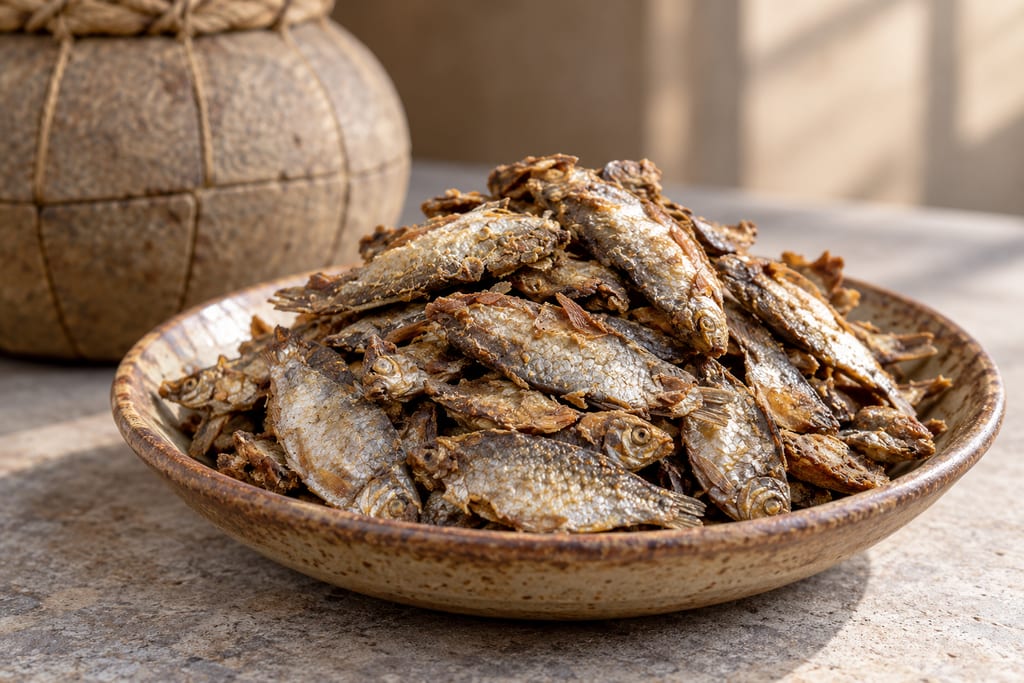
Ngari is a fermented fish food associated with Manipur, in northeastern India. A 2009 paper on traditional fermented foods of Manipur names ngari among fish products consumed as regular food and says household preparation knowledge is handed down across generations. Its abstract provides cultural context but does not describe a jar’s date or dimensions.
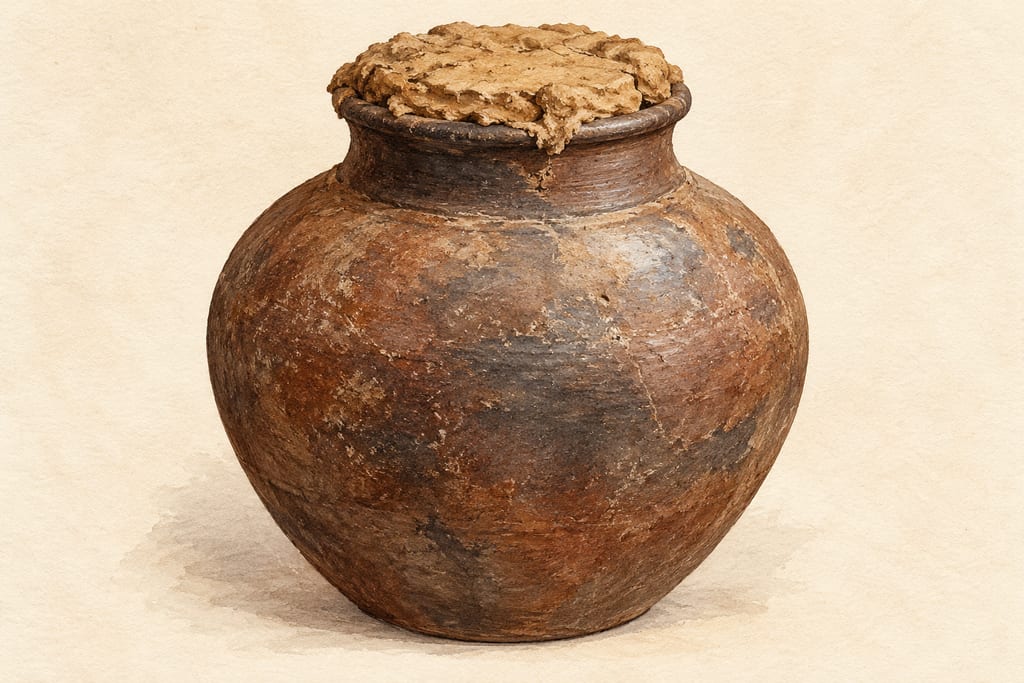
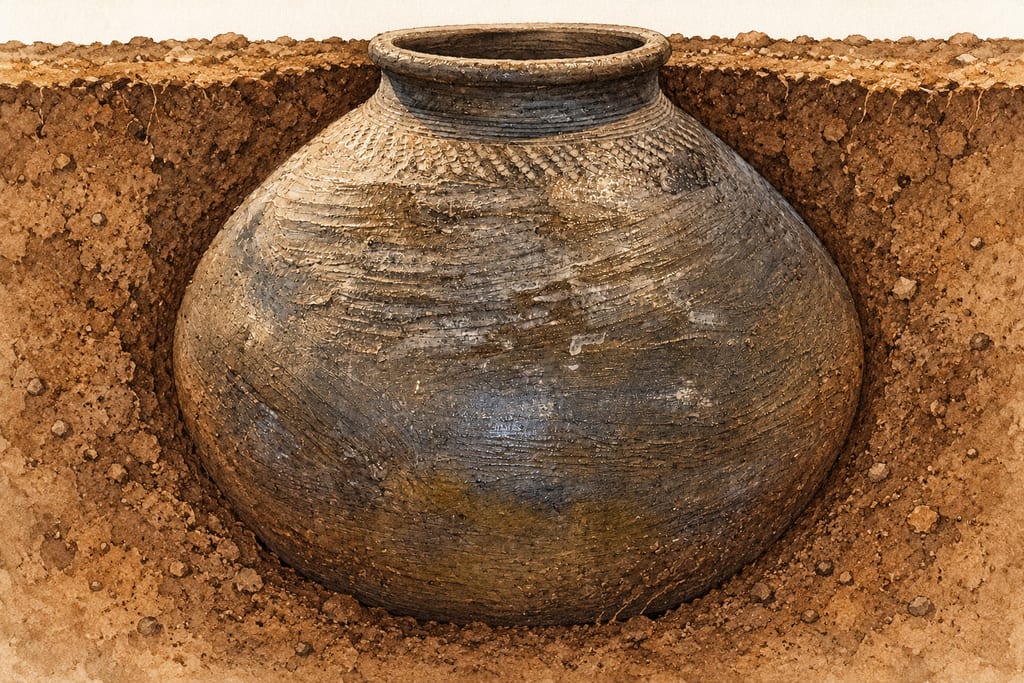
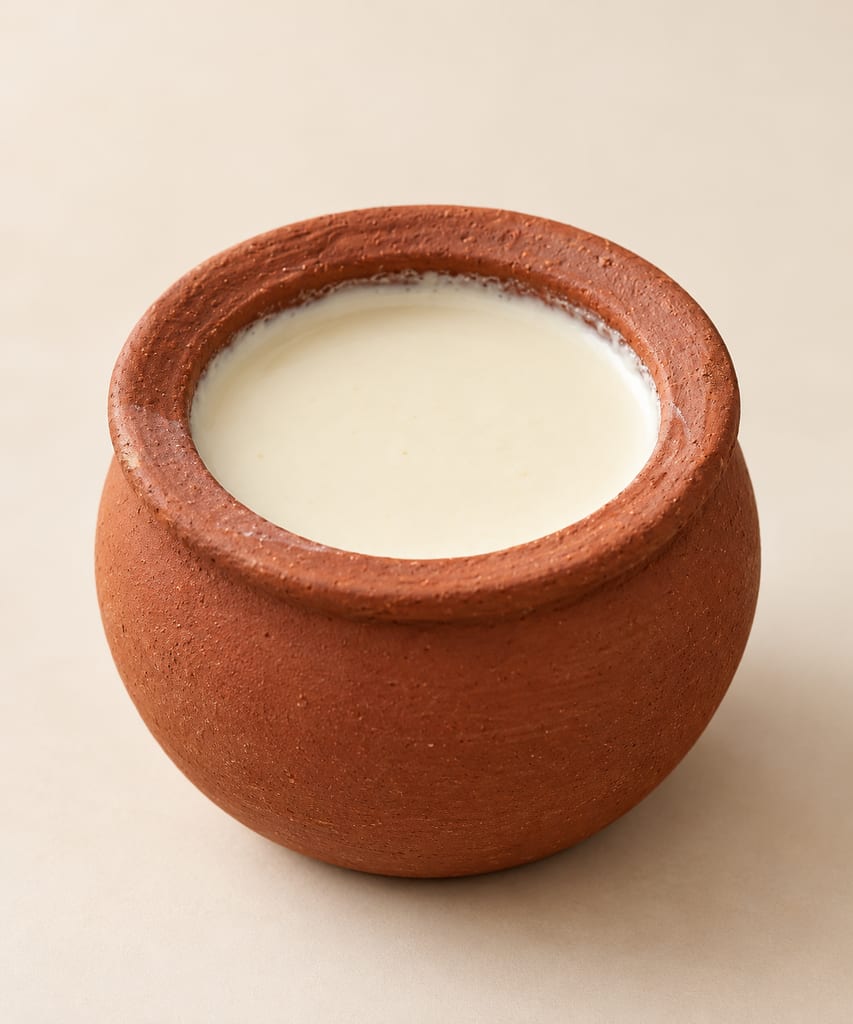
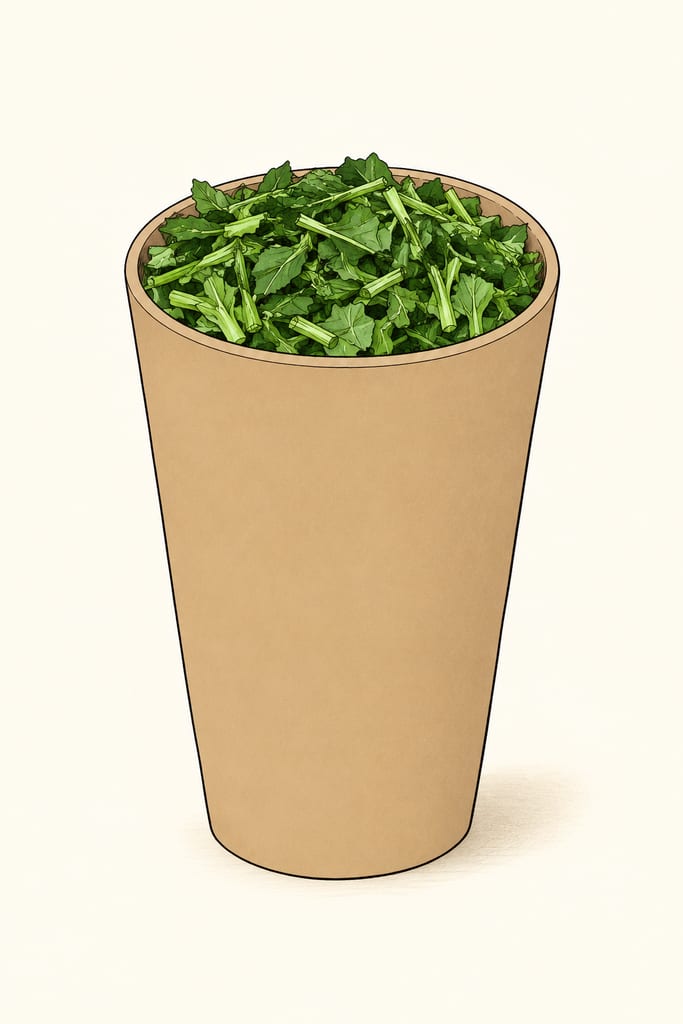
A 2020 paper calls the earthen pot or vat used in its documented process a chaphou. It describes the vessel as old and narrow-necked, while the accompanying 2015 photograph shows a broad, swollen body. Neither source provides a measured profile, so the illustration shows those general traits without assigning a capacity or exact proportions.
Sources for this section
A documented preparation
In one documented process, non-salted dried Puntius sophore fish were washed, drained, pressed and packed tightly into an old narrow-necked earthen pot or vat called a chaphou, then the pot was sealed with mud. Fermentation in this process is reported at room temperature for six to eight months. These details describe one research process and should not be generalized into a universal recipe or safety endpoint.
The study does not state the jar’s exact wall thickness, clay source, firing method, capacity or mouth diameter. It also does not supply a cleaning or seasoning procedure for reused pots. The Commons image caption says the photographed vessels were sealed for “days,” which conflicts with the study’s six-to-eight-month process; the photo is used here for vessel appearance and setting, not as a timing source.
Sources for this section
Place and evidence limits
The documented geographic association is Manipur, with the 2020 paper specifying Imphal as the market where its fish were obtained. The 2009 paper provides regional food context, while the 2020 paper provides the vessel description and one preparation method. The evidence does not establish when chaphou jars originated, a single standard shape or size, or one salting practice for every ngari producer. The 2020 source uses chaphou for its vessel; this entry makes no claim that the name is universal.
Sources for this section
History
Jeyaram and colleagues’ 2009 study documents ngari among Manipur’s traditional fermented foods and describes household preparation knowledge as passed between generations. It does not date the origin of a particular jar. Khusro and colleagues’ 2020 process paper describes an old, narrow-necked earthen pot called a chaphou; “old” is the source’s description, not an age measurement or date for the vessel tradition.
Equipment details
CareA 2020 study reports sealing the packed fish in the earthen pot with mud. It does not specify a general cleaning, seasoning or between-batch care protocol.
Made of
- earthenware — fermentation vessel
A 2020 process paper describes an old narrow-necked earthen pot or vat; it does not specify clay composition, firing or glaze.
Limits
The paper does not report a standardized capacity, height, mouth diameter, wall thickness or full vessel profile; do not infer dimensions from the photograph.
Source →The cited process uses non-salted dry fish, but documents one preparation rather than a universal rule for ngari batches.
Source →Places
Manipur
Documented preparation · Region evidenceThe 2009 study documents ngari among Manipur's traditional fermented fish foods; the 2020 paper reports one chaphou-based preparation in Imphal.