← Equipment

Equipment · Incubators and warm holds

Oven with a lamp

Oven-lamp fermentation chamber · Oven used as an improvised incubator

Loading ratings…

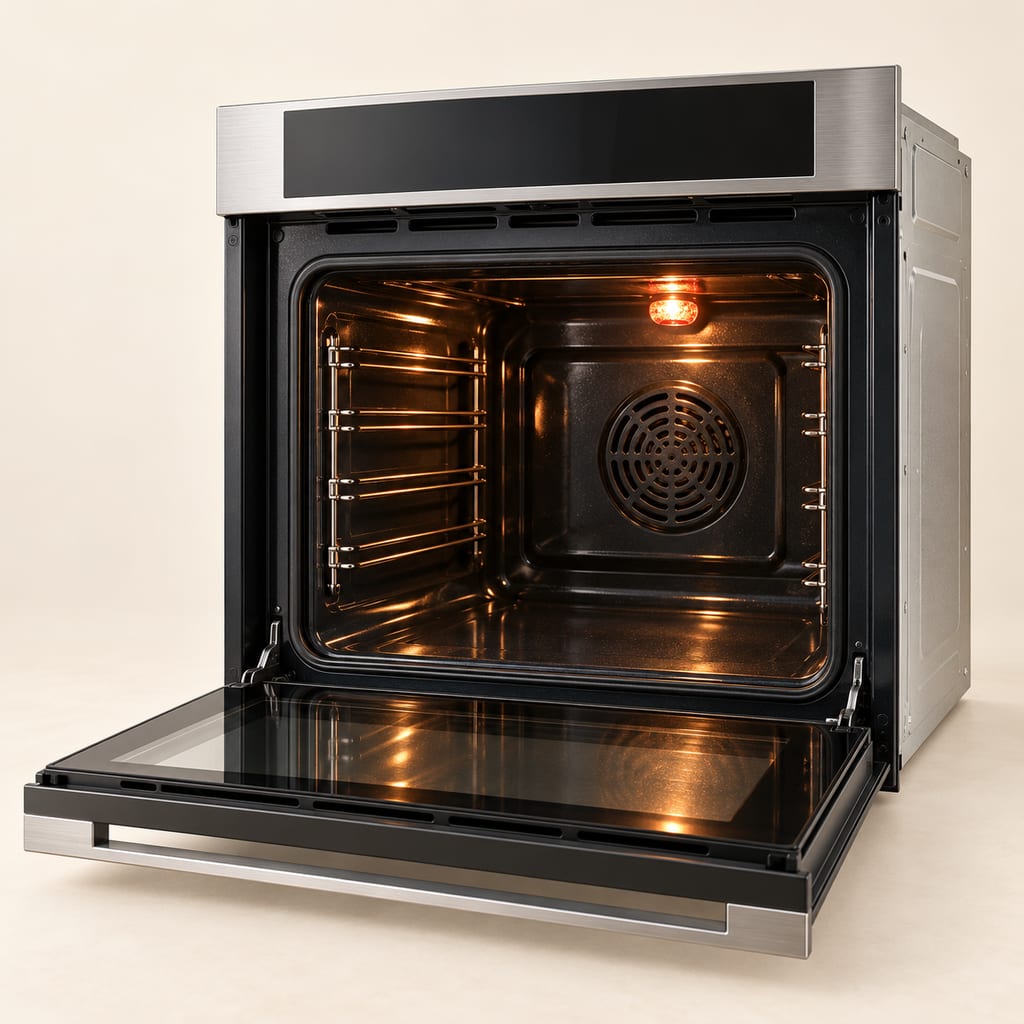
An ordinary oven repurposed as a warm enclosure by using its interior lamp. The cavity is not a calibrated incubator, and lamp output varies by model.

A generic unbranded electric oven with its door open and small internal oven lamp lit, against a warm ivory studio background.

An oven borrowed as an enclosure

An oven with a lamp is an ordinary domestic oven repurposed as a warm enclosure: the oven’s interior light is switched on, and the cavity is treated as a place to hold a fermentation container. The oven remains a cooking appliance, not a dedicated incubator. Its cavity, insulation, lamp and controls are specific to the model, and the lamp is not a calibrated temperature setting.

The name describes an improvised use rather than a standard product category. The food remains in its own tray or container; the oven cavity surrounds it. That distinction matters because the surrounding air and the food do not necessarily reach the same temperature. A Beko manual illustrates the model-to-model issue: for that oven, the lamp-only mode illuminates the cavity while no heater operates. Other ovens may behave differently.

Sources for this section

A variable source of warmth

The lamp is an incidental heat source, not a thermostat. In a practitioner’s account of a koji-related experiment, the oven cavity could rise above the desired conditions; the author says the setup required observation because it could become too warm. This is a report about one oven, not a performance specification for the equipment type. No universal temperature, capacity or holding range can be assigned to an oven-lamp setup.

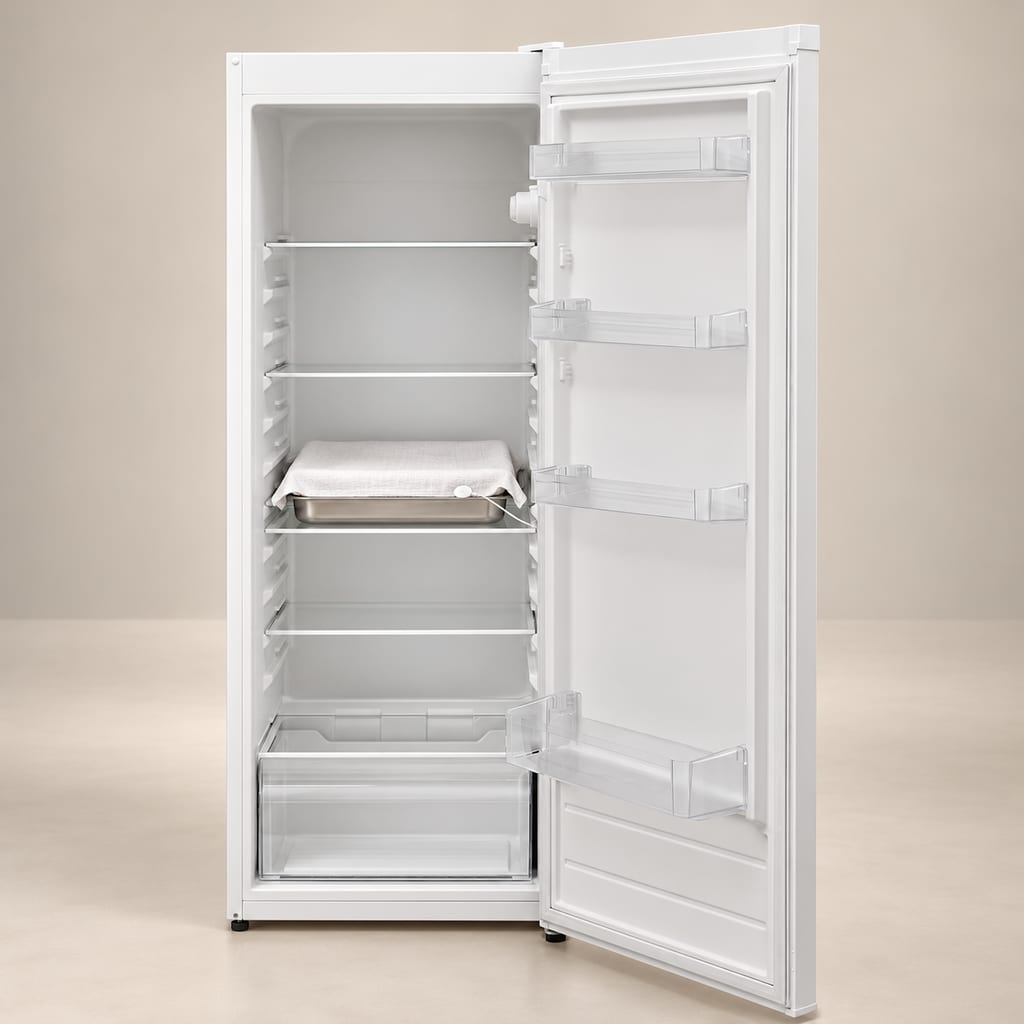
A controlled cabinet uses a different approach. Nordic Food Lab describes a koji chamber made from a switched-off refrigerator fitted with a heating mat and a probe connected to a controller. That account also treats humidity, airflow and the food’s own temperature as separate concerns. It shows why a lamp-lit oven should not be treated as equivalent to a controlled chamber: it lacks the documented feedback control of that particular cabinet.

Sources for this section

What the documented example does—and does not—show

A German-language article by Nico Stanitzok mentions an oven-lamp option in an experimental attempt with wild mould. It is one practitioner's account, not proof of a traditional koji method or a validated incubation design. The author reports mixed mould growth and failed early trials, and warns readers not to reproduce the wild-culture experiment: the organism was not genetically identified and its toxin potential is unresolved.

The oven itself is therefore best understood here as an improvised heat enclosure with uncertain behavior. The cited source does not establish a safe general process, a reliable temperature profile, or cleaning and maintenance requirements for fermentation use. Use the appliance only within its manufacturer’s instructions; this record does not recommend wild-culture collection or propagation.

Sources for this section

Geography and period

The technique is documented in a contemporary practitioner article, but the article does not establish the origin of the adaptation or the manufacture location of any oven. Although the author mentions working in Thailand, the oven-lamp passage is presented as a conditional option, not as a Thai tradition or a locally invented appliance. The equipment’s geographic origin is unknown.

The current evidence places this in modern household improvisation. It does not provide a first-use date, dimensions, capacity, or evidence that this approach is widespread.

Sources for this section

Equipment details

How you get oneImprovised from something else This is an off-label use of an existing domestic oven, not equipment manufactured or validated as a fermentation incubator.
CareFollow the oven manufacturer’s instructions for operation, cleaning and lamp replacement. The cited account does not establish a maintenance or cleaning routine for fermentation use.

Made of

  • Domestic oven cavity — enclosure
    The source describes using an existing oven; dimensions, insulation and internal layout depend on the specific model.
  • Oven lamp — incidental heat source in the documented adaptation
    Lamp function and output vary by oven. A Beko manual for one model describes a lamp-only function with no oven heater operating; this is not a universal specification.

Limits

Lamp output and oven behavior vary by model; the cited practitioner reports potential overheating but does not establish a general operating range.

Source →

A lamp-only function is documented for one Beko model; do not generalize that behavior to other ovens.

Source →

The practitioner explicitly advises against reproducing the wild-culture experiment because species identity and toxin potential were unresolved.

Source →

Places

Unknown

Relationship not established · Place not established

A practitioner describes an oven-lamp adaptation but does not establish where this equipment idea originated or where the oven was made. The author’s location in Thailand is not evidence that the appliance or practice originated there.

Related

Community

No community contributions have been published for this entry yet.

Share what you made

Sign in to contribute. Published comments and photos are free to read.

Sources