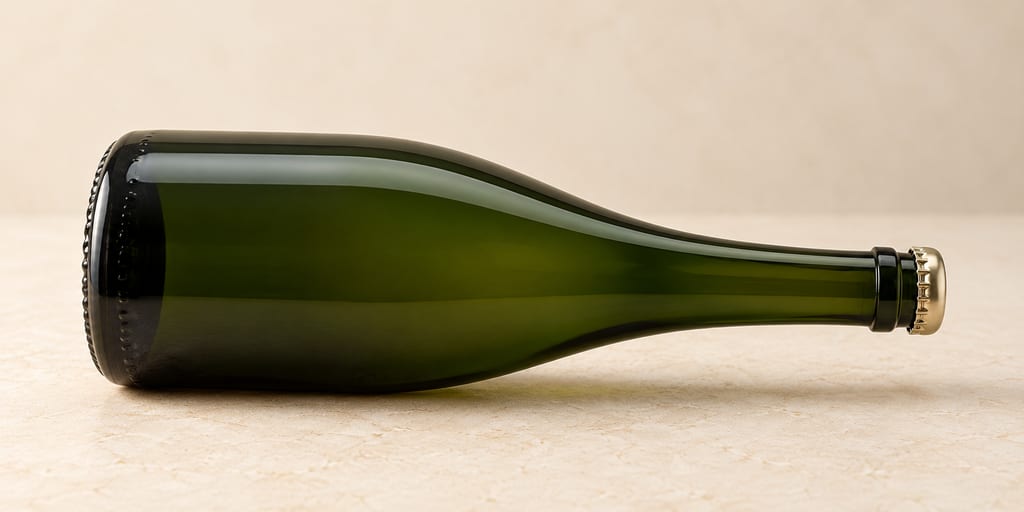
Bottle for secondary fermentation
Champagne’s traditional-method bottle holds wine through its second fermentation and subsequent maturation on lees. At tirage it has a crown cap and internal insert; bottle formats and specifications vary.
 FermenteaWhere food goes to change
Equipment · Baskets, trays and beds
A paillas (also called paillât) is a basket used in the Massif des Bauges for a shaped loaf’s second rise before baking. Local examples include baskets made from blâche, straw or osier, sometimes lined with cloth; the inventory also records a wooden version.
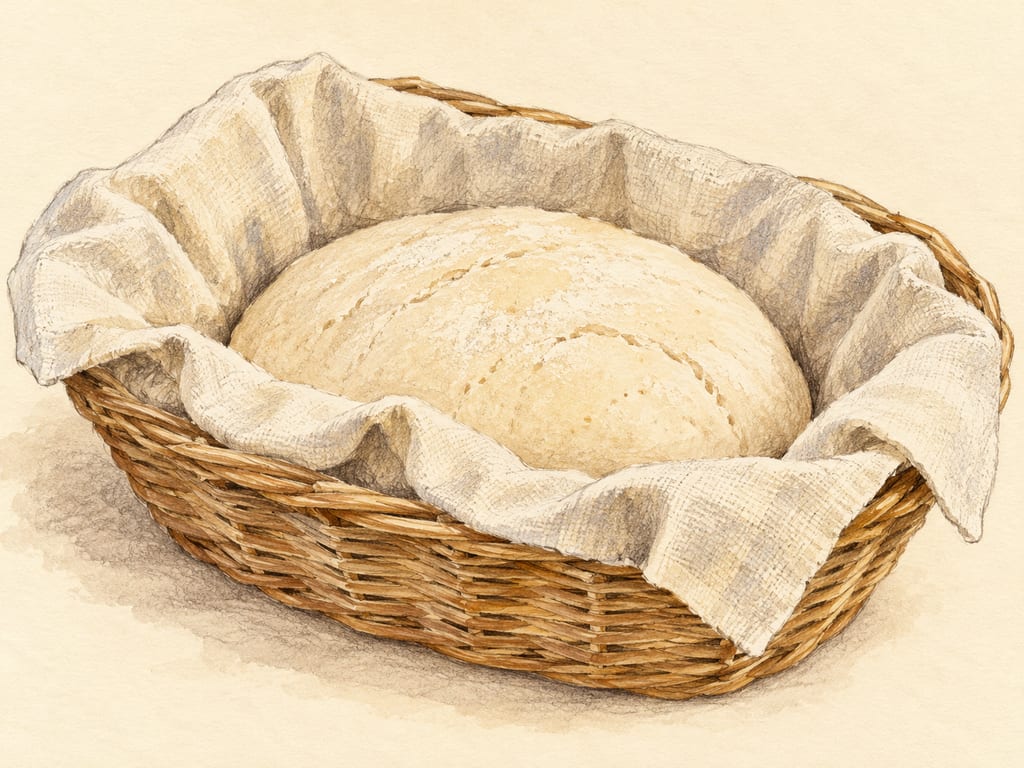
In the Massif des Bauges, paillas is the local name for baskets that hold shaped bread dough for its second rise. Paillât is also recorded as a singular local form. The vessel supports the loaf while fermentation continues after shaping; when the dough is ready, it is removed and transferred to the oven. That makes a paillas different from a baking tin, which surrounds dough during baking, and from a starter jar, which holds a culture rather than a shaped loaf.
The inventory describes baskets made from blâche, straw or osier. These are alternatives found in local practice, not materials necessarily combined in one basket or a single standard specification. Some osier baskets receive a cloth lining to limit sticking. A wooden paillas recorded at Seythenex shows that the name is not restricted to one material. The account does not establish a standard diameter, depth, capacity, weave or shape, so those details should not be treated as fixed features of every example.
After dough has been shaped, it is placed in a paillas for the second rise. The basket supports its shape while the dough rests, and a cloth liner separates dough from the weave where one is used. The basket is not a heat source and is not baked with the loaf. The inventory presents this sequence as part of a wider practice: dough is prepared and shaped, left to rise, then taken to the communal oven.
One account gives a boule of about 1.2 kilograms before baking, intended to make a one-kilogram loaf, and describes a second rise of roughly an hour. Those quantities and timing belong to that reported example; they are not a universal basket capacity or proofing schedule. Dough size and rise timing are not standardized by the record. The functional point is narrower: the basket holds an already shaped loaf during this stage, then releases it for baking.
Basket-making is part of the equipment’s history in the Bauges. The inventory distinguishes earlier baskets made by users from purchased examples and local efforts to relearn or revive basket-making. At La Compôte, associations worked to recover the craft; the record also notes that baskets sold today may be made from rotin and lined with linen. These products continue to be called paillas in the documented practice, but the inventory does not say every purchased basket is made locally or follows one construction.
The wooden paillas recorded at Seythenex is another local form. Together with blâche, straw and osier examples, it cautions against describing one basket as the definitive Bauges design. The bread-making practice is documented across Savoie and Haute-Savoie in the French Alps. That supports the association of paillas with this regional tradition; it does not prove an exclusive birthplace for baskets or for the broader idea of proofing dough in a basket.
The heritage inventory is detailed about use, materials and local craft history, but does not give a dated first attestation of the basket, standard dimensions, rated capacity, or prescribed cleaning and storage routine. The equipment’s earliest date therefore remains unknown. Nor does the source equate every paillas with the modern round cane banneton sold for home baking. A modern basket may perform a similar proofing role, but similarity alone does not establish the same local construction or history.
A gallery photograph shows cloth-lined wicker baskets holding shaped dough during proofing in Aubrac. It helps readers recognize the use of a basket during a rise, but it is not identified as a Bauges paillas and does not document the region’s exact materials or form. The generated illustration depicts one plausible osier-and-linen example among the recorded variants, rather than a measured or uniquely authentic pattern.
The Bauges heritage inventory describes paillas in the bread-making practice and distinguishes baskets formerly made by users from craft revival and purchased examples in contemporary use. It gives no dated earliest attestation for the basket itself, so the equipment’s first date remains unknown.
The paillas holds a shaped loaf for its second rise and is removed before baking; it is not described as the baking pan.
Source →Recorded materials are regional variants, not a universal specification for every proofing basket.
Source →The inventory places this practice in the Bauges massif across Savoie and Haute-Savoie; it does not establish one village or workshop as the basket’s exclusive origin.
Champagne’s traditional-method bottle holds wine through its second fermentation and subsequent maturation on lees. At tirage it has a crown cap and internal insert; bottle formats and specifications vary.
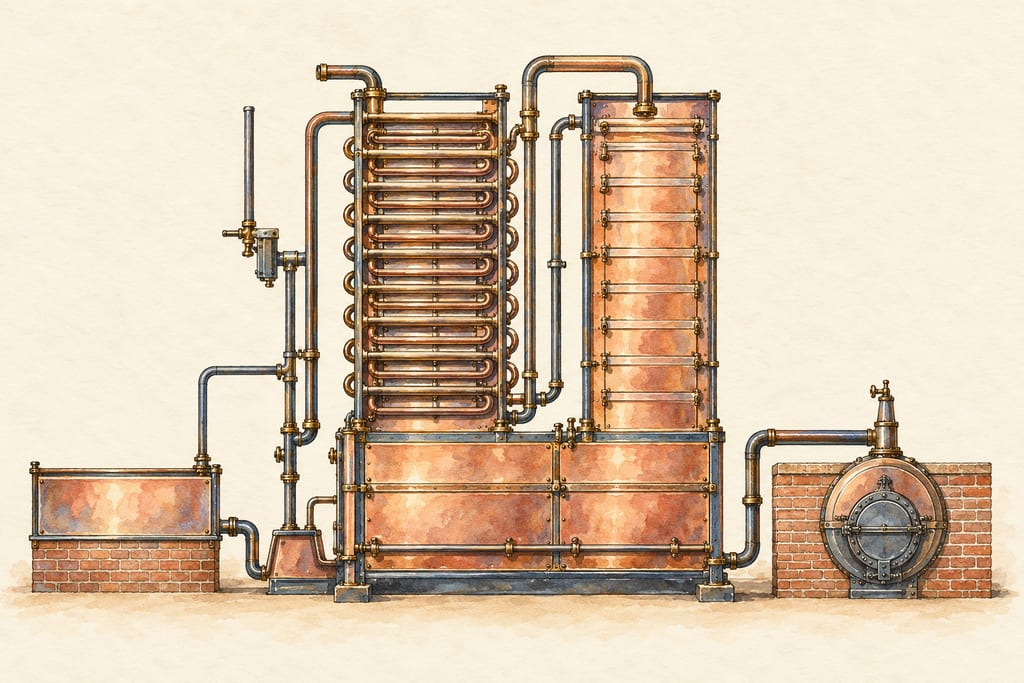
A column still is a distillation apparatus built around one or more vertical columns. Its continuous and rectifying designs appear in several spirits traditions, but materials and product character vary by installation.
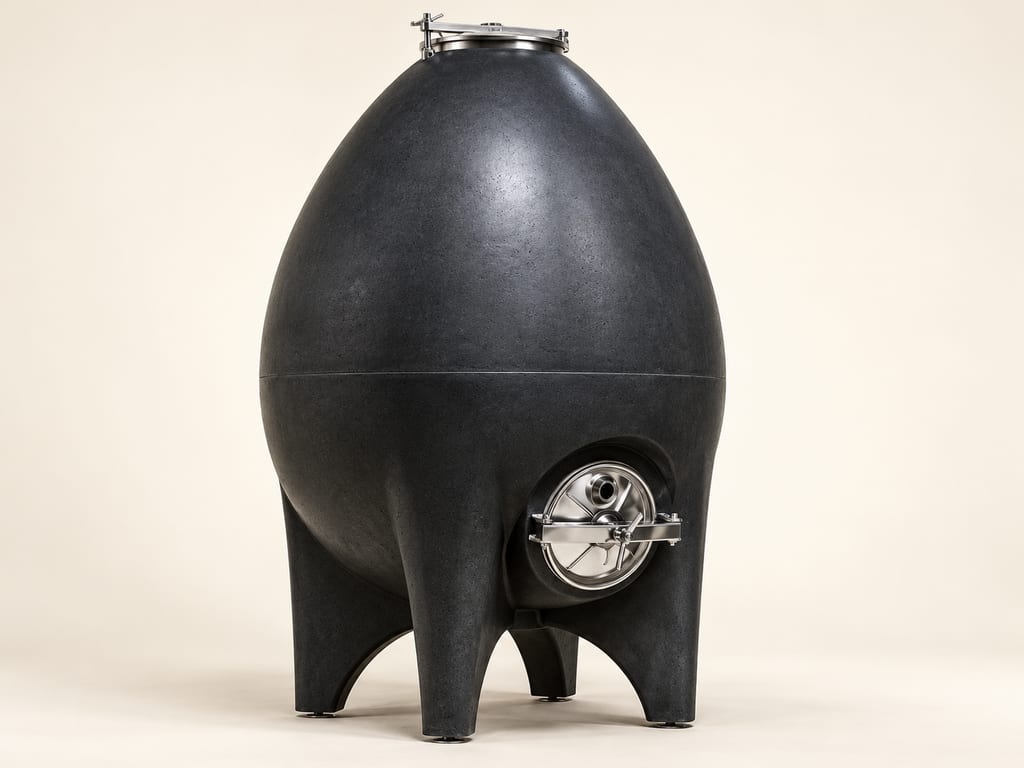
A modern ovoid concrete wine vat with smooth curved walls, made in several sizes and fitted according to model. Used for wine fermentation and maturation; support, access, cooling and interior treatment vary.
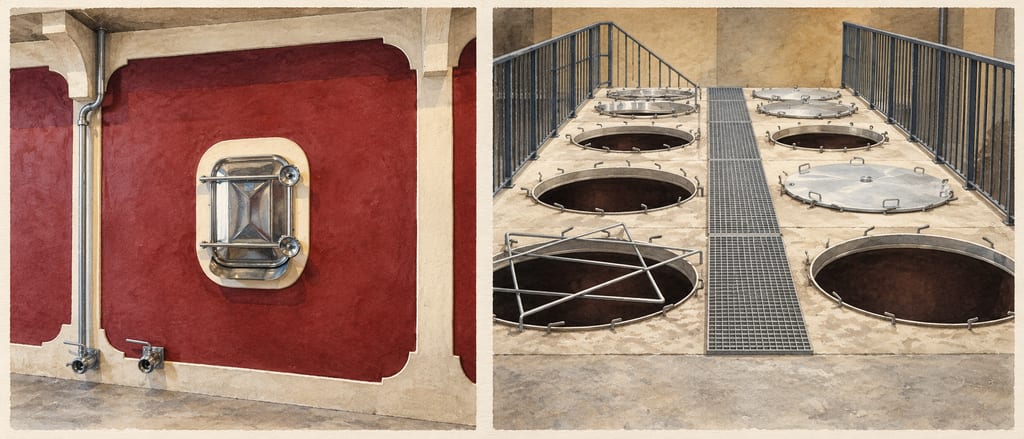
Concrete wine tanks are heavy, fixed vessels in rectangular, cylindrical and tapered forms. Their thermal response and wine contact depend on mix, wall construction and interior finish.
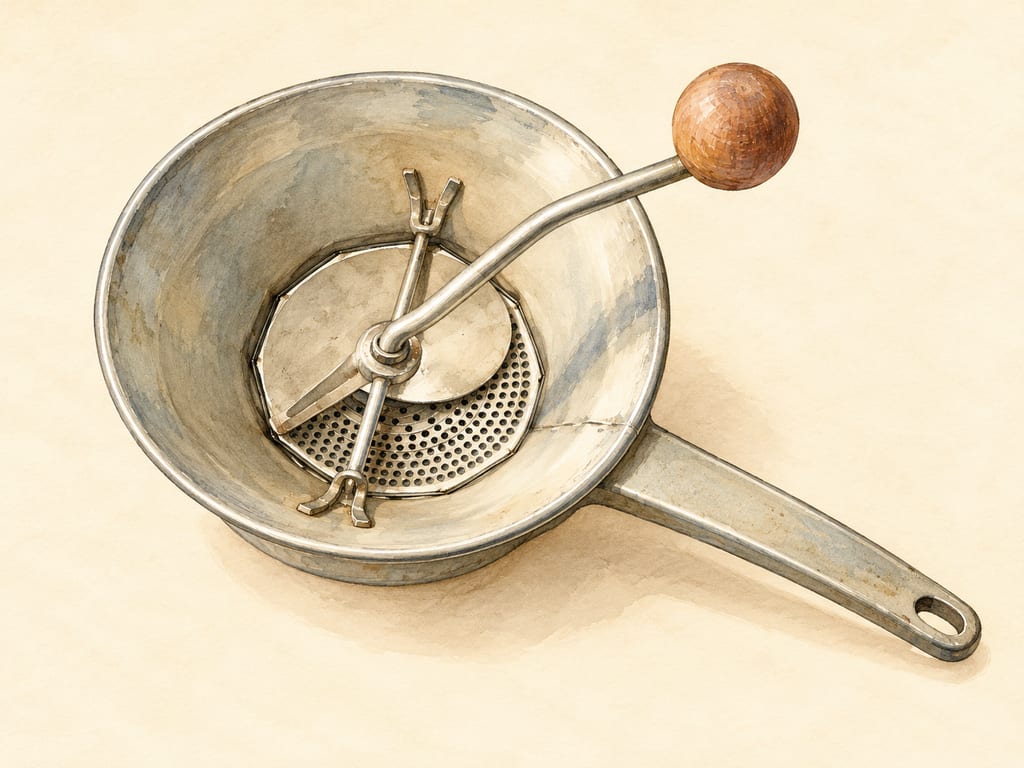
A hand-cranked food mill presses softened food across a perforated disk, producing a purée while keeping larger pieces in the chamber. Its exact shape and disk depend on the model.
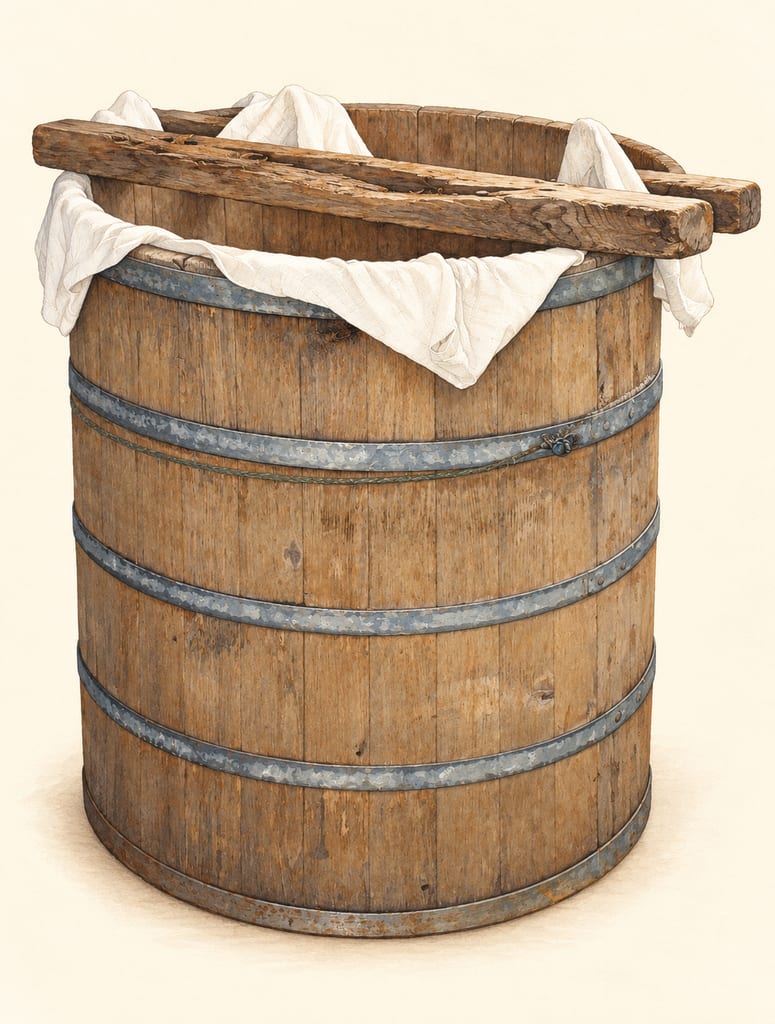
The gerle is a broad wooden vat used to receive and work milk for Salers cheese in its French AOP area. Its coopered form and microbial role are documented, but sources do not establish when this particular vessel first appeared.
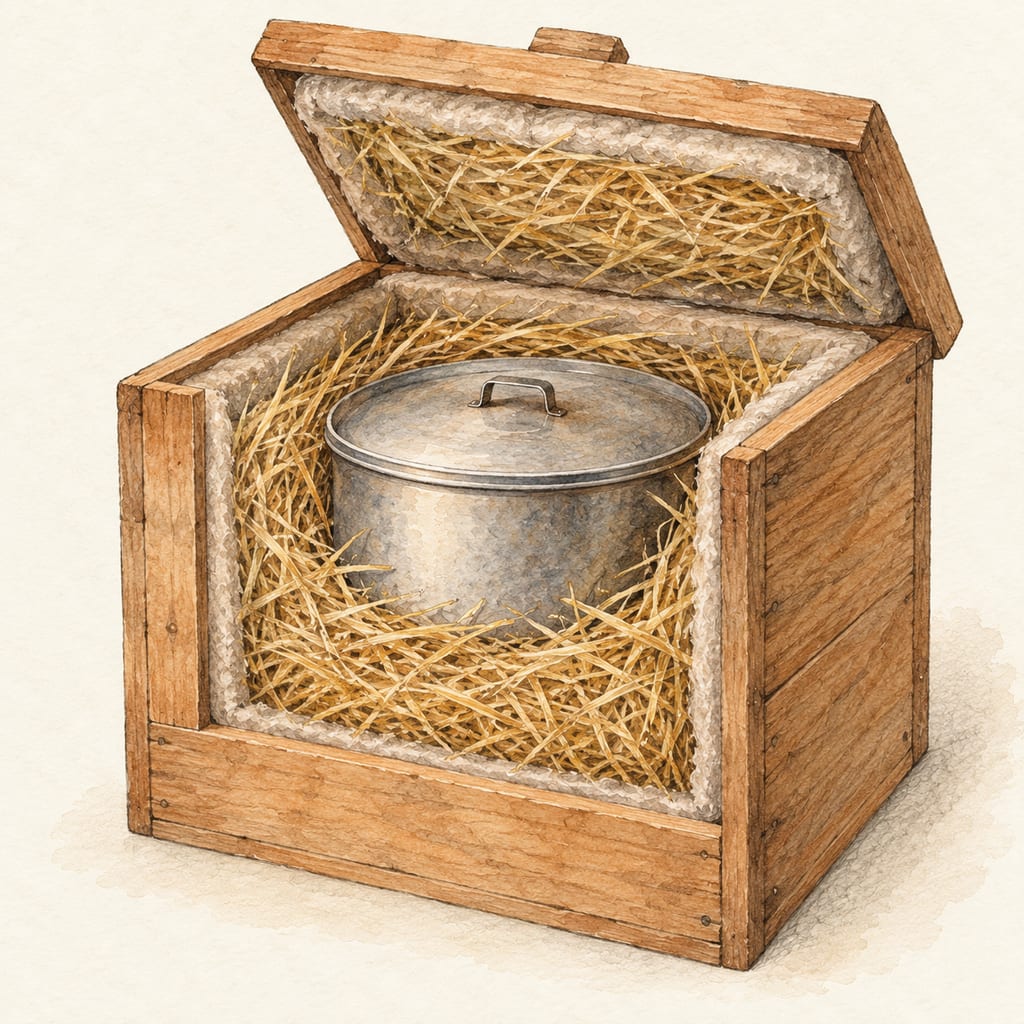
A haybox, also called a fireless or retained-heat cooker, is an insulated enclosure that lets a lidded pot finish cooking in heat already stored in the food after it leaves a stove. It generates no heat and is not a preservation method.
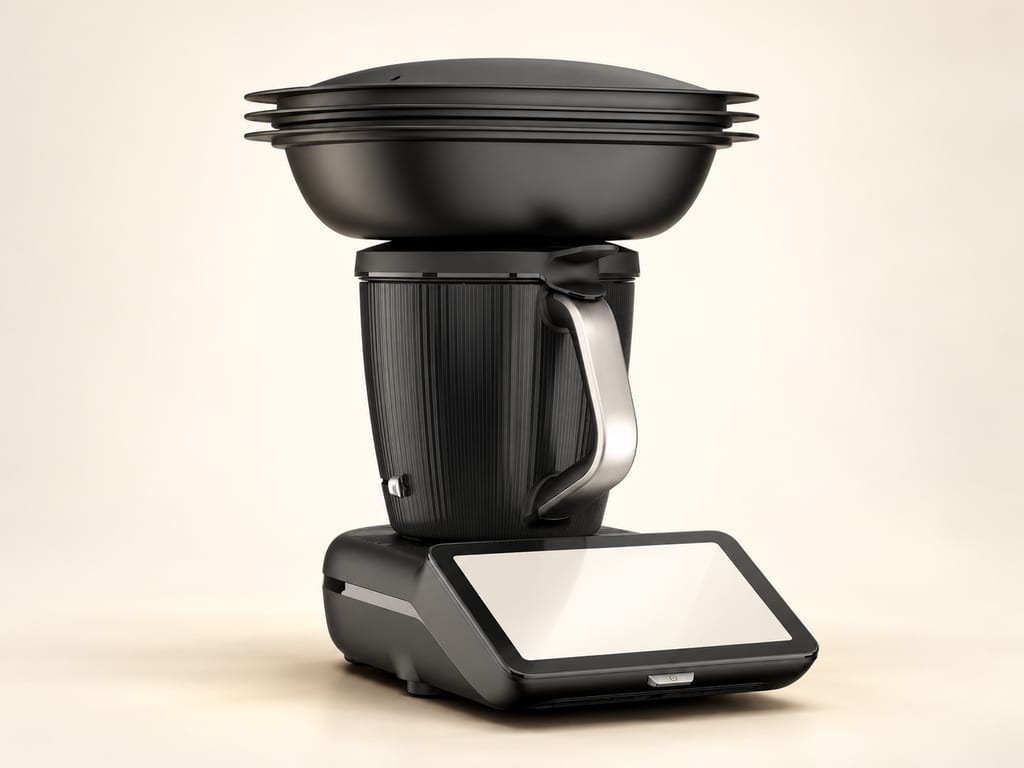
A modern electric countertop machine that heats, chops and stirs food in one mixing bowl. Cookidoo lists Thermomix models for making powidl and quince membrillo, although the full methods are not public on the pages reviewed.
No community contributions have been published for this entry yet.
Sign in to contribute. Published comments and photos are free to read.
Ministry of Culture, FranceEquipment · History · Geography
La panification traditionnelle, ou le faire au four, dans le massif des BaugesPlaces the bread-making practice in the Massif des Bauges in Savoie and Haute-Savoie.
Describes shaped dough placed in paillas for a second rise before baking; defines paillât as a cloth-covered basket in local usage.
Lists blâche, straw and osier; reports cloth liners, user-made baskets, craft revival, purchased examples and a wooden paillas at Seythenex.
Gives no dated first attestation, standard capacity or dimensions.
Cited in: The basket and its name; How it is used in bread-making; Making, buying and local variation; What the record does not specify
Tourisme en AubracImage
La Ferme du Verdier à LieutadèsLinked photograph shows shaped dough in cloth-lined wicker baskets during proofing in Aubrac; comparison image, not identified as a Bauges paillas.
Cited in: What the record does not specify