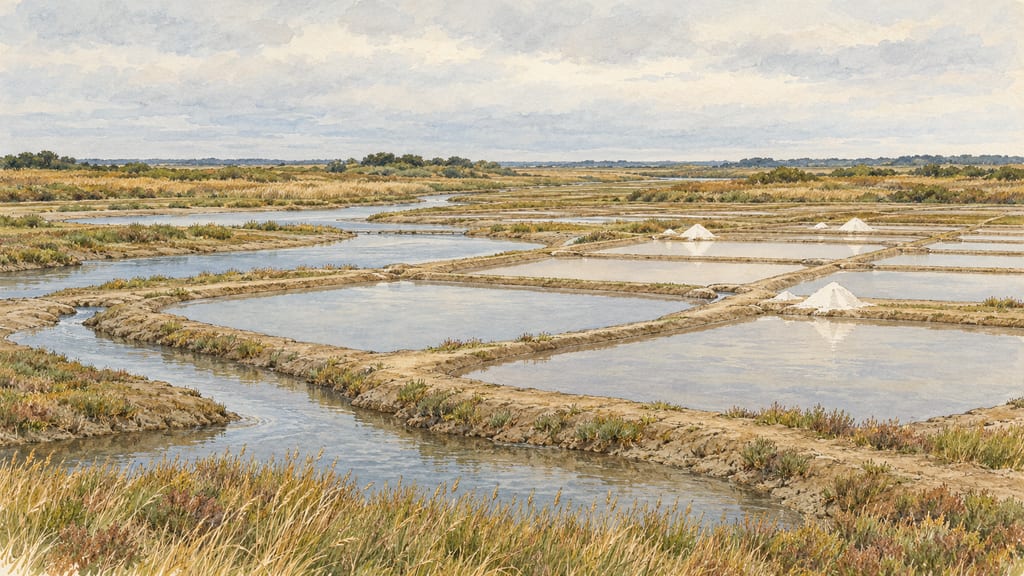
Guérande salt marshes
The Guérande salt marshes are a tidal, sun-worked salina landscape in western France, where brine moves through earthen basins toward small crystallising pans.
 FermenteaWhere food goes to change
Place · salt-evaporation-pans-and-salina
Maras salt pans · Salt Mines of Maras · Maras salterns
The Salineras de Maras are an Andean spring-fed salina: shallow evaporation wells descend a steep slope, supplied by branching gravity channels from saline water.
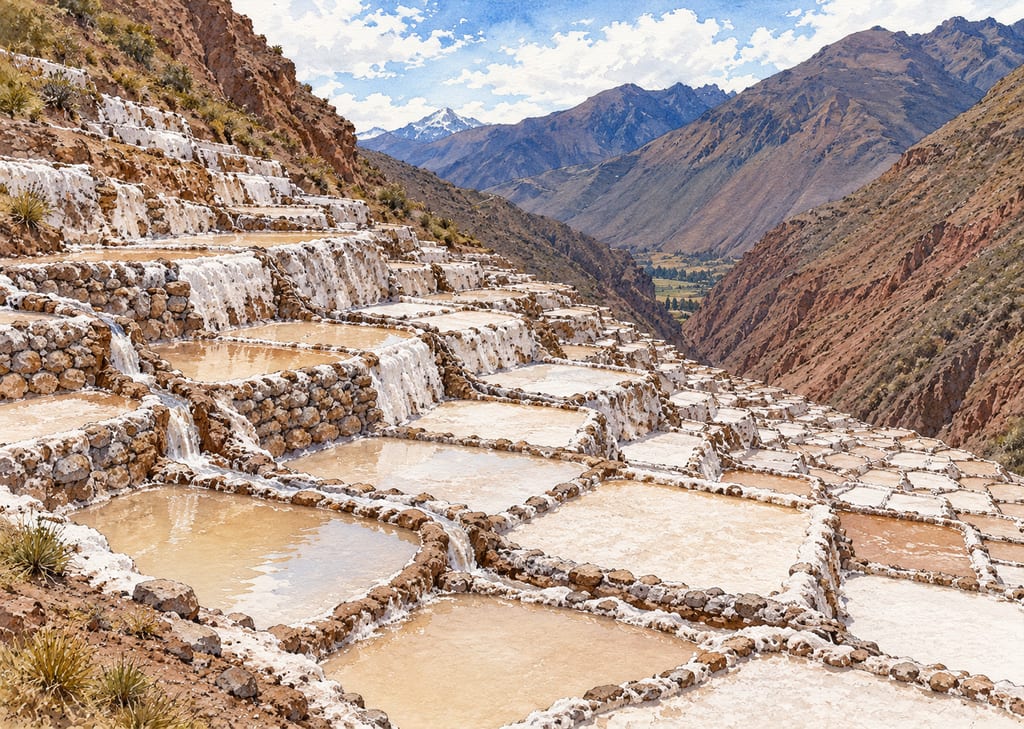
Official Peruvian site records describe an early history and continued association with local communities. The exact beginning and earliest construction phase are not independently established by the sources used here, so this page does not assign a definitive founding date.
This is a heritage description, not a design for construction or permission to harvest salt. Check site access and environmental rules with local operators and authorities.
Reference point supplied in Peru's UNESCO tentative-list submission for the salt-pan landscape, not an individual pan or entrance.
The Guérande salt marshes are a tidal, sun-worked salina landscape in western France, where brine moves through earthen basins toward small crystallising pans.
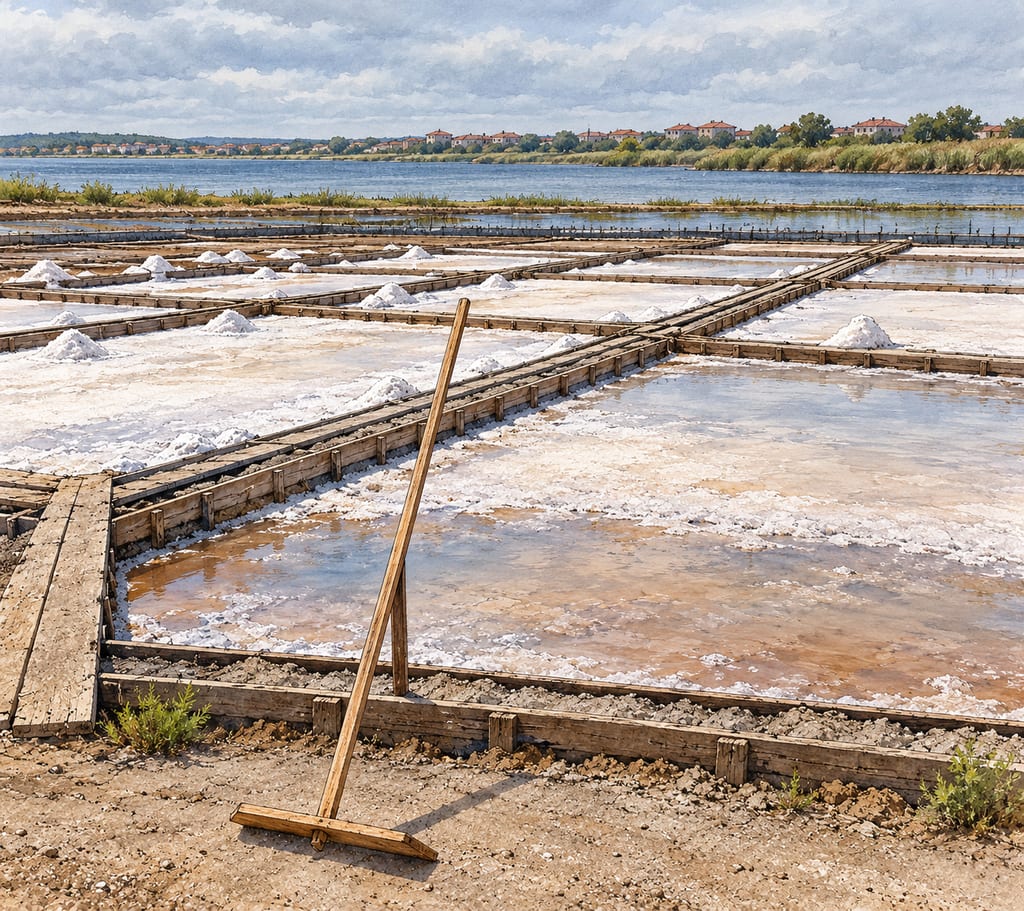
The Pomorie salt pans are a working coastal salina beside Lake Pomorie, where shallow beds use sun and wind to concentrate lake water and yield salt.
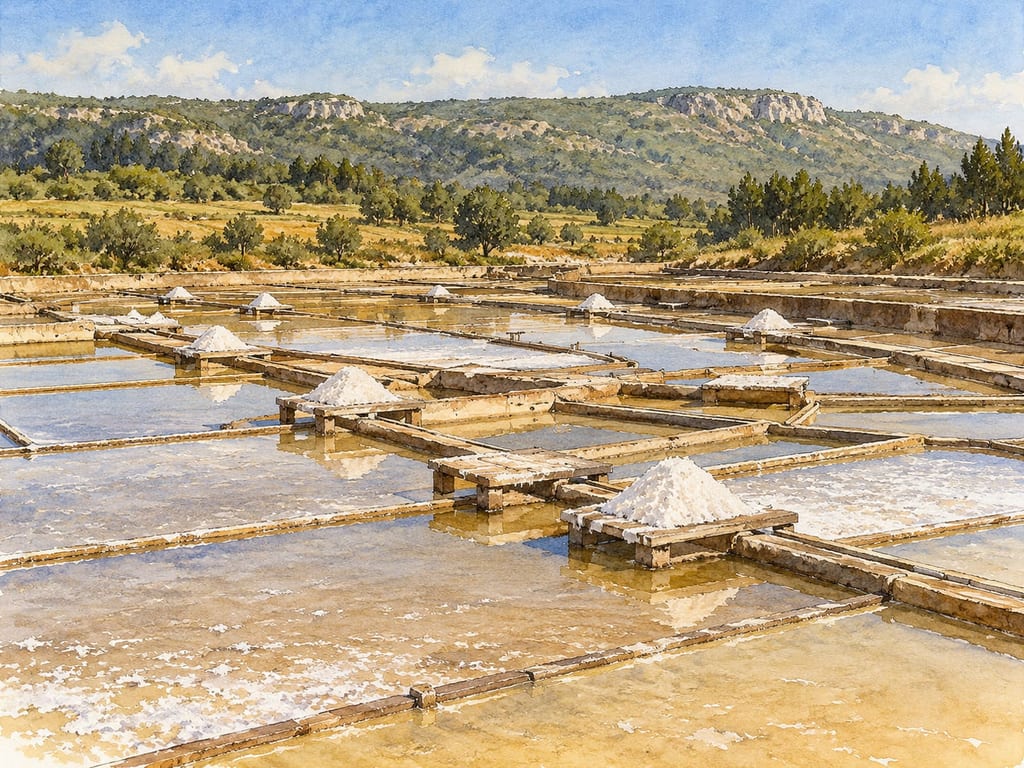
At Fonte da Bica, inland brine rises from an underground salt deposit and is solar-evaporated in traditional small crystallising pans at Rio Maior, Portugal.
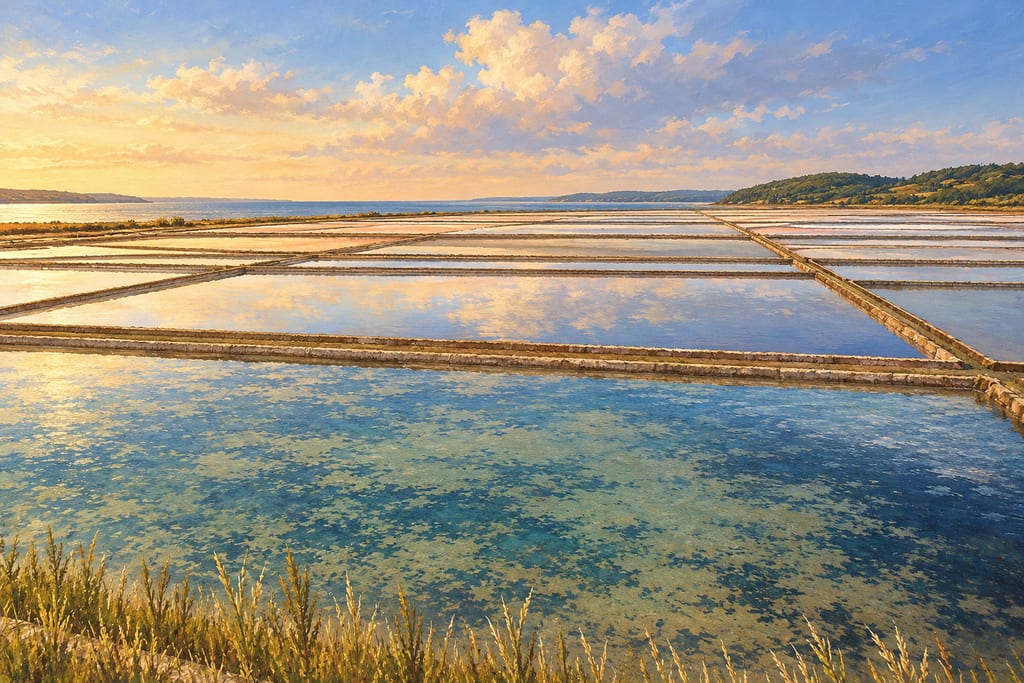
A northern Adriatic saltworks in Slovenia where seawater passes through evaporation ponds into crystallisation beds, with the traditional petola layer and daily hand harvesting preserved.
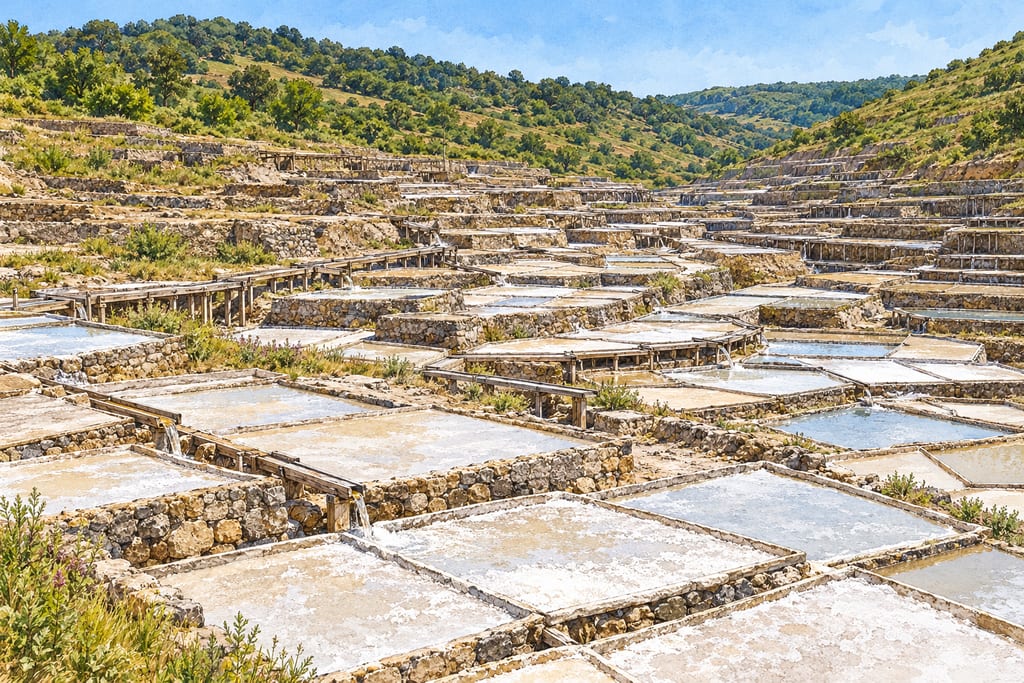
Valle Salado de Añana is an inland spring-brine saltworks in Álava, Spain, where wooden channels carry brine by gravity to stepped terraces of shallow evaporation pans.
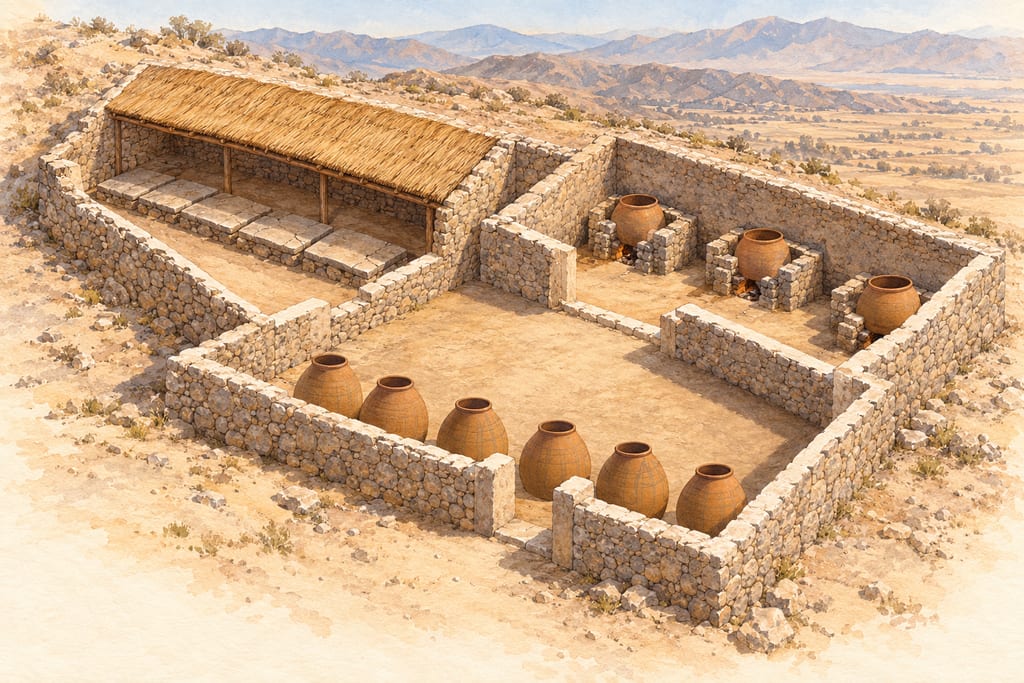
The fixed Wari brewery at Cerro Baúl in southern Peru had a trapezoidal plan with separate milling, boiling and fermentation/storage areas. Excavations document its layout, not a complete construction sequence or dimensions.
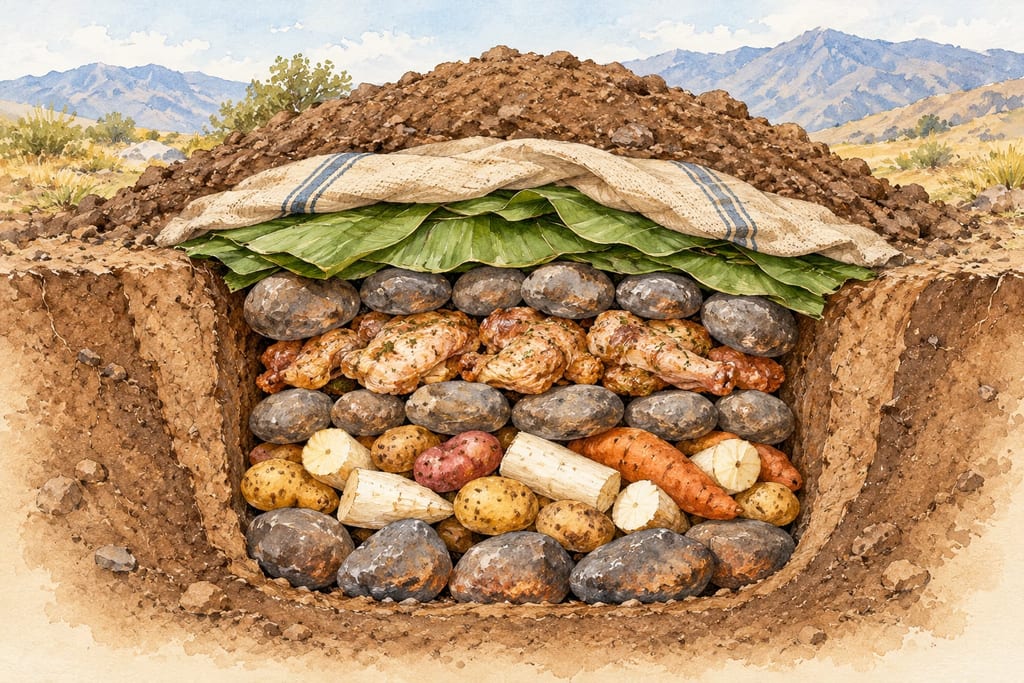
The Huánuco pachamanca is a temporary ground oven: firewood heats stones, which enclose layers of tubers and seasoned meat in an excavated pit. Banana leaves, blankets and earth seal the cooking cavity.
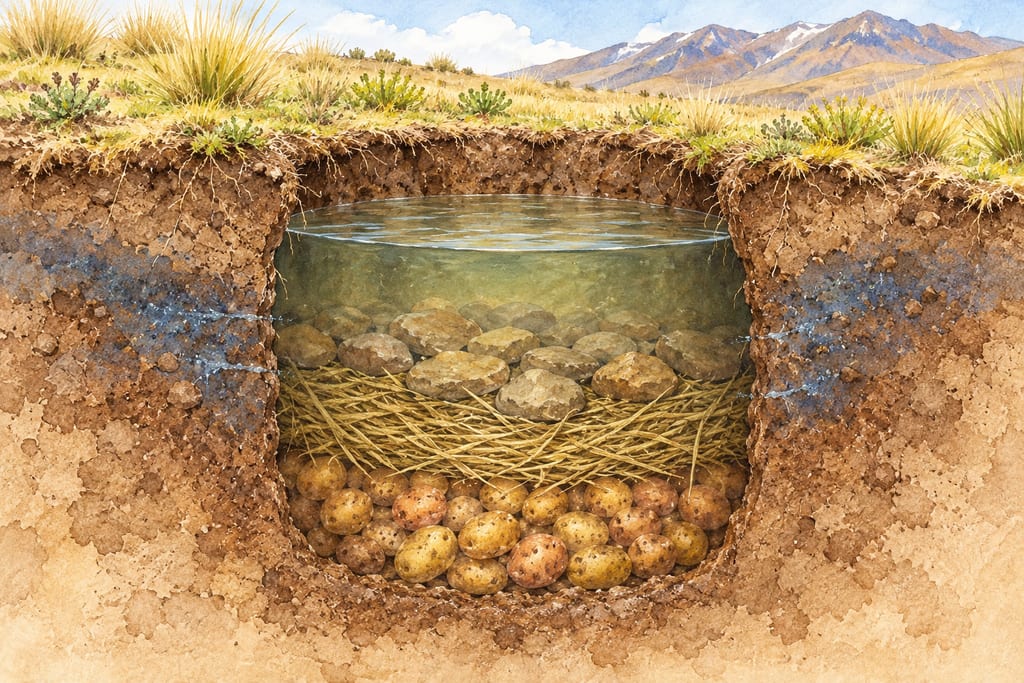
In the Huánuco highlands, tocosh potatoes are placed in deep earthen wells beside running water. Dry straw and stones cover the potatoes as seepage fills the pit, submerging its contents during a long fermentation.
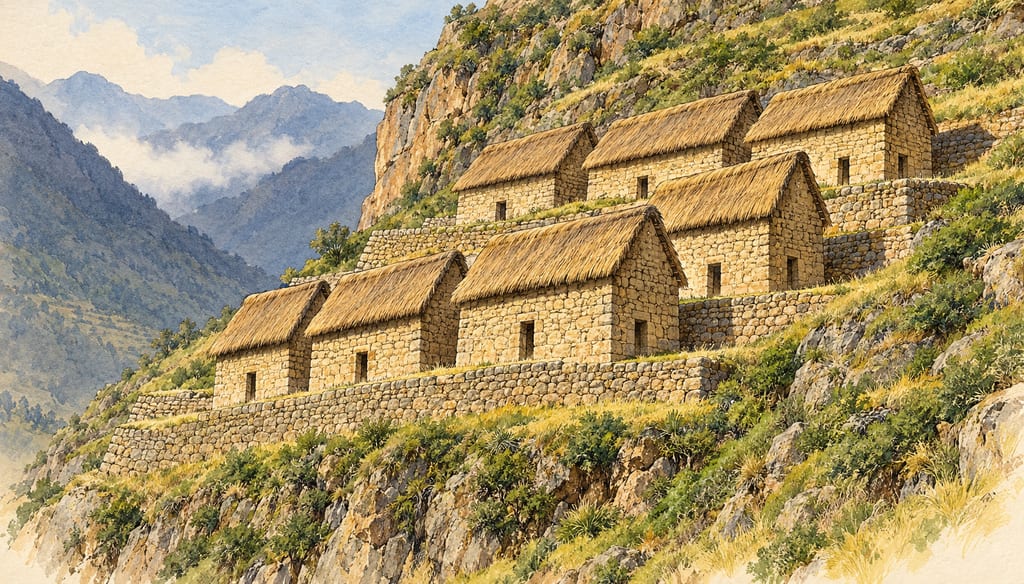
Qollqas (also called colcas) were fixed Inca state storehouses built in Andean networks. Their forms, locations and stored goods varied by site; Xauxa archaeology documents a large regional system.
No community contributions have been published for this entry yet.
Sign in to contribute. Published comments and photos are free to read.
Peru Ministry of Foreign Trade and Tourism (MINCETUR)Site description · Materials · Location · History
Salineras de MarasThe site uses saline spring water distributed by gravity through channels to stepped evaporation wells on Qaqawiñay slope.
The inventory describes stone retaining walls with mud mortar and the local site context.
UNESCO World Heritage Centre; nomination submitted by Peru Ministry of CultureSite description · Process · History · Seasonality
Salt Mines of MarasThe tentative-list dossier describes stepped wells, stone-and-mud retaining walls, branching channels, spring-fed brine, and local harvest practices.
The dossier is a State Party submission to the Tentative List, not an inscription.
Universidad Nacional de San Antonio Abad del CuscoCommunity production
Community production of salt in the Salineras de MarasThe abstract reports ethnographic research with 32 producers and states that production depends on climate and community collaboration.