A Wari brewery on a high mesa
Cerro Baúl was a Wari imperial centre in the Moquegua Valley of southern Peru. The brewery occupied part of the monumental settlement on the summit mesa. Excavation describes high-walled architecture built with irregular stone blocks cut from the mesa cap and bonded with earthen mortar. The site's architecture was reworked around AD 800; those broad materials and dates do not provide a complete construction history for the brewery itself.
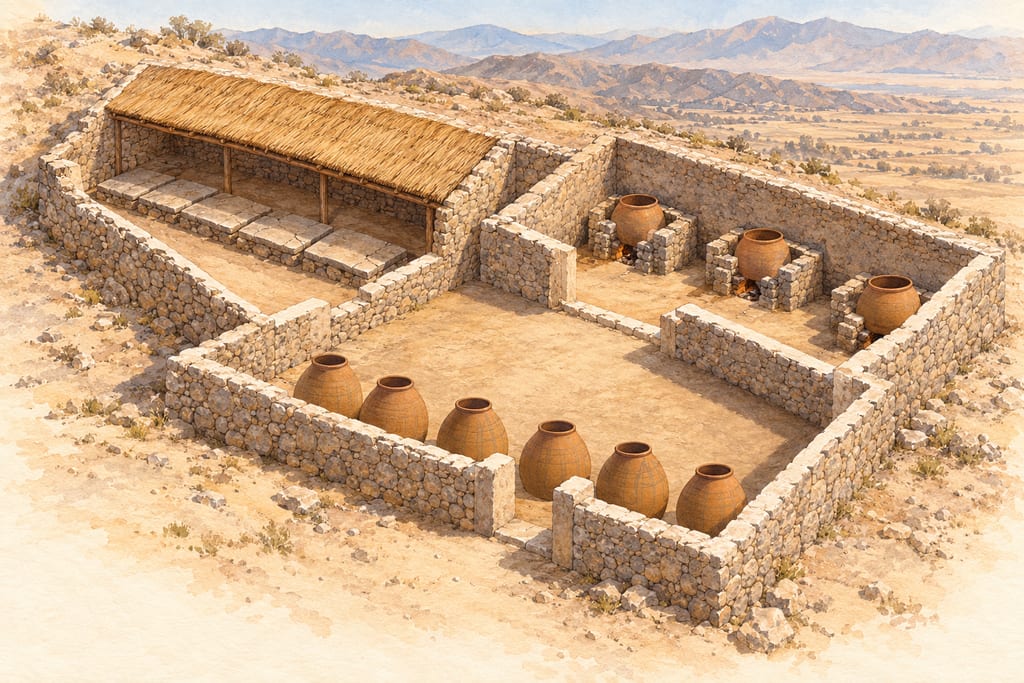
The brewing complex is distinct from a portable jar or kettle. It was a fixed, trapezoidal building with rooms organized around different stages of production. The excavated plan, room features and pottery assemblage support its interpretation as a specialized brewery rather than an ordinary domestic kitchen.
Sources for this section
Rooms for separate work
The excavated brewery plan separates spaces for grinding, boiling and fermenting or storing the drink. The 2019 study maps the fermentation/storage area as Room 1 and the boiling area as Room 2C, with other spaces assigned to grinding and food preparation. These room labels describe one archaeological plan; they are not a template for other Andean breweries.
This layout made room for a large production operation and its service vessels. It also places the brewery within a larger ceremonial centre: the complex's final use is associated with brewing and feasting before the Wari site's planned evacuation.
Sources for this section
Hearths, roof and vats
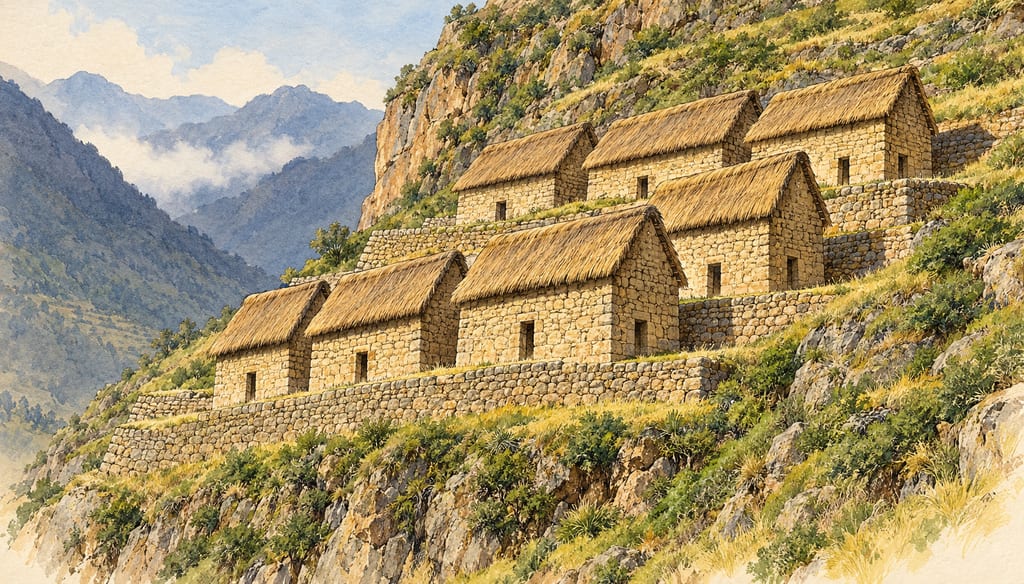
The milling room had a thatched roof. In the northern boiling room, at least seven hearths were excavated; each had two opposed stone supports that once held a ceramic vat. Ash and broken cooking-vessel fragments remained in this room. The surviving features document a working arrangement, but do not establish exact hearth dimensions, room height or the full roof system.
A patio served fermentation or storage. The 2005 excavation account describes twelve large vats arranged along its north wall, each capable of holding up to about 150 litres. That number describes the excavated arrangement, not a standard Wari vessel size. The vats were movable containers; the patio and surrounding rooms were the build.
Sources for this section
A building with a ceremonial ending
Brewing at Cerro Baúl was part of public and political life. The primary excavation publication describes the site's final evacuation as a sequence involving brewing, drinking and feasting, followed by smashed vessels and burned buildings. The brewery's remains therefore preserve both productive rooms and evidence of its planned closure.
The linked university images have different evidentiary roles: one photograph records excavated stone grinding tables, while the other is a published conceptual reconstruction of the boiling room. The generated illustration uses them to explain the building's room-and-hearth arrangement; it is editorial art, not a measured reconstruction. The available archaeology does not supply exact building dimensions, foundation details or a complete assembly sequence.
Sources for this section
History
Excavation identifies a trapezoidal brewery with distinct milling, boiling and fermentation/storage areas. The final evacuation of the site involved brewing, drinking, feasting, vessel smashing and building burning.
Site
SettingA Wari brewery at the monumental centre atop Cerro Baúl, in the Moquegua region of southern Peru. This is a specific excavated building, not a generic Andean brewhouse.
GroundThe building stood on the summit mesa. The broader monumental architecture used irregular stone blocks cut from the mesa cap and earthen mortar; a brewery-specific foundation profile is not published.
NotesThe archaeological account records plan, rooms, some roofing and hearth features but does not provide exact dimensions or a complete construction chronology. The surviving building was ritually closed and burned during the Wari site's final evacuation.
Places
Cerro Baúl, Moquegua
Historical attestation · Locality evidenceThe archaeological studies place the brewery at Cerro Baúl in the Moquegua Valley; they do not establish this as the origin of chicha or Wari brewing.