
Chuño negro
Chuño negro is a source-documented Andean potato-preservation practice. This entry records producer tradition; it is not a validated household process for making potentially toxic bitter potatoes safe.
 FermenteaWhere food goes to change
Built structures · state-storehouses
qollqa · qullqa · colca · collca · Inca state storehouse · Inca storehouse
Qollqas (also called colcas) were fixed Inca state storehouses built in Andean networks. Their forms, locations and stored goods varied by site; Xauxa archaeology documents a large regional system.
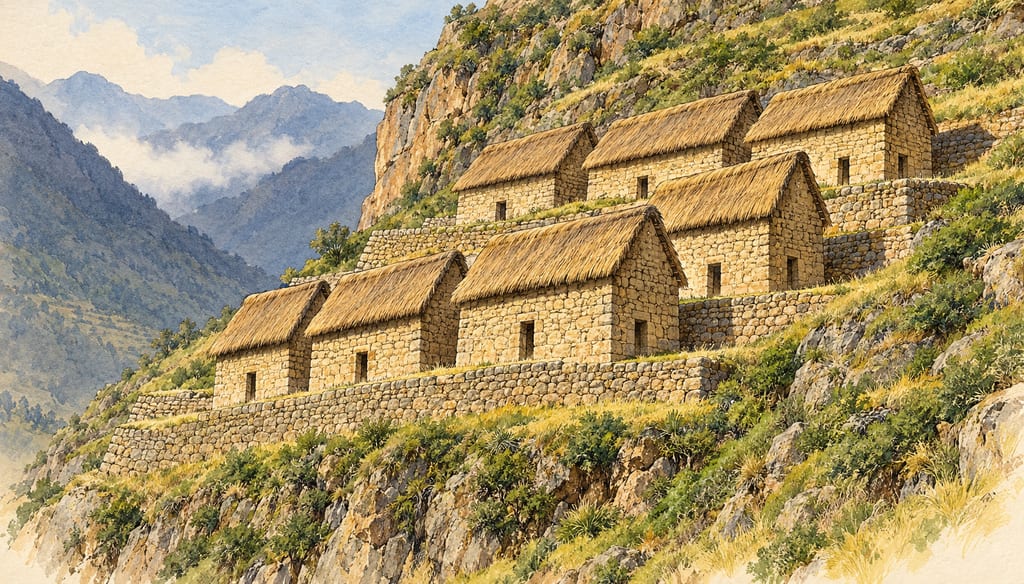
Qollqa (also written qullqa or colca) names an Inca storehouse. These were fixed buildings used within a larger system that gathered food, textiles, tools and other supplies and moved them to places where people and state projects needed them. Smithsonian accounts describe colcas as state facilities tied to collection and redistribution across the empire. Their storage role was architectural and administrative as well as culinary.
This record covers the built storehouse type, not a recipe or a single named building. Many sites have their own chronology, materials and local evidence. Archaeologists use the name for a family of structures whose shape and contents could vary.
In the central Peruvian highlands, the Xauxa region preserves unusually extensive evidence for state storage. D'Altroy and Hastorf report more than 2,000 storehouses across 52 architectural complexes. Their research describes goods produced by Huanca communities and notes that local people also took part in managing storage. The network was organized across a province rather than concentrated in one warehouse.
Test excavations in six Xauxa storehouses recovered maize, quinoa, potatoes and lupin, alongside fragments of Inca storage vessels. That list is evidence from excavated contexts, not a claim that every room held all four crops. A later account of Hatun Xauxa describes groups on the slopes west of the site, with circular and rectangular structures following the shape of the terrain.
Museum and archaeological sources describe both circular and rectangular qollqas, usually as compact one-room buildings arranged in clusters or rows. The Smithsonian's overview describes stone construction and thatched roofs. These are documented features of the type; surviving ruins may be roofless, and the remains at a particular site need their own reading.
At Hatun Xauxa, a published account reports 1,069 structures in five groups, with 562 circular and 507 rectangular rooms generally arranged in rows along the slopes. Other Inca sites differ. Research on Huánuco Pampa links shape and placement to particular storage needs, but those site-specific patterns should not be used as a universal blueprint. Museum sources describe location and airflow as aids to keeping goods cool and dry without establishing a single climate-control system for every qollqa.
Excavated crops are only part of the picture. Museum sources also document clothing, tools and weapons among stored supplies, while the Xauxa research recovered storage-vessel fragments. An exhibit shows dried potatoes such as chuño stored in ceramic containers inside a colca, supporting the related entries for chuño negro and tunta. Those links describe documented storage uses; they do not imply that every qollqa was a potato store.
The photograph linked here shows surviving storehouse ruins above Ollantaytambo in Cusco. It provides a visual example of hillside placement and masonry, while the main archaeological discussion on this page concerns Xauxa in Junín. Both sites are Andean examples; neither image nor account stands for all qollqas.
A build is made where it stands: moving it means building it again.
A documented regional concentration of Inca storehouse complexes, including the Hatun Xauxa area; the record does not imply one building plan for all Xauxa sites.
The photo shows surviving hillside ruins identified as storehouses above Ollantaytambo. It is a visual example, not the Xauxa study site or a universal qollqa form.
Chuño negro is a source-documented Andean potato-preservation practice. This entry records producer tradition; it is not a validated household process for making potentially toxic bitter potatoes safe.

Potatoes frozen and thawed as for black chuño, then washed or soaked for a long time before drying, giving a pale highland tuber product with different bitterness and colour.
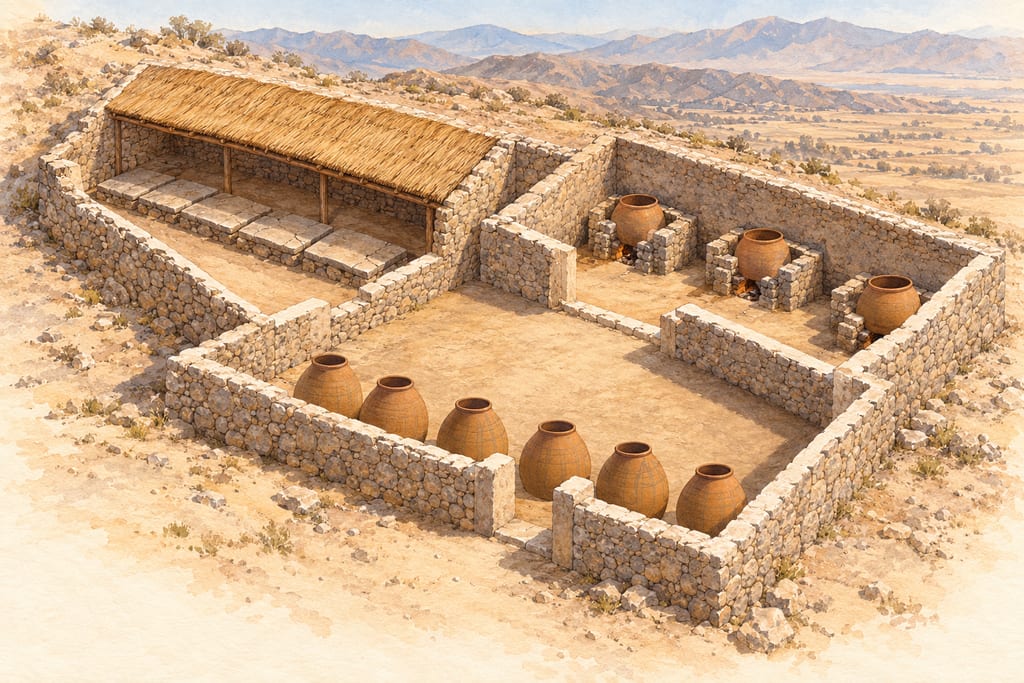
The fixed Wari brewery at Cerro Baúl in southern Peru had a trapezoidal plan with separate milling, boiling and fermentation/storage areas. Excavations document its layout, not a complete construction sequence or dimensions.
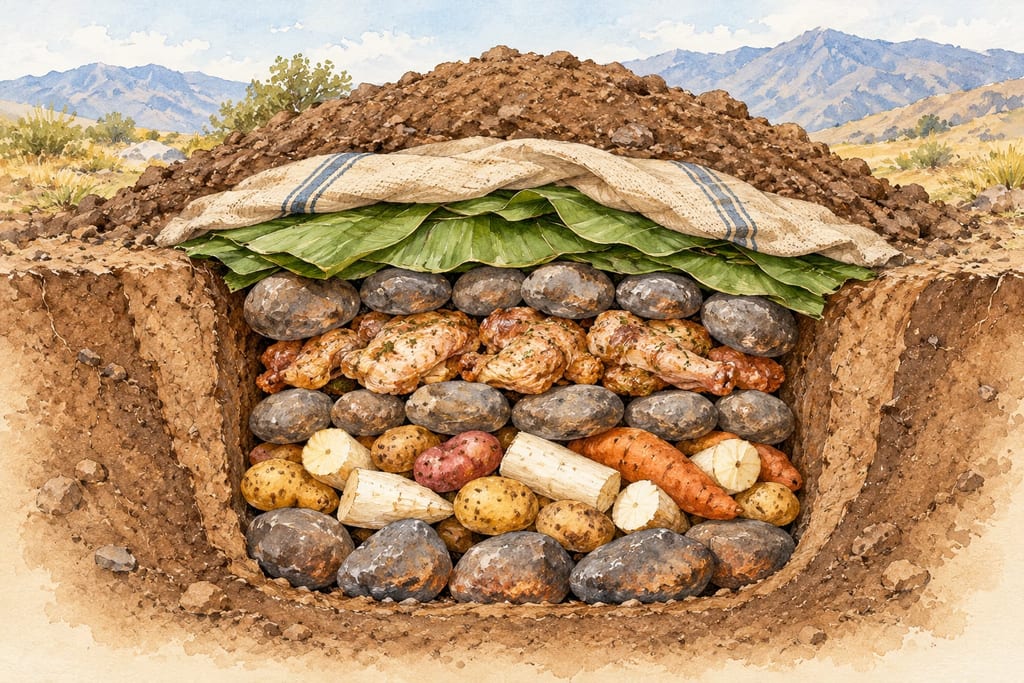
The Huánuco pachamanca is a temporary ground oven: firewood heats stones, which enclose layers of tubers and seasoned meat in an excavated pit. Banana leaves, blankets and earth seal the cooking cavity.
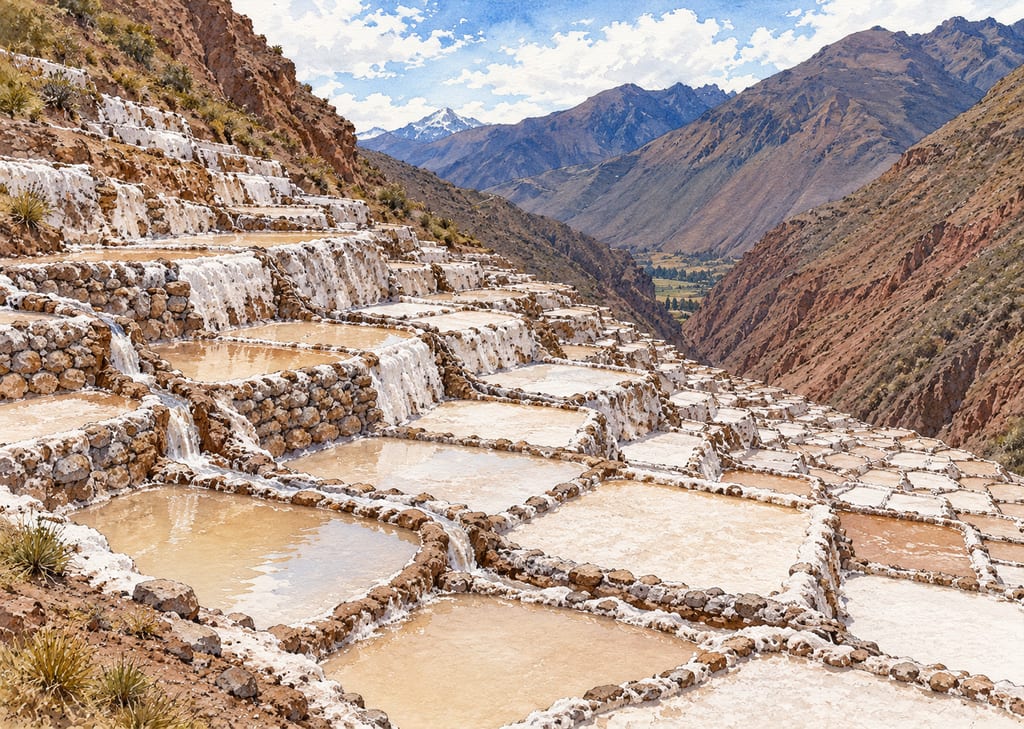
The Salineras de Maras are an Andean spring-fed salina: shallow evaporation wells descend a steep slope, supplied by branching gravity channels from saline water.
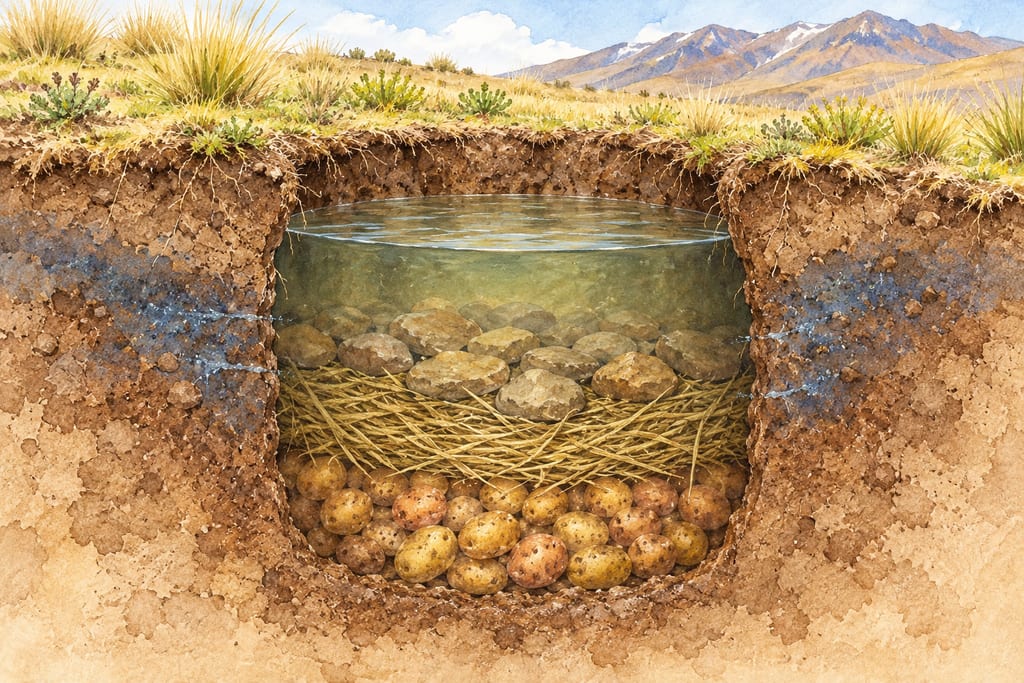
In the Huánuco highlands, tocosh potatoes are placed in deep earthen wells beside running water. Dry straw and stones cover the potatoes as seepage fills the pit, submerging its contents during a long fermentation.
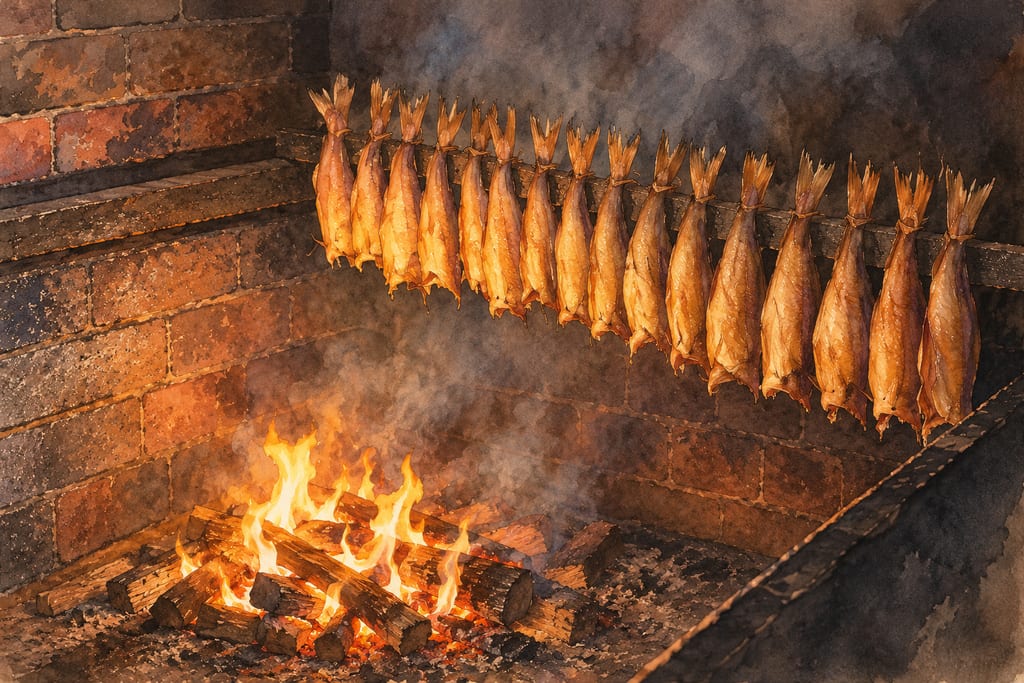
The Arbroath “barrel” is a hardwood-fired smoking pit with triangular rails and a cover. Its documented form belongs to the traditional hot-smoking of haddock around Arbroath and Auchmithie, Scotland.
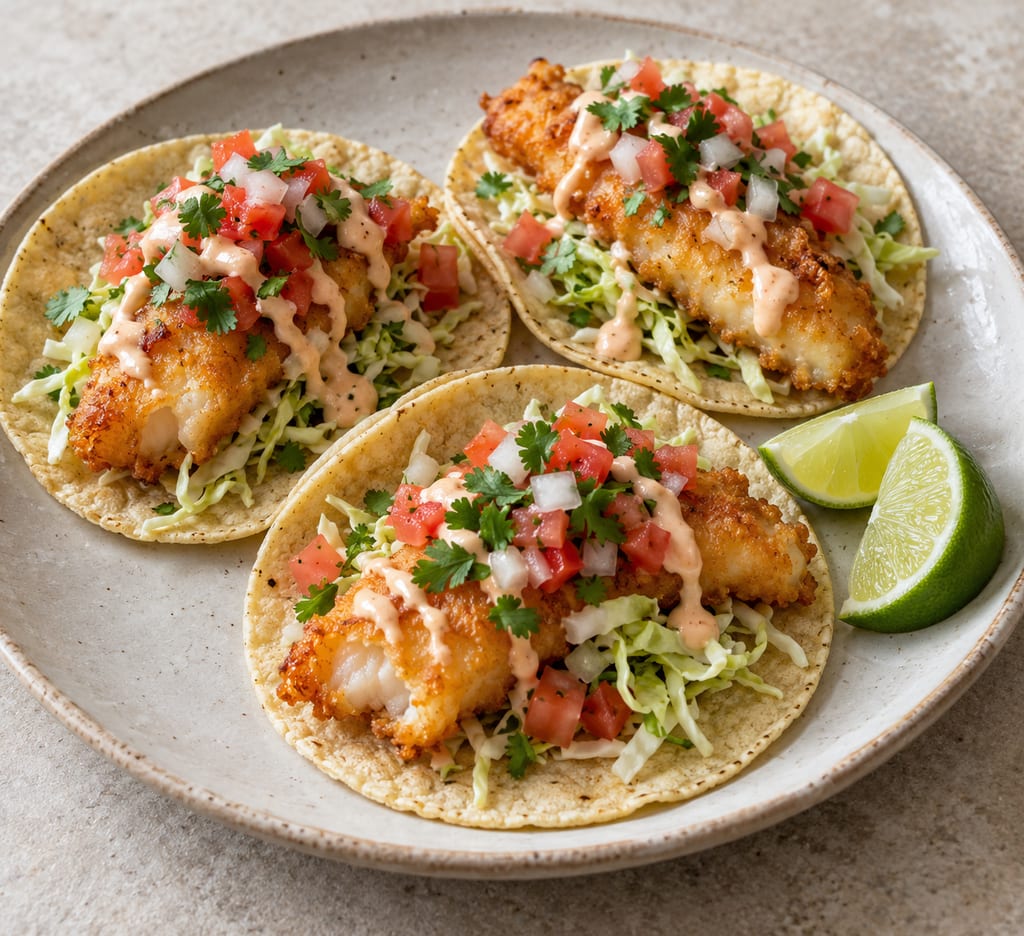
Crisp battered white fish in warm corn tortillas with shredded cabbage, lime and fresh salsa. This home version draws on the Ensenada style without claiming to be a definitive historic formula.
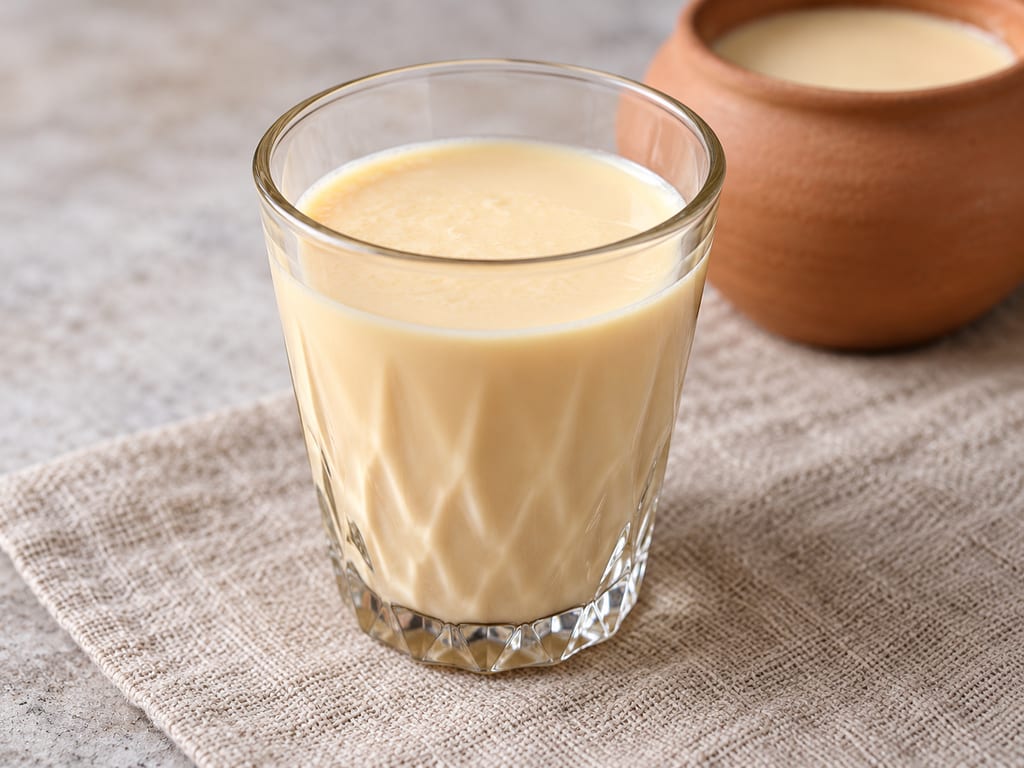
Baked milk is an Eastern European preparation of milk held at high heat for hours until it turns cream-coloured with a cooked, mildly sweet flavour, without any fermentation.
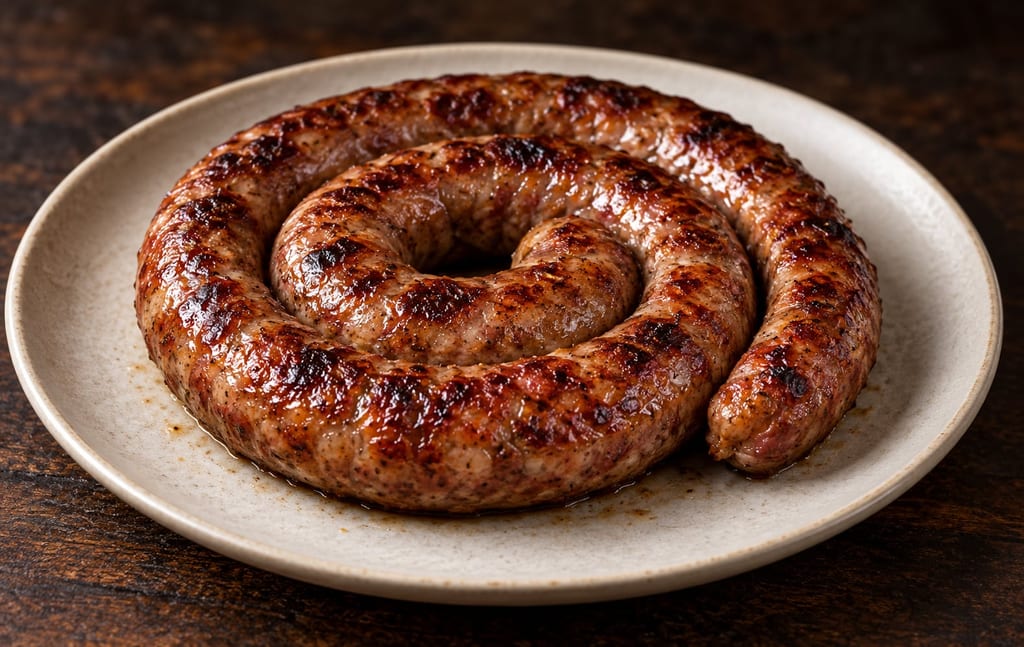
A coarse South African farmhouse sausage of beef with pork or mutton fat, defined by its coriander seasoning and cooked fresh over coals rather than preserved.
A flood-season pit store described for Omagua communities along the Amazon: manioc tubers were buried before inundation and recovered as waters receded. Its shape and lining are not recorded.
A temporary, in-place earthen oven used to cook camas with heat retained by fire-heated stones. The dimensions described here belong to one Kalispel-supervised reconstruction, not a universal form.
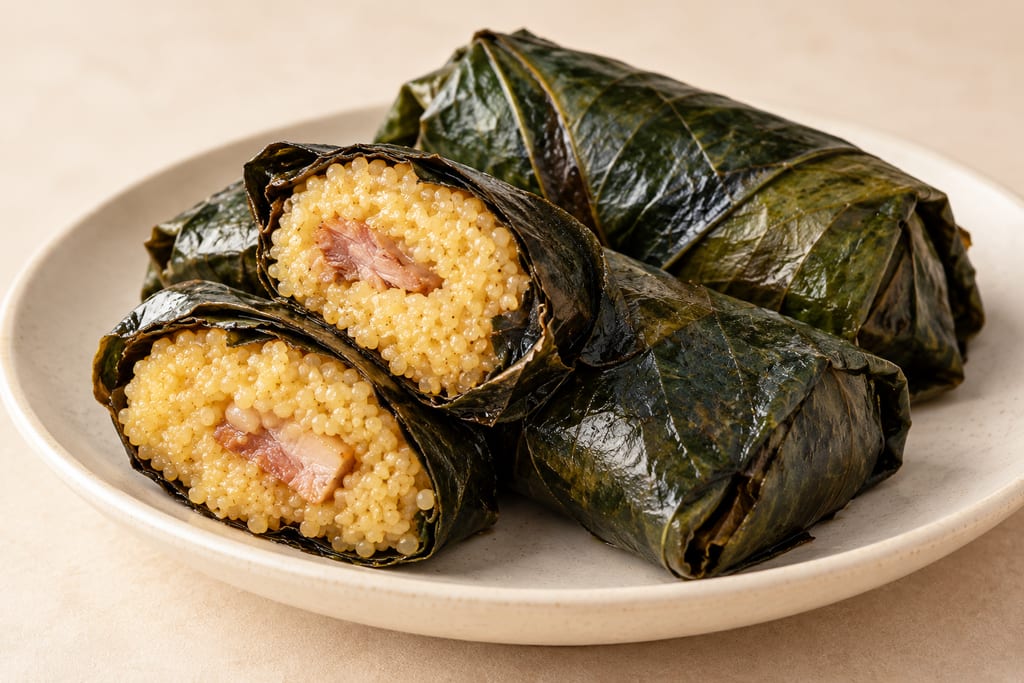
Cinavu is a Paiwan leaf-wrapped parcel built around millet or taro, meat and locally gathered leaves. It belongs to a food culture of harvest, hospitality and shared work, with village recipes differing in both filling and cooking time.
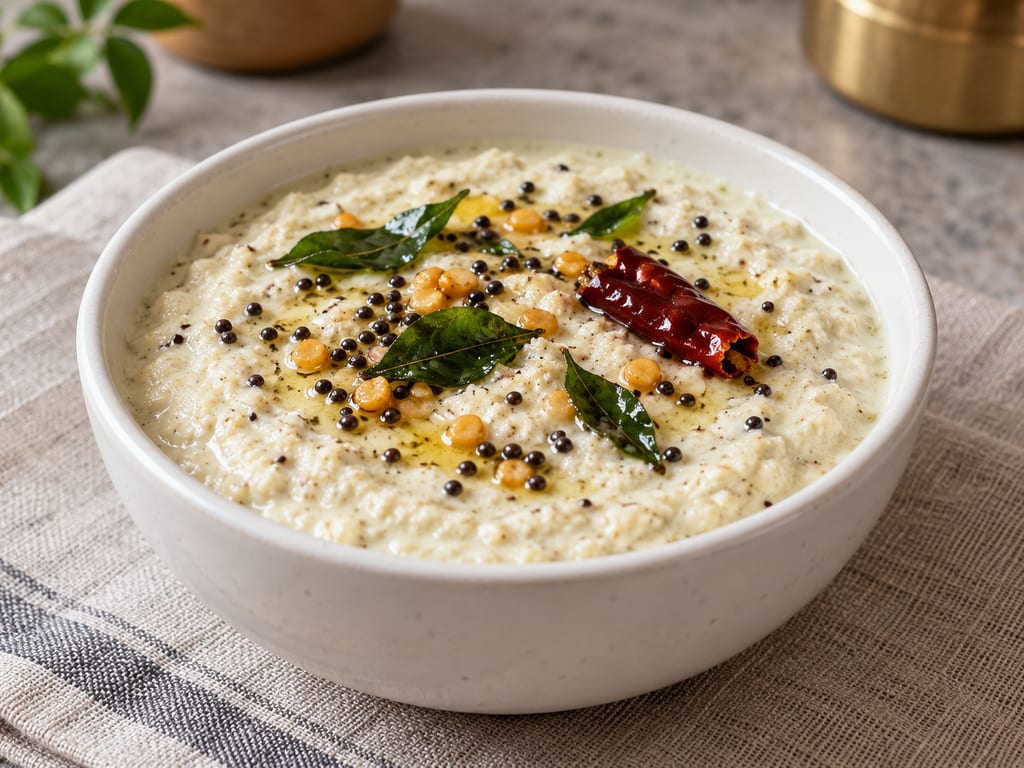
A coconut chutney whose ground base is finished with a separate oil tempering of mustard, urad dal, curry leaves and spices; the author pairs it with South Indian breakfast foods and snacks.
No community contributions have been published for this entry yet.
Sign in to contribute. Published comments and photos are free to read.
American Antiquity, 49(2), 334–349; Cambridge University PressRegional archaeology · Stored crops · State administration
The Distribution and Contents of Inca State Storehouses in the Xauxa Region of PeruThe Xauxa region of Peru's central highlands had more than 2,000 storehouses distributed among 52 architectural complexes.
Huanca producers supplied goods and played a role in managing the storage system.
Excavations in six storehouses recovered maize, quinoa, potatoes, lupin and fragments of Inca storage vessels.
Cited in: A storehouse in an imperial network; Evidence from Xauxa; Stored goods and continuity
Diálogo Andino, no. 49, 2016Site geography · Storehouse forms · Regional archaeology
Periplos europeos tempranos y fiestas andinas: un encuentro en Hatun XauxaThe article locates five storehouse groups on slopes west of Hatun Xauxa and reports a referenced inventory of 1,069 structures, 562 circular and 507 rectangular, generally arranged in rows following the terrain.
A footnote locates Hatun Xauxa about 1.5 km south of modern Jauja, at the present town of Sausa.
This site-specific account is not a count or layout for every qollqa complex.
Cited in: Evidence from Xauxa; Forms and storage conditions
Smithsonian National Museum of the American Indian, Engineering the Inka EmpireArchitecture · Materials · Form · Storage
How were food and supplies stored for the Inka empire?The museum describes one-room qollqas in round or rectangular forms, built of stone with thatched roofs and often grouped in rows.
Its overview lists potatoes, corn, quinoa, clothing, tools and weapons among typical stored goods and says design and location helped keep contents dry and cool.
Cited in: A storehouse in an imperial network; Forms and storage conditions
Smithsonian National Museum of the American Indian, Native Knowledge 360°State storage network · Redistribution · Airflow · Chuño
Preservation and StorageThe museum describes colcas as state facilities that collected and redistributed goods from across the empire.
Its exhibit explains that location and airflow helped preserve stored items and shows an example of dried potatoes stored in ceramic vessels.
Cited in: A storehouse in an imperial network; Stored goods and continuity
Cuadernos del Qhapaq Ñan, no. 8, 2022Site specific architecture · Crop storage
Sistemas de depósitos o colcasThe article reviews Inca storage complexes and summarizes evidence at Huánuco Pampa for circular and rectangular forms associated with different stored crops.
It cautions against treating one site's pattern as a universal rule.
Cited in: Forms and storage conditions
Wikimedia CommonsImage reference · Locality · Visible form · Rights
Ollantaytambo granaries Stevage.jpgThe file page identifies the subject as hillside storehouse ruins above Ollantaytambo, Peru, photographed by Stevage on 12 January 2009.
The image shows surviving stone masonry and small openings; no roof survives in the photograph.
The file is licensed CC BY-SA 3.0.
Cited in: Stored goods and continuity