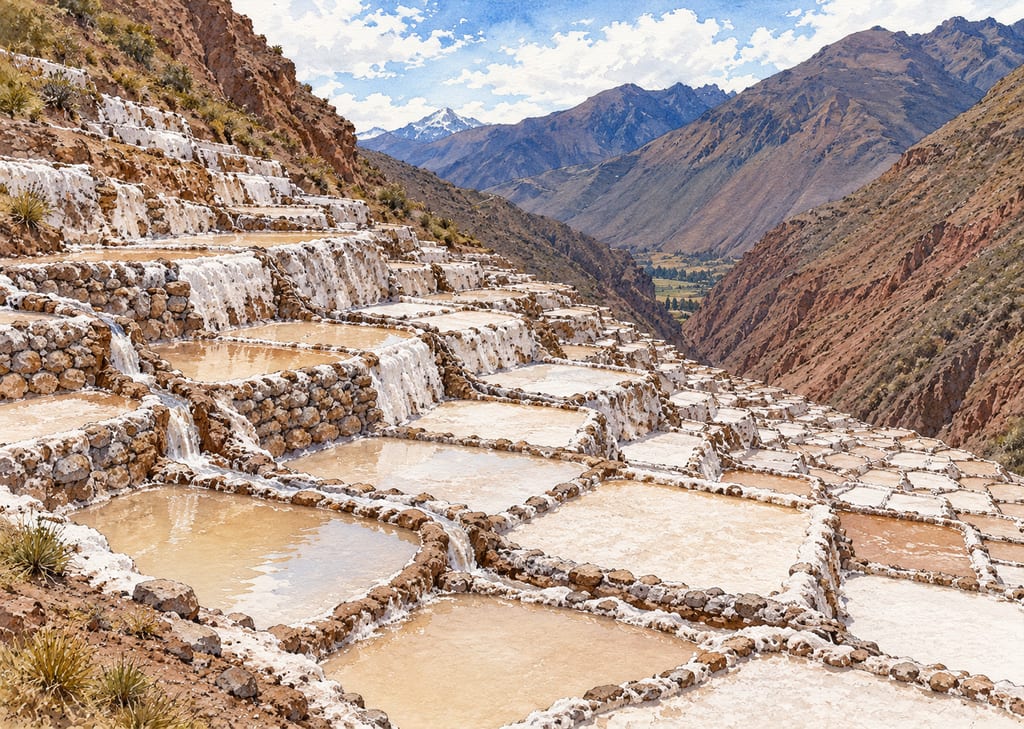
Salineras de Maras
The Salineras de Maras are an Andean spring-fed salina: shallow evaporation wells descend a steep slope, supplied by branching gravity channels from saline water.
 FermenteaWhere food goes to change
Place · salt-evaporation-pans-and-salina
Salinas de Rio Maior · Marinhas do Sal · Rio Maior salt pans
At Fonte da Bica, inland brine rises from an underground salt deposit and is solar-evaporated in traditional small crystallising pans at Rio Maior, Portugal.
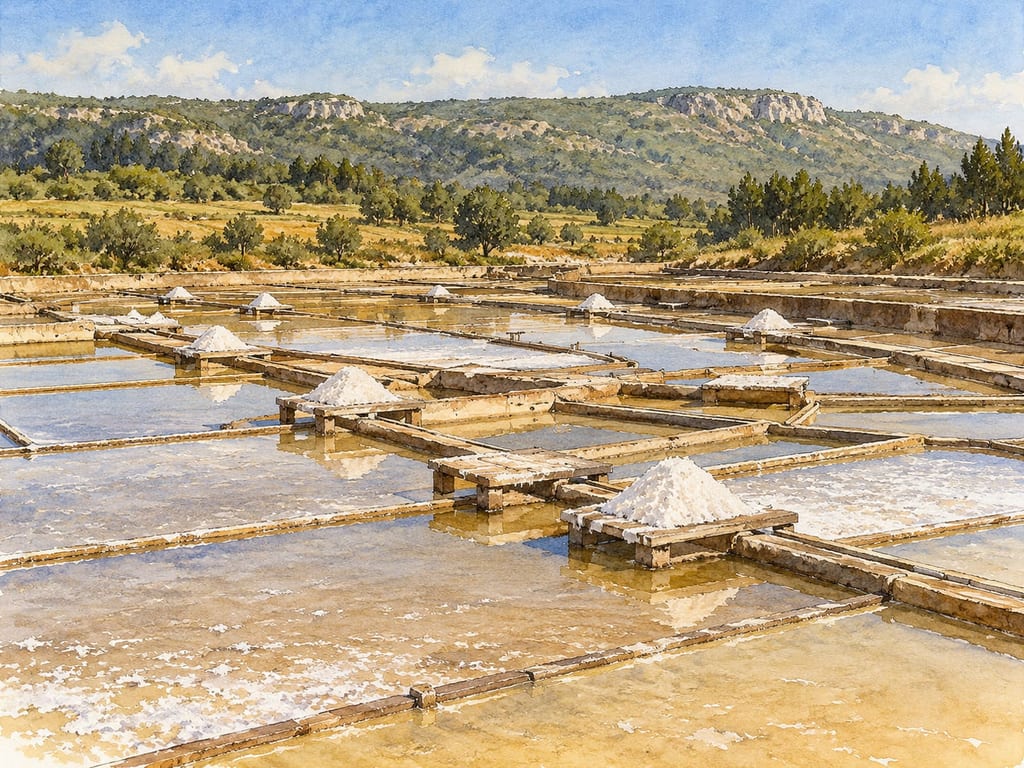
The official Rio Maior parish history identifies a 1177 document recording the sale of a fifth share of Rio Maior saltworks. The cooperative describes traditional production continuing at Marinhas do Sal. Neither source dates the present pans or walls to 1177.
This is a heritage description, not permission to enter or alter the working salt pans.
At Marinhas do Sal beside Fonte da Bica, around three kilometres from Rio Maior; no exact bed coordinates are asserted.
The Salineras de Maras are an Andean spring-fed salina: shallow evaporation wells descend a steep slope, supplied by branching gravity channels from saline water.
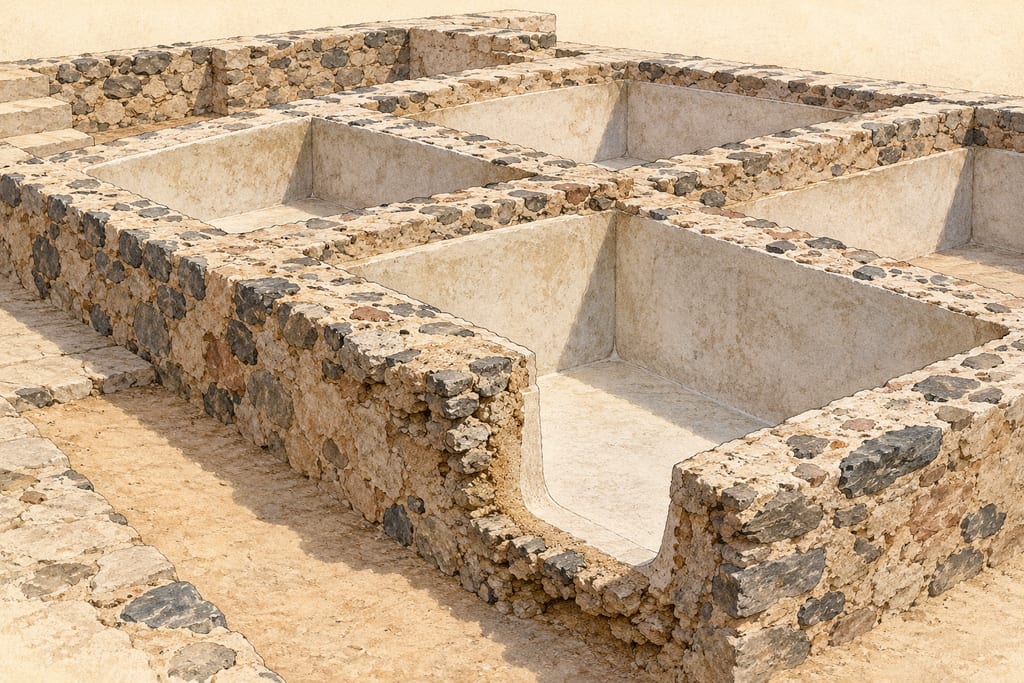
A cetaria is a fixed masonry basin in a Roman fish-processing installation. Examples at Baelo Claudia, Tróia and Monte Molião show varied forms, not one universal design.
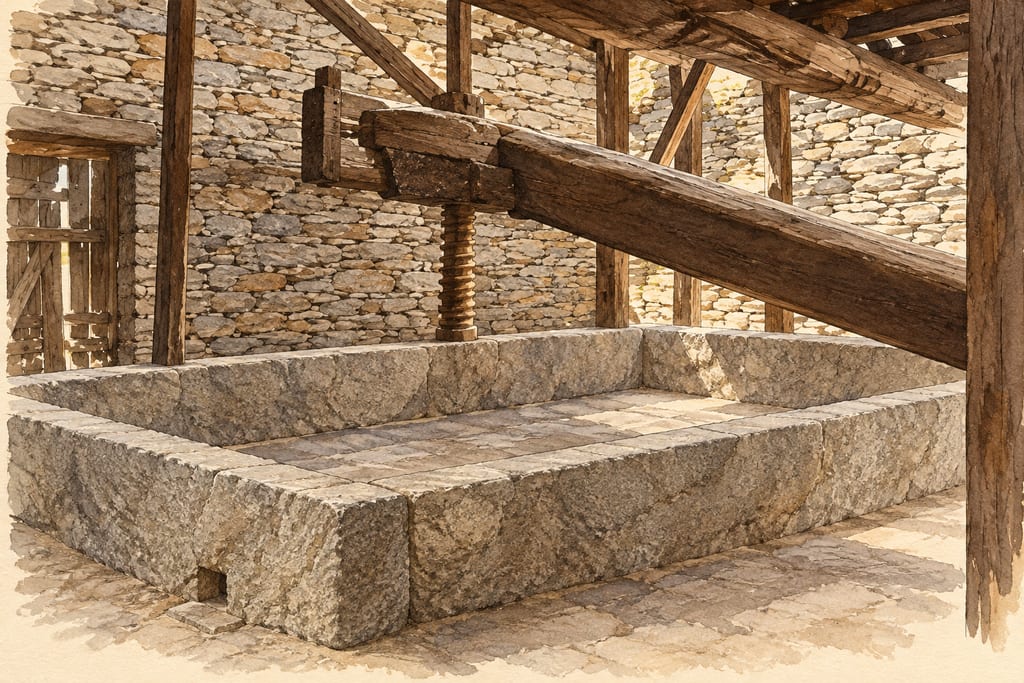
A lagar is a fixed stone tank used to tread grapes in some Douro wineries. Granite examples sit in winery rooms where gravity can carry must to vats below; the sizes, layouts and surviving uses vary by estate.

Protected Italian vinegar made only from cooked grape must, fermented and aged in a battery of wooden barrels for at least 12 years: sweet, sharp and syrupy.

Airag is Mongolia’s fermented mare’s-milk drink, traditionally churned with saved starter in a reusable cowhide khokhuur.

Appam, or hoppers, are South Indian and Sri Lankan rice pancakes made from a fermented coconut-and-rice batter and cooked in a curved pan to a crisp lacy rim and a soft, spongy centre.

Auricularia tremellosa is a wood ear fungus of the genus that supplies most dried wood ear sold in China; its own food record is thin, and the culinary practice described here comes from the closely related wood ear species.

Ayran is Turkey’s cold, savoury yogurt drink: plain yogurt is loosened with water and lightly salted, then whisked smooth or aerated into a soft cap of foam.
A thin stone griddle used over an open hearth. Norwegian archaeology documents the established tradition from the early Middle Ages; a Viking-period origin is only a cautious suggestion linked to Shetland.

Crushed or milled barley cooked in water until the starch softens and the mixture thickens, the plainest way a northern household turned stored grain into a meal, here with apple and hazelnut.

Black carrot is the anthocyanin-pigmented Eastern carrot (Daucus carota var. atrorubens), the purple root that preceded orange types and still colours kanji and şalgam.
No community contributions have been published for this entry yet.
Sign in to contribute. Published comments and photos are free to read.
Cooperativa do Sal Fonte SalinaMethod · Seasonality · Tools · Salt products
Informações TécnicasThe cooperative describes traditional crystallising pans, seasonal solar and wind evaporation, surface fleur de sal skimmed with a coador, bottom salt scraped with shovels, and drying on eiras.
The technical page describes groundwater salinas as source-brine salt and seasonal work when weather permits evaporation.
Cooperativa do Sal Fonte SalinaSite location · Brine source · History
Visitas GuiadasThe cooperative locates the salinas at Marinhas do Sal, about three kilometres from Rio Maior, and describes the underground saline source feeding a well.
The page identifies the earliest known document as 1177 and describes the pans as a living salt-making landscape.
Visit Portugal, Turismo de PortugalSite geography · History
Salinas da Fonte da BicaVisit Portugal locates the pans at Fonte da Bica, Marinhas do Sal, around three kilometres from Rio Maior, on the Serra dos Candeeiros slopes.
The page describes a long salt-extraction history with documentary references in 1177 and subterranean rock-salt brine.
Junta de Freguesia de Rio MaiorHistorical attestation
HistóriaThe parish history says the 1177 document records sale of a fifth share of Rio Maior saltworks by Pero d’Aragão and Sancha Soares to the Order of the Temple.