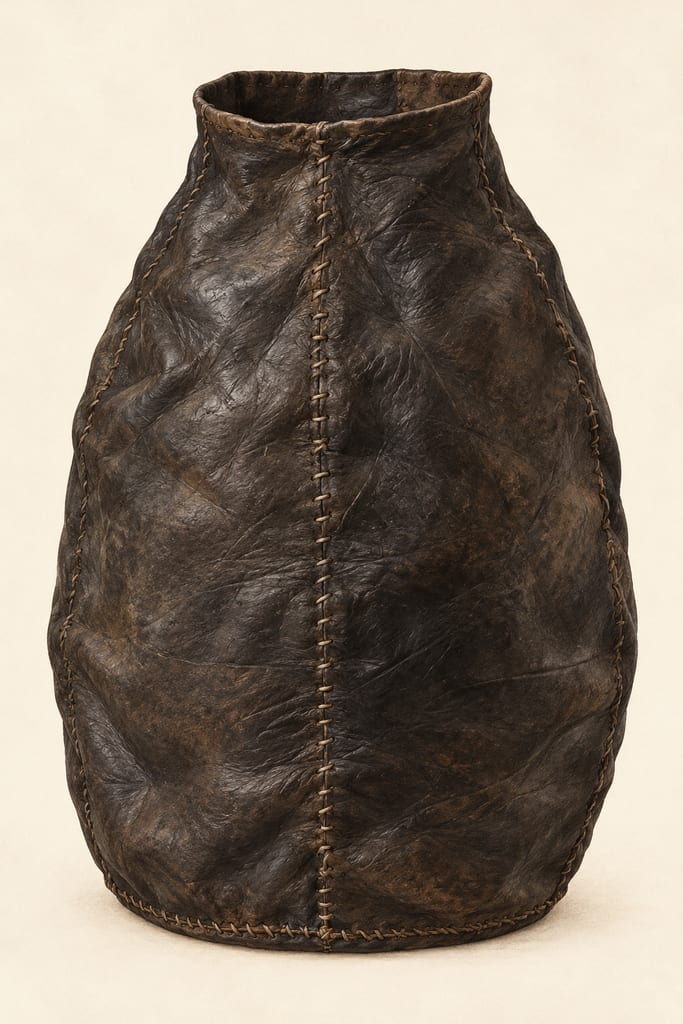
Altai arkhyt (chegen vessel)
Arkhyt is a traditional Altai sewn-hide vessel used to hold and periodically mix chegen. Sources describe a very large vessel, but do not establish one standard shape, measured capacity, or dimensions.
 FermenteaWhere food goes to change
Equipment · Bags, sacks and casings
хой хырны · Tuvan smoked sheep-stomach vessel · хырын · khyryn
A cleaned sheep stomach, inflated and briefly smoked, served as a light, one-use Tuvan container for carrying and storing chökpek. Sources describe its form and use in Tuva, but give no standard size or modern reuse guidance.
Smoked sheep stomach is a food-contact container documented in Tuvan accounts of seasonal food storage. The Tuvan vessel term хырын (khyryn) means stomach; хой хырны (khoy khyrny) names a sheep stomach. The organ itself forms the vessel; the cited accounts specify no frame or rigid walls.
A 2022 dissertation on Tuvan vessel vocabulary explains that the stomach was cleaned and washed in warm water, inflated like a balloon, tied at the end and hung near the yurt chimney. A brief period of smoking was said to remove its specific odor. The account gives no standard volume, dimensions or one fixed silhouette beyond the inflated pouch form.
The National Library of the Republic of Tuva describes чөкпек (chökpek) as the thick residue left while clarified butter is made. It says the residue was gathered and stored or carried in smoked sheep stomachs; it could be mixed with ground bird-cherry. The equipment's documented job is containment and storage, not a fermentation step.
Oorzhak quotes an account from southeastern Tuva in which sheep-stomach chökpek was eaten in winter with tea and milk skin. A more detailed version fills the warm residue with dried curd, pounded bird-cherry and roasted grain flour, then ties the vessel and hangs it in a dry, clean place. This store is described as lasting into deep winter. Recipes and mixtures varied, so these ingredients should not be read as a universal formula.
The sources distinguish the stomach pouch from other animal-part vessels. Tuvan vocabulary includes different names for vessels made from a stomach, a ruminant's abomasum, intestines and bladder. The Ministry of Culture's National Museum page also describes winter food containers made from several kinds of livestock entrails, generally for one use; it separately identifies a dressed bull-scrotum sack as a reusable object. That museum artifact is a different form and should not be mistaken for a sheep-stomach chökpek container.
Once used, a stomach vessel was cut open to take out the food; the dissertation describes the remaining stomach piece as discarded or given to a dog. Its treatment as a disposable food wrapper is part of the account, not evidence that every Tuvan animal-organ vessel was disposable.
The sources establish a regional storage practice but do not date its origin, set a capacity or describe a standard form. They do not provide a tested shelf-life specification, modern sanitation procedure or instructions for repeated use. Their descriptions are historical and ethnographic evidence, not a current preservation protocol.
Where the stomach vessel is discussed, the cited use is storing and carrying chökpek. A link to the Chökpek preparation record reflects that documented storage relationship; it does not imply that the stomach itself makes or ferments the food.
Tuvan sources describe chökpek stored in smoked sheep stomachs. The practice appears in a 1969 ethnographic reference quoted by Oorzhak and in a 2021 account by the National Library of the Republic of Tuva; these publication dates do not establish when the practice began.
The dissertation cites a specific account among southeastern Tuvans; the broader National Library article presents the practice in a Tuva context. Neither source establishes uniform use across every community.
Arkhyt is a traditional Altai sewn-hide vessel used to hold and periodically mix chegen. Sources describe a very large vessel, but do not establish one standard shape, measured capacity, or dimensions.
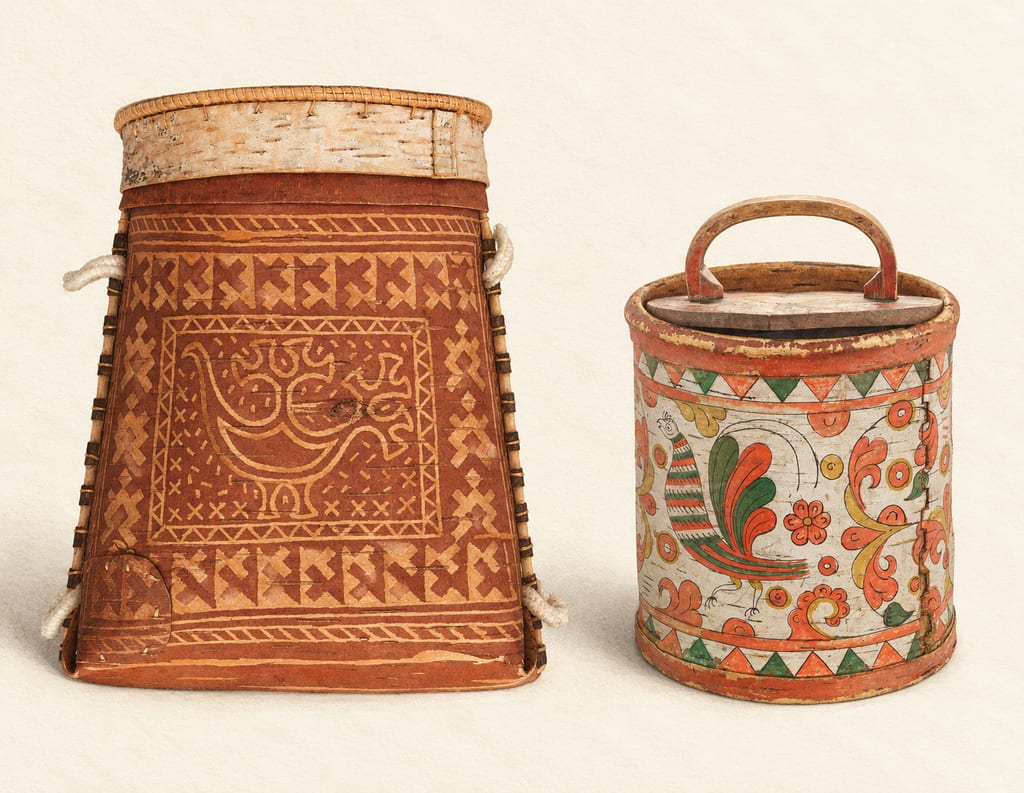
Ket sources describe frozen lingonberries in birch-bark containers; Shor sources describe salted wild garlic in birch-bark tuyes. Their exact forms are not documented.
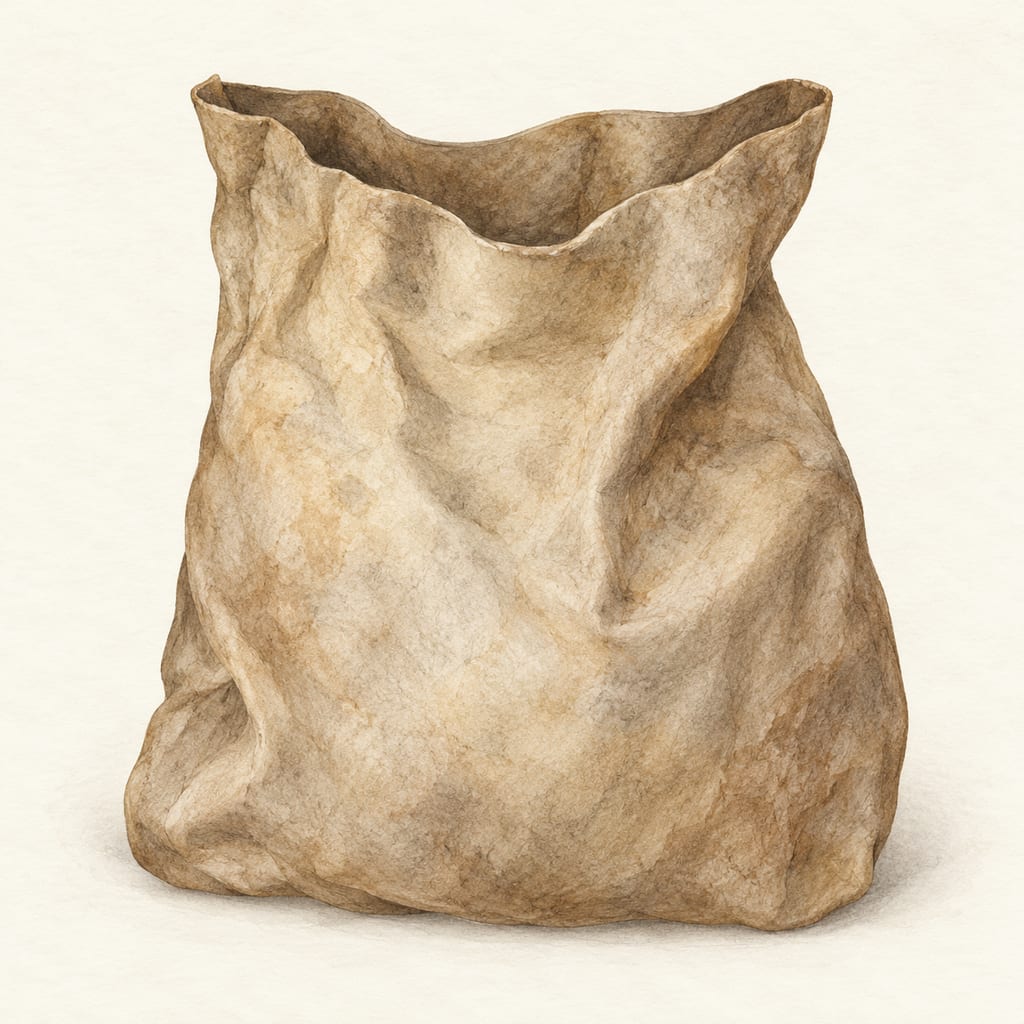
A Kalmyk interview describes dried sheep meat packed into calfskin bags for winter. The account identifies the material and storage use, but not the bag’s construction or dimensions.
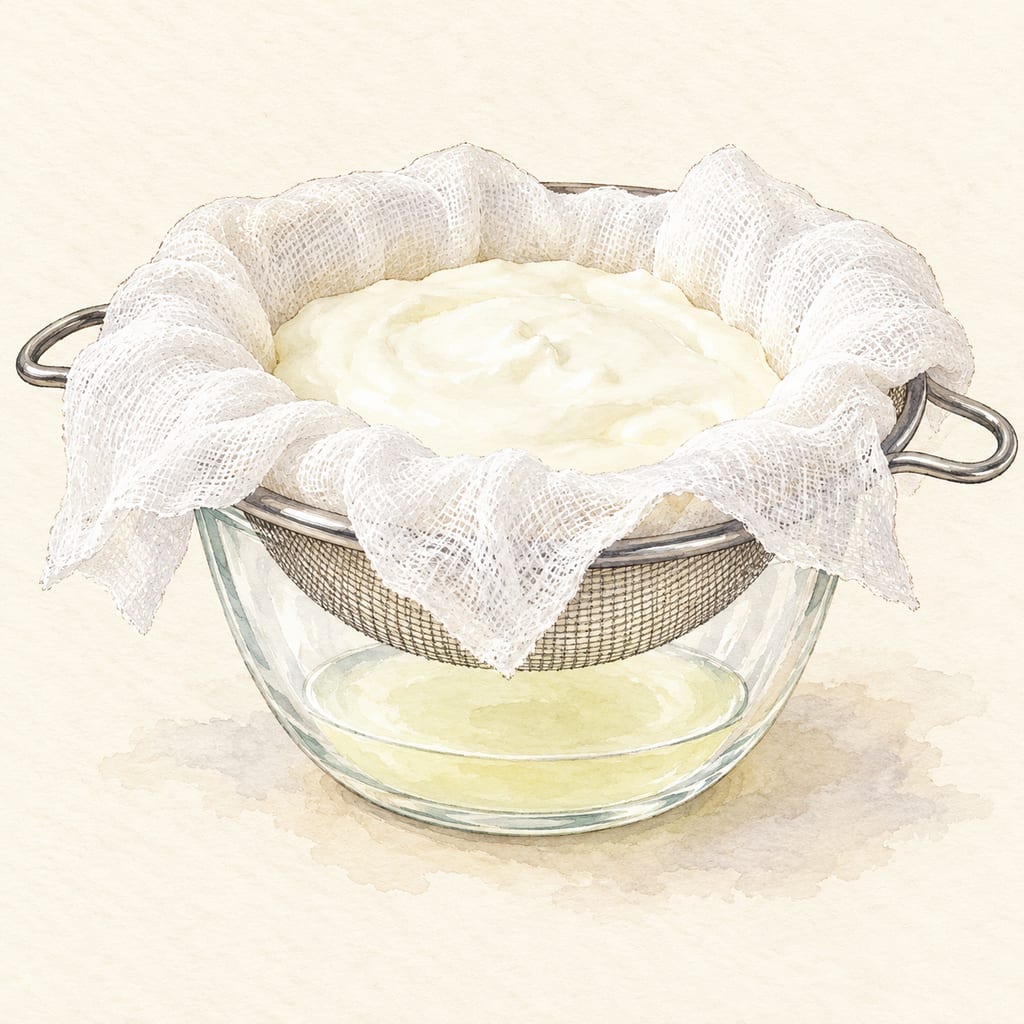
A kitchen strainer lined with cloth holds soft curd while whey passes through into a bowl. It is a modern, general-purpose setup; Sakha sources record strained suorat but do not specify this tool or its materials.
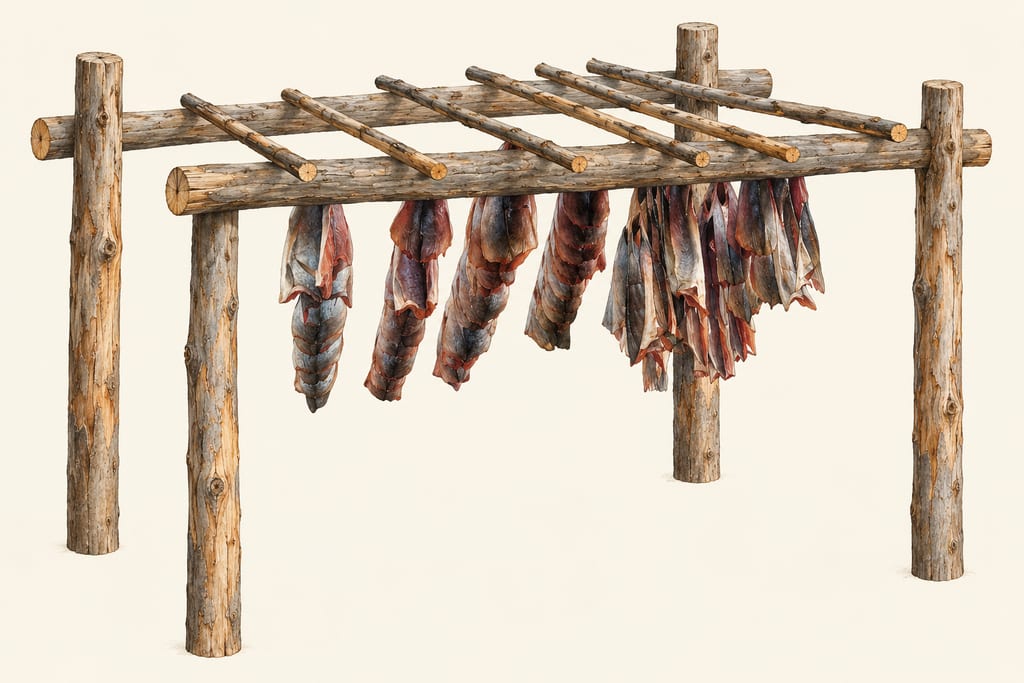
Daguma is an Udege open-air rack for hanging fish to dry, including yukola. The documented frame has four upright posts, two rails and cross-poles; its dimensions are not recorded.
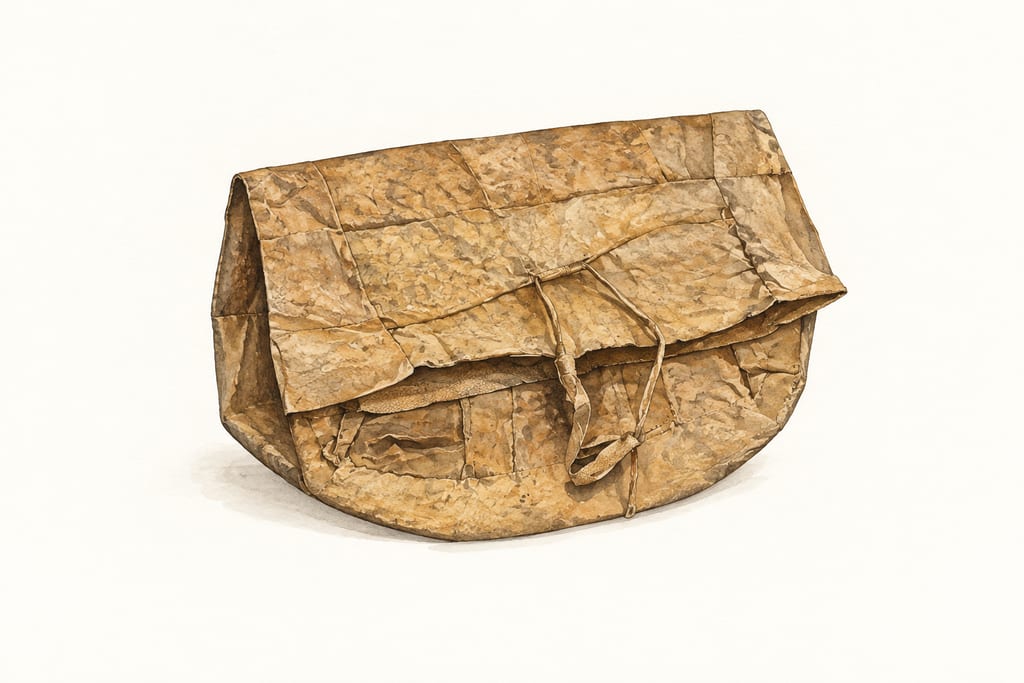
An Enets account records fish meal called porsa stored in burbot-skin bags. Museum records from the Yenisei and Ob regions document related fish-skin sacks, while keeping each community’s object and use distinct.
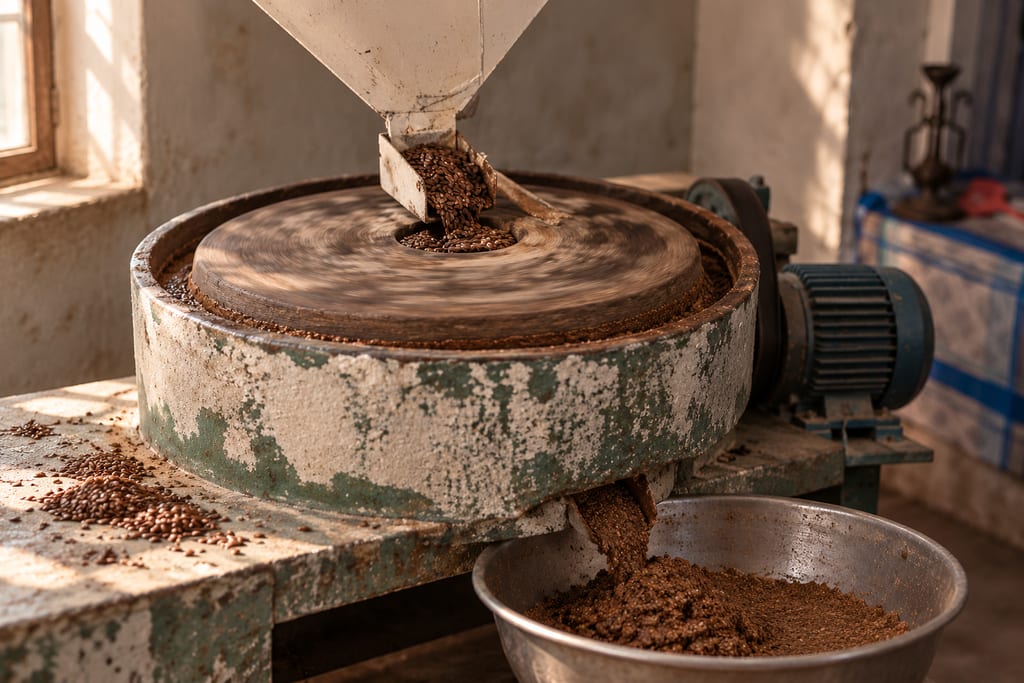
Mills grind seeds, nuts and grain into flour, meal or oil-rich paste. Stone, feed and power arrangements differ by tradition and model; the Dagestani example is one documented form, not a universal design.
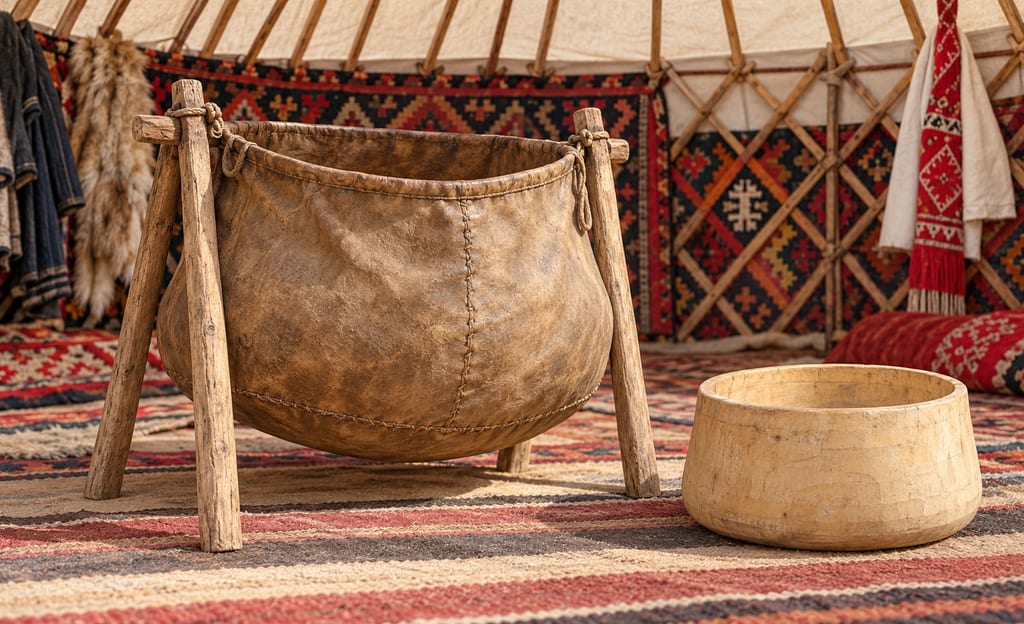
A Bashkir household account describes a large leather һаба for kumys, with one or two limewood tubs as alternatives; exact vessel dimensions and schedule are unspecified.
No community contributions have been published for this entry yet.
Sign in to contribute. Published comments and photos are free to read.
A. S. Pushkin National Library of the Republic of TuvaHistory · Form · Use · Geography
Молочная пища тувинцев (Milk food of Tuvans)Chökpek is the residue produced while making clarified butter; the account says it was stored and carried in smoked sheep stomachs.
The residue could be mixed with ground bird-cherry; the vessel's use is storage and transport, not a described fermentation process.
Cited in: A vessel for chökpek; What the records leave unknown
Tuvan State UniversityHistory · Form · Use · Geography
Лексика посуды и домашней утвари в тувинском языке и его диалектах (Lexicon of utensils and household goods in Tuvan and its dialects)The dissertation identifies khoy khyrny as a sheep stomach used as a vessel and cites an account among southeastern Tuvans.
It describes cleaning and washing the stomach, inflating and tying it, then briefly smoking it over the yurt chimney before filling it with chökpek.
One documented mixture includes dried curd, powdered bird-cherry and roasted grain flour; the filled stomach is tied and hung in a dry, clean place for winter storage.
The same source distinguishes stomach vessels from vessels made from intestines and bladders and notes single-use practice.
Cited in: A stomach shaped into a light storage vessel; A vessel for chökpek; One-use organ containers, not a generic skin bag; What the records leave unknown
Ministry of Culture of the Russian Federation; Museum PortalContext
Bull scrotum sackThe National Museum of the Republic of Tuva describes multiple animal-organ vessels for winter food storage and distinguishes these mostly one-use containers from a separate, dressed bull-scrotum sack intended for repeated use.
Cited in: One-use organ containers, not a generic skin bag