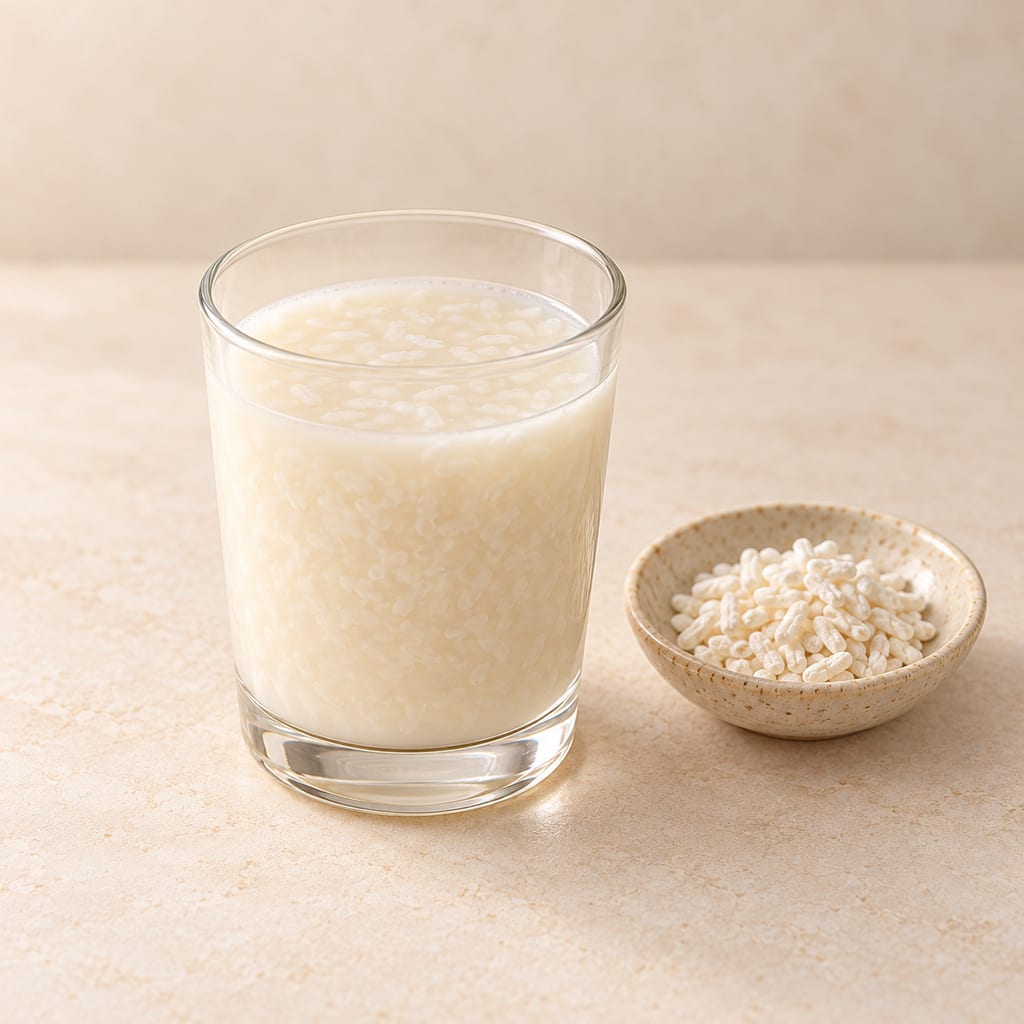
Rice-koji amazake
Cooked rice, rice koji and water are held warm for hours so koji enzymes turn the rice starch to sugars, giving a naturally sweet Japanese drink with no added sugar and no second fermentation.
 FermenteaWhere food goes to change
Built structures · Incubators and warm holds
circulator-jacketed pot · stirrable inner pot
A small open metal pot held on a rack or bridge inside a circulator bath, so food can be stirred, added to or cut while bath water heats it from outside.
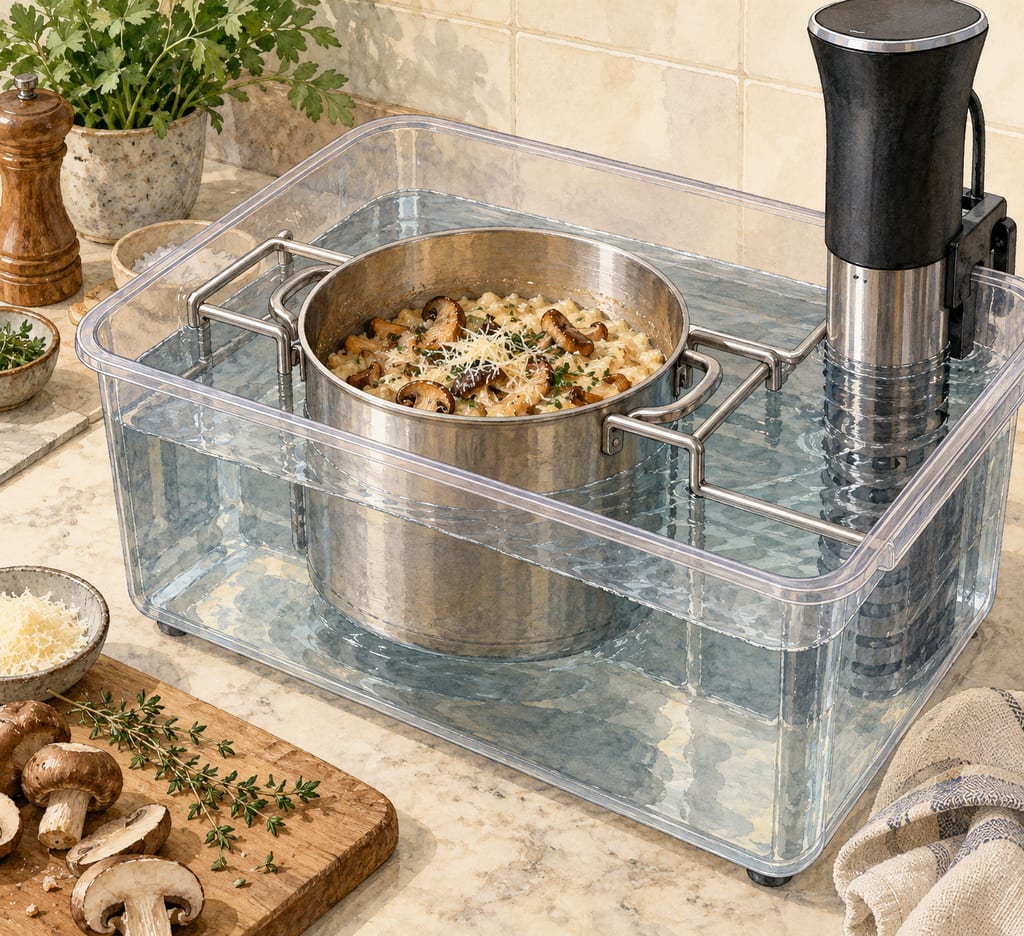
A small open pot is held on a rack or bridge inside a circulator bath, so the food can be stirred, added to or cut while the bath water heats it from outside. The food stays separate from the bath water, as the circulator makers require.
Heat enters through the pot wall in proportion to the gap between the bath and the food. The open surface loses heat by evaporation and to the air, so the food settles below the bath temperature, and waiting does not close the gap once temperatures are steady.
A bath limited to 194 °F (90 °C) cannot bring an open pot of milk to 90 °C. The documented yogurt recipes for circulators and steam ovens heat their milk on a stove for this reason and use the appliance only for the low hold. A thin metal pot responds faster than a thick ceramic bowl.
Amazake: an open pot held at 50 to 60 °C and stirred. This mirrors Marukome's open-lid rice-cooker hold. The circulator version is an adaptation.
Probe the food at the pot's centre and compare it with the circulator display. Record the steady gap.
This assembly is untested, and no temperature record of it was found. The food stays below the bath temperature, so high-temperature steps belong on a stove.
A floating or tipping pot changes depth and stability, so it needs a fixed support.
The circulator and the open-pot assembly are proposed. No source shows this exact assembly, and the manufacturer's material covers water-only use and separation of food from the water.
A build is made where it stands: moving it means building it again.
The manufacturer says the immersion circulator is for water only, and food must be kept in a container separated from the water.
Hazard sourceKeep the food in a container separated from the water, with the pot's rim above the bath water.
Control sourceThis is an untested, proposed assembly. Check the steady gap with a probe before using it for food.
Documented for international use, with no single place of origin assigned.
Cooked rice, rice koji and water are held warm for hours so koji enzymes turn the rice starch to sugars, giving a naturally sweet Japanese drink with no added sugar and no second fermentation.

Soft, spreadable Calabrian pork sausage made with a great deal of red chilli and fatty pork, stuffed into natural casings, sometimes smoked and matured while staying soft.

A way to add independent temperature logging to an existing food dehydrator without changing its built-in controls or protections. It is a monitoring method, not a rewiring plan.

Pleurotus cystidiosus is the abalone mushroom, a cultivated oyster-type fungus with dark brown caps that grows more slowly and is more demanding than other Pleurotus species.

A dark, balanced vinegar from Emilia-Romagna made by combining cooked or concentrated grape must with wine vinegar, then acetifying and refining it in wood under a protected specification.

A living dairy inoculum that starts controlled cream fermentation, developing acidity and aroma before sour cream or cultured butter is finished.

A small electric incubator holds jars at a selected temperature for yogurt and other documented warm food preparations. Controls, capacity and vessel arrangement vary by model.

Adygean salt is a seasoned table salt associated with Adygea and the wider North Caucasian culinary tradition. Salt is blended with garlic and a variable selection of herbs and spices; the exact mix depends on the named style and maker.

The African Caesar-group mushroom, Amanita masasiensis, is a wild ectomycorrhizal species of central and southern African woodlands, eaten locally. The genus contains deadly poisonous species, so identification needs care.
No community contributions have been published for this entry yet.
Sign in to contribute. Published comments and photos are free to read.
Breville USA (Breville|PolyScience)Method
the HydroPro™ Plus & the HydroPro™ Instruction Book - CSV750/CSV700Cited in: Overview; Measuring; Limits
BC Centre for Disease ControlMethod
Guidelines for restaurant sous vide cooking safety in British ColumbiaCited in: Limits
Anova CulinaryMethod
Ultra-Simple Sous Vide Yogurt from #anovafoodnerd Justin BoreckyCited in: How it works