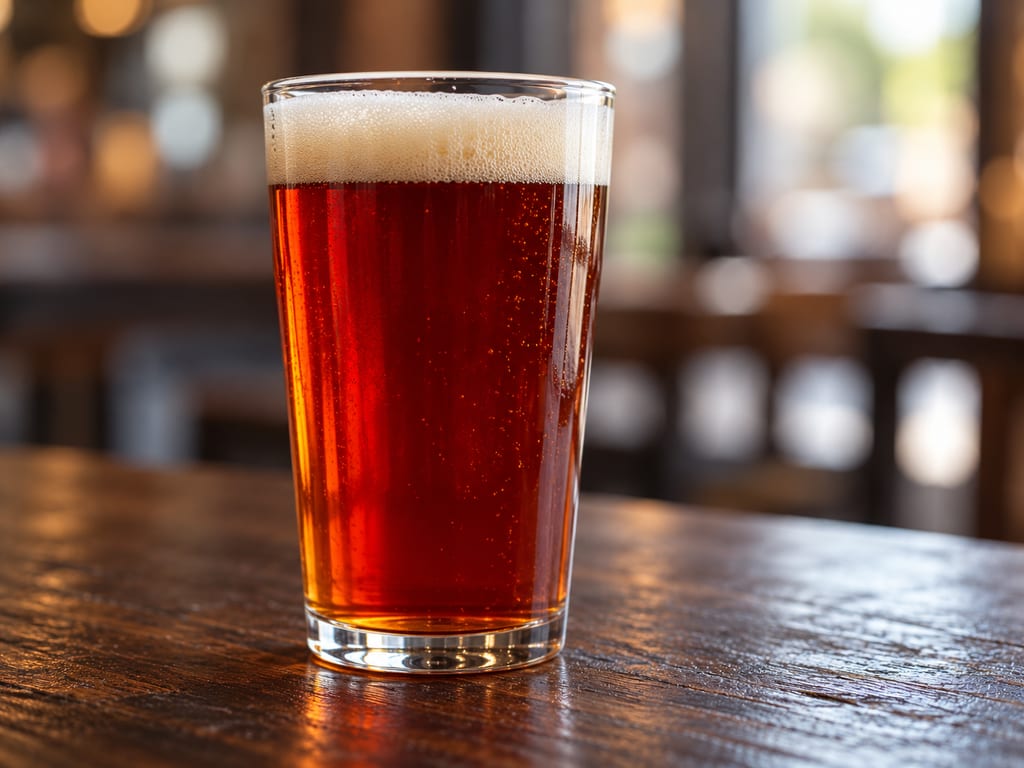
All-grain American red ale
A deep amber-red American ale brewed from pale, Munich, CaraVienne and chocolate malts, bittered with Columbus hops and finished with Amarillo.
 FermenteaWhere food goes to change
Equipment · Kettles, coppers and boilers
A three-vessel all-grain setup separates heated water, mashing and lautering, and wort boiling into an HLT, mash/lauter tun, and boil kettle. Other methods may combine vessels.
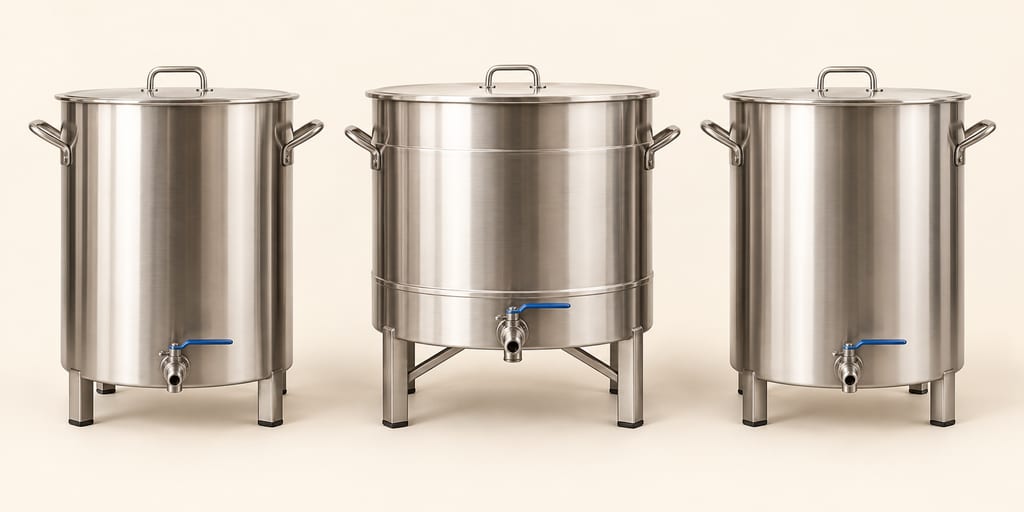
In a three-vessel all-grain setup, hot brewing water, the grain mash and the boil occupy separate vessels. The hot-liquor tank (HLT) heats water for mashing and sparging. The mash/lauter tun (MLT) holds crushed malt and water while the mash rests, then separates liquid wort from spent grain. The boil kettle receives the collected wort for boiling. In some homebrew instructions, the latter is called a boil pot.
This division describes a configuration, not a universal requirement for all-grain beer. The American Homebrewers Association (AHA) presents a batch-sparge method with a mash tun, boil pot and sparge pot. Its equipment guide says the sparge pot, also called an HLT, can be used but is not necessary, and points to brew-in-a-bag as an all-grain process that needs less equipment. Readers should distinguish this three-vessel batch-sparge arrangement from methods that combine or omit vessels.
Brewers use “liquor” to mean brewing water. Here the HLT supplies heated water for the mash and, later, the sparge. It may be a dedicated vessel or a pot assigned that role. The AHA batch-sparge example first heats strike water in the boil pot, then heats sparge water in a second pot while the mash rests. The roles can therefore be arranged differently from a permanently plumbed commercial system; the process plan and actual vessel names matter.
A hot-liquor vessel may have a tap or transfer arrangement, but no single fitting, capacity or material is common to every example. Blichmann publishes model-specific size recommendations for its own kettles and batch sizes. These are useful when choosing that product range, not a universal design rule.
Mashing brings crushed malt into contact with heated water so malt enzymes can convert grain starch into soluble sugars. The tun holds the mash during its rest and, in this setup, supports lautering: separating sweet wort from the grain bed. AHA documents an insulated cooler used as a mash tun: strike water and grain are combined, the mash rests, some wort is recirculated to settle the grain bed (vorlauf), and the wort is drained into the boil pot. Sparge water is then added and the wort drains again.
A tun needs a way to hold grain while liquid leaves. The AHA example uses a spigot and describes the separation step; its equipment guide explains the tun's dual role. False bottoms, screens, manifolds and coolers are design choices that should be tied to the particular equipment source. Insulation helps the documented cooler setup retain mash temperature, but the source supplies no universal temperature-loss figure.
The boil kettle collects wort from lautering and provides the vessel in which the recipe's boil takes place. In the AHA batch-sparge example, wort drains into the boil pot, sparge runoff is collected there, and the wort is brought to a rolling boil before hops are added. Required kettle capacity depends on the batch and boil volumes, evaporation and chosen process.
Blichmann's product information gives suggested sizes for its BoilerMaker products and describes sizing for pre-boil volume and headspace. Those are maker recommendations for that product family. They do not establish one size for every brewer, and the AHA tutorial's volume example should not be combined with a separate manufacturer's chart as if both formed one tested recipe.
A batch-sparge brew day heats strike water, combines it with grain in the tun, and lets the mash rest. Sparge water can be heated separately during that rest. At the end, vorlauf settles the grain bed; wort drains into the kettle, sparge water is added, and runoff is collected. The combined wort is then boiled. These are the stages in the AHA tutorial, not a prescription for every beer or system.
More complex three-vessel setups add pumps, a heat-exchange coil, recirculation lines, flow controls or a whirlpool return. Blichmann's Electric Pilot System V5 manual illustrates one three-vessel HERMS arrangement, labels the HLT, mash tun and boil kettle, and gives equipment-specific hose routes and valve settings. Those fittings belong to that designed system. A simpler home setup may rely on gravity or different transfers; do not transfer the manual's routing to unrelated equipment.
Three separate vessels keep hot water, grain and boiling wort in separate containers during successive stages, but occupy more space and require planned transfers. AHA calls batch sparging an advanced process with extra steps and equipment and suggests brew-in-a-bag for an all-grain approach that needs less space and equipment. Two-vessel and all-in-one arrangements combine jobs differently and are separate equipment subjects.
To compare systems, identify which vessel heats strike and sparge water, which holds and drains the mash, and which boils collected wort. Then check the actual maker's capacity, heating, fittings and care guidance against the intended batch and available heat source. The cited sources establish no universal performance figures, material requirements or best arrangement.
The cited homebrew and manufacturer sources document contemporary equipment configurations; they do not establish when three-vessel brewing originated.
An HLT/sparge pot is not necessary for every all-grain method; AHA describes brew-in-a-bag as needing less equipment.
Source →Blichmann's three-kettle size recommendations apply to its product range and example batch sizes, not universally.
Source →Documented for international use, with no single place of origin assigned.
A deep amber-red American ale brewed from pale, Munich, CaraVienne and chocolate malts, bittered with Columbus hops and finished with Amarillo.

Soft, spreadable Calabrian pork sausage made with a great deal of red chilli and fatty pork, stuffed into natural casings, sometimes smoked and matured while staying soft.

A way to add independent temperature logging to an existing food dehydrator without changing its built-in controls or protections. It is a monitoring method, not a rewiring plan.

Pleurotus cystidiosus is the abalone mushroom, a cultivated oyster-type fungus with dark brown caps that grows more slowly and is more demanding than other Pleurotus species.

A dark, balanced vinegar from Emilia-Romagna made by combining cooked or concentrated grape must with wine vinegar, then acetifying and refining it in wood under a protected specification.

A living dairy inoculum that starts controlled cream fermentation, developing acidity and aroma before sour cream or cultured butter is finished.

A small electric incubator holds jars at a selected temperature for yogurt and other documented warm food preparations. Controls, capacity and vessel arrangement vary by model.

Adygean salt is a seasoned table salt associated with Adygea and the wider North Caucasian culinary tradition. Salt is blended with garlic and a variable selection of herbs and spices; the exact mix depends on the named style and maker.

The African Caesar-group mushroom, Amanita masasiensis, is a wild ectomycorrhizal species of central and southern African woodlands, eaten locally. The genus contains deadly poisonous species, so identification needs care.
No community contributions have been published for this entry yet.
Sign in to contribute. Published comments and photos are free to read.
American Homebrewers AssociationMethod · Equipment
All-Grain (Batch Sparge) HomebrewingAHA's batch-sparge equipment list and sequence: mash, vorlauf, lautering, sparging and boil.
AHA's example uses a mash-tun cooler and separate boil and sparge pots; it instructs cleaning with unscented cleanser and notes that full boils may need stronger heating.
Cited in: Three jobs, three vessels; The hot-liquor tank; The mash and lauter tun; The boil kettle; Wort flow and added equipment; Choosing a configuration
American Homebrewers AssociationEquipment
Homebrew EquipmentMash tun holds heated water and grain during the mash and separates wort from grain.
Sparge pot (sometimes HLT) prepares sparge water but is not necessary for every all-grain method; BIAB uses less equipment.
Cited in: Three jobs, three vessels; The mash and lauter tun; Choosing a configuration
Blichmann EngineeringEquipment · Manufacturer specifications
BoilerMaker KettlesProduct- and batch-specific recommended three-kettle sizes; guidance to size a kettle for pre-boil volume and headspace.
Cited in: The hot-liquor tank; The boil kettle; Choosing a configuration
Blichmann Engineering; PDF hosted by MoreBeerEquipment · Manufacturer manual
Pilot System V5: 3 Vessel HERMS SystemManufacturer's electric pilot system image and schematic label HLT, Mash Tun and Boil Kettle; instructions describe system-specific vessel transfers, pumps and valves.
Cited in: Wort flow and added equipment; Choosing a configuration