A serving vessel for fermented millet
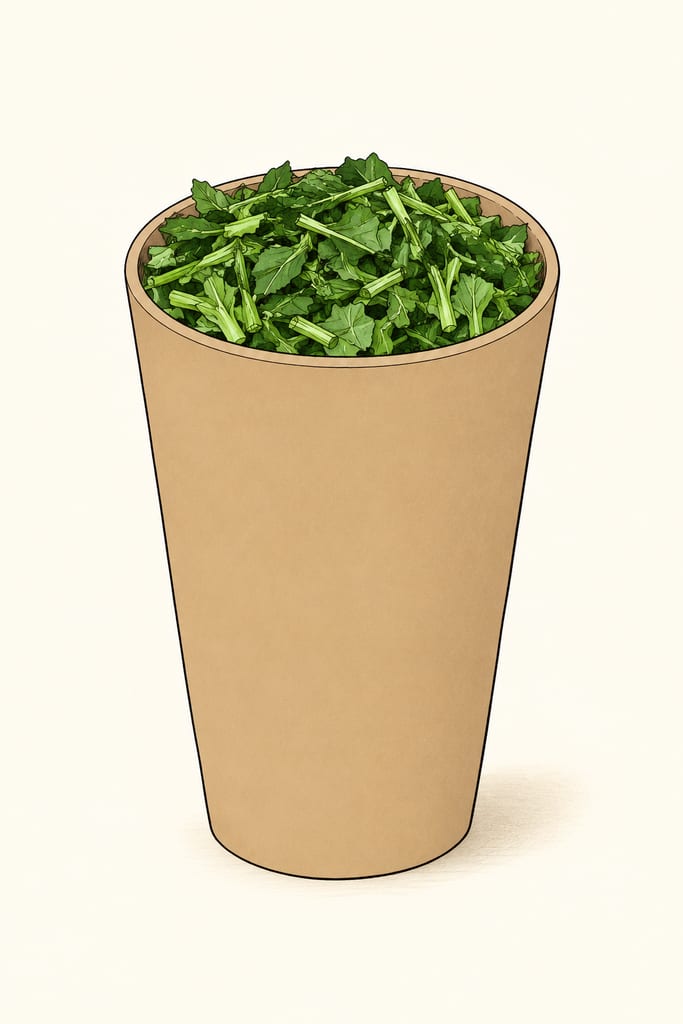
Tongba is both the name used for a Himalayan fermented millet drink and, in some local naming, its serving vessel. In Sikkim, an Indian Council of Agricultural Research inventory records the bamboo cup as tongba in Nepali and bhib in Bhutia; the same entry describes bamboo or wooden cups offered to guests. The vessel is part of the drink's mode of serving, not evidence that fermentation itself takes place inside that cup.
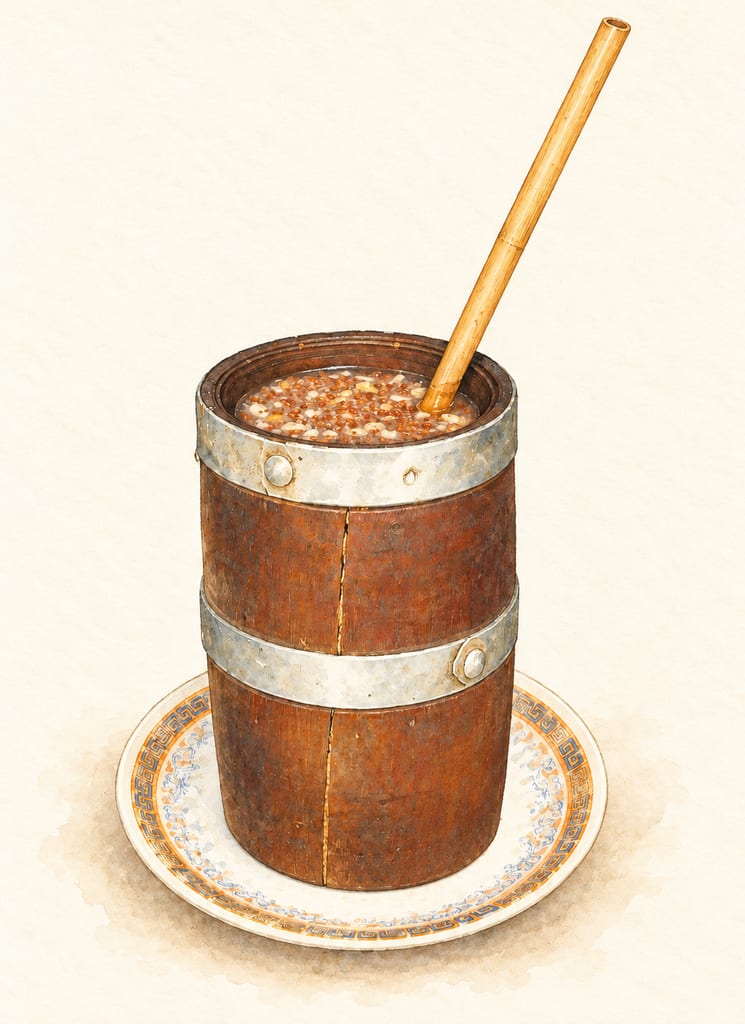
The object is not one standardized design. Scholarly accounts describe a bamboo-made vessel, the ICAR record includes wooden alternatives, and a 2007 photograph from Kalpokhri shows a wooden staved cylinder held by metal hoops. These sources support a family of local serving forms, not a universal material, ornament or manufacturing method.
Sources for this section
How the vessel serves the drink
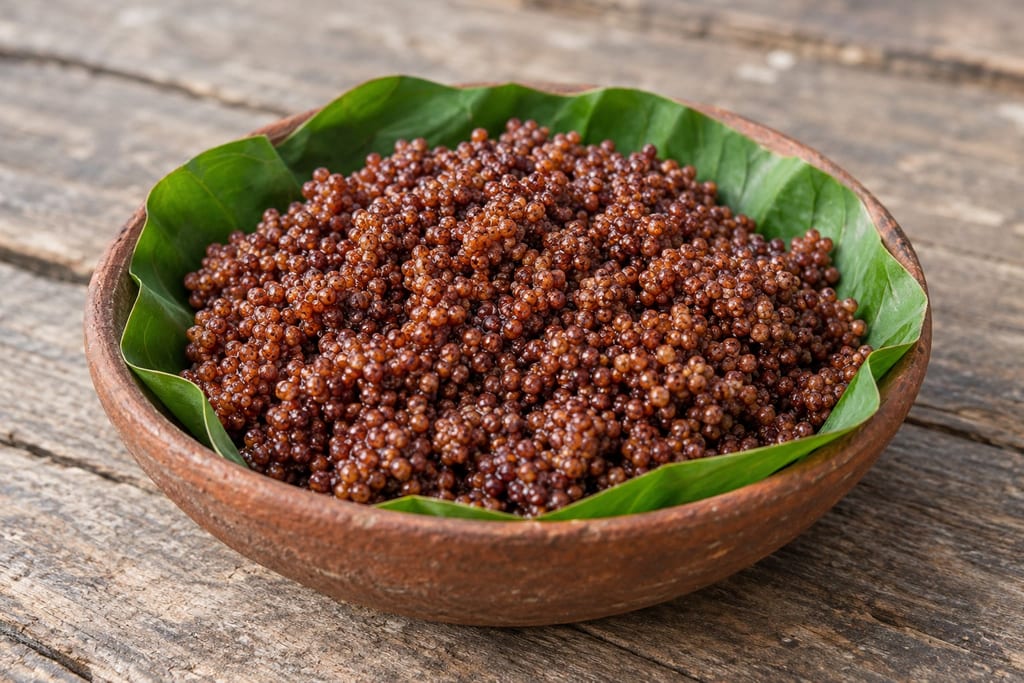
A documented method places fermented finger-millet grains in the vessel and adds water for drinking. Thapa and Tamang's 2004 study describes 200–500 grams of fermented seeds in a toongbaa, with lukewarm water brought to the rim. After 10–15 minutes, the milky extract is sipped through a narrow bamboo straw called pipsing. A small opening near the straw's lower end helps keep coarse millet grits from entering it. Once the extract is drawn off, more water may be added two or three times.
Other accounts describe the drink as served with hot water, so the temperature is not safely reduced to one universal instruction. The vessel holds grain and water together while the straw provides a route for sipping the liquid; this use differs from a jar used to age or initially ferment a batch. A 2024 field study distinguishes tongba's aged fermented culture before the serving water is added, documenting a sample from Kalipokhri in Darjeeling district.
Sources for this section
Regional names and hospitality
Tongba belongs to a broader Eastern Himalayan landscape of millet drinks and community-specific names. The 2004 study calls the serving container toongbaa and the straw pipsing, while the ICAR inventory records local vessel and pipe names in Nepali and Bhutia. A 2022 review describes bamboo-made toongbaa and the practice of sipping the extract of fermented millet drinks among Nepali, Bhutia, Lepcha, Tibetan, Ladakhi, Mongpa and Dukpa communities. These are regionally grounded accounts; they should not be treated as proof that every community uses an identical vessel.
For readers following the beverage itself, the published kodo ko jaanr (finger millet beer) page describes the fermented grain served in tongba. This equipment record is focused on the serving object and its extraction role, not on reproducing the drink recipe.
Sources for this section
What the sources do not standardize
Published sources identify bamboo and wood but do not provide a standard vessel capacity, diameter, height, or construction specification. The 200–500-gram amount in the 2004 paper describes the fermented grain portion used in its serving account; it is not a universal capacity rating. The linked photograph is one example of a staved wooden form with metal hoops, not a template to impose on every region.
The records consulted describe serving rather than cleaning, seasoning, or long-term storage. They also do not establish when the vessel first appeared or a general supply route. Those details remain open rather than being filled with assumptions. The reviewed history literature explicitly notes that origins of Himalayan fermented beverages remain unknown.
Sources for this section
History
A 2004 study records the toongbaa serving practice in the Eastern Himalayas, and an Indian Council of Agricultural Research inventory records a bamboo cup called tongba in Nepali and bhib in Bhutia. Later scholarship documents the vessel and drink in regional use but does not date the vessel's origin.
Equipment details
CapacityNo standard vessel capacity is established. One 2004 study describes serving 200–500 g of fermented millet in a toongbaa, but that serving quantity is not a universal vessel specification.
SizeNo standard height, diameter or shape measurements are reported for this family of serving vessels.
How you get oneNot established The sources document bamboo and wooden vessels in use but do not establish a general maker, retail route or construction method.
CareThe cited studies and institutional record describe serving and extraction, not a shared cleaning, seasoning, storage or reuse routine. No care schedule can be stated from these sources.
Made of
- Bamboo — vessel
The 2004 ICAR inventory records the bamboo cup called tongba in Nepali and bhib in Bhutia; later review literature also describes bamboo-made toongbaa. - Wood — vessel
The ICAR inventory records bamboo or wooden cups for serving Sikkim's fermented millet drink; the linked Jweatherley photograph documents a wooden staved example with metal bands. - Metal — hoops on one documented wooden form
Two broad metal hoops are visible on the linked 2007 Wikimedia Commons photograph. This is one documented example, not a defining feature of every tongba vessel. - Bamboo — drinking straw
The 2004 study describes a narrow bamboo pipsing straw with a side opening near its lower end to reduce passage of millet grits.
Places
Eastern Himalaya
Traditional use · Region evidenceSources describe toongbaa vessels used with fermented millet drinks in the Eastern Himalayas, spanning multiple jurisdictions; this is a use region, not an origin or manufacturing claim.
Darjeeling hills and Sikkim
Documented use · Region evidenceThe study sampled kodo ko jaanr in Darjeeling and Sikkim, and the ICAR inventory records vessel forms used for Sikkim kodo beer; neither establishes the vessel's origin.