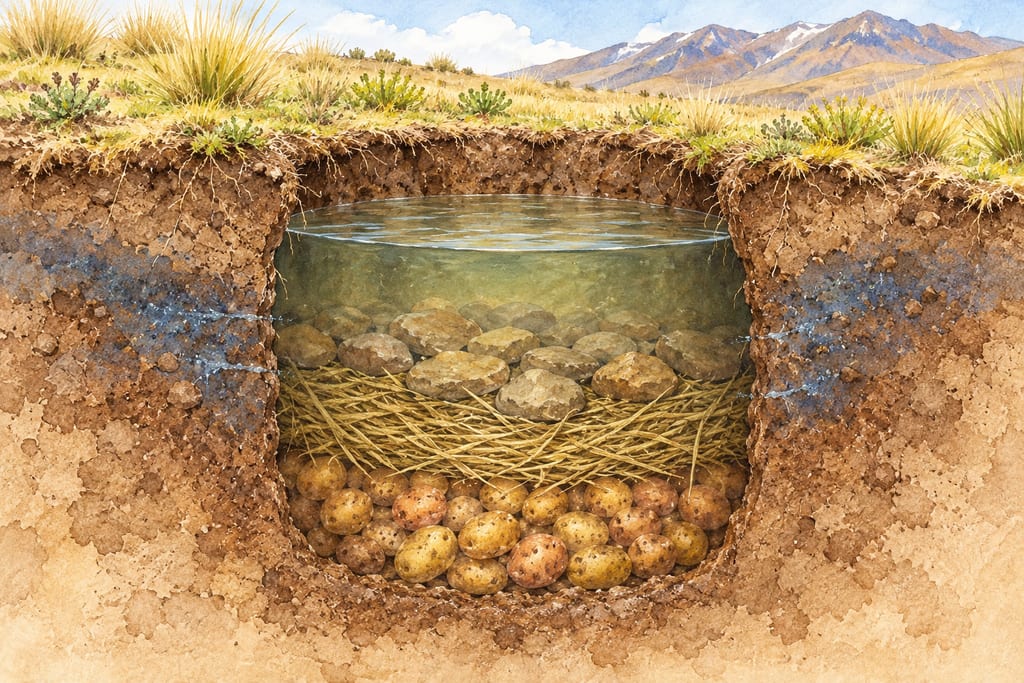
Tocosh spring-fed pit
In the Huánuco highlands, tocosh potatoes are placed in deep earthen wells beside running water. Dry straw and stones cover the potatoes as seepage fills the pit, submerging its contents during a long fermentation.
626 sourced equipment pages: vessels, tools, appliances and built structures.

In the Huánuco highlands, tocosh potatoes are placed in deep earthen wells beside running water. Dry straw and stones cover the potatoes as seepage fills the pit, submerging its contents during a long fermentation.

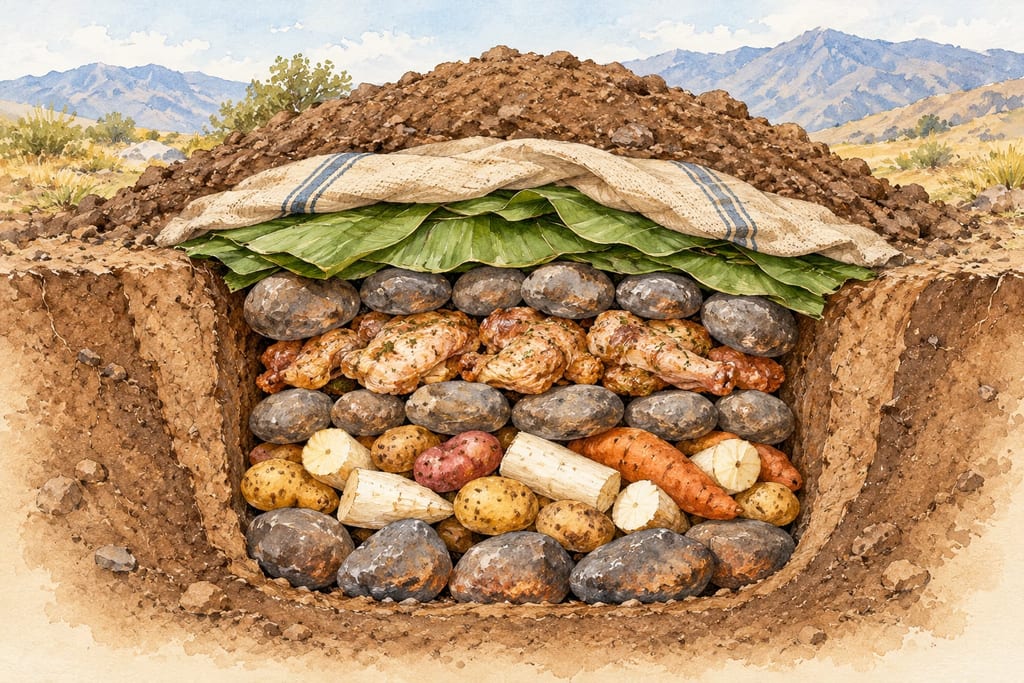
The Huánuco pachamanca is a temporary ground oven: firewood heats stones, which enclose layers of tubers and seasoned meat in an excavated pit. Banana leaves, blankets and earth seal the cooking cavity.

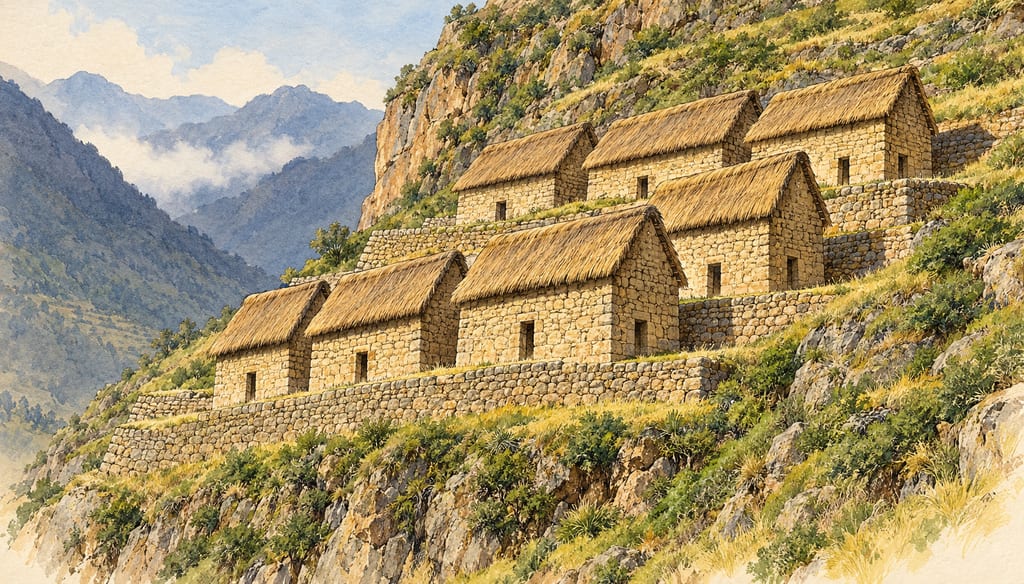
Qollqas (also called colcas) were fixed Inca state storehouses built in Andean networks. Their forms, locations and stored goods varied by site; Xauxa archaeology documents a large regional system.

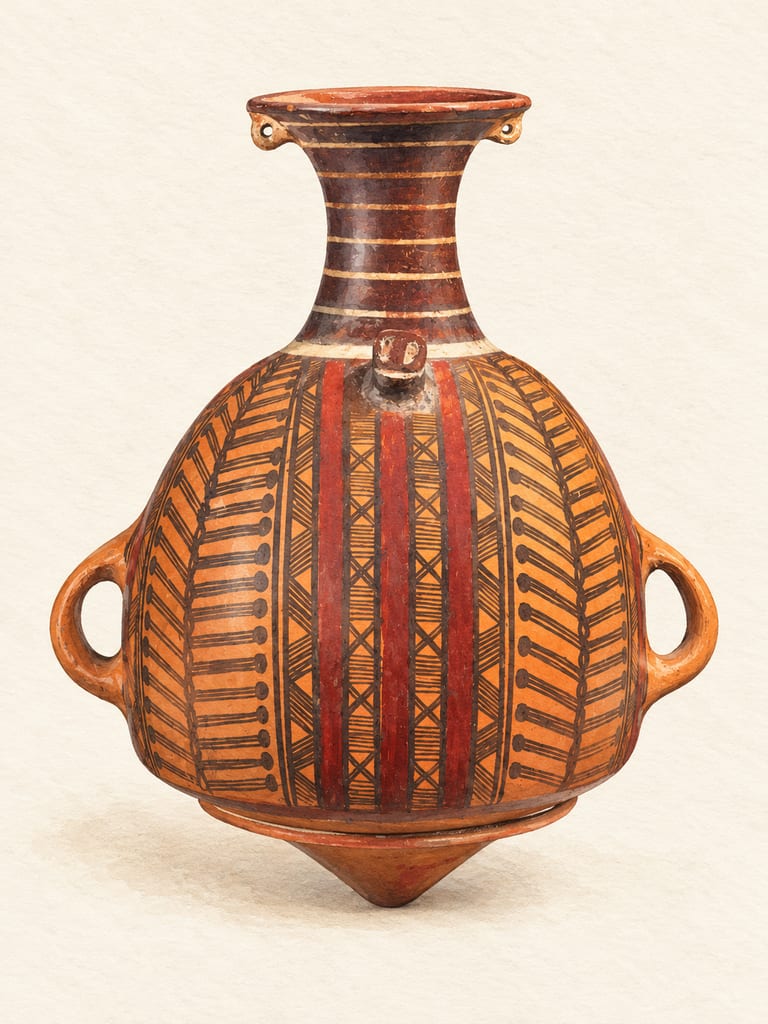
Urpu is an Inca ceramic jar with a globular body, high flared neck, carrying handles, shoulder lug and pointed base; museum examples show that size shaped whether a vessel served, carried or held chicha.

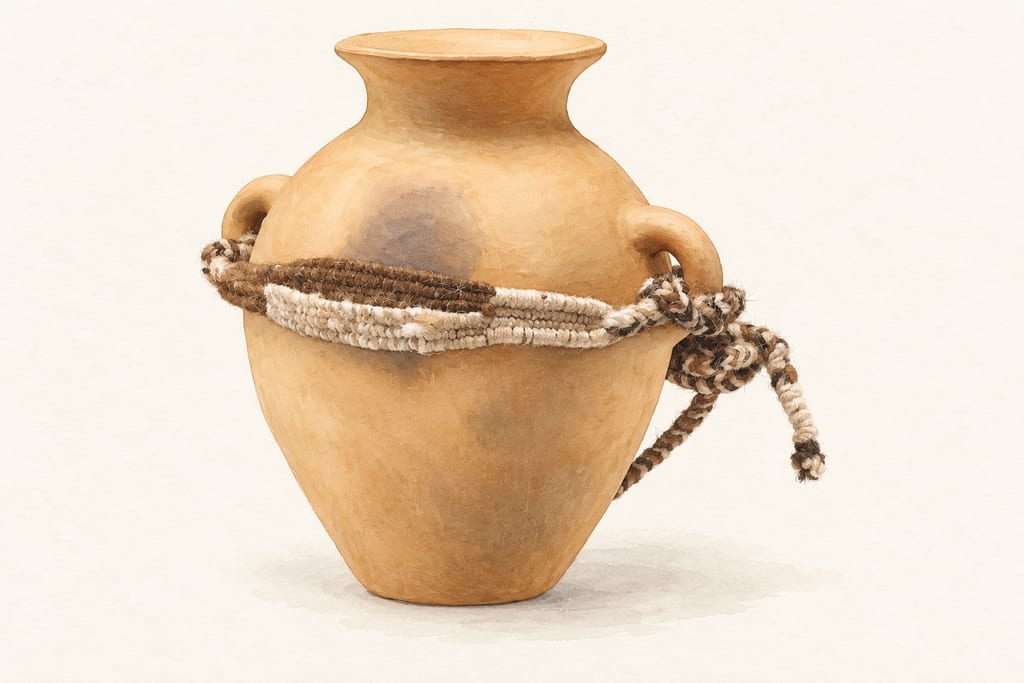
A Quechua pottery vessel catalogued by the Smithsonian’s National Museum of the American Indian for storing chicha. This 2003 Pisac example has an alpaca-hair-yarn sling; the catalog does not establish that it was used to ferment the drink.

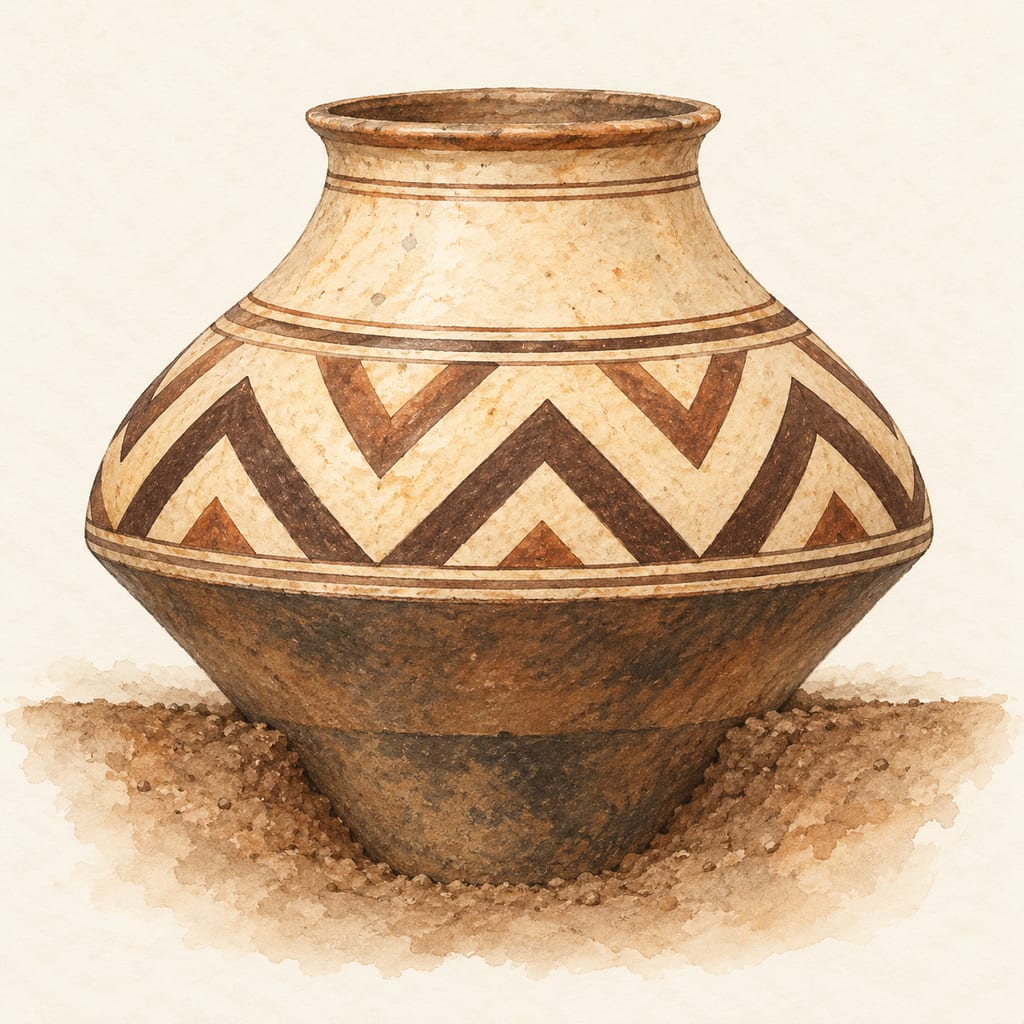
A painted ceramic jar used to hold festive beer among Shipibo-Conibo communities in Peru’s Ucayali region. One collection object has a tapered base partly buried to cool its contents.

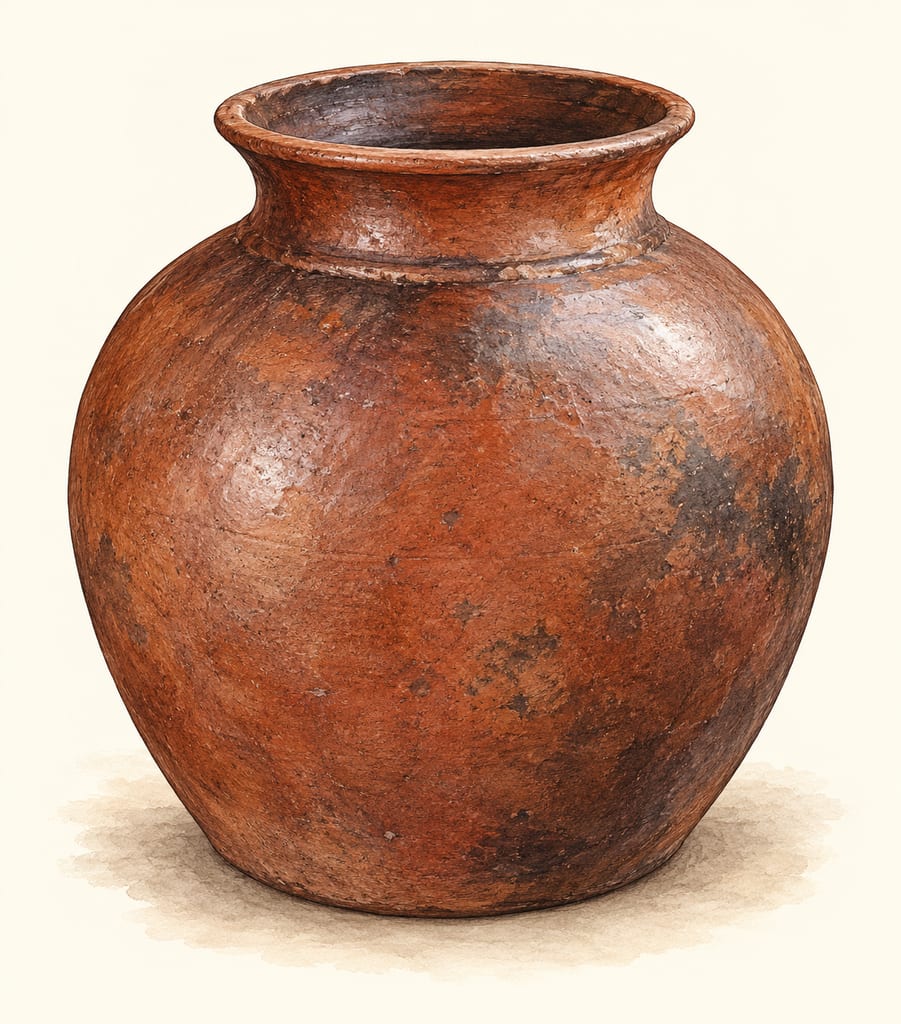
In Arequipa, ceramic chombas hold chicha de Güiñapo as it ferments. Other Andean chicha methods use dedicated earthenware fermentation pots, but the shape, size and handling practice vary by place and process.