A pot for the ferment, not a serving cup
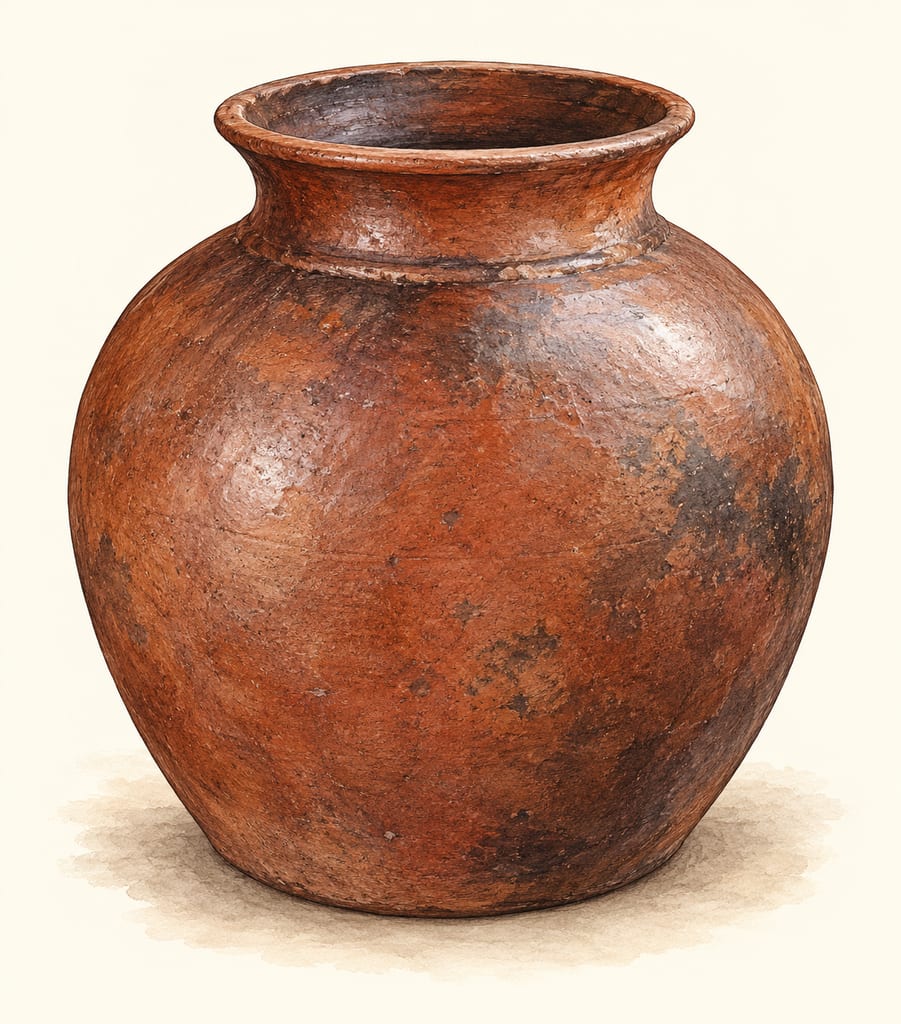
Chicha is a family of fermented beverages rather than one fixed recipe. In Arequipa, chicha de Güiñapo is made from partially germinated purple maize, milled and cooked before the liquid ferments. The ceramic vessel used for that stage is called a chomba. A 2020 study identifies ceramic chombas as the fermentation vessels and shows them in the processing sequence. That makes the pot part of a living regional practice, not a generic Andean amphora.
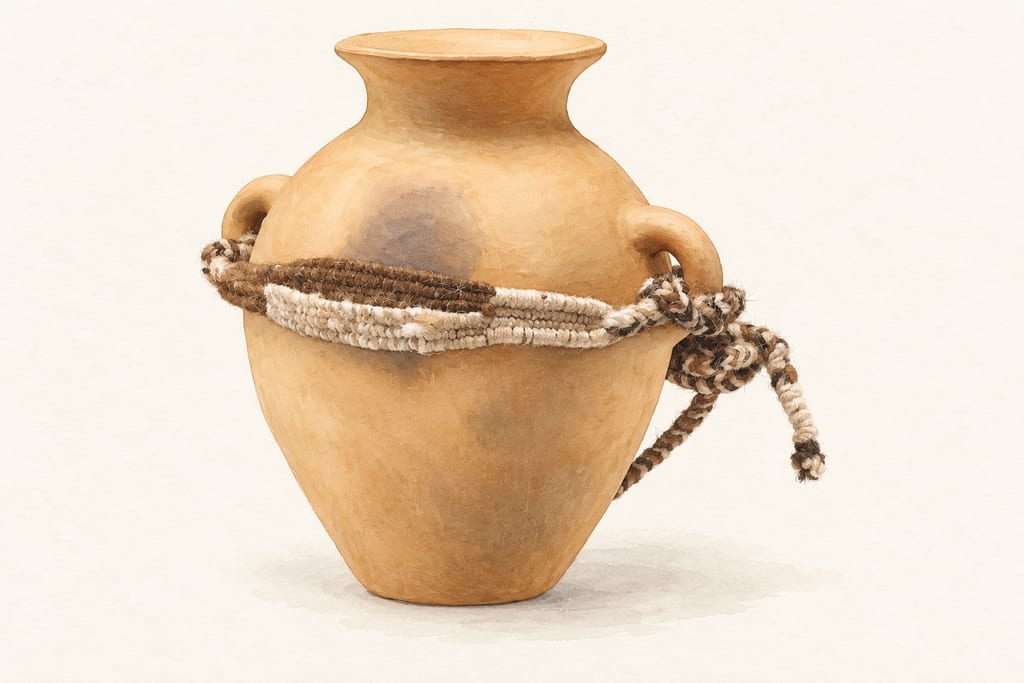
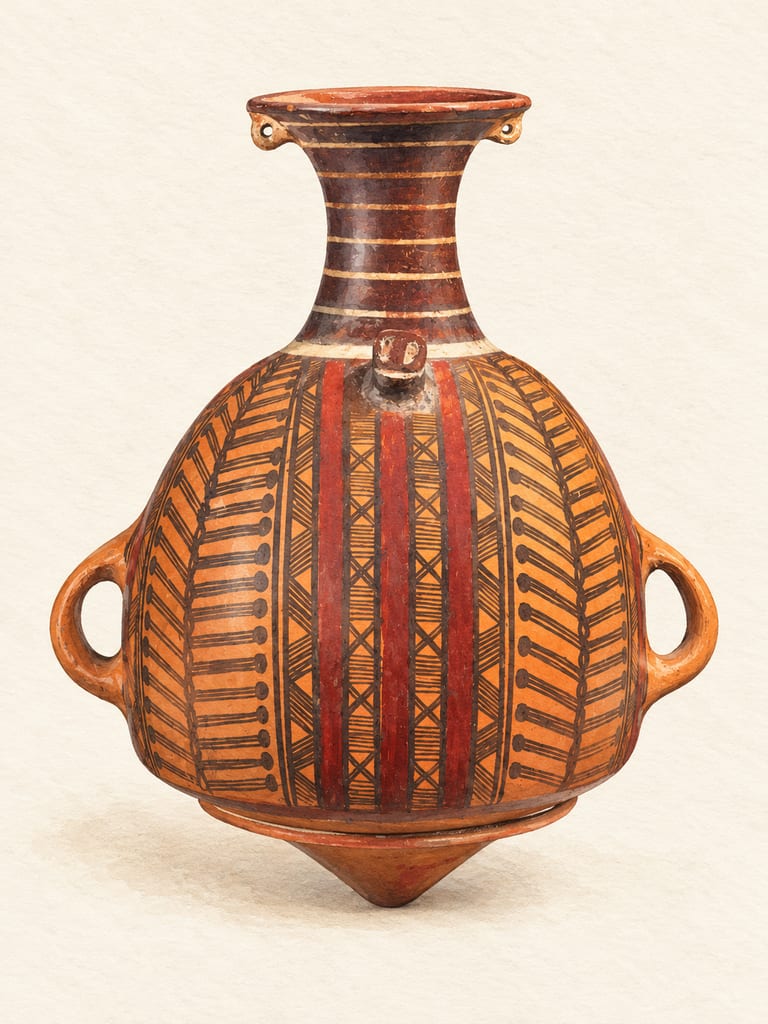
The fermenting vessel differs from objects used to grind, cook, filter, carry or drink the beverage. The study names a batán as a stone mill and a caporal as a serving glass. In Piura, a 2015 cultural inventory describes clay cántaros for fermenting and transporting chicha. Those are separate regional records; the Piuran name does not establish that every jar or pot elsewhere is a chomba.
Sources for this section
Earthenware and ceramic vessels hold different documented methods
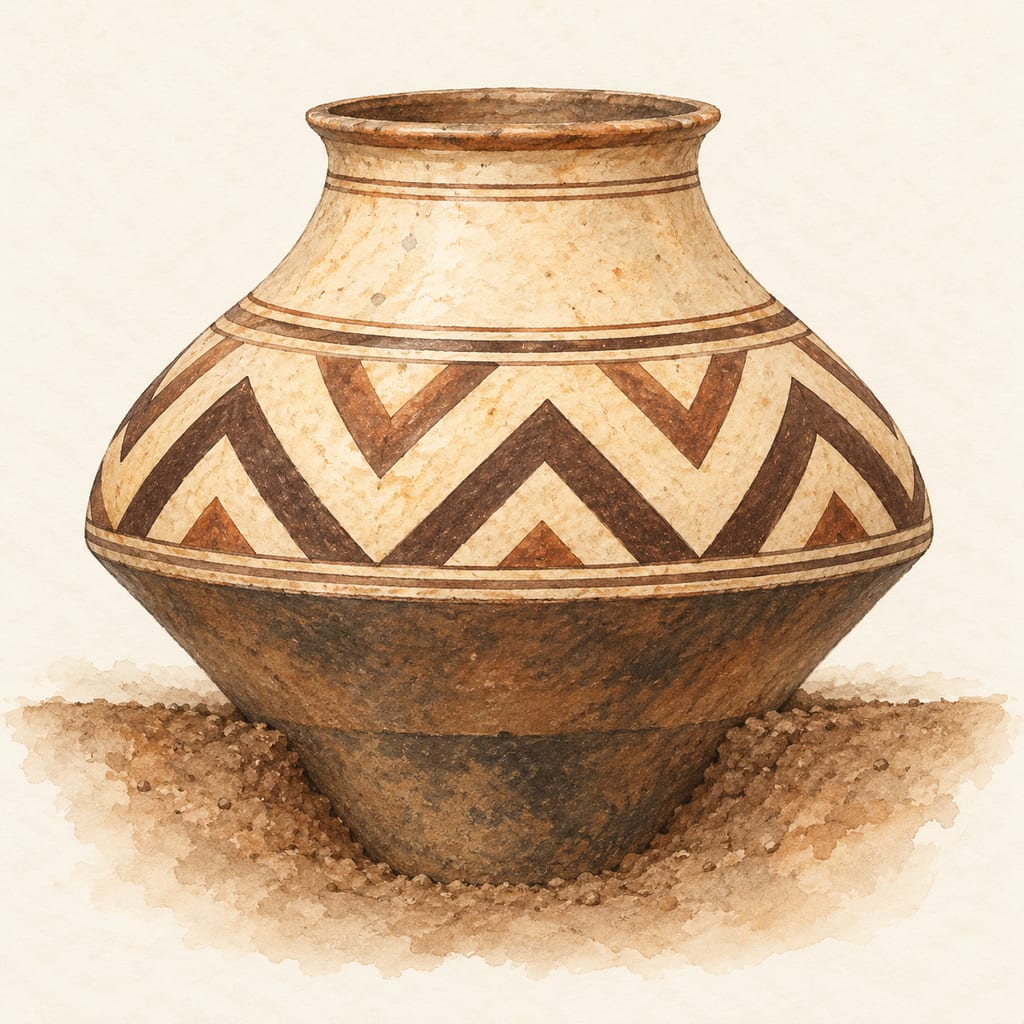
An FAO chapter describes more than one maize chicha process. In one flour-based method, an earthenware pot is used for processing before liquid is transferred to another pot. In a germinated-maize method, filtered liquid goes into pots used exclusively for fermentation, which the chapter says already carry organisms from prior use. Its account concerns a reported process, not a universal rule about chicha vessels.
In the Arequipa study, ceramic chombas appear with local chicha de Güiñapo preparation. Surveyed districts did not all use the same equipment: some picanterías combined traditional tools with plastic or metal pots. This page centers the source-documented ceramic form while noting that variation. It does not turn one photographed vessel into a required design for every producer.
Sources for this section
What the vessel contributes, and what remains unknown
A dedicated pot holds prepared liquid during fermentation, after earlier heating, filtering and cooling. The evidence records carryover of active organisms in some dedicated pots, alongside starter material such as previous-day chicha residue in the Arequipa process. The sources do not establish that one clay body, glaze or shape alone creates fermentation.
No standard capacity, wall thickness, lid, neck profile or firing method is supplied for the chombas. A dimension reported for an earthenware processing pot belongs to that operation and should not be assigned to a fermentation vessel. The sources also do not give universal cleaning, seasoning or repair guidance, nor a standard maker, price or present-day supplier.
Sources for this section
Regional names stay attached to regional practice
The study's ceramic chombas belong specifically to chicha de Güiñapo as documented in Arequipa. The Peruvian cultural inventory describes clay cántaros in Piura, where they ferment and carry chicha. FAO places chicha traditions across the Andes and records distinct maize-processing methods. These sources show related equipment traditions without making one vessel shape, name or operating habit universal.
The records document practice in 1999, 2015 and 2020; those dates do not identify when earthenware chicha vessels originated. Traditional material is meaningful evidence, but ceramic or reuse alone does not validate a safe fermentation process.
Sources for this section
History
A 2020 study records ceramic chombas fermenting chicha de Güiñapo in Arequipa. FAO's 1999 chapter describes dedicated earthenware fermentation pots for a separate method. These are documentation dates, not invention dates.
Equipment details
CapacityNo capacity is specified for the fermentation chombas or dedicated pots.
SizeNo standard dimensions are given. The FAO's separately described 75 cm by 85 cm vessel is for maize-flour processing and should not be assigned to the fermentation pot.
PowerNo power The vessel has no powered parts.
How you get oneNot established The sources identify ceramic and earthenware but do not give a standard maker, seller or price.
CareNo universal cleaning, seasoning or repair method is established. The FAO account of microbial carryover in particular dedicated pots documents one method, not a general care recommendation.
Made of
- Earthenware or ceramic — Fermentation vessel body
FAO describes dedicated earthenware fermentation pots; a 2020 Arequipa study calls chombas ceramic vessels. Neither specifies universal clay composition, firing or glaze.
Places
Arequipa
Documented preparation · Region evidenceCeramic chombas are documented for fermenting chicha de Güiñapo in Arequipa; this does not establish one pot form for all chicha.
Peru
Documented use · Country evidenceThe Piura cultural inventory identifies clay cántaros used to ferment and carry chicha; it records a distinct regional practice, not the Arequipa chomba.