A distinctive Inca jar
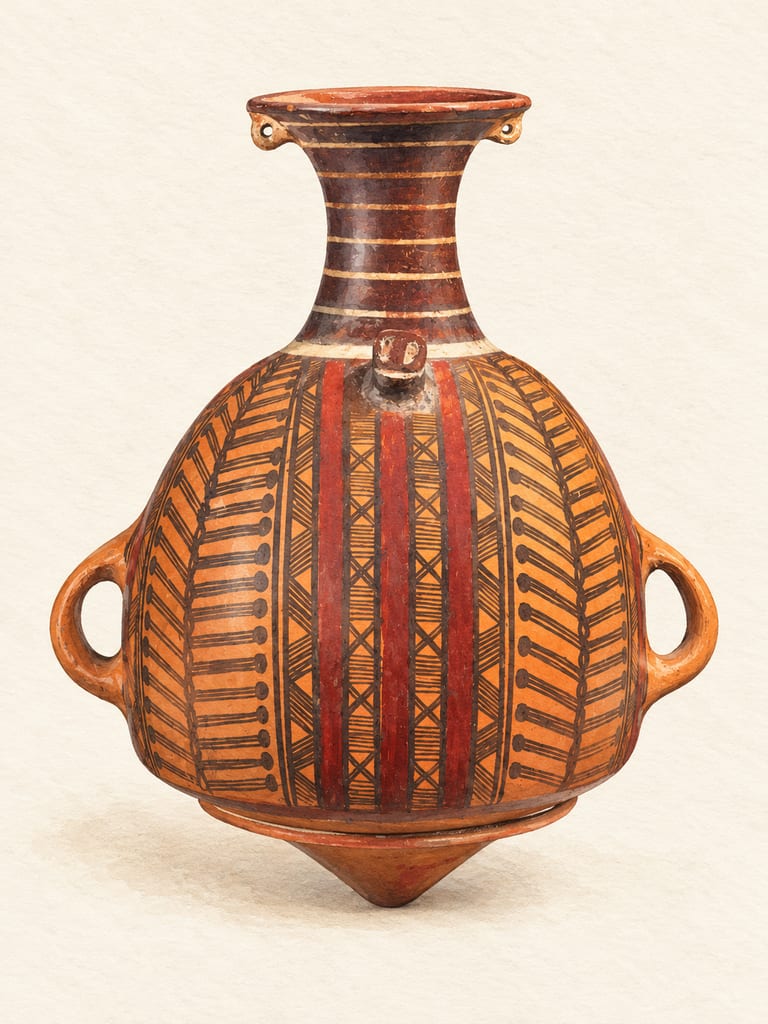
Urpu is the Quechua name the Metropolitan Museum uses for a recognizable Inca ceramic form. Museum writing also calls it an aríbalo in Spanish or an aryballos in English because archaeologists compared its outline with an ancient Greek vessel; the comparison names a resemblance, not a Greek origin. The Met also uses “Cuzco bottle.” The form is identified by a swelling, nearly globular body, pointed base, long narrowing neck and flared rim. A raised lug sits on the shoulder, while larger handles project from the sides of the body. Some examples also have smaller loops below the rim.
The Metropolitan Museum's object 1978.412.68 is dated 1400–1535 CE and measures 21.9 cm high, 18.8 cm wide and 14.6 cm deep. Its slip-painted surface carries red and dark geometric bands. The Met describes the front decoration as vertical panels with double crosses, zigzags and framed designs. These details describe that collection object, not a template for every urpu. Other museum examples vary in scale and decoration.
Sources for this section
One form, different scales and jobs
Size changes what an urpu could do. The Met describes a range from roughly four inches to forty-five inches high. It says large vessels were used in making, storing and transporting chicha, the fermented corn drink, as well as other foods. A small vessel such as 1978.412.68 is different: the Met considers service of liquids likely and a votive role possible, because small examples have been found in burials. Penn Museum likewise catalogs a larger 34.4 cm Inca jar as a beer vessel, but its recorded interior residue is not identified as a specific food.
These distinctions matter when reading a museum object or choosing an illustration. The 21.9 cm Met urpu is not evidence for a communal fermentation vessel. Evidence that large urpus took part in chicha production does not make every small jar a fermenter. Conversely, storage, carrying and service are not merely decorative readings: museums connect the form's body, neck and carrying hardware to practical liquid handling.
Sources for this section
Carrying hardware and the pointed base
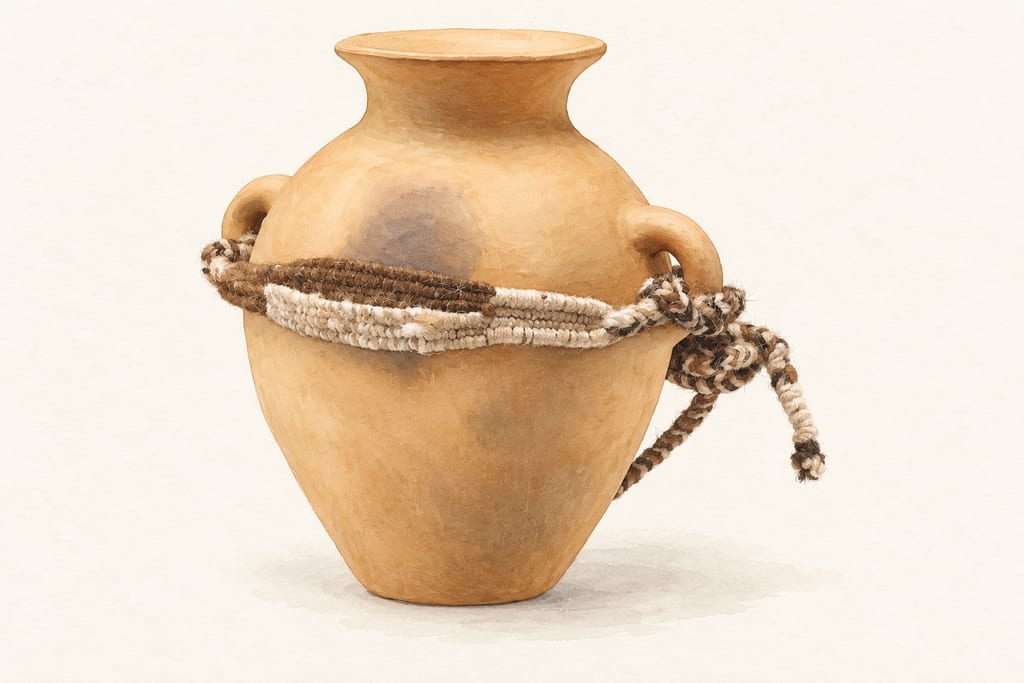
The side handles and shoulder lug work together. The Met explains that ropes could pass through the handles and be secured around the lug so porters could carry larger jars on their backs. The Peruvian national archaeology museum also describes the body handles as carrying aids. The lug is therefore a structural feature as well as a possible modeled animal form; its shape differs among vessels.
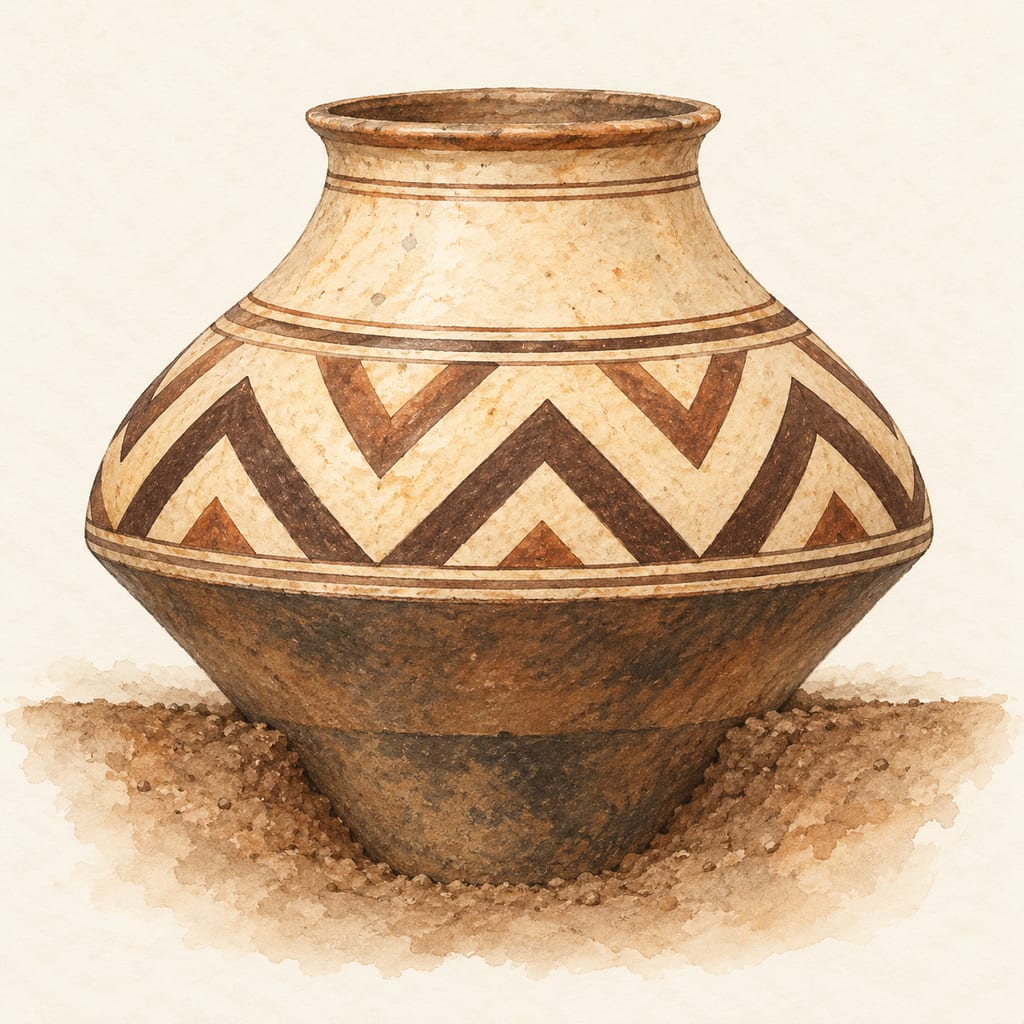
The conical point also needs careful interpretation. The Met says the pointed base allowed large urpus to be set into earth for stability. That supports depicting the tip placed into supporting soil when illustrating a large vessel in context, but it does not establish one universal burial depth or show that this small Met jar was buried during fermentation. The Smithsonian's National Museum of the American Indian describes a particular vessel from Píllaro, Ecuador, as a raqui and says its lower half was buried to aid fermentation. That is useful comparative evidence for that object and local name; it should not be transferred unqualified to Urpu 1978.412.68.
Sources for this section
Chicha, exchange and imperial settings
The urpu's role belongs to a wider history of storage, transport and shared drinking. The Met links large examples to chicha production and movement, and describes another large Urpu as carrying and serving aqha at ritual celebrations sponsored by the Inca state. Peru's national archaeology museum says aríbalos stored and distributed liquids such as water and chicha, and relates their use to social-economic activity, alliances and imperial control. Museo Larco describes large aryballos used for chicha and other foods in festivals of redistribution.
The scholarly chapter abstract by Tamara Bray emphasizes variation: vessel size, design and archaeological context differed across Tawantinsuyu, and the distribution of aríbalos does not point to a single state policy for every region. A jar's context, scale and decoration should therefore be read with its own collection record rather than assigned one fixed ceremonial or household role.
Sources for this section
What the evidence does not establish
The dated museum examples anchor the form in the Inca imperial period, but they do not reveal a single invention date, one workshop, a standard capacity or a complete map of production. The Met places the form's development in the Cuzco area and records individual objects from Peru; Penn Museum records an Urpu from Pachacamac. Comparable forms circulated through wider Inca territories, where local names and uses could differ.
Sources reviewed here do not provide a reliable general volume, a standard diameter, a modern purchase route or care instructions. Nor do they provide a general fermentation recipe or one rule for burying the vessel. The safest account keeps the distinction visible: large urpus are documented for chicha production, storage and transport; the specific small Met jar is a documented Inca ceramic object whose likely service use and possible votive use remain the museum's qualified interpretation.
Sources for this section
History
The Met calls Urpu a Quechua name and dates object 1978.412.68 to 1400–1535 CE. This is a dated museum example, not a claim about the invention date of the whole form.
Equipment details
CapacityNo inspected source gives a volume for the Urpu form as a class. The Met documents sizes from about four to forty-five inches high, and its 21.9 cm object is one small example.
Size21.9 cm tall The Met measures object 1978.412.68 at 21.9 cm high × 18.8 cm wide × 14.6 cm deep. Those dimensions belong to this one object, not the wider Urpu class; the source does not give a standardized diameter.
PowerNo power This ceramic vessel has no powered mechanism; movement and carrying are manual.
How you get oneNot established Museum sources document historical objects and manufacture material, but do not establish a present-day acquisition route or price.
CareThe inspected sources are museum records and historical descriptions, not care instructions. They do not prescribe cleaning, storage or handling routines for contemporary use.
Made of
- Ceramic — Vessel body
Museum records identify Inca urpu examples as ceramic. - Slip paint — Surface decoration
The Met records slip decoration on the 1400–1535 CE examples; colors and motifs vary by object.
Limits
The Met's 21.9 cm Urpu 1978.412.68 is a small specimen; the museum considers service use likely and a votive role possible. It should not be portrayed as a large communal chicha fermenter.
Source →The pointed base allowed large urpus to be set into earth for stability; the source does not specify a universal burial geometry or state that this small Met example was buried to ferment.
Source →The Smithsonian account of burial to aid fermentation concerns a specific Ecuadorian vessel called raqui; it is not a blanket rule for every Inca urpu.
Source →No inspected source gives a standard volume or care regimen for the Urpu class.
Source →Places
Peru
Historical attestation · Country evidenceThe Met and Penn Museum locate individual Inca Urpu examples in Peru; this does not claim Peru is the form's exclusive present-day use.
Cuzco area
Historical attestation · Region evidenceThe Met says this distinctive Inca ceramic form developed in the Cuzco area; this is a regional historical association, not an exact workshop location.