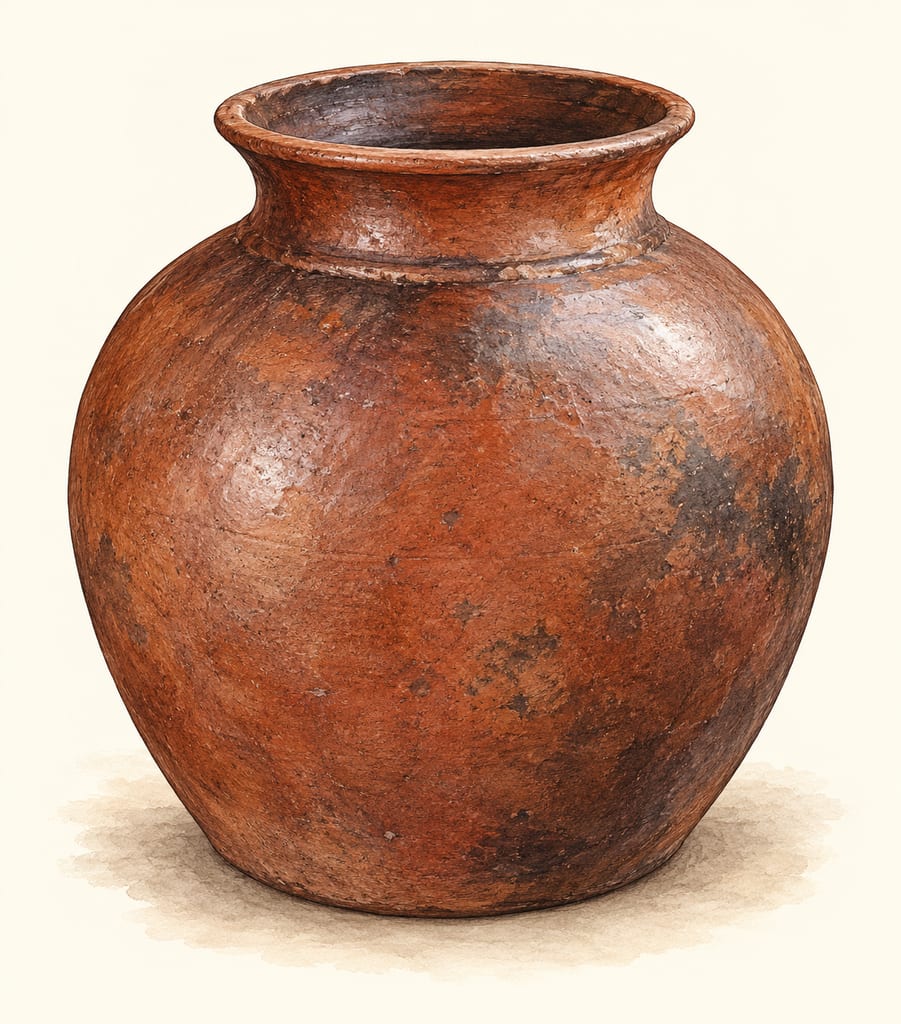
Chicha fermentation pot
In Arequipa, ceramic chombas hold chicha de Güiñapo as it ferments. Other Andean chicha methods use dedicated earthenware fermentation pots, but the shape, size and handling practice vary by place and process.
 FermenteaWhere food goes to change
Equipment · Jars, pots and crocks
mak'as · mak'as chicha vessel · Quechua chicha storage pot
A Quechua pottery vessel catalogued by the Smithsonian’s National Museum of the American Indian for storing chicha. This 2003 Pisac example has an alpaca-hair-yarn sling; the catalog does not establish that it was used to ferment the drink.
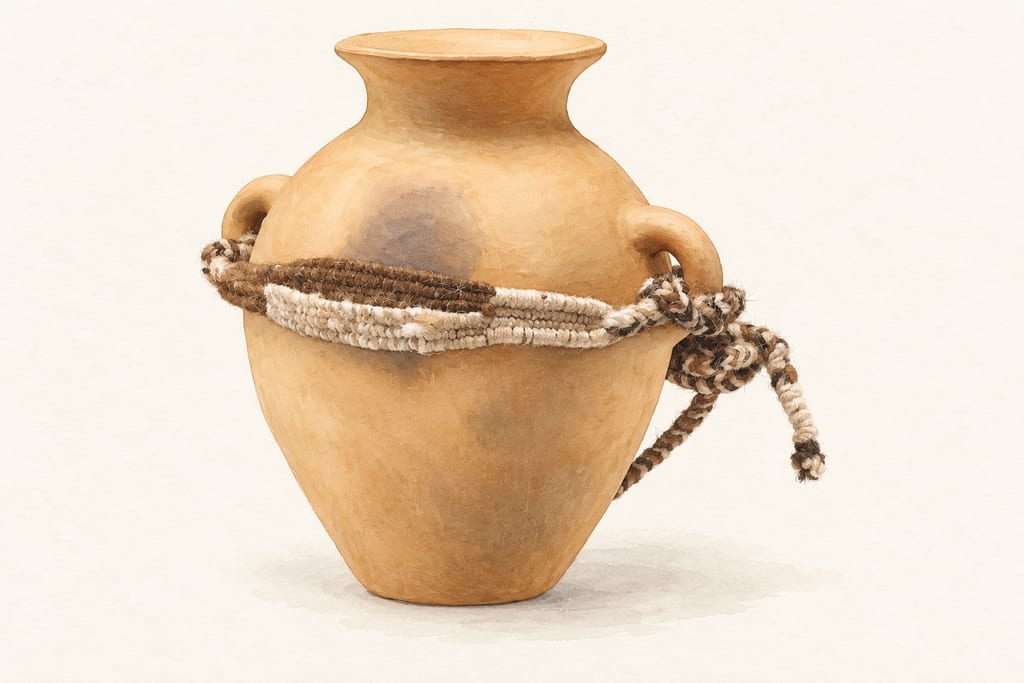
The National Museum of the American Indian identifies this pottery object as a Quechua mak'as and names its purpose as storing chicha (corn beer). It is a specific museum record, not a survey of every vessel called mak'as. The entry's wording supports storage; it does not establish that this pot fermented or brewed the drink.
The catalog dates the object to 2003 and gives catalog number 26/1555 (NMAI_277653). A photographed example has a rounded body, a small neck and lug-like projections at the shoulders, with alpaca-hair yarn wrapped around the upper body. Those visible details describe this individual piece, not a required shape for all Quechua chicha vessels.
The museum records two materials: pottery and alpaca hair yarn. It separately lists the pottery techniques as coiled or hand-built and modeled, and the textile techniques as woven and braided. The photograph shows the yarn arranged as a band around the vessel with cords extending from it. A carrying role is plausible from the form and the supplied equipment description, but the catalog does not explain how the sling was attached or how a filled pot was carried.
The record lists dimensions as 28 by 20 by 26.5 centimetres. It does not label those three values by axis in the current entry, so they are kept as a catalog measurement rather than converted into a claimed height or diameter. No capacity, lid, glaze, clay source, firing schedule or maker is identified. The museum image is the strongest reference for this particular vessel's shape and textile arrangement.
The object's catalog name is “Vessel used to store chicha (corn beer).” That is the firm functional statement to carry forward. Nothing on the entry says the vessel was used for fermentation, mashing, cooking or serving, and a storage pot should not be made into a fermenter simply because chicha is a fermented beverage.
The item's wool sling is part of its documented material description. It may support carrying or suspension, but the record does not state its intended loading, method of attachment, or whether the sling is used when the pot is full. The linked photograph lets readers see the band and cords directly; the accompanying text keeps the unknown handling details open rather than filling them in.
The museum associates this object with Pisac in Calca Province, Cusco Region, Peru, and identifies its culture or people as Quechua. It records Guadalupe Holgado Huarancca, a Quechua seller, and says the object was purchased in 2003 by NMAI agent Emil Her Many Horses. The catalog's place field does not explicitly identify a workshop or say where the vessel was used, so this page records Pisac as the location associated with the object rather than a proven point of manufacture.
The date 2003 belongs to this individual museum object. It does not date the origin of mak'as or show how long the Quechua community has used pottery vessels with wool slings. The account is deliberately object-specific: it makes the documented person, place, materials and storage purpose visible without turning one accession into a universal tradition.
This vessel belongs alongside accounts of chicha because the museum identifies chicha as the food stored in it. The linked chicha preparation record is a general candidate; it may later describe a broader beverage family. The connection is about storage, not evidence that this particular pot was the vessel used to ferment a given recipe.
The object record does not say whether the sling is unique to this piece or one of many comparable examples, and no capacity or care instructions are listed. The illustrated hero is an editorial rendering grounded in the NMAI photograph. It is not a copy of the collection image, a reconstruction of an undocumented use, or evidence for fermentation.
National Museum of the American Indian object 26/1555, identified as a Quechua mak'as used to store chicha, with pottery and alpaca hair yarn.
This catalog entry documents storage of chicha, not fermentation or brewing in the vessel.
Source →The catalog does not explain how the sling was attached or used, whether it bears the filled vessel's weight, or whether this form represents a wider standard.
Source →The catalog associates the object with Pisac but does not specify whether the place refers to manufacture, use, sale or collection.
In Arequipa, ceramic chombas hold chicha de Güiñapo as it ferments. Other Andean chicha methods use dedicated earthenware fermentation pots, but the shape, size and handling practice vary by place and process.
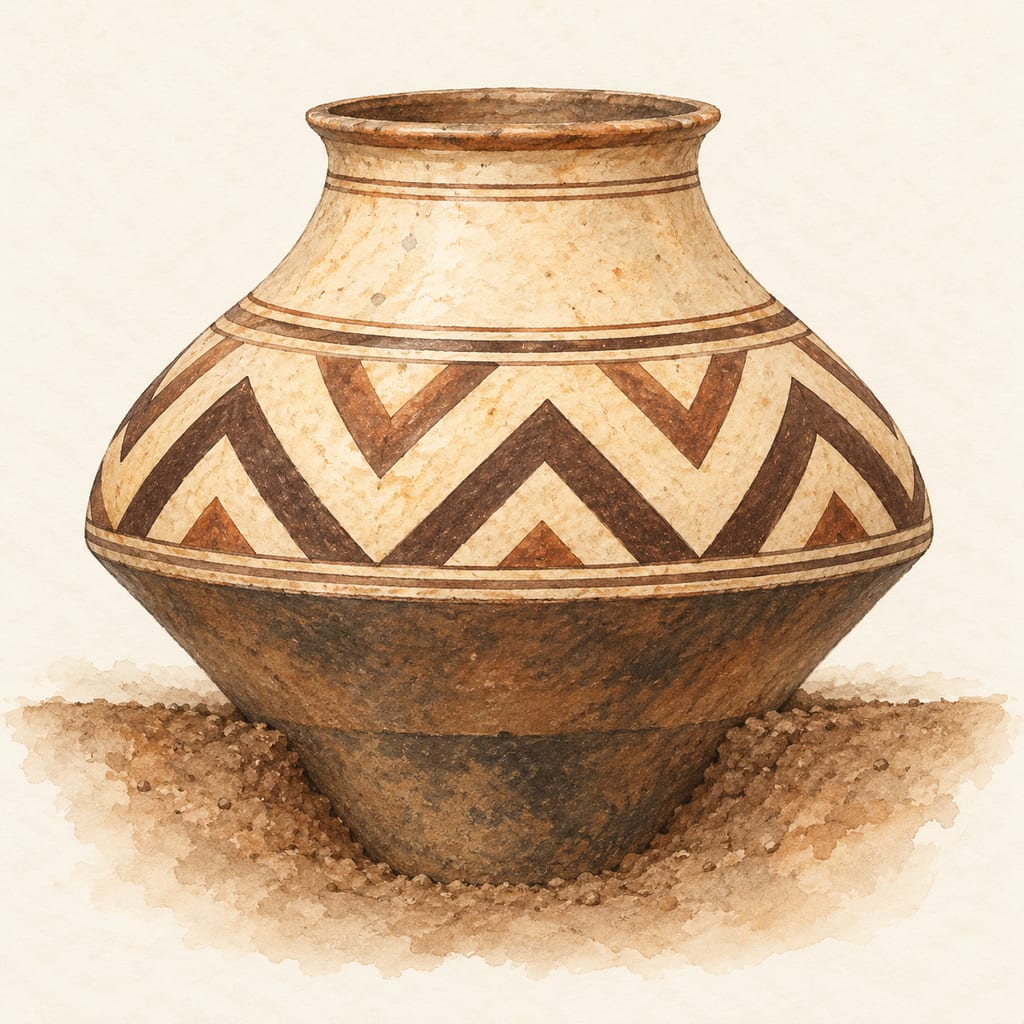
A painted ceramic jar used to hold festive beer among Shipibo-Conibo communities in Peru’s Ucayali region. One collection object has a tapered base partly buried to cool its contents.
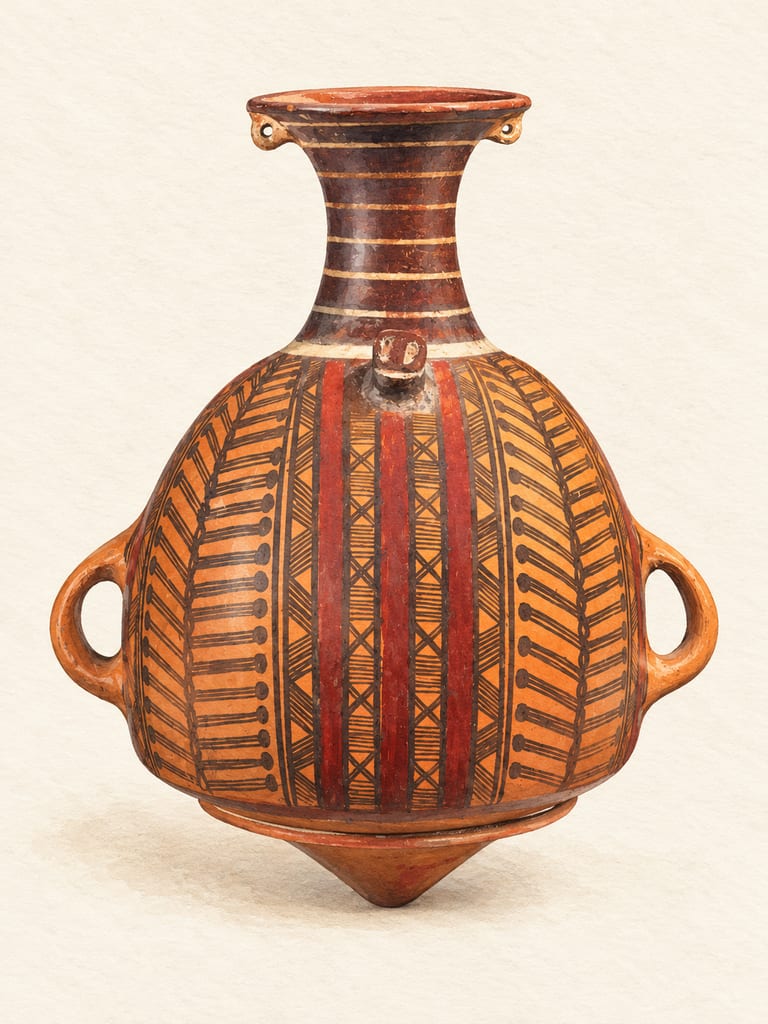
Urpu is an Inca ceramic jar with a globular body, high flared neck, carrying handles, shoulder lug and pointed base; museum examples show that size shaped whether a vessel served, carried or held chicha.

Soft, spreadable Calabrian pork sausage made with a great deal of red chilli and fatty pork, stuffed into natural casings, sometimes smoked and matured while staying soft.

A way to add independent temperature logging to an existing food dehydrator without changing its built-in controls or protections. It is a monitoring method, not a rewiring plan.

Pleurotus cystidiosus is the abalone mushroom, a cultivated oyster-type fungus with dark brown caps that grows more slowly and is more demanding than other Pleurotus species.

A dark, balanced vinegar from Emilia-Romagna made by combining cooked or concentrated grape must with wine vinegar, then acetifying and refining it in wood under a protected specification.

A living dairy inoculum that starts controlled cream fermentation, developing acidity and aroma before sour cream or cultured butter is finished.

A small electric incubator holds jars at a selected temperature for yogurt and other documented warm food preparations. Controls, capacity and vessel arrangement vary by model.

Adygean salt is a seasoned table salt associated with Adygea and the wider North Caucasian culinary tradition. Salt is blended with garlic and a variable selection of herbs and spices; the exact mix depends on the named style and maker.

The African Caesar-group mushroom, Amanita masasiensis, is a wild ectomycorrhizal species of central and southern African woodlands, eaten locally. The genus contains deadly poisonous species, so identification needs care.
No community contributions have been published for this entry yet.
Sign in to contribute. Published comments and photos are free to read.
National Museum of the American Indian, Smithsonian InstitutionEquipment · Geography · History · Image reference
Vessel used to store chicha (corn beer)Catalog number 26/1555 identifies a Quechua mak'as as a vessel used to store chicha.
The museum lists pottery and alpaca hair yarn, coiled/hand-built and modeled pottery, woven/braided yarn, and dimensions 28 × 20 × 26.5 cm.
The record dates the object to 2003, places it in Pisac, Calca Province, Cusco Region, Peru, and records a 2003 purchase from Guadalupe Holgado Huarancca, identified as Quechua.
The page states that image reuse conditions apply; the linked image is attributed to the museum and not claimed as reusable.
Cited in: One catalogued Quechua vessel; Pottery with an alpaca-yarn sling; Storage is the documented function; Pisac and collection history; A careful link to chicha