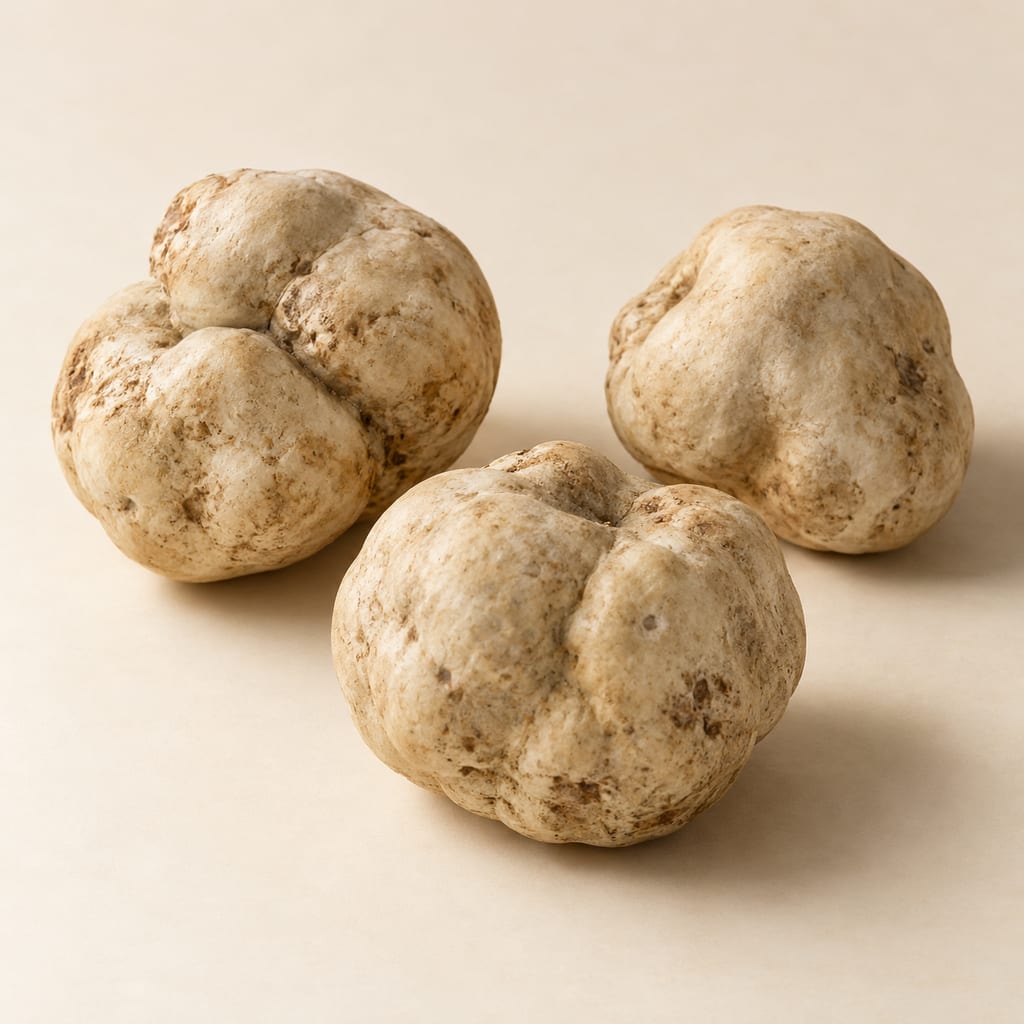
Afrocastellanoa ivoryana
Afrocastellanoa ivoryana is a truffle-like false truffle of African woodlands, ectomycorrhizal with woodland trees and recorded as a regional wild food in West and Central Africa.
 FermenteaWhere food goes to change
Other
Amanita pudica is a wild rainforest fungus of Tshopo Province in the DR Congo, recorded as locally eaten in interviews. The genus contains deadly poisonous species, so identification by a specialist is essential.
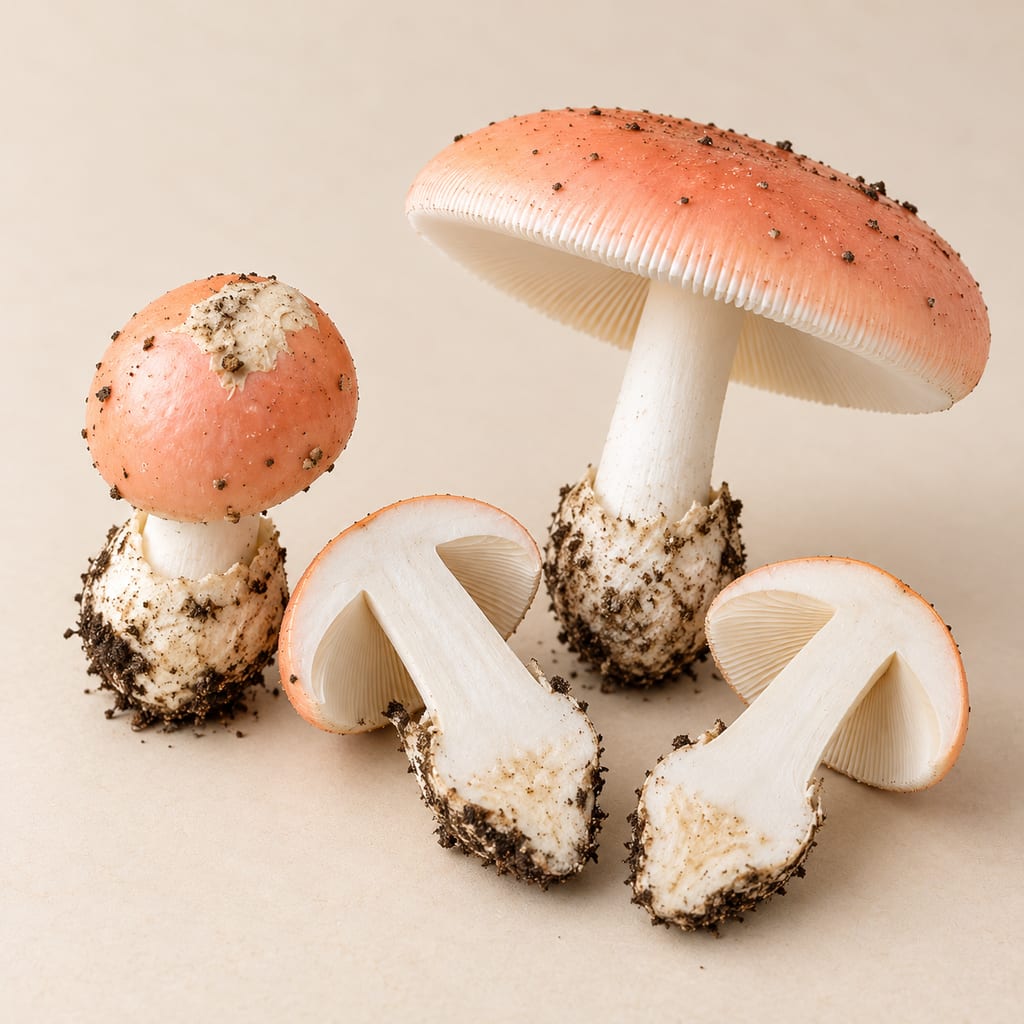
Amanita pudica is recorded in the catalogue as an ectomycorrhizal fungus of the rainforest, which grows in partnership with tree roots and is gathered wild. Its food use comes from ethnomycological fieldwork in Tshopo Province, in the Democratic Republic of the Congo, where it was recorded as locally consumed in interviews backed by voucher specimens.
The catalogue treats the scientific name as a research label. It has not been validated against a current accepted name, so the species should be read as the name under which these records were made.
The catalogue records that species-specific preparation was not established. The record does not give a method, a quantity or a cooking time for this species, and this page gives none.
The record is an ethnomycological food-use record. It is not an independent toxicological assessment, and it does not show that the fungus is safe to eat in any form.
The genus Amanita includes deadly poisonous species. The catalogue's caution states that specialist identification is essential before any Amanita is used as food.
Local use recorded in an interview does not confirm the identity of a particular specimen, and a field recognition is not a substitute for expert confirmation. Readers should not gather or eat this fungus on the basis of this page.
Locally consumed in voucher-backed interviews in Tshopo, as the supplied catalogue records it. Preparation for this species was not established.
Afrocastellanoa ivoryana is a truffle-like false truffle of African woodlands, ectomycorrhizal with woodland trees and recorded as a regional wild food in West and Central Africa.
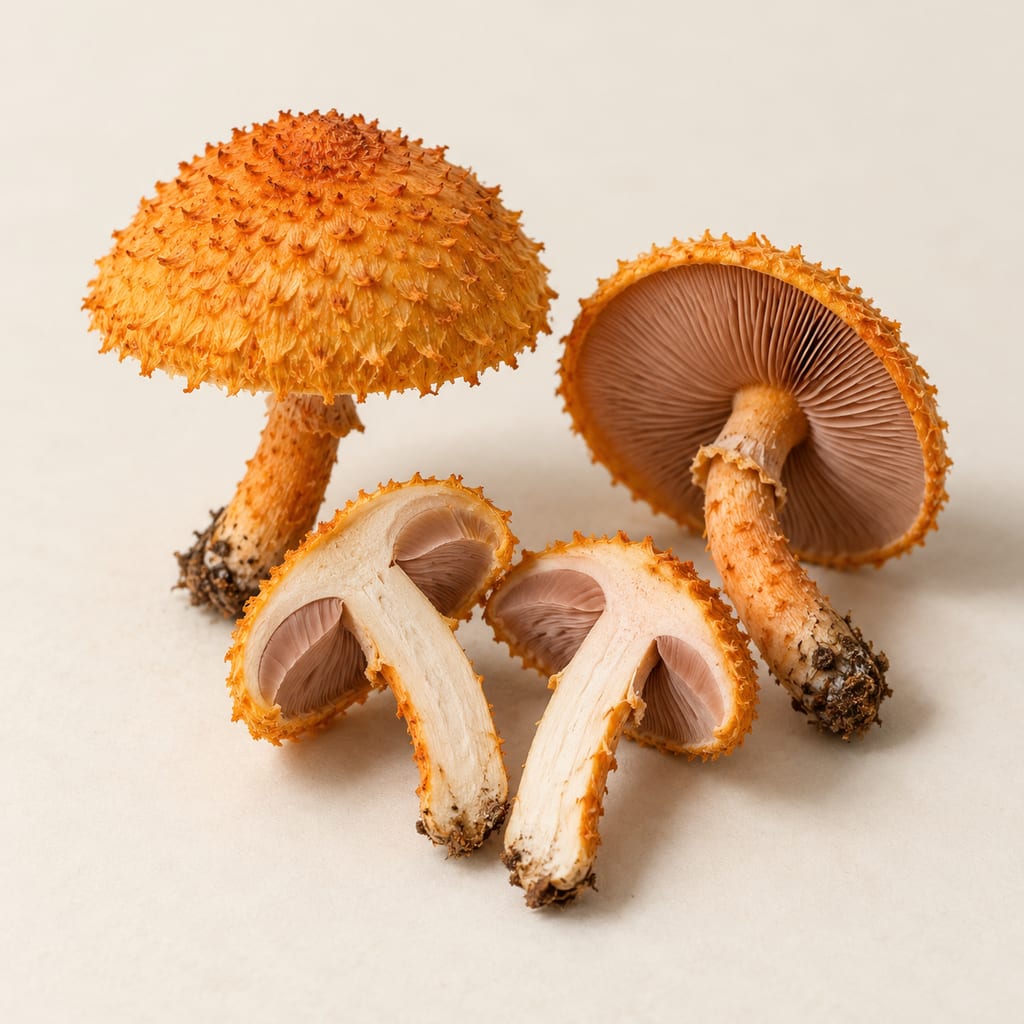
A forest mushroom of the genus Agaricus, recorded as a wild food in the Tshopo province of the Democratic Republic of the Congo in a voucher-backed ethnomycological survey.
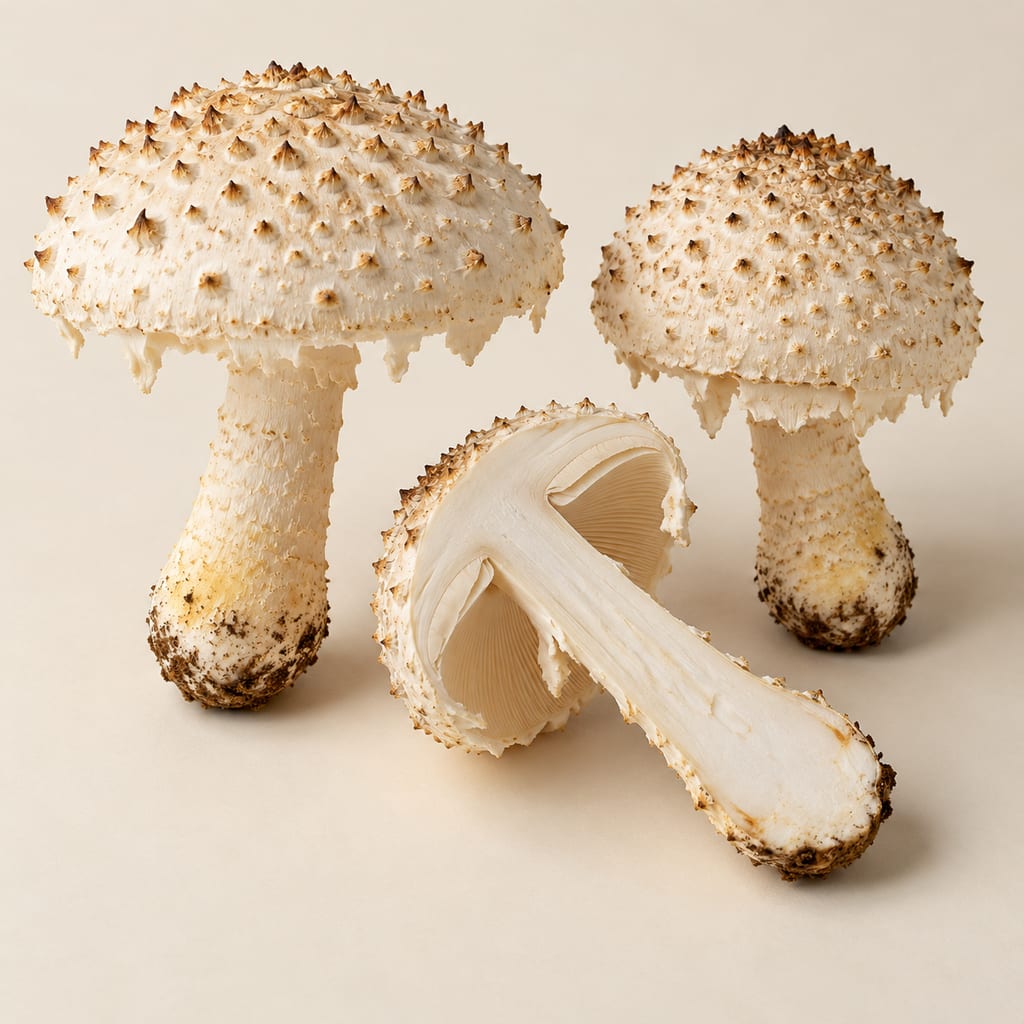
Amanita afrospinosa is a white, warted Amanita of miombo woodland in southern and central Africa. A regional food-use record exists, but the Amanita genus includes deadly species, so no safe use is established here.
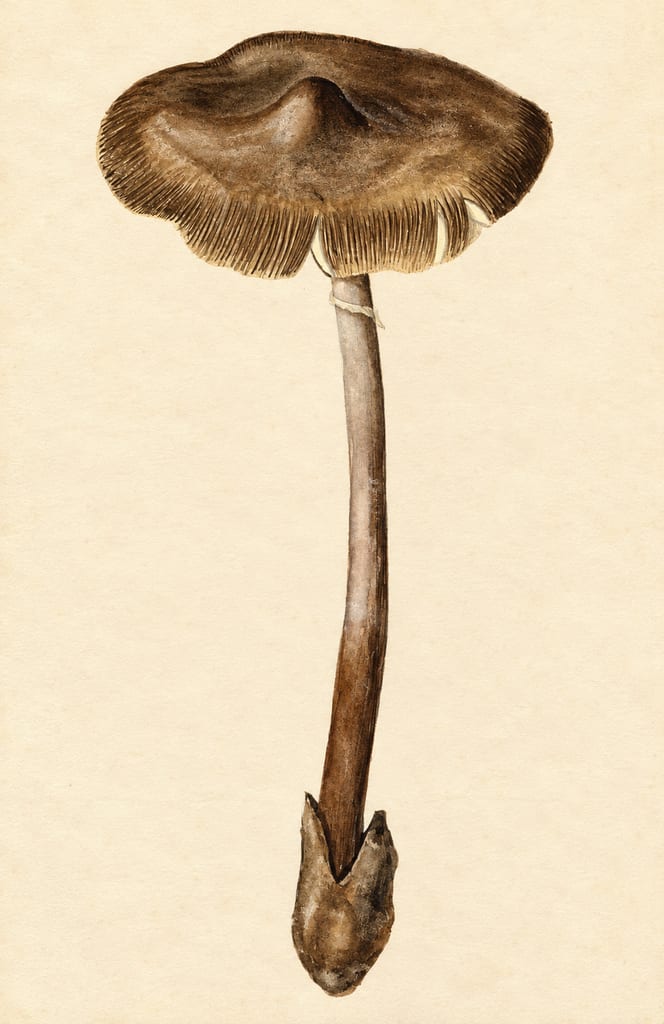
A wild ectomycorrhizal Amanita of the Congo rainforest, recorded as locally consumed in Tshopo province. Its preparation was not established, and the genus includes deadly species.
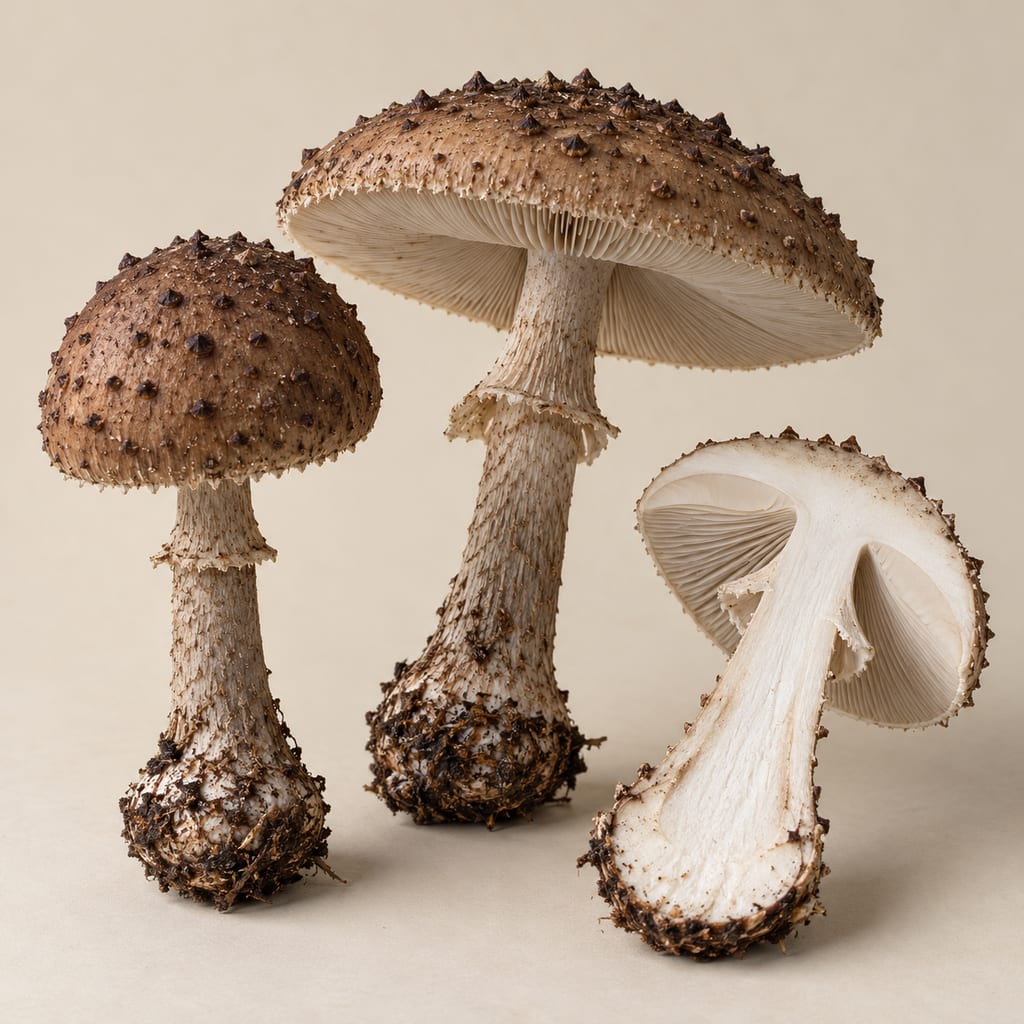
A wild ectomycorrhizal Amanita of the Congo rainforest, recorded as locally consumed in Tshopo province. Its preparation was not established, and the genus includes deadly species.
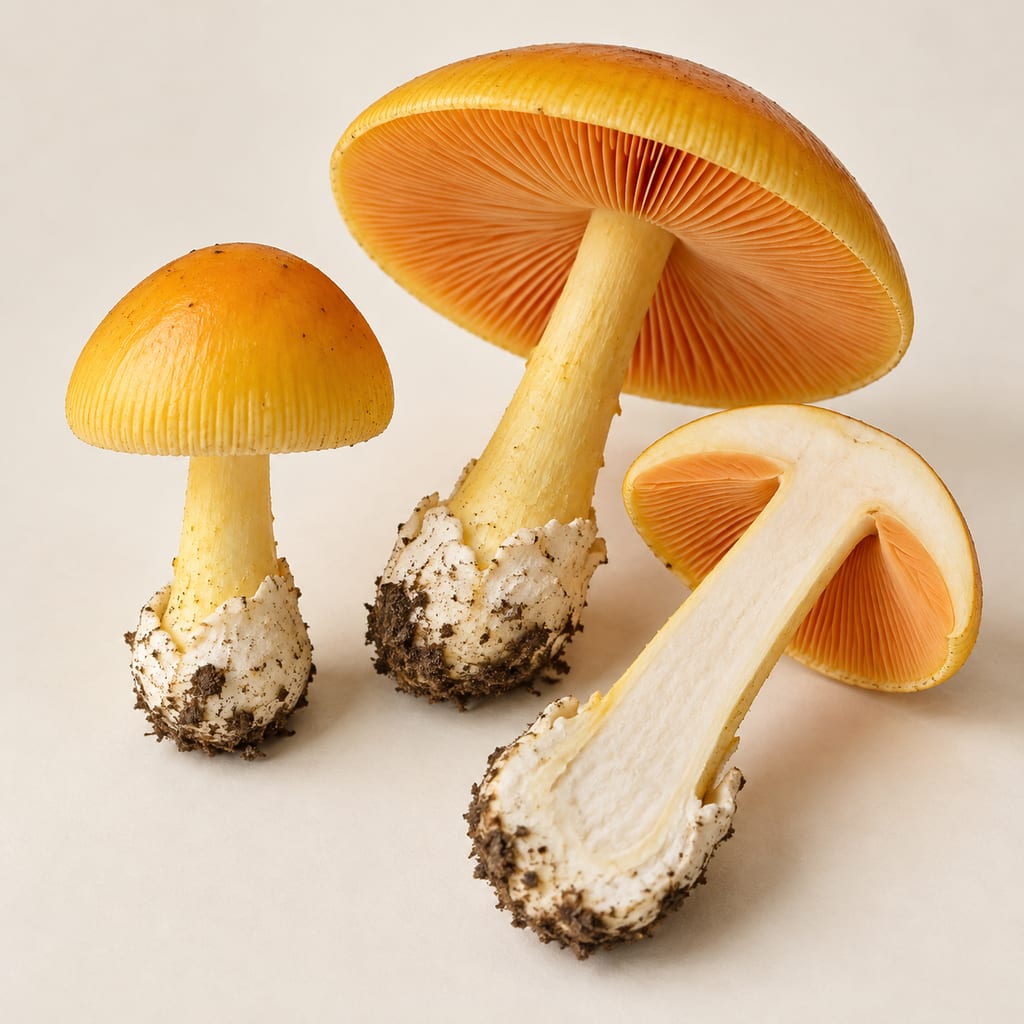
A wild miombo Amanita recorded as a local food in northern Zambia, with collections also documented in Haut-Katanga, DRC. The evidence is regional and does not make wild identification safe.
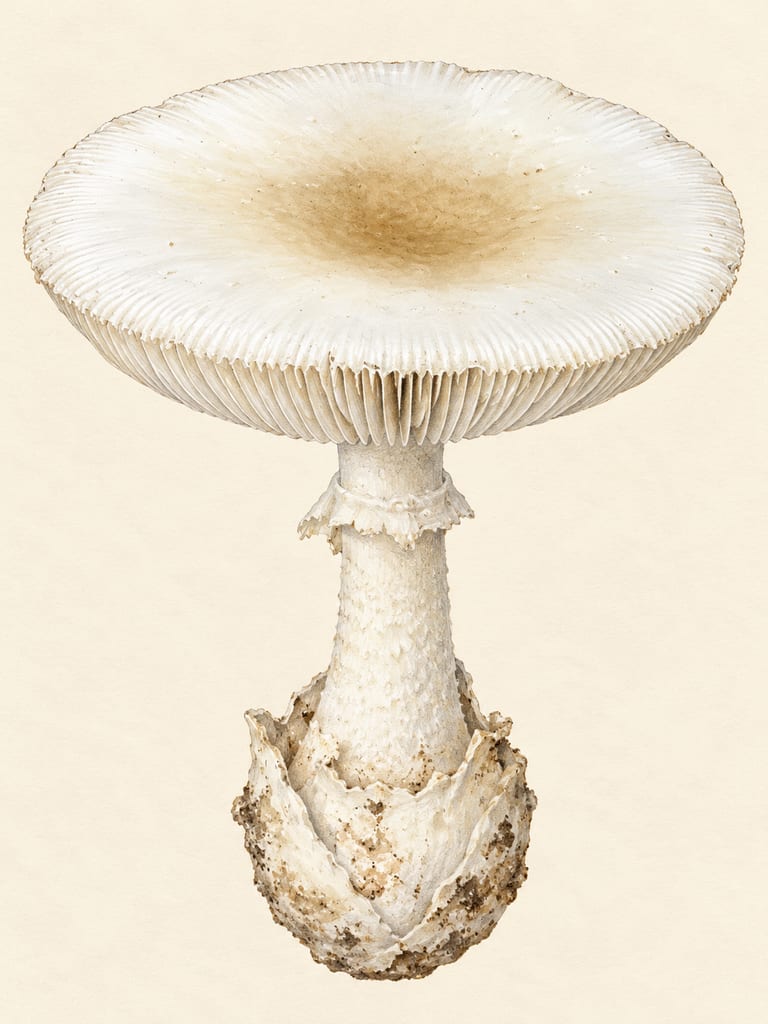
Amanita loosei is a large wild Amanita of tropical African miombo and open woodland, gathered and sold as a valued seasonal food. Regional food-use evidence is not a guide to identifying wild mushrooms.
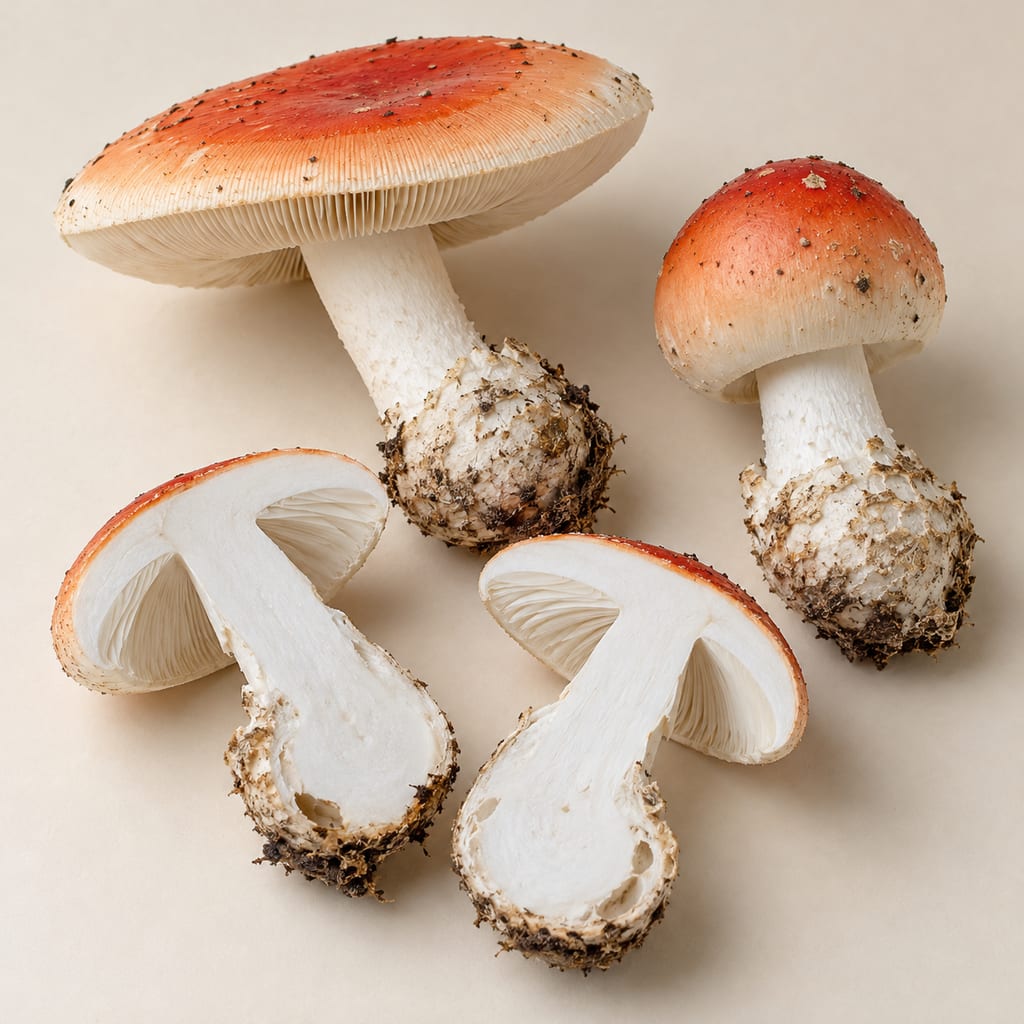
Amanita robusta Beeli is a poorly documented Central African Amanita known from voucher-backed rainforest collections in the Democratic Republic of the Congo and Cameroon. A Tshopo study reports local food use for a taxonomically supported voucher, but neither that record nor the name makes an unknown Amanita safe to identify or eat.
No community contributions have been published for this entry yet.
Sign in to contribute. Published comments and photos are free to read.
PubMed CentralDistribution · Method · Safety
Ethnomycological source for Tshopo food use (supplied catalogue record F-e3aa0f3ca83f, source S056)Ectomycorrhizal rainforest fungus recorded as locally consumed in voucher-backed Tshopo interviews; preparation not established
Ethnomycological food-use record, not a toxicological assessment; Amanita includes deadly lookalikes; specialist identification essential
Cited in: A rainforest mushroom recorded in use; Preparation and use; Amanita lookalikes and identification