A fish named for the sauce it can become
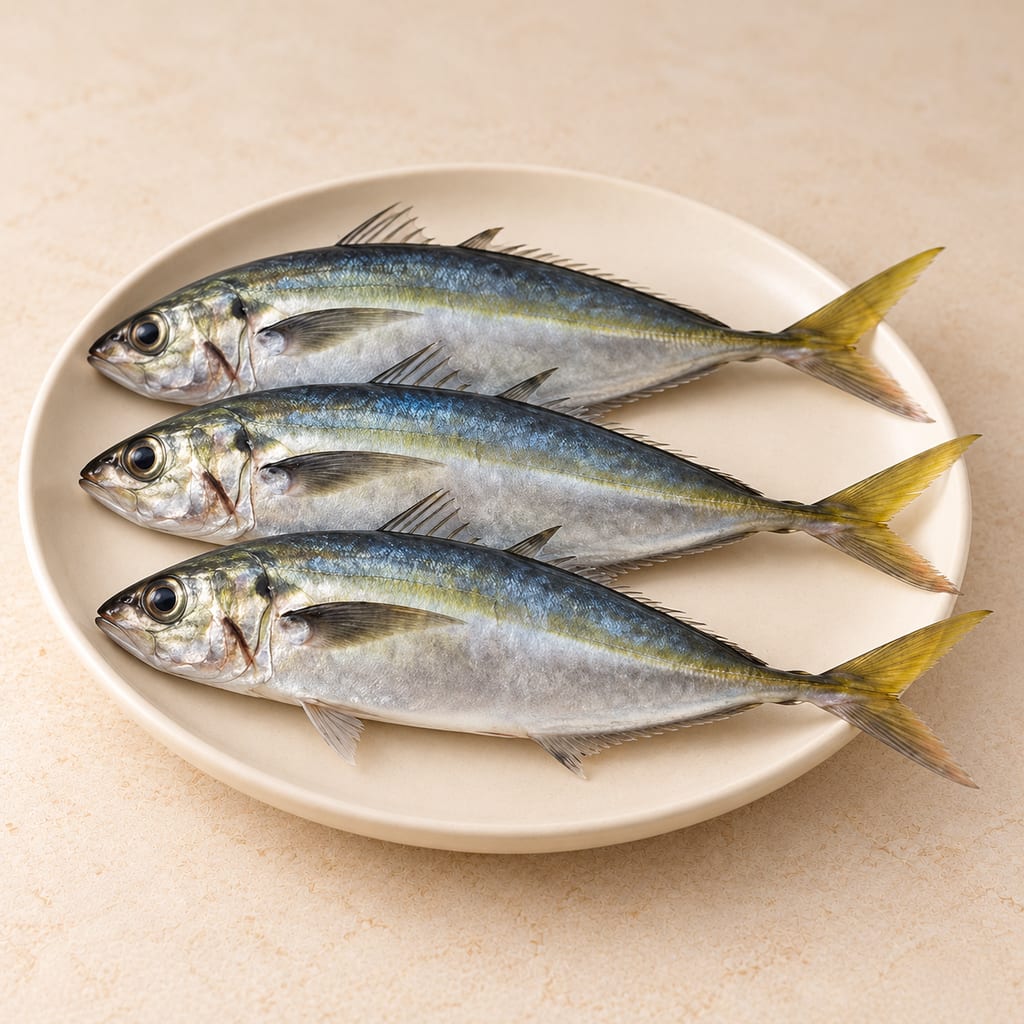
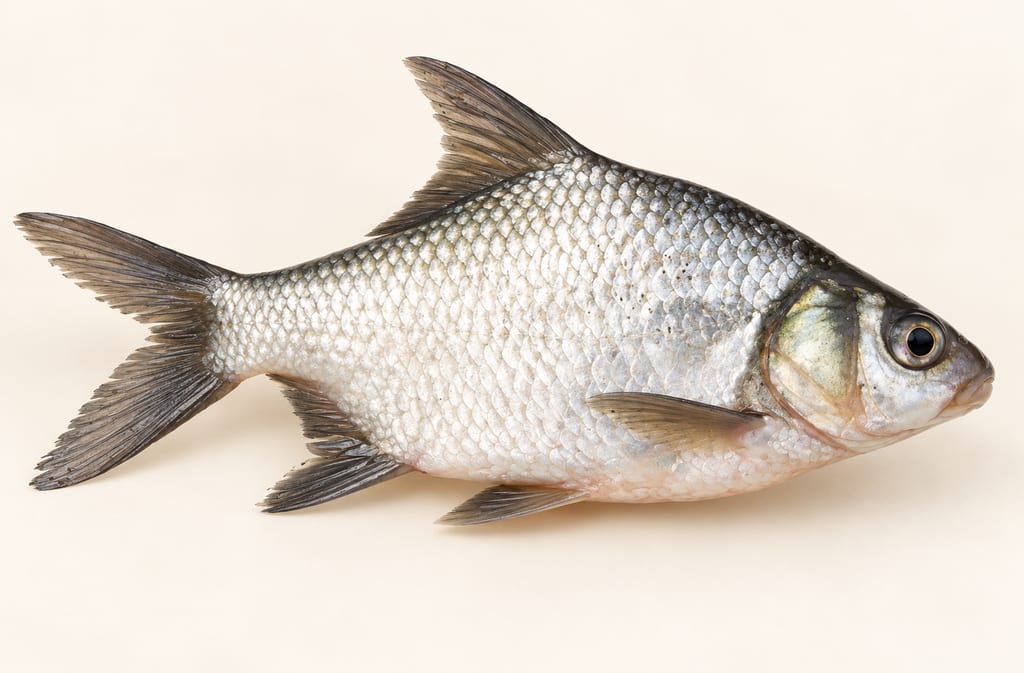
Amberstripe scad is a small marine member of the jack family, Carangidae. The name suggests a flank stripe on a silvery, quick-swimming fish, but its significance on this page lies in a barrel of salt and fish. In a 2022 account of Vietnamese *nước mắm*, cultural researcher Le Hai Dang names amberstripe scad among fish used for the sauce and describes its resulting sauce as dark brown. He compares that character with lighter anchovy sauce and bright yellow sauce made from yellow jack. The fish is therefore an ingredient that shapes the identity of a condiment, not simply an interchangeable source of protein.
There is a taxonomic limit to the named account. FAO and the U.S. FDA use “amberstripe scad” as the common name of *Decapterus muroadsi*, and FAO places it in Carangidae. Le Hai Dang's fish-sauce essay gives the family but does not supply a Latin species for the fish he calls amberstripe scad. A common-name match does not prove that every fish in the described Vietnamese practice was sampled or identified as *D. muroadsi*. The useful identification for this linked recipe is therefore the named scad in the cited account, with the common-name species mapping as orientation rather than as a documented voucher for its catch.
This distinction matters at a fish stall. “Scad” covers several related marine fishes, and a vendor may use another local name or sell a mixed small-fish catch. A finished bottle of *nước mắm* cannot disclose species identity by color alone. To follow the named amberstripe-scad preparation closely, the cook or maker needs the fish actually described under that market name, fresh enough for processing and appropriate to the intended batch. A generic fish-sauce label may be delicious but does not recover the exact raw material. The page's subject is whole fish as a substrate for salt fermentation; it is not a page about buying already fermented sauce.
Sources for this section
Coast, household table and a barrel
Le Hai Dang places fish sauce within Vietnam's maritime life: fishing villages, coastal processing, and the use of abundant catches for longer keeping. His account names Quang Ninh, Khanh Hoa and Ninh Thuan among production areas, while also describing Phan Thiet and Phu Quoc as renowned producers. These locations are a map of fish-sauce practice, not evidence that the particular amberstripe scad in the linked method was caught at one of them. In the kitchen, *nước mắm* may be both a dip and a seasoning mixed into cooked food. Its significance reaches beyond storage: the essay describes a shared bowl at the table, one condiment passing among people who eat together.
The fish-sauce barrel makes the ingredient's transformation visible. The cultural account describes fish laid in layers with salt, then weighted and covered. A spigot near the bottom lets liquid drain, and liquid can be moved and returned during management of the ferment. At the end the sauce trickles out while much of the original fish remains behind as residue. The starting fish gives up soluble material to the liquid. Its flesh no longer appears as fillets, but its proteins and the products of their breakdown help determine what the sauce tastes and smells like.
For amberstripe scad specifically, the essay states a fish-to-salt ratio of 4:1 in the traditional example. It contrasts this with 6:1 for Cyprinidae and many other species. These are ratios within the described method, not a licence to substitute a freshwater fish while keeping every other step unchanged. A scad is marine; the Cyprinidae example is a different family and part of the source's explanation of varying traditions. The essay says the whole sequence typically takes roughly six months to one year. The long duration, salt and repeated draining belong to the sauce method; they should not be reduced to a quick marinade simply because both start with fish and salt.
Sources for this section
What the fresh fish contributes
The fish's flesh is a dense store of protein and water. In a sauce barrel, salt draws liquid from the fish while enzymes cut protein into smaller pieces. Some of those pieces become soluble peptides and free amino acids, which can travel into the liquid that will be drawn off as sauce. The process does not require the fish to be pure fat, nor does it rely on a flavored brine merely soaking up surface taste. The interior of the fish changes over time. That is why two species may produce different color and taste even when both are put in barrels with salt.
Research on sardine and anchovy proteolysis gives a controlled view of one part of the mechanism. Investigators compared the breakdown of those fishes' proteins under different salt concentrations and with or without added commercial enzymes. More salt slowed proteolysis in those tested materials, and the species differed in liquefaction. This does not measure amberstripe scad directly, but it cautions against a simple claim that salt only preserves while enzymes work at a fixed speed. Salt is both the defining seasoning and a condition that changes how quickly proteins can break down. The traditional 4:1 scad ratio is a named practice, not an equation from which one can calculate an exact maturation day.
FAO's fish guide describes *D. muroadsi* as a marine scad of the Indo-Pacific; FishBase records it as marketed fresh and salted or dried. Together those references establish a broader food-fish context for the common name. The fish-sauce essay is narrower and more useful for this ingredient page: it tells us a scad called amberstripe is among the traditional sauce fishes and gives its ratio in a specific process. None supplies a chemical profile of a verified amberstripe-scad sauce batch. The dark-brown color and high protein content are the cultural author's comparative descriptions, not values to be projected onto every bottle or every specimen.
Sources for this section
The slow making of a savory liquid
The 2022 account divides the traditional process into salting and pressing, management, and final draining. First, fish and salt are layered and covered under weight so the fish remain submerged. After some days liquid is released from the lower opening. Later, the maker mixes and moves the liquid between vessels, a management step that lets the ferment develop rather than leaving every layer untouched. Finally the sauce drains slowly through the outlet. The language of “making fish sauce” can hide all this handling; the fish is neither just buried and forgotten nor boiled down into a stock.
The chemistry becomes a taste when soluble nitrogenous compounds accumulate in the salty liquid. A Vietnamese fish-sauce experiment using anchovy and a selected salt-tolerant bacterium tracked total and amino nitrogen over six months, and reported changes in glutamic and aspartic acids. It also measured aroma compounds. That controlled starter experiment is not the same as the un-inoculated amberstripe method in the cultural account. It does, however, show what researchers mean when they say fish protein becomes savory sauce: measurable small nitrogen compounds increase as the fish matrix breaks down. The original fish species and process still matter to the resulting aroma.
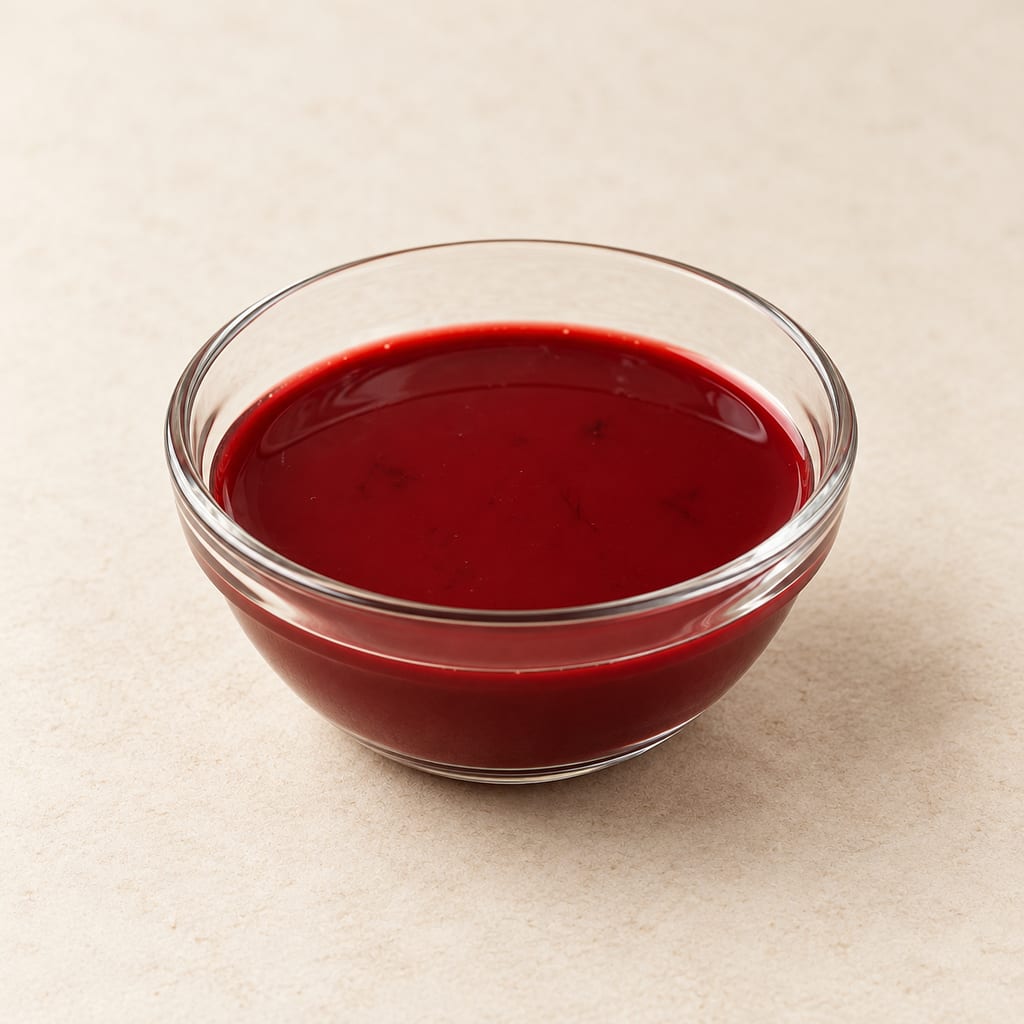
Color is another outcome that needs context. Le Hai Dang describes amberstripe-scad *nước mắm* as dark brown and high in protein, while anchovy sauce is light yellowish with a delicate fragrance. Those contrasts help a diner imagine the range of traditional fish sauces, but a color alone cannot certify species or quality. Fermentation length, fish condition, salt, mixing and draw all affect the liquid. The named source's scad ratio of 4:1 is a useful starting point for understanding that tradition; it is not a guarantee that a homemade jar will reproduce a particular commercial sauce's shade or chemical composition.
Sources for this section
Reading the fish at the market and the sauce at the table
An amberstripe scad can be recognized more precisely than by a poetic English name alone. FAO's guide to *D. muroadsi* describes an elongated slender body and the characteristic eye covering and stripe pattern of this market fish. The FDA Seafood List maps the English common name to the same Latin binomial. Such references help when checking a seller's identification or translating a label, especially because several scads resemble one another. They do not make the fish-sauce essay a species-identification report. A cook should keep the market identification separate from the food tradition's less formal naming.
Fresh and salted or dried scad are all food forms documented by FishBase for *D. muroadsi*. They are not interchangeable within the linked sauce description. The traditional account begins with fish that can be salted and pressed in layers; starting with a dried product would change available water, salt uptake and the material released. Similarly, buying a finished scad sauce is buying the outcome, not the raw fish substrate. The distinction is important in a recipe database where both fish and fish sauce can appear as ingredients. Amberstripe scad is what goes into the long fermentation; *nước mắm* is the liquid that comes out and then seasons a meal.
At the table, that liquid may be diluted or combined with other flavors for dipping, or used directly to season cooking. The cultural account emphasizes its ordinary presence in Vietnamese meals and the social act of sharing it. A scad source page should therefore not end at a technical ratio; the fish's final use is a few drops that deepen a plate of food, passed around with other dishes. The whole fish and its salt have crossed from the barrel into a condiment whose aroma announces itself long before one sees the residue it left behind.
Sources for this section
The limits of a common name
The linked recipe's strongest claim is also its simplest: a named heritage account says amberstripe scad can be used to make Vietnamese fish sauce, describes the resulting sauce, and specifies a 4:1 fish-to-salt example. Its family identification is Carangidae. Modern fish lists explain the common name with *D. muroadsi*, but the account does not tell us how its scad specimens were identified. The page therefore leaves species-level attribution to the named Vietnamese practice open. This does not make the ingredient unusable; it prevents an English market label from doing more evidential work than the original account allows.
The essay was published in December 2022. That date records the explanation, not the first moment someone put this fish into a sauce barrel. It describes a living culinary practice with a long history but gives no earliest dated amberstripe-scad recipe. The historical period for this exact ingredient use remains unknown here. The places named are Vietnamese fish-sauce regions, and this ingredient's location row records the country-level documented preparation, not a precise catch site or claimed origin of the species.
Think of the fish in two scales at once. In the barrel it is a whole marine animal whose proteins, moisture and endogenous enzymes meet a large amount of salt. On the table it is a dark savory liquid shared in small amounts. The route between those scales is slow, worked and regionally varied. Respecting the source's ratio, named fish and process makes more culinary sense than treating all scads, all salt levels or all fish sauces as one generic thing.
Sources for this section
Places
Vietnam
Documented preparation · Country evidenceICH Courier documents amberstripe scad in Vietnamese nước mắm; country association is culinary, not a catch site or species origin.