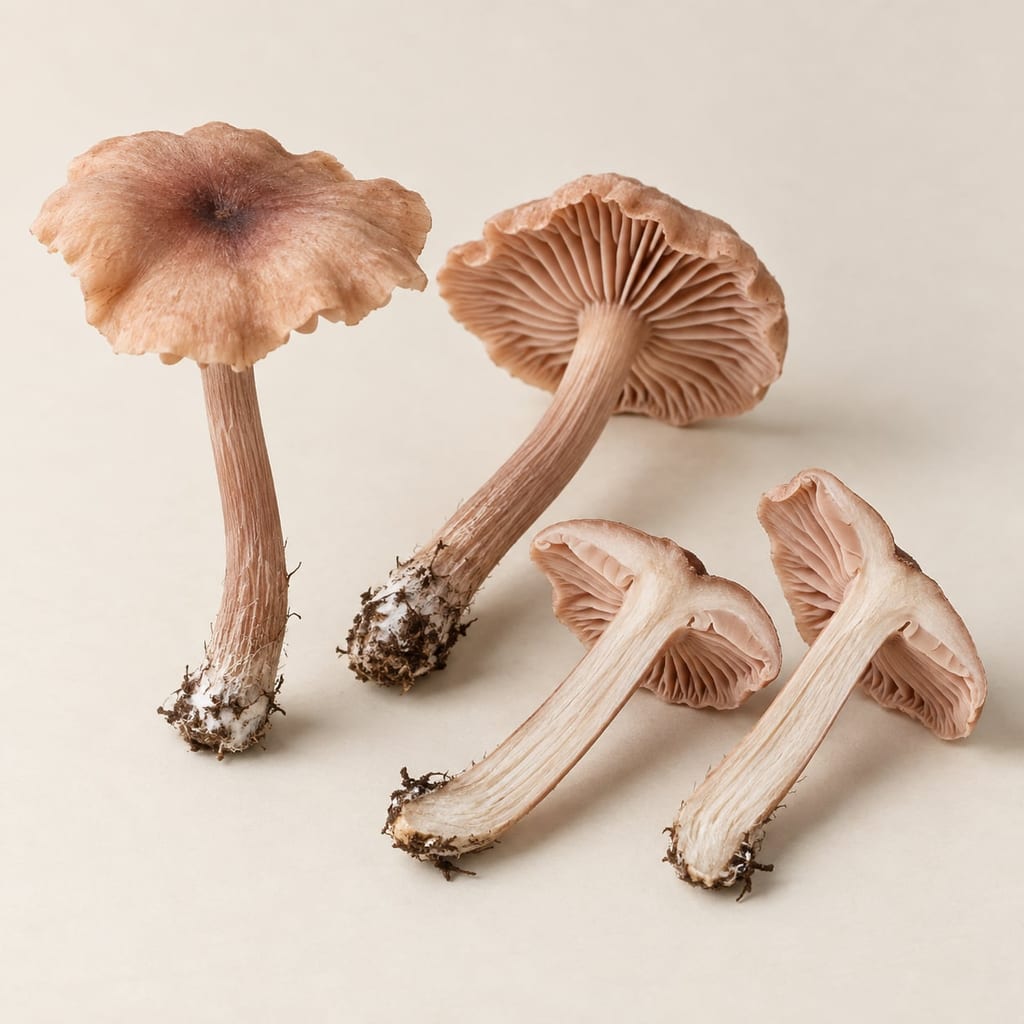
Asian deceiver
Laccaria vinaceoavellanea is a small ectomycorrhizal mushroom sold as food in Yunnan and Sichuan, and it accumulates arsenic in its caps, which the sources treat as a main safety caveat.
 FermenteaWhere food goes to change
Mushrooms
A gelatinous wood-ear fungus described from Yunnan, China, in 2021 and listed as edible in a 2026 Chinese catalogue. Documented food use, preparation and safety are absent.
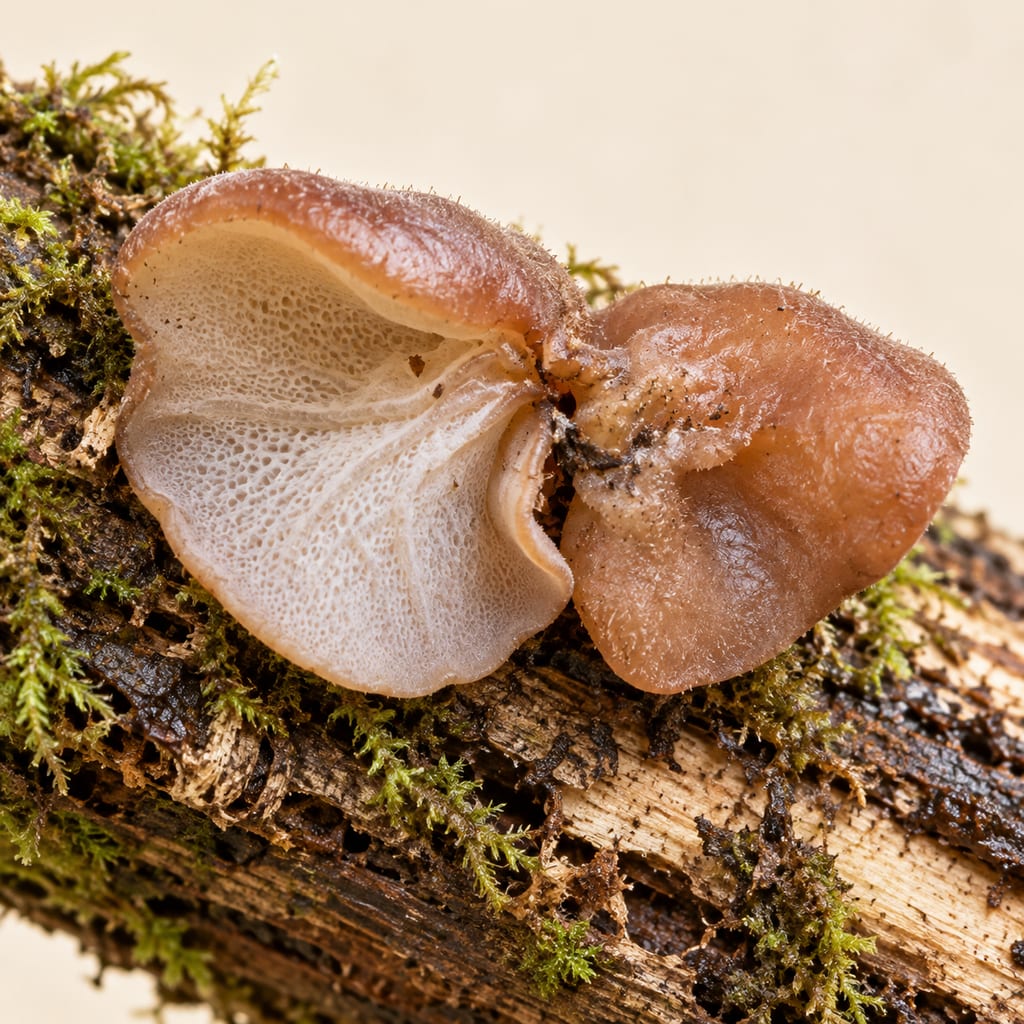
Auricularia lateralis is a gelatinous wood-ear fungus. It belongs to the Auricularia delicata complex, a group of species that look much alike and were separated mainly by DNA sequence data. It was described as new in 2021, so it is one of the more recently named edible fungi in the genus.
Its food status rests on one national catalogue. A 2026 Chinese catalogue of edible and medicinal fungi lists it as edible. That listing confirms a reported property, not a documented tradition of eating it, a market, or a recipe.
The species was described by Wu and colleagues in 2021 from specimens gathered on rotten broadleaved wood in Daxueshan Nature Reserve, Yongde County, Yunnan. Multi-locus phylogenetic analysis placed it in a lineage separate from A. delicata and A. sinodelicata. The authors report that it is morphologically similar to the African A. pilosa but phylogenetically distant from it.
The fruit bodies are described as gelatinous, reddish-brown to fawn, ear-shaped or disc-shaped, solitary or clustered, and up to about 5 cm across. The upper surface is conspicuously hairy and the lower surface is porose-reticulate. The authors stress that macroscopic characters vary within the group, so appearance alone does not settle identity. The name 'wide-haired wood ear' is a literal rendering of the Chinese catalogue name and is not an established English common name.
The type and paratype specimens grew on dead angiosperm wood, which is saprotrophic growth. No cultivation, yield, substrate or harvest calendar is documented. The Yunnan collections are dated August 2014 and August 2015. Those dates describe the specimens only and do not show when the fungus fruits or how long the season lasts.
The sources do not describe a dish, a preparation method, a storage practice or a fermentation use for Auricularia lateralis. The genus-wide culinary history of other wood ears must not be transferred to this species. Its edible status is a catalogue entry for China.
No species-specific toxicological study or validated safe preparation process was found. Wood ears in the A. delicata complex are hard to separate by appearance, and a checklist entry does not make a wild specimen safe to identify or eat. A generated picture, a local name, or resemblance to cultivated wood ear does not establish either identity or safety. Any foraging decision should rest on expert identification and local guidance.
Edible status comes from a national species catalogue. It does not describe how, where or how often the fungus is eaten.
Collection locality of the type specimen and paratypes. It records where specimens were found, not food use, abundance or seasonality.
Laccaria vinaceoavellanea is a small ectomycorrhizal mushroom sold as food in Yunnan and Sichuan, and it accumulates arsenic in its caps, which the sources treat as a main safety caveat.
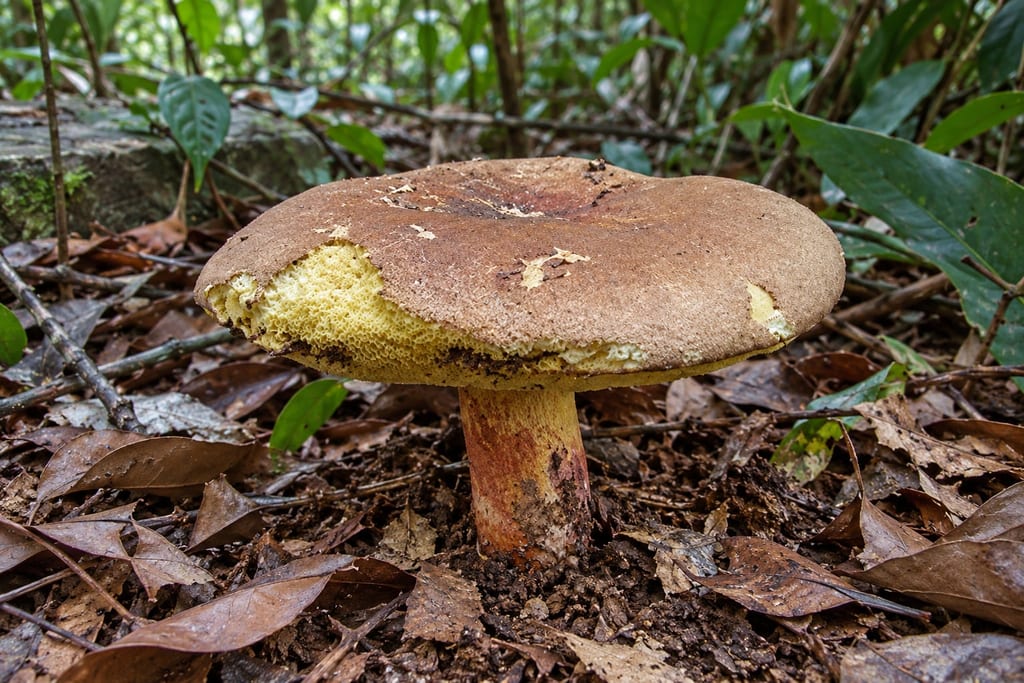
Butyriboletus huangnianlaii is a Chinese butter bolete described from Fujian and later found at market in Pu’er, Yunnan. The local edible label is limited evidence; recurring season and preparation remain unestablished.

Soft, spreadable Calabrian pork sausage made with a great deal of red chilli and fatty pork, stuffed into natural casings, sometimes smoked and matured while staying soft.

A way to add independent temperature logging to an existing food dehydrator without changing its built-in controls or protections. It is a monitoring method, not a rewiring plan.

Pleurotus cystidiosus is the abalone mushroom, a cultivated oyster-type fungus with dark brown caps that grows more slowly and is more demanding than other Pleurotus species.

A dark, balanced vinegar from Emilia-Romagna made by combining cooked or concentrated grape must with wine vinegar, then acetifying and refining it in wood under a protected specification.

A living dairy inoculum that starts controlled cream fermentation, developing acidity and aroma before sour cream or cultured butter is finished.

A small electric incubator holds jars at a selected temperature for yogurt and other documented warm food preparations. Controls, capacity and vessel arrangement vary by model.

Adygean salt is a seasoned table salt associated with Adygea and the wider North Caucasian culinary tradition. Salt is blended with garlic and a variable selection of herbs and spices; the exact mix depends on the named style and maker.

The African Caesar-group mushroom, Amanita masasiensis, is a wild ectomycorrhizal species of central and southern African woodlands, eaten locally. The genus contains deadly poisonous species, so identification needs care.
No community contributions have been published for this entry yet.
Sign in to contribute. Published comments and photos are free to read.
Journal of FungiIdentity · Taxonomy · Morphology · Locality
Global Diversity and Updated Phylogeny of Auricularia (Auriculariales, Basidiomycota)Description as new in 2021, MycoBank MB 825098, type Dai 15670 from Daxueshan Nature Reserve, Yongde County, Yunnan, collected 27 August 2015.
Placement in the A. delicata complex and morphological similarity to A. pilosa.
Cited in: Overview; Taxonomy and identity; Habitat and season; Identification and safety
MycosystemaFood use · Status
Species cataloging of edible and medicinal fungi in China (中国食药用菌物种编目)Entry 723 lists A. lateralis as edible (食用).
Cited in: Overview; Food use and preparation; Identification and safety