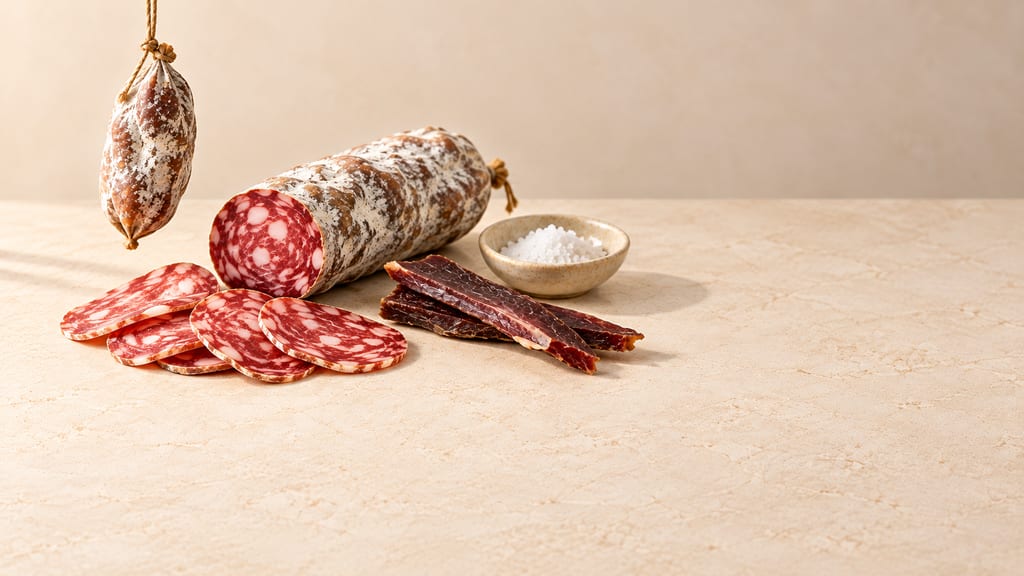
Fermented meat around the world
Dry salami, sour pork with rice, matured sheep and aged blubber follow different paths from animal to food. Their stories connect microbes with climate, slaughter, migration and the meals people share.
 FermenteaWhere food goes to change
Substrates
Barley groats are barley kernels with their inedible outer hull removed, sold whole or further cut and polished. In Småland’s coarse isterband sausage, cooked korngryn may extend pork and/or beef, alongside or instead of potato.
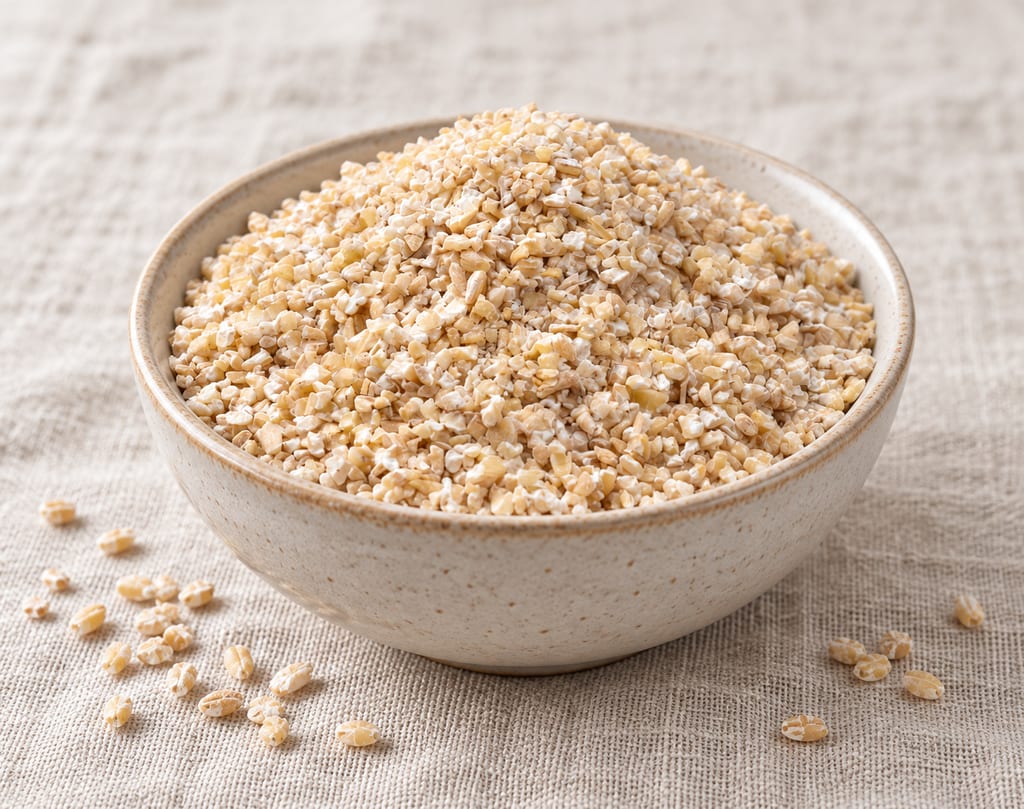
Barley groats start as the kernels of barley, Hordeum vulgare. Most harvested barley is covered by a tough hull that clings to the grain; food processors remove this inedible layer. The resulting hulled grain may be sold whole, cut into pieces, or polished further. Names differ across markets, so “groats” does not guarantee one particle size or one degree of bran removal. A package label and the grains themselves matter more than the broad name.
Hulled or dehulled barley is not the same as pearled barley. The European Union’s technical definition of pearled grains specifies removal of the outer coat, pericarp, germ and much of the outer and aleurone layers; in a less polished product more of those layers remain. Pot barley, pearl barley, barley grits and groats can overlap in retail naming, yet processing changes the kernel and the cooking result. Barley grits are cut pieces; flour is milled; flakes are flattened; malt has been steeped, germinated and dried. They are not interchangeable ingredients.
The edible kernel contains a starchy endosperm, an embryo or germ, and outer layers that include the bran. The hull is the separate inedible covering that adheres to the kernel in covered barley. Dehulling aims to remove that covering; additional pearling wears away more of the kernel. The boundary between named commercial grades can be a matter of how much material a mill removes, so the everyday terms do not by themselves tell a cook whether the bran and germ are intact.
Barley is one of the early domesticated cereal crops of Southwest Asia. The wild ancestor, Hordeum vulgare subsp. spontaneum, grew across a broad area. Archaeobotanical work tracks changes in the rachis, the central stem that holds the kernels: wild ears shatter readily, while non-shattering forms are easier to harvest and spread under cultivation. The evidence supports a gradual and geographically complex process, including likely separate selection chains. It does not point to one settlement as the undisputed birthplace of every cultivated barley.
Groats have a narrower story than barley itself. Removing a hull is a practical step between a covered grain and food, but this evidence cannot date the first groats or assign them to a particular people. This page therefore uses the Neolithic crop history for the plant and treats named groat use as a separate culinary record.
Barley evolved into a crop with two-row and six-row forms, and into covered and hulless types. The row count describes how kernels are arranged on the ear; it does not name a groat grade. Covered types carry a firmly attached hull that must be removed for food. Hulless types lose it more readily at harvest but can still carry adhering hull fragments that need cleaning. Crop type, milling treatment and final groat size are different characteristics.
The Canadian Grain Commission separates crop classifications from food processing. Covered and hulless describe how the hull attaches to the kernel at harvest; two-row and six-row describe the arrangement of kernels on the ear. Neither distinction says whether a retail bag contains whole groats, cut pieces or polished grain. This separation helps keep three questions apart: what kind of barley grew, what milling removed, and what a cook purchased.
The clearest connection for barley groats in this atlas is Småländska isterband. Smaka Sverige, the Swedish Board of Agriculture’s food-culture project, describes a coarse, lightly smoked sausage with a pronounced sour character. It identifies cooked barley groats and/or potato as extenders mixed with ground meat. Contemporary formulations often use pre-boiled korngryn in place of, or alongside, potato. The grain is part of the sausage mixture, not a garnish added after fermentation.
The official account places the named style in Småland and says isterband was historically popular across southern Sweden, including on Christmas and smörgåsbord tables. It also records an older practice of hanging stuffed sausages near a wood-burning stove, where drying and naturally present lactic-acid bacteria contributed to sourness. The same page notes that producers now use other ways to create that flavour. Those historical descriptions explain the ingredient’s context; they are not a safe, validated recipe for home meat fermentation.
Smaka Sverige calls out the range found among isterband: degree of sourness, fat and meat content, saltiness and smoke can differ. It also distinguishes the lightly smoked Småland style from some more heavily smoked Västergötland products. Those variations show why the grain should not be treated as a fixed proportion or as a defining ingredient in every sausage bearing the isterband name. Potato remains another documented extender, and the Swedish account reports current producers may replace it or combine it with groats.
The groat’s size and treatment shape its role. Whole kernels keep their form; cut groats expose more surface; pearling removes more of the outer layers. Barley groats retain a substantial amount of starch and outer material, and the degree of processing affects texture and cooking behaviour. A cut grain softens differently from an intact one, while additional polishing changes the amount of bran left. These differences matter when the grain is mixed with meat because cooked kernels contribute a visible, distinct texture rather than disappearing like flour.
In a sausage, cooked groats can contribute grain texture and absorb moisture in the mixture. Smaka Sverige confirms the pre-cooking step for current Småland-style products, but does not set one universal groat size, grain-to-meat ratio or cooking time. Such details vary by producer and should not be guessed from the ingredient name. Nor does the heritage source's historical hanging description supply validated fermentation, drying or storage controls.
Outside sausage, hulled and pearled barley can be cooked as grain dishes, while cut groats are used in porridges and other cereal foods. Barley can also be malted for brewing or ground for flour. These uses begin from related kernels but involve different treatments. In particular, malting means controlled germination and drying; it is not simply another name for groats. Barley flakes are also processed: grain is conditioned and flattened, rather than left as whole or cut groats.
Barley contains starch, protein, fiber and beta-glucan, but the amounts vary by cultivar, growing conditions and how much of the kernel remains after processing. A nutritional figure from one covered, hulless or pearled sample should not be transferred to every bag labelled “groats.” The food-science review describes the several processing routes and their effects; it does not offer one universal composition or cooking instruction for the product name.
The kernel’s outer layers are not merely an appearance. They are part of the grain structure, so removing them changes the proportion of endosperm and the texture of the cooked result. The food-processing review describes the flow from cleaned and conditioned grain through dehulling, then through pearling or polishing when that product is wanted. It describes flour as a further milling product. In other words, a groat is not just a synonym for any barley food; the term points to a grain form before flour-making and away from malt, which has been germinated.
Korngryn is the Swedish term used by Smaka Sverige for cooked barley groats in isterband. The singular grain and its processed form can be easy to confuse in translated menus and product labels. The Canadian Grain Commission glossary defines hulled kernels as kernels with their hull removed and uses peeled barley as an example. It separately describes hulless barley as a variety whose hull is naturally loose or absent from the harvested kernel. “Hulless” therefore describes the crop, while “hulled” describes a grain after removal.
European trade terminology draws another boundary: pearling removes more of the grain layers than basic dehulling. A groat may consequently be whole or partly polished; some may be split. This item is about food-grade dehulled barley groats as an ingredient family, not a claim that every market uses one uniform definition. Where a source specifically calls for korngryn, that name should be kept instead of silently changing it to barley flour, malt, pearl barley or another cereal.
The Swedish source gives no cultivar, barley variety, producer or mill specification for the groats in its description. It does not say whether the traditional or current sausage uses whole, cut, hulled or polished kernels in every instance. This account leaves those product details open instead of inventing a standard and does not promise that one form will behave exactly like another in a sausage mixture.
Words on a label can be especially imprecise in translation. A grain sold as barley groats in one market may be whole and hulled; another product called groats may have been cut or polished. The relevant distinction in a recipe is the form the author actually uses. The Swedish source's word korngryn establishes groats, but leaves the particular size and polish undescribed. Unless a producer specification or tested recipe resolves that point, a source-based account should retain the local word and state the gap.
Barley is a gluten-containing cereal. The National Institute of Diabetes and Digestive and Kidney Diseases lists barley among grains whose gluten triggers the immune response in people with celiac disease. Barley groats, whether whole, cut or pearled, therefore do not become gluten-free through processing. Anyone who needs a medically gluten-free diet should avoid them and use products whose gluten-free status is appropriate to their needs.
That warning applies to the grain itself, not only to bread or malt. A meat product that includes cooked korngryn also contains barley. Reading the full ingredient declaration matters for people avoiding gluten, and the name isterband alone does not reveal whether a particular formulation contains groats or potato. Product recipes vary, as the heritage account notes.
Gluten is a protein mixture in barley as well as in wheat and rye. The NIDDK describes celiac disease as an immune reaction to gluten and lists barley among the grains to avoid. This information is useful even though groats are typically cooked as kernels rather than baked into a loaf: the way a grain is processed does not erase its gluten content. A sausage made with korngryn also contains barley. People who need to avoid gluten should check the complete product declaration.
Barley groats are grain, not a place-specific crop. Barley domestication took place in Southwest Asia, while the ingredient’s relevant use in this assignment is recorded much farther north in a Swedish sausage. Småland is the named landscape for Småländska isterband; the heritage source also mentions historical popularity in southern Sweden and a Västergötland variation. The location rows describe these documented food associations. They do not locate the beginning of groats, the origin of barley, or every place where groats are eaten.
The atlas places Isterband among Nordic fermented meat preparations and says pork and/or beef can be extended with barley groats and/or potato. This ingredient record follows that specific source relationship. It does not turn a grain into an animal product, attribute a fermentation method to the groats alone, or suggest that all Nordic sausages use them.
Barley’s domestication has a deep archaeological record; groats as a named processed ingredient require their own evidence. The sources consulted here explain the cereal and its forms but do not date the emergence of barley groats or trace their movement as a distinct food. Those unknowns belong in the record rather than a made-up origin story.
This record keeps the geography deliberately narrow. Southwest Asia belongs to the evidence for domestication of the barley plant; it is not listed as a historical center for this particular processed grain. The Swedish heritage source supports the Småland association because it names that landscape and describes the sausage formulation. Its southern Sweden note is a broader historical use association. Neither source traces trade routes for groats nor proves a single place where people first prepared them.
Smaka Sverige's account says that present-day isterband producers mix the meat with cooked groats, sometimes alongside or instead of potato. It does not publish a household formula in the cited entry. The ingredient profile therefore describes what the grain contributes and how its processing differs, but it does not supply a sausage recipe, a fermentation schedule or food-safety thresholds.
That distinction matters because a historical description can identify ingredients and customary practice without specifying a safe repeatable process. The old stove-side hanging practice is reported as part of food history, not endorsed as a method. Meat fermentations depend on controlled formulations and conditions that this ingredient source does not give. A cook looking for a practical method needs a separately validated source, and the ingredient page will not fill its gaps with guessed quantities or limits.
The boundary with food-safety guidance is also deliberate. A heritage page can document that a sausage was hung near a stove and developed sourness, but that observation is not a critical control value. It cannot supply safe salt concentration, acidity, humidity, time, temperature or storage life for a modern home batch. This page names the cultural and ingredient relationship, while leaving meat-fermentation directions to sources that validate the complete process.
Barley contains gluten.
The source documents cooked barley groats in Småländska isterband. It does not identify the barley cultivar or groats mill, nor claim that barley originated here.
The heritage account places historical popularity chiefly in southern Sweden; this is a use association, not an origin claim for the grain.
Dry salami, sour pork with rice, matured sheep and aged blubber follow different paths from animal to food. Their stories connect microbes with climate, slaughter, migration and the meals people share.
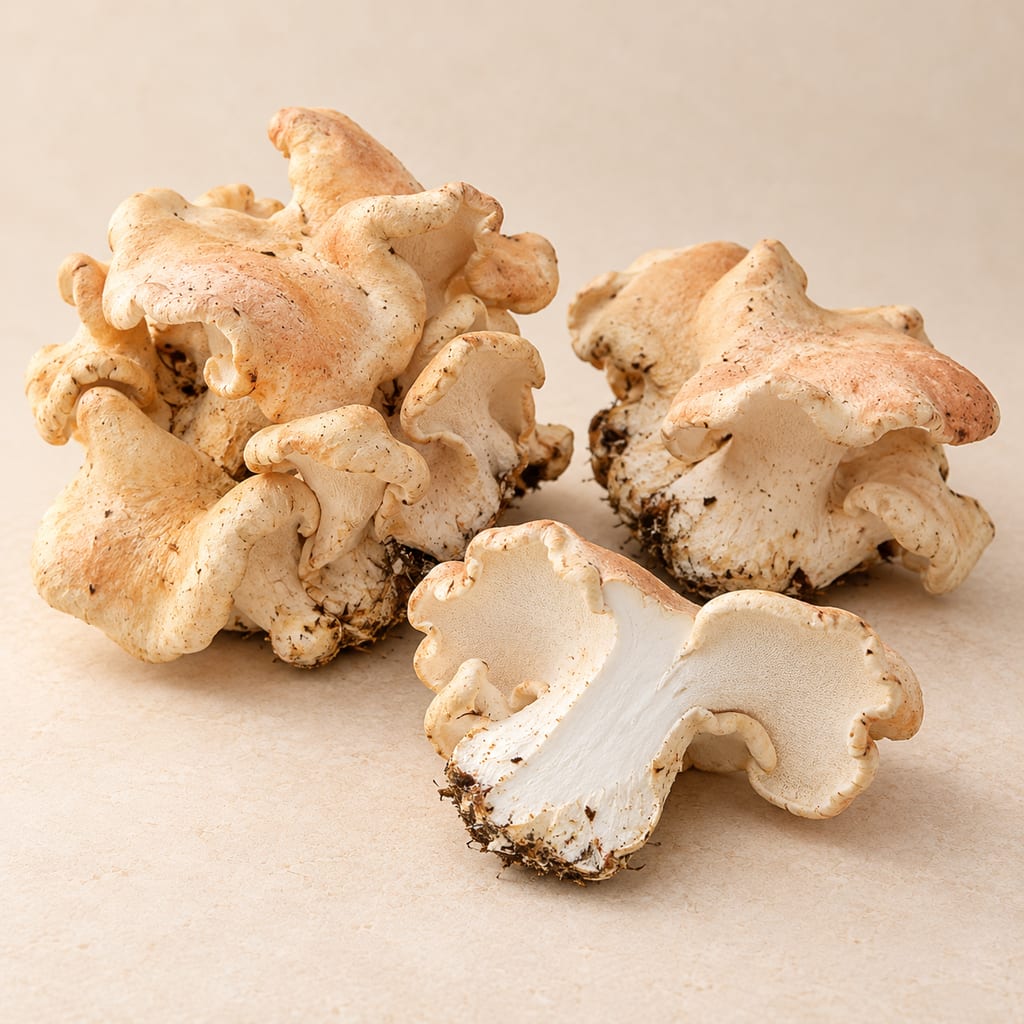
Albatrellus confluens is a ground-growing polypore with fused buff-orange caps. Sources document Chinese market use and regional edibility, but others reject it as too bitter; taxonomy also varies between Albatrellus and Albatrellopsis.

Cicerbita alpina is an alpine perennial whose tender shoots and leaves have been eaten raw or cooked. Sámi milk preparations and modern Carnian dishes are distinct uses, with serious identification and preservation limits.

Aniseed is the dried ripe fruit of Pimpinella anisum, an aromatic Apiaceae spice commonly called a seed. It adds a sweet, warm aroma to breads such as Moroccan krachel and South African mosbolletjies, and is distinct from star anise.
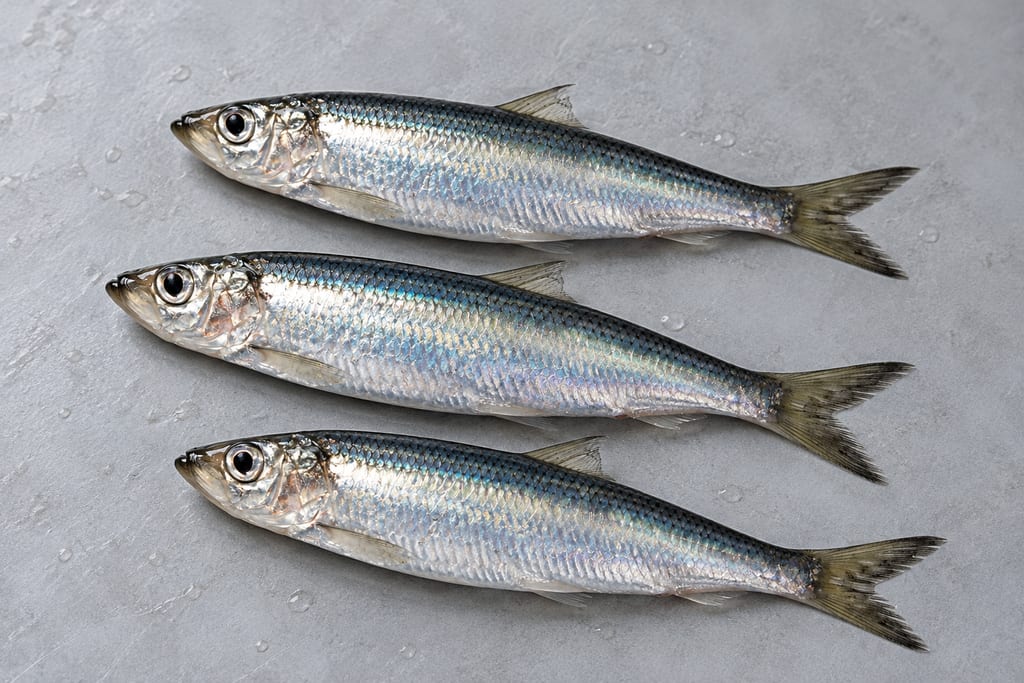
A small, schooling herring of the brackish Baltic Sea, sold under regional names including Finnish silakka and Swedish strömming. It is the raw fish behind several regional preparations, including Sweden’s fermented surströmming.
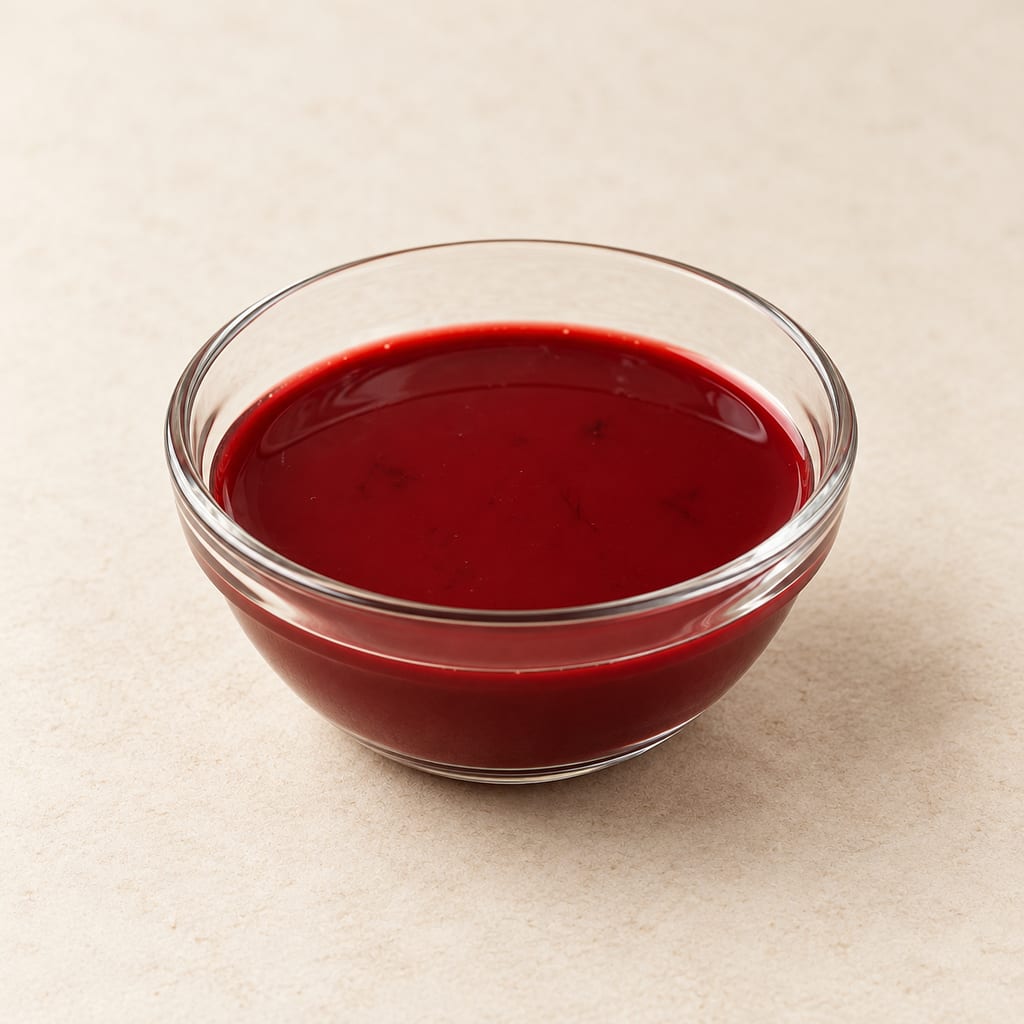
Animal blood is a perishable food material used fresh, coagulated, cooked, dried or processed into ingredients. Its uses range from grain-filled puddings to functional protein ingredients, each with distinct history and handling needs.
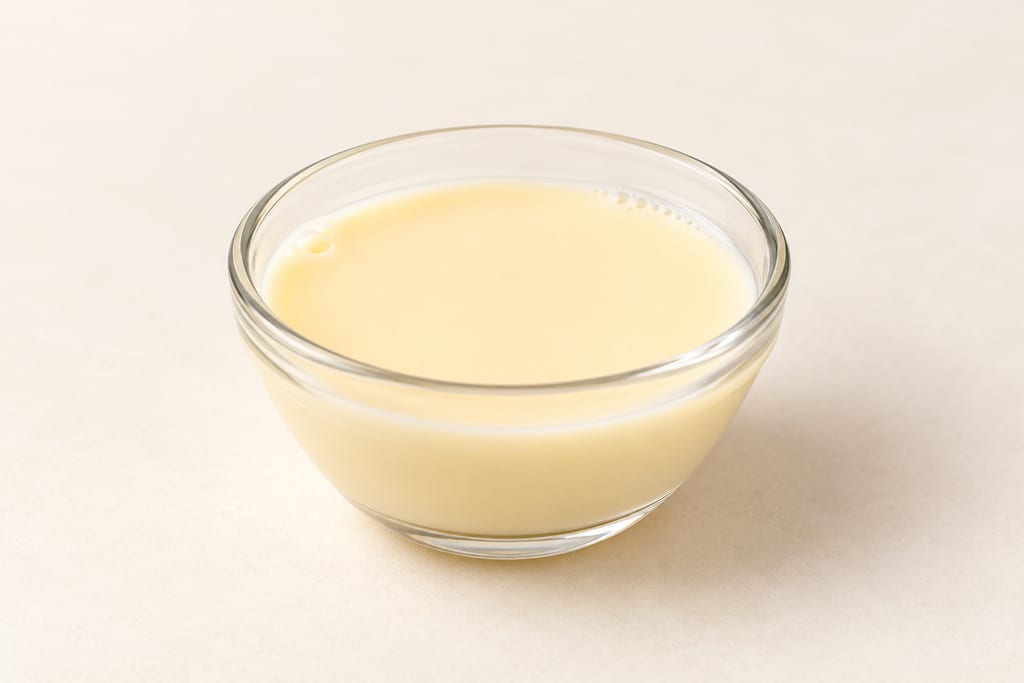
Bovine colostrum is the changing first secretion around calving, concentrated in proteins and maternal immune components; it feeds newborn calves and appears in seasonal foods and processed products.
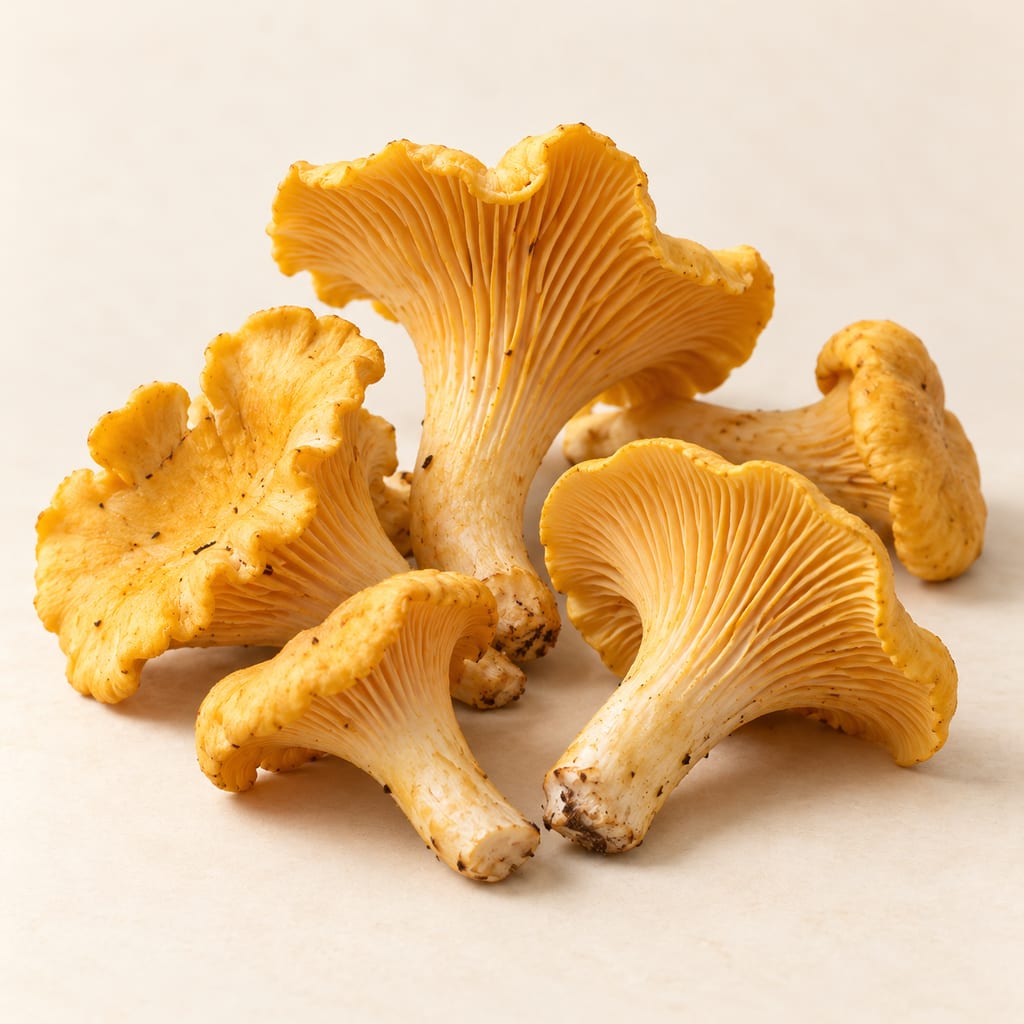
Chanterelles are wild, tree-associated edible mushrooms, particularly the European golden chanterelle Cantharellus cibarius, prized for their firm flesh, fruity aroma and use fresh, frozen, dried or pickled.
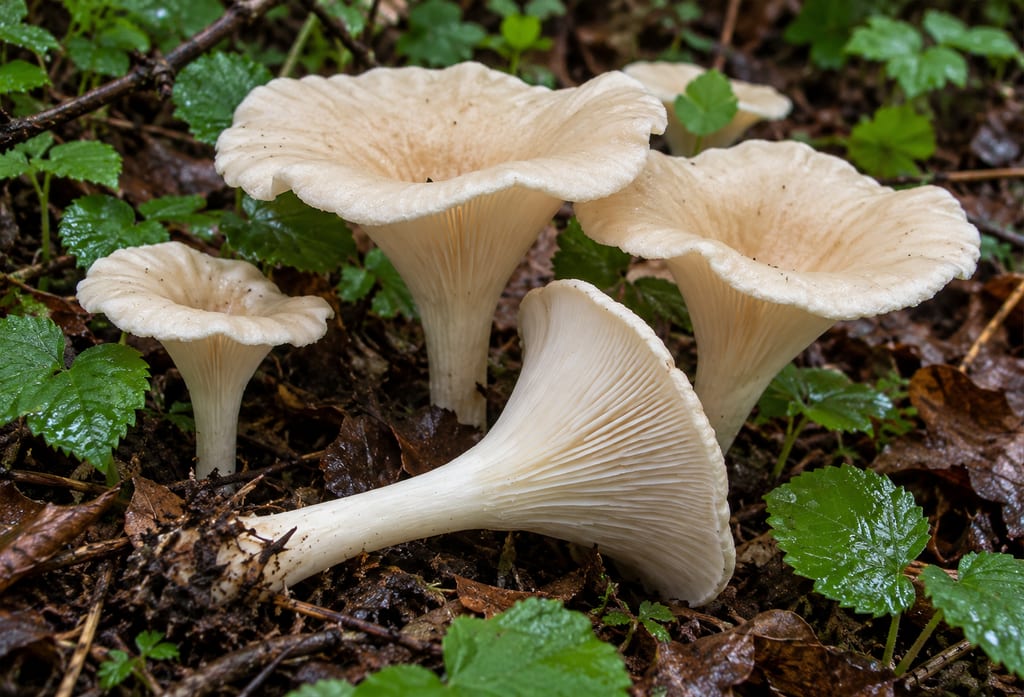
A pale funnel mushroom listed as edible in one Chinese scientific catalogue, but with unsettled taxonomy, uncertain Brazilian records and dangerous lookalikes. The evidence does not support a foraging or preparation recommendation.
No community contributions have been published for this entry yet.
Sign in to contribute. Published comments and photos are free to read.
Smaka Sverige, Swedish Board of AgricultureIdentity · Use · Geography · History
Småländska isterbandThe page identifies Småland as the landscape for Småländska isterband and describes a coarse, lightly smoked, sour sausage.
It says ground meat is mixed with cooked barley groats and/or potato; current formulations often replace or supplement potato with pre-boiled barley groats.
It records historic popularity in southern Sweden at Christmas and smörgåsbord meals and an earlier practice of hanging stuffed sausages above a wood stove to dry and develop sourness.
It notes substantial variation in smoking, acidity, meat/fat content and saltiness; these are product descriptions, not a validated home process.
Cited in: Korngryn in Småland’s isterband; Texture, starch and preparation; The words around groats; A dietary distinction that matters; Geography and the limits of the record; Cooking context without invented directions
Royal Society Open ScienceHistory · Origin
Geographic mosaics and changing rates of cereal domesticationThe review places barley domestication in Southwest Asia, drawing on geographically widespread wild populations.
Its archaeobotanical synthesis describes gradual appearance of non-shattering rachis remains and probable multiple regional selection chains; it does not identify a single birthplace or date for barley groats.
Cited in: From wild grass to cereal crop; Geography and the limits of the record
PlantsIdentity · Processing · Forms
Barley in the Production of Cereal-Based ProductsThe review describes removing the inedible hull for food use; it describes hulled grain or groats as retaining more of the kernel than pearled barley.
It distinguishes dehulling from further pearling/polishing, milling, flaking and malting; barley grits can be a cut form and processes vary.
It reports that barley processing affects texture, cooking behaviour and composition; no single processing specification covers every product sold as groats.
Cited in: A kernel changed for the kitchen; Texture, starch and preparation
Canadian Grain CommissionDefinitions
Official Grain Grading Guide: GlossaryThe glossary defines hulled kernels as those with their hulls removed and gives peeled barley as an example; it distinguishes hulless cultivars, whose hulls detach readily, from covered types.
Cited in: A kernel changed for the kitchen; The words around groats
European CommissionDefinitions · Forms
Commission Regulation (EC) No 508/2008The regulation's grain definitions distinguish hulled from pearled cereals and describe pearled barley as having the tegument, pericarp, germ and much of the outer and aleurone layers removed. This is a regulatory product distinction, not a universal milling recipe.
Cited in: A kernel changed for the kitchen; The words around groats
National Institute of Diabetes and Digestive and Kidney DiseasesDietary safety
Definition & Facts for Celiac DiseaseBarley contains gluten proteins that can trigger the immune response in people with celiac disease; it is not a gluten-free substitute.
Cited in: A dietary distinction that matters
Canadian Grain CommissionCrop types · Grain processing
Official Grain Grading Guide: BarleyThe guide distinguishes covered barley, whose outer hull remains attached after harvest, from hulless barley, whose loose hull commonly falls away during harvesting.
It describes food uses including grain products made by splitting and polishing.
Cited in: From wild grass to cereal crop