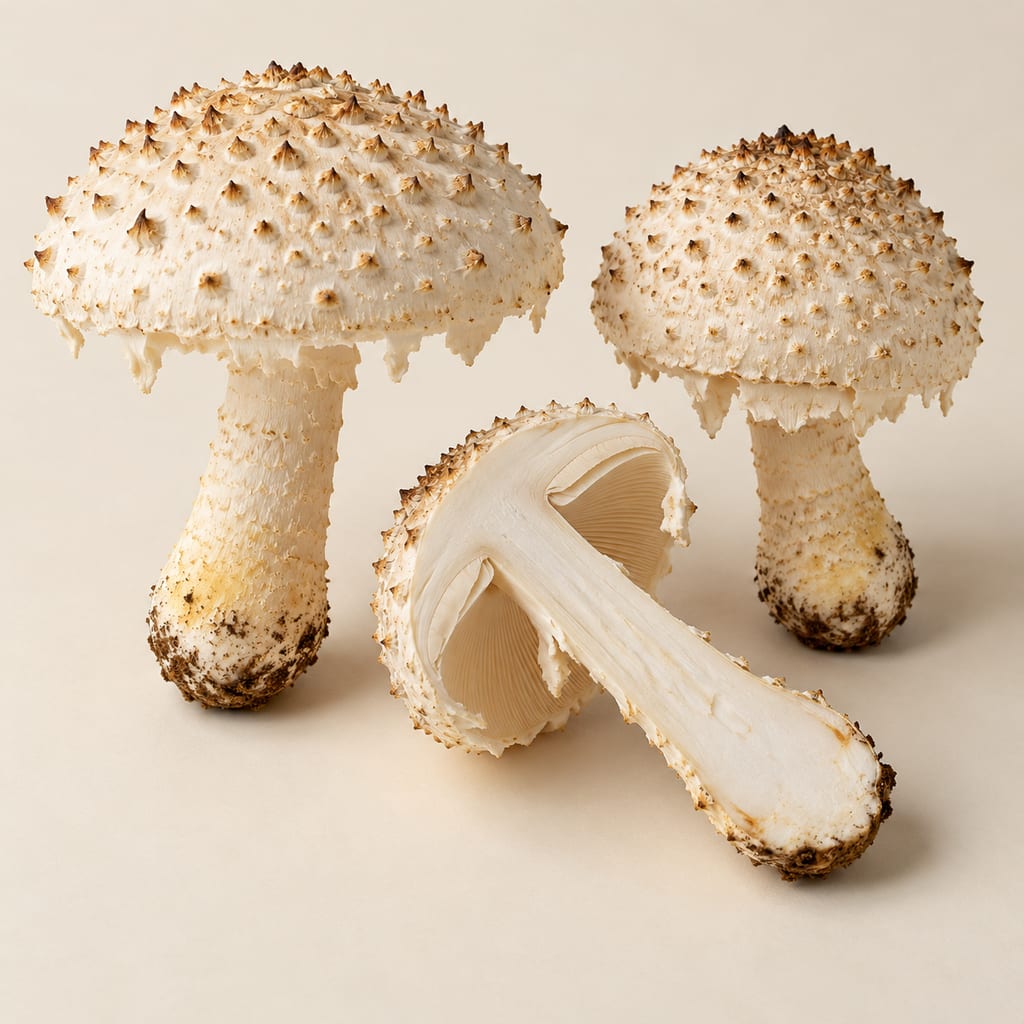
Amanita afrospinosa
Amanita afrospinosa is a white, warted Amanita of miombo woodland in southern and central Africa. A regional food-use record exists, but the Amanita genus includes deadly species, so no safe use is established here.
 FermenteaWhere food goes to change
Mushrooms
Wild ectomycorrhizal chanterelle of miombo woodland. An IUCN assessment reports consumption in Zimbabwe; sources reviewed here give no preparation method or food-safety validation.
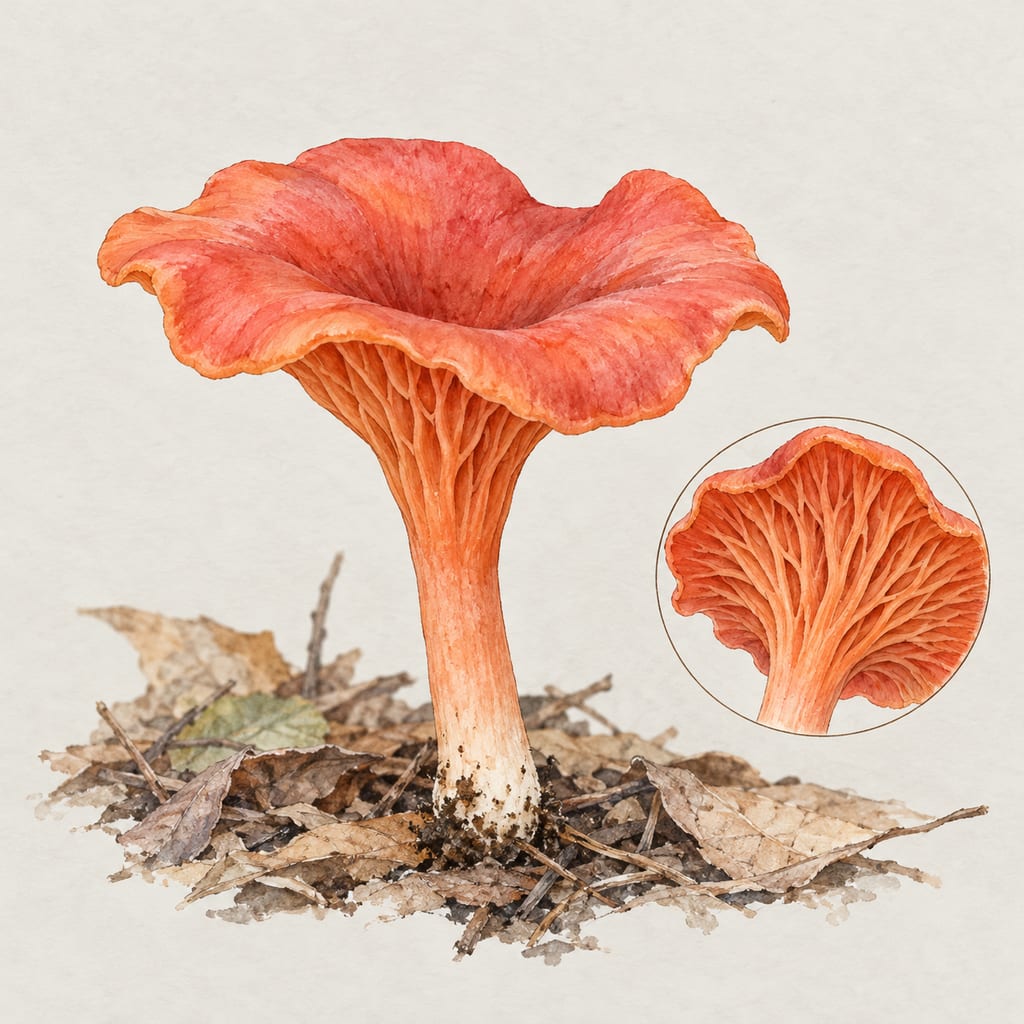
African chanterelle is the English name in the catalogue for Cantharellus heinemannianus, a wild chanterelle-type fungus. The EFTA species page describes it as ectomycorrhizal, growing in open forest and miombo woodland. The page names no host tree or plant species.
The EFTA page places it close to Cantharellus addaiensis. It separates the two by the larger, fleshier fruiting bodies of C. heinemannianus, its less tightly packed gill-like folds (lamellae), and its distinctive spores. These are field and taxonomic notes, not a guide to identifying the fungus for eating.
The EFTA species page lists Zambia, citing Eyssartier and Buyck (1998). A later IUCN assessment describes the species as likely more widespread in miombo woodland and reports consumption in Zimbabwe, as well as records from eastern Democratic Republic of the Congo. It notes that an older Tanzania record may not represent this species with certainty.
The page gives no publication or update date for the record.
The IUCN assessment reports consumption in Zimbabwe and cites regional studies. The EFTA species page gives no edibility rating or preparation method. Neither source here validates a preparation method or establishes the safety of a mushroom identified by appearance.
Catalogue inclusion is not an edibility verdict. Nothing on this page is an identification guide, a recipe or a statement of safe use.
The EFTA species page records Zambia as the only known area and gives no food use or preparation. The catalogue's food-use summary is not confirmed by the page.
Amanita afrospinosa is a white, warted Amanita of miombo woodland in southern and central Africa. A regional food-use record exists, but the Amanita genus includes deadly species, so no safe use is established here.
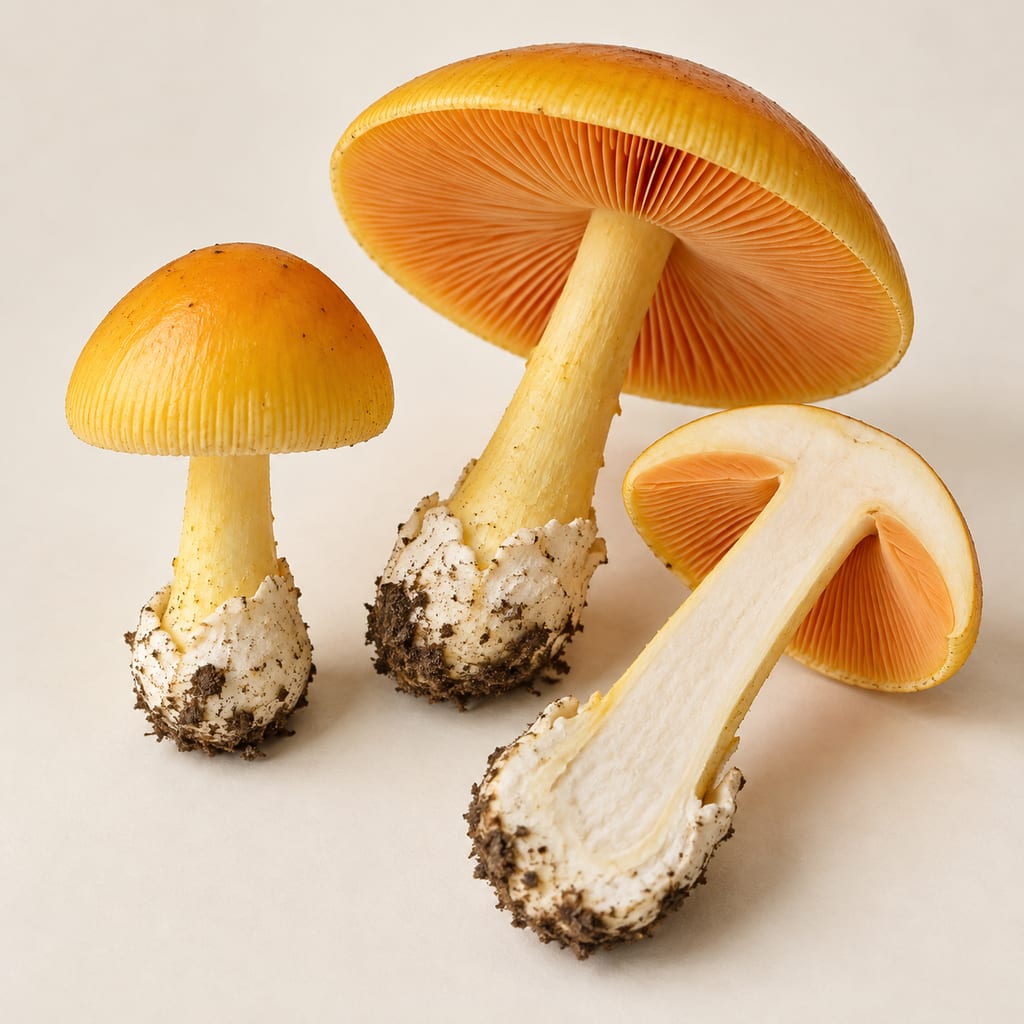
A wild miombo Amanita recorded as a local food in northern Zambia, with collections also documented in Haut-Katanga, DRC. The evidence is regional and does not make wild identification safe.
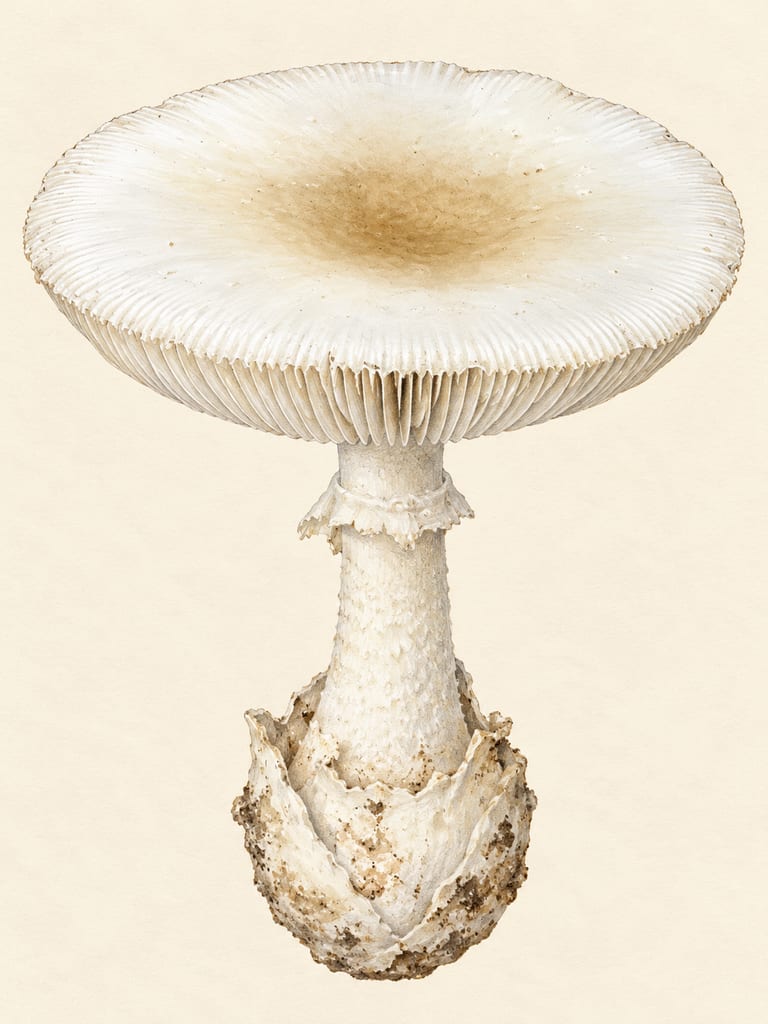
Amanita loosei is a large wild Amanita of tropical African miombo and open woodland, gathered and sold as a valued seasonal food. Regional food-use evidence is not a guide to identifying wild mushrooms.
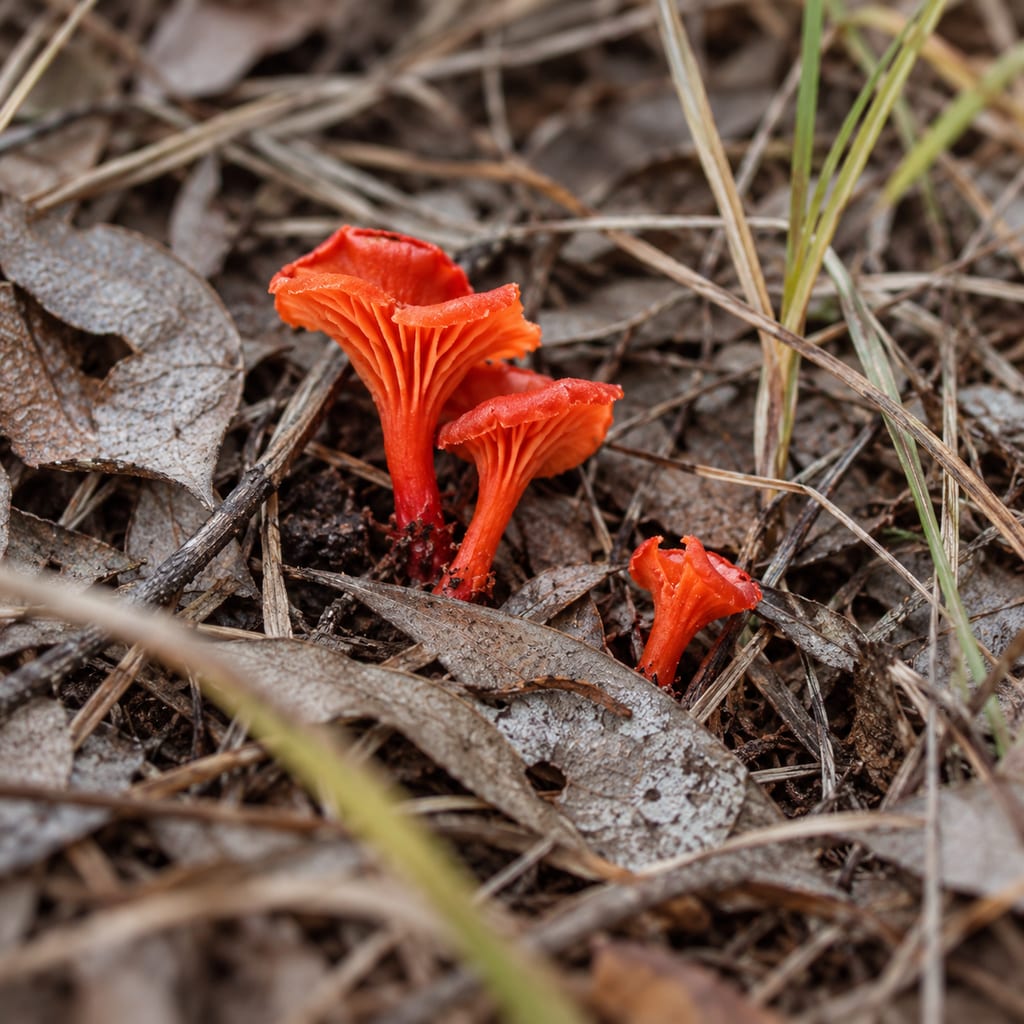
A small red ectomycorrhizal chanterelle of African open forest and miombo. Sources document regional food use but differ on taste and harvesting preference; older records as C. floridulus or C. miniatescens require care.
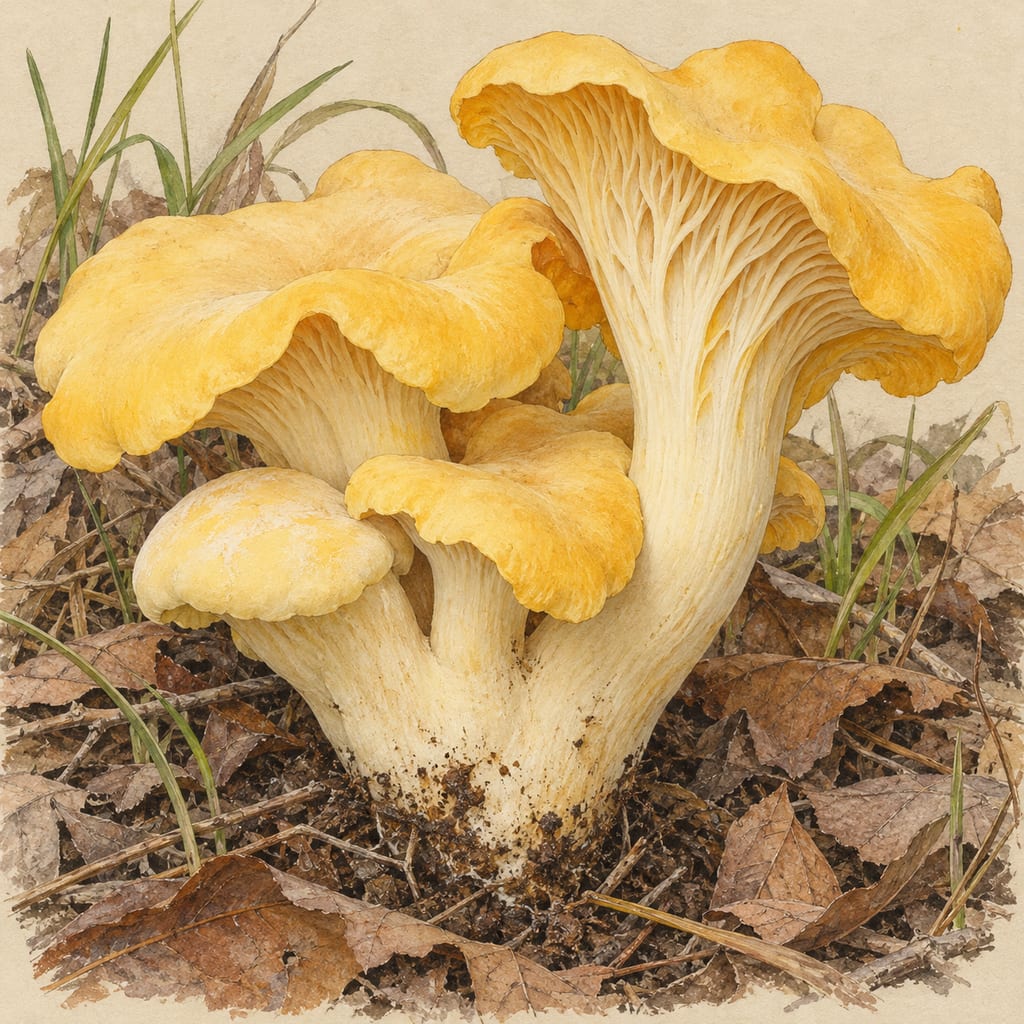
Cantharellus afrocibarius is a robust yellow chanterelle of the miombo woodlands of southern Central Africa. It is eaten and sold locally, is rated Vulnerable on the IUCN Red List, and is hard to tell from related species in the field.
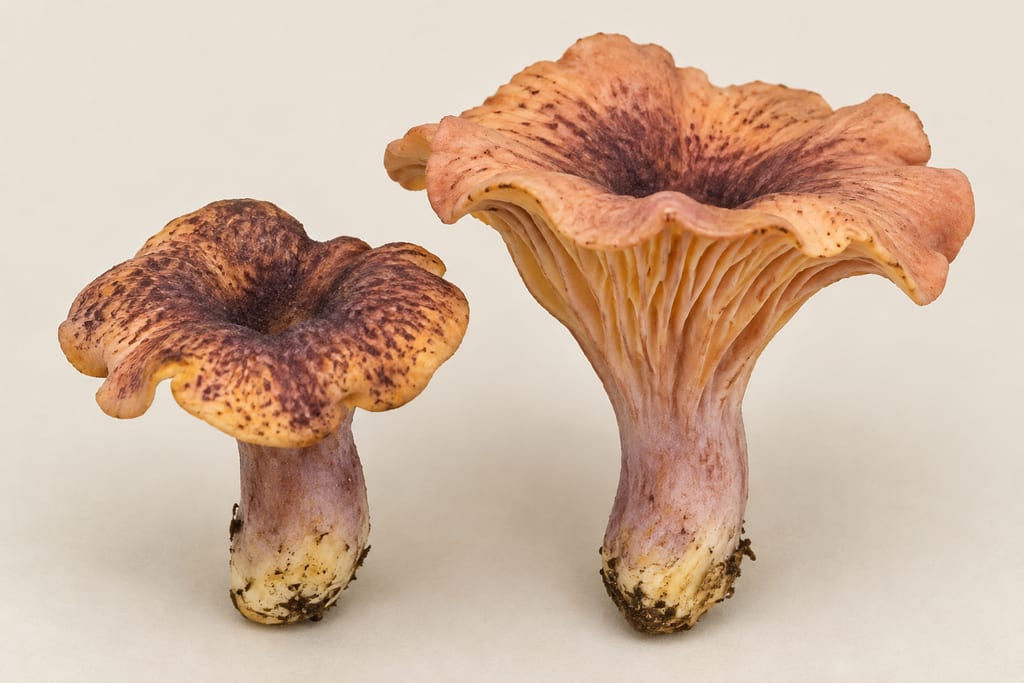
Wild Central African chanterelle recorded as locally eaten in voucher-backed Tshopo interviews. Historical country claims exceed the current revised range; preparation, fermentation and toxicology remain undocumented.
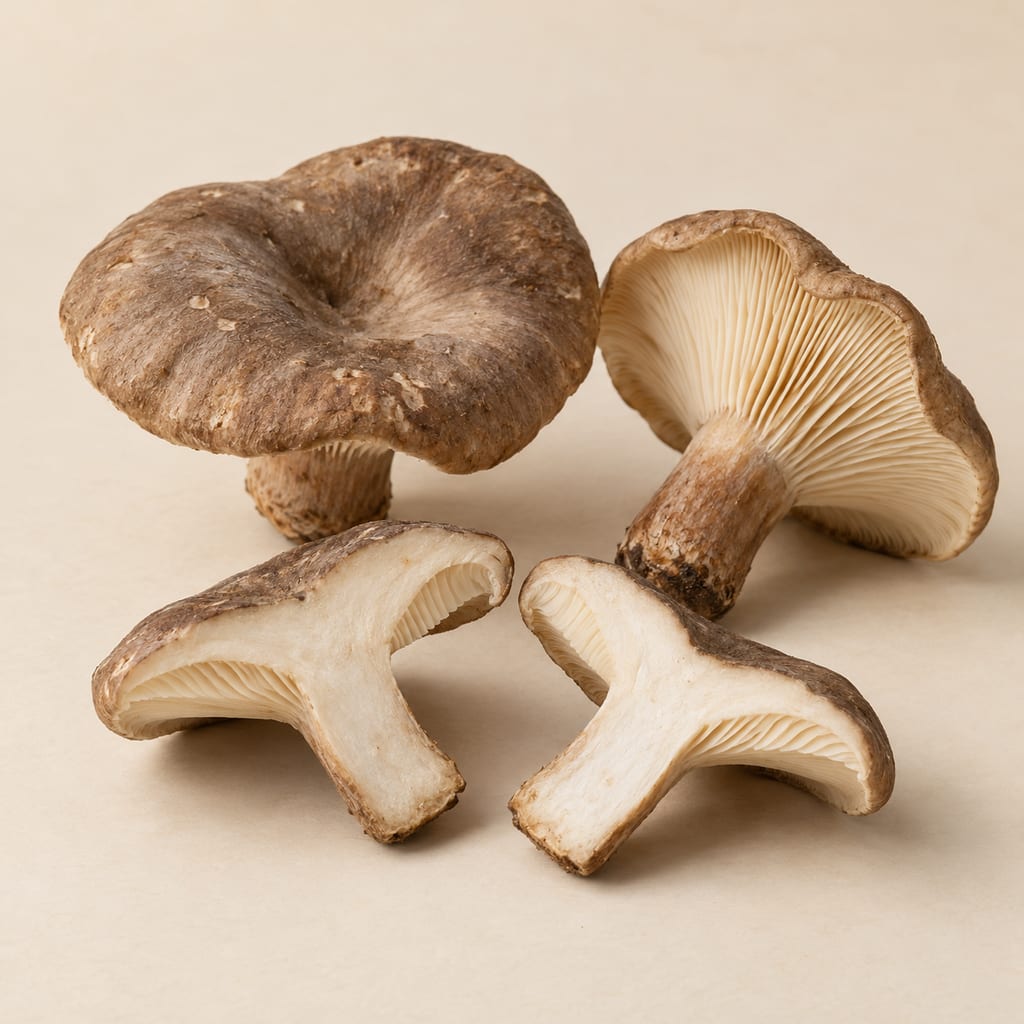
Lactarius kabansus, the African milkcap, is an ectomycorrhizal mushroom of miombo woodland that has long been recorded as food in central and southern Africa.
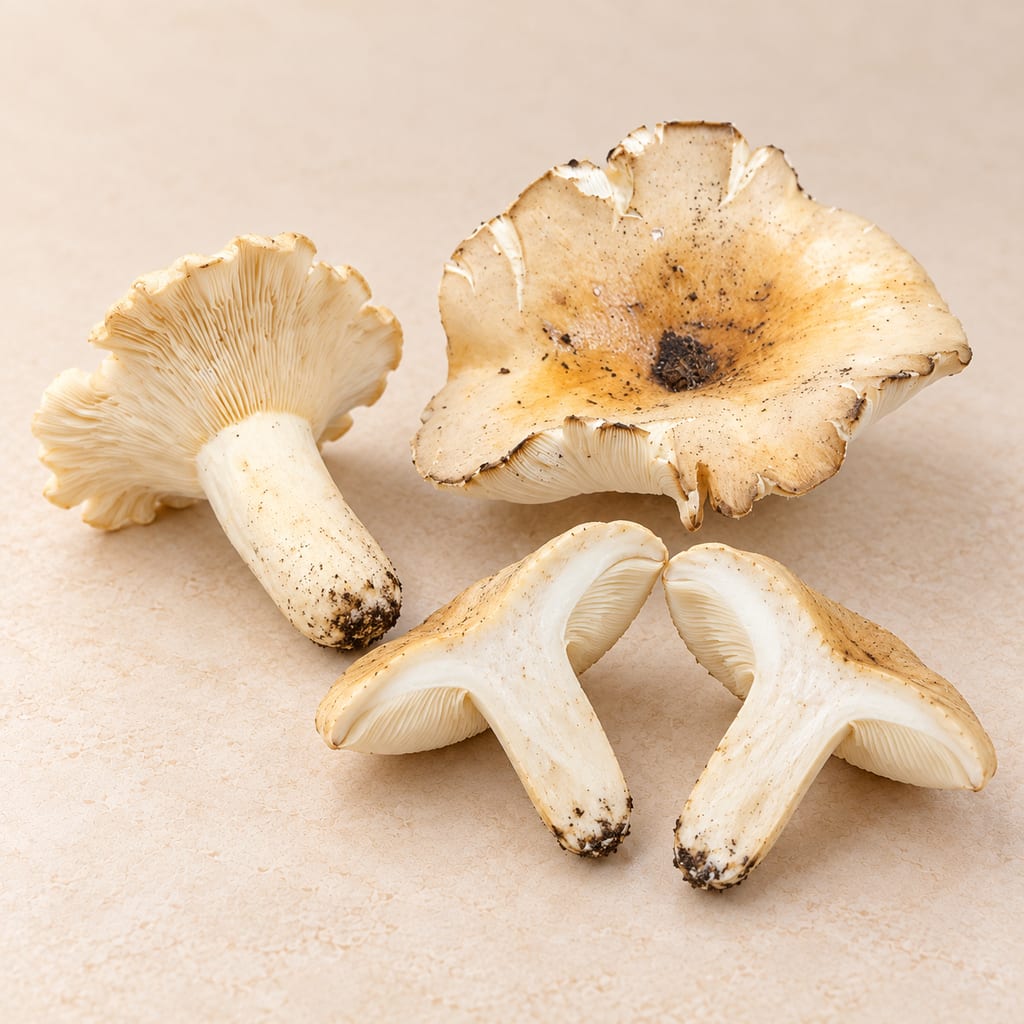
African milkcap, a wild ectomycorrhizal milkcap of woodland in central, eastern and southern Africa, recorded as an edible wild mushroom in regional inventories and food studies.
No community contributions have been published for this entry yet.
Sign in to contribute. Published comments and photos are free to read.
European Fungi Taxonomy and Applications (EFTA)Reference · Safety
Cantharellus heinemannianusKnown distribution Zambia, citing Eyssartier and Buyck 1998
Ectomycorrhizal in open forest and miombo; no host named
Close to C. addaiensis; differences in fruiting-body size, lamellae spacing and spores
No edibility rating, preparation or warning on the page
Global Fungal Red List InitiativeReference · Food use · Safety
Cantharellus heinemannianus (IUCN Red List assessment)The 2022 IUCN Red List assessment describes the species as likely more widespread in miombo than the known records indicate; records include eastern DRC and an uncertain older Tanzania record.
The assessment reports consumption in Zimbabwe, citing Mlambo and Maphosa (2017).
The assessment does not give a preparation method or validate identification-based food safety.