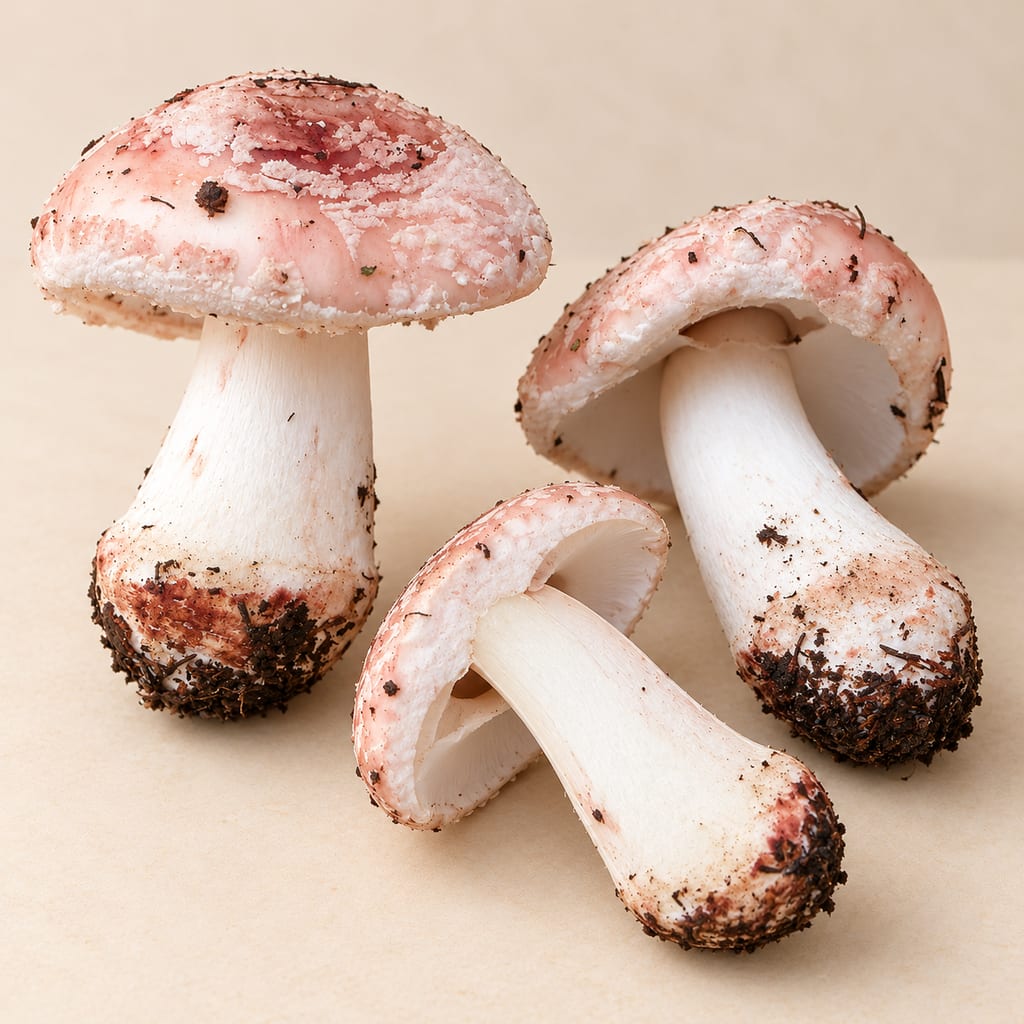
American blusher
Amanita novinupta is a western North American blusher, a forest mushroom recorded as food in Mexico, and one that must be cooked because its raw flesh is toxic.
 FermenteaWhere food goes to change
Mushrooms
A clustering woodland agaric, now named Collybiopsis confluens, documented as eaten in one Mexican lake basin and listed as edible in older Hong Kong and Malawi checklists. Its food status varies by region.
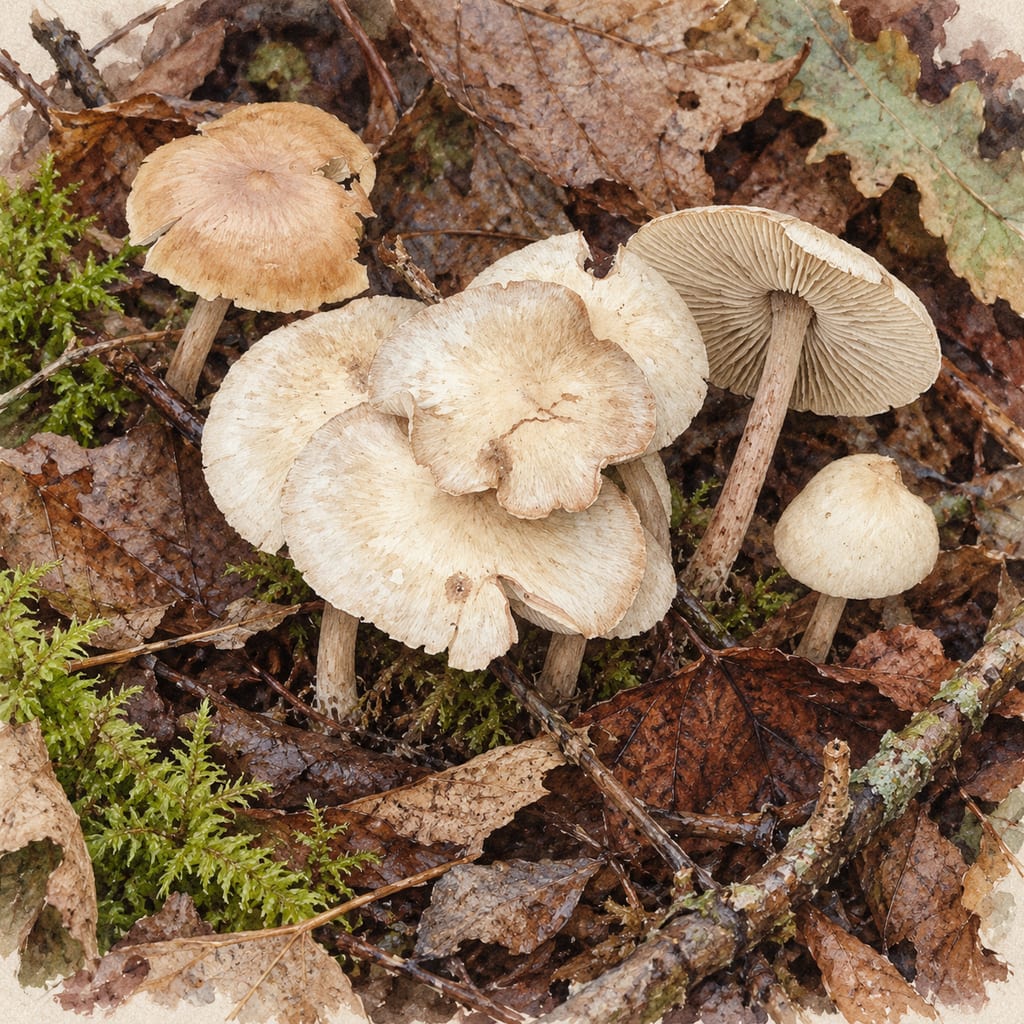
The current accepted name is Collybiopsis confluens (Pers.) R.H. Petersen (2021). Collybia confluens is the older catalogue name and remains a searchable synonym, as do Gymnopus confluens and Marasmiellus confluens. The basionym is Agaricus confluens Pers.
Molecular work reports a substantial split between European and North American material, and it describes the North American lineage as a separate subspecies. The intercontinental history is unresolved, and morphology does not readily separate the populations. Records from Asia have not been resolved against that treatment, so a historical record under the old name should not be read as confirmed identity with modern European material.
A Purépecha ethnomycological study of the Lake Pátzcuaro basin in Michoacán, Mexico, lists this mushroom among those eaten locally. The authors describe the caps as tough or chewy, and they record boiling followed by frying, or boiling and stewing with oregano, cumin and tomato. This is historical ethnographic evidence of local practice, not a tested safety protocol, and it does not show that boiling removes any toxin.
The FAO wild edible fungi compilation places the name in a food category defined by reported consumption. Its checklist labels, edible for Hong Kong and edible for Malawi, carry no preparation or practice detail. A secondary Spanish field guide calls the species inedible or of little culinary value, while noting that young caps may be eaten. The regional and source-level disagreement means no global edibility claim is supported.
Correct identification matters more than any preparation. Common names are not reliable identifiers, and nothing on this page is an identification guide or a recommendation to forage or eat the fungus.
Secondary European accounts describe clustered fruiting in woodland, especially broadleaf and beech woods, with occasional association with conifers. Most records are in autumn, with some in summer. A North American field account gives July to November. These are regional observations, not a global calendar, and a single season should not be presented as universal.
Mapped places should stay at the level the sources support: the Pátzcuaro basin and Michoacán for the ethnographic record, and country or regional centroids for the Hong Kong and Malawi checklist labels. The Hong Kong and Malawi entries cite older checklist material and add no independent observation.
Five reference photographs are linked from sources that identify their subjects as Collybiopsis confluens or the older synonym Collybia confluens. Those source identifications have not been independently confirmed on this page. The generated hero is an illustrative reconstruction based on published descriptions and source-labelled photographs, not a specimen photograph. These images show source-reported appearance only; they are not an identification guide, a foraging recommendation or evidence that the species is safe to eat.
Ethnomycological record of local consumption; no coordinates inferred.
Checklist label only; no practice detail.
Checklist label only; no practice detail.
Amanita novinupta is a western North American blusher, a forest mushroom recorded as food in Mexico, and one that must be cooked because its raw flesh is toxic.

Ripe avocado flesh is the soft, buttery, fat-rich pulp of Persea americana, eaten raw. It is low in acid, so it is a fresh ingredient that needs care in chilled dishes.
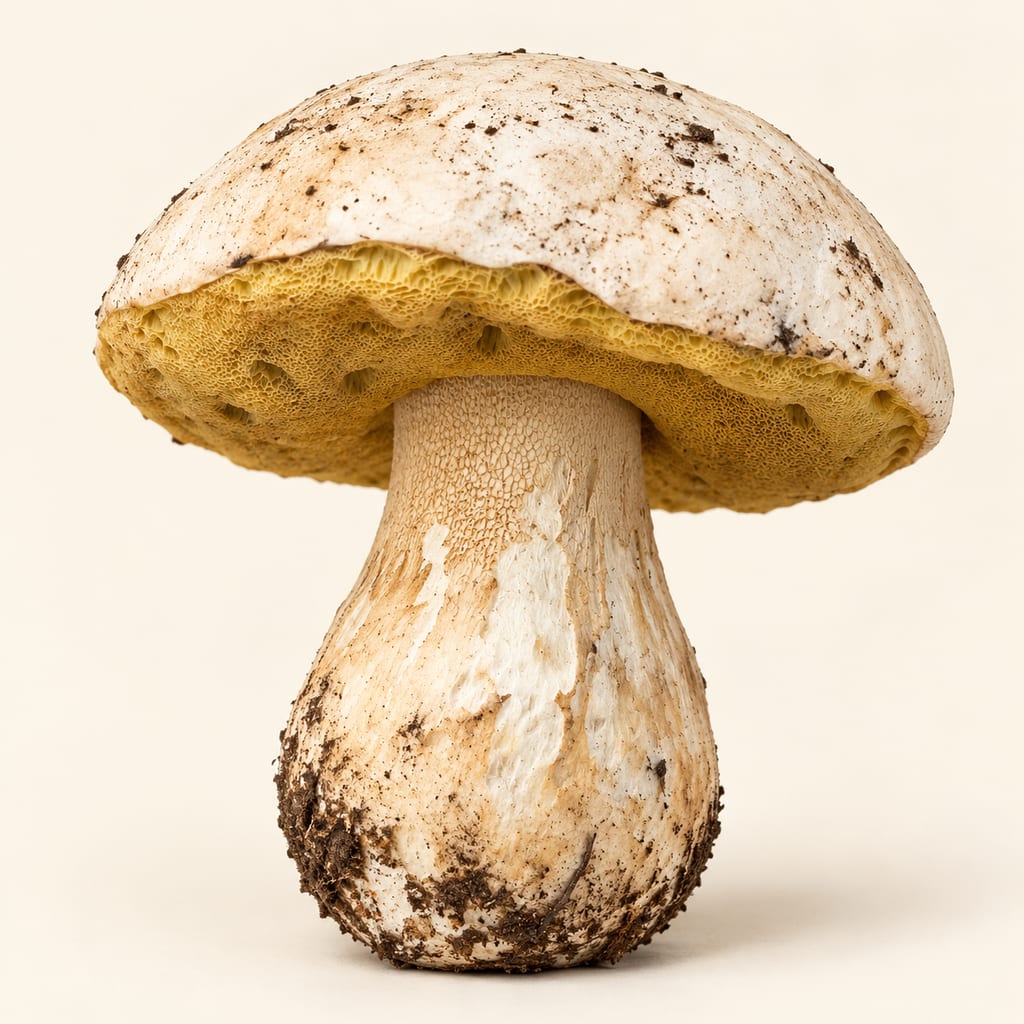
Boletus barrowsii, the white king bolete, is a western porcini relative with documented local food use in Mexico. Its pale cap and netted stem are not enough for field identification.
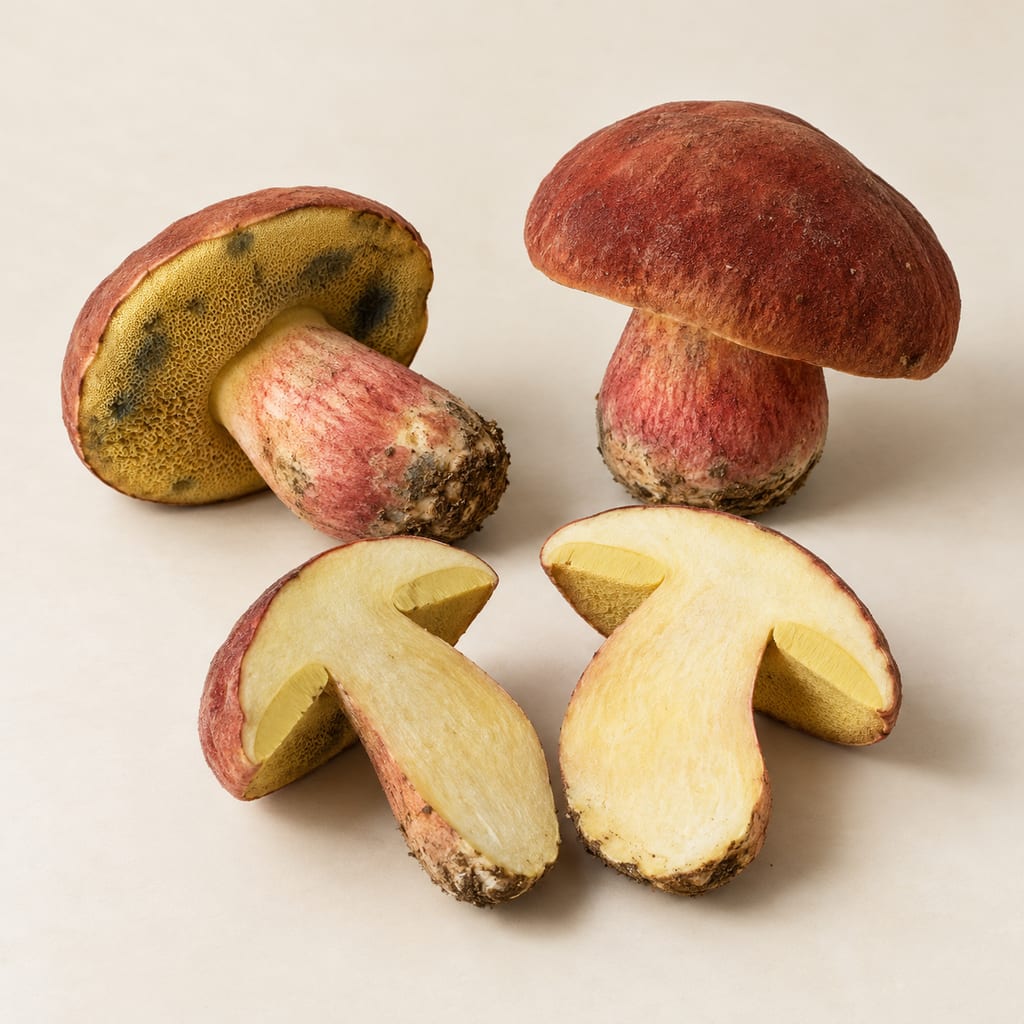
A red-and-yellow bolete described from Michigan and also listed in Mexican fungal records. Historical sources classify it as food, but its species limits, Mexican range and safe food use need careful qualification.
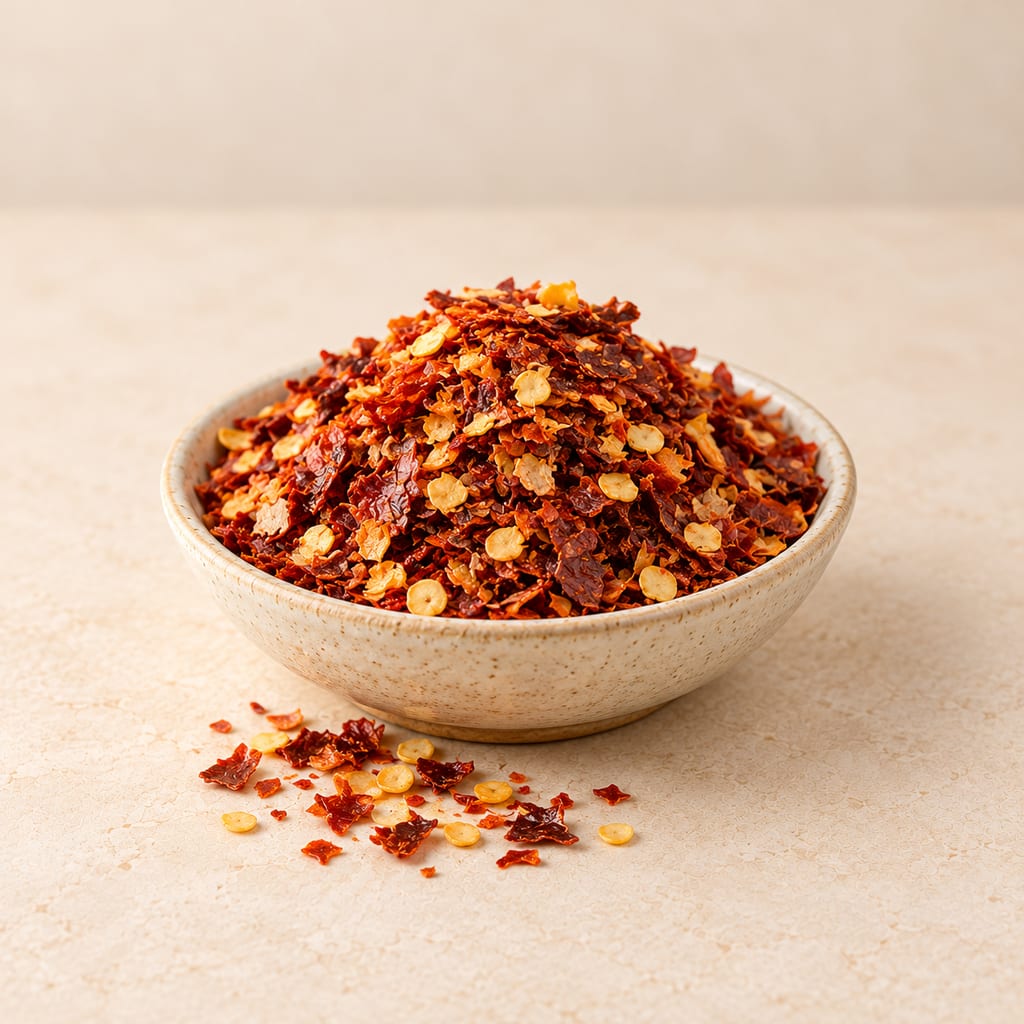
Calabrian pepper flakes are dried red Capsicum annuum from Calabria, crushed into coarse pieces; Peperoncino di Calabria is a protected geographical indication.
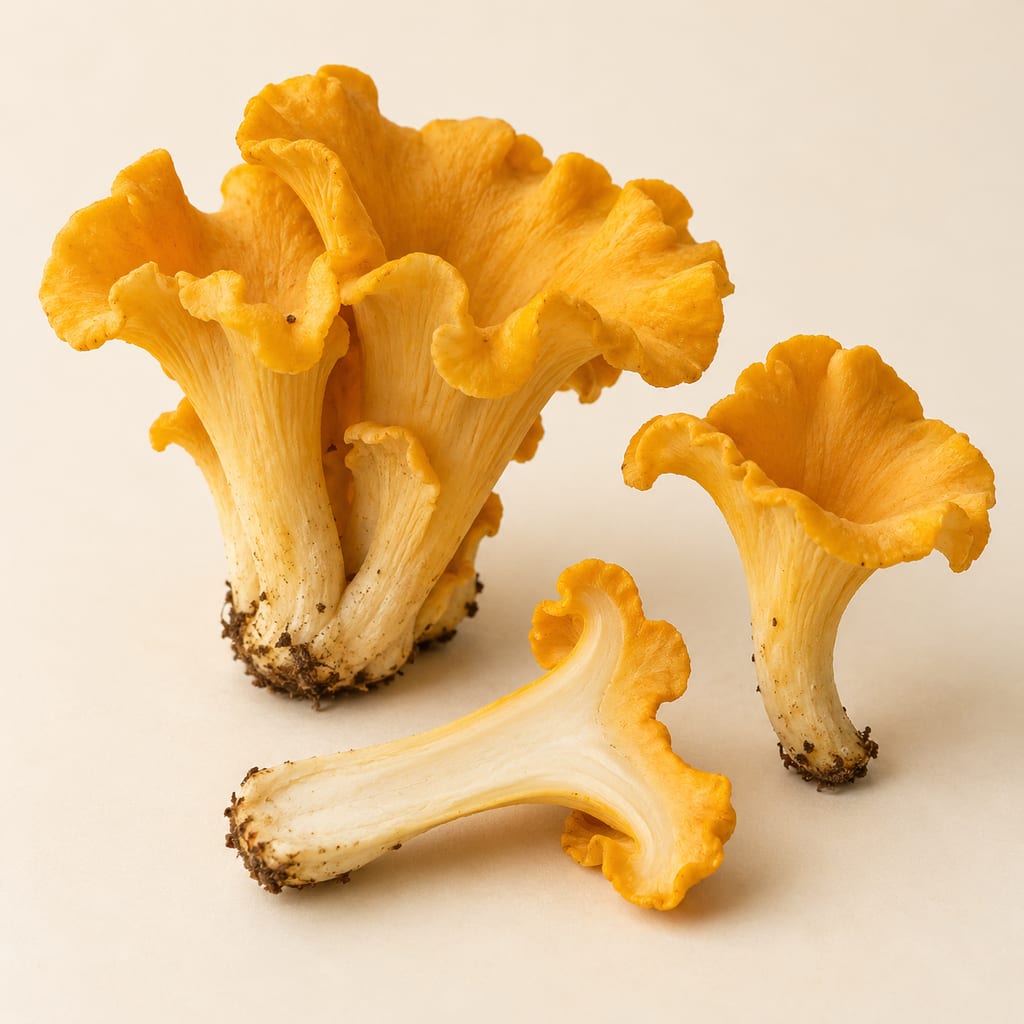
Cantharellus odoratus, the fragrant chanterelle, is a North American and Central American oak-woodland fungus. It was sold in a Veracruz market in the 1980s and in Guatemala in 2002, and its name is still disputed.
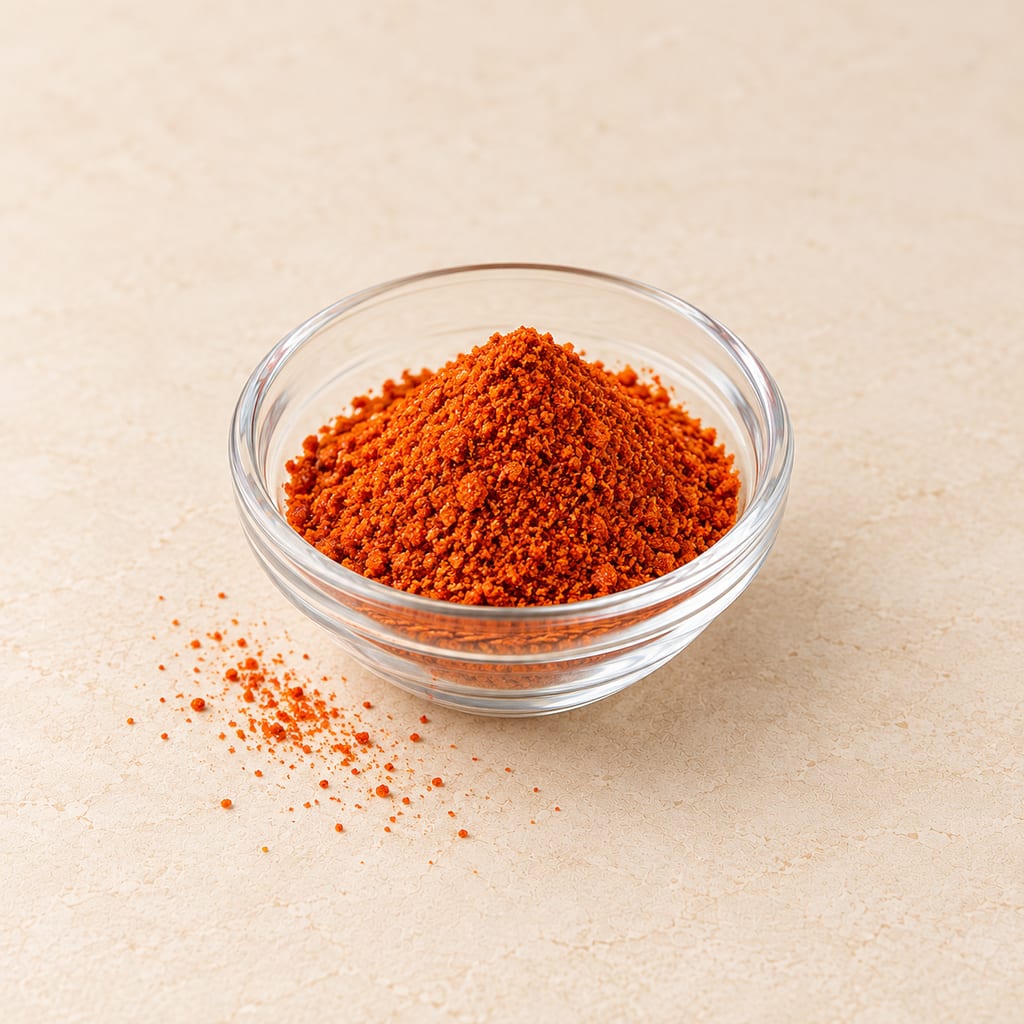
Cayenne is a very pungent red powder from dried, ground hot chilli pods, mostly Capsicum annuum, and the name of the long red peppers it comes from.
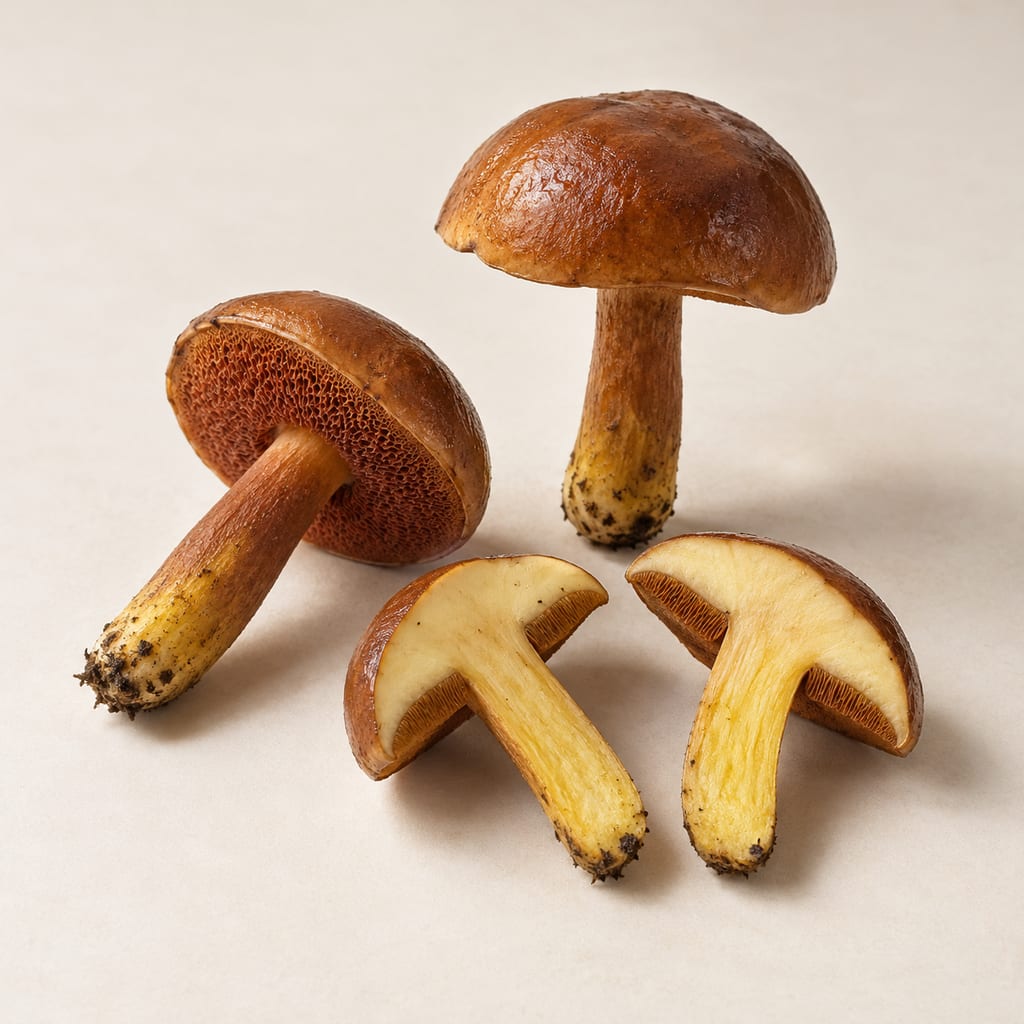
A peppery woodland bolete with historical edible labels and reported condiment use in Querétaro. Current mycological references call its edibility suspect or unestablished; this entry does not recommend consumption.
No community contributions have been published for this entry yet.
Sign in to contribute. Published comments and photos are free to read.
FAOHistory · Safety
Wild edible fungi: a global overview of their use and importance to people (Annex 2 and 3)Food category by reported consumption (Annex 3)
Checklist labels: food for Mexico, edible for Hong Kong, edible (1) for Malawi (Annex 2)
Cited in: Food use and its limits; Habitat, season and places
MycoKeysTaxonomy
Transatlantic disjunction in fleshy fungi III: Gymnopus confluensDivergent European and North American lineages; unresolved intercontinental history; Asian records not resolved
Cited in: Name and identity; Images
NCBI TaxonomyTaxonomy
Collybiopsis confluens, NCBI TaxonomyAccepted name Collybiopsis confluens (Pers.) R.H. Petersen
Cited in: Name and identity
FungipediaIdentification · Safety
Collybia confluensSecondary field accounts of habitat, season and culinary value
Cited in: Food use and its limits; Habitat, season and places