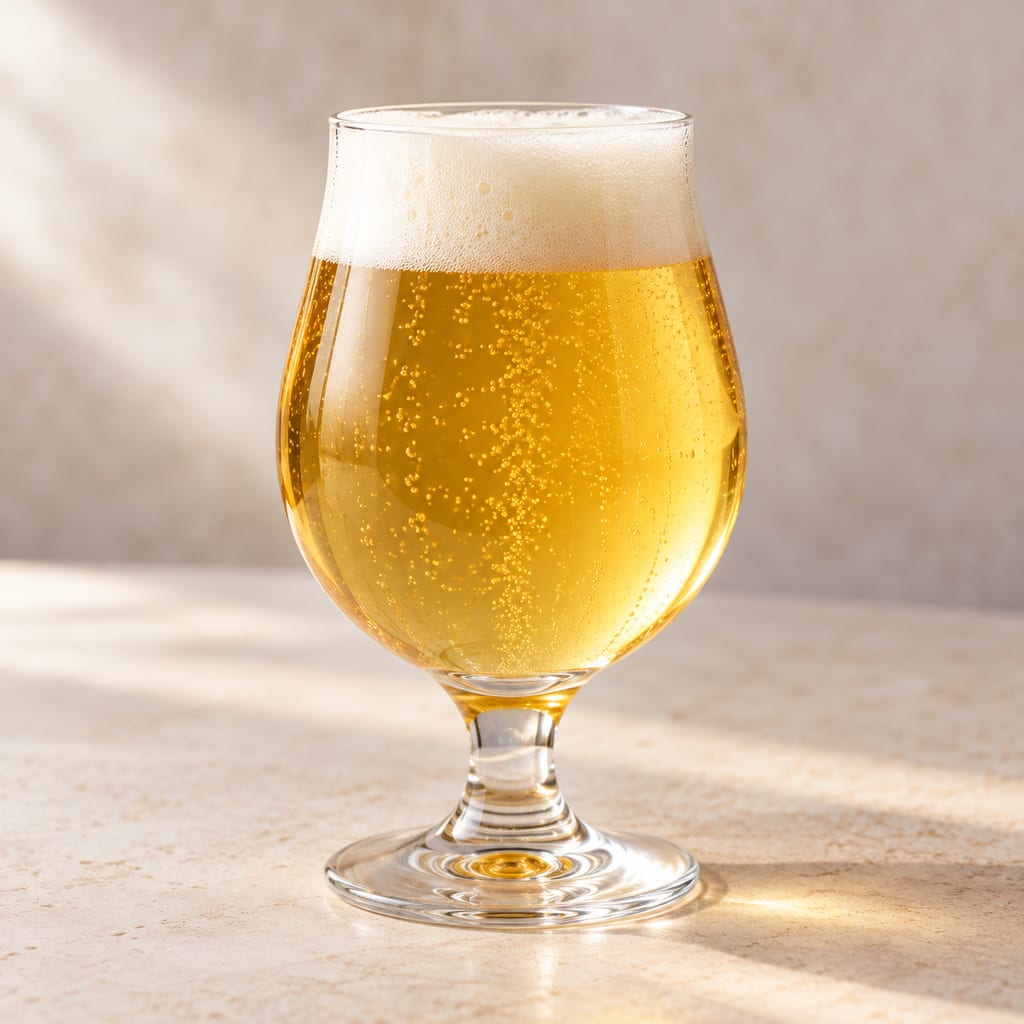
Monk’s Ration Trappist-style single
A pale Belgian-style ale with Pilsner and aromatic malts, cane sugar and Saaz hops, fermented under loose foil before an airlock is fitted.
 FermenteaWhere food goes to change
Spices and aromatics
Saaz, or Žatecký poloraný červeňák, is a Czech fine-aroma hop cultivar used for herbal hop character and bitterness in beer. Its cultivar, product form, origin and lot analysis describe different parts of the ingredient.
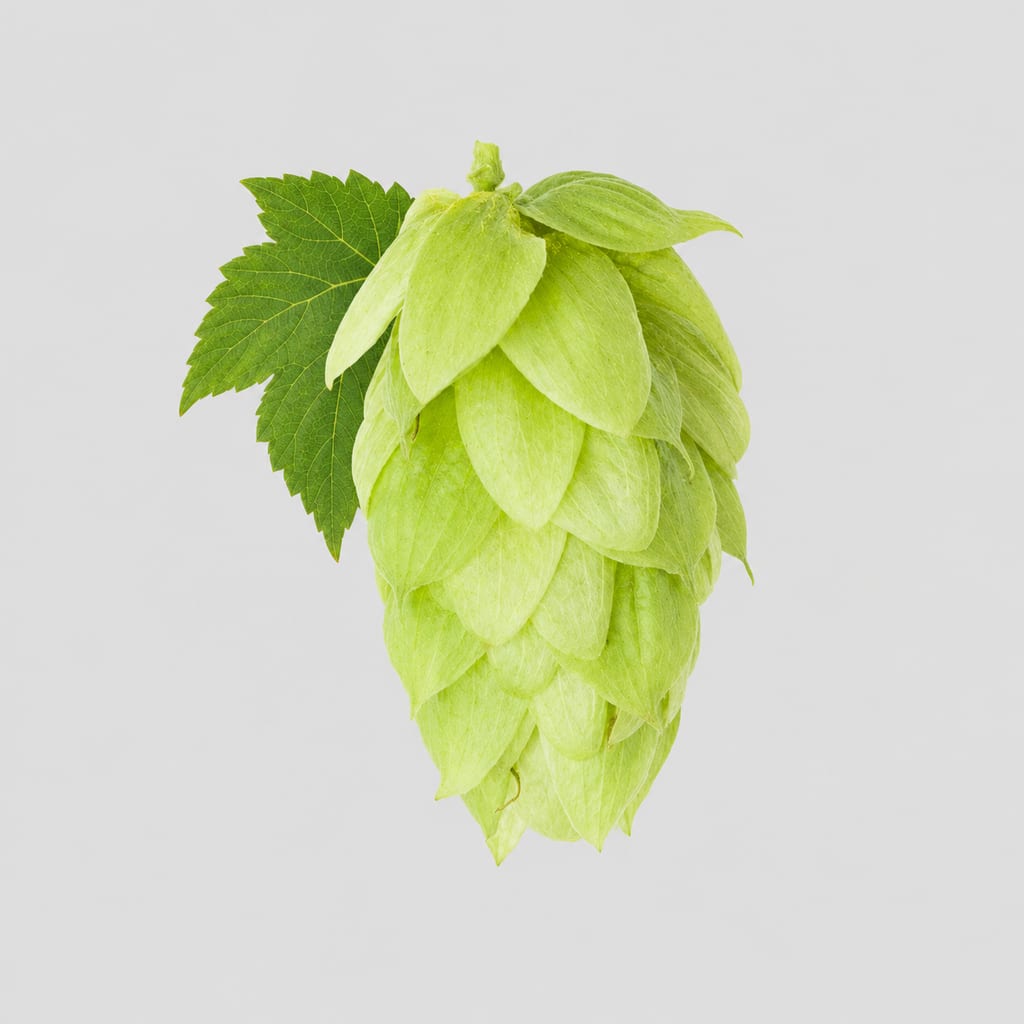
Saaz is a fine-aroma hop cultivar associated with Czech brewing and the hop-growing country around Žatec. Its Czech name is Žatecký poloraný červeňák. The ingredient comes from the female cones of Humulus lupulus, a climbing plant grown for the resins and aromatic oils carried in those cones.
The name belongs to selected planting material within the hop species. A brewer may buy Saaz as dried whole cones or a processed hop product, while a grower handles the living plant and its seasonal crop. Cultivar identity, physical form and the analysis of a particular lot each describe a different part of the ingredient.
Herbal aroma is central to the cultivar’s research-institute profile. Czech growers describe its use in later hopping and cold hopping, while the institute identifies Czech-style lagers as a common use. These are documented applications of the hop; its final effect also depends on the beer and the stage at which it is added.
Around Žatec, hop growing connects agricultural land with a town built to process and trade the crop. Hop fields near the Ohře, villages, drying facilities and urban industrial buildings form parts of the same working landscape. The surviving structures show how a seasonal cone became a product that could be dried, checked, stored and sent to brewers elsewhere.
Origin became part of that trade. The protected name Žatecký chmel entered the European Union register as a Protected Designation of Origin in 2007. The published application describes a defined production area, specified planting material and a system of labelling, sealing and verification. It records commercial work beyond cultivation: establishing which crop a package actually contains.
The cultivar name and the protected product name consequently answer different questions. Saaz identifies the variety. The protected designation adds an origin and specification claim. A recipe that simply asks for Czech Saaz leaves the supplier, field, clone and certification of its particular lot unstated.
Saaz was obtained through clonal selection from existing hop growths. Growers selected plants and maintained their planting material, rather than creating a new species. The Hop Research Institute records the cultivar’s registration in 1942 and describes its continued cultivation through several clones, including the widely grown Osvald selections.
Clonal maintenance and crossbreeding serve different purposes. A selected clone remains part of the cultivar’s planting material, while breeding can produce a separately named variety. Saaz Late, Saaz Brilliant, Saaz Comfort and Saaz Shine belong to a related breeding series. Their shared ancestry connects them with Saaz, but their names identify distinct varieties.
The breeding work addresses practical growing problems as well as brewing character. The institute describes aims including yield stability and resistance to drought and fungal diseases while retaining useful aroma traits. The ingredient’s history therefore includes ongoing selection and testing, alongside the preservation of established planting material.
The hop plant has a perennial crown and rootstock that produce climbing stems each season. Commercial production uses female plants for the cone-like structures that develop from their flowers. A cone has a central axis surrounded by bracts and smaller bracteoles, giving it the layered appearance seen in an intact hop.
The small yellow glandular bodies called lupulin carry the resins and essential oils used in brewing. Much of the ingredient’s value is concentrated in structures that are less conspicuous than its green outer shape. The cone is therefore both plant material and a carrier of flavour-active compounds.
Harvest and processing have to recover and retain those useful constituents. The living growth, the harvested cone and the dried brewing ingredient are connected stages with different moisture and handling characteristics. A view of the plant in a hop yard explains its growth habit, while a supplied product’s specification explains what enters the brewery.
A hop yard carries an enduring plant through repeated growing seasons. The crown and roots remain, while new climbing stems grow from them. Rhizomes, the underground stems bearing buds, provide material for propagation. At harvest, the cone-bearing growth can be cut from the root system, leaving the continuing plant behind. The year’s crop and the maintained planting stock are therefore different parts of the grower’s work.
The climbing stems need support as they develop. In a commercial yard, the arrangement of plants, poles and wires gives the seasonal growth a structure to occupy. The protected-product application describes that work as a sequence of cutting, wiring, training and cultivation before harvest. These operations prepare the crop that will later be picked, dried and handled as a brewing material.
Pollination makes another difference within the cone. Female flowers can form seeds when pollen reaches them; managing male plants influences that outcome. Seeded and seedless cones differ in weight and handling, and the USDA account notes that seedless cones tend to shatter less during picking. The state of the harvested material thus reflects decisions made while the crop was still growing.
After harvest, cones can be dried and prepared for storage and sale. They may remain as whole cones or be pressed or processed into pellets. The Hop Research Institute describes sending harvested cones to a processing partner, mainly for type-90 pellets. The protected-product application likewise describes pressed or granulated material reaching the market.
Those forms package the same crop in different physical arrangements. Whole cones retain their recognizable structure; a pellet presents compacted plant material. An extract is another product again, made to carry selected hop constituents. The actual form belongs in a product description because it affects how the brewer handles and separates the material.
Experiments also name their form precisely. A Czech dry-hopping study used type-90 pellets from a particular crop and growing region, while its control beer had received a hop extract during wort boiling. That distinction lets the comparison address the tested products without treating all hop additions as identical.
Alpha acids are among the bitter components of hops. During heating they can isomerize, rearranging into iso-alpha acids that contribute bitterness to beer. This is a chemical change associated with the hot brewing stage. It is different from the later biological work of yeast producing alcohol and other fermentation products.
Time and temperature affect the reaction, while real wort adds interactions with its other constituents and with material separated during brewing. A kinetic experiment studied isomerization in a buffered solution to examine the reaction apart from that complex mixture. Such work explains the mechanism, while an actual brewery still has extraction and separation losses to consider.
A variety profile gives context for choosing hops, rather than one fixed result. The institute’s Saaz profile lists an alpha-acid range of 2–5 percent. The recorded Monk’s Ration recipe specifies Saaz at 3 percent alpha acids. A lot’s measured analysis supplies the relevant value for calculations using that supplied product.
The essential-oil fraction contains several compounds whose proportions contribute to hop character. Its total quantity and its composition describe different things. Two products with similar total oil can still contain different balances of aroma-active material. A cultivar profile is therefore more informative when it describes both the oil fraction and the sensory character associated with it.
Brewing changes that balance further. Compounds transfer from hops into beer at different rates, and the resulting beer does not simply reproduce the cone’s oil composition. In the Czech dry-hopping experiment, Saaz was tested alongside other varieties and against a control beer. Chemical analysis found different compound patterns in the hops and the finished beers.
Linalool and humulene epoxide I were among the compounds measured at higher levels in the Saaz dry-hopped beer than in the control. The study also discusses possible oxidation and yeast-related transformations. These results explain why extraction and subsequent changes both deserve attention; the raw hop’s aroma description alone cannot predict every finished beer.
Monk’s Ration uses Czech Saaz twice near the end of its boil: at fifteen minutes and five minutes remaining. Magnum supplies a separate earlier hop addition. The schedule gives the named hops different positions in the brewing sequence. It preserves a distinction that would disappear if all three additions were combined into one total weight.
Dry hopping introduces hop material to beer outside the kettle boil. The Czech study used that approach during lager maturation, examining what the added pellets contributed to the beer’s aroma. It is a different application from the two Saaz kettle additions in Monk’s Ration, with its own contact conditions and resulting chemical profile.
These uses give brewers several ways to work with the cultivar. The stage, product form, analysis and intended beer all help define the addition. A dry-hopping experiment does not supply a replacement schedule for the source recipe, and the recipe itself leaves whole-cone versus pellet form unspecified.
Iso-alpha acids can inhibit many Gram-positive bacteria in beer. One mechanism involves disrupting the proton motive force, the energy-storing difference maintained across a bacterial cell membrane. This helps explain the connection between hop bitterness and beer’s resistance to some forms of bacterial spoilage.
Some beer-spoilage bacteria tolerate that environment. Research on hop resistance identified HorA, a transport protein that can move hop compounds out of cells using cellular energy. Experiments expressing the protein increased resistance to those compounds. A microorganism’s ability to cope with hops therefore changes the outcome.
The selective effect belongs to particular compounds and organisms in a beer context. Hops do not replace hygienic handling, a sound fermentation process or the controls needed by another food. Saaz is a brewing ingredient with bittering and aromatic roles; its name does not establish a food-safety intervention.
The useful buying information includes cultivar, product form, crop or lot identity and analytical values. Origin and certification need their own evidence when they matter. A package labelled Saaz can identify the variety while leaving several of those details to a supplier’s specification or analysis sheet.
Hop resins deteriorate with storage, and the rate depends on temperature, duration, exposure to oxygen and light, and variety. Protecting the product from oxygen and maintaining suitable cold storage help preserve its brewing character. Once a package is opened, its protective storage conditions have changed; follow the supplier’s instructions for the actual product.
Aroma is useful to the brewer as a quality characteristic, but it does not measure alpha acids or establish microbial safety. Keep the product’s identifying information with it when dividing a pack. The label and analysis provide details that the appearance of a cone or pellet cannot recover.
Contact reactions to hops have been documented, including a published occupational case involving both fresh and dried material. Such reports concern particular people and exposure settings. They do not provide a frequency estimate for ordinary culinary use or for drinking a beer made with Saaz.
Hops are not named in the European Commission’s list of declared food-allergen categories. That list is a labelling framework, rather than a guarantee that every person can tolerate a plant. Check the actual hop product and the finished beverage’s ingredients when an allergy or another dietary restriction matters.
The Monk’s Ration source gives no seller, crop year, clone, processing form, growing district or PDO certification for its Czech Saaz. Its alpha-acid figure is a recipe specification. No lot-specific storage duration, nutrient profile or safety claim is inferred here.
Documented cultivar/growing-landscape association. This does not establish the field or PDO status of the recipe lot; the cultivar profile also records original growths in the Auscha region.
A pale Belgian-style ale with Pilsner and aromatic malts, cane sugar and Saaz hops, fermented under loose foil before an airlock is fitted.
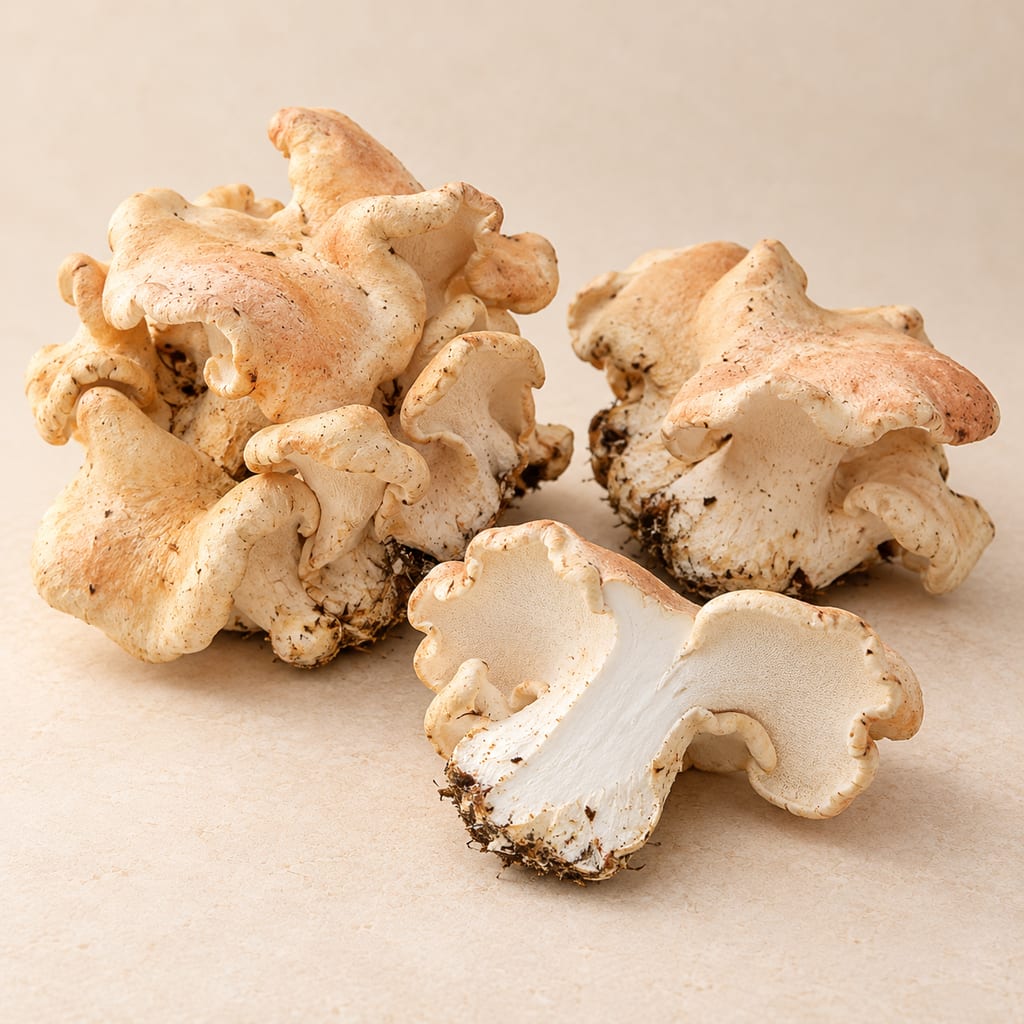
Albatrellus confluens is a ground-growing polypore with fused buff-orange caps. Sources document Chinese market use and regional edibility, but others reject it as too bitter; taxonomy also varies between Albatrellus and Albatrellopsis.

The European blusher, Amanita rubescens, is a woodland amanita whose flesh turns pink when cut. It is eaten only well cooked and is easily confused with the poisonous panthercap.

Koji is steamed grain — rice, barley, soybean or wheat — grown out with a food-grade Aspergillus mold until the kernels carry working enzymes. It is bought or cultivated, and it converts starch and protein for the foods that follow.
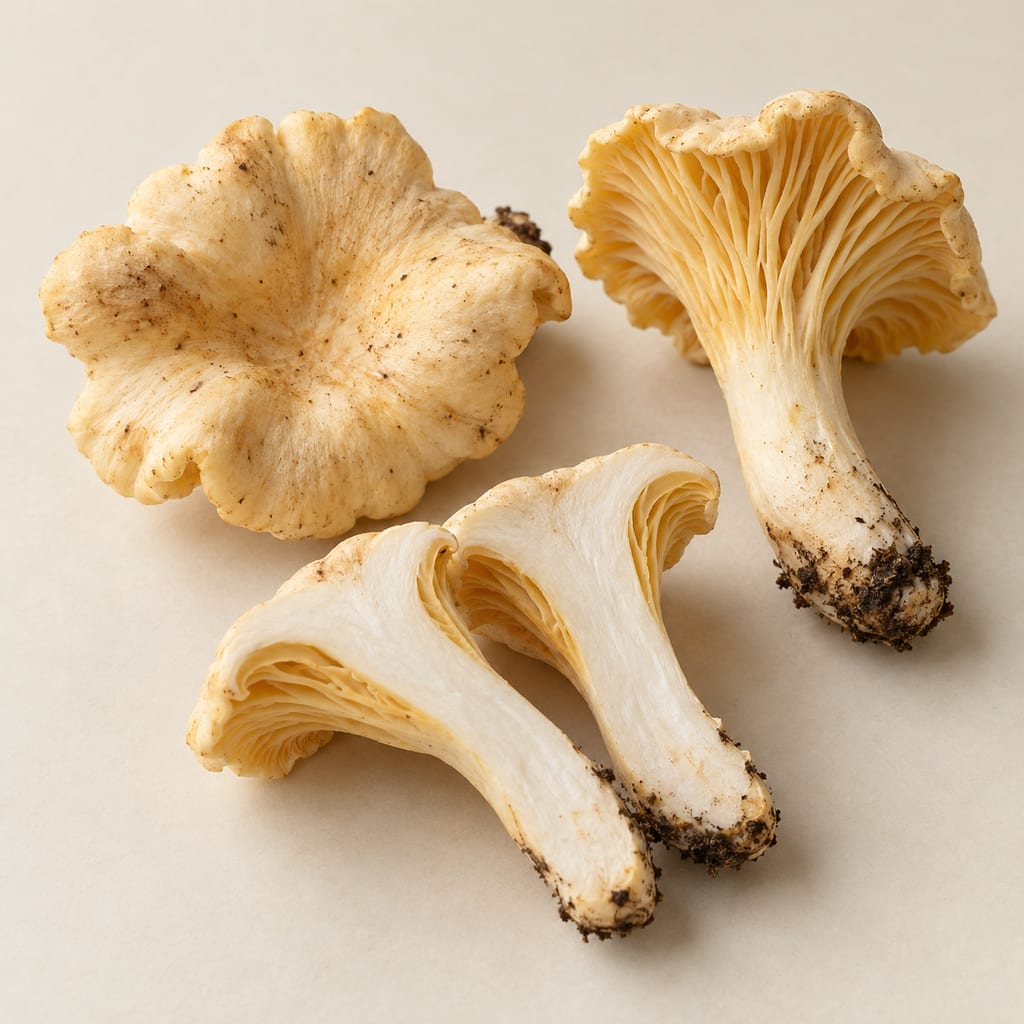
Cantharellus pallens is a pale, fleshy European chanterelle with orange-yellow folded ridges. It is gathered and sold as food in documented regional traditions, but its variable appearance makes photographs unreliable for identification.
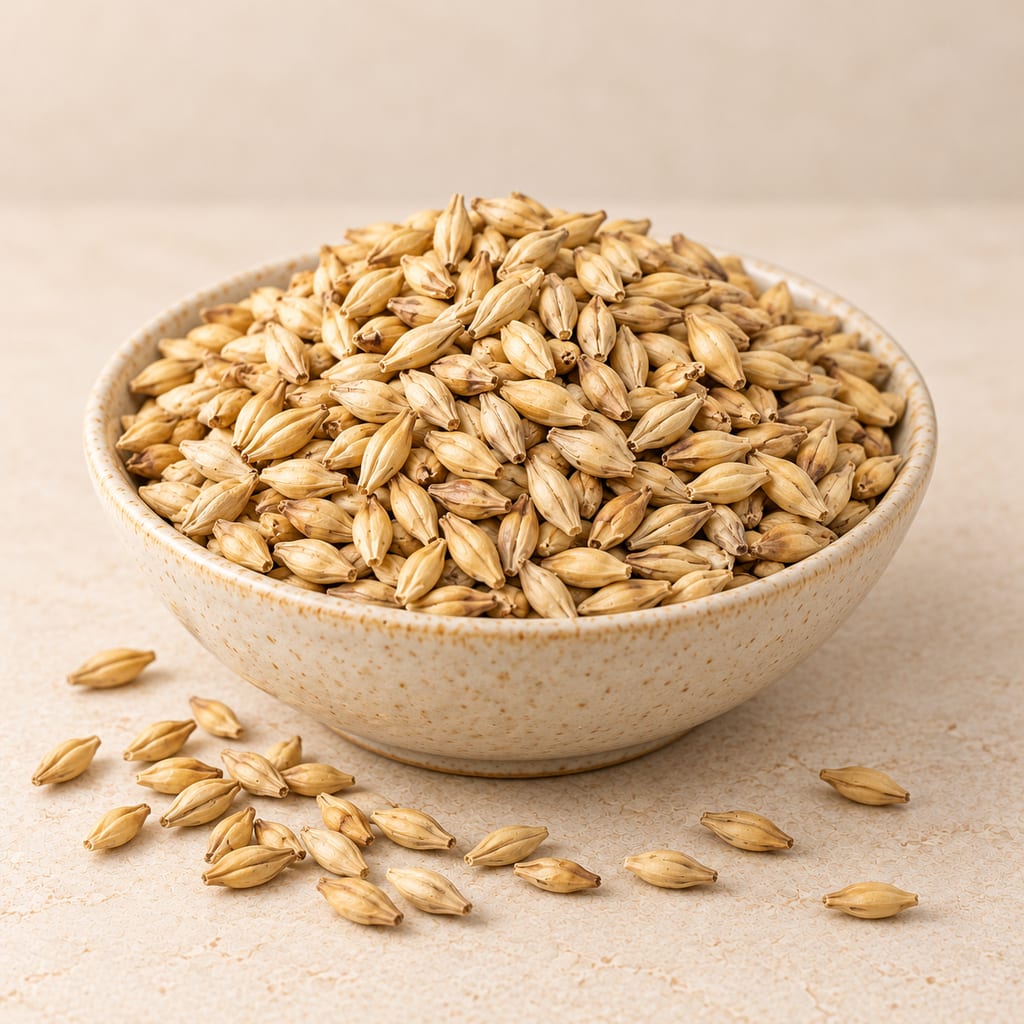
A pale, lightly kilned barley base malt that supplies wort material and brewing enzymes, with product-specific flavour, analysis and handling requirements.
Saccharomyces pastorianus is the hybrid lager yeast, a cross of the ale yeast S. cerevisiae and the cold-tolerant S. eubayanus, that ferments beer at cool temperatures from the bottom of the tank.
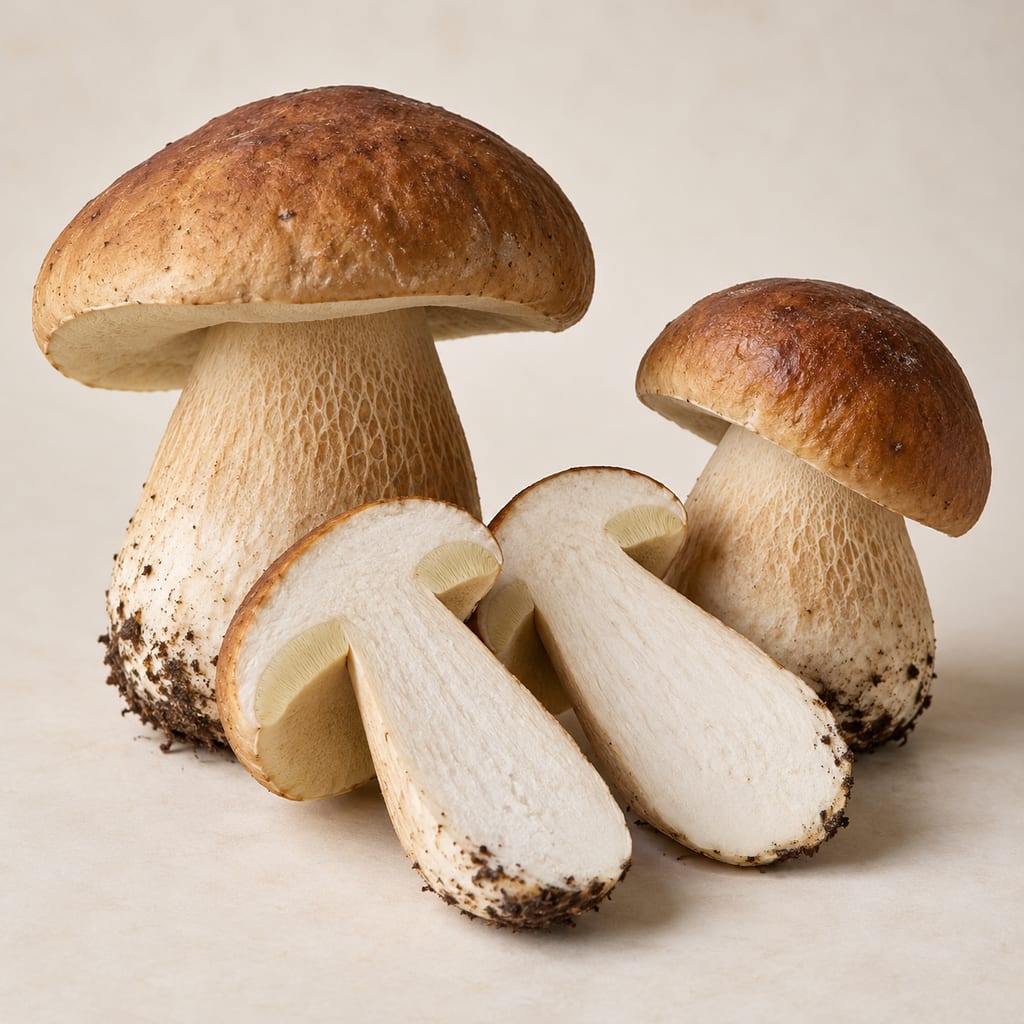
A wild European bolete with documented seasonal fruiting in broadleaf woods and culinary use. Sources treat Boletus reticulatus and B. aestivalis as synonyms, though taxonomic authorities differ on the preferred name.
No community contributions have been published for this entry yet.
Sign in to contribute. Published comments and photos are free to read.
Hop Research Institute Co. Ltd., Žatec
New Saaz series of hop cultivars / Genetic map of hop varietiesDescribes Saaz clonal maintenance, its registration in 1942, related distinct cultivars and an alpha-acid reference range of 2–5%.
Cited in: A named aroma hop from Czech growing traditions; Clonal selection keeps a variety in cultivation; Alpha acids and the work of the boil; Aroma is more than one oil measurement; Buying a lot and protecting its character
Hop Growers Union of the Czech Republic
Žatecký poloraný červeňákNames Žatecký poloraný červeňák and describes clonal selection and late or cold-hopping applications.
Cited in: A named aroma hop from Czech growing traditions; Clonal selection keeps a variety in cultivation; Late kettle additions and dry hopping
Economic Research Service, USDA
Hops: An Economic Assessment of the Feasibility of Providing Multiple-Peril Crop InsuranceDescribes the hop plant’s perennial rootstock and annual climbing stems, propagation, cones and lupulin glands, seeded and seedless forms, and drying.
Cited in: A named aroma hop from Czech growing traditions; The cone and the yellow glands inside it; A perennial plant with an annual crop; Harvested cones become several brewing products
UNESCO World Heritage Centre
Žatec and the Landscape of Saaz HopsDescribes the Žatec hop landscape, including fields, villages and buildings used for processing, certification and trade.
Cited in: A landscape built around a crop
European Commission; official adopted text reproduced by legislation.gov.uk
Commission Regulation (EC) No 503/2007 of 8 May 2007 registering certain names in the Register of protected designations of origin and protected geographical indicationsThe adopted regulation and annex register Žatecký chmel as a protected designation of origin in 2007.
Cited in: A landscape built around a crop
European Commission application summary; reproduction hosted by Government of Mexico
Summary of application for registration: Žatecký chmelThe application summary describes the defined area, planting material, label and seal verification, pole cultivation, and pressed or granulated product forms. It is an application specification, not a certificate for a particular lot.
Cited in: A landscape built around a crop; A perennial plant with an annual crop; Harvested cones become several brewing products; Notes on the recipe’s ingredient
Hop Research Institute Co. Ltd., Žatec
Sale of hopsInstitute describes its own supply and processing partner, mainly producing T90 pellets. Not generalized to every Saaz lot.
Cited in: Harvested cones become several brewing products
Foods
Effect of Czech Hop Varieties on Aroma of Dry-Hopped Lager BeerThe experiment compares five T90 hop cultivars with an extract control, measures aroma compounds in Saaz beer and discusses possible transformations during brewing. Its results concern that beer experiment.
Cited in: Harvested cones become several brewing products; Aroma is more than one oil measurement; Late kettle additions and dry hopping
Journal of Agricultural and Food Chemistry; PubMed abstract
A kinetic study on the isomerization of hop alpha-acidsThe abstract describes hop-acid isomerization in a buffered model and limits on applying model results to real wort.
Cited in: Alpha acids and the work of the boil
American Homebrewers Association
2026 Official Big Brew Recipes — Monk’s Ration Trappist-Style SingleThe Monk’s Ration recipe specifies Czech Saaz at 3% alpha acids, with additions at 15 and 5 minutes remaining and a separate earlier Magnum addition. Hop form and lot are unspecified.
Cited in: Alpha acids and the work of the boil; Late kettle additions and dry hopping; Notes on the recipe’s ingredient
Journal of Bacteriology
Hop Resistance in the Beer Spoilage Bacterium Lactobacillus brevis Is Mediated by the ATP-Binding Cassette Multidrug Transporter HorADescribes bacterial resistance to hop compounds and the role of HorA transport. The findings concern beer-spoilage bacteria.
Cited in: A named aroma hop from Czech growing traditions; Hop compounds shape a selective microbial environment
Government of Ontario
Brewer’s Guide to Ontario-Grown Hop Varieties 2022–2023Explains how temperature, time, oxygen, light and hop variety affect resin deterioration, and describes protected cold packaging.
Cited in: Buying a lot and protecting its character
Annals of Agricultural and Environmental Medicine
Occupational airborne and hand dermatitis to hop (Humulus lupulus) with non-occupational relapsesAn occupational case report documents reactions after exposure to fresh and dried hops. It does not estimate prevalence or establish the risk from eating hops.
Cited in: Handling and allergy context
European Commission, Directorate-General for Health and Food Safety
AllergiesCurrent European Commission declaration list does not name hops. Absence from this list does not establish individual tolerance.
Cited in: Handling and allergy context