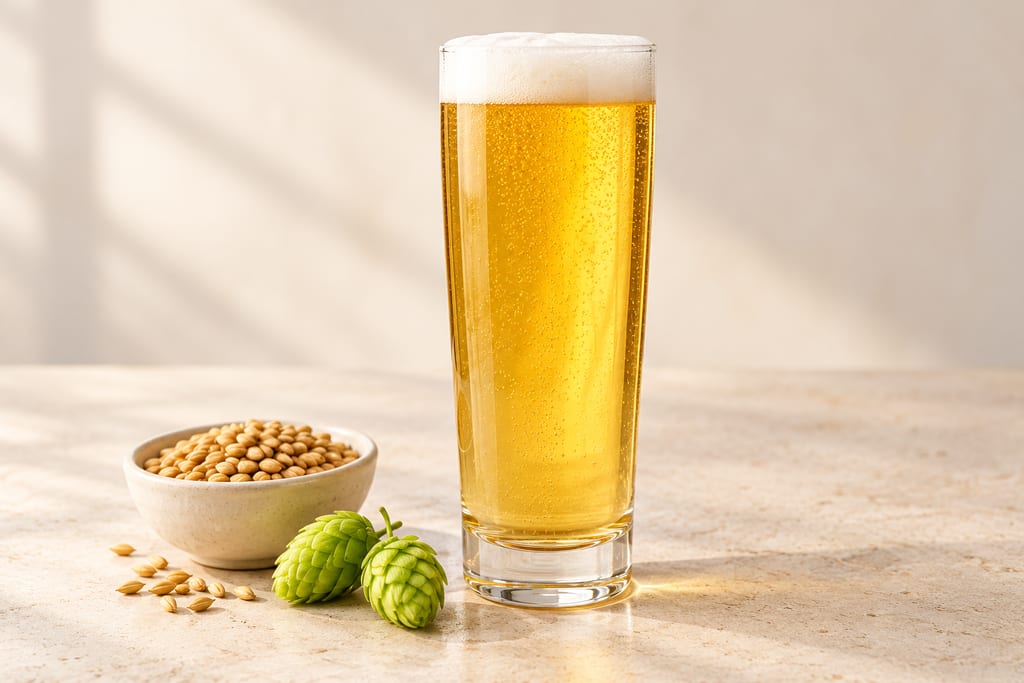
German pils, all-grain
A pale, dry lager with Pilsner malt, Magnum bittering hops and Hallertau Mittelfrüh and Tettnang additions, followed by cold maturation.
 FermenteaWhere food goes to change
Substrates
A pale, lightly kilned barley base malt that supplies wort material and brewing enzymes, with product-specific flavour, analysis and handling requirements.
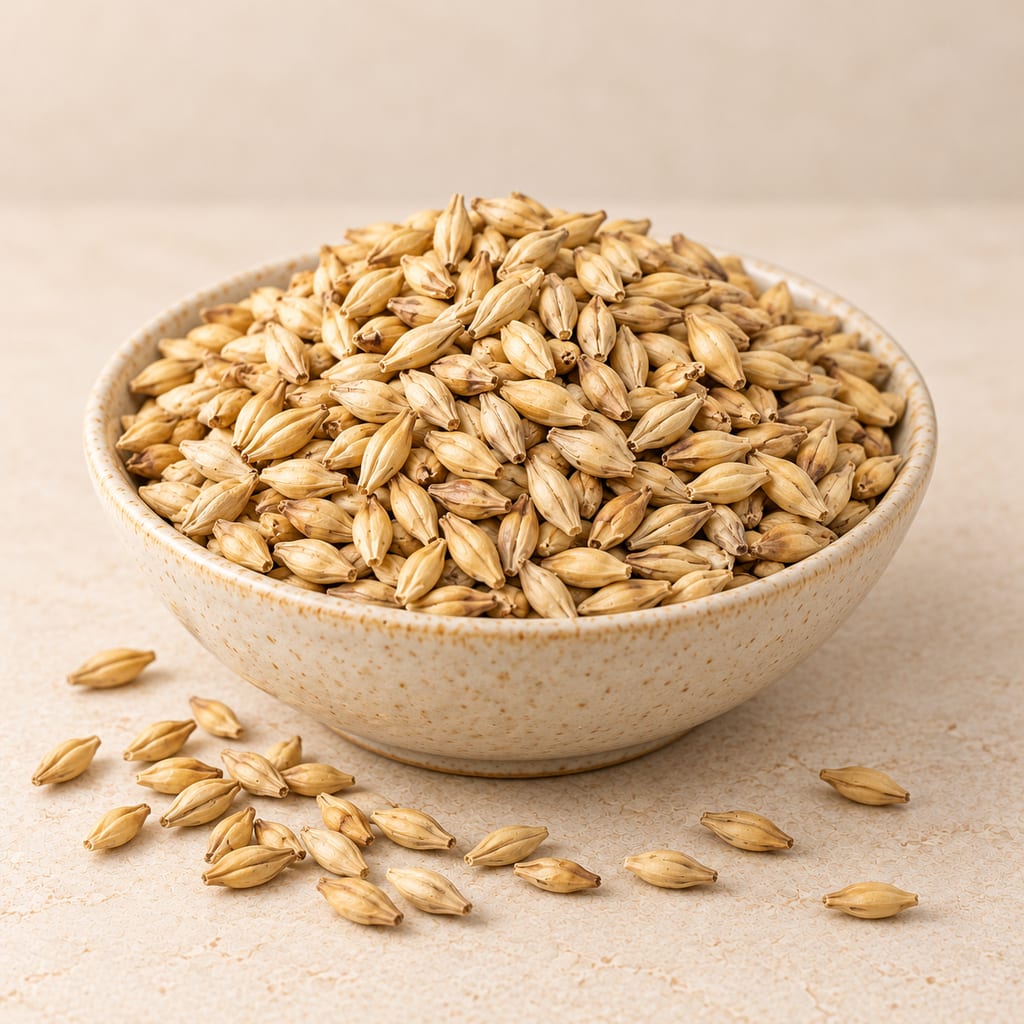
Pilsner malt is a pale barley malt bought as a brewing ingredient. Its kernels have already been steeped, allowed to germinate and dried by a maltster. They may arrive whole or milled. In an all-grain brew they supply material for the wort and enzymes that help make that material useful. A sack of Pilsner malt is therefore a processed cereal ingredient, with a different brewing behaviour from an equivalent weight of raw barley.
The barley species is Hordeum vulgare. Pilsner identifies a malt category rather than a single barley variety, farm or country of production. Makers select their own raw material and manage their own processes. Viking's dated Pilsner sheet, for example, describes Finnish two-row spring barley, while the Canada Malting product sold by Danny's is described as a German-style lager base malt. The style description and the growing location answer different questions.
Pale colour is useful when malt forms most of the grain bill. It allows a light beer to retain a restrained cereal character without acquiring the colour and stronger roast character associated with darker malts. It also leaves room for other ingredients to contribute their own character. The intended result still depends on the complete grist, water, hops, yeast and process.
The name recalls the pale lager associated with Plzeň, also called Pilsen. Joseph Groll made the first Pilsner brew there on 5 October 1842. Its golden appearance was connected with lightly and gently kilned malt, alongside the other ingredients and the brewing method. This is a milestone in the history of a beer, rather than a date on which a modern commercial malt specification was formally established.
That distinction helps explain the ingredient's subsequent breadth. A malt can be sold as Pilsner by a maker outside the city whose name gave the beer its identity. The name communicates a useful brewing family: a pale base malt associated with light-coloured beers. It does not require every bag to reproduce one historical raw material or one brewery's method.
The historical appeal was partly visible. A light malt could help make a golden beer rather than a dark one. Yet the malt was only one part of that change. Treating it as the sole cause would leave out fermentation and the rest of the brew. The ingredient carries a connection with that brewing history without prescribing the finished beer's entire identity.
Malting depends on grain capable of germinating. Cleaning and grading remove foreign material and separate kernels with unsuitable characteristics. Uniformity matters because kernels that take up water at different rates do not progress through germination evenly. A damaged hull can speed water uptake, while the intact hull protects the developing shoot. Grain quality is consequently part of process control before a brewer opens the bag.
Steeping supplies water to start the seed's growth. The hydrated barley then moves into controlled germination, where enzyme development and changes within the endosperm make stored reserves more accessible. Proteins surrounding the starch are broken down as the kernel modifies. This is purposeful use of the seed's growth machinery, interrupted before a new plant consumes the material wanted for brewing.
Kilning dries the grain and stops that growth. The balance of time, temperature and moisture also preserves useful enzyme activity and develops malt character. Finished malt is cleaned of the rootlets produced during germination. By the time it reaches a brewery, it has passed through both a biological stage and a drying stage; its pale appearance does not mean that nothing substantial has happened inside it.
Viking Pilsner has a slightly nutty, sweet profile. Proximity's Pilsen is mild and subdued, with some grassy or raw-grain character. The Canada Malting product has mild malt sweetness and gentle honey notes. The differences provide useful sensory choices within the pale-malt family. Mild sweetness, a grain-like note and a subtle nutty character can each sit differently beneath hops or the other malts in a grist.
Kilning is also part of flavour development. Maillard reactions during the malt process contribute malty flavours, while control of the drying programme helps retain the enzymes needed later. The maker is balancing storage stability, flavour and brewing performance. Pale malt is not simply grain dried as little as possible; it is a finished product made for a particular role.
The commercial range includes products intended for lagers and products also used in ales. MoreBeer's Viking listing describes use in light-coloured pale ales and hop-forward beers as well as lagers. A pale base can therefore support a restrained malt profile or sit beneath more assertive hop character. The same category can serve different beers through the choices made around it.
Milling is the next important change in physical form. Breaking the malt exposes the material inside the kernel to brewing water. Whole kernels and a milled grist are distinct purchases, even when they came from the same malt. Retailers may offer both, so checking the selected form avoids discovering on brew day that a necessary preparation has not been done.
The husk also matters during wort separation. In a conventional grain bed, barley husk material helps provide the structure through which liquid can pass while grain fragments are retained. This is one reason the physical character of a grist matters alongside its chemical composition. A fine powder and a suitably crushed malt do not behave alike merely because their weights match.
The brewery's equipment determines how that separation is arranged. In a mash-and-lauter vessel, draining and rinsing recover liquid from the bed; other brewing systems handle the grain differently. Milling and separation therefore work together. The grist needs to expose useful material to water while remaining manageable in the vessel and separation system. Whole or milled purchases provide different starting points for that work.
Mashing combines crushed malt with water under conditions chosen for enzyme activity. Starch becomes accessible and is broken into a mixture including fermentable sugars and larger carbohydrate fragments. Alpha-amylase, beta-amylase and debranching enzymes contribute different actions. Their combined work helps determine the balance of sugars and dextrins in the wort, rather than converting every part of the kernel into one simple sugar.
Protein breakdown has another role. Smaller peptides and amino acids can support yeast growth, while other protein-derived material contributes to beer's foam. Malt therefore provides more than the prospective alcohol in a batch. Its extract includes several kinds of dissolved material, with consequences for fermentation, appearance and texture. This helps explain why replacing malt with a weight of simple sugar changes the ingredient system.
The mash schedule belongs to the beer and the malt's degree of modification. A single infusion and a sequence of rests offer different ways to work with a grist. Decoction adds another operation by heating a removed portion before returning it. The schedule connects the malt's degree of modification with the equipment and the desired wort. Different sequences can work with the same broad malt family while changing the way its components are treated.
A malt sheet makes the differences between products more concrete. Extract figures describe recoverable material under the specified analysis, and a dry-basis figure accounts for the sample's moisture. Fine-grind analysis is not the same as the recovery achieved by every brewery. The useful number is tied to its test and reporting basis; it is not a guaranteed brewhouse yield.
Colour, protein, moisture, friability and enzyme measures add other information. Maltosa reports a range of these properties and tracks its malt from field through delivery. Proximity's analysis consists of typical average values rather than guaranteed figures. Keeping that distinction prevents a representative catalogue value from becoming a claim about a particular sack.
Diastatic power is one example where the unit matters. Viking and Maltosa report it in WK, while Proximity's page uses Lintner. Comparing the bare numbers would hide that difference. A useful comparison begins with matching the property, unit and basis, then checking whether the value is a specification, a typical analysis or a measurement for the lot actually purchased.
Malt also supplies precursors relevant to beer aroma. S-methylmethionine, usually abbreviated SMM, can break down with heat to form dimethyl sulphide, DMS. This can happen during kilning and wort boiling. The resulting aroma is a brewing consideration; it does not mean that a dry kernel should smell like cooked vegetables or that all Pilsner malts contain the same precursor amount.
A second route involves dimethyl sulphoxide, DMSO, which yeast can reduce to DMS during fermentation. Research also examines DMS formation during beer storage. The chemistry therefore crosses several stages rather than ending when the kettle is switched off. An ingredient's upstream processing and the later handling of wort and beer can both influence the outcome.
The linked German Pils method uses an open boil and specifies its own duration. That is a recipe-level choice within its process. During boiling, heat drives chemical conversion while volatile material can leave the open kettle. The operation deals with wort as a changing liquid, alongside its other roles in the brewing sequence. The malt's precursor content and the changing conditions from kiln to kettle to fermenter connect the bought grain with the eventual aroma of the beer.
Bräu Supply's German Pils formulation uses Pilsner malt for most of its grain bill, with smaller additions of Carapils and acidulated malt. Hops and lager yeast perform their own roles. The example shows what base means in practice: this malt supplies the main cereal foundation rather than appearing as a small colour adjustment or a finishing flavour.
The method then mashes, separates wort, boils, ferments and conditions the beer. Pilsner malt contributes material to that sequence; it does not arrive as finished beer. The yeast receives a wort whose composition has been shaped by grain choice and mashing. Keeping those stages in view makes the ingredient's contribution clearer than attributing dryness or alcoholic strength to the malt name alone.
Store the purchased malt under the conditions supplied for that product. The maker's advice commonly emphasises a cool, dry environment protected from pests, moisture and strong odours. Packaging and the manufacturing date are useful parts of that information. Keep the identity and lot details with the grain, particularly after dividing a larger bag into smaller containers.
The storage period depends on the product and its conditions. Viking Pilsner has its own conditional shelf life, while Proximity's whole-kernel diastatic and pre-ground malts carry their own freshness guidance. The package, manufacturing date and state of the grain belong together. Storage is intended to preserve flavour and brewing performance as well as the visibly dry appearance of the grain.
Avoid creating or inhaling unnecessary grain dust, and keep the malt away from hot surfaces as directed on the Viking sheet. Practical handling begins with the bought food ingredient and its package information. Identity and storage information accompany the ingredient from the supplier through to the brew, so a divided bag can still be traced to the material originally purchased.
Barley is a gluten-containing cereal, and ordinary malted barley has not been processed to remove that gluten. The US FDA's gluten-free labelling guidance therefore excludes ordinary barley malt as an ingredient in foods bearing that claim. Malting changes the seed's brewing properties; it does not turn this ingredient into a gluten-free cereal.
Use the actual product's ingredient and allergen declaration for any additional information. The word Pilsner does not identify cross-contact conditions, a particular supplier's controls or other ingredients in a finished beer. Its value is more specific: it identifies a pale malt family whose biological preparation and retained enzyme activity make it useful to brewers.
The generic item does not establish a producer, farm, barley cultivar, crop year, lot analysis, grind state or universal shelf life. The 1842 milestone concerns Pilsner beer, not a modern malt specification.
gluten
Beer-style/name association; not origin of every purchased malt.
Generic recipe names no maltster, barley farm, crop year or purchased lot.
A pale, dry lager with Pilsner malt, Magnum bittering hops and Hallertau Mittelfrüh and Tettnang additions, followed by cold maturation.
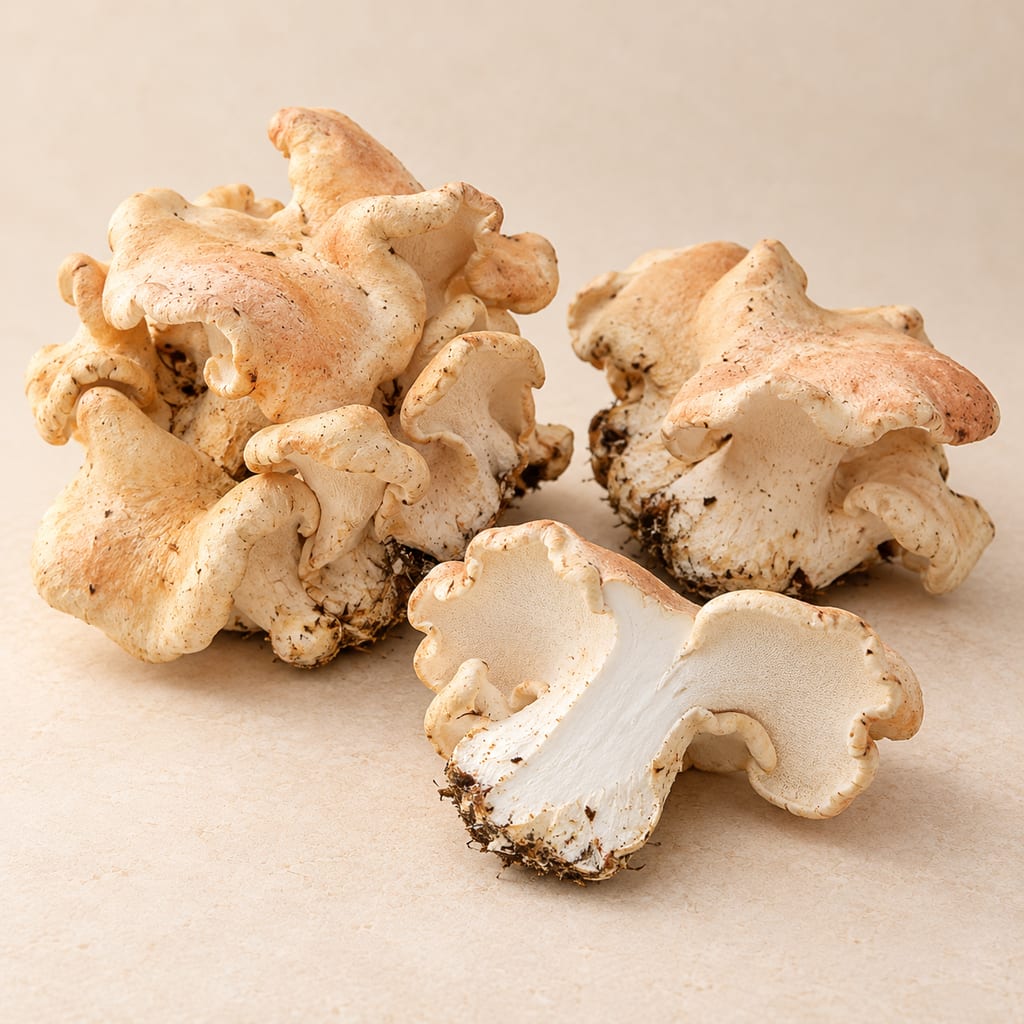
Albatrellus confluens is a ground-growing polypore with fused buff-orange caps. Sources document Chinese market use and regional edibility, but others reject it as too bitter; taxonomy also varies between Albatrellus and Albatrellopsis.
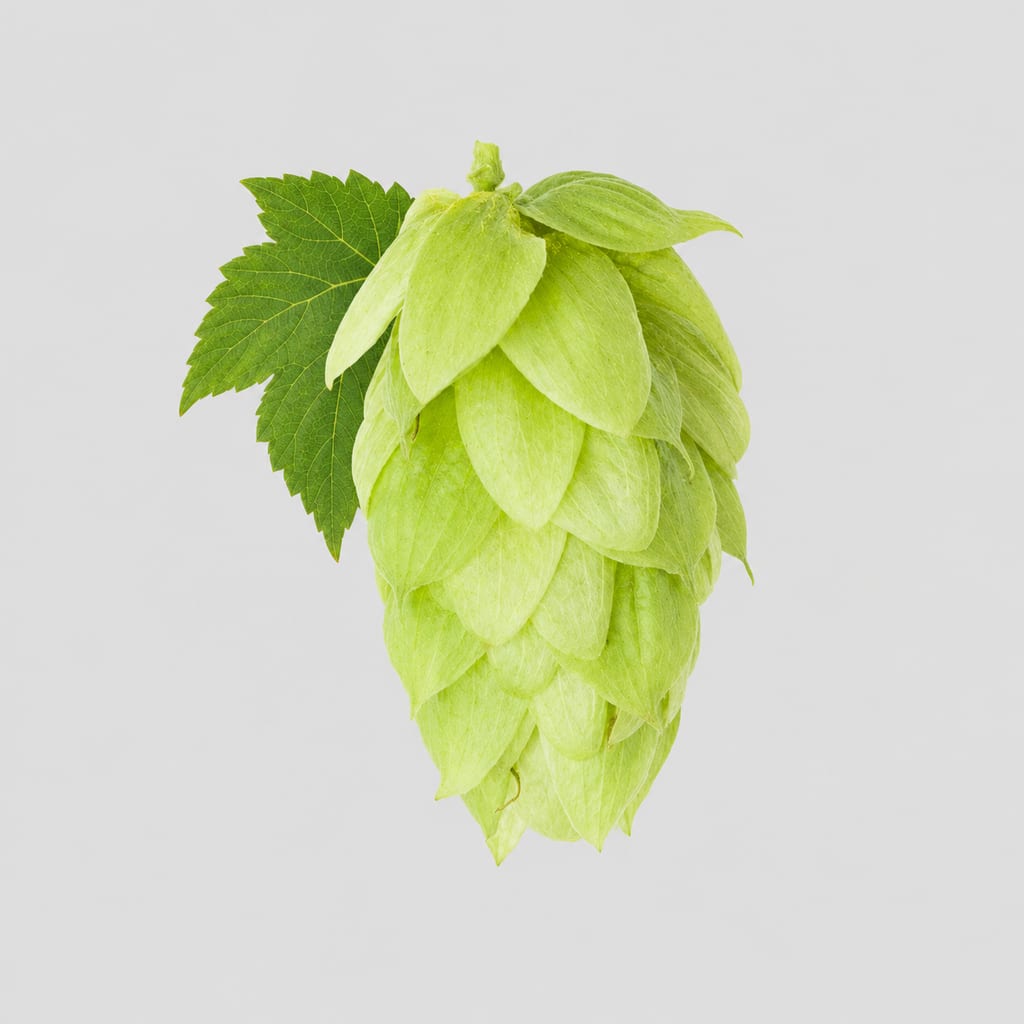
Saaz, or Žatecký poloraný červeňák, is a Czech fine-aroma hop cultivar used for herbal hop character and bitterness in beer. Its cultivar, product form, origin and lot analysis describe different parts of the ingredient.
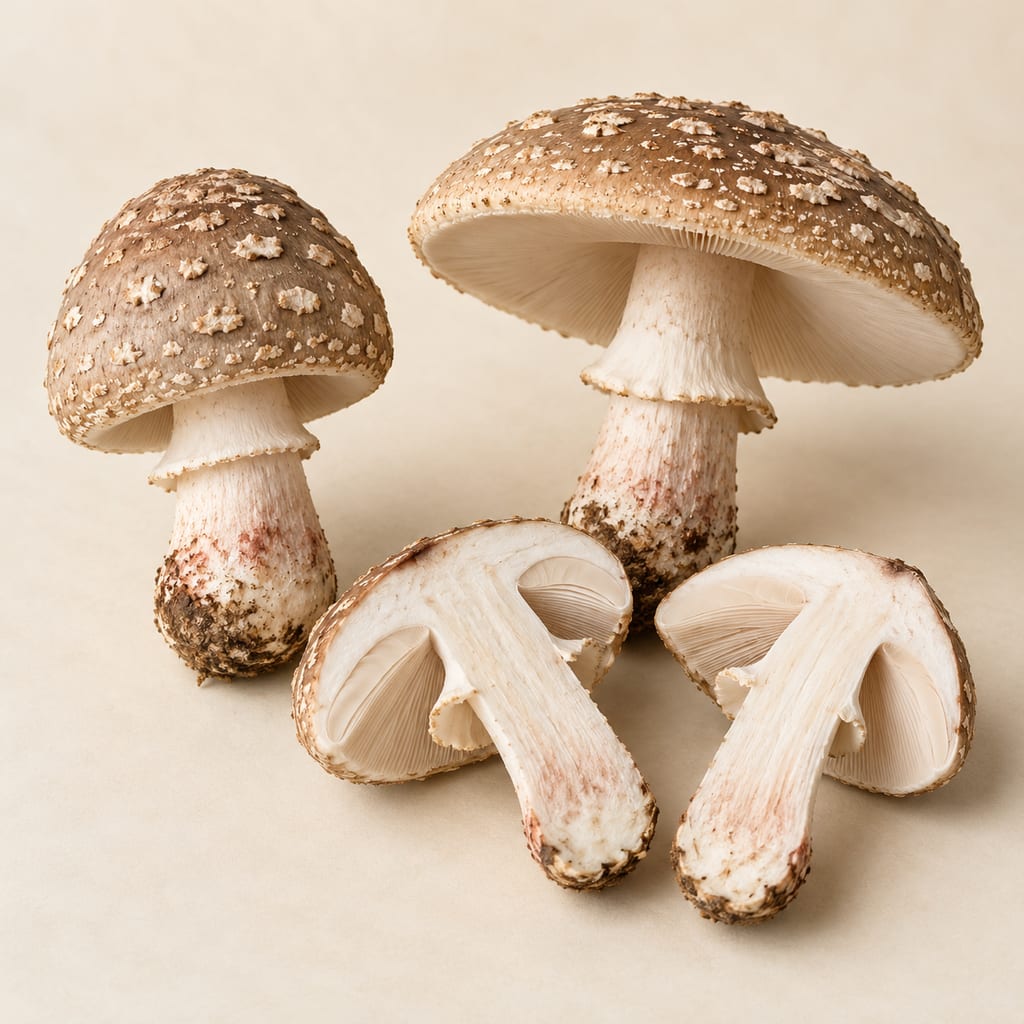
The European blusher, Amanita rubescens, is a woodland amanita whose flesh turns pink when cut. It is eaten only well cooked and is easily confused with the poisonous panthercap.
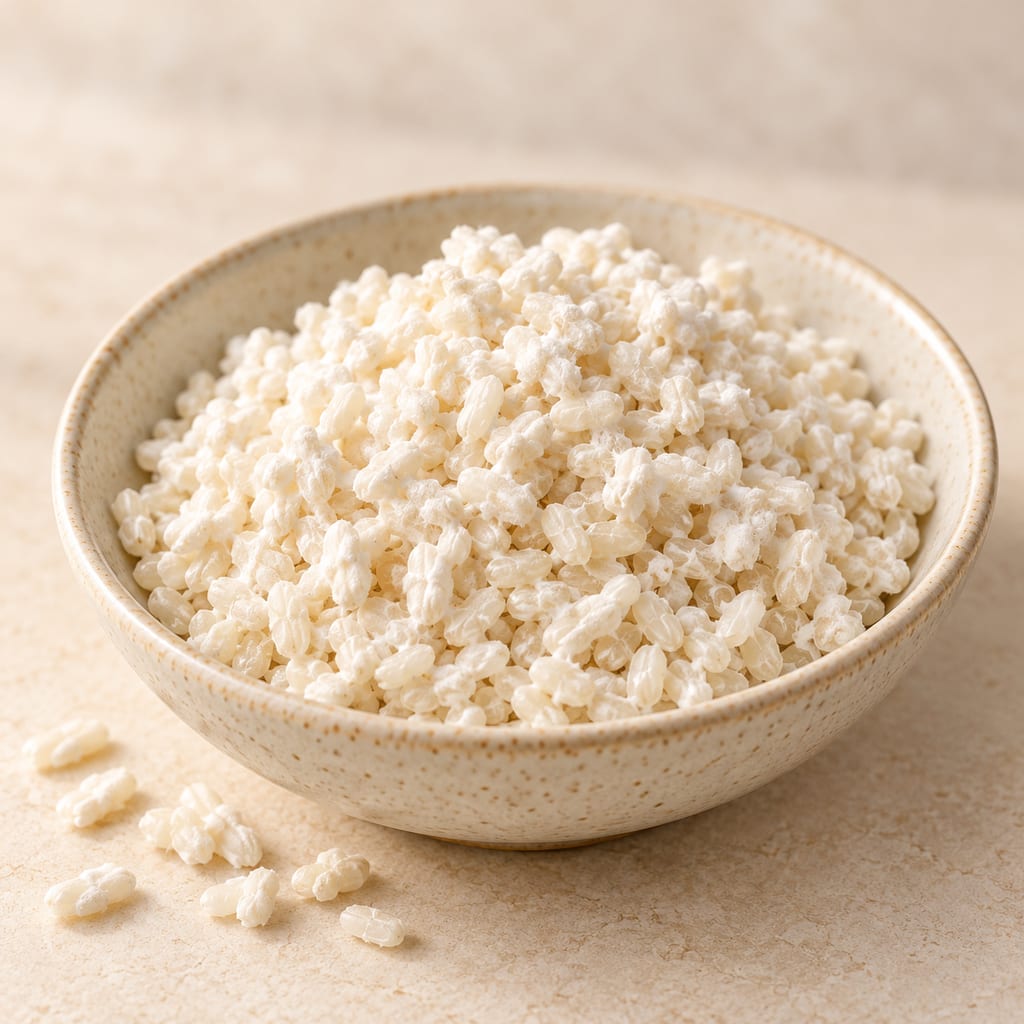
Koji is steamed grain — rice, barley, soybean or wheat — grown out with a food-grade Aspergillus mold until the kernels carry working enzymes. It is bought or cultivated, and it converts starch and protein for the foods that follow.
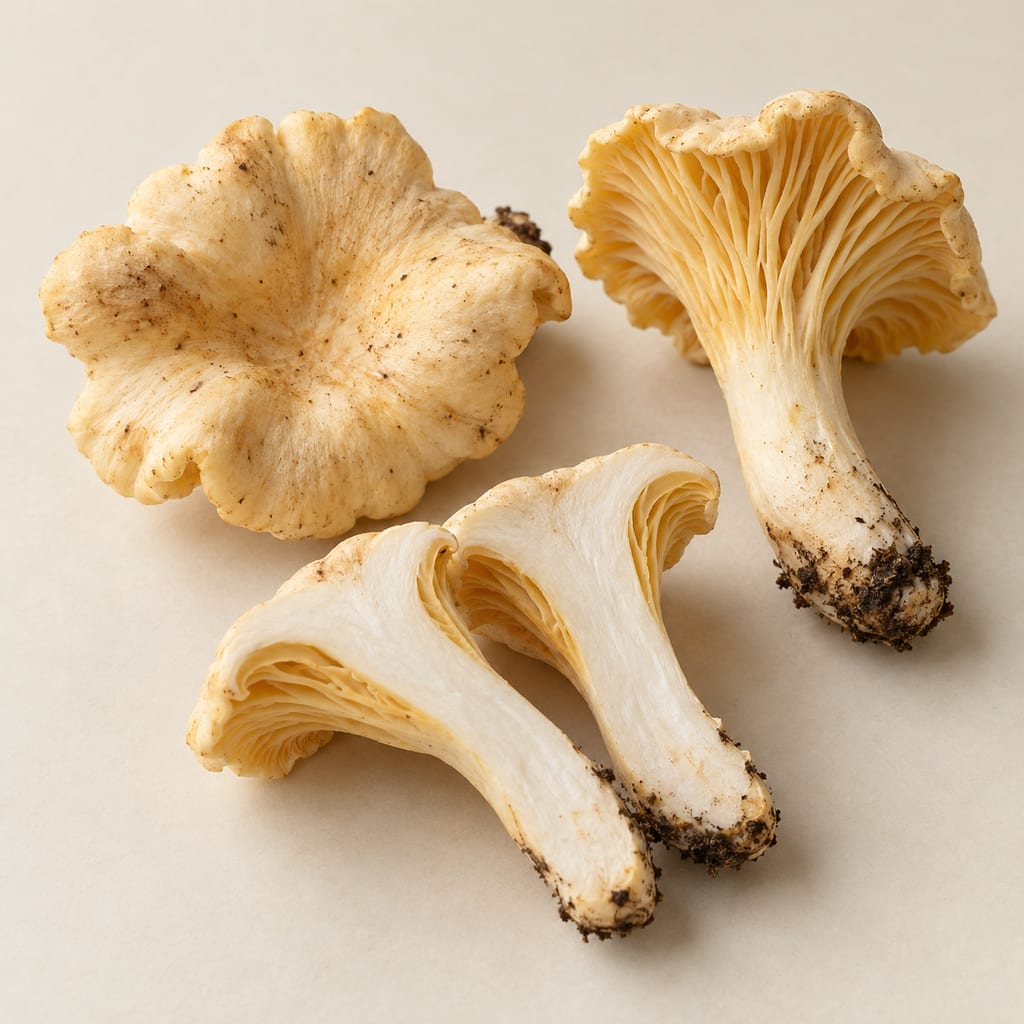
Cantharellus pallens is a pale, fleshy European chanterelle with orange-yellow folded ridges. It is gathered and sold as food in documented regional traditions, but its variable appearance makes photographs unreliable for identification.
Saccharomyces pastorianus is the hybrid lager yeast, a cross of the ale yeast S. cerevisiae and the cold-tolerant S. eubayanus, that ferments beer at cool temperatures from the bottom of the tank.
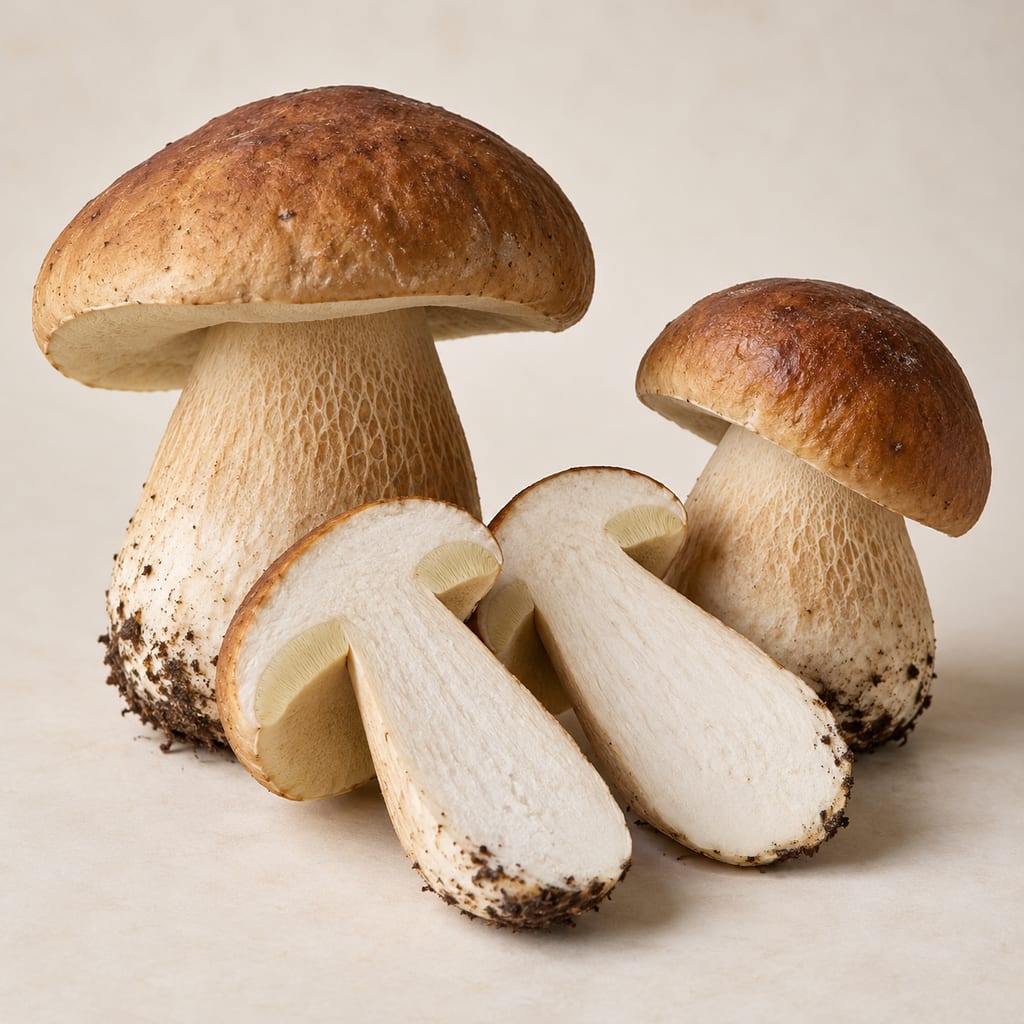
A wild European bolete with documented seasonal fruiting in broadleaf woods and culinary use. Sources treat Boletus reticulatus and B. aestivalis as synonyms, though taxonomic authorities differ on the preferred name.

A Cap-Pelé boucanière is an Acadian herring-smoking building. The documented Willie Niles example is a one-storey wood-frame structure with a ridge smoke vent and interior bays for hanging fish-bearing cannes.

Achcharu is a family of Sri Lankan vinegar pickles made with mixed vegetables or seasonal fruit and a piquant spice dressing. This version is a quick, refrigerated, non-fermented mixed-vegetable pickle.

The acocote is a long, hollowed and dried gourd used to draw aguamiel from a mature maguey. It is a harvesting tool: the sap is transferred to a separate vessel before it ferments into pulque.

Adrak murabba preserves young ginger in sugar syrup, a sweet South Asian preparation recorded in Indian cookery and food-processing sources.

Parkia biglobosa seeds are fermented into regional West African seasonings, including nététou, iru, dawadawa and soumbala. The yellow fruit pulp is a separate food, and names and methods vary by place.

Japanese reddish-brown vinegar from sake lees matured about three years, turned to vinegar by acetic bacteria; the vinegar of Handa and Edomae sushi rice.

A refined common-wheat flour blended for a broad range of baking; its protein and behavior vary with wheat, milling and market.

The almond mushroom, Agaricus subrufescens, was cultivated in eastern North America in the 1800s, lost its market, and returned as a cultivated mushroom from Brazil, where it is grown under several names.
No community contributions have been published for this entry yet.
Sign in to contribute. Published comments and photos are free to read.
University of Minnesota Extension; Brian Sorenson and Paul SchwarzIngredient context
Understanding grain qualityCleaning, grading, controlled germination and drying produce malt; grain quality, hull integrity, variety and weather affect the raw material and brewing properties.
Cited in: The maltster begins with a living seed; Milling opens the kernel; Mashing continues the transformation
Viking MaltIngredient context
Pilsner MaltViking's Pilsner product uses Finnish two-row spring barley, has a pale, slightly nutty and sweet profile, and carries product-specific analysis and storage guidance.
Cited in: Pale grain with work already done; Light kilning leaves a particular ingredient; Reading a malt analysis; Keeping the malt in useful condition; What remains lot-specific
MaltosaIngredient context
MALTOSA Pilsner technical sheetMaltosa Pilsner is kilned barley malt with specifications for extract, colour, moisture, protein and diastatic power, and traceability from field to delivery.
Cited in: Reading a malt analysis
Proximity MaltIngredient context
PilsenProximity Pilsen is a mild base malt; its listed analysis is typical rather than guaranteed, with diastatic power reported in Lintner and product-specific storage guidance.
Cited in: Light kilning leaves a particular ingredient; Reading a malt analysis; Keeping the malt in useful condition; What remains lot-specific
Proximity MaltIngredient context
MaltingSteeping, germination and kilning develop malt; controlled drying preserves brewing enzymes, Maillard reactions develop flavour, and rootlets are removed.
Cited in: The maltster begins with a living seed; Light kilning leaves a particular ingredient
German Patent and Trade Mark OfficeIngredient context
Beer & IPJoseph Groll made the first Pilsen brew on 5 October 1842; lightly kilned malt contributed to its golden appearance.
Cited in: The Pilsen connection; What remains lot-specific
Matthias Baldus and Frank-Jürgen Methner / Journal of the Institute of BrewingIngredient context
Effect of antioxidants on dimethyl sulphoxide reduction and impact on dimethyl sulphide formation during beer storageMalt-derived SMM can form DMS during kilning and wort boiling; yeast can reduce DMSO, and beer storage can also affect DMS formation.
Cited in: Sulphur chemistry reaches beyond the bag
David Houseman and Scott Bickham / Beer Judge Certification ProgramIngredient context
Wort ProductionMashing uses malt enzymes to alter starch and protein; lautering separates wort from the grain bed, while mash schedules and equipment determine the treatment.
Cited in: Milling opens the kernel; Mashing continues the transformation
Steven Liesch / Bräu SupplyIngredient context
German Pils Recipe (All-Grain)The German Pils formulation uses Pilsner malt as its principal grain, alongside Carapils, acidulated malt, hops and lager yeast.
Cited in: Sulphur chemistry reaches beyond the bag; A base malt in the linked German Pils; What remains lot-specific
MoreBeer!Ingredient context
Pilsner Malt - Viking MaltThe Viking Pilsner product is offered whole or milled and used in lagers and light-coloured, hop-forward ales.
Cited in: Pale grain with work already done; Light kilning leaves a particular ingredient; Milling opens the kernel; Barley remains barley after malting
Danny's Wine & Beer SuppliesIngredient context
Pilsner Malt - 55lbThe Canada Malting Pilsner product is a German-style barley base malt with mild malt sweetness and honey notes, offered with a milling option.
Cited in: Pale grain with work already done; Light kilning leaves a particular ingredient
U.S. Fish & Wildlife ServiceIngredient context
Common BarleyThe scientific name of common barley is Hordeum vulgare.
Cited in: Pale grain with work already done
US Food and Drug AdministrationIngredient context
Questions and Answers on the Gluten-Free Food Labeling Final RuleOrdinary barley malt is made from a gluten-containing cereal and has not been processed to remove gluten; it is excluded from US gluten-free-labelled foods.
Cited in: Barley remains barley after malting