
Agar / kanten
A gelling polysaccharide extracted from red seaweeds, sold as kanten strips or powder; it sets firm at a low concentration and stays solid until about 85 °C.
 FermenteaWhere food goes to change
Mushrooms
Darwin’s fungus is a pitted orange stroma that grows from galls on living southern beeches in southern Chile and Argentina. Sources document regional food use, especially in Tierra del Fuego.
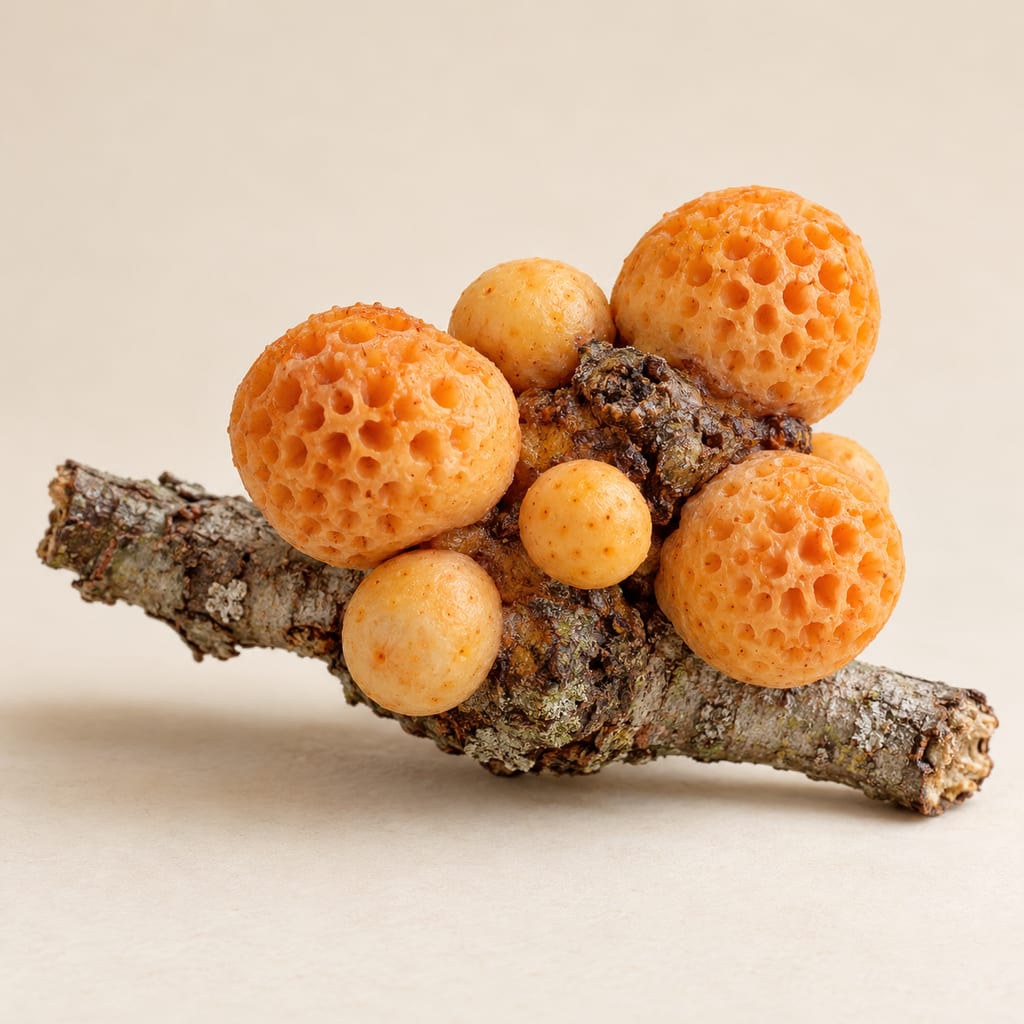
Cyttaria darwinii, usually called Darwin’s fungus or pan del indio in Tierra del Fuego, is not a cap-and-stem mushroom. Its visible fruiting body is a rounded stroma, commonly about two to five centimetres across, that emerges from a conspicuous swelling on a living southern-beech branch or trunk. The surface is firm and elastic, pale yellow to orange, and becomes pitted as the small cup-like reproductive structures develop within it. The flesh is described as gelatinous and firm; the spores are greyish. A Chilean field account reports a mild, distinctive sweetness and no characteristic smell, while the national park profile calls the fresh tissue rather bland.
The fungus belongs to Ascomycota, the group whose reproductive spores form in microscopic sacs. In the current fungal taxonomic treatment used here it sits in Cyttariales and Cyttariaceae. Some broad database lineages still place it under Helotiales, so the displayed order can differ across taxonomic services. Its species name honours the collecting history associated with Charles Darwin, but its culinary identity is not limited to a commemorative name: the host tree, the gall-like growth and the pitted globose stroma are central to understanding what this fungus is.
The pitted surface reflects the way the reproductive cups are embedded in the stroma rather than arranged as gills beneath a cap. The national park profile describes the outside as smooth in young structures, with the surface becoming dimpled as the apothecia become visible. A basal ring carries black spermogonia, and the flesh becomes hard and horny when dry. This change in form helps explain why field accounts describe a firm, elastic fresh body and a much tougher dried one; it does not provide a safe identification by itself.
Cyttaria species are obligate parasites of Nothofagus, the southern beeches. C. darwinii forms tumour-like swellings on living branches and trunks, and its fruit bodies arise from these infected areas. Sources name ñire (Nothofagus antarctica), lenga (N. pumilio) and guindo (N. betuloides) among its hosts. Species Fungorum records the type material on branches of N. betuloides from Magallanes. The national park profile describes the relationship as relatively weak: affected branches may die gradually while the host tree remains alive for a long time.
The gall is part of the host’s response to infection, not a separate edible plant or a growth on dead timber. This matters for both ecology and identification: a round orange object on a branch is not enough by itself to assign a name. The genus contains several Nothofagus-associated species with overlapping common names and regional appearances. A field guide that calls several fungi digüeñes is describing a vernacular group, not proving that every specimen is C. darwinii.
Host lists are useful context but not a stand-alone key. The Chilean review gives C. berteroi a different host association, including N. obliqua and N. glauca, while C. darwinii is linked to N. betuloides, N. antarctica and N. pumilio. Yet several Cyttaria species share Nothofagus hosts or broad vernacular names, and host trees may be difficult to identify without botanical expertise. A record of a gall on beech therefore narrows the ecological setting but cannot confirm a species name.
The documented range is in southern Chile and Argentina, wherever the relevant southern-beech hosts occur. The type locality at Magallanes, Chile, and historical accounts from Tierra del Fuego give the southern end of a well-documented regional story. A Chilean field guide describes the species across austral Chile and Argentina; the official Chilean SIMBIO page associates observations with Dos Lagunas Natural Monument and the Entrada Baker priority site.
Argentina’s biodiversity profile lists literature records associated with Los Arrayanes, Nahuel Huapi and Los Glaciares National Parks, but marks those presences as unvalidated. They should therefore be read as historical or bibliographic indications rather than confirmed modern observations. The Chilean platform provides no administrative-region table for this species. Neither source justifies a finely drawn continuous range polygon or invented collection coordinates, so the place markers here remain at the named region or protected-area scale.
The range statements in regional guides are ecological and bibliographic summaries, not a census. The fungus depends on southern-beech hosts, so a broad map should follow suitable Nothofagus forest rather than suggest that the fungus occurs uniformly across every part of Chile or Argentina. The named protected-area records are useful as leads for further field verification, but their source status matters: the Argentinian records are explicitly unvalidated, and the Chilean platform’s observation table does not provide coordinates. Map scale should reflect those limits.
Phenology changes with location and with what a source means by “season.” In Tierra del Fuego, the park biodiversity profile says the stromata appear in spring on the leafless deciduous Nothofagus, remain on branches through autumn and winter, and mature during the following spring or summer. The Fuegian tourism field guide lists January through April and August through December as likely months for finding it around Ushuaia and Tolhuin, while also describing spring appearance and summer maturity. Darwin’s nineteenth-century note gives December to June for the material he observed.
A Chilean field guide reports the species in all four seasons across its broader range. That statement and the southern-Fuegian month list are not necessarily contradictory: they cover different areas and collection conventions. They do not establish absence in unlisted months. A useful description therefore gives the local spring-to-summer maturation pattern while treating year-round and historical month ranges as regional records rather than a universal calendar.
The two local calendars describe different observations. The tourism guide’s months are practical reports for places around Ushuaia and Tolhuin; the park profile explains how fruit bodies can remain on branches across seasons before maturation. Darwin’s December–June note is a nineteenth-century observation from a particular collection context. None should be converted into a guarantee that specimens will be present, ripe or safe to collect on a given date.
Darwin’s Fuegian collections became part of the species’ scientific history: Berkeley described C. darwinii in 1842 and included Darwin’s field observations in the published account. The historical text describes the fungus as an important food of Indigenous people in Tierra del Fuego. Later regional accounts identify Yámana or Yaghan communities around the Beagle Channel and record eating the fresh fruiting bodies. These sources establish an Indigenous food tradition, but they do not date its beginning or describe one uniform practice shared by every community.
The common name pan del indio reflects this history in Argentine Patagonia, while llao llao and digüeñe are names used more broadly for members of the genus in different places. Because names can cross species boundaries, the cultural history should remain attached to the local source and taxon it actually describes. It should not be generalized into a single pan-Andean or pan-Indigenous recipe.
The historical description uses the language of the period and does not identify every community practice in detail. Later sources provide the Yámana/Yaghan attribution, but still do not supply a dated origin, a recipe, or quantities consumed. “Staple” in Darwin’s report conveys his observation of importance; it is not a measured dietary survey. Keeping the early account alongside later regional descriptions preserves both its historical significance and its evidential limits.
The available food accounts call C. darwinii edible and describe several distinct uses. Regional sources report eating it fresh; the Chilean guide also records dried use among Yámana people. The Argentine national park profile says fresh specimens are often considered bland and that pickles are preferred. The Fuegian tourism guide repeats that preference. FAO’s account records fruit bodies sold in southern Chile and used in salads or fried in butter. These are documented regional practices, not one standardized preparation.
No source here supplies a tested recipe, a measured pickling formula, processing controls or a shelf-life claim. The record therefore names the uses without turning them into preservation instructions. Nor should the report of edibility be read as a recommendation to forage: the written sources concern an identified species and do not replace expert identification or food-safety practice.
The culinary record spans several distinct contexts: fresh consumption in Tierra del Fuego, fresh and dried use in a Chilean field guide, and the salads, frying and market sale reported for southern Chile by FAO. These accounts demonstrate that the fungus has been eaten in more than one way, but they do not establish that every preparation belongs to every community or that the methods can be combined. The reported mild sweetness, firm elastic texture and later blandness are descriptions of the fruit body, not standardized sensory measurements.
The accepted name is C. darwinii Berk.; current taxonomic databases trace its publication to 1842. C. berteroi is a separate accepted species, with other Nothofagus hosts reported in the Chilean review. This distinction matters because genus-level statements about edible digüeñes cannot automatically be assigned to every species. The sources reviewed here did not provide a diagnostic key that safely separates all lookalikes, nor species-specific toxicology or allergy data.
This is not an identification guide, and it does not make a wild collection safe. Host association and the species' distinctive form are useful context but are not enough to authenticate a specimen in isolation. Cultivation, commercial supply beyond the reported southern-Chilean markets, modern storage recommendations and a universal handling method are not established.
The supplied index records its supply as wild, and the sources reviewed here describe wild fruit bodies rather than a cultivated crop. The market report is geographically limited to southern Chile; it does not support a broad commercial supply claim. No source gives a modern storage life, a cleaning method, preparation temperature or preservation ratio. Those details are deliberately left open rather than inferred from general mushroom practice.
Regional range and southern-Chilean market/food reports; no precise collection coordinate is implied.
Broad regional distribution and food-history context; the cited sources do not define a continuous range boundary.
Historical Yámana food use is tied to the Beagle Channel area; this is not a claim that every locality or community used it identically.
Species Fungorum gives this as the type locality on Nothofagus betuloides; it is a taxonomic locality, not a comprehensive range estimate.
SIMBIO associates two observations with this protected area; no coordinates or administrative locality are supplied in the species table.
SIMBIO associates two observations with this priority site; this does not establish the species' full distribution or exact collection coordinates.
SIB lists a literature presence record but marks it unvalidated.
SIB lists a literature presence record but marks it unvalidated.
SIB lists a literature presence record but marks it unvalidated.
A gelling polysaccharide extracted from red seaweeds, sold as kanten strips or powder; it sets firm at a low concentration and stays solid until about 85 °C.
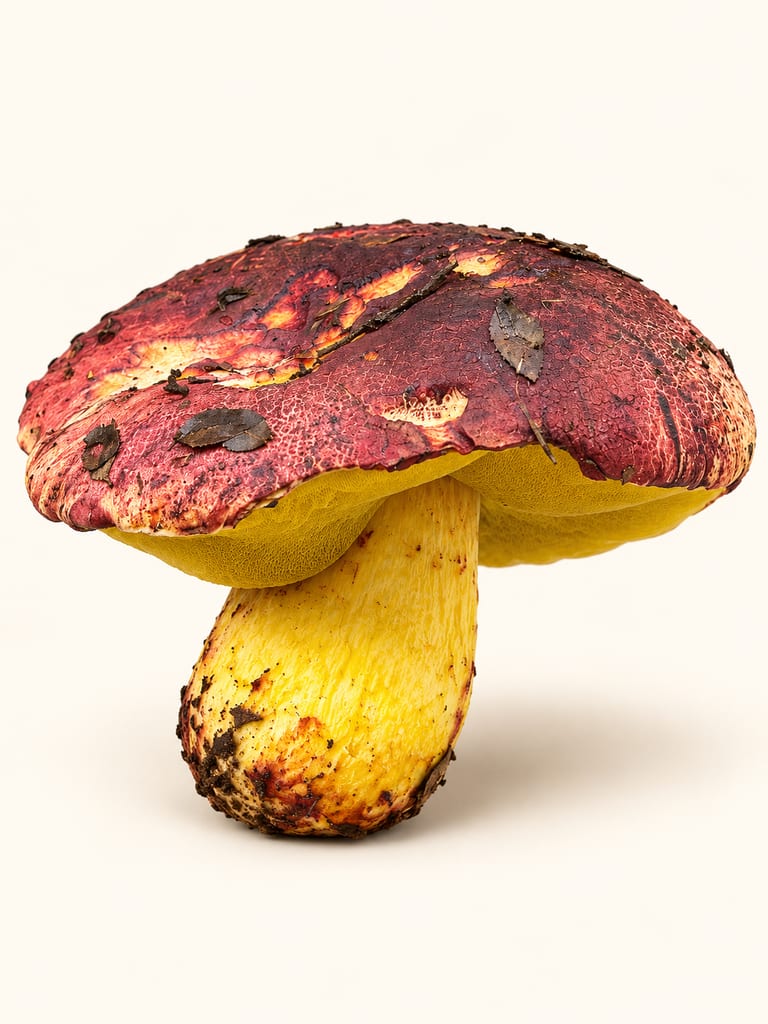
A large, Nothofagus-associated bolete native to central and southern Chile, where it has a documented Mapuche food tradition and local market use. It is listed as Endangered; historical edibility is not a reason to collect it.
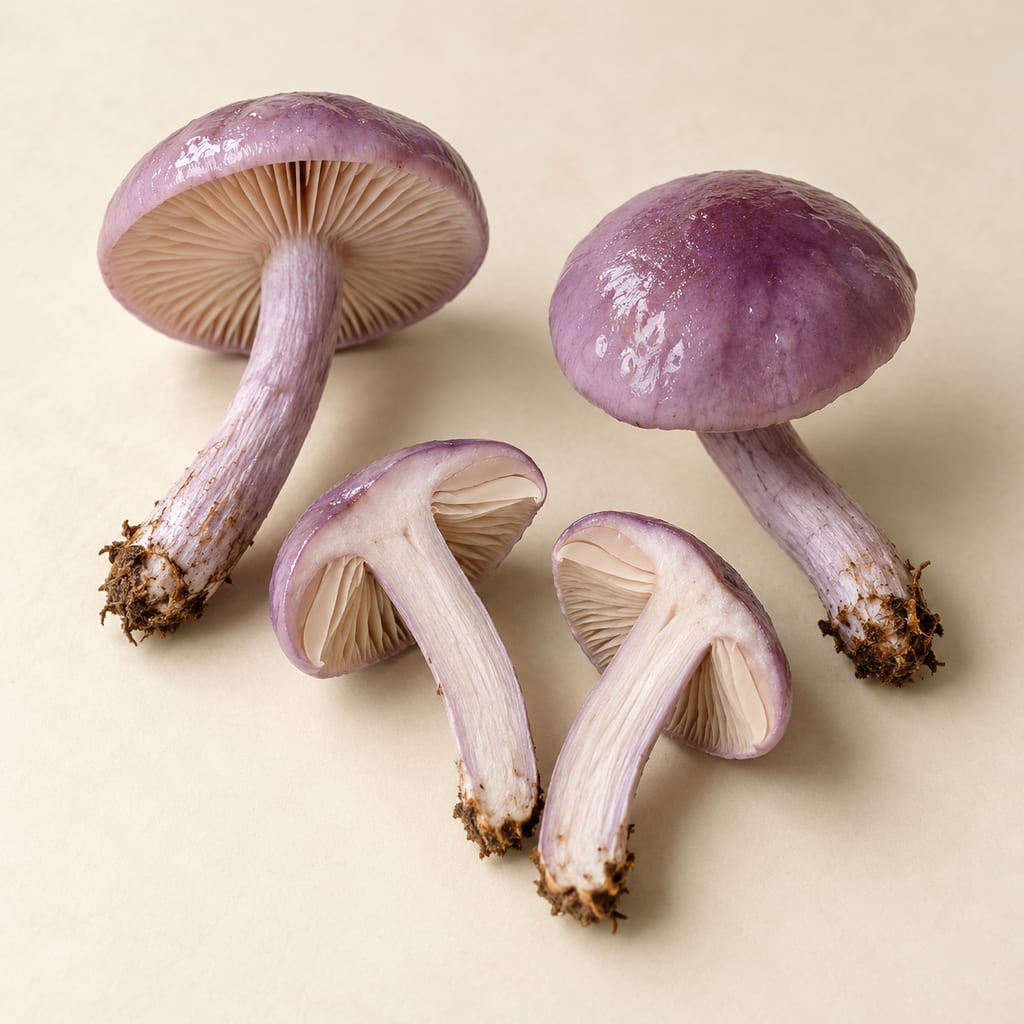
Cortinarius magellanicus is a webcap mushroom of Nothofagus forests in Patagonia, recorded in regional food use, but it belongs to a species complex and its genus contains deadly toxic species.
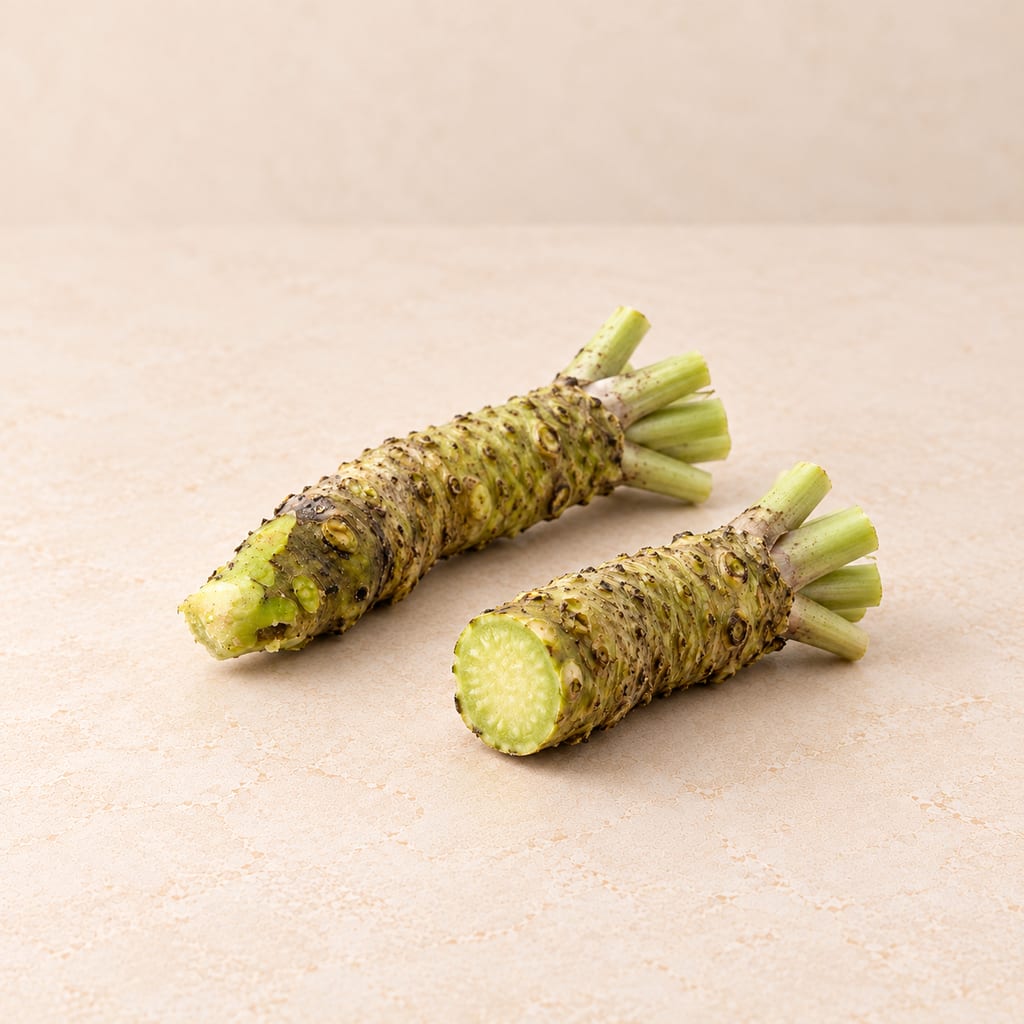
Wasabi is the enlarged stem of Eutrema japonicum, a pungent perennial in the mustard family. Fresh rhizome is grated as a Japanese condiment; powder and prepared paste are separate products.
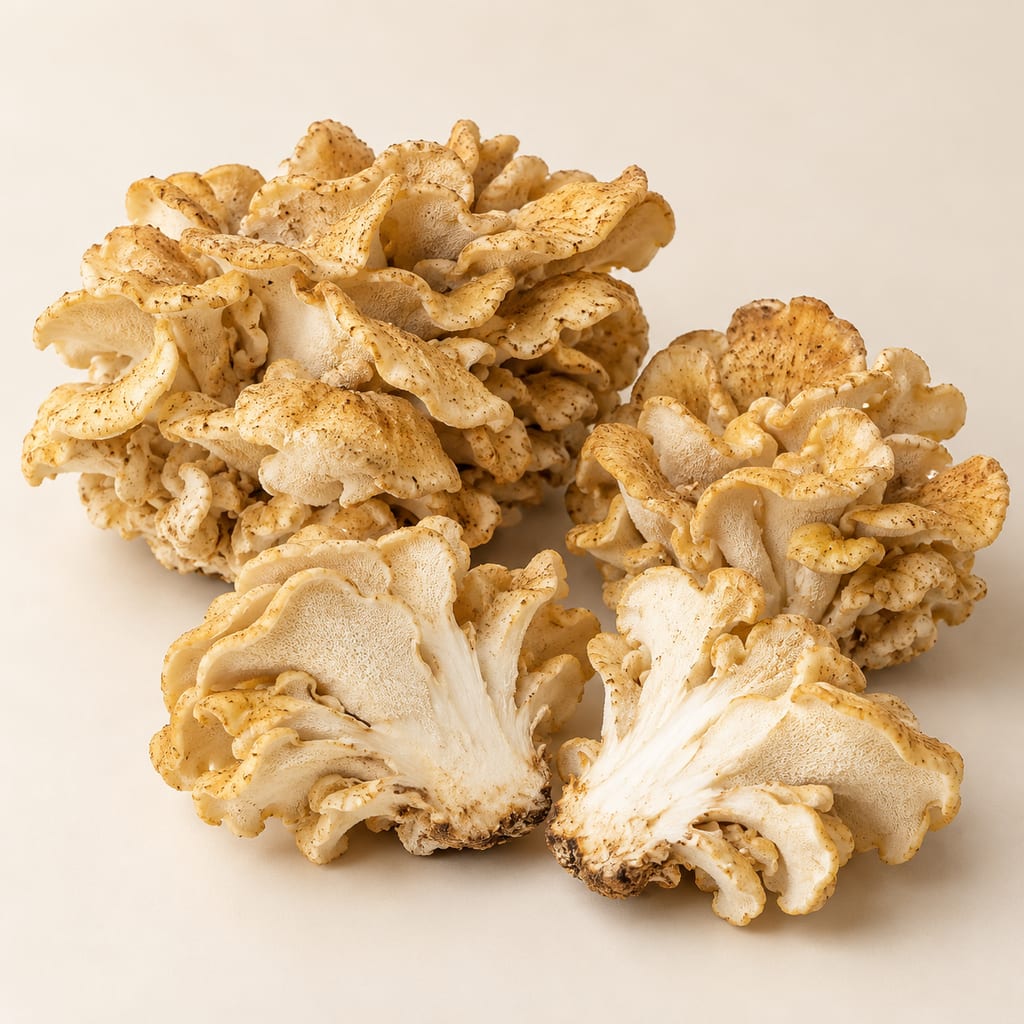
Gargal, Grifola gargal, is a wild mushroom of the Andean-Patagonian forests of Argentina and Chile, prized for its taste and now rated Endangered because wild stocks are declining.
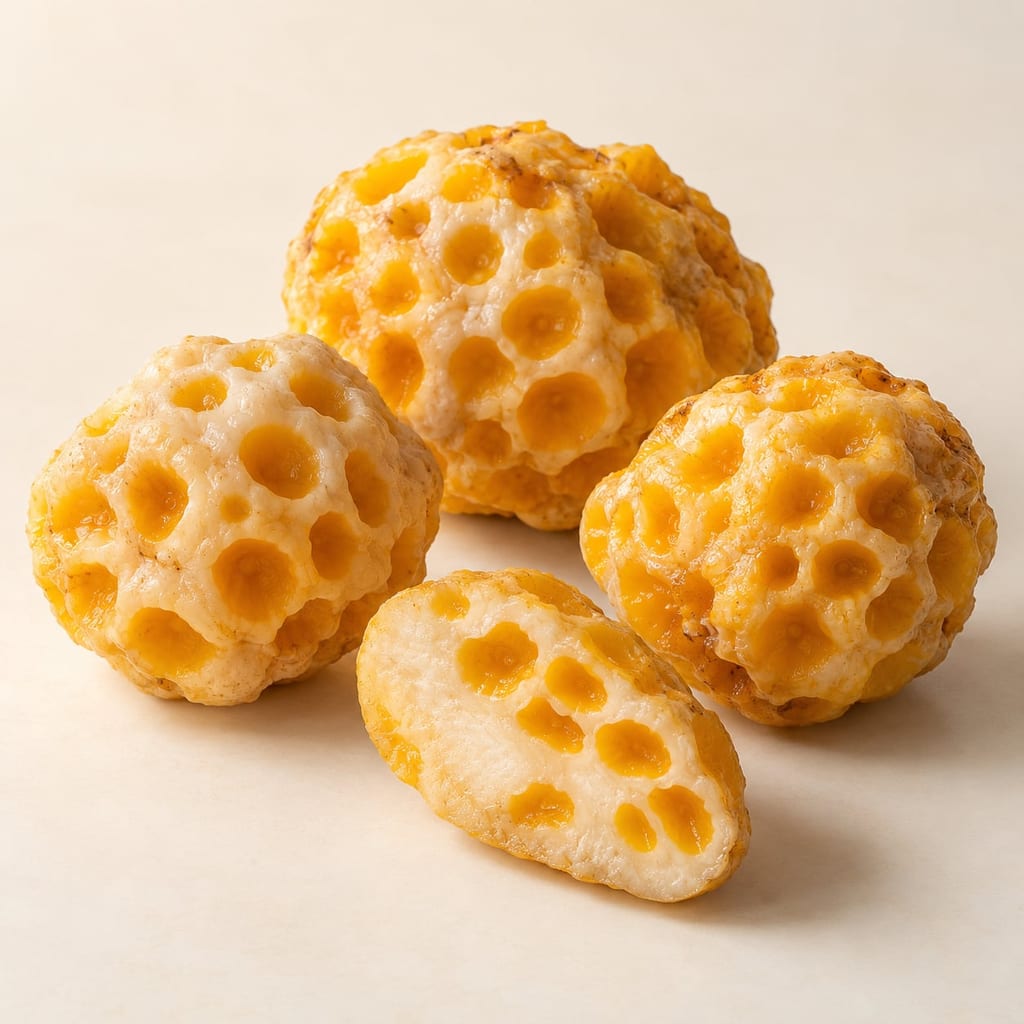
Llao-llao is the orange, gelatinous fruiting body of a southern-beech parasite in the Andean–Patagonian forests of Chile and Argentina. Regional sources document its food history, including Mapuche use in chicha.
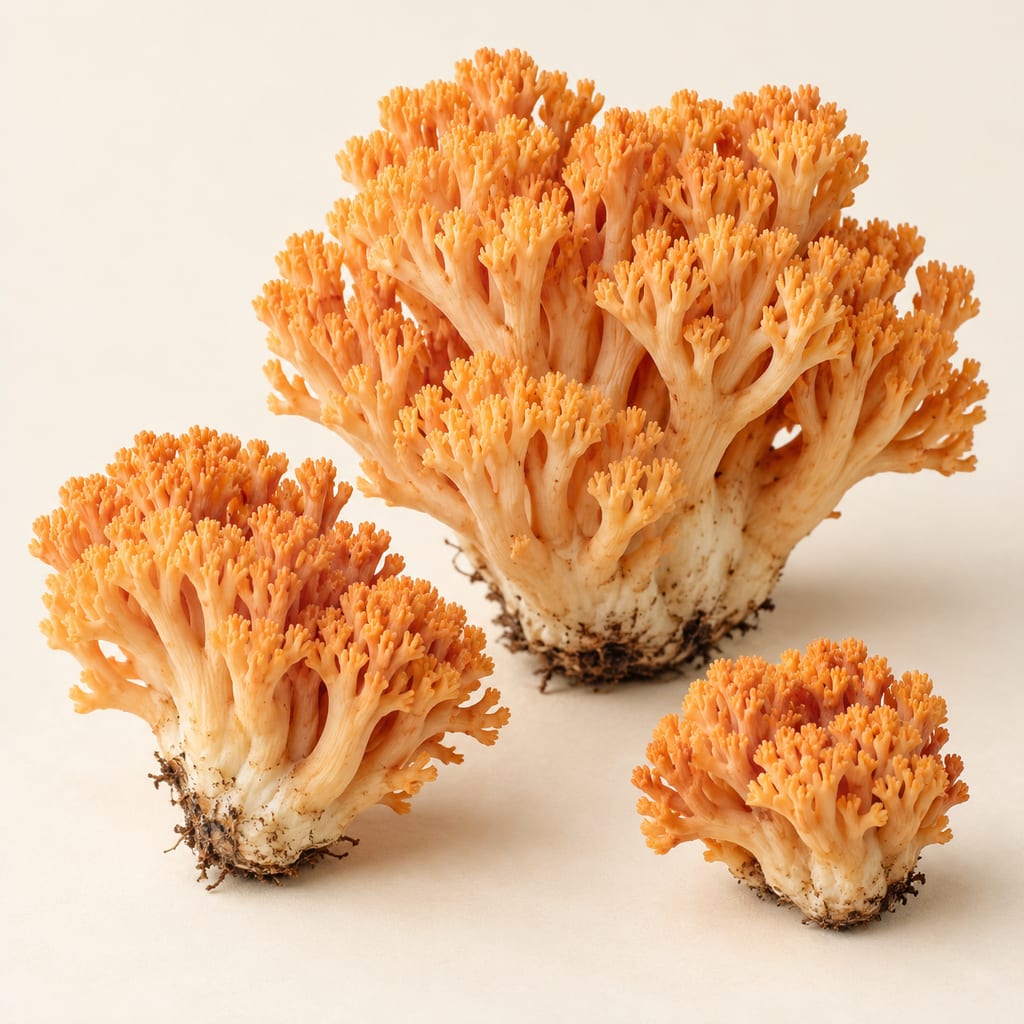
Patagonian changle, Ramaria patagonica, is a coral fungus of southern Chilean and Argentine forests that Patagonian guides list as cooked and eaten, with no species-level safety verdict.
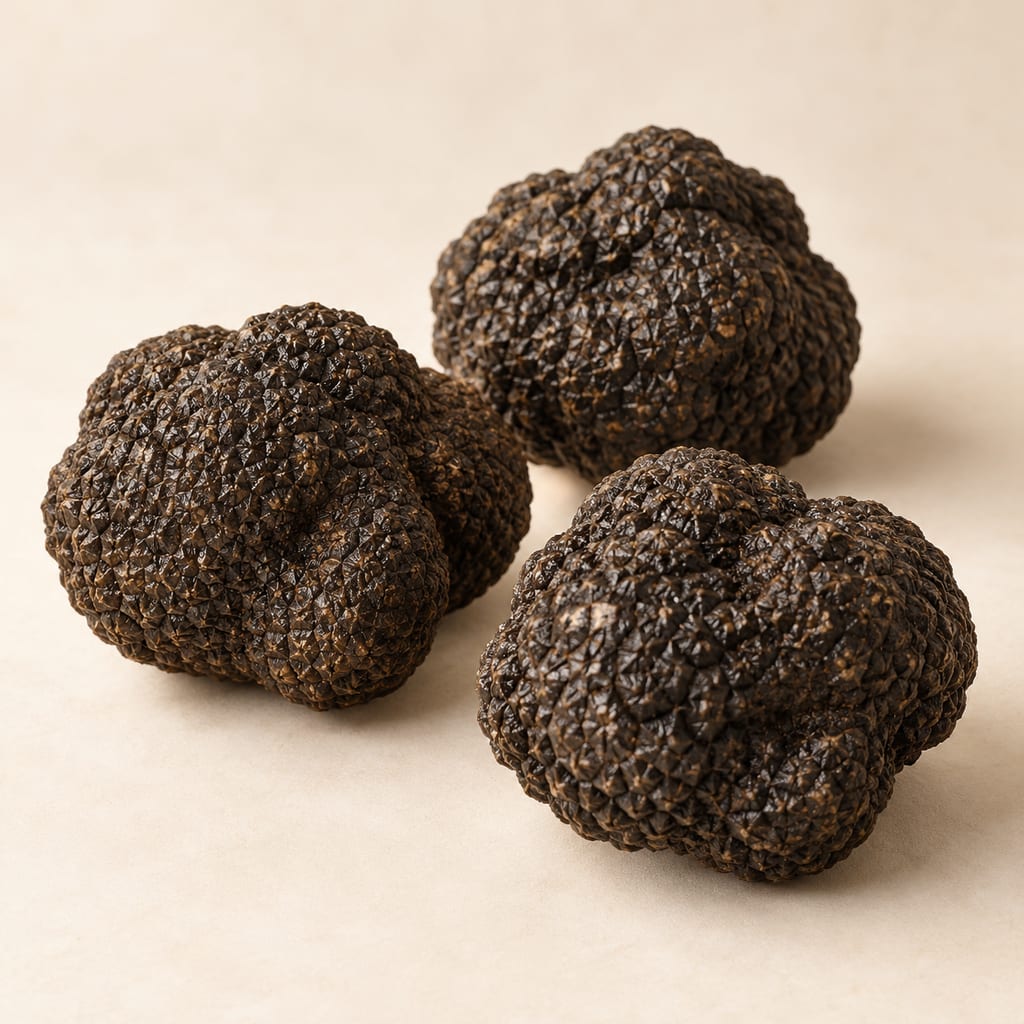
Tuber melanosporum is the Périgord black truffle, a mycorrhizal fungus of southern Europe grown in inoculated oak and hazel orchards and used as a high-value aromatic seasoning.
No community contributions have been published for this entry yet.
Sign in to contribute. Published comments and photos are free to read.
Species FungorumTaxonomy · Host and type locality
Species Fungorum: Cyttaria darwinii (Record 141158)Cyttaria darwinii Berk. is the current name, published in 1842 in Transactions of the Linnean Society of London 19:40.
The type host and locality are recorded as branches of Nothofagus betuloides in Magallanes.
Cited in: A fruit body that grows from a tree gall; A parasite of southern beeches; Range and the limits of a map; Identification and practical limits
Sistema de Información de Biodiversidad, Administración de Parques Nacionales (Argentina)Taxonomy · Morphology · Ecology · Seasonality · Food history · Geography
Cyttaria darwiniiProfile describes 2–5 cm globose stromata, pale to yellowish, pitted by immersed apothecia; hosts ñire, lenga and guindo.
In Tierra del Fuego fruit bodies appear in spring, persist through autumn and winter, and mature in spring or summer.
Profile calls the species edible, describes fresh fruit bodies as bland and pickles as preferred, and records Yámana consumption fresh.
The listed Los Arrayanes, Nahuel Huapi and Los Glaciares records are marked unvalidated.
Cited in: A fruit body that grows from a tree gall; A parasite of southern beeches; Range and the limits of a map; A seasonal fruiting body; An Indigenous food history; How it is eaten; Identification and practical limits
Ministerio del Medio Ambiente de ChileMorphology · Range · Seasonality · Food use
Hongos de Chile: Guía de campoSpecies account p. 120 describes 2–5 cm orange to yellowish globose fruiting bodies on Nothofagus, Chile and southern Argentina, and occurrence across the four seasons at regional scale.
The account reports Yámana fresh and dried use, present-day preference for pickles, firm-elastic texture, no characteristic odor and mild sweet flavour.
Cited in: A fruit body that grows from a tree gall; Range and the limits of a map; A seasonal fruiting body; An Indigenous food history; How it is eaten
Fin del Mundo / Instituto Fueguino de TurismoSeasonality · Culinary use · Regional location
Pan de indio (Cyttaria darwinii)Guide lists likely finding months January–April and August–December around Ushuaia and Tolhuin; it says spring appearance, persistence into autumn/winter and summer maturity.
Guide records Yámanas as consumers and pickling as a preferred contemporary use due to blandness.
Cited in: A seasonal fruiting body; How it is eaten
Food and Agriculture Organization of the United NationsFood use · Food history · Ecology
Non-Wood Forest Products from Conifers, Chapter 9: Cyttaria spp.The account reports C. darwinii sold in southern Chile and used in salads or fried in butter; it also records a traditional food history in Tierra del Fuego.
The genus parasitizes Nothofagus and fruits on infected branches.
Cited in: How it is eaten; Identification and practical limits
Darwin Online / Transactions of the Linnean Society of LondonHistorical taxonomy · Historical food use · Historical seasonality
On an edible fungus from Tierra del Fuego, and an allied Chilian speciesBerkeley's 1842 taxonomic account uses Darwin's Tierra del Fuego collections and reports the fungus as a staple food of local Indigenous people.
Darwin's locality-specific seasonal observation runs December–June; this does not establish a universal annual season.
Cited in: A seasonal fruiting body; An Indigenous food history
Boletín MicológicoTaxonomy · Regional context
Actualización del conocimiento del género Cyttaria Berk. (Cyttariales, Ascomycota) en ChileThe review treats C. darwinii and C. berteroi as distinct among seven Cyttaria species in Chile, and discusses taxonomy, morphology and ecology.
The shared vernacular category digüeñe covers multiple species; food traditions should be tied to the particular source and species where possible.
Cited in: A parasite of southern beeches; An Indigenous food history; Identification and practical limits
Ministerio del Medio Ambiente de Chile, SIMBIOTaxonomy · Geography
Cyttaria darwinii Berk.Chile platform places the species in Ascomycota, Leotiomycetes, Cyttariales, Cyttariaceae and Cyttaria.
Its occurrence table lists two observations associated with Dos Lagunas and two with Entrada Baker; administrative distribution fields are blank, so this is not a complete range map or a source of precise coordinates.
Cited in: Range and the limits of a map