
Agar / kanten
A gelling polysaccharide extracted from red seaweeds, sold as kanten strips or powder; it sets firm at a low concentration and stays solid until about 85 °C.
 FermenteaWhere food goes to change
Mushrooms
A large, Nothofagus-associated bolete native to central and southern Chile, where it has a documented Mapuche food tradition and local market use. It is listed as Endangered; historical edibility is not a reason to collect it.
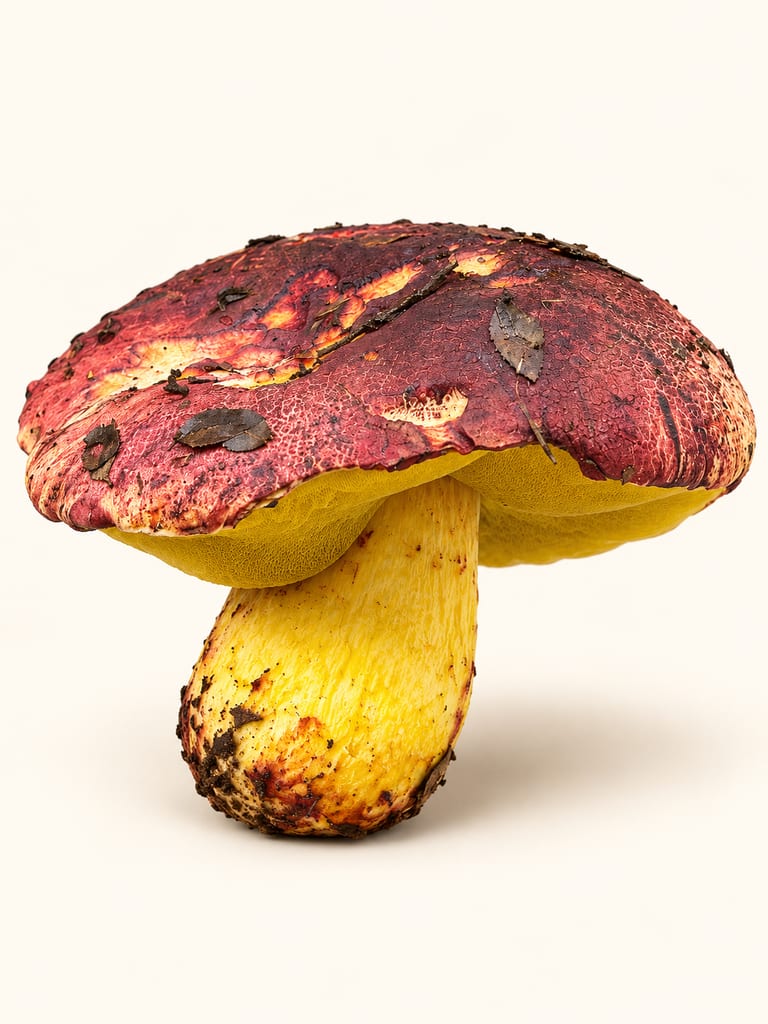
The Chilean bolete was described as Boletus loyo and is now classified as Butyriboletus loyo (Phillippi) Mikšík, a combination published in 2015. Chile's species record lists Boletus loyus Espinosa as a synonym. Field accounts describe a very large, dark red to burgundy cap, yellow pores and yellow flesh that can blue when cut or bruised, on a stout stem with a red base. It grows from soil in association with Nothofagus beech trees. These are source descriptions, not a field-identification or food-safety key. [Species Fungorum](https://www.speciesfungorum.org/names/Synonymy.asp?RecordId=551722); [Riquelme et al. 2019](https://revistas.uv.cl/index.php/Bolmicol/article/view/1754); [Chilean Environment Ministry species record](https://clasificacionespecies.mma.gob.cl/wp-content/uploads/2019/10/Boletus_loyo_11RCE_02_PAC.pdf).
This ectomycorrhizal fungus lives with Nothofagus, especially N. obliqua and N. dombeyi, and also has records with N. alpina and N. glauca. The Chilean assessment documents it from Maule, Biobío, Araucanía and Los Ríos, with O'Higgins and Los Lagos listed as uncertain; the 2019 taxonomic review describes Chilean populations across the Nothofagus belt. The assessment gives late summer through autumn, approximately March to May, while an earlier Chilean field account gives May to July. These regional observations support a broad austral-autumn season, not fixed dates for every forest. [Chilean Environment Ministry species record](https://clasificacionespecies.mma.gob.cl/wp-content/uploads/2019/10/Boletus_loyo_11RCE_02_PAC.pdf); [Riquelme et al. 2019](https://revistas.uv.cl/index.php/Bolmicol/article/view/1754); [CONAF field guide](https://investigacion.conaf.cl/archivos/repositorio_documento/2018/11/002_2011-LIBRO.pdf).
A 1915 Chilean natural-history account records loyo as edible and highly esteemed by local inhabitants. Later Chilean research describes it as a culturally important Mapuche food mushroom; an INFOR species account notes consumption among Indigenous communities from Biobío southward and recognition by Huilliche communities in San Juan de la Costa. Government and forestry sources document fresh local-market sales, mainly in Biobío and Araucanía, alongside domestic use and wider trade. The evidence establishes food use, but the sources reviewed here do not establish one standard preparation method, so none is prescribed. [Espinosa 1915](https://publicaciones.mnhn.gob.cl/668/w3-article-64280.html); [IUCN assessment, 2019](https://www.iucnredlist.org/species/75099337/75099440); [INFOR 2023](https://bibliotecadigital.infor.cl/entities/publication/99094540-c04f-4d92-af9b-2e1b67d7a27d); [Chilean Environment Ministry species record](https://clasificacionespecies.mma.gob.cl/wp-content/uploads/2019/10/Boletus_loyo_11RCE_02_PAC.pdf).
Chile's official species list and the 2019 IUCN assessment classify loyo as Endangered. The IUCN assessment identifies overharvesting and loss or fragmentation of Nothofagus forest as threats; the Chilean assessment records habitat loss and exploitation concerns. Because the mushroom is threatened, its food history should be read as cultural documentation rather than a prompt to harvest. Neither the edible-use record nor the morphology summary substitutes for expert identification or a species-specific toxicological assessment. [Chile Environment Ministry final classification list](https://clasificacionespecies.mma.gob.cl/procesos-de-clasificacion/11o-proceso-de-clasificacion-de-especies-2014/listado-de-especies-y-fichas-finales-11o-proceso-rce/); [IUCN assessment, 2019](https://www.iucnredlist.org/species/75099337/75099440); [Chilean Environment Ministry species record](https://clasificacionespecies.mma.gob.cl/wp-content/uploads/2019/10/Boletus_loyo_11RCE_02_PAC.pdf).
The national association is based on documented records and use; it does not imply continuous occurrence across the country.
Official species account documents local fresh-market sales, mainly in Biobío and Araucanía.
Official species account documents local fresh-market sales, mainly in Biobío and Araucanía.
INFOR reports that its 2018–2021 food-mushroom research project was conducted in Panguipulli, Los Ríos. This is a documented research area, not a claim of uniform use throughout the region.
The INFOR 2023 source records Huilliche recognition in San Juan de la Costa (Osorno Province). The Chilean species assessment lists Los Lagos occurrence as uncertain; cultural use and species distribution evidence are kept distinct.
A gelling polysaccharide extracted from red seaweeds, sold as kanten strips or powder; it sets firm at a low concentration and stays solid until about 85 °C.
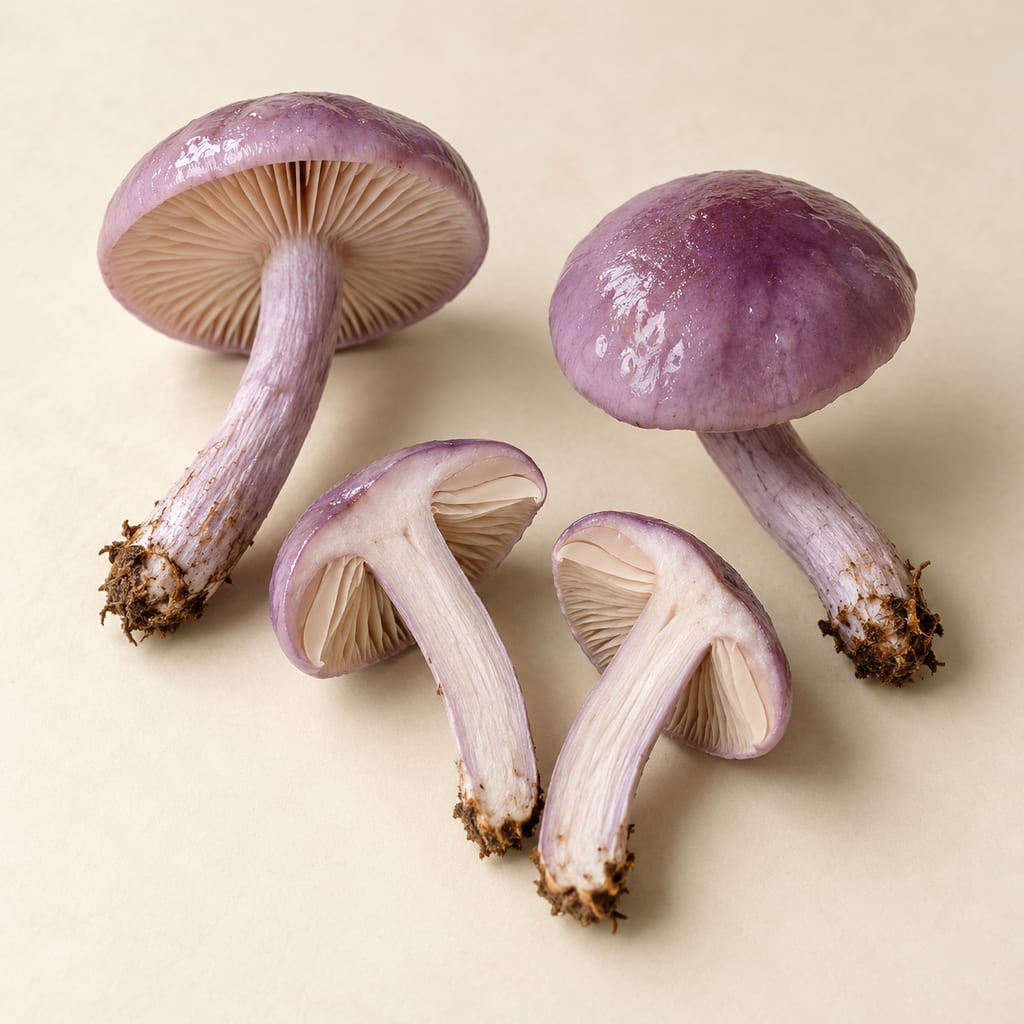
Cortinarius magellanicus is a webcap mushroom of Nothofagus forests in Patagonia, recorded in regional food use, but it belongs to a species complex and its genus contains deadly toxic species.
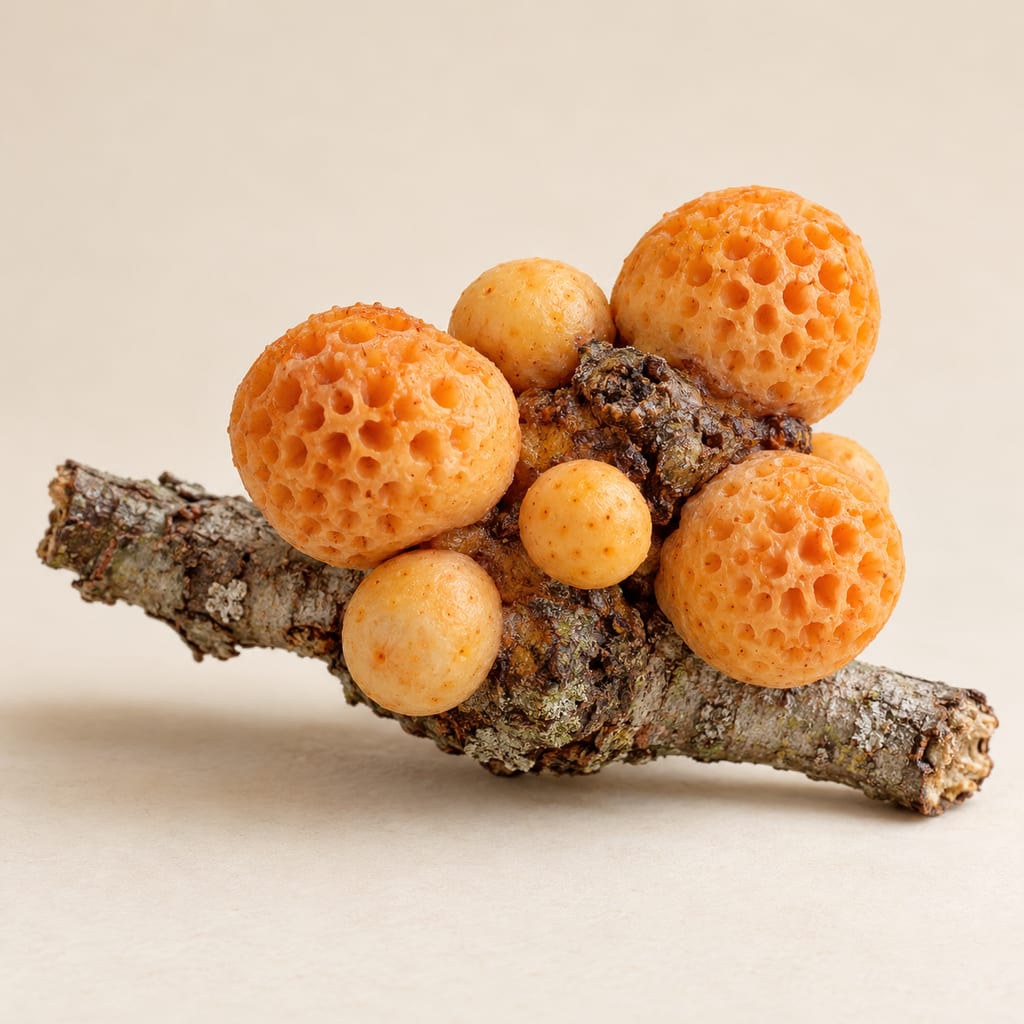
Darwin’s fungus is a pitted orange stroma that grows from galls on living southern beeches in southern Chile and Argentina. Sources document regional food use, especially in Tierra del Fuego.
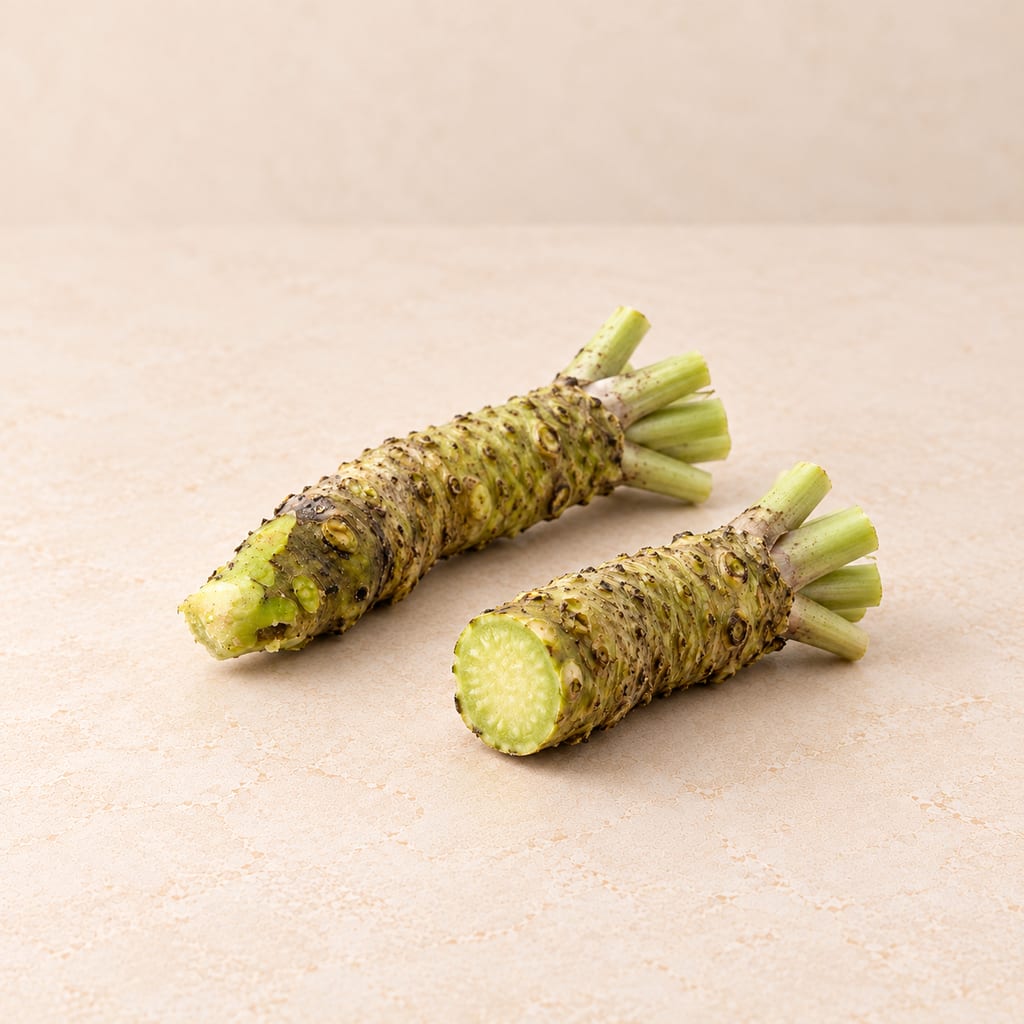
Wasabi is the enlarged stem of Eutrema japonicum, a pungent perennial in the mustard family. Fresh rhizome is grated as a Japanese condiment; powder and prepared paste are separate products.
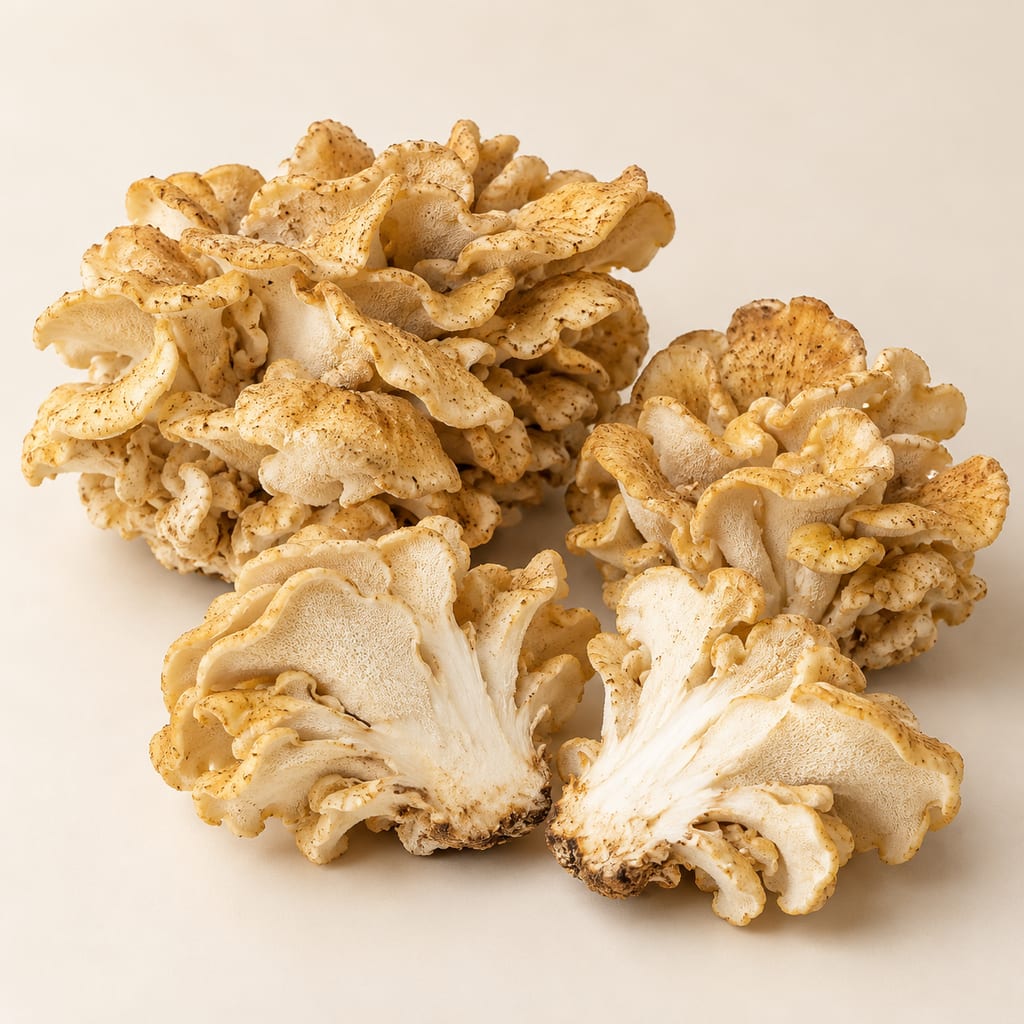
Gargal, Grifola gargal, is a wild mushroom of the Andean-Patagonian forests of Argentina and Chile, prized for its taste and now rated Endangered because wild stocks are declining.
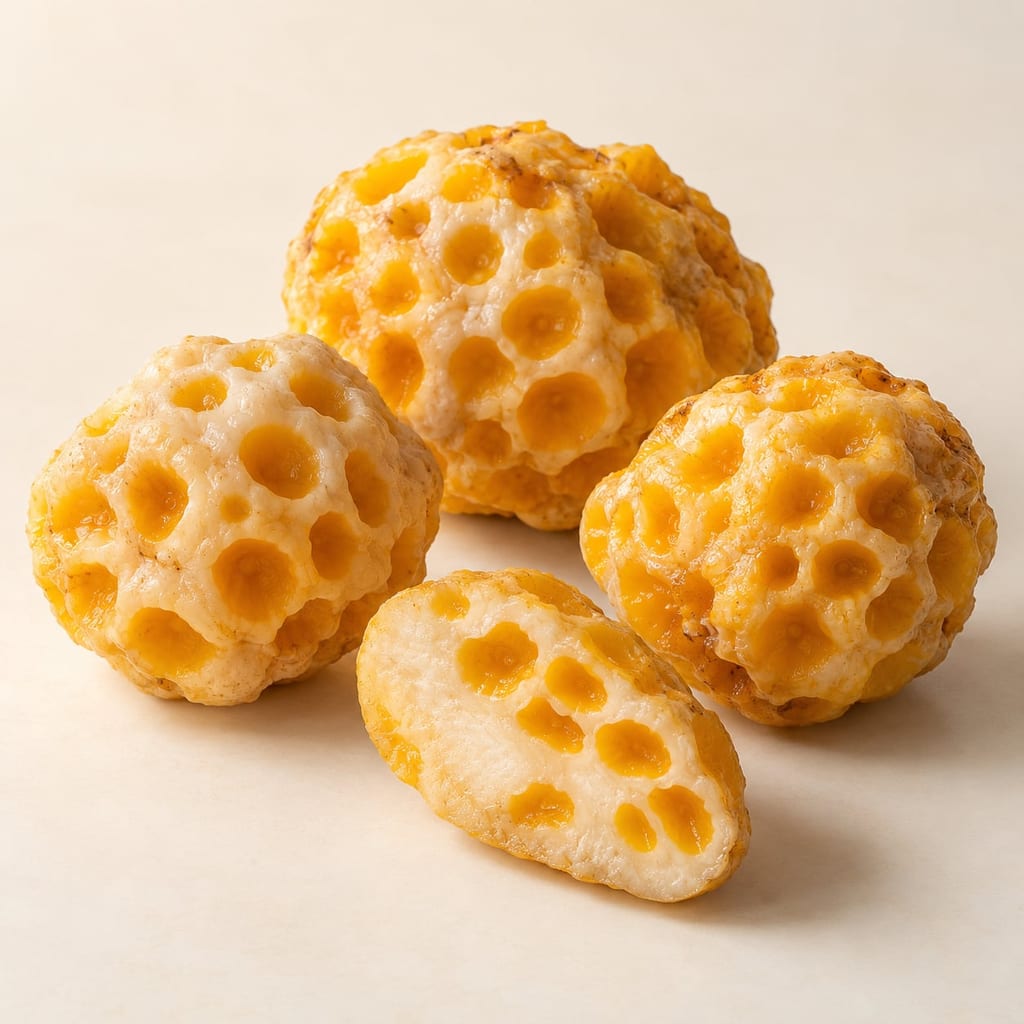
Llao-llao is the orange, gelatinous fruiting body of a southern-beech parasite in the Andean–Patagonian forests of Chile and Argentina. Regional sources document its food history, including Mapuche use in chicha.
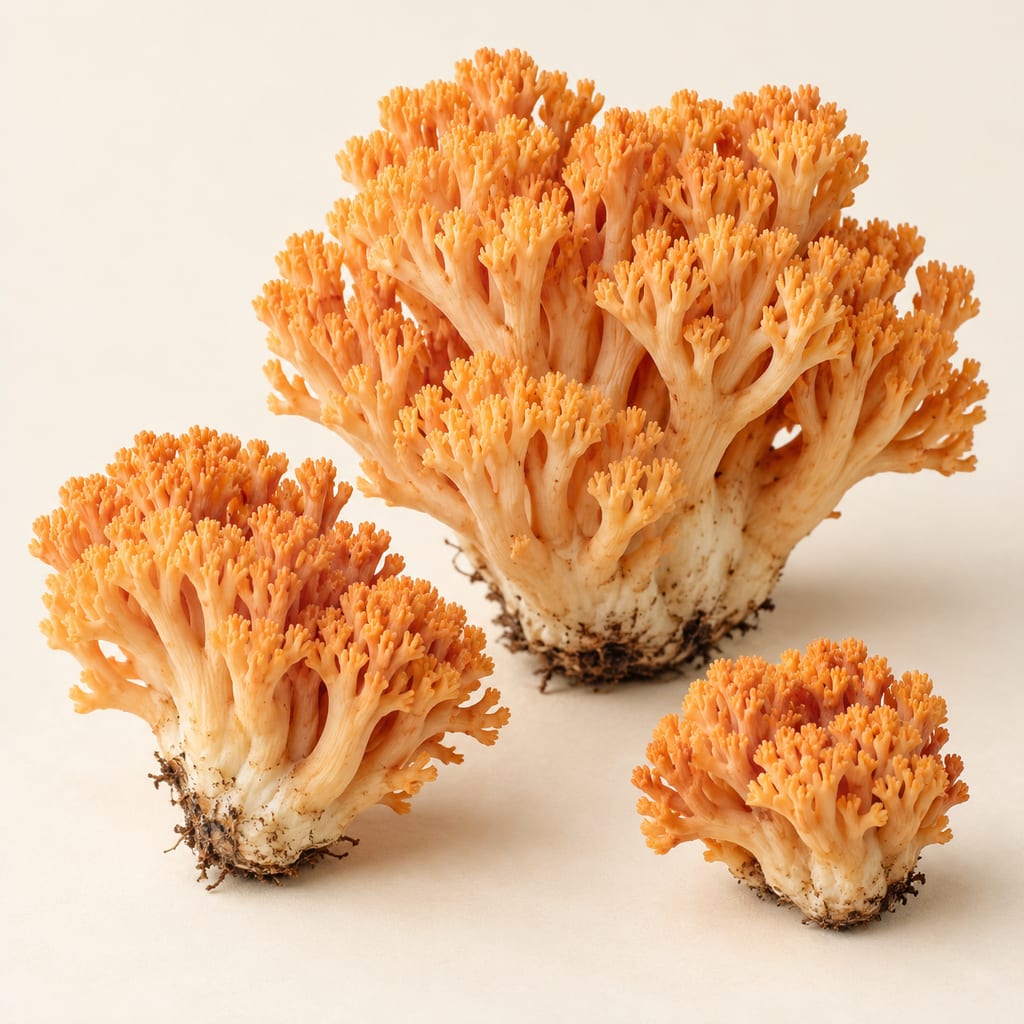
Patagonian changle, Ramaria patagonica, is a coral fungus of southern Chilean and Argentine forests that Patagonian guides list as cooked and eaten, with no species-level safety verdict.
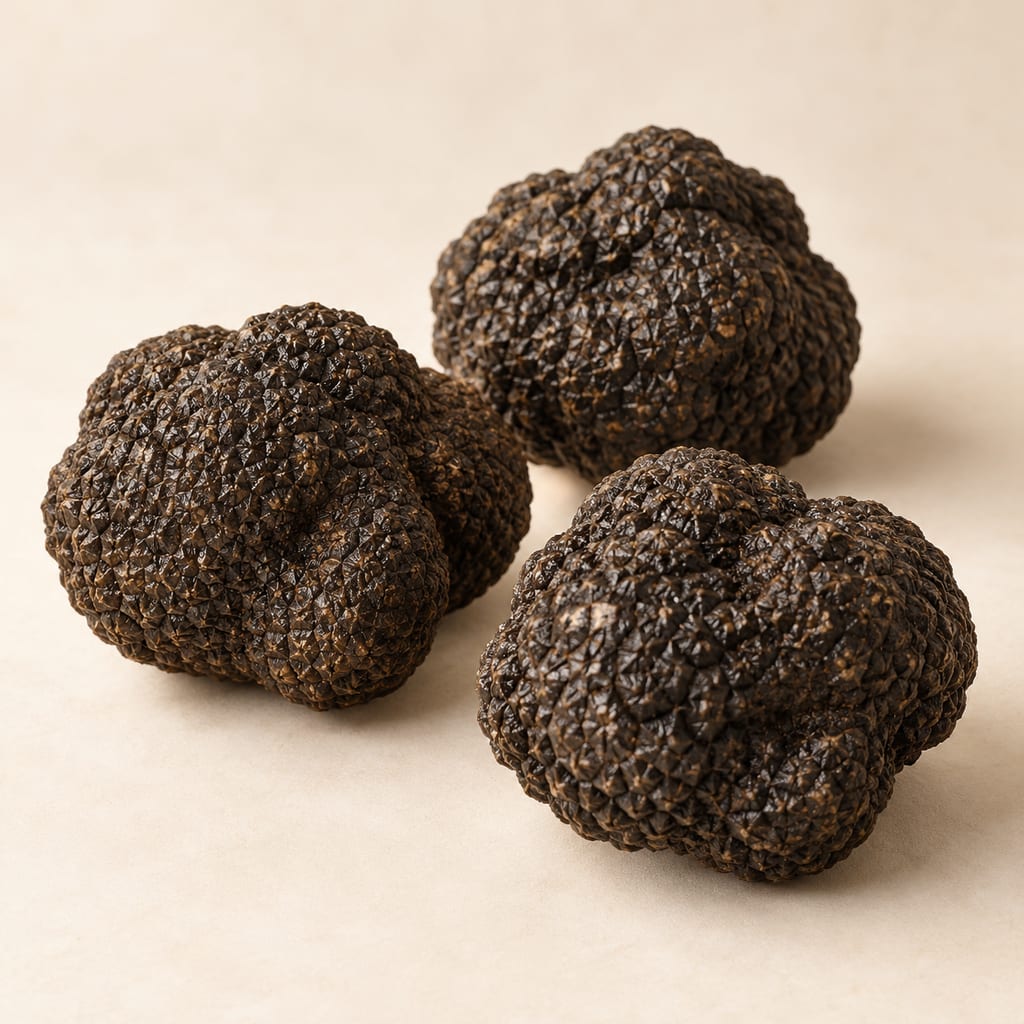
Tuber melanosporum is the Périgord black truffle, a mycorrhizal fungus of southern Europe grown in inoculated oak and hazel orchards and used as a high-value aromatic seasoning.
No community contributions have been published for this entry yet.
Sign in to contribute. Published comments and photos are free to read.
Species Fungorum / Royal Botanic Gardens, KewIdentity
Butyriboletus loyo synonymy record2015 combination; Boletus loyo basionym.
Cited in: Name and identity
Boletín Micológico, Universidad de ValparaísoIdentity · Ecology
Revisión del género Boletus L. (Boletales, Basidiomycota) en ChileTreats Boletus loyo as Butyriboletus; Chilean Nothofagus association and taxonomic review.
Cited in: Name and identity; Forest, range and season
Ministerio del Medio Ambiente de ChileIdentity · Habitat · Season · Locations · Food history · Conservation
Ficha de antecedentes de especie: Boletus loyoMorphology, host trees, distribution and specimen localities, approximate fruiting months, fresh-market use, threats and assessment history.
Cited in: Name and identity; Forest, range and season; Food use and cultural context; Conservation and limits
Corporación Nacional Forestal (CONAF)Season · Food history
Guía de hongos silvestres comestibles de ChileEarlier Chilean field-guide season estimate and gathered/consumed fruiting bodies.
Cited in: Forest, range and season
Museo Nacional de Historia Natural de Chile, Boletín 8Identity · Food history
Hongo nuevo chileno: el loy, Boletus loyus Espinosa, n. sp.1915 description under synonym Boletus loyus; historical edible and esteem report.
Cited in: Food use and cultural context
Instituto Forestal (INFOR), ChileFood history · Locations
Hongos silvestres comestibles: Productos forestales no madereros vinculados a pueblos indígenas2023 account of Indigenous food traditions; Huilliche recognition and food-use context for loyo.
Cited in: Food use and cultural context
IUCN Red List of Threatened SpeciesFood history · Conservation
Butyriboletus loyo assessment2019 Endangered category; Mapuche cultural and gastronomic importance; domestic use and trade; threats.
Cited in: Food use and cultural context; Conservation and limits
Ministerio del Medio Ambiente de ChileConservation
Final classifications, 11th RCE processOfficial listing for Boletus loyo as Endangered (EN A2cd).
Cited in: Conservation and limits
FAOFood history
Wild edible fungi: a global overview — Annex 2Country-level historical Chile food-use listing.
FAOFood history
Wild edible fungi: a global overview — Annex 3Overview's compiled edible-use listing.
Wikimedia CommonsImage provenance
Boletus loyo (MYCL000158)Species-subject photo from Valdivia, Chile; CC0.
Wikimedia CommonsImage provenance
Boletus loyo (VALDF0006)Species-subject photo from Valdivia, Chile; CC0.
Wikimedia CommonsImage provenance
Boletus loyo 510578Species-subject photo from Punucapa, Valdivia, Chile; CC BY-SA 3.0.
Wikimedia CommonsImage provenance
Boletus loyoSpecies-subject photo from Colegual, Chile; CC BY-SA 4.0.
iNaturalistImage provenance
Butyriboletus loyo observation 384751896Observation from Ñuble dated 2026-06-22; photo licensed CC BY-NC; identification marked Research Grade but image has atypically pale cap appearance.