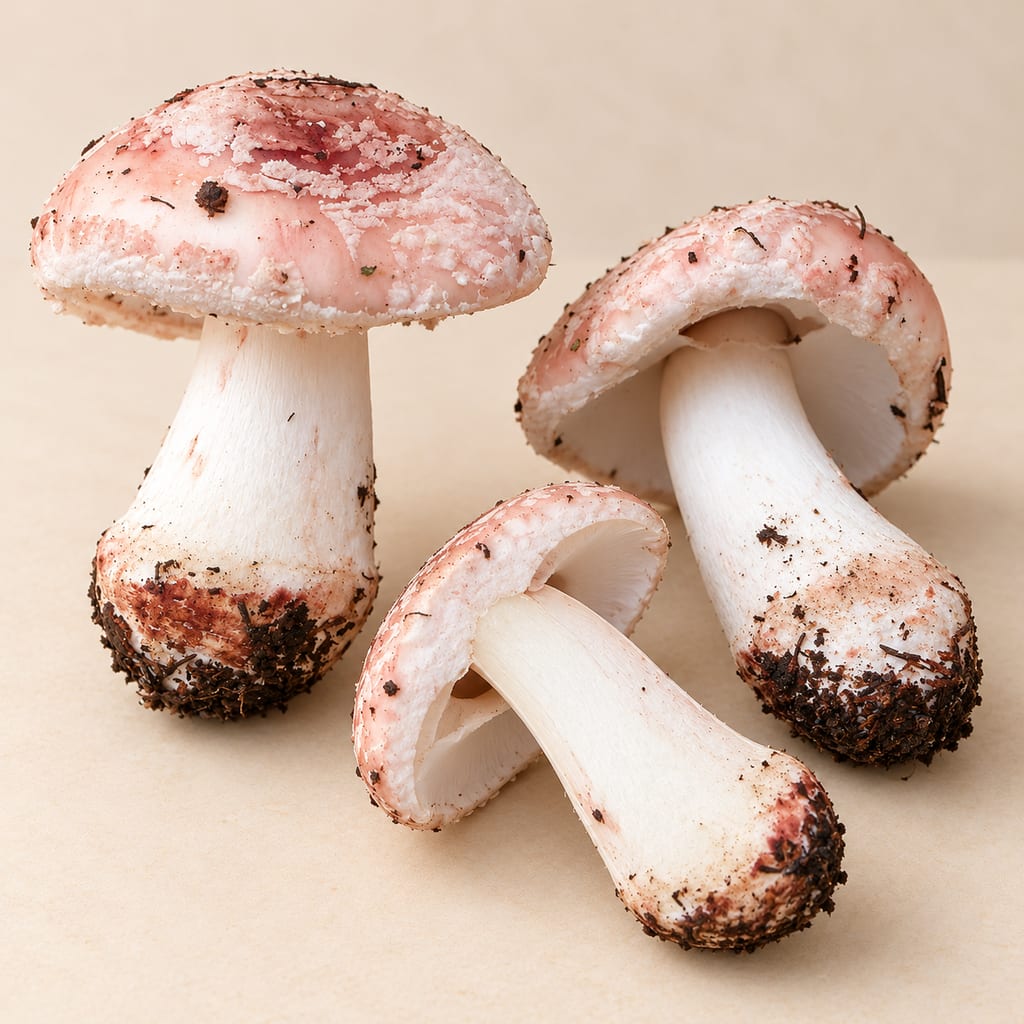
American blusher
Amanita novinupta is a western North American blusher, a forest mushroom recorded as food in Mexico, and one that must be cooked because its raw flesh is toxic.
 FermenteaWhere food goes to change
Mushrooms
Marasmius oreades is a small grassland mushroom that forms fairy rings. It is used for cooking and drying in Europe and Mexico. Toxic grassland lookalikes occur, so growth in rings is not an edibility test.
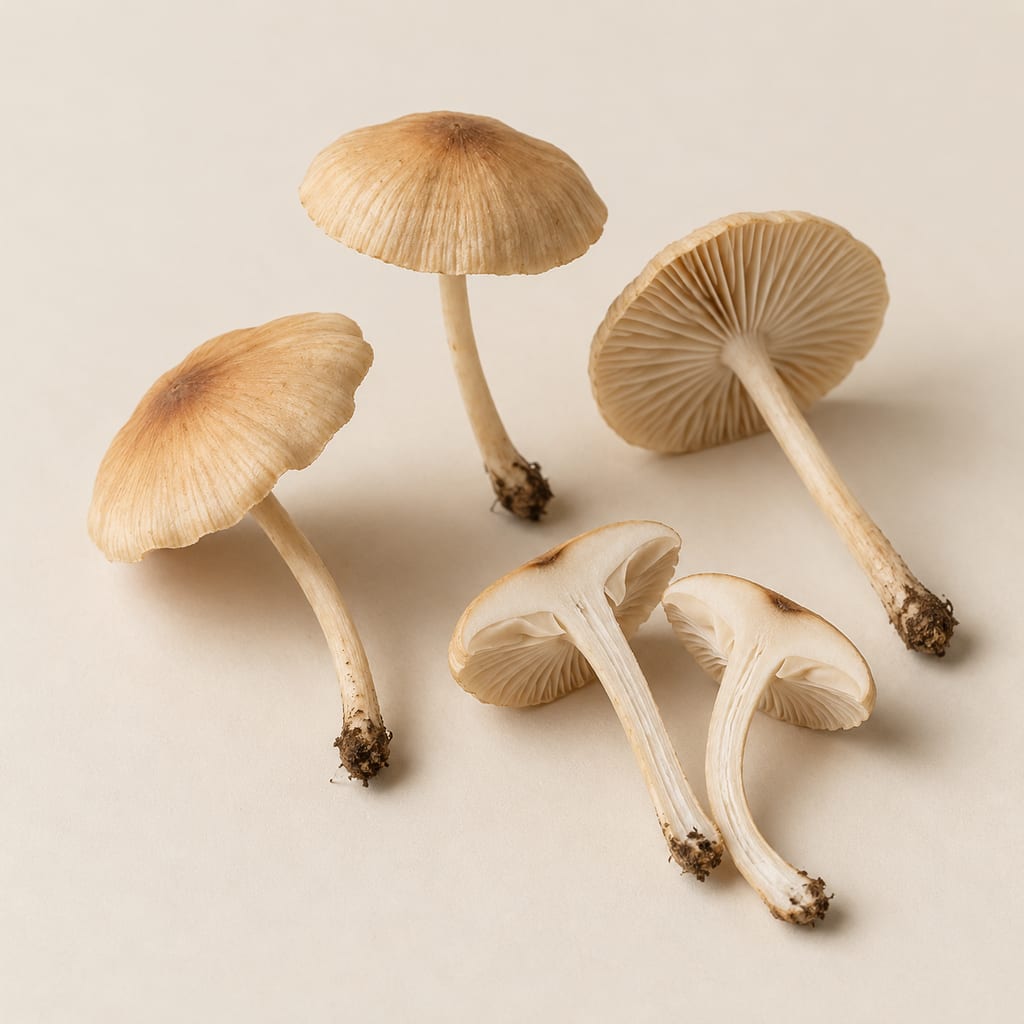
Marasmius oreades is a small grassland mushroom, a decomposer that grows in lawns, pastures and other grassland. It often forms rings or partial arcs, which gives it the name fairy-ring champignon. The cap is tan to buff, and the spore print is white.
The catalogue names the species as Marasmius oreades and lists fairy-ring mushroom as another name. Both are research labels in the catalogue, which does not validate the current name.
The catalogue records small caps used for cooking and drying in Europe and other temperate regions, and a food-use record among the Wixarika and mestizo peoples of Mexico. Foraging guides describe the caps as edible and suited to cooking. The sources do not give a dish, a quantity or a cooking time.
Because the caps are small and dry well, the species is recorded in drying as well as in fresh cooking. The catalogue does not describe how dried caps are prepared or stored.
Dried specimens of this species can revive after they are moistened, a trait that some guides use to separate it from lookalikes. Clitocybe rivulosa does not revive in the same way.
Fairy rings are not an identification test. The growth pattern appears in several grassland fungi, and the catalogue states that fairy-ring growth is not an edibility test.
The grassland lookalikes most often named in the sources are Clitocybe dealbata and Clitocybe rivulosa, which both grow in rings. Clitocybe rivulosa is toxic and contains muscarine. Some sources also warn about poisonous Inocybe species. Sources disagree on how far the Clitocybe species differ from each other.
Early in the season the species is described as fairly safe, while later in the summer toxic species appear in the same places and call for extra care. The catalogue warns that grassland lookalikes can be poisonous. Confirm any identification with an experienced local forager or a mycologist before eating a wild fungus. This page gives no identification or edibility verdict for Marasmius oreades.
Food use recorded in the supplied catalogue and in UK foraging guidance. The sources do not give a country-level tradition.
Recorded in Wixarika and mestizo food use in the supplied catalogue. The record names the country but not a locality.
Amanita novinupta is a western North American blusher, a forest mushroom recorded as food in Mexico, and one that must be cooked because its raw flesh is toxic.

Ripe avocado flesh is the soft, buttery, fat-rich pulp of Persea americana, eaten raw. It is low in acid, so it is a fresh ingredient that needs care in chilled dishes.
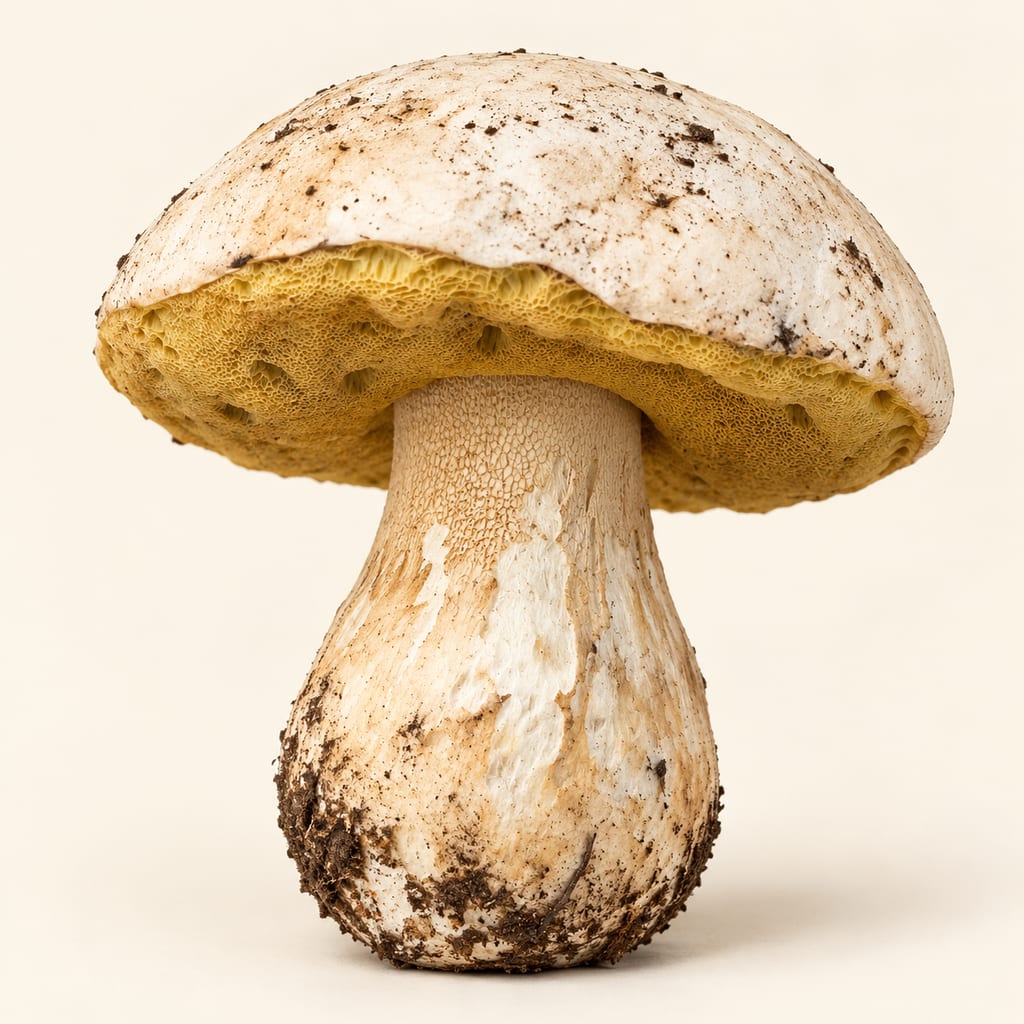
Boletus barrowsii, the white king bolete, is a western porcini relative with documented local food use in Mexico. Its pale cap and netted stem are not enough for field identification.
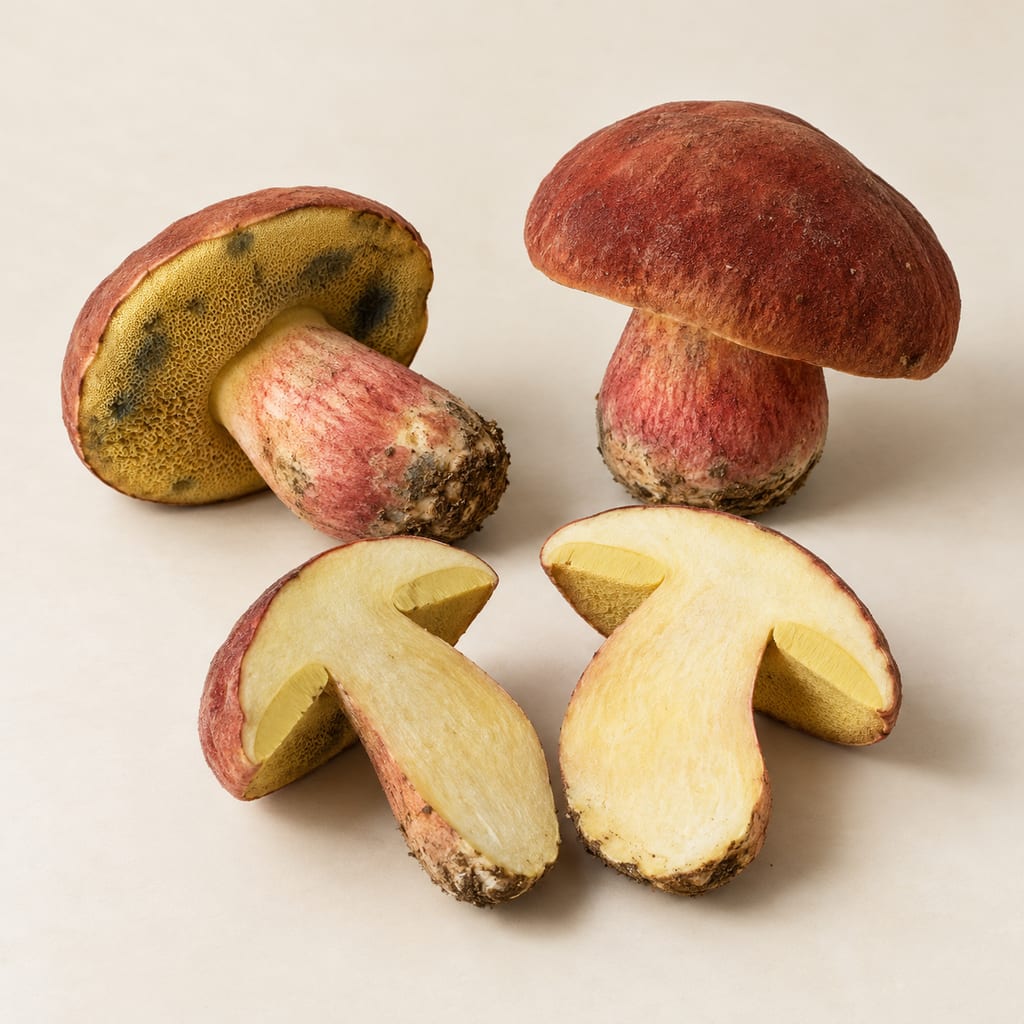
A red-and-yellow bolete described from Michigan and also listed in Mexican fungal records. Historical sources classify it as food, but its species limits, Mexican range and safe food use need careful qualification.
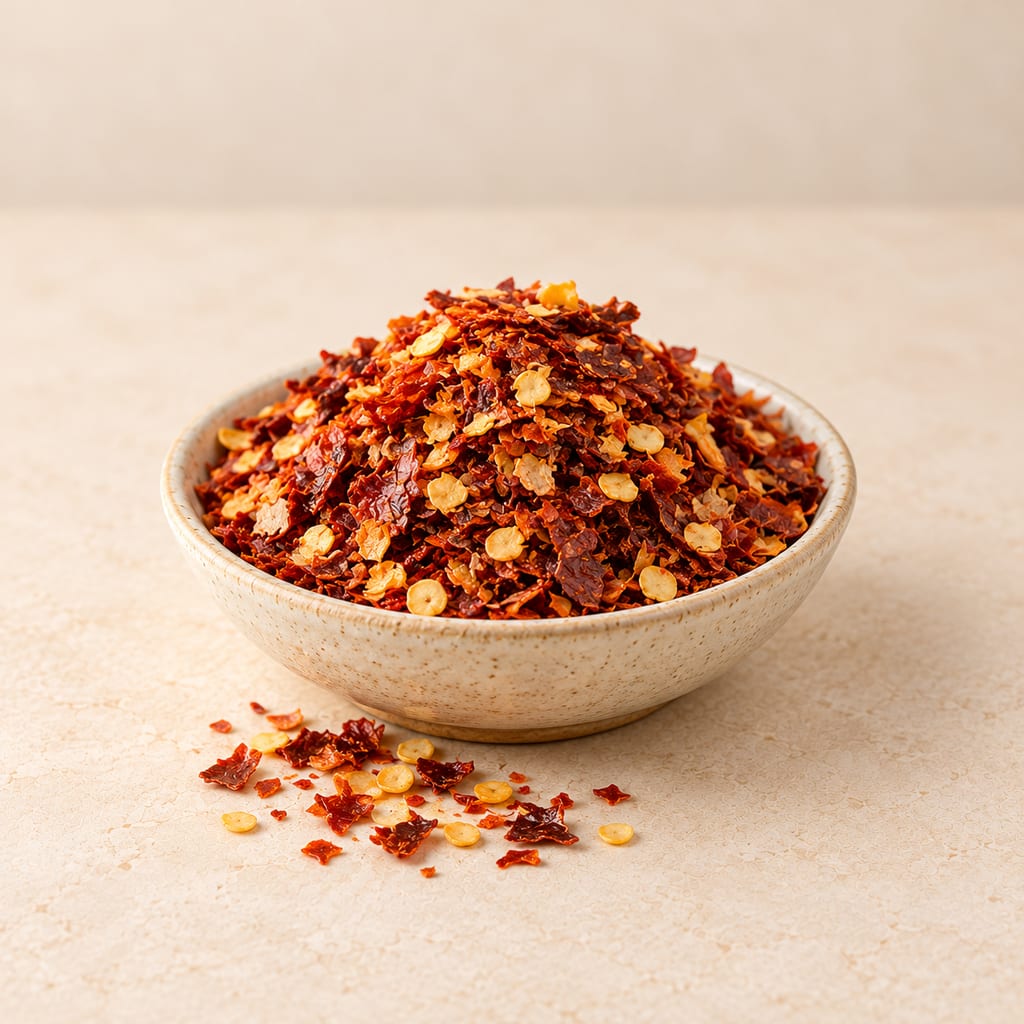
Calabrian pepper flakes are dried red Capsicum annuum from Calabria, crushed into coarse pieces; Peperoncino di Calabria is a protected geographical indication.
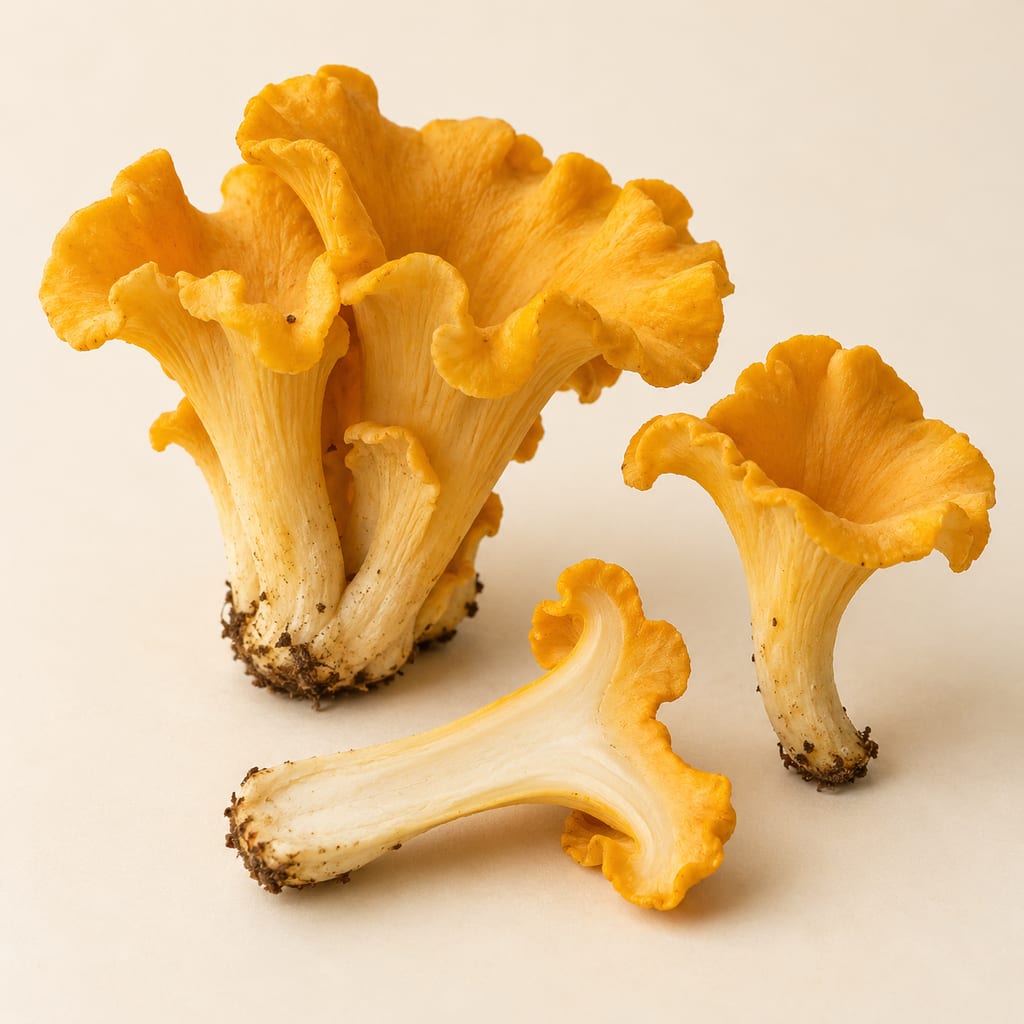
Cantharellus odoratus, the fragrant chanterelle, is a North American and Central American oak-woodland fungus. It was sold in a Veracruz market in the 1980s and in Guatemala in 2002, and its name is still disputed.
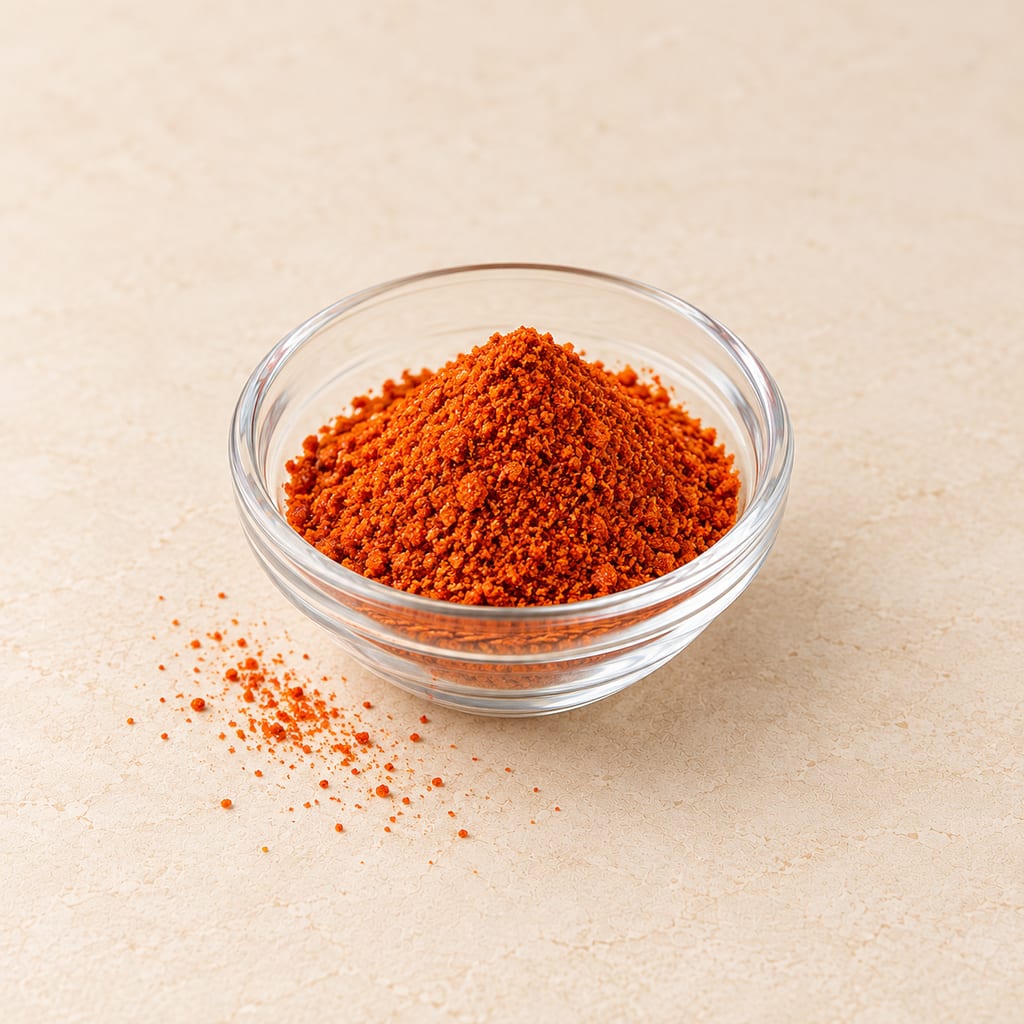
Cayenne is a very pungent red powder from dried, ground hot chilli pods, mostly Capsicum annuum, and the name of the long red peppers it comes from.
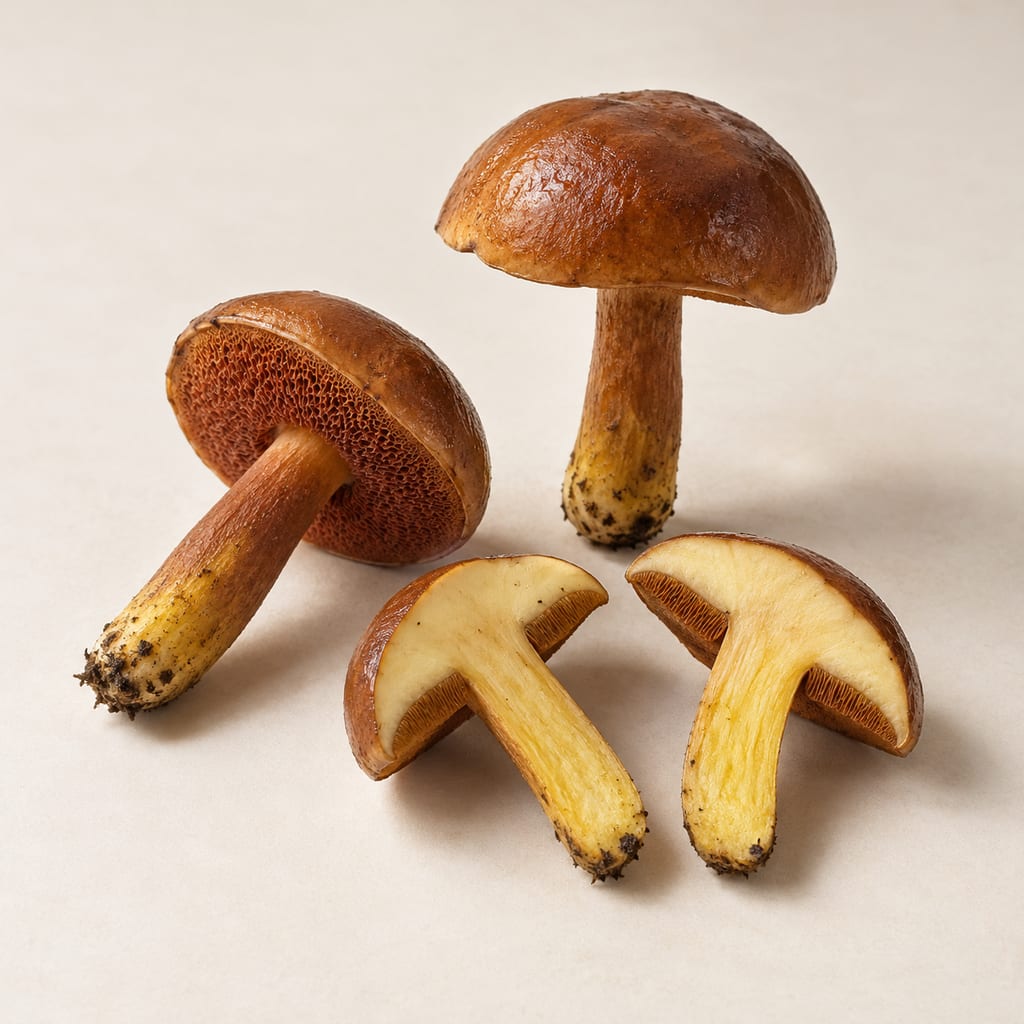
A peppery woodland bolete with historical edible labels and reported condiment use in Querétaro. Current mycological references call its edibility suspect or unestablished; this entry does not recommend consumption.
No community contributions have been published for this entry yet.
Sign in to contribute. Published comments and photos are free to read.
Boletin Oficial del EstadoFood use
Supplied catalogue reference (BOE-A-2009-1110)Small caps for cooking and drying; grassland lookalikes can be poisonous.
Cited in: What the mushroom is; Food use; Lookalikes and safety
SpringerFood use
Supplied catalogue reference (Springer, s43008-019-0014-6)Wixarika and mestizo food-use record in Mexico.
Cited in: Food use
Wild Food UKIdentification · Lookalikes · Food use
Fairy ring champignonsGrassland mushroom forming rings or arcs; tan to buff cap; white spore print; revives when moistened.
Clitocybe dealbata and Clitocybe rivulosa named as lookalikes; early season fairly safe, mid-summer onward needs care.
Cited in: What the mushroom is; Food use; Dried specimens and identification; Lookalikes and safety
MykowebLookalikes · Safety
Clitocybe rivulosaClitocybe rivulosa is toxic and contains muscarine; grows in grassland rings.
Cited in: Dried specimens and identification; Lookalikes and safety