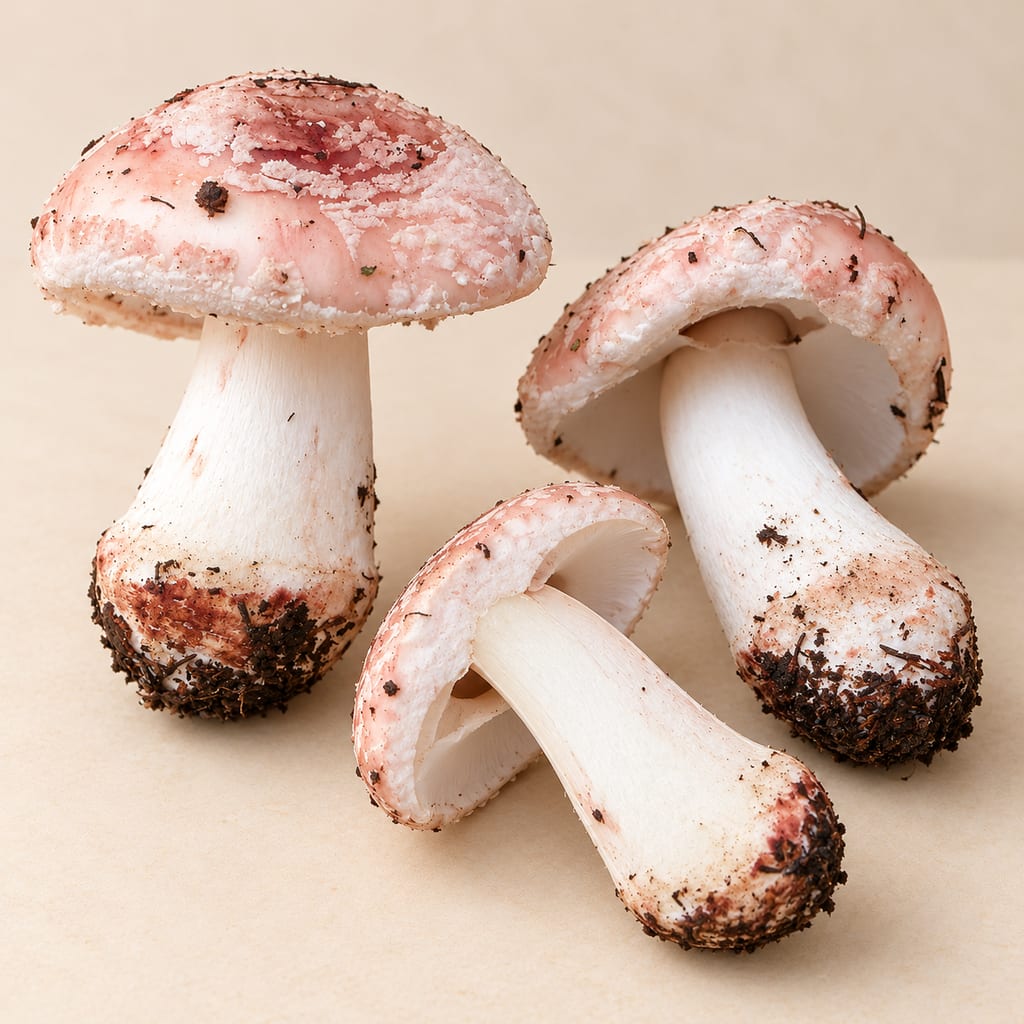
American blusher
Amanita novinupta is a western North American blusher, a forest mushroom recorded as food in Mexico, and one that must be cooked because its raw flesh is toxic.
 FermenteaWhere food goes to change
Mushrooms
Indigo milkcap, Lactarius indigo, is a blue-latexed milkcap of Mexican and Guatemalan forests. Market and ethnomycology records describe it as roasted or dried for food, and a similar-looking species is a known confusion risk.
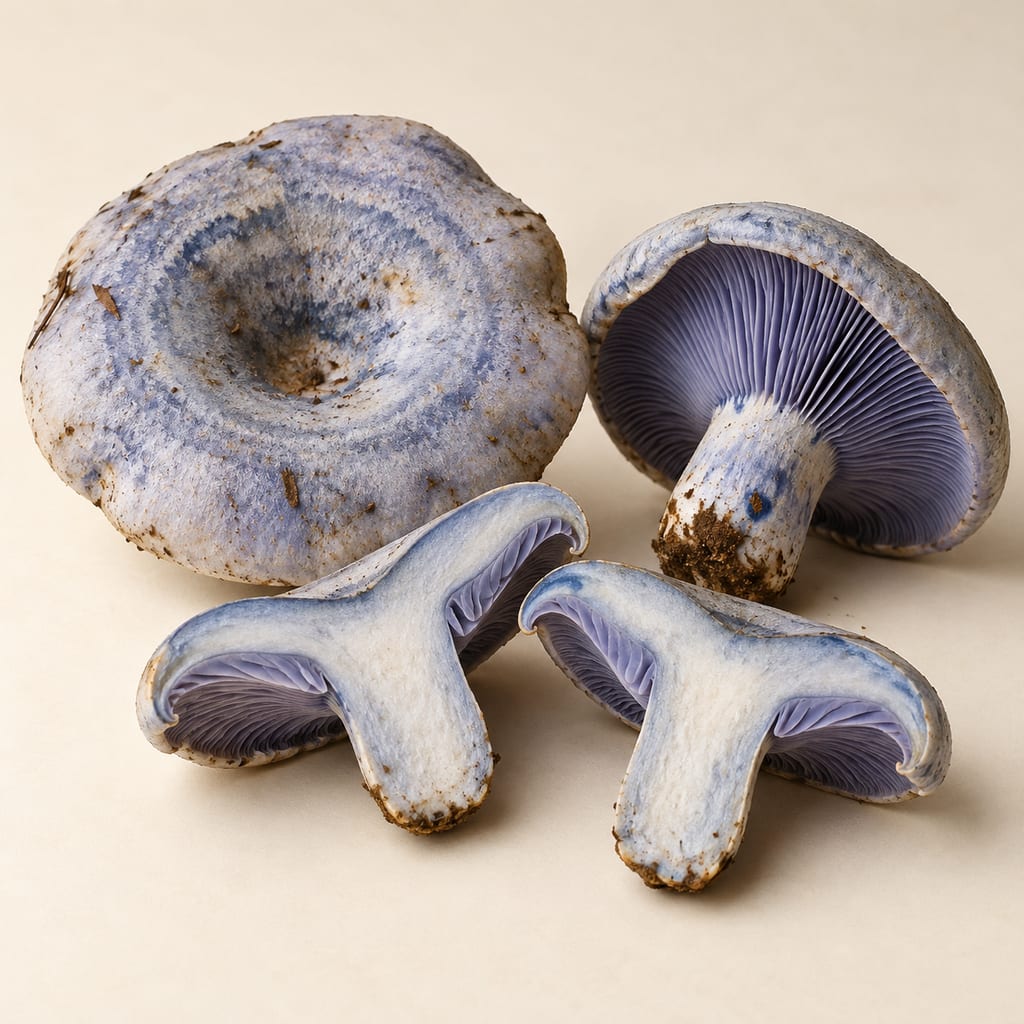
Indigo milkcap, Lactarius indigo, is a milkcap of forests in Mexico and Guatemala. It forms ectomycorrhizal partnerships with trees.
The species is a wild food in parts of Mexico, where it is roasted or dried, and it is sold in rural markets in Mexico and Guatemala.
In Guatemala it is called shara or xara azul, meaning blue. In central Mexico it is called anil, azul or hongo azul. In Veracruz and Puebla it is called quexque.
The catalogue also searches it under the alias Indigo milkcap and records no further name.
The catalogue records roasting and traditional drying in parts of Mexico. In Mexico, one account places the species among the mushrooms of lower rank for consumption, while views on its desirability vary.
Guatemalan market surveys list the species among edible mushrooms sold in markets and along roads, and Maya highland populations hold traditional knowledge of Lactarius species, according to the summarised records. The records do not give a dish or a recipe.
A student-written wiki warns that the species can be confused with Omphalotus mexicanus, a similar-looking fungus that it describes as harmful.
The catalogue marks the record as food and market evidence, not a safety assessment. Documented food use does not establish that the species is safe in every preparation.
This page is not an identification guide. Do not eat a wild milkcap on the basis of this page. Confirm identity with an expert before eating any wild fungus.
The sources reviewed do not describe how the mushroom is roasted or dried, how long it keeps, or how it is cooked in dishes. The Mexican ethnomycology record that would settle these points was not read in full in this pass.
The catalogue records roasting and traditional drying in parts of Mexico. Market use is recorded in rural markets; the sources give no single locality.
Recorded as sold in markets and as known to Maya populations in the highlands, according to the summarised Guatemalan records.
Amanita novinupta is a western North American blusher, a forest mushroom recorded as food in Mexico, and one that must be cooked because its raw flesh is toxic.

Ripe avocado flesh is the soft, buttery, fat-rich pulp of Persea americana, eaten raw. It is low in acid, so it is a fresh ingredient that needs care in chilled dishes.
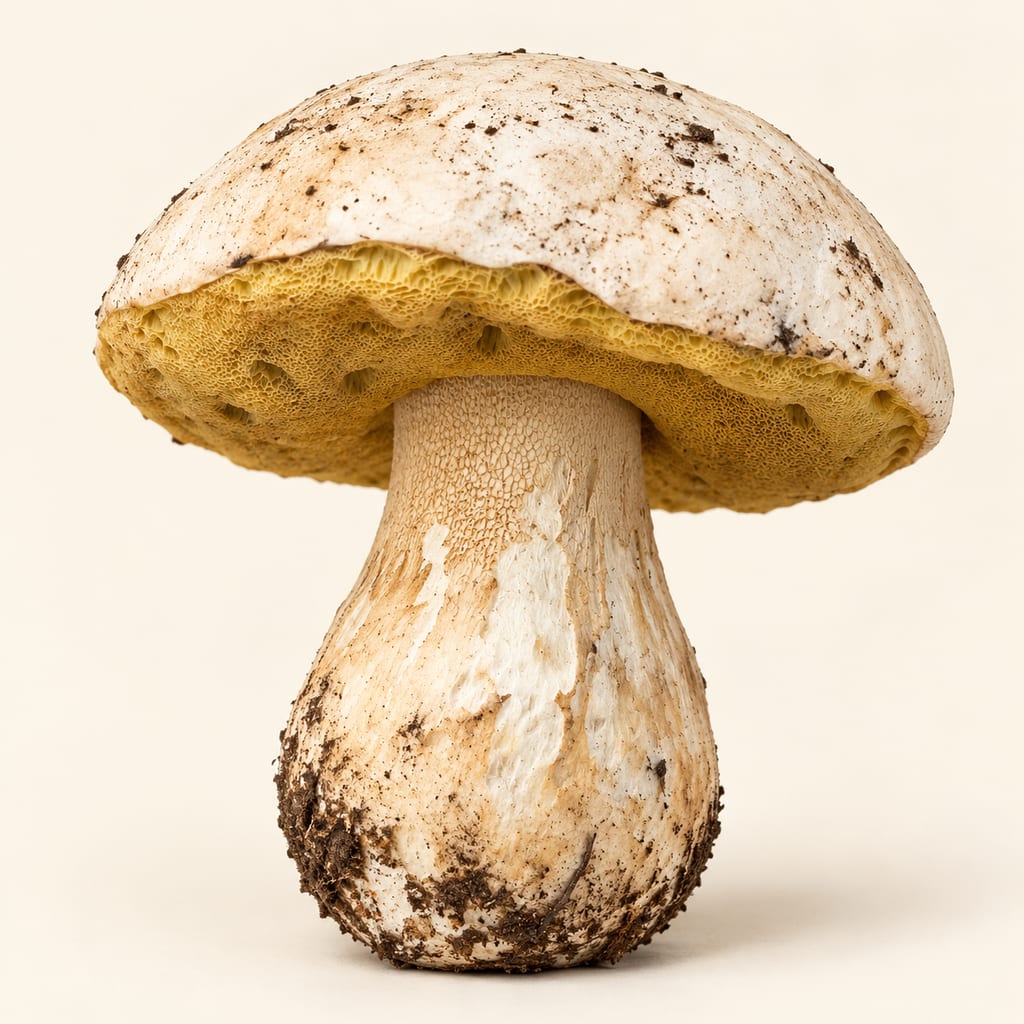
Boletus barrowsii, the white king bolete, is a western porcini relative with documented local food use in Mexico. Its pale cap and netted stem are not enough for field identification.
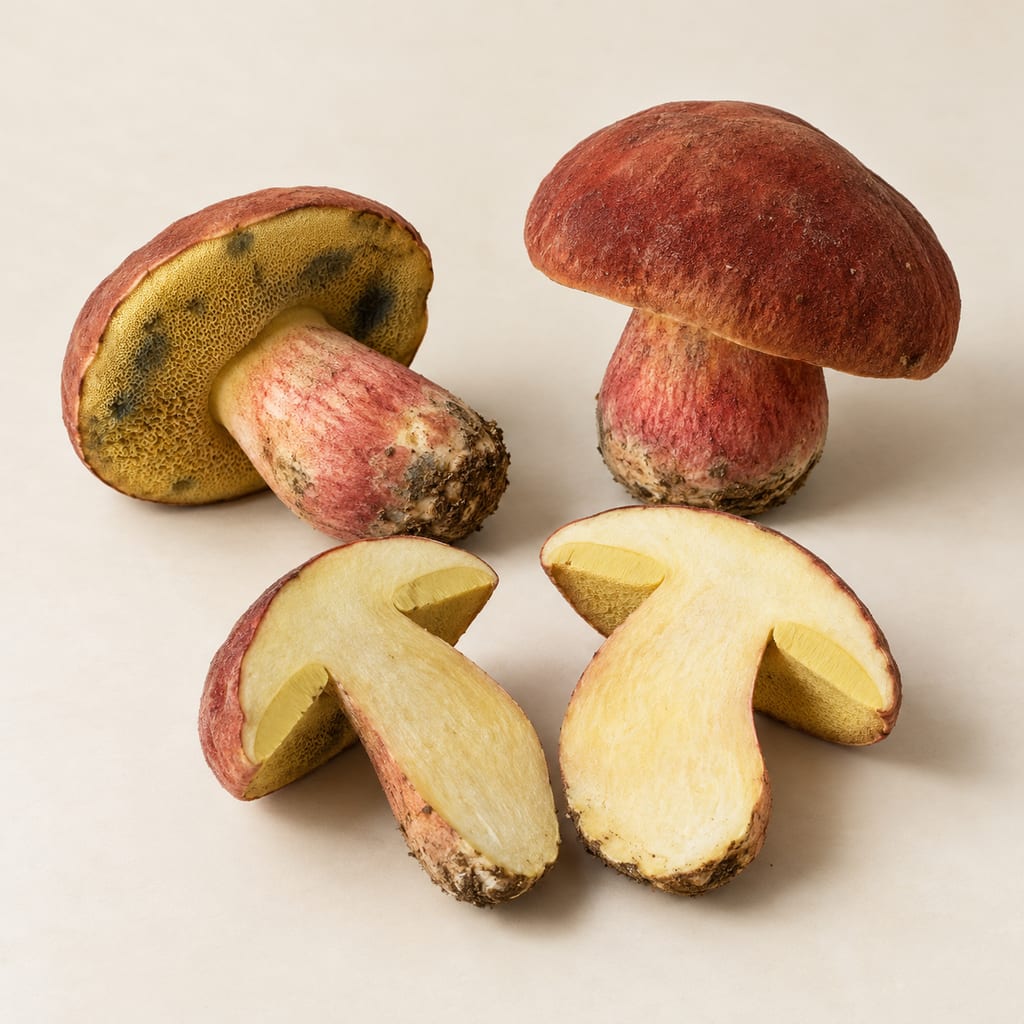
A red-and-yellow bolete described from Michigan and also listed in Mexican fungal records. Historical sources classify it as food, but its species limits, Mexican range and safe food use need careful qualification.
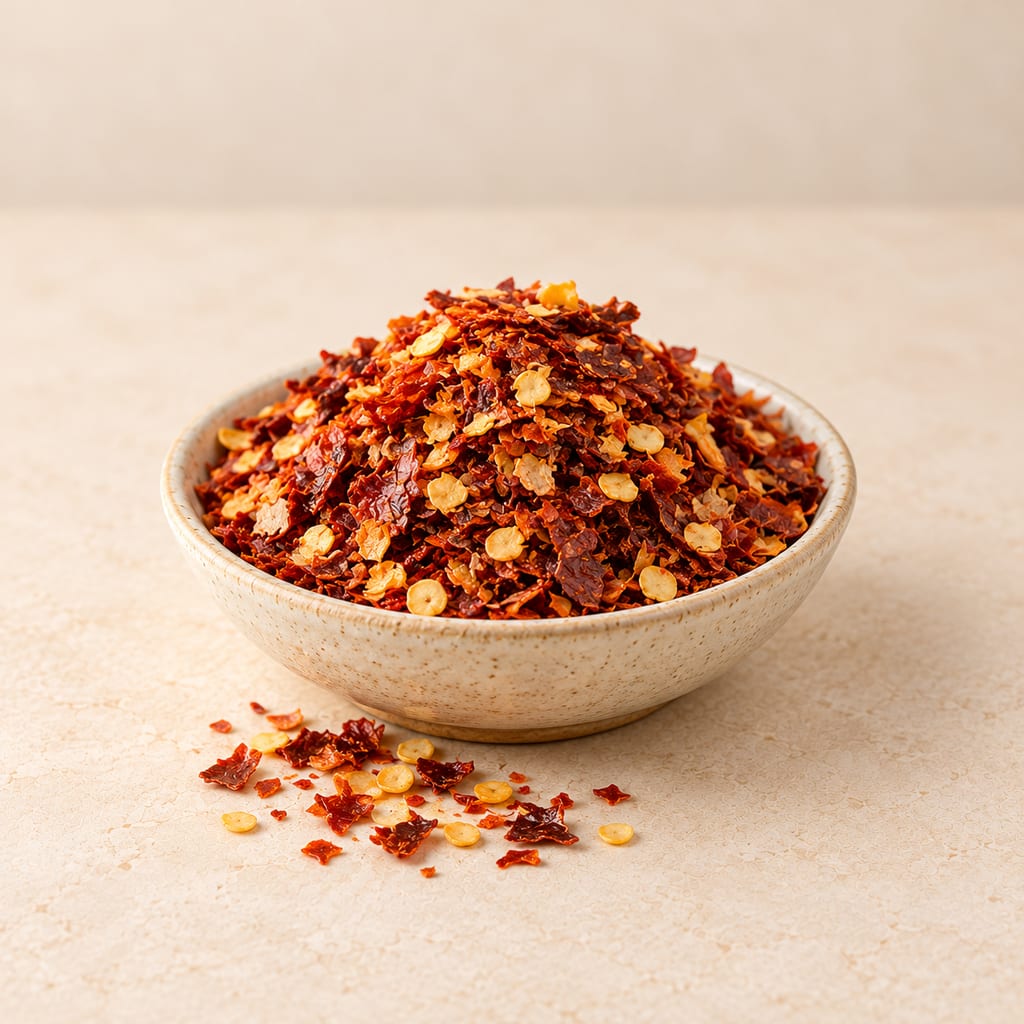
Calabrian pepper flakes are dried red Capsicum annuum from Calabria, crushed into coarse pieces; Peperoncino di Calabria is a protected geographical indication.
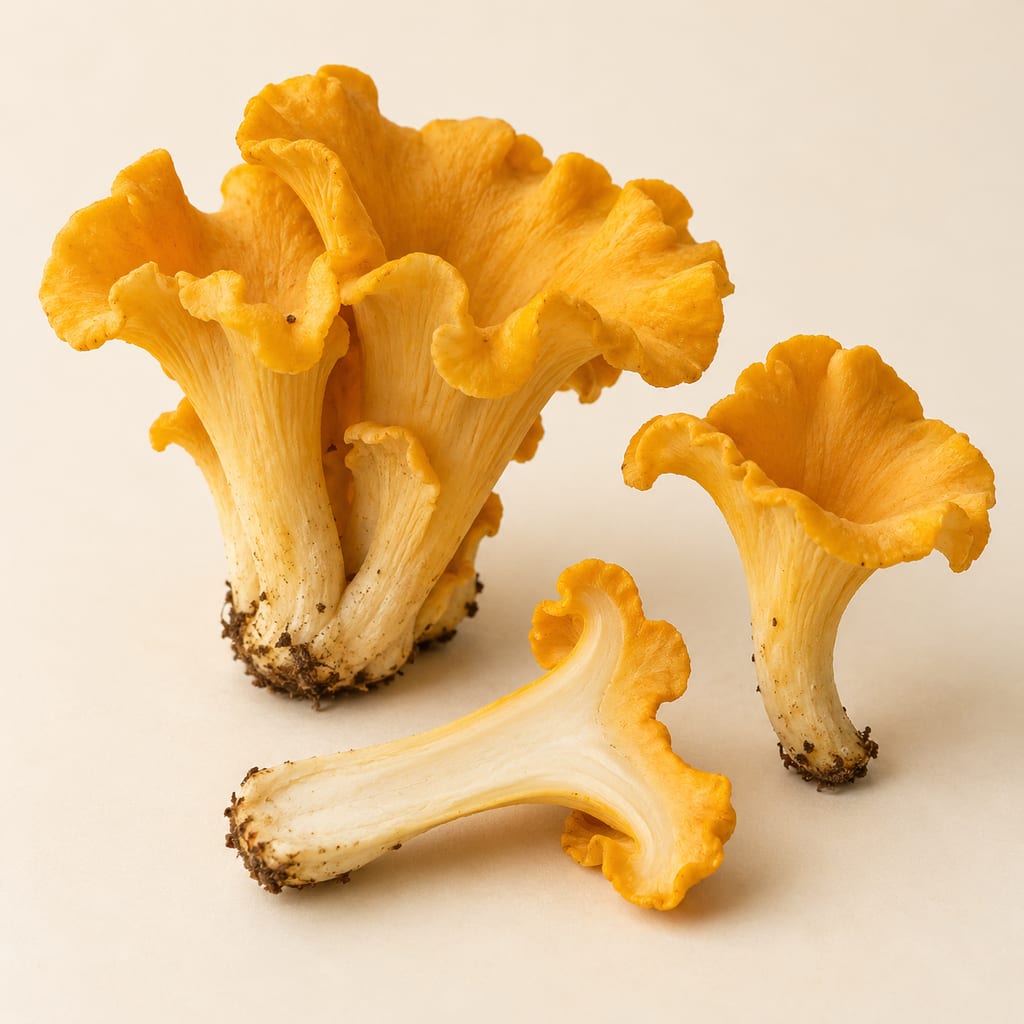
Cantharellus odoratus, the fragrant chanterelle, is a North American and Central American oak-woodland fungus. It was sold in a Veracruz market in the 1980s and in Guatemala in 2002, and its name is still disputed.
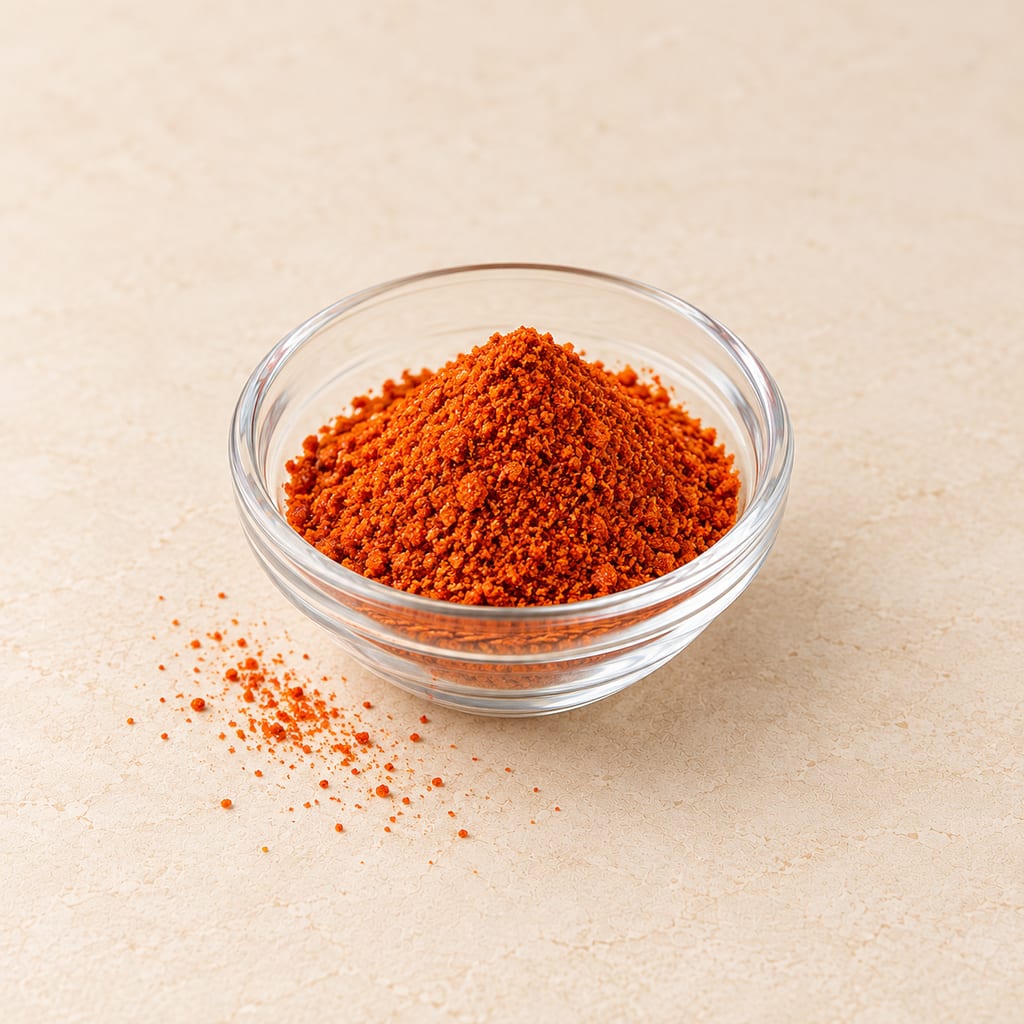
Cayenne is a very pungent red powder from dried, ground hot chilli pods, mostly Capsicum annuum, and the name of the long red peppers it comes from.
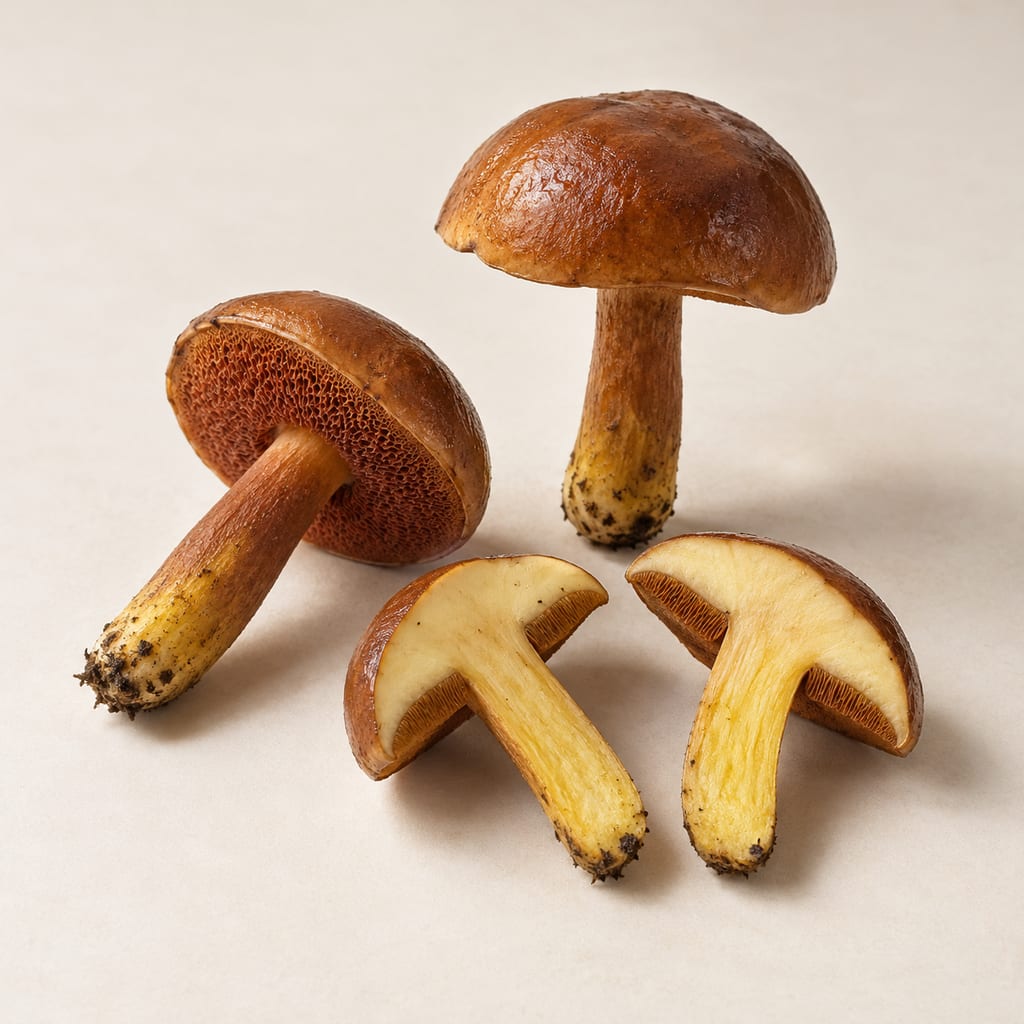
A peppery woodland bolete with historical edible labels and reported condiment use in Querétaro. Current mycological references call its edibility suspect or unestablished; this entry does not recommend consumption.
No community contributions have been published for this entry yet.
Sign in to contribute. Published comments and photos are free to read.
SpringerFood · Market
Ethnomycological study, Mexico and Guatemala (Journal of Ethnobiology and Ethnomedicine, 2017; catalogue source S029)Catalogue record: roasted and traditionally dried in parts of Mexico; wild supply; the article could not be opened in this research pass, so the record is taken from the catalogue
Cited in: Overview; Food use and markets; Identification and safety; Open questions
SpringerFood · Market
Ethnomycological study, Mexico (Journal of Ethnobiology and Ethnomedicine, 2019; catalogue source S030)Catalogue citation for the species' food-use record; the article was not re-read in this research pass
Cited in: Food use and markets
WikipediaLead · Food · Names
Macrofungi of GuatemalaGuatemalan local name shara or xara azul (blue)
Cited in: Overview; Names; Food use and markets
Kenyon CollegeSafety · Names
Lactarius Indigo (Kenyon College MicrobeWiki)Local names in central Mexico (anil, azul, hongo azul) and in Veracruz and Puebla (quexque); lookalike Omphalotus mexicanus, described as harmful; a student-written wiki, so these points are treated as leads
Cited in: Names; Identification and safety