Names and plant identity
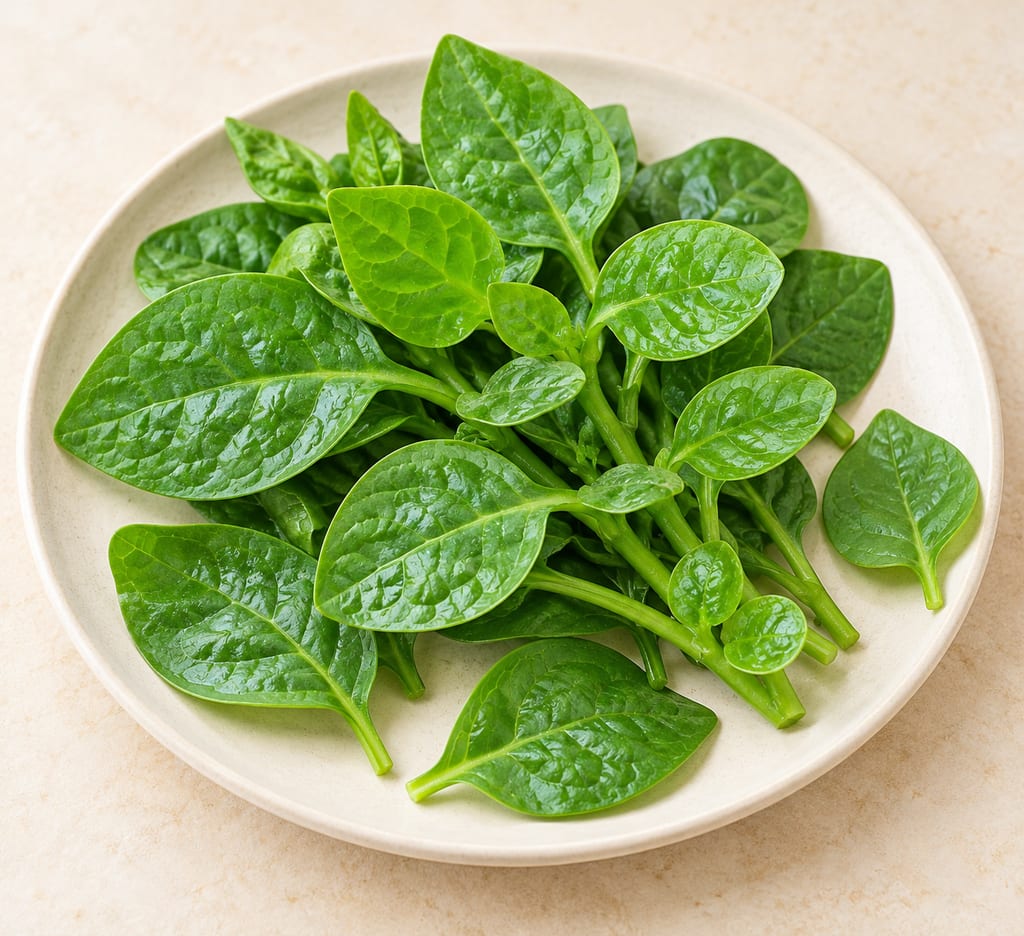
Kew accepts Basella alba L. and lists Basella rubra L. as a synonym. Philippine crop guides still separate green-stem and red-stem planting material, so those labels are kept here without treating stem colour as a test of species or accession. The Bureau of Plant Industry names Pulahan and Luntian as 1981 IPB releases; that release history was not checked against an IPB record.
The Department of Agriculture guide lists alugbati, dundula and libato without assigning them to a province or language. The Visayas State University trial treated red- and green-labelled material as separate types, and that label does not settle identity under Kew's treatment.
Sources for this section
Food use in the Philippines
Young shoots go into soups and stews, including nilaga, and the guides also mention boiling, frying and salad. The Department of Agriculture guide names dishes with mung beans and with fish paksiw, and prints batches for ginisang munggo na may dahon ng alugbati and paksiw na isda na may alugbati. Its mung-bean recipe lists 4-1/2 kutsarita asin. These are documented source recipes, not reviewed catalogue recipes or validated safety methods.
The Bureau of Plant Industry guide also describes manure tea and fermented plant juice. Both are field or foliar crop inputs. They are not food cultures or starters for fermenting Basella.
Sources for this section
Philippine growing accounts
The Department of Agriculture advises a trellis and healthy 20 to 25 cm tip cuttings. The Bureau of Plant Industry describes full sun and sandy loam, a growing pH of 5.5 to 8.0, and scarifying seed before sowing it about a quarter inch deep once the soil reaches 18.33 °C. Rows sit about 8 inches apart, with furrow irrigation every 5 to 7 days or daily sprinklers in the dry season, and drainage canals after heavy wet-season rain. These are manual recommendations, not universal thresholds.
Harvest calendars differ. The Department of Agriculture gives about 6 to 8 weeks to a first harvest and repeated cutting over 4 to 6 months; the Bureau of Plant Industry gives 30 to 45 days and weekly shoot cutting. A replicated 2013 trial in rolling upland soil at Inopacan, Leyte, compared labelled material and mulch treatments and reports 11.02 t/ha under silver plastic mulch against 8.38 t/ha with none. That is one site's result, not a general yield.
Shoots wilt quickly. The Bureau of Plant Industry describes root-intact bundles held in water for up to seven days and shoots refrigerated in styrofoam boxes for up to 14 days. These are manual statements, not validated shelf-life or safety limits. Both guides list pests and leaf diseases, and the Leyte trial reports leaf spot on red-labelled material; none of this is a household diagnosis guide.
Sources for this section
New Caledonia: dye in 1872, food now
Kew lists New Caledonia as introduced range. On printed page 37 of his 1942 work, Guillaumin calls a plant reported at Thio in 1872 Basella rubra and says local people cultivated it to dye their bodies red with its sap, not as a vegetable. The current synonymy of B. rubra with B. alba does not independently identify that historical plant.
The current Agripedia Baselle page describes the leaves eaten raw in salads or cooked like spinach. It gives no measured New Caledonian recipe, and it does not change what Guillaumin reported for Thio. The two records are separate: a shared botanical name does not make one food history.
Sources for this section
New Caledonia growing descriptions
Agripedia describes a warm, humid crop and prints 25 to 35 °C as a constant-temperature descriptor and 2,000 to 2,500 mm a year as ideal rainfall. It allows full sun or shade, with larger leaves in light shade, and reports flowering when days are shorter than 13 hours. It describes organic-rich, drained soil and gives no pH. These are agency-page statements, not measured tolerance limits or a named New Caledonian trial.
It describes seed and vegetative propagation: 20 to 30 cm stem or rhizome pieces, seed soaked for 24 hours, germination in about 5 to 6 days and transplanting at 10 to 12 cm. One passage gives a first harvest at 30 to 45 days and another a first trellis harvest at 55 to 70 days, with yields on differing bases that the page does not reconcile. It mentions planting in a pot without a pot specification or yield, and gives no greenhouse method. Root-knot nematodes are named without a threshold or treatment.
Sources for this section
What the sources leave open
The Pulahan and Luntian names are not assigned to individual languages, and the earliest food use is undated. Their red and green planting materials have no accession-level link to current taxonomy. A measured frost threshold, an edible container method, a protected-crop method and a validated safe storage period for raw shoots are not established. The named dishes have no separate recipe or food-safety review, and no cultivar claim is made. Current New Caledonian legal, invasive-risk, conservation and collection-permission status is not established.
Sources for this section
Places
Philippines
Documented use · Country evidencePhilippine government crop guides and a Leyte field trial describe alugbati as a food plant; they give no earliest record and no province-level history.
New Caledonia
Documented use · Country evidenceKew lists it as introduced. Guillaumin records a 1872 use of the sap as a body dye at Thio, not as a vegetable; today's Agripedia page describes the leaves as food.