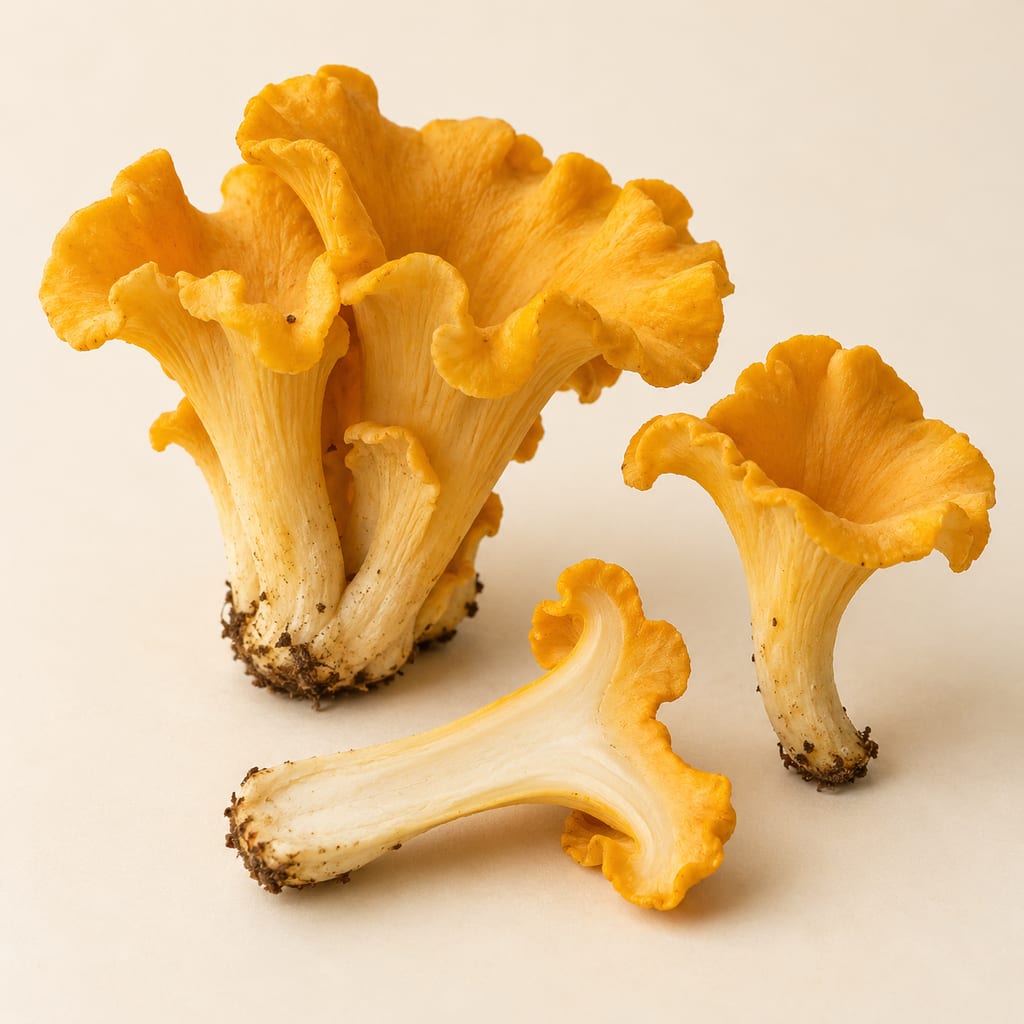
Cantharellus odoratus
Cantharellus odoratus, the fragrant chanterelle, is a North American and Central American oak-woodland fungus. It was sold in a Veracruz market in the 1980s and in Guatemala in 2002, and its name is still disputed.
 FermenteaWhere food goes to change
Substrates
Loroco is the edible flower bud of Echites panduratus (syn. Fernaldia pandurata), eaten in Guatemalan dips, pupusas, soups and rice; local growing and preservation studies leave household production open.
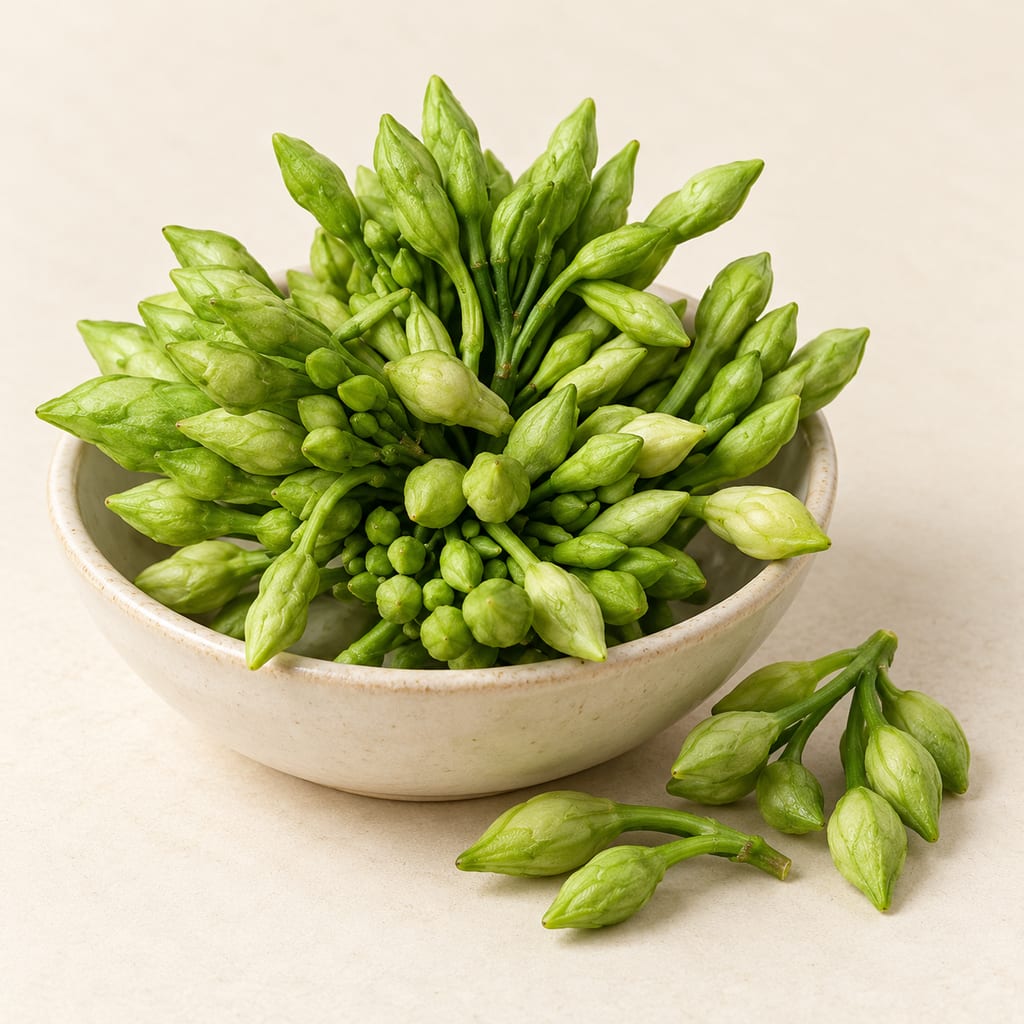
Kew accepts Echites panduratus A.DC. and lists Fernaldia pandurata (A.DC.) Woodson as a homotypic synonym. The Guatemalan reports and recipe book use Fernaldia pandurata, while loroco is their crop and food name. A name crosswalk does not identify an unvouchered market lot. The field evidence in these sources is concentrated in the Motagua valley and Zacapa, rather than a national survey.
The ICTA/MAGA cookbook identifies flowers as the food part and includes loroco in soups, rice, dips and sauces. It gives named batches for a loroco dip and cheese pupusas; the dip lists cream cheese, loroco and salt, then says to cook and chop the flowers before mixing. The book does not provide a cooking time, yield or storage period for that batch. A separate 2002 Motagua report records flowers paired with egg or rice, used in tamalitos and chicken broth, and combined with requesón in tortilla turnovers. These are source-reported uses, not a complete account of regional practice.
A 2002 USAC report describes producer practices and sites in the semi-arid Motagua region. It presents its cultivation outline as accumulated grower experience that needs validation before broader use. Its locality and climate figures describe that study region, not species-wide temperature or rainfall limits. A separate 2018 experiment in shaded nursery bags tested 3, 4, 5 and 6 cm rhizome pieces. At day 90, the 5 and 6 cm groups each had 52 percent emergence, without a significant difference in emergence; shoot length differed. The report title says Fernaldia sp. and the body also uses F. pandurata. This is nursery propagation evidence, not mature container or field-flower yield evidence.
An undated study compared three water application depths with daily, two-day and three-day intervals in established fields at Estanzuela and Chispán, Zacapa. Reported treatment responses differed by site, and some conclusions do not align with the reported significance tests; the study is not a household watering schedule. In a background passage, the authors cite older guidance giving altitude, rainfall, temperature, humidity and well-drained-soil ranges. Those values are secondary citations, not measurements from this trial, and their original sources were not reopened. The sources reviewed here do not establish a measured pH target, productive pot size or mature greenhouse crop.
An ICTA report compared technical treatments for loroco flowers over three months, but its methods and treatment labels conflict. It describes visual observations rather than documented microbial assays, and the inspected results do not give numeric product pH, water activity or a validated shelf-life endpoint. Sensory or visual observations therefore do not establish a home preservation method. The ICTA project index links additional studies, but its varietal-characterization flipbook did not expose readable text.
ICTA/MAGA documents loroco flowers in Guatemalan dishes, including dips and cheese pupusas; this is a documented use, not an origin claim.
The 2002 USAC report describes producer practice and loroco food uses in this semi-arid region; it does not establish a unique origin or a validated growing schedule.
Nursery propagation and irrigation studies use sites in Zacapa; this is a research cultivation association, not proof of origin or a household crop recommendation.
Cantharellus odoratus, the fragrant chanterelle, is a North American and Central American oak-woodland fungus. It was sold in a Veracruz market in the 1980s and in Guatemala in 2002, and its name is still disputed.
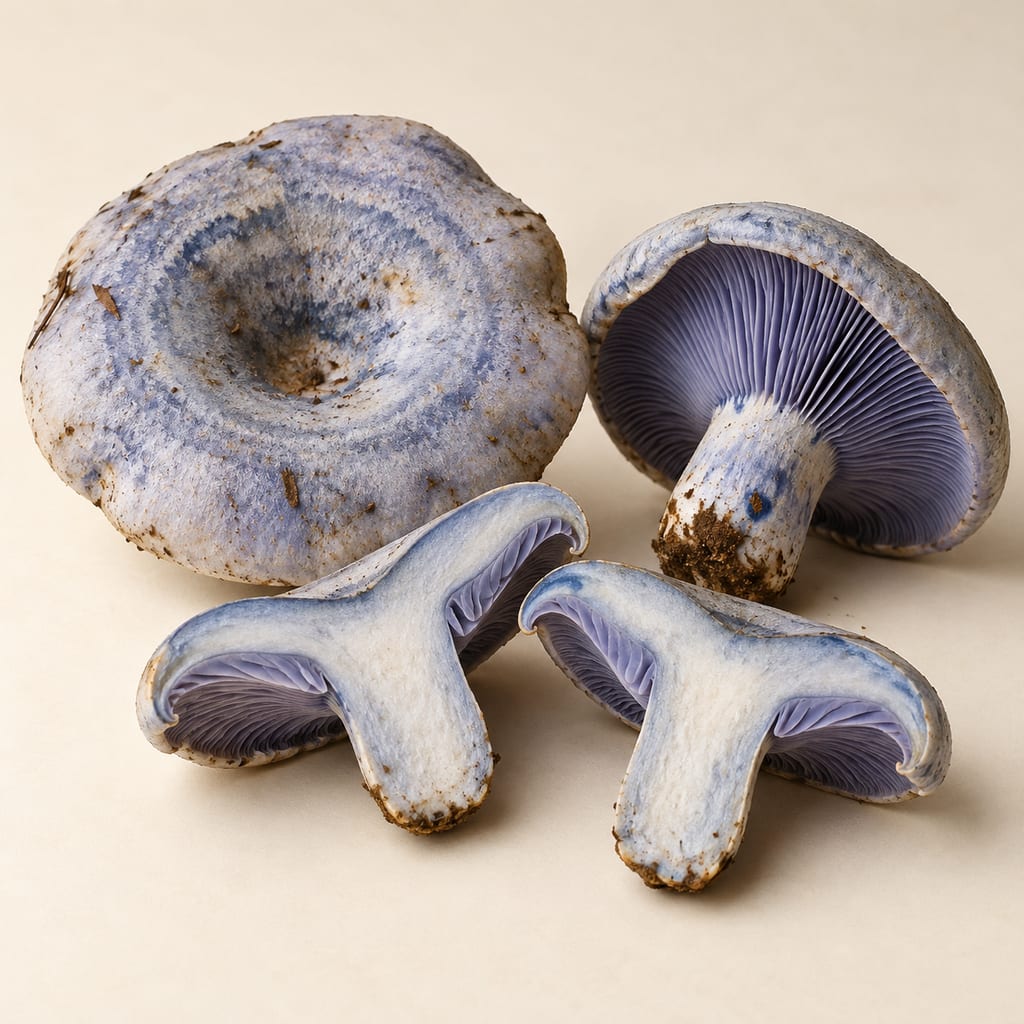
Indigo milkcap, Lactarius indigo, is a blue-latexed milkcap of Mexican and Guatemalan forests. Market and ethnomycology records describe it as roasted or dried for food, and a similar-looking species is a known confusion risk.
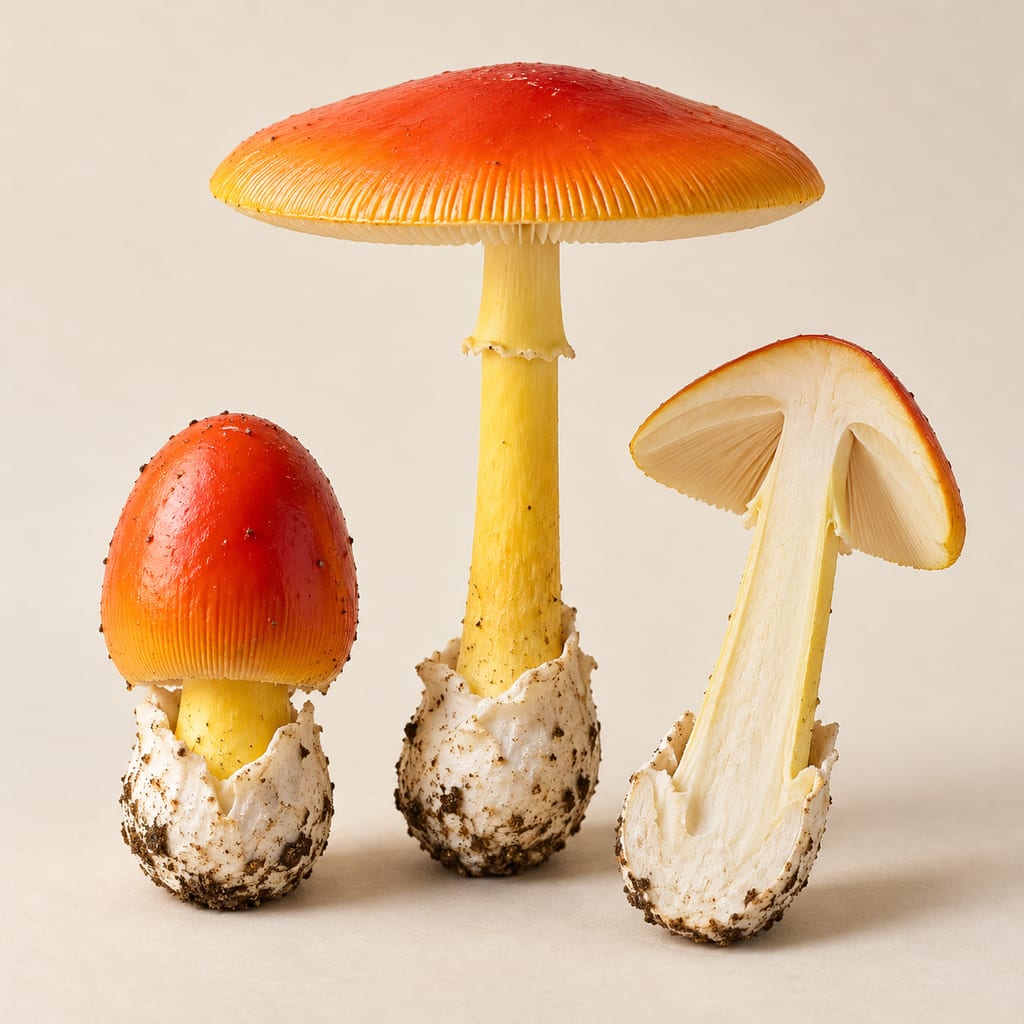
Jackson's slender Caesar, Amanita jacksonii, is a wild ectomycorrhizal fungus of Central American and Mexican forests, sold in some local markets. Amanita includes deadly species, so the name gives no basis for identification.
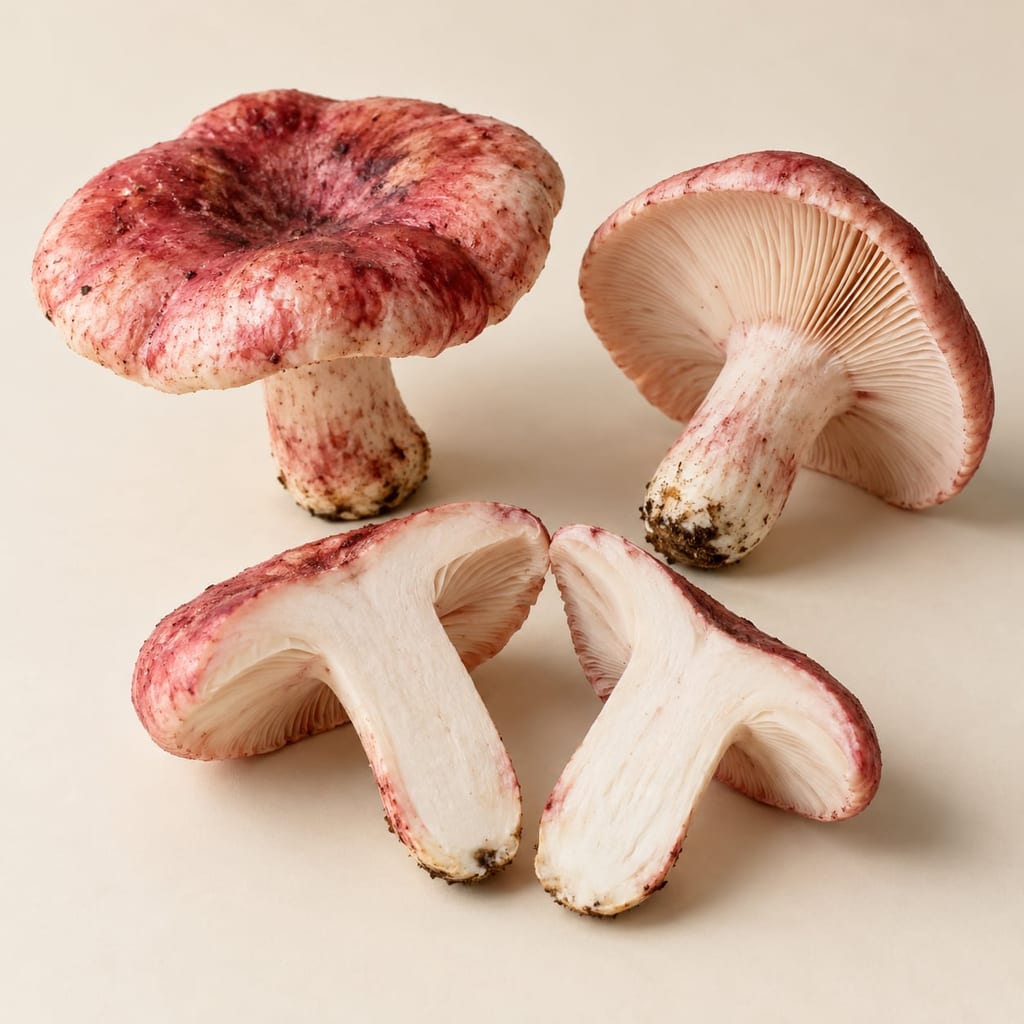
Hygrophorus russula, the pinkmottle woodwax, is a firm mycorrhizal mushroom of broadleaf woods in southern Europe and Guatemala. It is used cooked or preserved, and field guides differ on its quality.
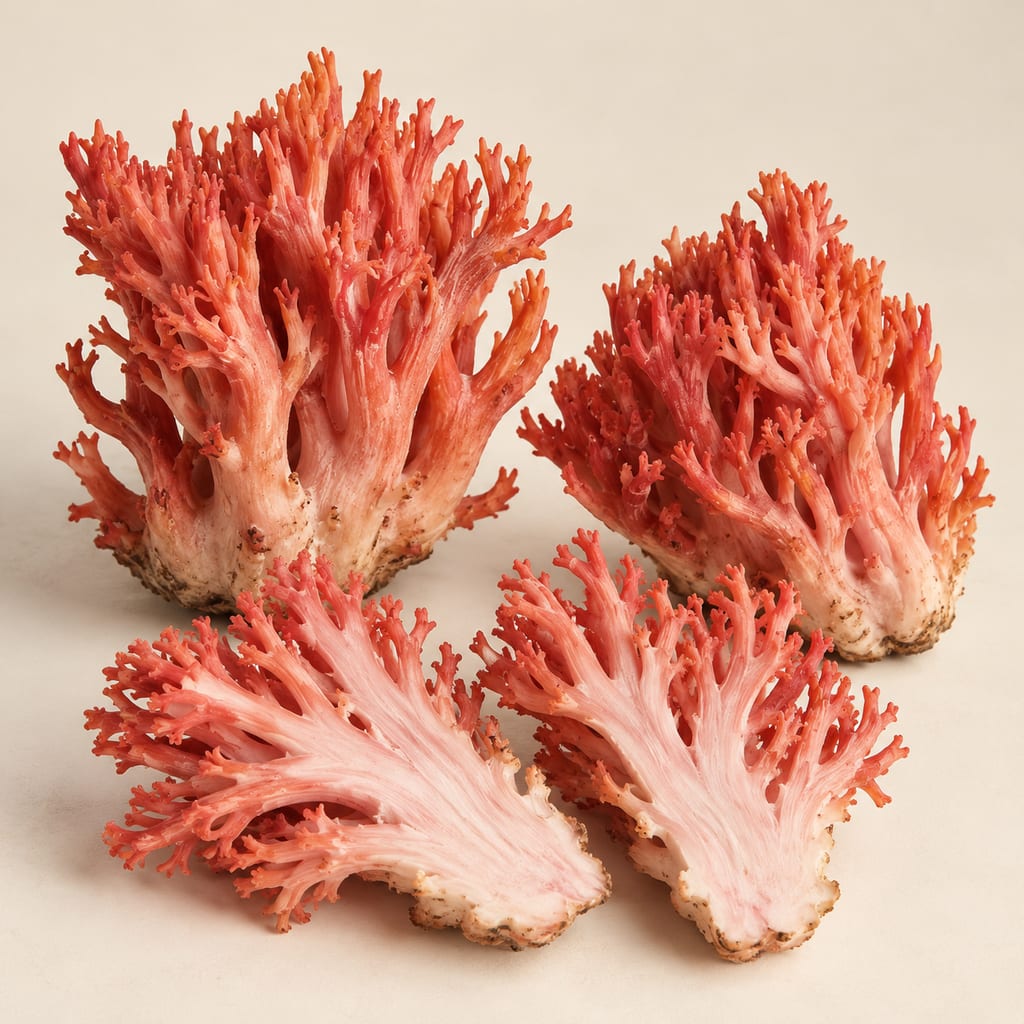
Red coral mushroom, Ramaria araiospora, is a wild coral fungus collected and sold in Guatemala. Coral fungi have toxic look-alikes, so identification needs a specialist.
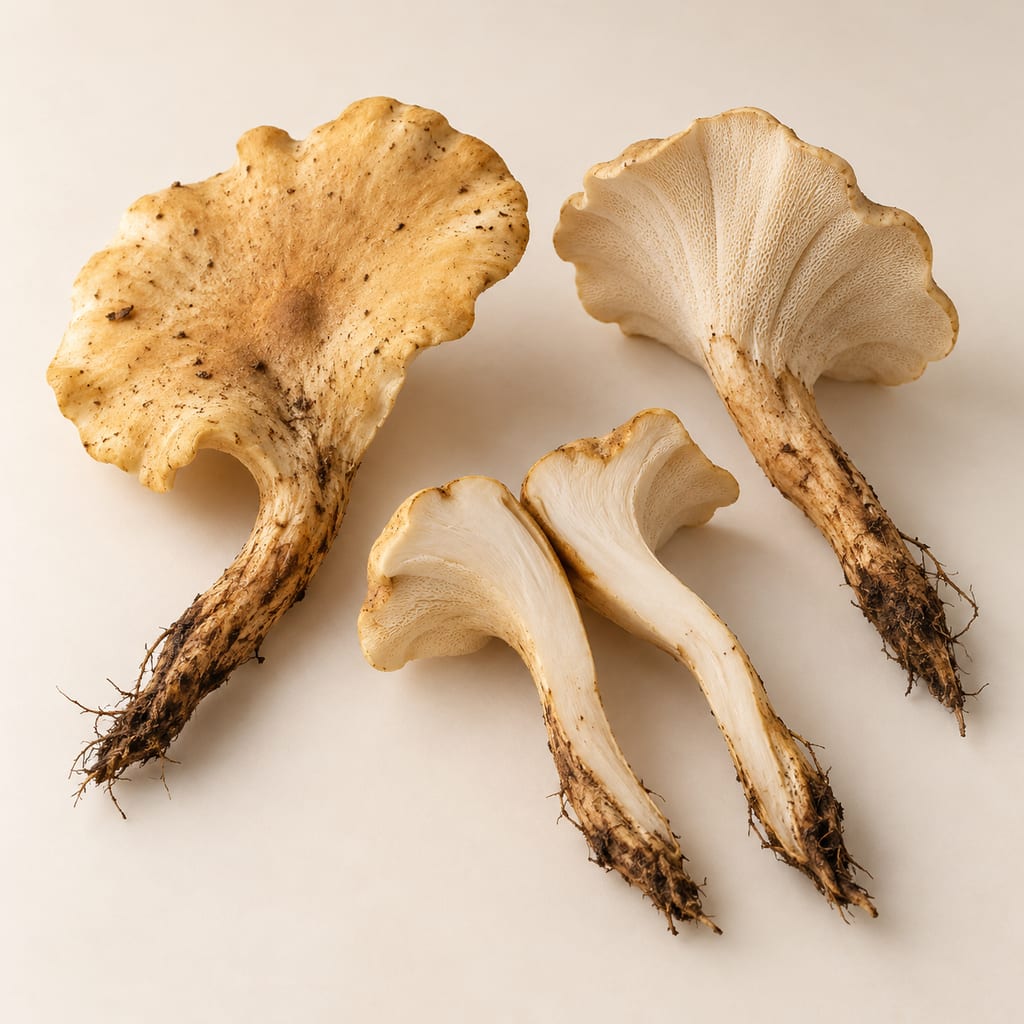
The rooting beefsteak fungus, Pseudofistulina radicata, is a wood-decaying bracket fungus with a root-like stem. A Guatemalan food record exists, but the sources found do not confirm edible use.
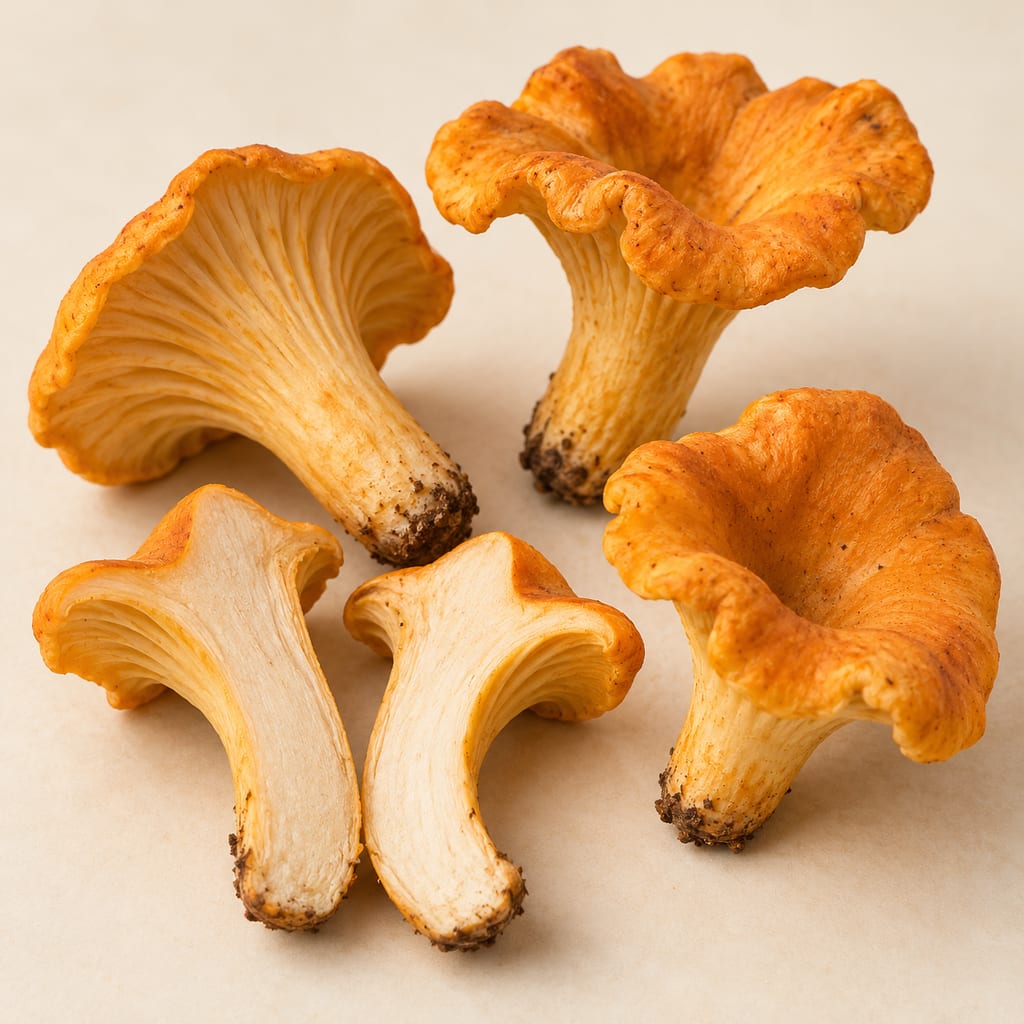
Cantharellus lateritius is a bright orange chanterelle of oak and mixed woodland. A Guatemalan market record and a Missouri field guide describe it as edible, with cautions about a poisonous lookalike.
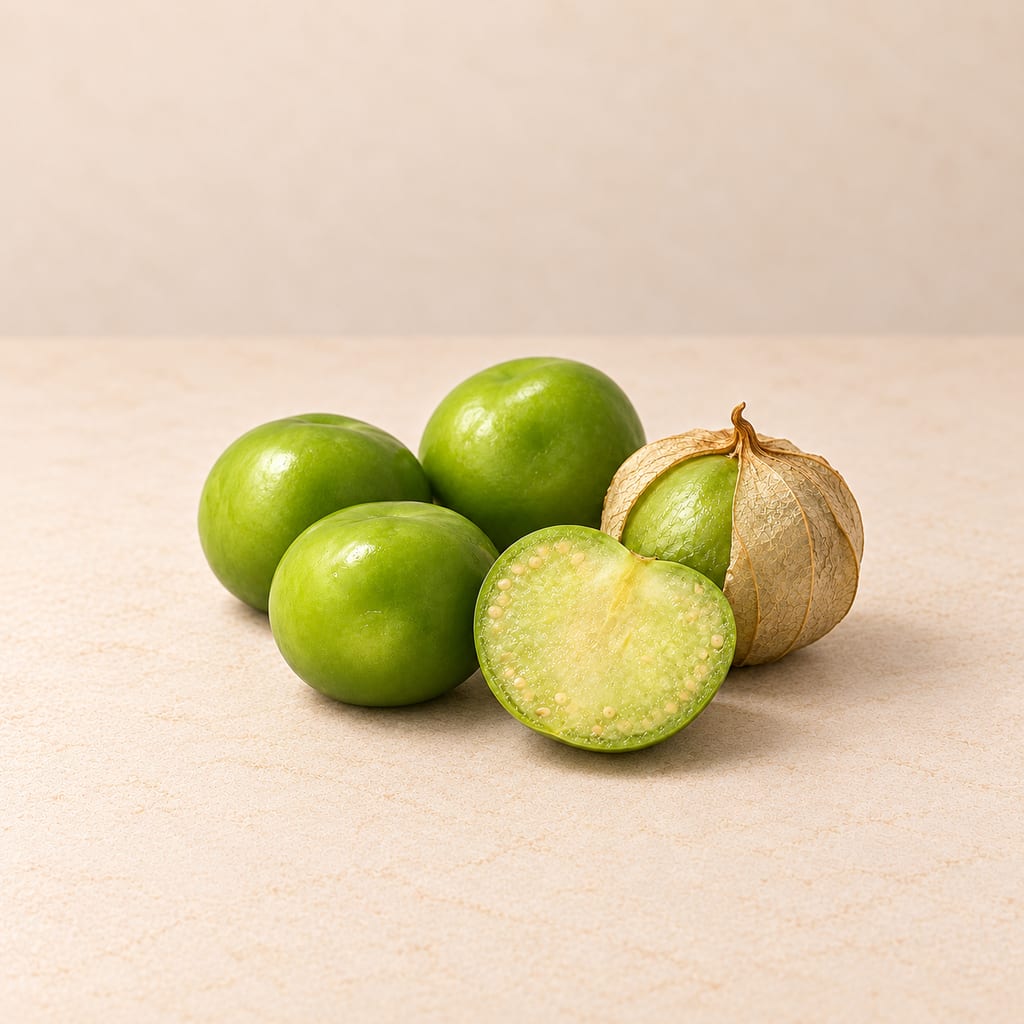
The tomatillo is the tart green fruit of Physalis ixocarpa, a Mexican relative of the tomato that grows inside a papery husk. It is the base of salsa verde.
No community contributions have been published for this entry yet.
Sign in to contribute. Published comments and photos are free to read.
Royal Botanic Gardens, KewIngredient research
Echites panduratus A.DC. | Plants of the World OnlineCited in: Names and Guatemalan evidence
Universidad de San Carlos de Guatemala, Dirección General de Investigación, Instituto de Investigaciones AgronómicasIngredient research
Estudio agronómico de tres especies nativas, en zonas semiáridas de GuatemalaCited in: Names and Guatemalan evidence; Flowers in reported dishes; Growing evidence from separate settings
Instituto de Ciencia y Tecnología Agrícolas and Ministerio de Agricultura, Ganadería y AlimentaciónIngredient research
Recetas de cocina a base de hortalizas nativas de GuatemalaCited in: Names and Guatemalan evidence; Flowers in reported dishes
CRIA Oriente, CUNZAC and Universidad de San Carlos de GuatemalaIngredient research
Evaluación de cuatro longitudes de rizomas para la reproducción de plantas de loroco (Fernaldia sp.), fase de vivero. Chispán; Estanzuela, ZacapaCited in: Growing evidence from separate settings
CRIA Oriente, CUNZAC and Universidad de San Carlos de GuatemalaIngredient research
Efecto de tres láminas de riego en combinación con tres frecuencias de riego en el rendimiento del cultivo de loroco (Fernaldia pandurata Woodson), en dos localidades del departamento de ZacapaCited in: Irrigation and reported growing ranges
CRIA Oriente and CUNZACIngredient research
Estudio de las técnicas de preservación de la flor de loroco (Fernaldia pandurata Woodson) y su mercado potencialCited in: Food preservation evidence and open questions
Instituto de Ciencia y Tecnología AgrícolasIngredient research
Informes LorocoCited in: Food preservation evidence and open questions