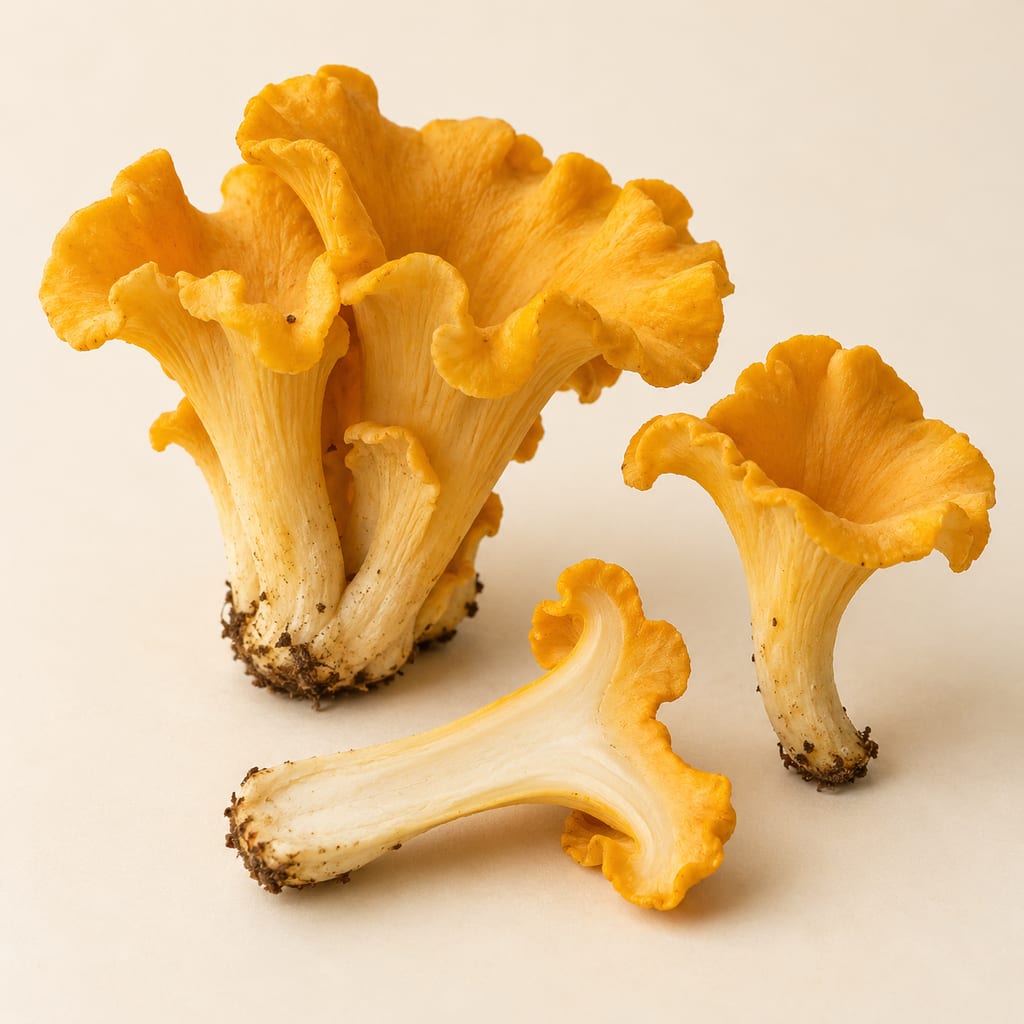
Cantharellus odoratus
Cantharellus odoratus, the fragrant chanterelle, is a North American and Central American oak-woodland fungus. It was sold in a Veracruz market in the 1980s and in Guatemala in 2002, and its name is still disputed.
 FermenteaWhere food goes to change
Mushrooms
Jackson's slender Caesar, Amanita jacksonii, is a wild ectomycorrhizal fungus of Central American and Mexican forests, sold in some local markets. Amanita includes deadly species, so the name gives no basis for identification.
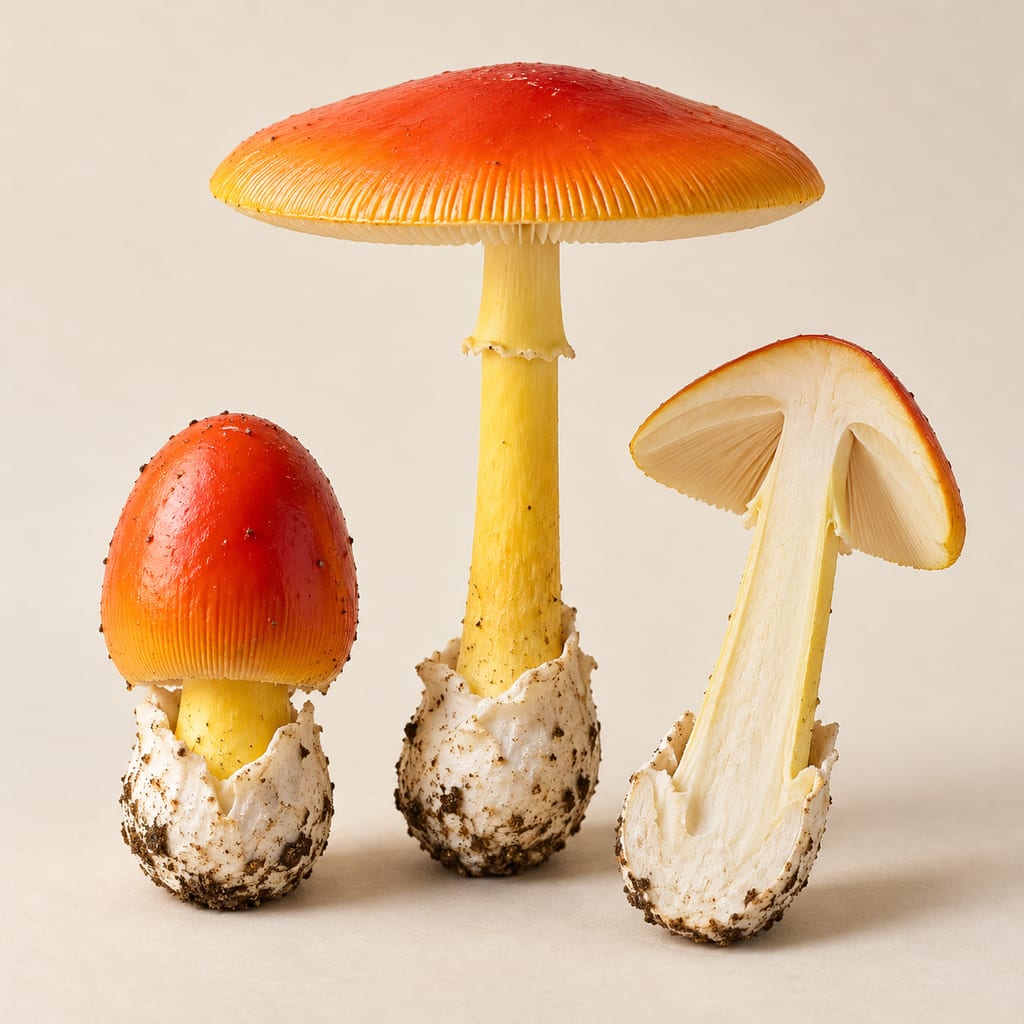
Jackson's slender Caesar is the English name the catalogue gives to Amanita jacksonii, a wild fungus that forms ectomycorrhizal relationships with trees in forest. The IUCN Red List lists its common names as Jackson's slender Caesar, American Caesar's mushroom and slender Caesar.
The species is recorded across a wide range. The IUCN entry lists the eastern United States, Canada, southern Mexico, Guatemala, Honduras, El Salvador and Colombia, and the Netherlands.
A Kaqchikel ethnomycology study from San Juan Sacatepequez, in the Guatemalan Highlands, documents a market where fresh fruit bodies of this species were sold as Hongo de San Pedro alongside other edible species. The same study says that knowledge of the ethnomycological practices of the Mayan peoples of Guatemala is still rudimentary compared with Mexico.
A Guatemalan newspaper describes the mushroom under the name hongo de San Pedro and calls it edible. The catalogue records a food use in which the mushroom is marketed and then grilled or cooked with tomato and onion. The sources checked for this page do not give a recipe or quantities.
The IUCN entry lists the species as edible for humans throughout its range. That is a conservation database's statement and does not replace a food-safety assessment.
Amanita includes deadly species, and mycologists advise caution with the genus because misidentification can be lethal. The catalogue states that edible identification must not be inferred from appearance or from the common name.
Catalogue inclusion is not an edibility verdict. Nothing on this page is an identification guide, a preparation method or a statement that the species is safe to eat.
A market in San Juan Sacatepequez is documented as selling fresh fruit bodies alongside other edible species. The study is of the Kaqchikel people of the Guatemalan Highlands and is not a national survey.
The catalogue records cooked and marketed use in Mexico. The specific Mexican studies were not linked from the sources checked for this page, so no locality is given.
Cantharellus odoratus, the fragrant chanterelle, is a North American and Central American oak-woodland fungus. It was sold in a Veracruz market in the 1980s and in Guatemala in 2002, and its name is still disputed.
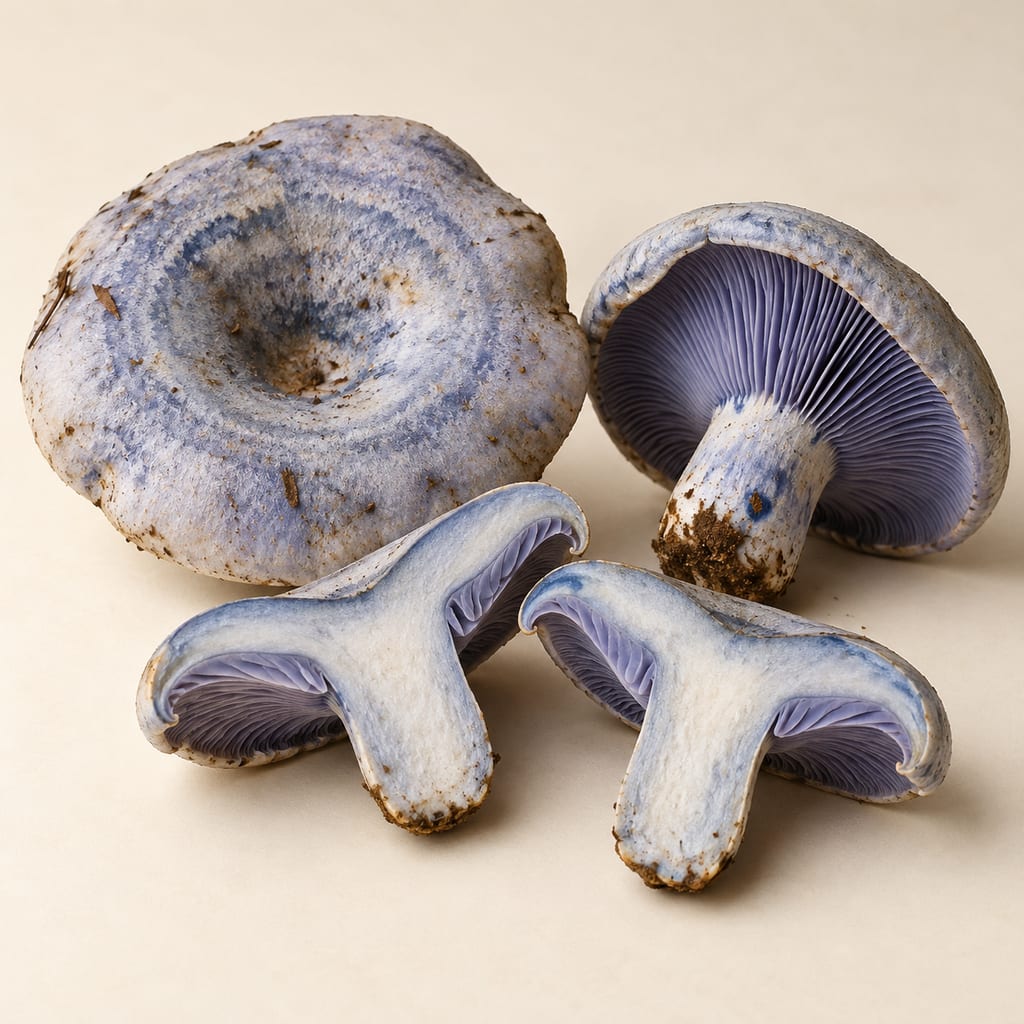
Indigo milkcap, Lactarius indigo, is a blue-latexed milkcap of Mexican and Guatemalan forests. Market and ethnomycology records describe it as roasted or dried for food, and a similar-looking species is a known confusion risk.
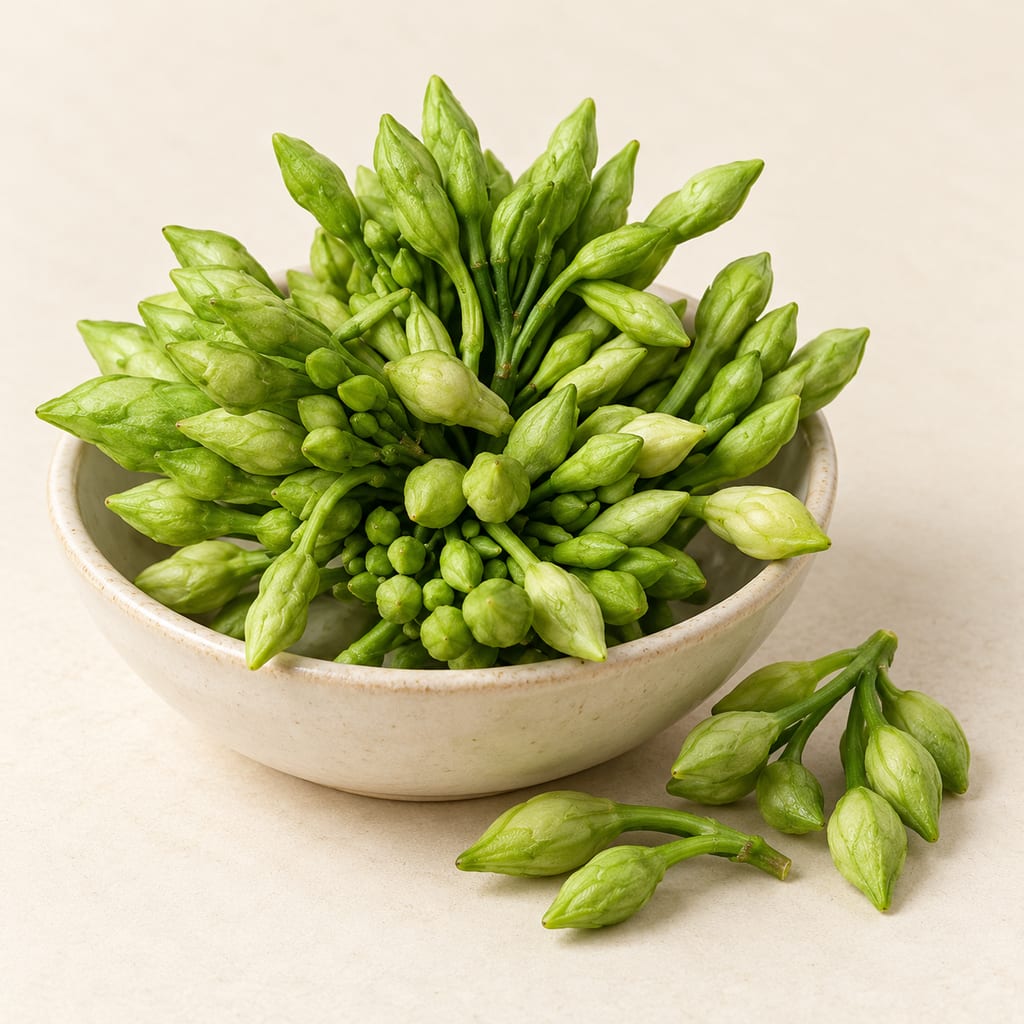
Loroco is the edible flower bud of Echites panduratus (syn. Fernaldia pandurata), eaten in Guatemalan dips, pupusas, soups and rice; local growing and preservation studies leave household production open.
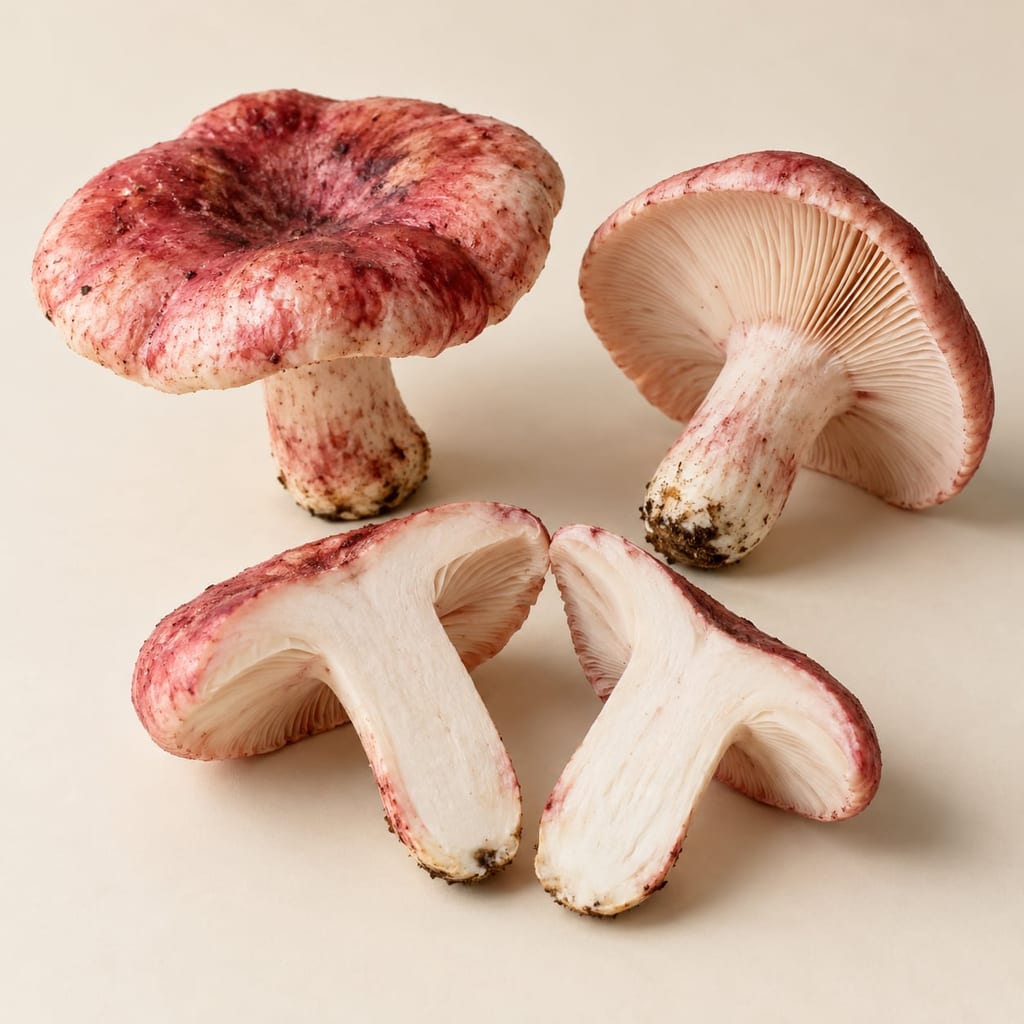
Hygrophorus russula, the pinkmottle woodwax, is a firm mycorrhizal mushroom of broadleaf woods in southern Europe and Guatemala. It is used cooked or preserved, and field guides differ on its quality.
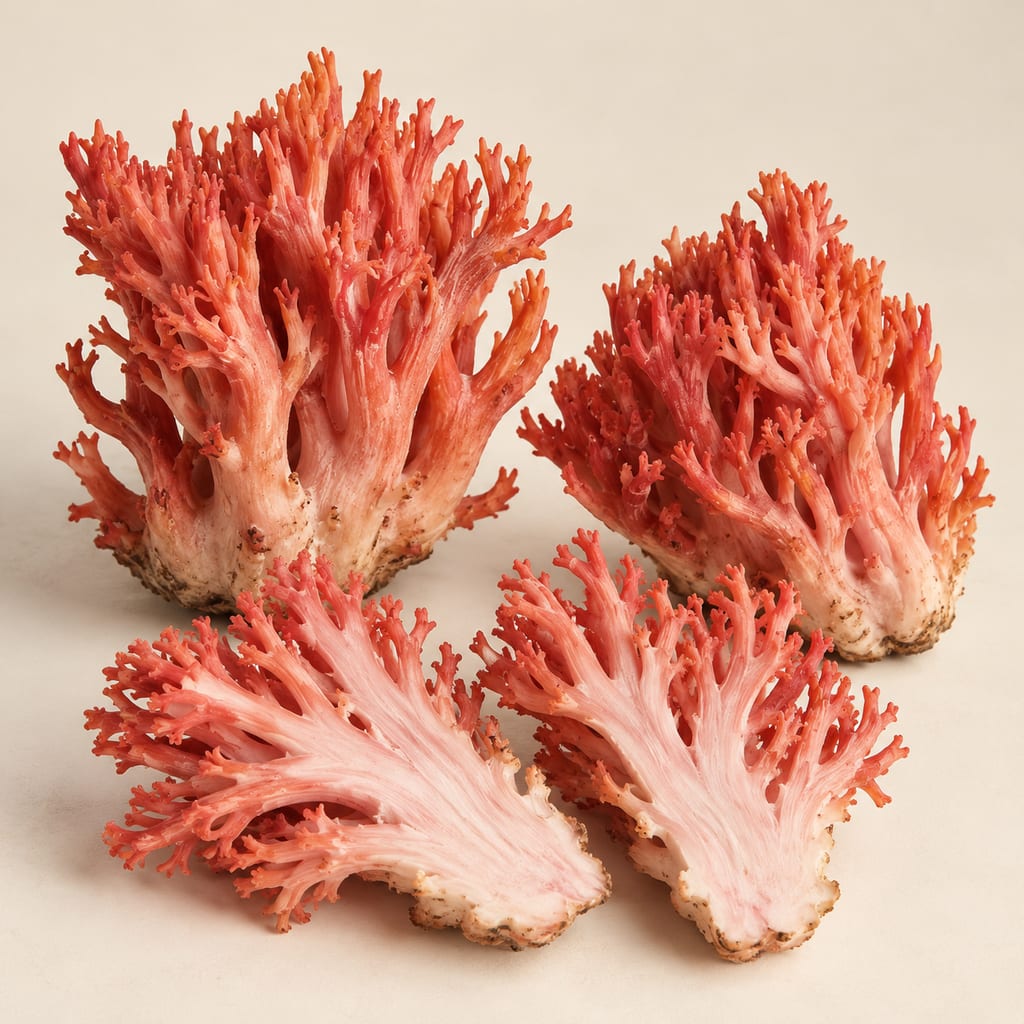
Red coral mushroom, Ramaria araiospora, is a wild coral fungus collected and sold in Guatemala. Coral fungi have toxic look-alikes, so identification needs a specialist.
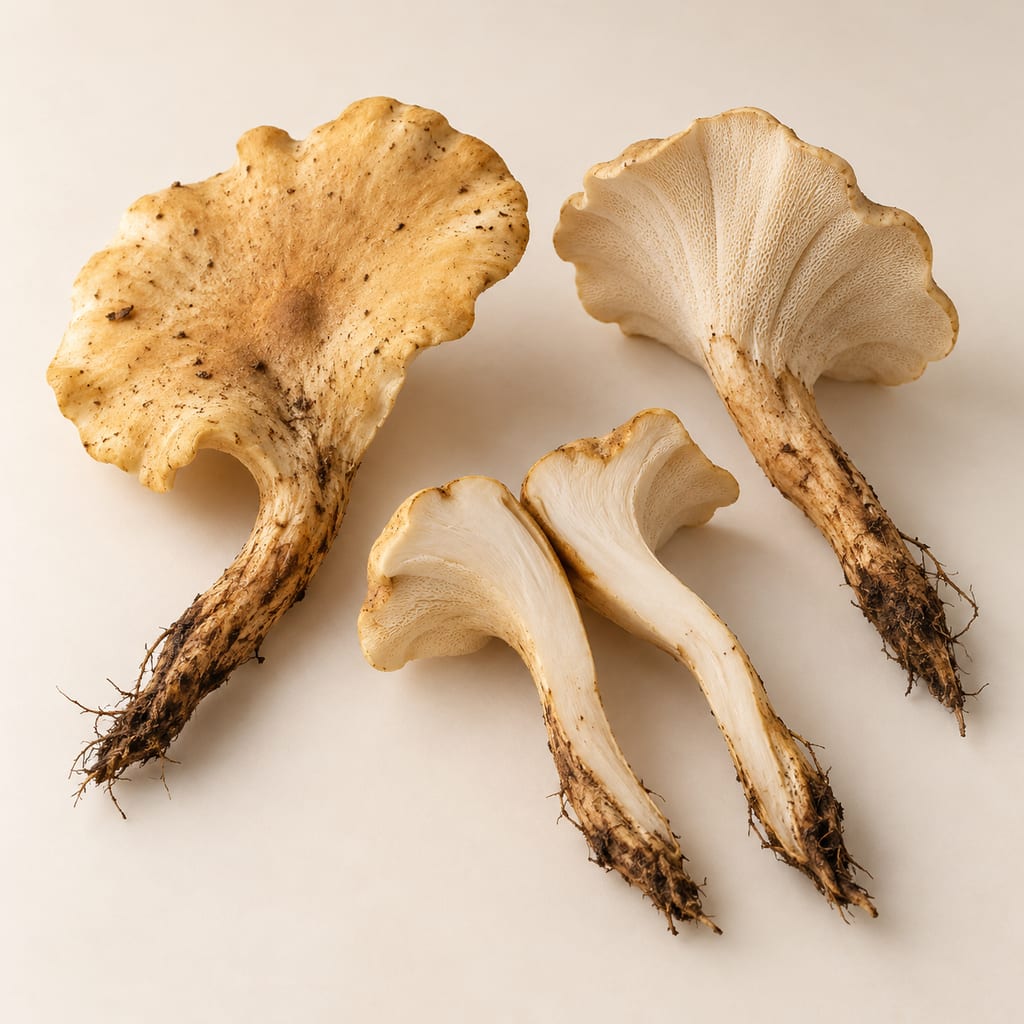
The rooting beefsteak fungus, Pseudofistulina radicata, is a wood-decaying bracket fungus with a root-like stem. A Guatemalan food record exists, but the sources found do not confirm edible use.
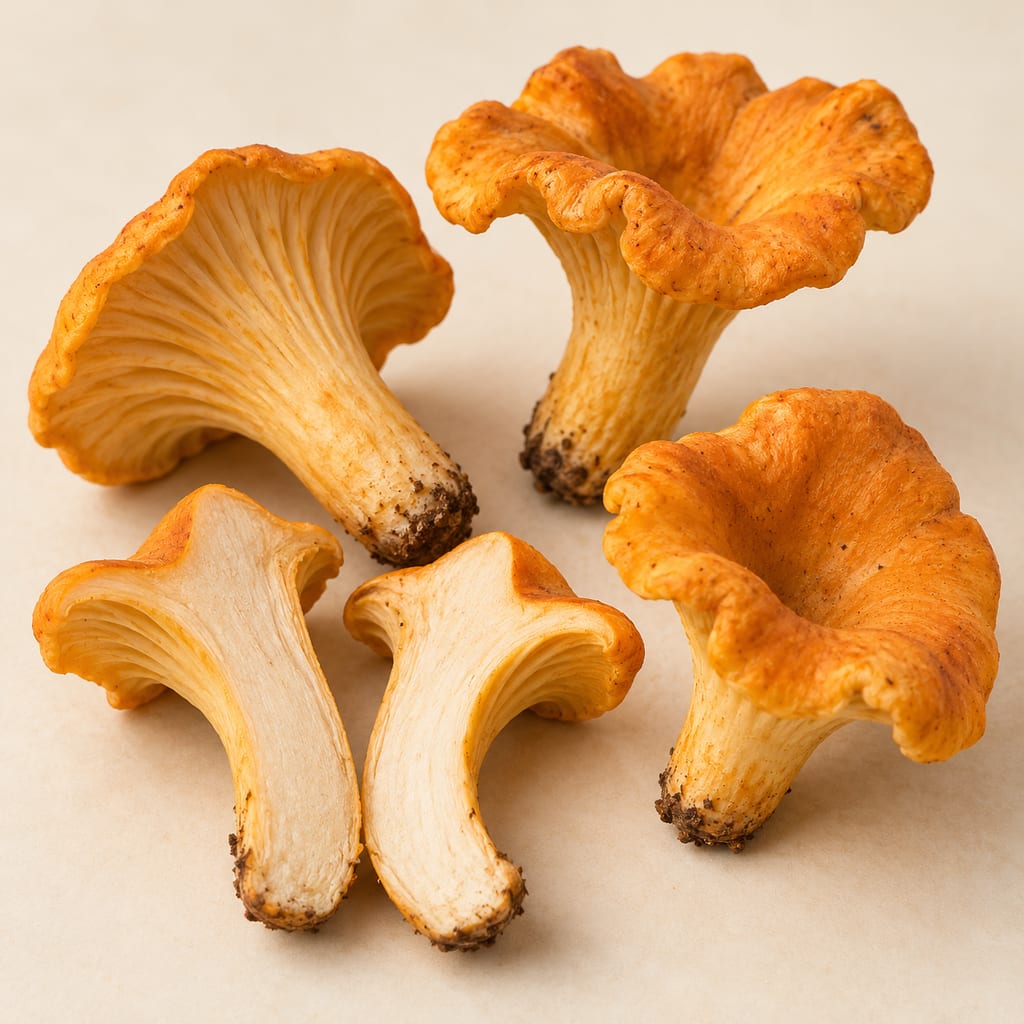
Cantharellus lateritius is a bright orange chanterelle of oak and mixed woodland. A Guatemalan market record and a Missouri field guide describe it as edible, with cautions about a poisonous lookalike.
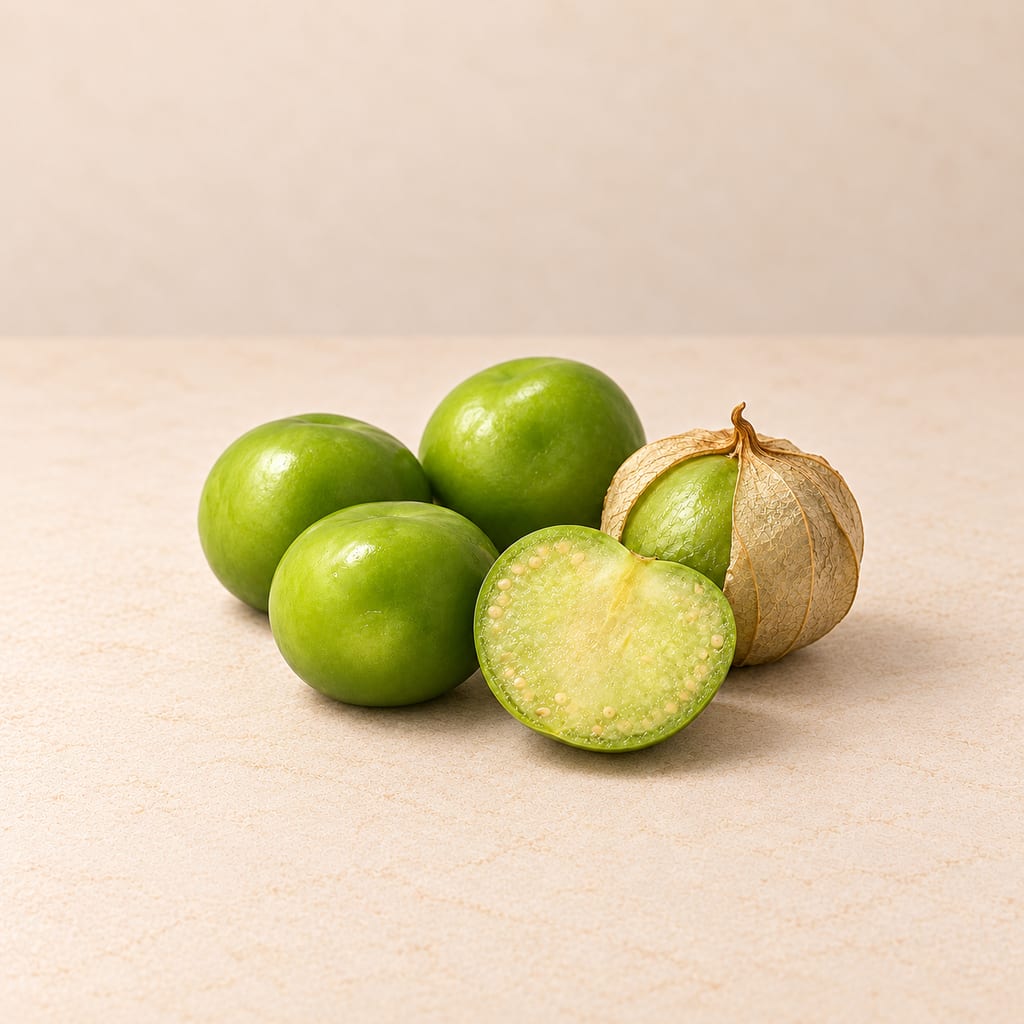
The tomatillo is the tart green fruit of Physalis ixocarpa, a Mexican relative of the tomato that grows inside a papery husk. It is the base of salsa verde.
No community contributions have been published for this entry yet.
Sign in to contribute. Published comments and photos are free to read.
Journal of Ethnobiology and EthnomedicineReference · History
Ethnomycological knowledge among Kaqchikel, indigenous Maya people of Guatemalan HighlandsMarket in San Juan Sacatepequez selling fresh fruit bodies of A. jacksonii as Hongo de San Pedro
Ethnomycological knowledge of Mayan peoples of Guatemala described as rudimentary compared with Mexico
IUCNReference · Safety
Amanita jacksonii, IUCN Red List entryRange including Guatemala, southern Mexico, El Salvador, Honduras
Common names
Listed as edible for humans
Prensa LibreReference
Prensa Libre report on hongo de San PedroName hongo de San Pedro and described as edible