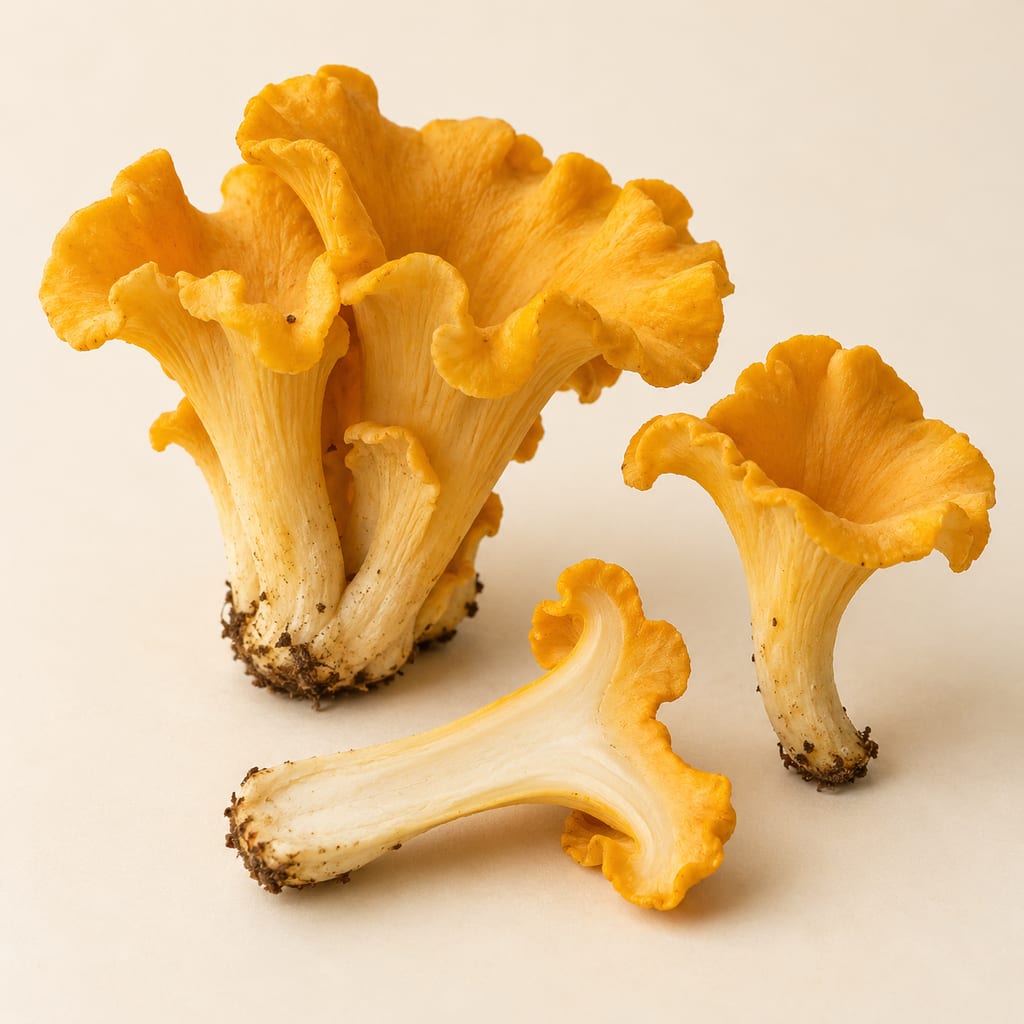
Cantharellus odoratus
Cantharellus odoratus, the fragrant chanterelle, is a North American and Central American oak-woodland fungus. It was sold in a Veracruz market in the 1980s and in Guatemala in 2002, and its name is still disputed.
 FermenteaWhere food goes to change
Mushrooms
Hygrophorus russula, the pinkmottle woodwax, is a firm mycorrhizal mushroom of broadleaf woods in southern Europe and Guatemala. It is used cooked or preserved, and field guides differ on its quality.
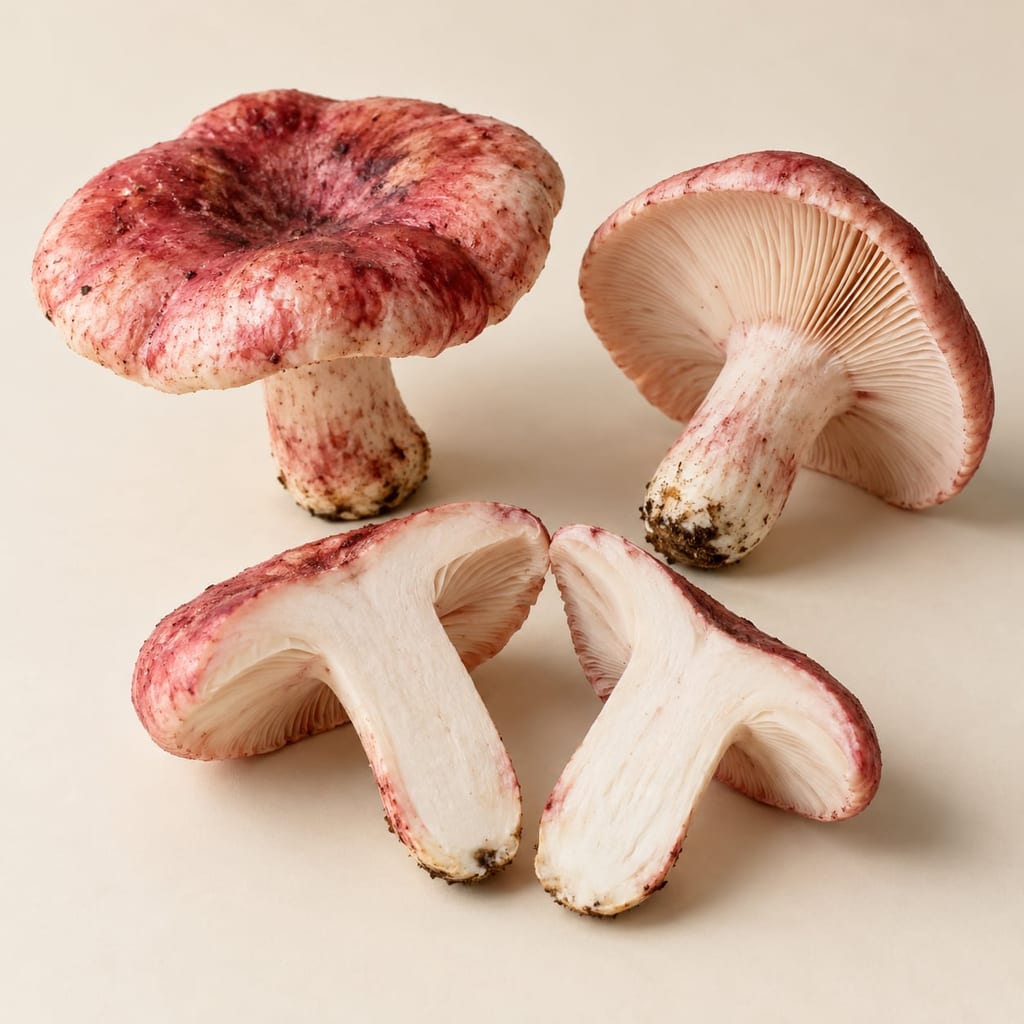
The pinkmottle woodwax is a waxcap-type mushroom of the genus Hygrophorus. It grows with broadleaf trees, especially oak, and Its firm flesh has led to its use as a food in southern Europe, and it is also recorded as a market food in Guatemala. In some places it is known by a regional name or as the Russula-like waxcap, which the catalogue keeps alongside the scientific name.
The record is a market and food-use record, not a verdict on the species' quality. Field guides differ on how good it is, and the sources read for this page do not agree on whether it needs cooking first.
The species is Hygrophorus russula. The catalogue lists the common names pinkmottle woodwax and Russula-like waxcap, the second name pointing to a resemblance to Russula species. Field guides note that its flesh is less brittle than a russula's. The catalogue records the name as a research label and has not validated it against a current accepted-name list.
Closely related species should be kept apart from it. The catalogue asks that regional names and closely related species are retained in the record rather than merged into one entry.
The catalogue records the ecology as broadleaf-associated, ectomycorrhizal, in forest, and as wild. Field accounts place it with oak and other broadleaf trees, and they give a season from late summer to late autumn, roughly August to November.
Accounts also differ on how common it is. One guide describes it as very rare, and another says it is more common in eastern North America than in the west. The Guatemalan record shows that it is known outside Europe, and the sources do not give a range within either region.
The catalogue describes the species as a firm mushroom used cooked or preserved. The market record is from Southern Europe and Guatemala.
One field guide describes its flavour as mild and says it is often mixed with stronger mushrooms. It advises boiling the mushrooms for about ten minutes before eating. Other sources say it is edible by some but not by others, so the guidance is not uniform.
Hygrophorus purpurascens is a similar species with a veil and a conifer habitat, and it is also described as edible but of poor quality. The two are distinguished by habitat and by the veil.
The catalogue flags that regional names and closely related species should be kept in the record. No identification from a photograph should be treated as settled, and a specialist should confirm the species before any use.
The catalogue's caution is that this is a food and market record under specialist evidence. Regional names and closely related species should be retained, and the record does not establish a safety assessment for the species.
Sources that describe the species as edible disagree with sources that list it as not edible, and the advice to boil it first is one guide's advice, not a tested method. Foragers should confirm identification with an expert before eating any wild mushroom.
Regional market record; the catalogue does not pin a country or locality.
Country-level food-use record from the catalogue.
Cantharellus odoratus, the fragrant chanterelle, is a North American and Central American oak-woodland fungus. It was sold in a Veracruz market in the 1980s and in Guatemala in 2002, and its name is still disputed.
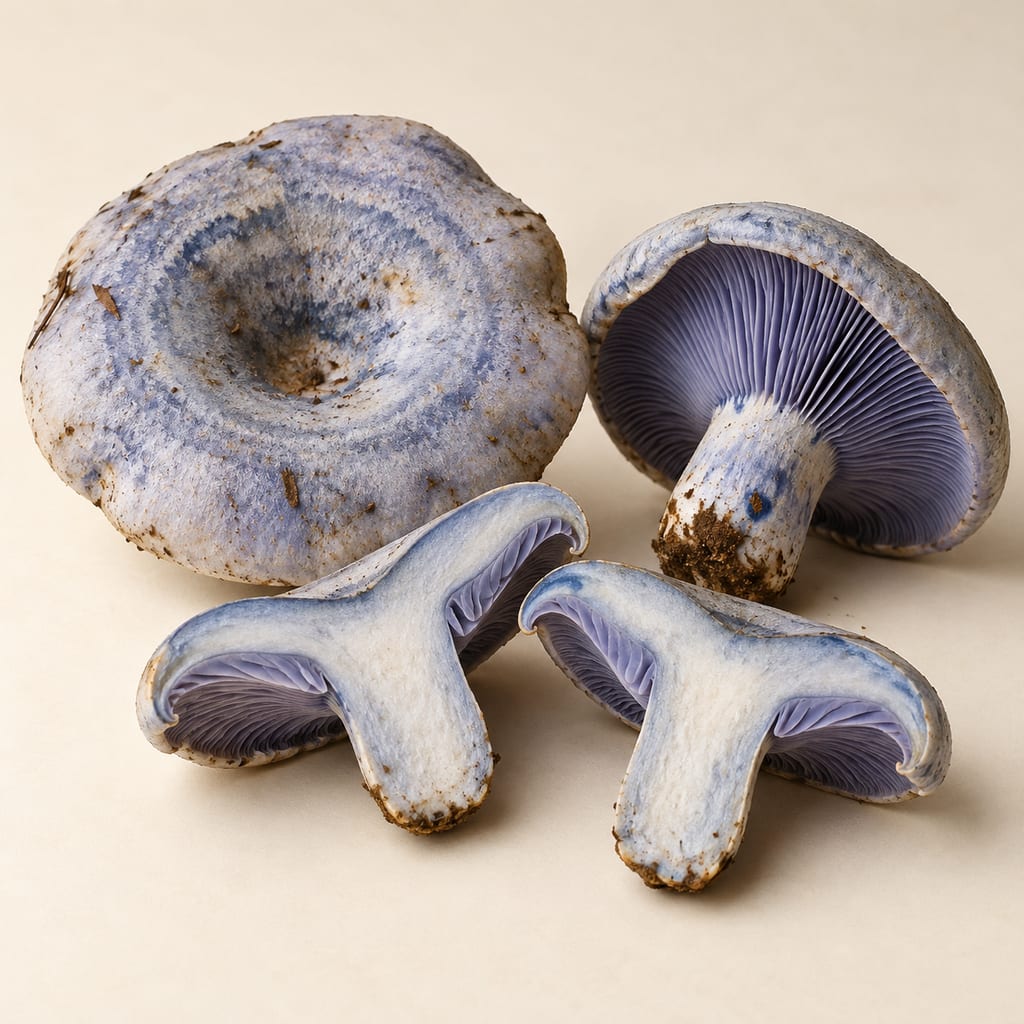
Indigo milkcap, Lactarius indigo, is a blue-latexed milkcap of Mexican and Guatemalan forests. Market and ethnomycology records describe it as roasted or dried for food, and a similar-looking species is a known confusion risk.
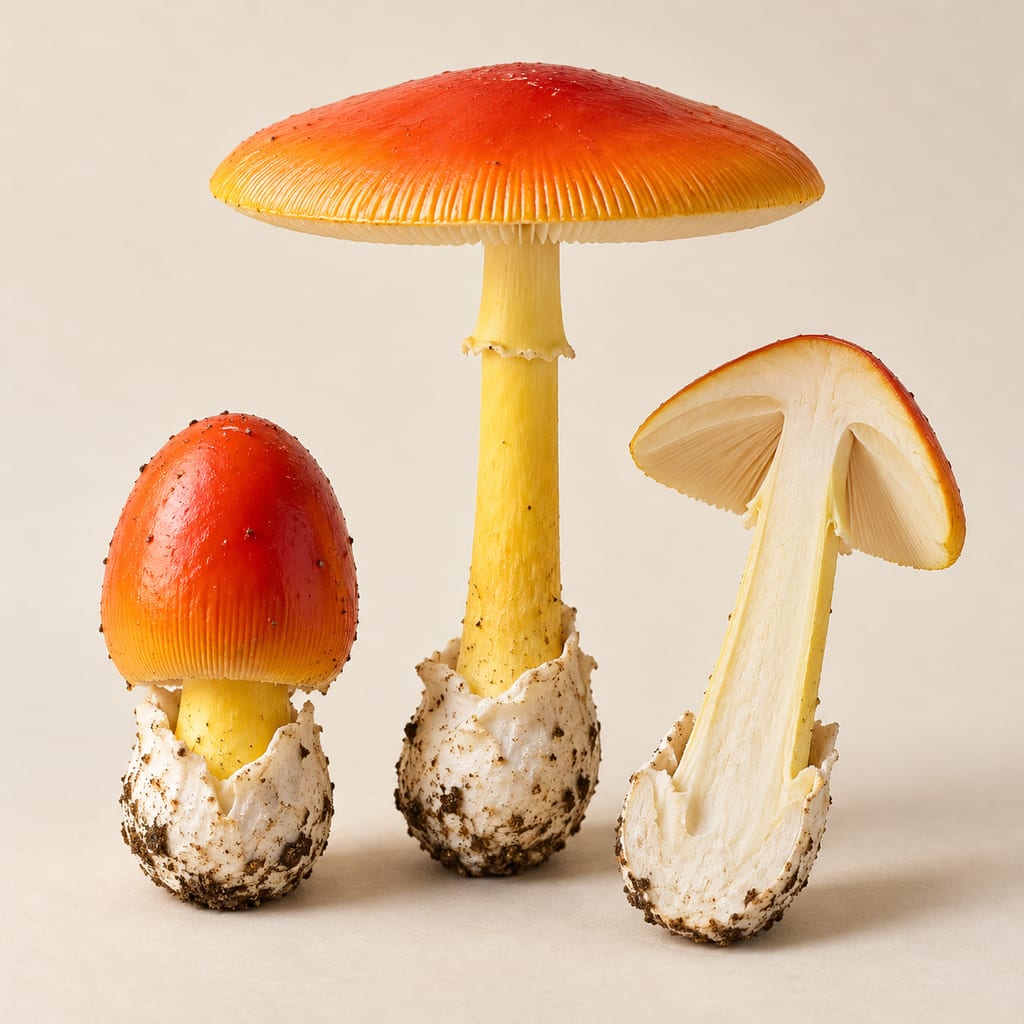
Jackson's slender Caesar, Amanita jacksonii, is a wild ectomycorrhizal fungus of Central American and Mexican forests, sold in some local markets. Amanita includes deadly species, so the name gives no basis for identification.
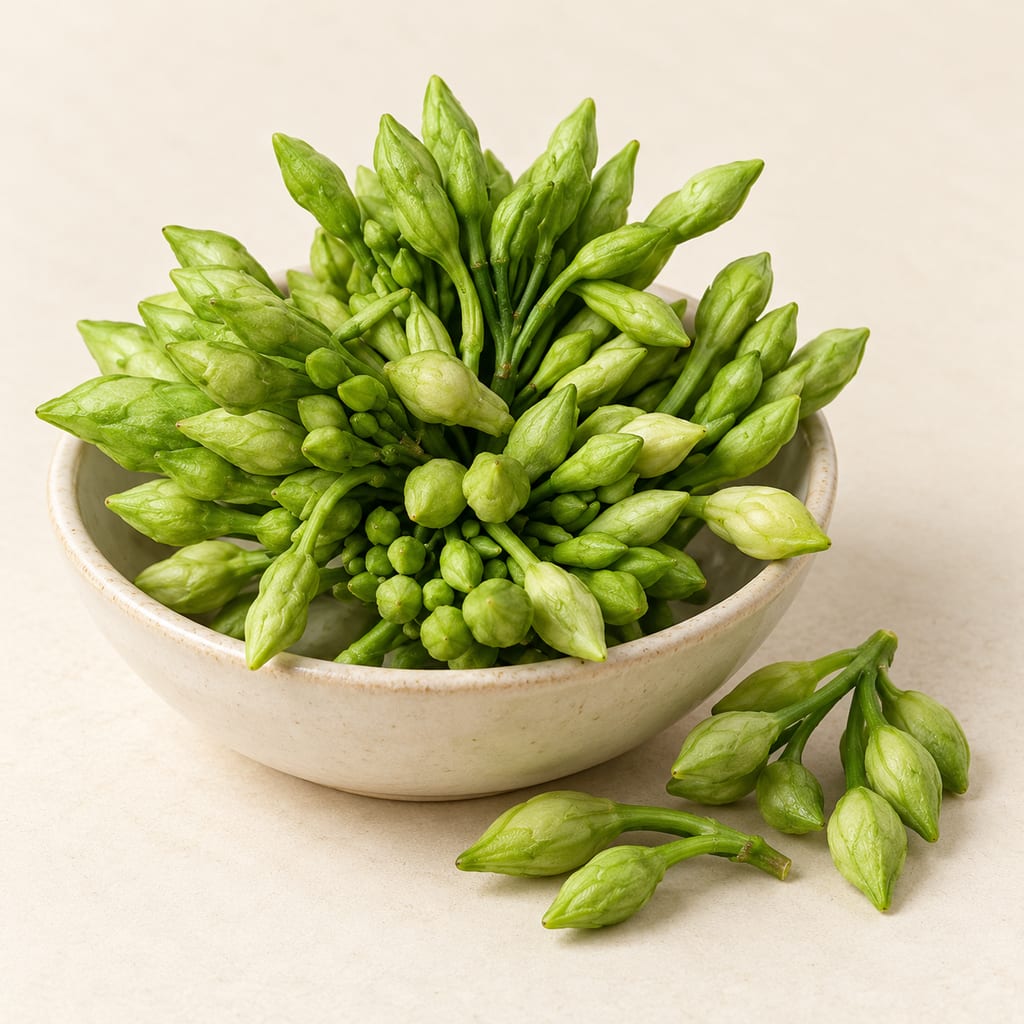
Loroco is the edible flower bud of Echites panduratus (syn. Fernaldia pandurata), eaten in Guatemalan dips, pupusas, soups and rice; local growing and preservation studies leave household production open.
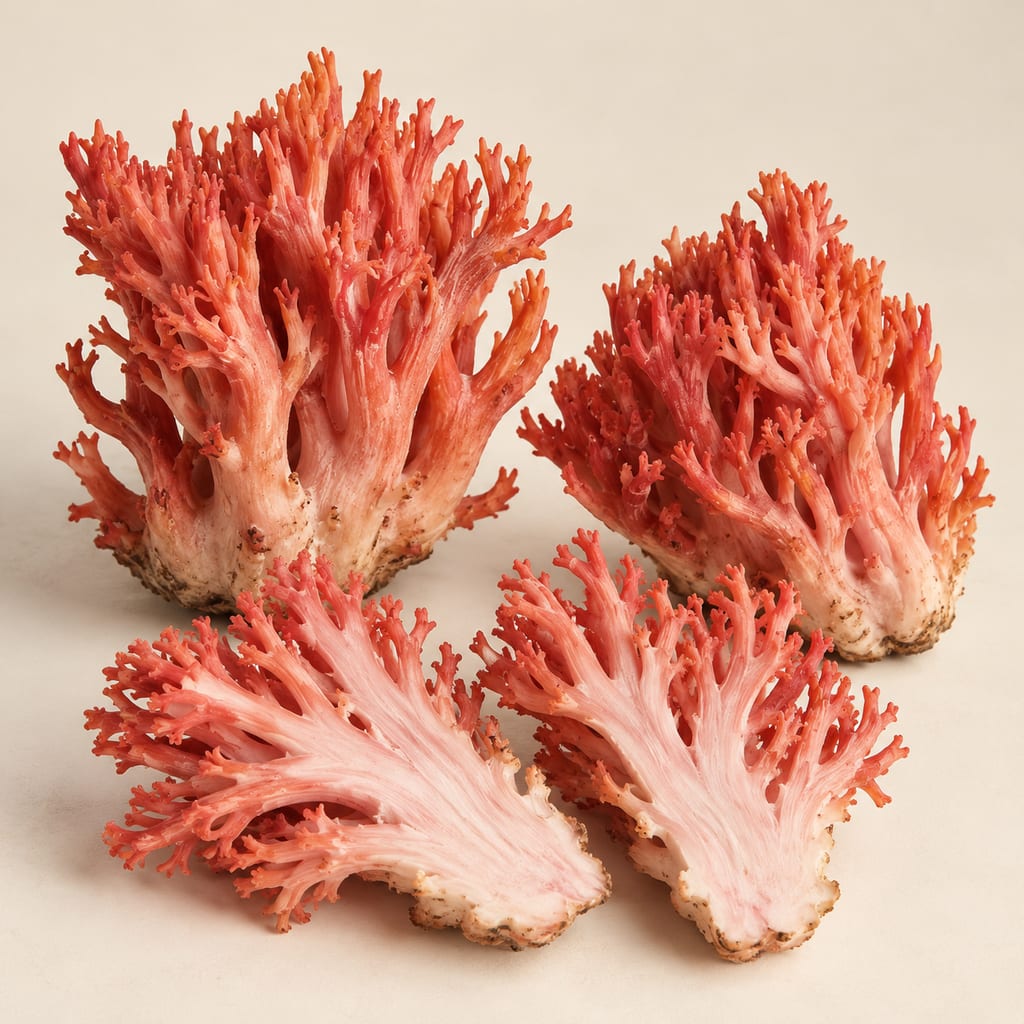
Red coral mushroom, Ramaria araiospora, is a wild coral fungus collected and sold in Guatemala. Coral fungi have toxic look-alikes, so identification needs a specialist.
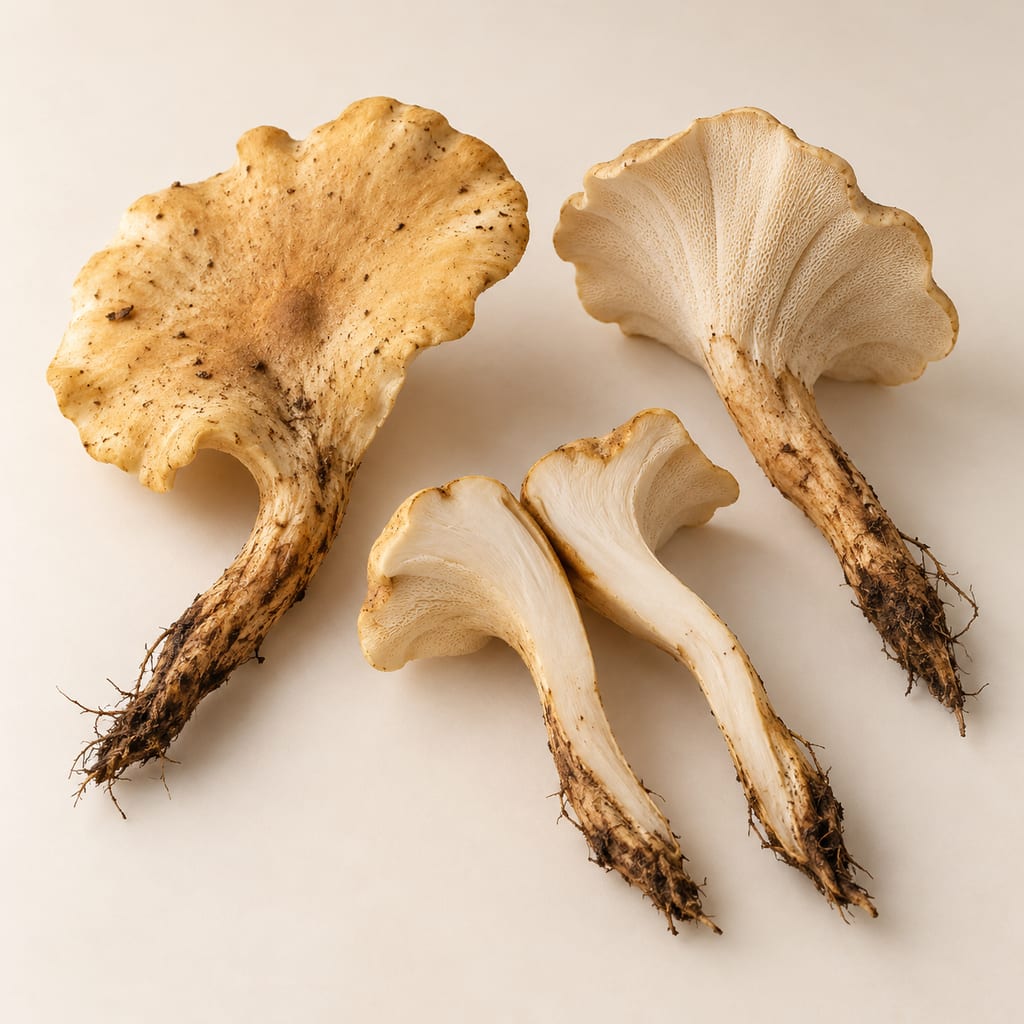
The rooting beefsteak fungus, Pseudofistulina radicata, is a wood-decaying bracket fungus with a root-like stem. A Guatemalan food record exists, but the sources found do not confirm edible use.
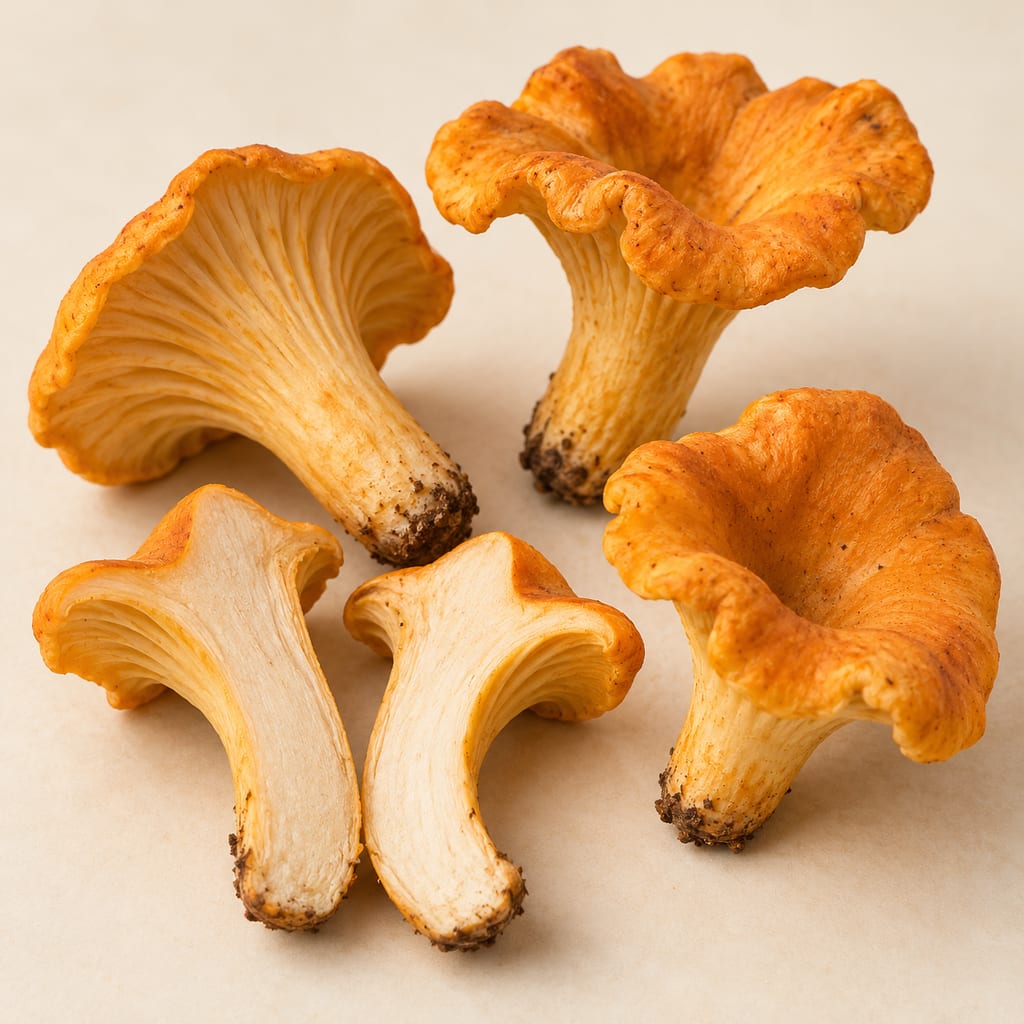
Cantharellus lateritius is a bright orange chanterelle of oak and mixed woodland. A Guatemalan market record and a Missouri field guide describe it as edible, with cautions about a poisonous lookalike.
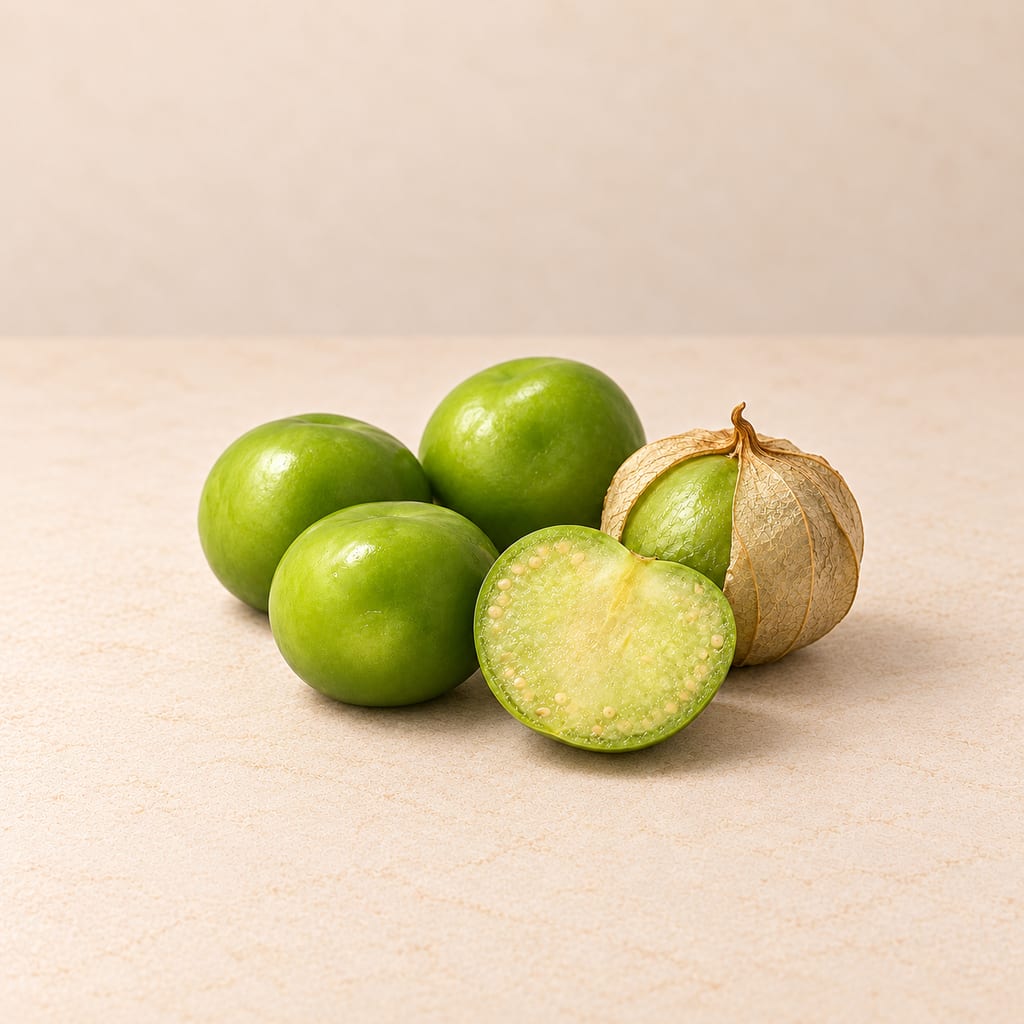
The tomatillo is the tart green fruit of Physalis ixocarpa, a Mexican relative of the tomato that grows inside a papery husk. It is the base of salsa verde.
No community contributions have been published for this entry yet.
Sign in to contribute. Published comments and photos are free to read.
Boletin Oficial del EstadoFood use · Regulation · Regional names
Boletin Oficial del Estado entry BOE-A-2009-1110Spanish official bulletin entry cited by the catalogue for the southern European market record.
Springer (Journal of Ethnobiology and Ethnomedicine)Food use · Market
Ethnobiology study cited for the Guatemalan and southern European food-use recordFirm mushroom used cooked or preserved; market food-use record in the catalogue.
WikipediaTaxonomy lead · Edibility lead
Hygrophorus russulaEdibility described as not definitive across sources.
Cited in: Overview; Taxonomy and names; Food use; Safety
JungleDragonIdentification · Season · Food use · Look alike
Pinkmottle woodwax (Hygrophorus russula)Edible good by one field guide; boil about 10 minutes advised; mild flavour; season August to November; oak associate; very rare.
Cited in: Overview; Ecology and season; Food use; Look-alikes and identification; Safety
ViriarEcology · Rarity
Hygrophorus russula (Pinkmottle Woodwax)Mycorrhizal with broad-leaved trees, particularly oak.
Cited in: Ecology and season