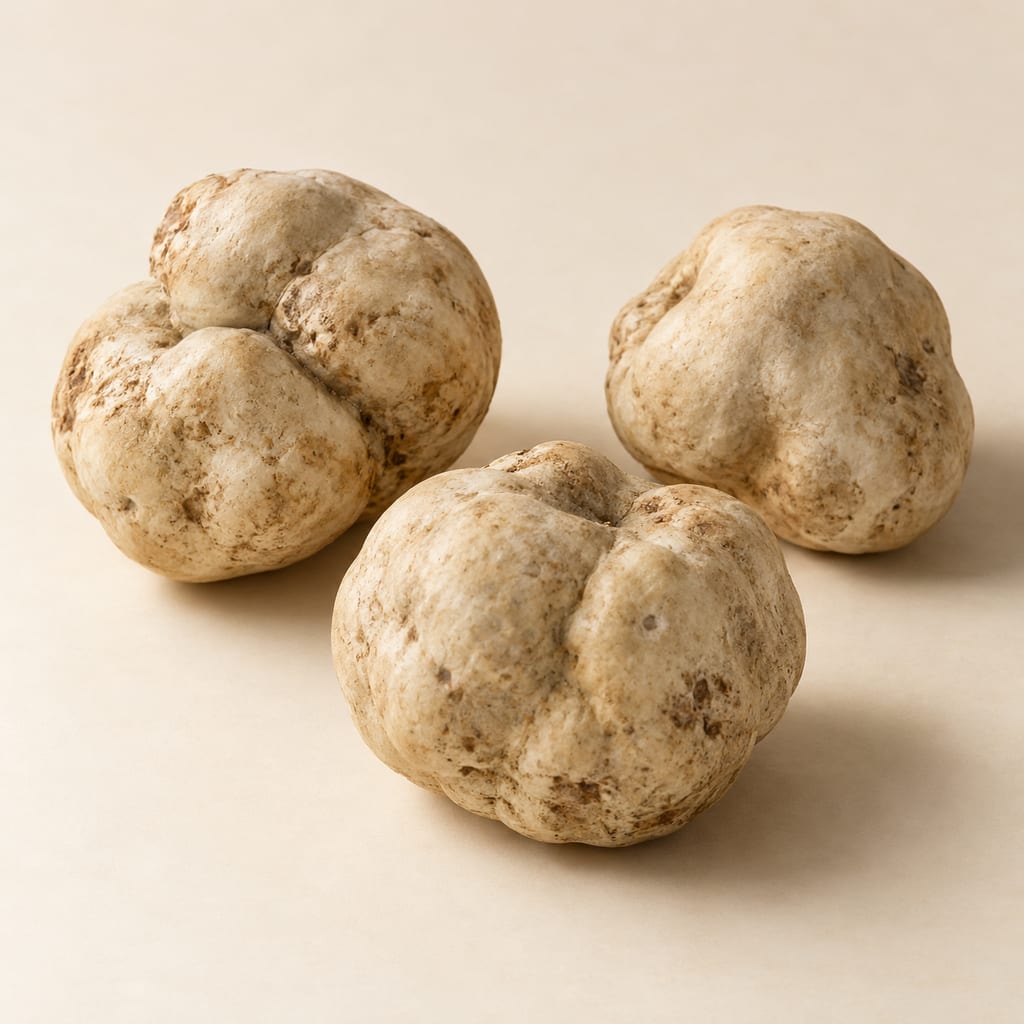
Afrocastellanoa ivoryana
Afrocastellanoa ivoryana is a truffle-like false truffle of African woodlands, ectomycorrhizal with woodland trees and recorded as a regional wild food in West and Central Africa.
 FermenteaWhere food goes to change
Mushrooms
Lactifluus medusae is an African milkcap, a white-latexed ectomycorrhizal mushroom of miombo and wooded savanna. The EFTA edible-species inventory records it as a popular edible species of the Zambezian region.
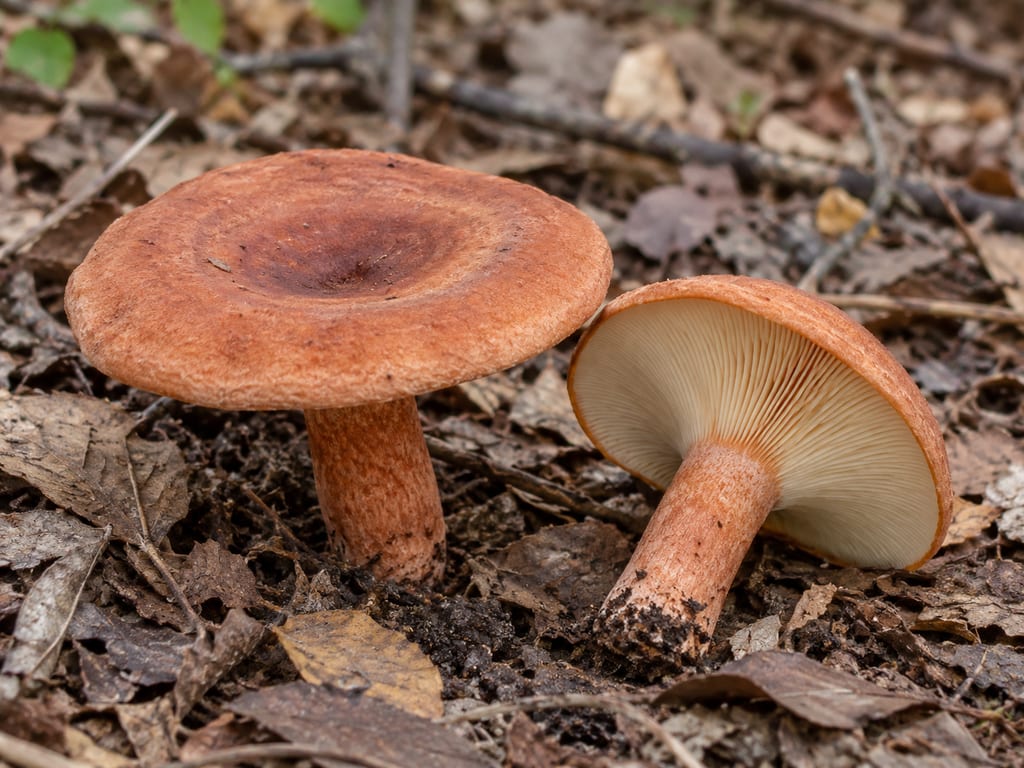
Lactifluus medusae is an African milkcap, a mushroom of the milkcap genus that grows with trees in miombo woodland and wooded savanna. Its cap is velvety and dry to pruinose, and it releases a white latex that turns purple as it dries.
The species is recorded as a popular edible mushroom of the Zambezian region. The sources that support that record are regional inventories and older field studies.
The catalogue searches the name as Lactarius medusae, an older genus placement. The catalogue keeps Lactifluus medusae as a research name and does not treat it as a reconciled accepted name.
The common label African milkcap is used for several milkcap species from the region, so this page uses the scientific name.
The species is ectomycorrhizal, forming a root partnership with trees, and is recorded in miombo and wooded savanna. The sources do not describe its host trees by species.
The EFTA distribution list covers ten countries from West Africa to Zimbabwe. The catalogue's food-use records name DR Congo, Malawi and the Zambezian region. The sources do not give localities, seasons or yields.
The EFTA inventory describes the species as a popular edible mushroom in the Zambezian region. The sources do not describe the dishes made from it or the preparation used.
The catalogue states that identity, preparation and current safety require separate validation for this species. The record does not establish a safe preparation method.
The EFTA page says the species is easily identified by its pruinose, velvety cap, the coloured edge of its lamellae and the long terminal elements of its pileipellis. It is often confused with Lactifluus gymnocarpoides, which is closely related.
This page is not an identification guide. Do not eat a wild milkcap on the basis of this page. Milkcap identity depends on microscopic and colour features, and confirmation by an expert is needed before any wild fungus is eaten.
The sources do not state whether the mushroom is cooked before eating, how it is preserved, or what it is eaten with.
A molecular record places a collection in Cameroon, and the distribution list is ambiguous between this species and L. gymnocarpoides in some sources. Regional records need checking against a monograph of tropical African milkcaps before the range is treated as settled.
The EFTA page calls the species popular in the Zambezian region, citing Karhula et al. (1998) and Morris (1984). The catalogue also records food use in DR Congo and Malawi.
Food-use context recorded in the catalogue. The sources do not give a locality.
Food-use context recorded in the catalogue. The sources do not give a locality.
Afrocastellanoa ivoryana is a truffle-like false truffle of African woodlands, ectomycorrhizal with woodland trees and recorded as a regional wild food in West and Central Africa.
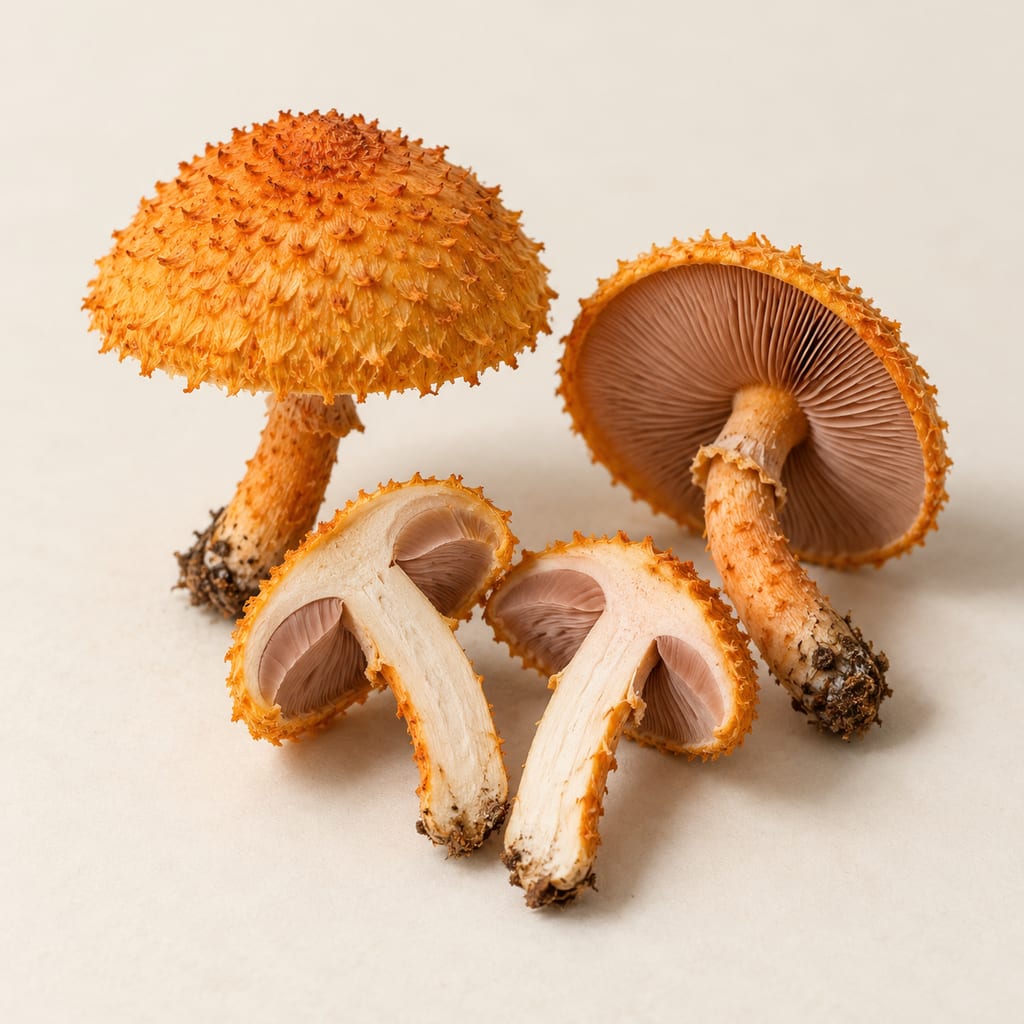
A forest mushroom of the genus Agaricus, recorded as a wild food in the Tshopo province of the Democratic Republic of the Congo in a voucher-backed ethnomycological survey.
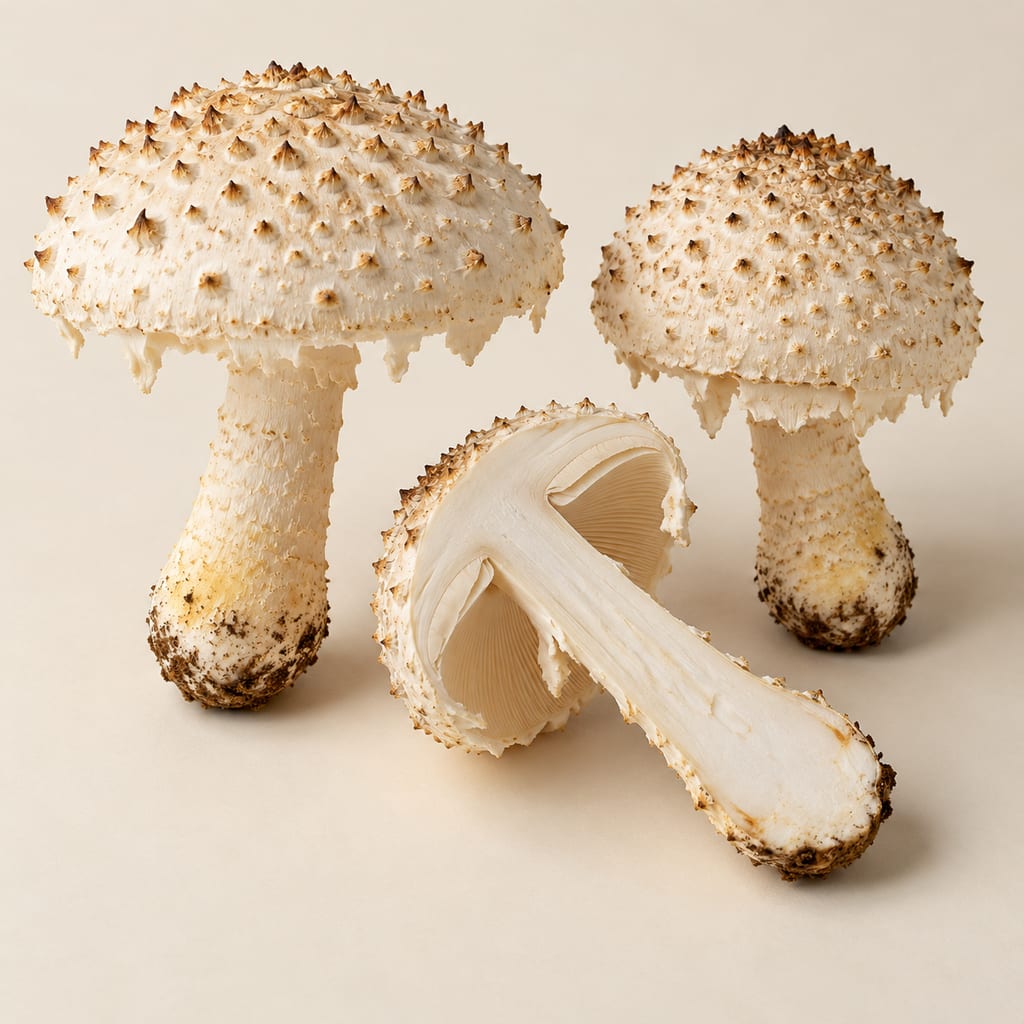
Amanita afrospinosa is a white, warted Amanita of miombo woodland in southern and central Africa. A regional food-use record exists, but the Amanita genus includes deadly species, so no safe use is established here.
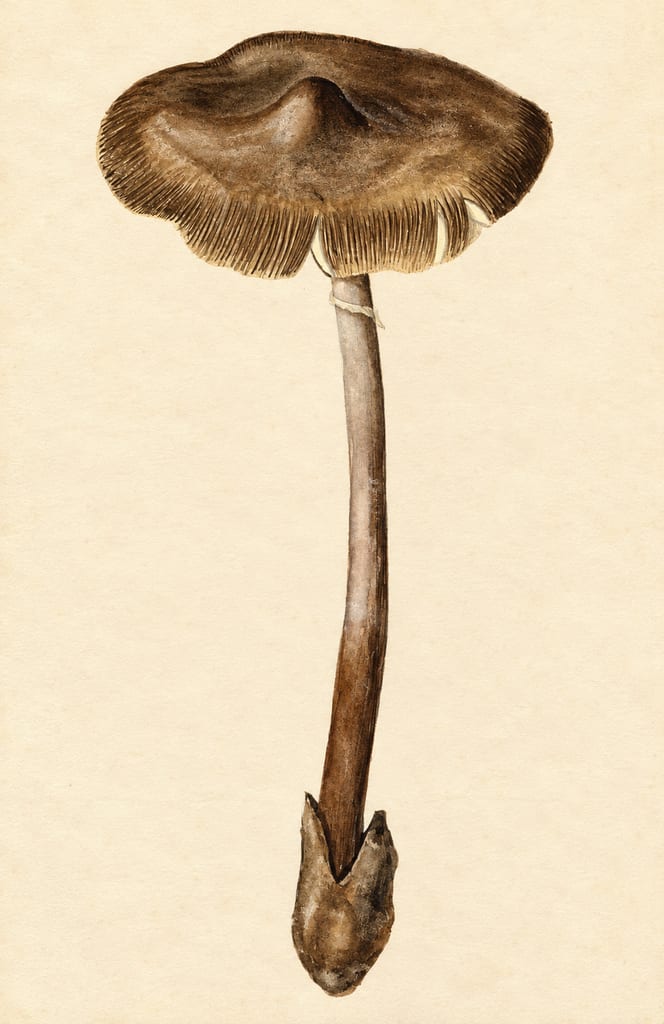
A wild ectomycorrhizal Amanita of the Congo rainforest, recorded as locally consumed in Tshopo province. Its preparation was not established, and the genus includes deadly species.
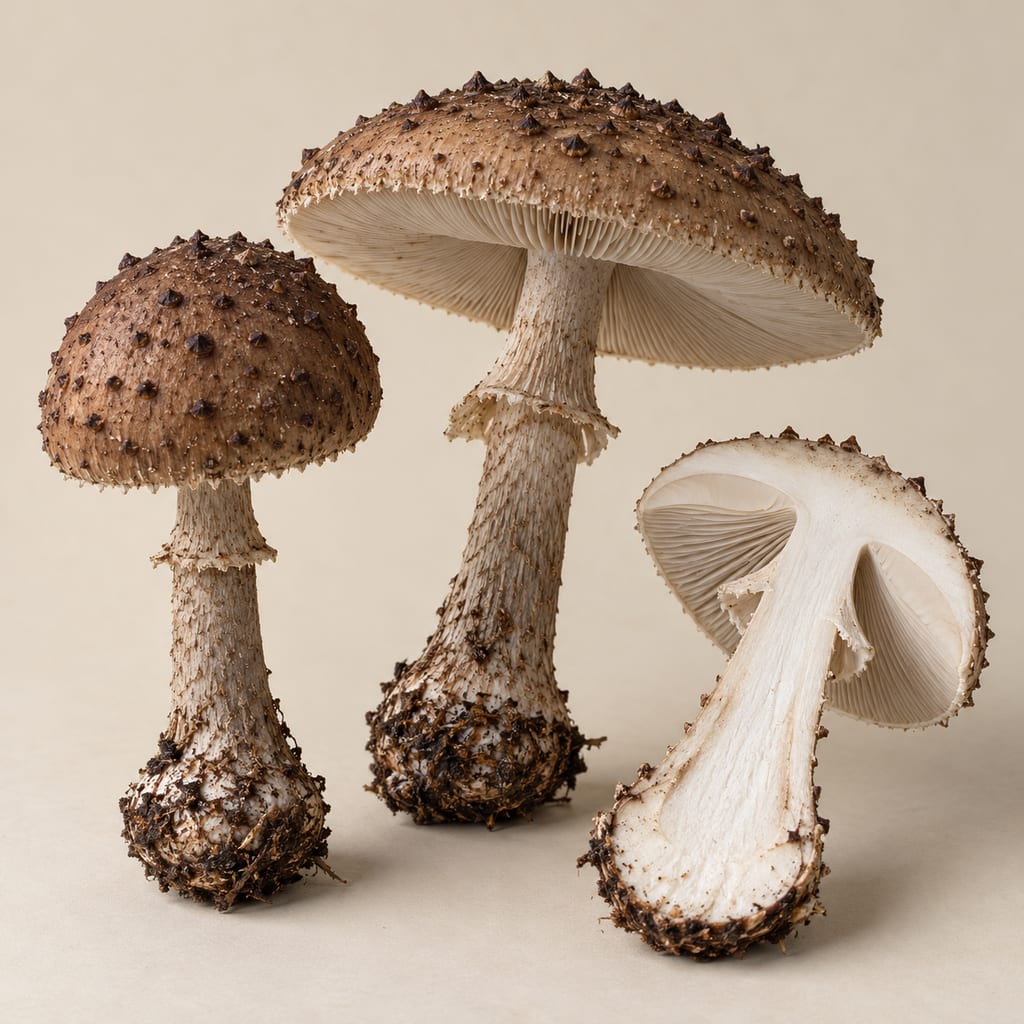
A wild ectomycorrhizal Amanita of the Congo rainforest, recorded as locally consumed in Tshopo province. Its preparation was not established, and the genus includes deadly species.
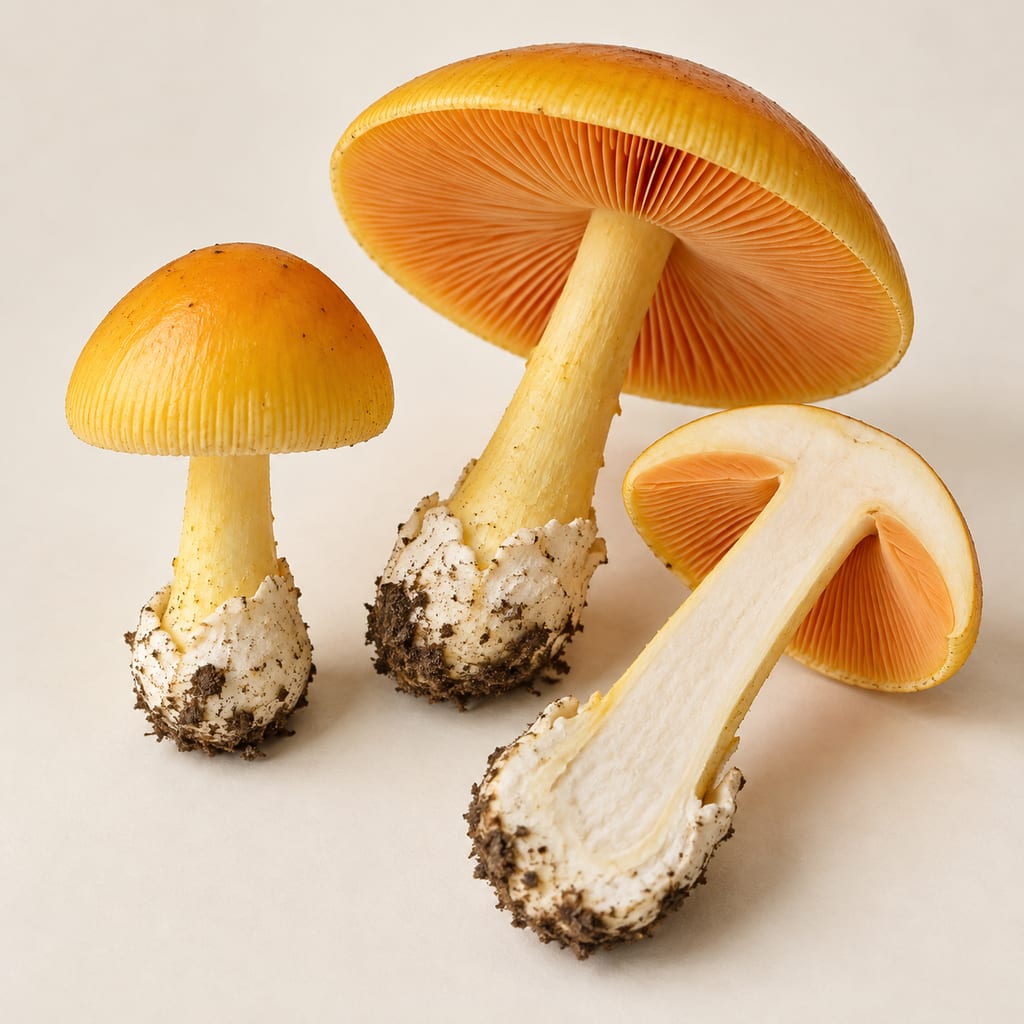
A wild miombo Amanita recorded as a local food in northern Zambia, with collections also documented in Haut-Katanga, DRC. The evidence is regional and does not make wild identification safe.
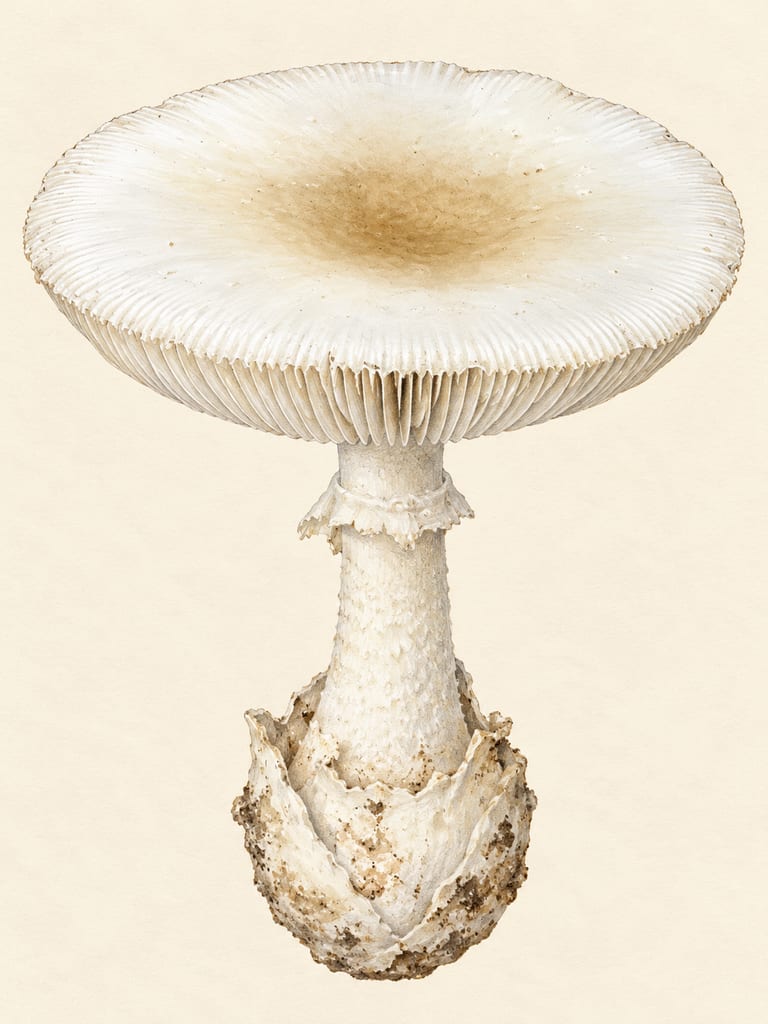
Amanita loosei is a large wild Amanita of tropical African miombo and open woodland, gathered and sold as a valued seasonal food. Regional food-use evidence is not a guide to identifying wild mushrooms.
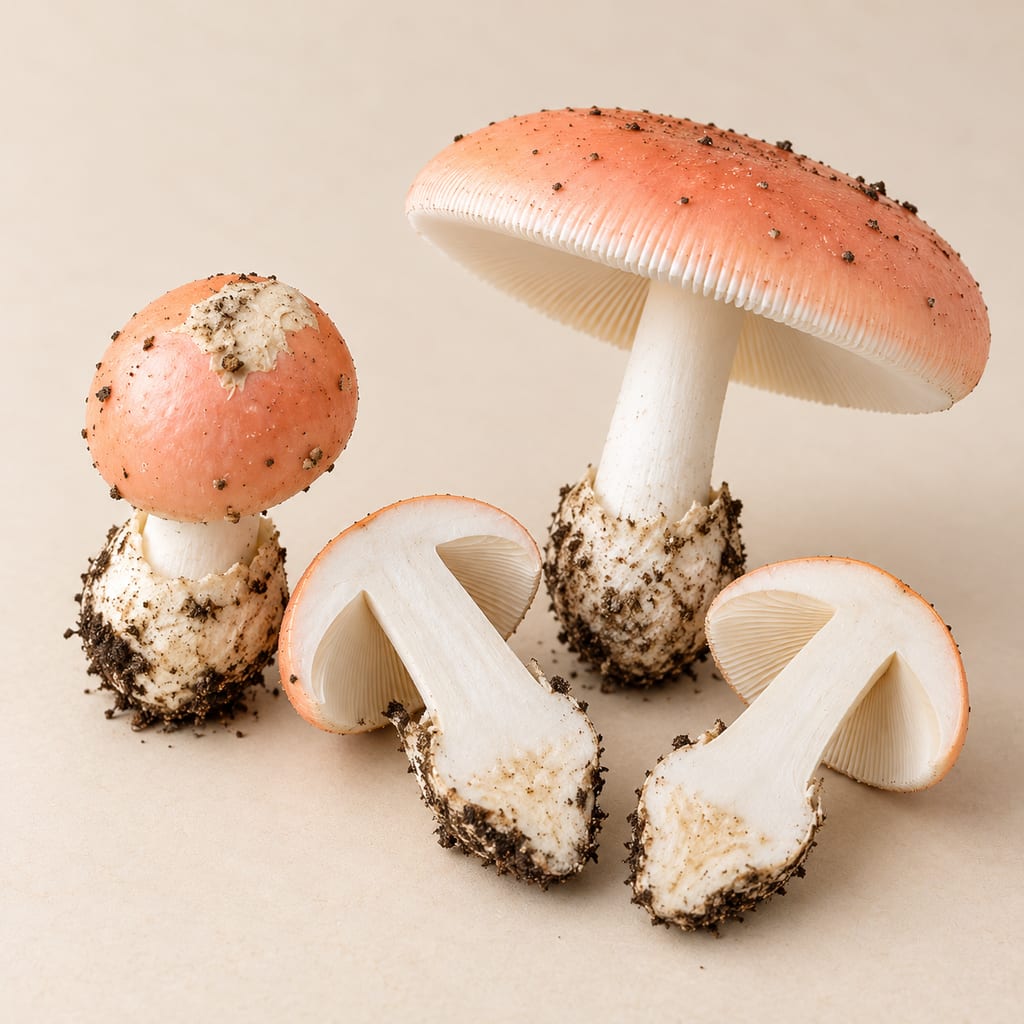
Amanita pudica is a wild rainforest fungus of Tshopo Province in the DR Congo, recorded as locally eaten in interviews. The genus contains deadly poisonous species, so identification by a specialist is essential.
No community contributions have been published for this entry yet.
Sign in to contribute. Published comments and photos are free to read.
EFTA (European Fungi Taxonomy and Assessment) species inventoryFood · Identification · Distribution
Lactifluus medusaePopular edible species in the Zambezian region, citing Karhula et al. (1998) and Morris (1984)
Ectomycorrhizal in miombo and wooded savanna
Cap 7-12 cm, velvety, pruinose, with concentric rings; odour pleasant, taste mild; latex white, turning purple
Listed distribution: Burkina Faso, DR Congo, Guinea, Malawi, Mali, Mozambique, Tanzania, Togo, Zambia, Zimbabwe
Cited in: Overview; Names; Habitat and ecology; Food use; Identification and safety; Open questions
EFTAIdentification
Lactifluus gymnocarpoides (EFTA), for comparisonClosely related milkcap that is often confused with L. medusae; distinguished by coloured lamella edge and pileipellis terminal elements
Cited in: Identification and safety
MycoKeys (Pensoft)Taxonomy
MycoKeys molecular study (Lactifluus, African and Asian records)One molecular study includes an L. medusae collection from Cameroon (Dja Biosphere Reserve region)
Cited in: Open questions