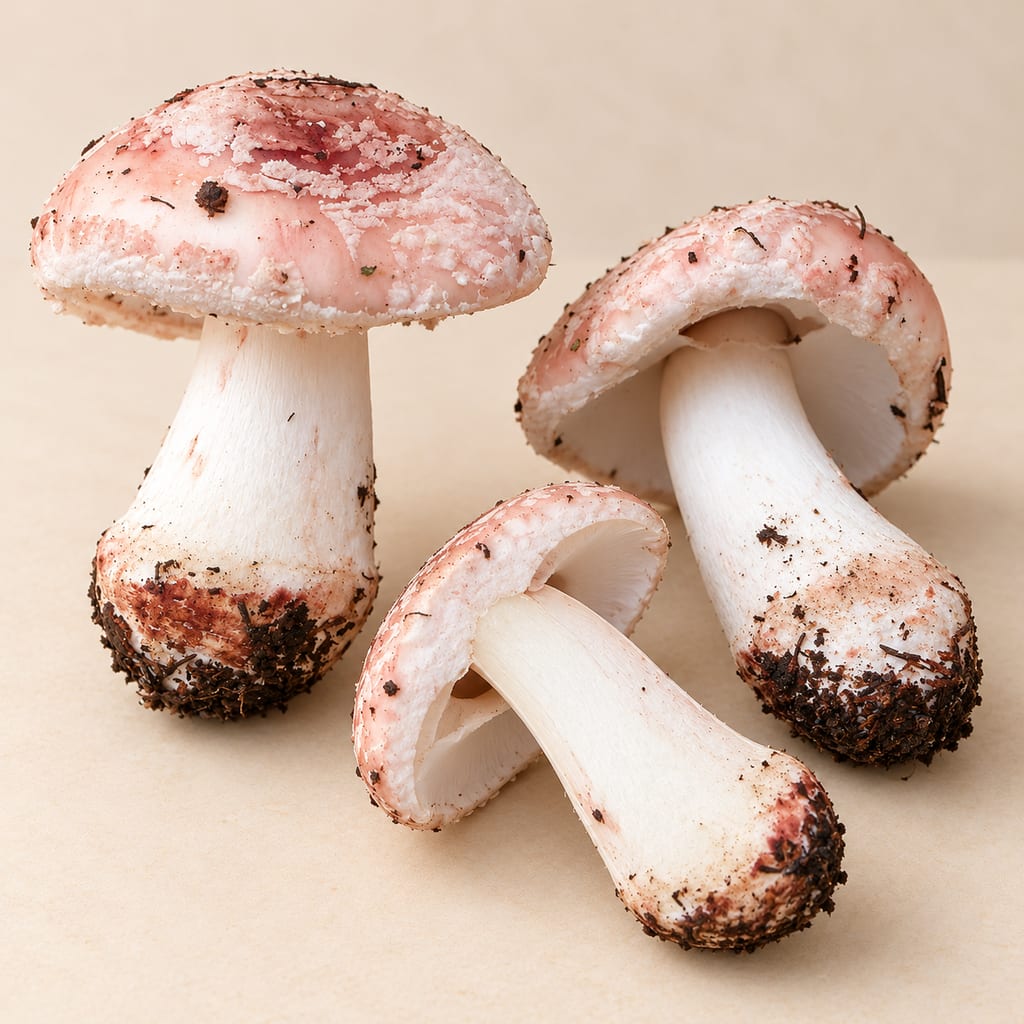
American blusher
Amanita novinupta is a western North American blusher, a forest mushroom recorded as food in Mexico, and one that must be cooked because its raw flesh is toxic.
 FermenteaWhere food goes to change
Mushrooms
The peeling puffball, Lycoperdon marginatum, is a small saprobic puffball of sandy soil whose spiny skin sheds in patches. Its edibility is disputed in the sources, and the catalogue records a Mexican local food-use record.
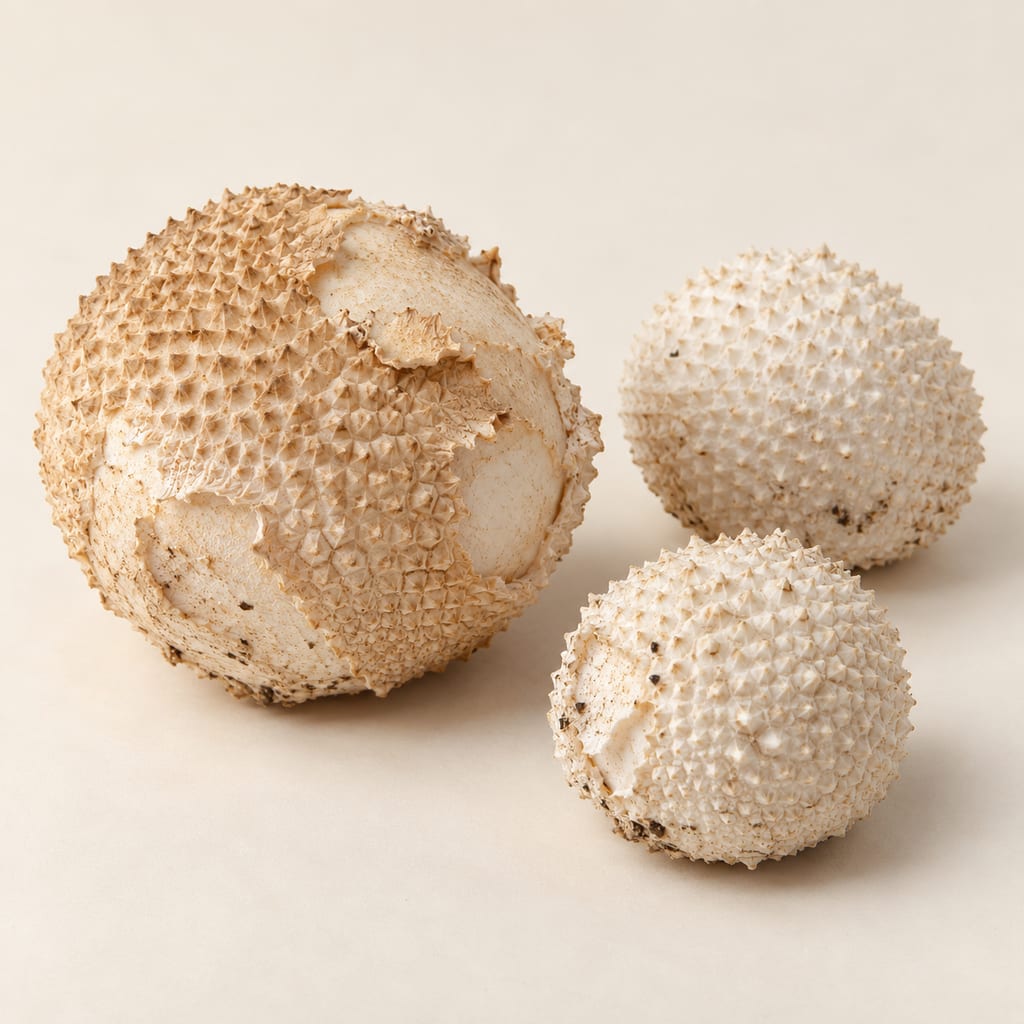
The peeling puffball, Lycoperdon marginatum, is a small puffball that grows on the ground. When young it is round and covered with short white spines. The spines later fall off in irregular sheets, which leaves a smooth brown outer skin. The fruit body opens at the top to release spores when it matures.
Its edibility is disputed. Some sources list it as edible when young but insubstantial, and others describe it as poisonous. The sources reviewed do not establish safe use, so this page records the conflict rather than giving a verdict.
Vittadini described the species in 1839, cited as Vittad. Molecular analysis places it in subgenus Lycoperdon, close to L. perlatum and L. norvegicum. The catalogue records the scientific name as a research label rather than a reconciled accepted name, so records should be checked against current taxonomy.
Fruit bodies are 1 to 5 cm wide. They begin nearly spherical and become flattened and more pear-shaped as they age, on a short tapering stalk. The outer layer is white and spiny at first. The spines fall off in irregular sheets rather than one by one. The inner flesh, the gleba, is white and firm when young, then greenish-brown, greyish-brown and powdery as it matures. The spores are round, 3.5 to 4.5 micrometres, with fine warts, and the spore print is white to olive.
The fungus is saprobic, feeding on dead organic matter. It grows singly, scattered or in groups on the ground, often on sandy, nutrient-poor soil or in oak-pine woods. No host plant is named in the sources. It fruits from June to December.
Sources give its range as Australia, Europe, and North and South America. Records are not detailed for each country in the sources reviewed.
Lycoperdon echinatum looks similar, but its spines do not come off in sheets. The outer layer of L. rimulatum sometimes peels in sheets, but it has no spines. Several other spiny puffballs can look alike when young, and many shed their spines one at a time.
The catalogue records a local puffball food-use record in Mexico. Wikipedia reports that the fungus is said to be used in Mexico to cause hallucinations, but chemical analysis of fruit bodies found no substance that would explain this.
A regional guide reports that some people eat it when young, while noting that reports vary and that eating it is not recommended. Young fruit bodies have white, firm flesh, and some sources describe them as edible but insubstantial. The sources do not give a method of preparation for this species.
The sources reviewed give conflicting edibility reports and no clear toxicity data. The Minnesota guide advises against eating it. The Wikipedia article gives no clear safety recommendation.
Appearance, smell and taste do not establish that a puffball is safe to eat. Identify wild specimens with a qualified expert and follow official food safety advice before eating any wild fungus.
The sources do not give a dated record of food use, a regional name, a preparation that would make the species safe, or confirmed toxin data. These are unknown, not negative findings.
The catalogue records a local puffball food-use record in Mexico. Wikipedia reports a Mexican use linked to hallucinations, which chemical analysis has not confirmed; the food use is not described in the sources reviewed.
Range given by Wikipedia. The sources reviewed do not record food use in these regions, so the relationship is unknown.
Amanita novinupta is a western North American blusher, a forest mushroom recorded as food in Mexico, and one that must be cooked because its raw flesh is toxic.

Ripe avocado flesh is the soft, buttery, fat-rich pulp of Persea americana, eaten raw. It is low in acid, so it is a fresh ingredient that needs care in chilled dishes.
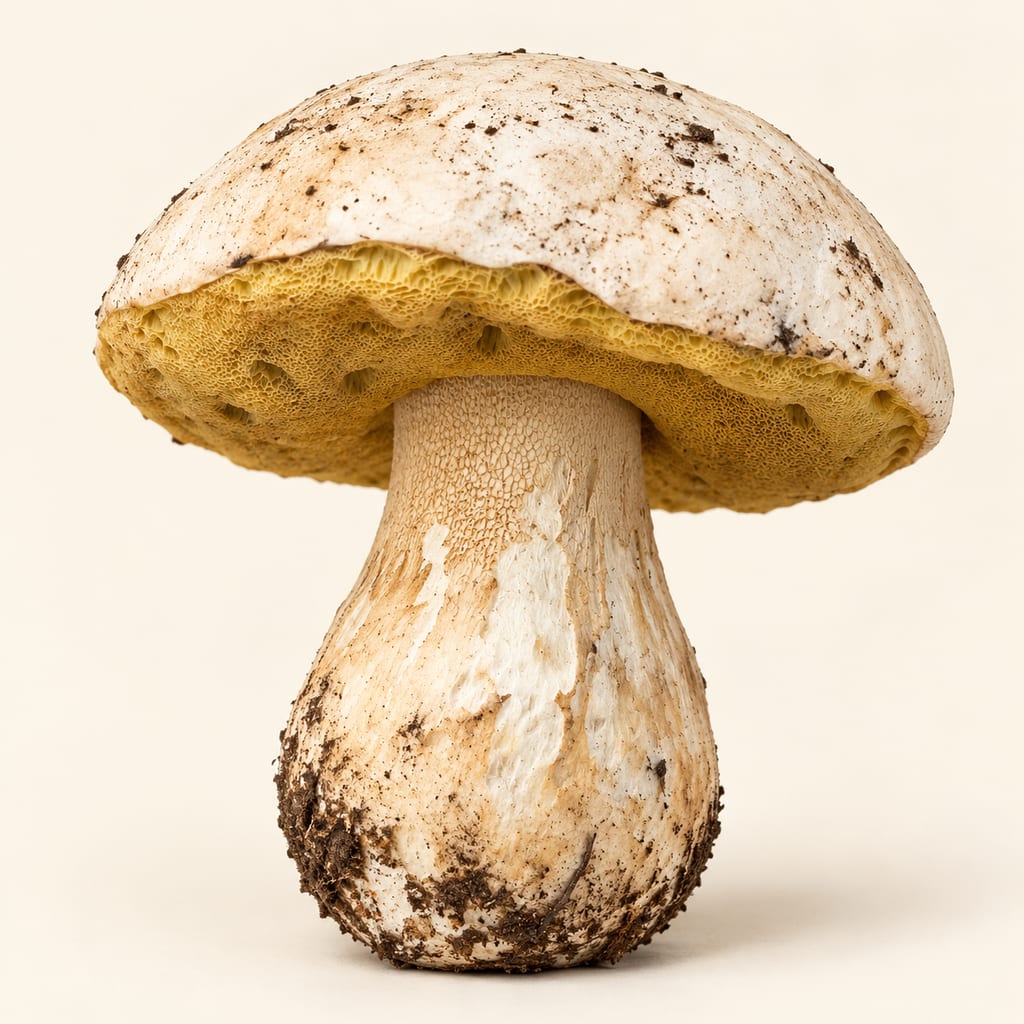
Boletus barrowsii, the white king bolete, is a western porcini relative with documented local food use in Mexico. Its pale cap and netted stem are not enough for field identification.
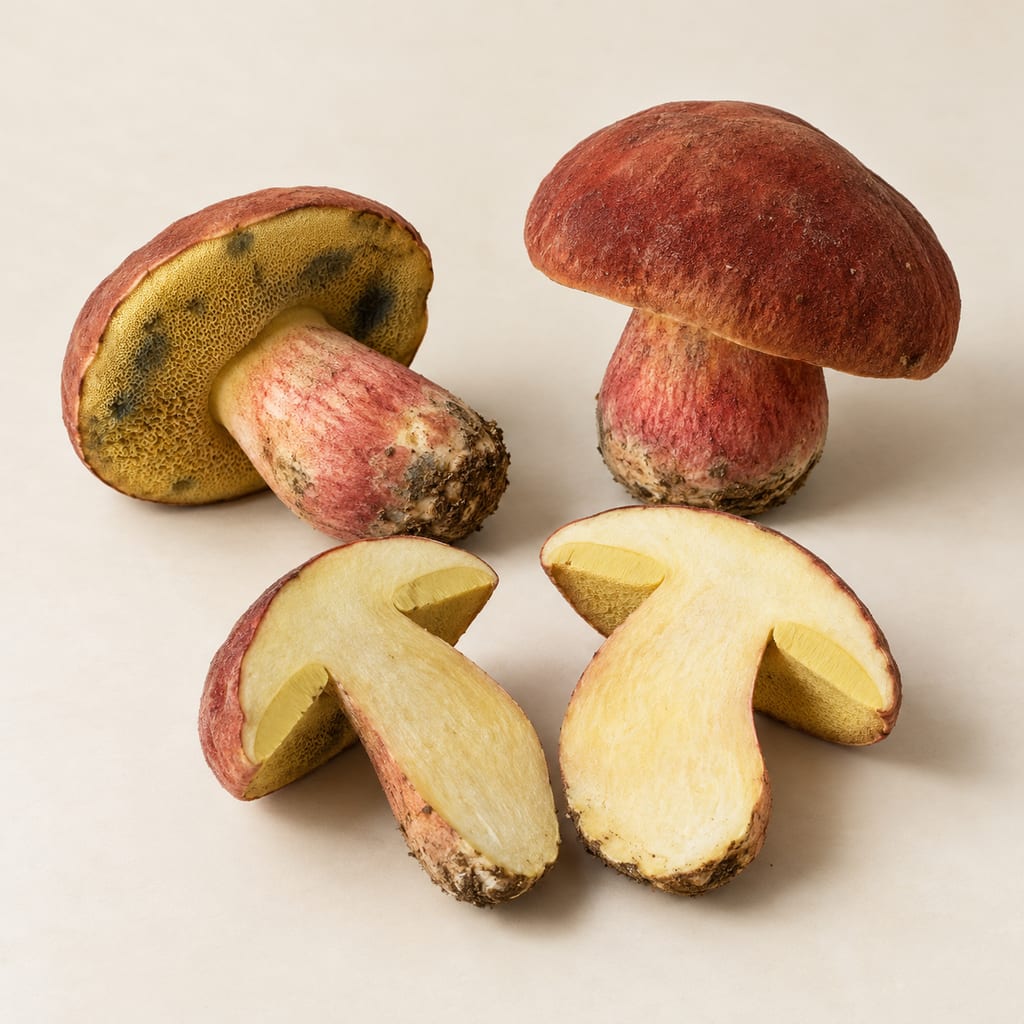
A red-and-yellow bolete described from Michigan and also listed in Mexican fungal records. Historical sources classify it as food, but its species limits, Mexican range and safe food use need careful qualification.
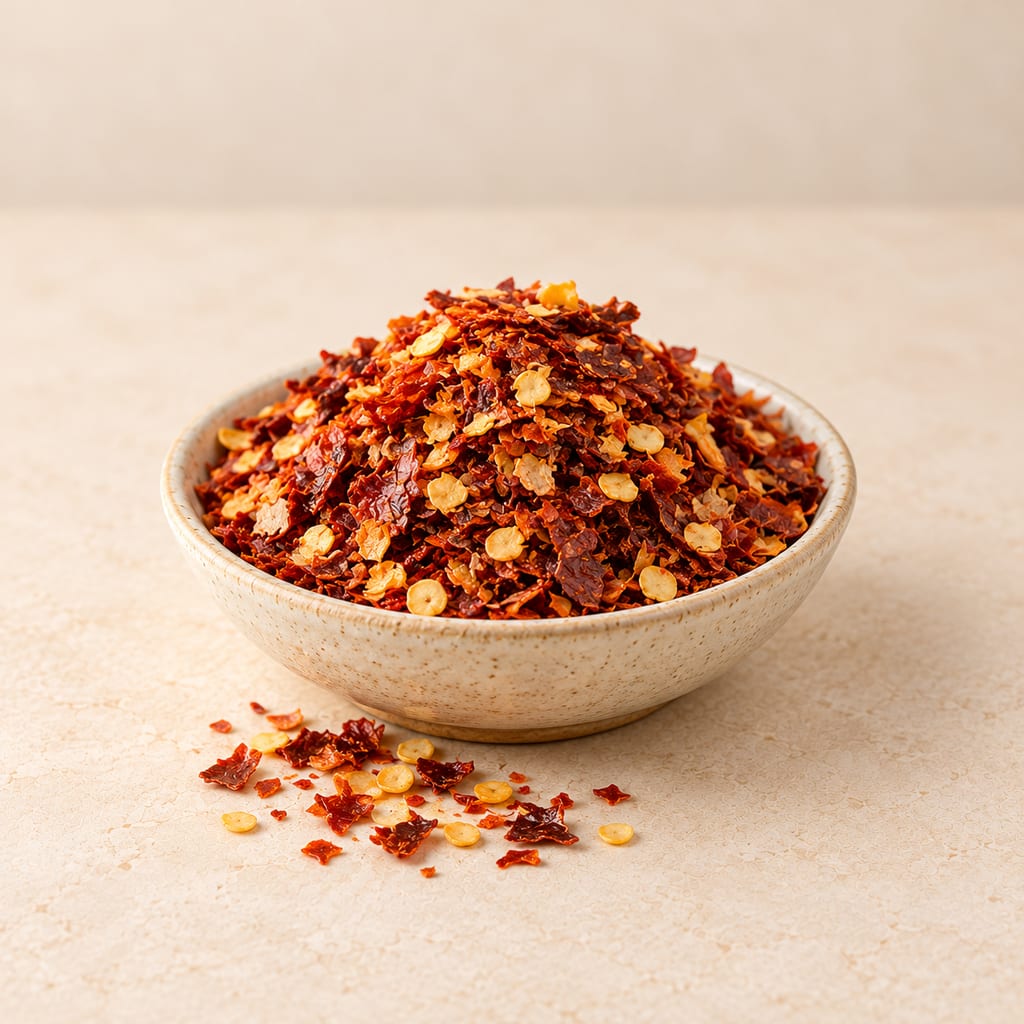
Calabrian pepper flakes are dried red Capsicum annuum from Calabria, crushed into coarse pieces; Peperoncino di Calabria is a protected geographical indication.
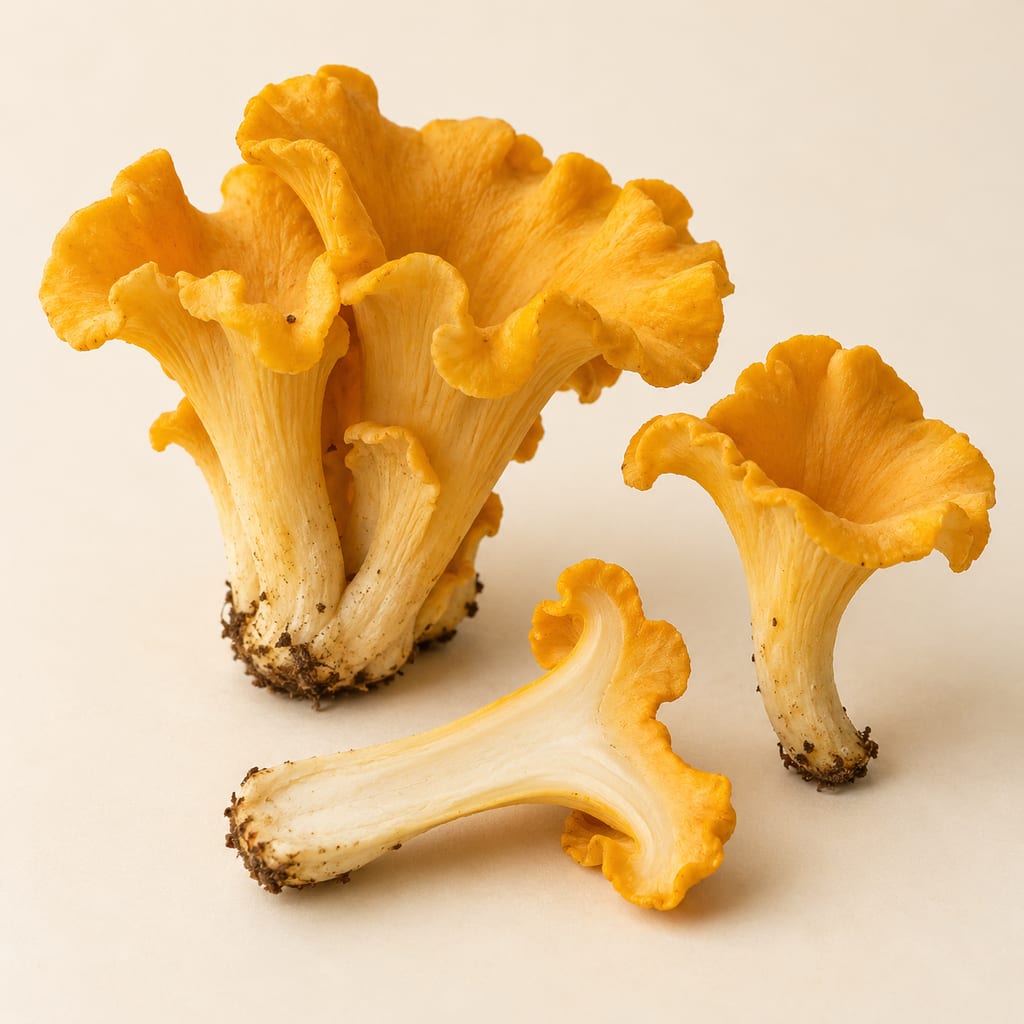
Cantharellus odoratus, the fragrant chanterelle, is a North American and Central American oak-woodland fungus. It was sold in a Veracruz market in the 1980s and in Guatemala in 2002, and its name is still disputed.
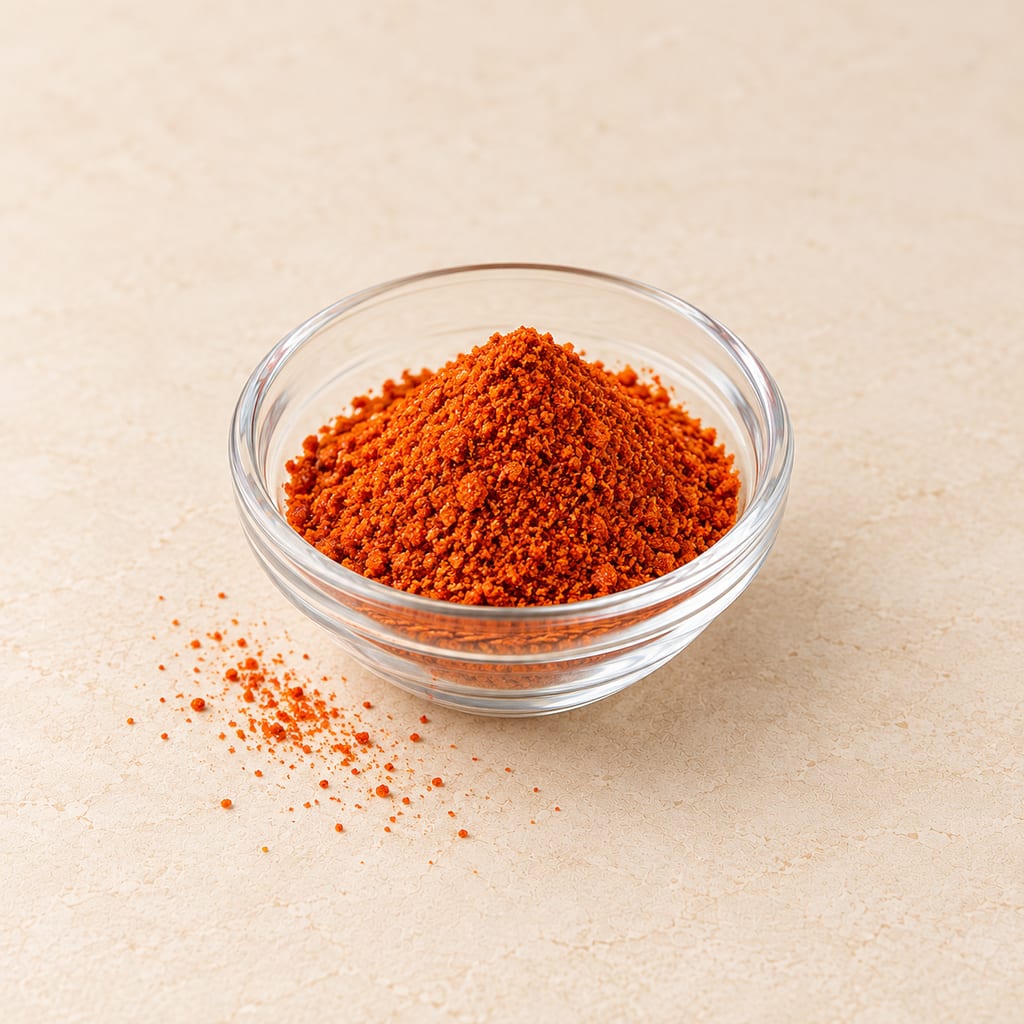
Cayenne is a very pungent red powder from dried, ground hot chilli pods, mostly Capsicum annuum, and the name of the long red peppers it comes from.
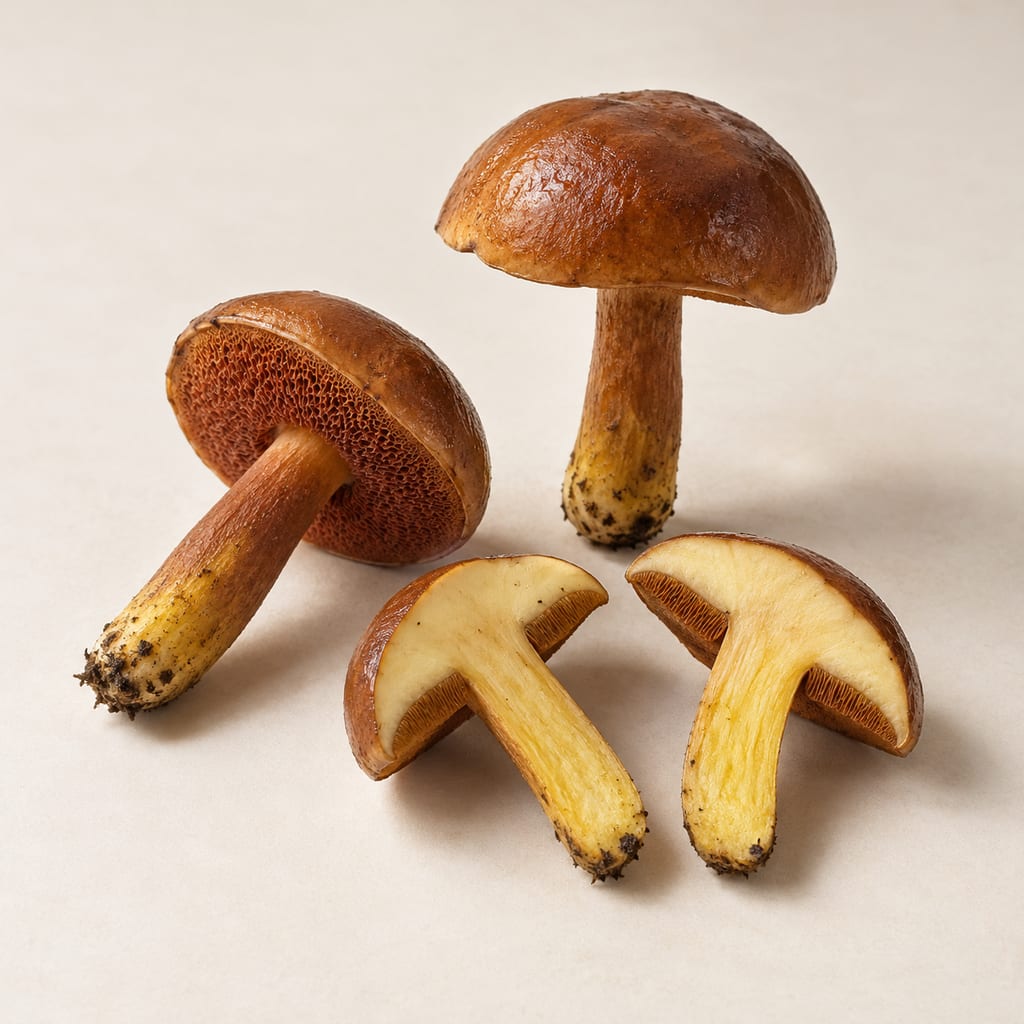
A peppery woodland bolete with historical edible labels and reported condiment use in Querétaro. Current mycological references call its edibility suspect or unestablished; this entry does not recommend consumption.
No community contributions have been published for this entry yet.
Sign in to contribute. Published comments and photos are free to read.
WikipediaTaxonomy · Description · Habitat · Distribution · Edibility · Look alikes
Lycoperdon marginatumDescribed by Vittadini in 1839; placed in subgenus Lycoperdon with L. perlatum and L. norvegicum
Fruit bodies 1 to 5 cm wide; white spines on the peridium that fall off in irregular sheets, leaving a smooth brown surface
Gleba white and firm when young, then greenish-brown to powdery; spores 3.5 to 4.5 micrometres with warts
Saprobic on the ground, often on sandy, nutrient-poor soil or in oak-pine woods; fruits June to December
Edibility reported as conflicting: some list it as safe to eat when young but insubstantial, others as poisonous; reported use in Mexico linked to hallucinations, not confirmed by analysis
Look-alikes L. echinatum and L. rimulatum
Cited in: Overview; Taxonomy; Description; Habitat and season; Distribution; Look-alikes; Food use and edibility; Safety; Open questions
Minnesota SeasonsEdibility · Safety
Peeling PuffballReported as edible by some, but reports vary and eating is not recommended
Flesh white and firm when young, becoming greenish-brown and granular with age
Cited in: Overview; Description; Food use and edibility; Safety