
Lunu dehi
Lunu dehi is Sri Lankan salted lime pickle. This version sun-dries cut, salt-stuffed ripe limes, then packs them with dried lime juice, chillies, spices and vinegar.
 FermenteaWhere food goes to change
Spices and aromatics
Whole peppercorns are crushed for their texture, aroma and pungency. A recipe that leaves their type unnamed does not establish a species, colour or growing origin.
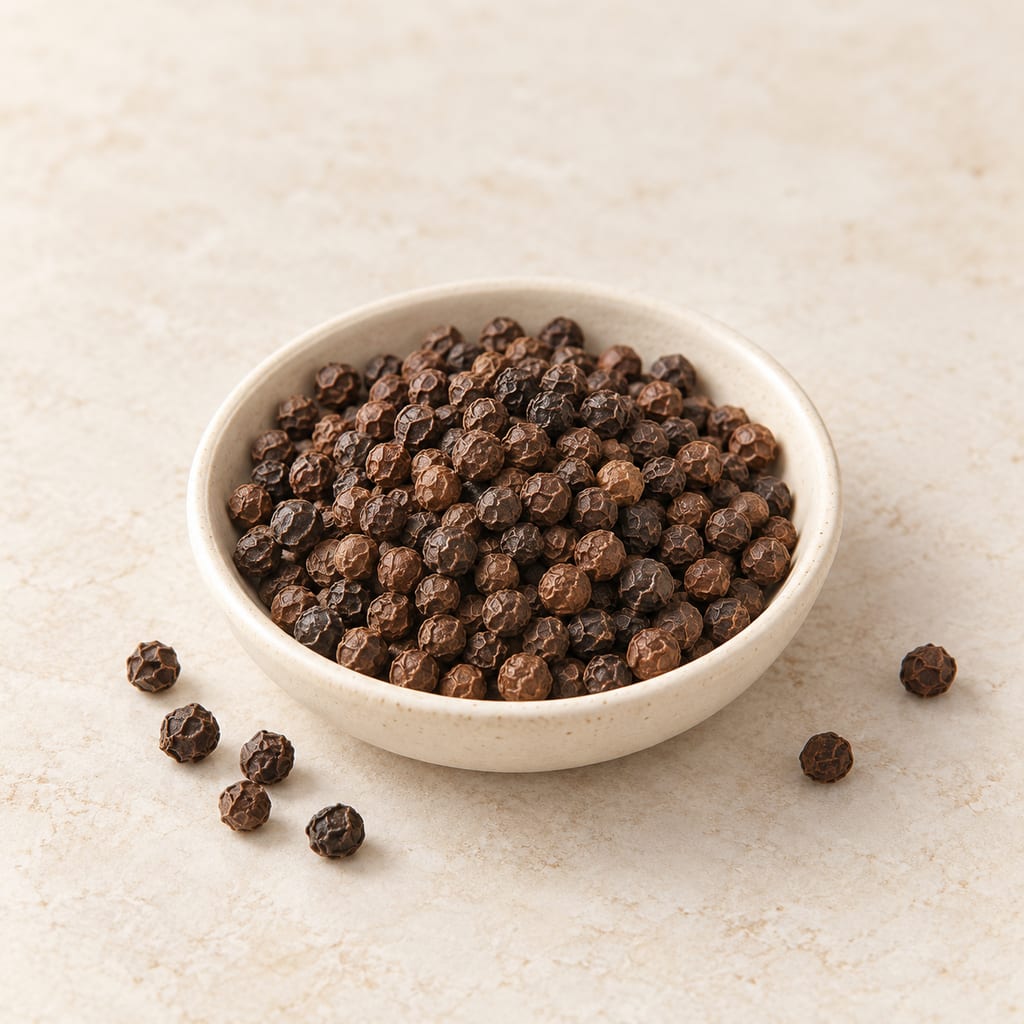
Peppercorns enter a kitchen as small fruits that can be kept whole, cracked into uneven pieces or ground. Those forms make a difference to eating: crushed pieces remain distinct, while powder becomes a finer part of the seasoning. A recipe that says only peppercorns, however, has not fully described the fruit. Its colour, species, cultivar and growing place may all remain unstated.
True black pepper, Piper nigrum, provides a well-documented comparison. It is a climbing tropical plant whose fruits can become black, white or green pepper products through differences in maturity and processing. These familiar colours are not necessarily different species. Nor does a colour name, by itself, explain the complete production route or the composition of a prepared product.
In the Sri Lankan lunu dehi account, the instruction is to add crushed peppercorns, with no type named. The black, white and green true-pepper forms discussed here are comparisons, not an identification of that ingredient. They help explain the choices available to a cook: the maturity of the fruit, the tissues retained and the processing behind its colour.
Pepper's long-distance history is visible at Mantai, the ancient Sri Lankan port. Recovered black pepper among other plant foods and spices points to a market in exotic spices by the middle of the first millennium AD. A small preserved fruit can therefore contribute to a much larger picture of food moving through a port, alongside the material remains of the people who traded and ate there.
The archaeological sequence also has limits. Some later deposits were disturbed, and identifying pepper in a layer is not the same as identifying the farm that supplied it. Trade, consumption and cultivation are separate activities. The finds support pepper's place in exchange and everyday food without proving uninterrupted cultivation at the port or the origin of a modern packet.
Smallholder cultivation and the preparation of black and white pepper for sale connect the growing plant to markets for particular forms. Processing can turn a crop into different commodities rather than one undifferentiated harvest. That commercial life helps explain why pepper may arrive with a precise grade and growing origin, yet an individual household recipe retains only the ordinary name peppercorns.
Piper nigrum grows as a climbing shrub or tree in wet tropical conditions. Its cultivation depends on the environment in which flowering and fruit development take place: warmth, humidity, rainfall distribution and well-drained soil all matter. A crop is therefore shaped by the place and season in which it grows as well as by the form later selected for sale.
The plant's climbing stems attach to supports with small roots at their nodes, while lateral branches bear the flower spikes. The fruits develop along those spikes. This separates the support structure of the vine from the branches carrying the crop, and explains why a harvested spike still needs threshing before it becomes a collection of separate peppercorns.
Commercial propagation commonly uses cuttings rather than sowing the dried spice. Living trees and posts can both serve as supports in documented cultivation systems, with different arrangements of shade and management. These are features of growing true pepper, not instructions for identifying an unnamed dried fruit. They also show how much agricultural work precedes the simple kitchen action of crushing a few peppercorns.
Native-range accounts do not all agree. Kew's current taxonomic treatment lists Sri Lanka as the native range; older regional accounts place the plant's wild origin in the Western Ghats of India. Those are different published interpretations, and neither should be silently substituted for a traceable origin declaration on a purchased spice.
Different shoots serve different functions on the plant. The main climbing stems remain vegetative, while lateral branches carry the flowering spikes. Commercial propagation commonly selects terminal climbing shoots for cuttings; runners and other planting material can establish a different pattern of early branching and fruiting. A rooted cutting must develop both a supporting framework and the branches on which the crop will form.
Water is important to the crop without making waterlogged soil desirable. Rainfall distribution influences flowering and fruit development, while drainage keeps the root environment suitable. The plant's feeder roots spread through the upper soil, alongside deeper main roots. Managing the growing site therefore involves the availability of moisture, the structure of the soil and the support on which the stems climb.
For a standard black-pepper route, whole berries are harvested while unripe but fully developed. The fruit's outer tissues remain with the kernel. Browning and drying produce the dark, wrinkled appearance familiar in black peppercorns. Threshing separates fruit from its stalk, while subsequent cleaning and grading separate usable pepper from extraneous material and sort it for trade.
These stages perform different jobs. Drying changes moisture and texture; threshing and cleaning are physical separation; browning changes appearance. Some production routes include blanching before drying. A description of black pepper should therefore allow for processing variation rather than implying that every berry is treated in exactly the same way.
The fruit begins as a small, rounded drupe with pulpy tissue around its seed. As that outer tissue dries and shrinks, it forms the characteristic wrinkled exterior. A black peppercorn consequently contains the dried fruit wall as well as the inner kernel. Calling it simply a seed misses part of the material that is ground and eaten, and obscures the physical difference from a white peppercorn.
White pepper has had the outer fruit tissues removed. One established route begins with ripe berries and loosens the surrounding pericarp through retting in water. Bacterial breakdown helps release those tissues, which are then removed before the kernels are washed and dried. The pale result comes from removing part of the fruit, not simply from bleaching a black peppercorn.
Retting is one route to white pepper. In a heat-assisted alternative, softening allows the skin to be rubbed away by hand or machine, followed by washing and drying. Mechanical decortication can also remove the exterior from already dried black pepper. Each route reaches a pale inner product by removing tissue, but it begins with a different condition of the fruit.
Those routes can leave differences in aroma and appearance. The heat-assisted route described for white pepper can produce a light brown powder, associated with starch gelatinisation, whereas the retted product is described as yielding a whiter powder. Decorticated black pepper can have a less attractive whole-kernel appearance while remaining useful when ground. Processing history thus matters beyond the broad label white pepper.
Green pepper is another example of processing directing the appearance of the same named crop. In dehydrated green pepper production, immature berries receive treatment intended to inactivate the enzymes responsible for browning before controlled drying. Retaining green colour is therefore an active processing aim, not evidence that a dry black peppercorn can simply be returned to its earlier condition.
Green pepper also occurs in preserved forms, including products packed in brine. A wet preserved berry and a dried berry bring different textures and surrounding ingredients to a dish. The name green pepper alone is insufficient for substitution: the package and the recipe need to establish which form is intended.
Colour categories and particle size are independent choices. Black or white pepper may be sold whole, then cracked into uneven fragments or milled more finely. A light crush leaves pieces of fruit wall and kernel together; a fine grind makes a more uniform seasoning. This gives a cook control over how much separate pepper texture remains in the finished food.
In true black pepper, pungency and aroma arise from different components. Piperine contributes the characteristic pungent sensation; volatile oils contribute much of the smell. Their balance varies with the plant material and with how it has been processed and analysed. Pepper's flavour cannot be reduced to one constant oil content or one chemical profile shared by every origin and harvest.
Removing the fruit wall changes more than colour. Black and white pepper have different proportions of the tissues that make up the dried fruit, and their flavour profiles can differ. A pale kernel and a dark whole berry are therefore not merely alternative decorations. The choice can change the aroma and texture of the finished seasoning even before the cook decides how finely to grind it.
Breaking a peppercorn opens the fruit into smaller pieces and makes its aroma more apparent during preparation. A coarse crush leaves pieces that are encountered separately in the food. Grinding produces a different texture and a more finely distributed seasoning. These physical differences explain why the action specified in a recipe matters even when no exact particle size is supplied.
Extracted pepper oil and oleoresin have their own manufacturing methods. Steam distillation collects volatile oil from crushed pepper, while solvent extraction produces oleoresin. Distillation selects the volatile fraction responsible for much of the aroma, rather than preserving the complete physical fruit. These products are useful in flavour manufacture, where they deliver a different material from the whole or crushed spice.
Lunu dehi uses pepper alongside chilli powder and kochchi miris rather than combining them under one general label of hot spice. In the documented batch, five or six peppercorns are crushed and added with the other seasonings. That is a source-specific count, not a universal dose for lime pickle or an equivalent weight for all peppercorns.
The separate ingredients give the seasoning several dimensions. Pepper's aroma and pungency sit beside chilli pungency, the sharpness of the citrus and vinegar, and the salt already associated with the limes. Keeping the pepper in pieces also gives it a different physical presence from the chilli powder. The method's word crushed is useful evidence even though the precise pepper type remains unknown.
In lunu dehi, the pepper is part of a concentrated accompaniment rather than the main bulk of the food. A little pickle gives a meal sharpness, saltiness and spice; it may also contribute a sliver of seasoned lime to pol sambol. This places the crushed fruit in a familiar culinary role: a small aromatic addition that helps shape the character of a much larger preparation.
A dry peppercorn is not sterile. Low moisture can restrict microbial growth while still allowing pathogens to survive. A dry spice's keeping qualities are therefore different from a treatment proven to make a food microbiologically safe. Pungency and dryness describe useful characteristics of pepper, but neither supplies a test for contamination.
Moisture changes the conditions around a dry spice. When pepper is added to a wet food, its final handling depends on that preparation's controls. Laboratory work on pepper compounds often uses extracted materials and controlled tests rather than ordinary culinary additions. Pungency, an intense aroma and a dry appearance therefore provide no assurance that unwanted organisms have been eliminated.
Choose food-grade pepper and keep its form identifiable. A dry whole spice, a ground powder and pepper preserved in brine are handled as different products. Cleaning and grading remove extraneous material and sort the harvested crop; supplier controls address other hazards along the chain. Follow the storage directions for the purchased form, and use the prescribed preparation rather than turning a production description into a household process.
An unspecified peppercorn can still be described accurately. The known culinary action is crushing; the known role is seasoning. Black, white and green true-pepper products show why maturity, outer tissues and processing matter, without deciding which one an undocumented recipe used. Colour, species, cultivar and source origin remain open for the lunu dehi ingredient, and no measured preservation effect is established.
The recipe documents Sri Lankan use, but it does not identify the peppercorn species or growing origin. Botanical distribution and ancient port trade are separate associations.
The lunu dehi account documents use of crushed, unspecified peppercorns. This association does not identify them as Piper nigrum or establish their growing origin.
Lunu dehi is Sri Lankan salted lime pickle. This version sun-dries cut, salt-stuffed ripe limes, then packs them with dried lime juice, chillies, spices and vinegar.
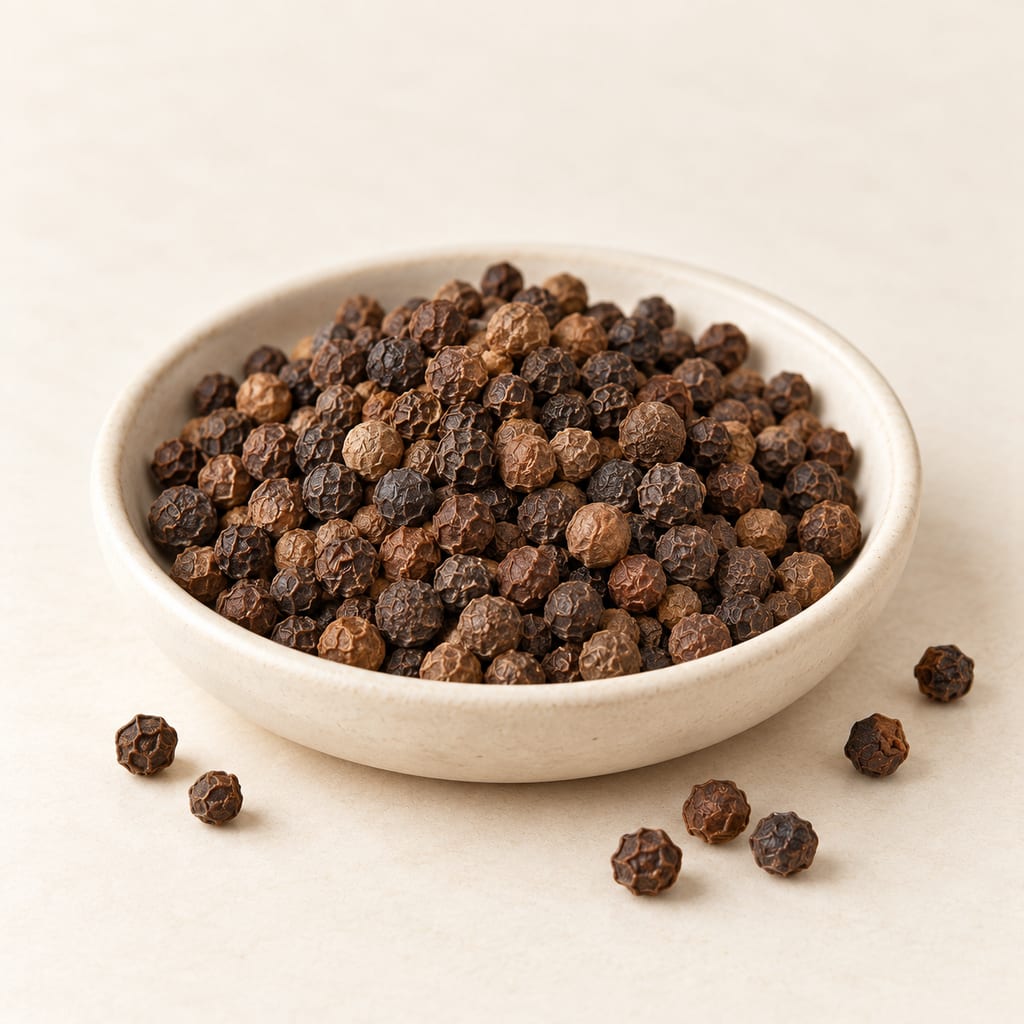
Black peppercorns are dried fruits of Piper nigrum, valued for piperine pungency and volatile aroma; whole peppercorns season Peter Kuruvita's lime pickle.
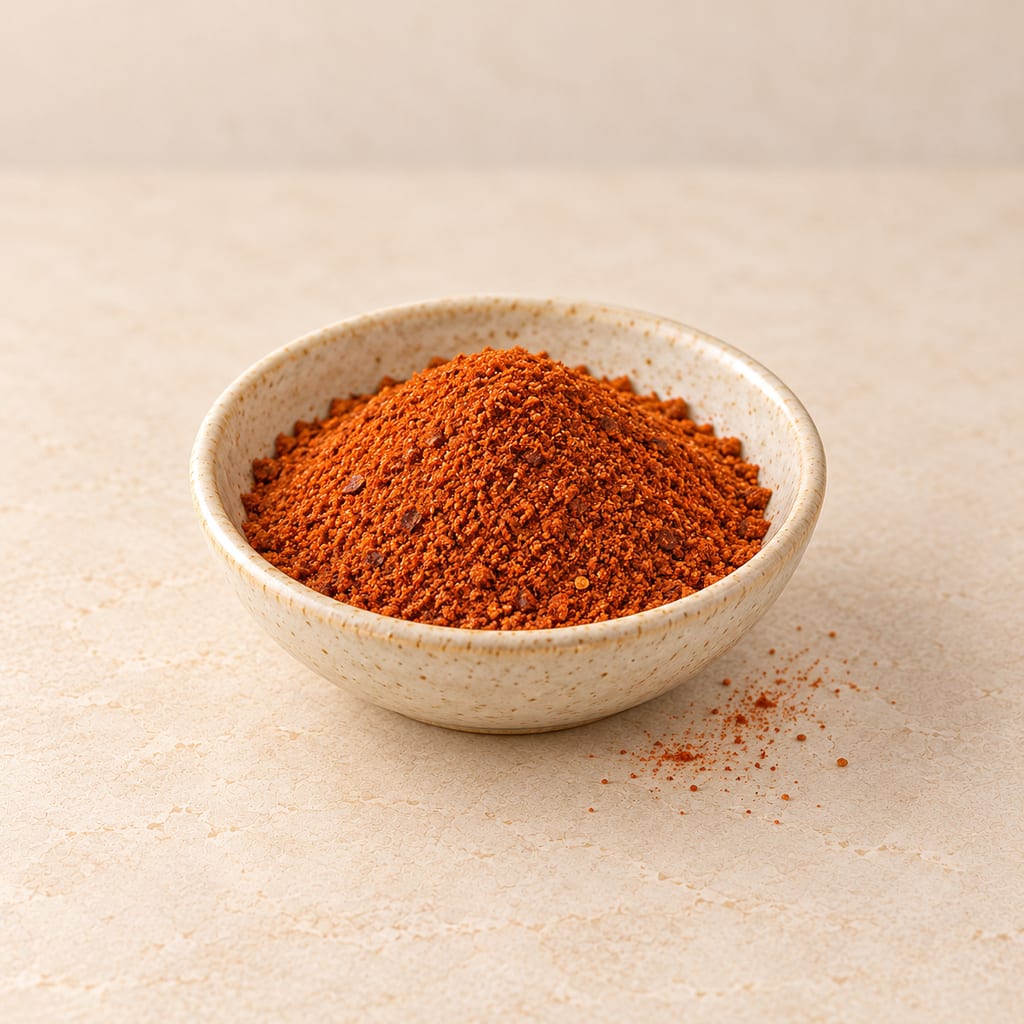
Chilli powder is dried chilli fruit ground fine, sold either as plain ground chillies or, in the United States, as a seasoning blend with salt, garlic and cumin.
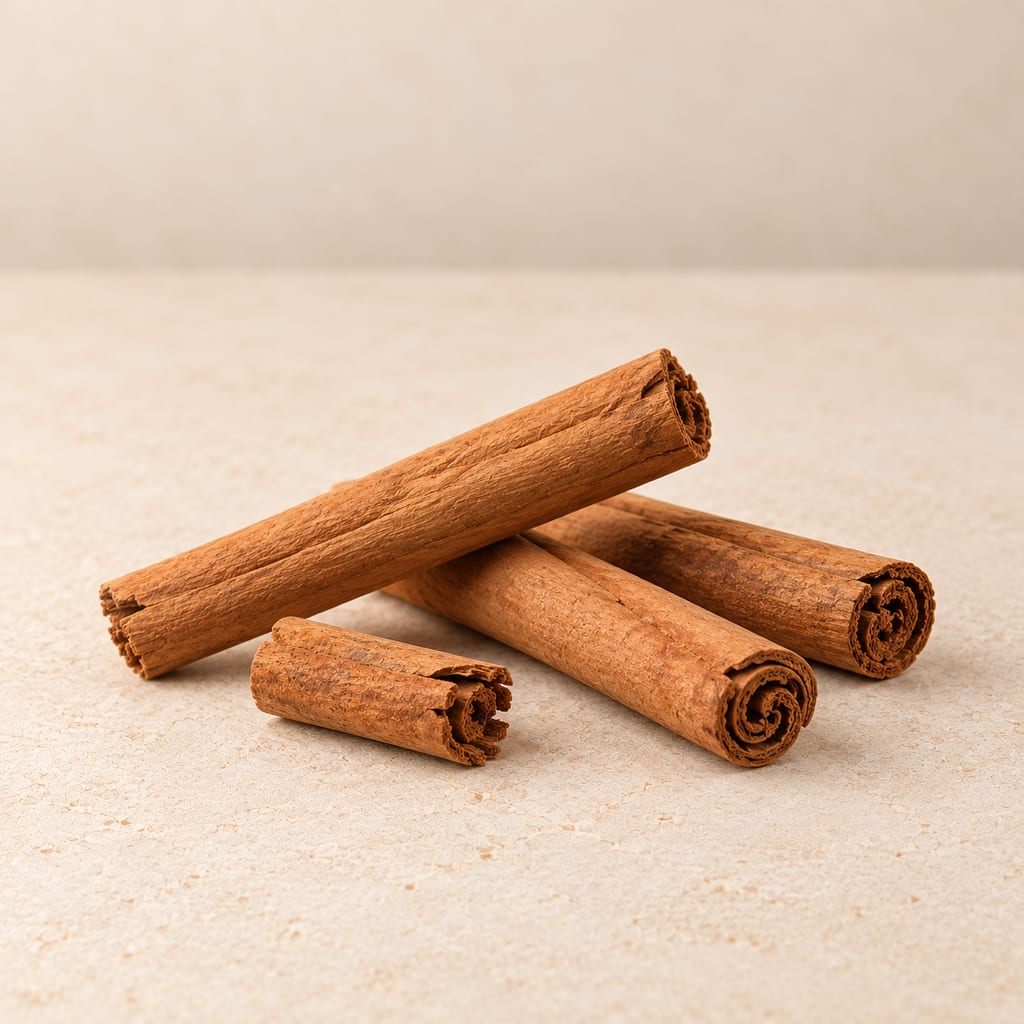
Cinnamon is the dried inner bark of Cinnamomum trees, rolled into quills or ground; Ceylon cinnamon comes from C. verum of Sri Lanka and cassia from related species.
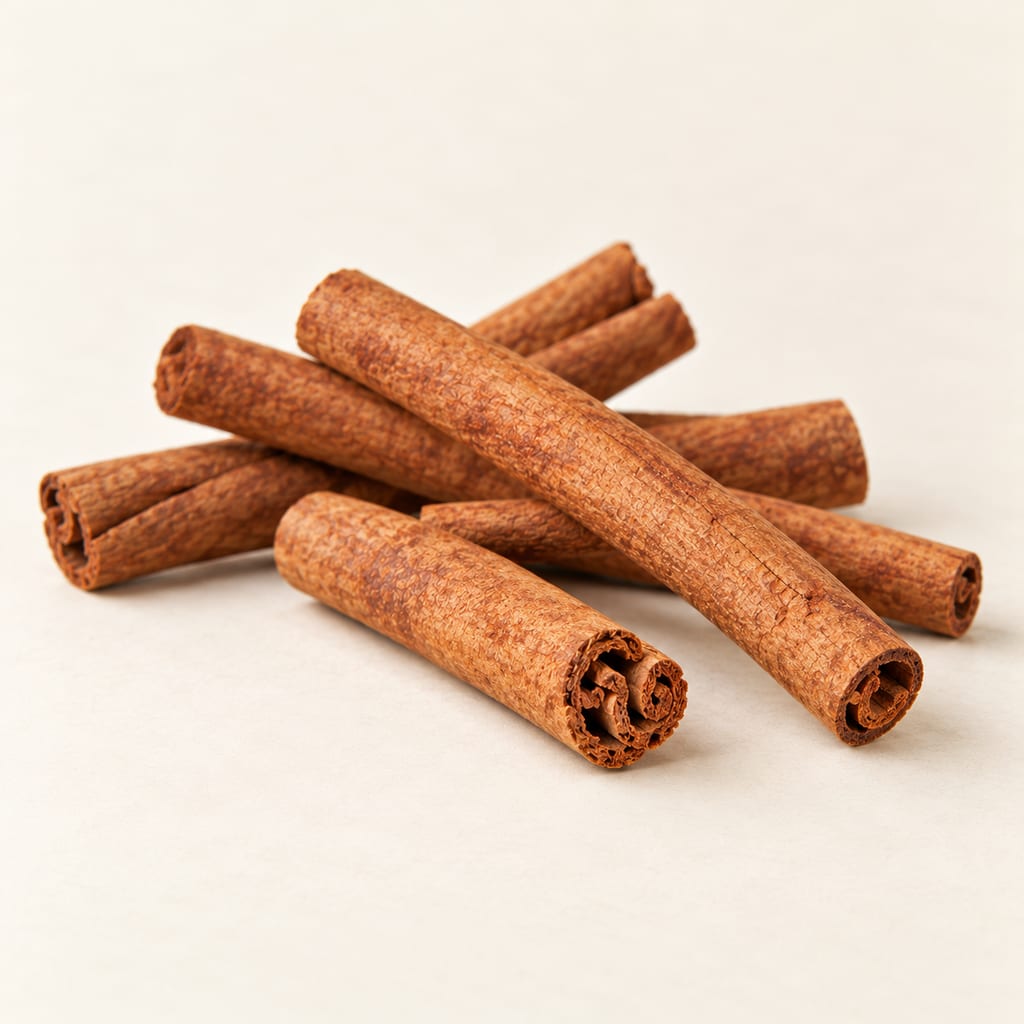
Cinnamon sticks are dried inner bark curled or layered into quills. The common name covers several Cinnamomum species; whole bark perfumes food and drink.
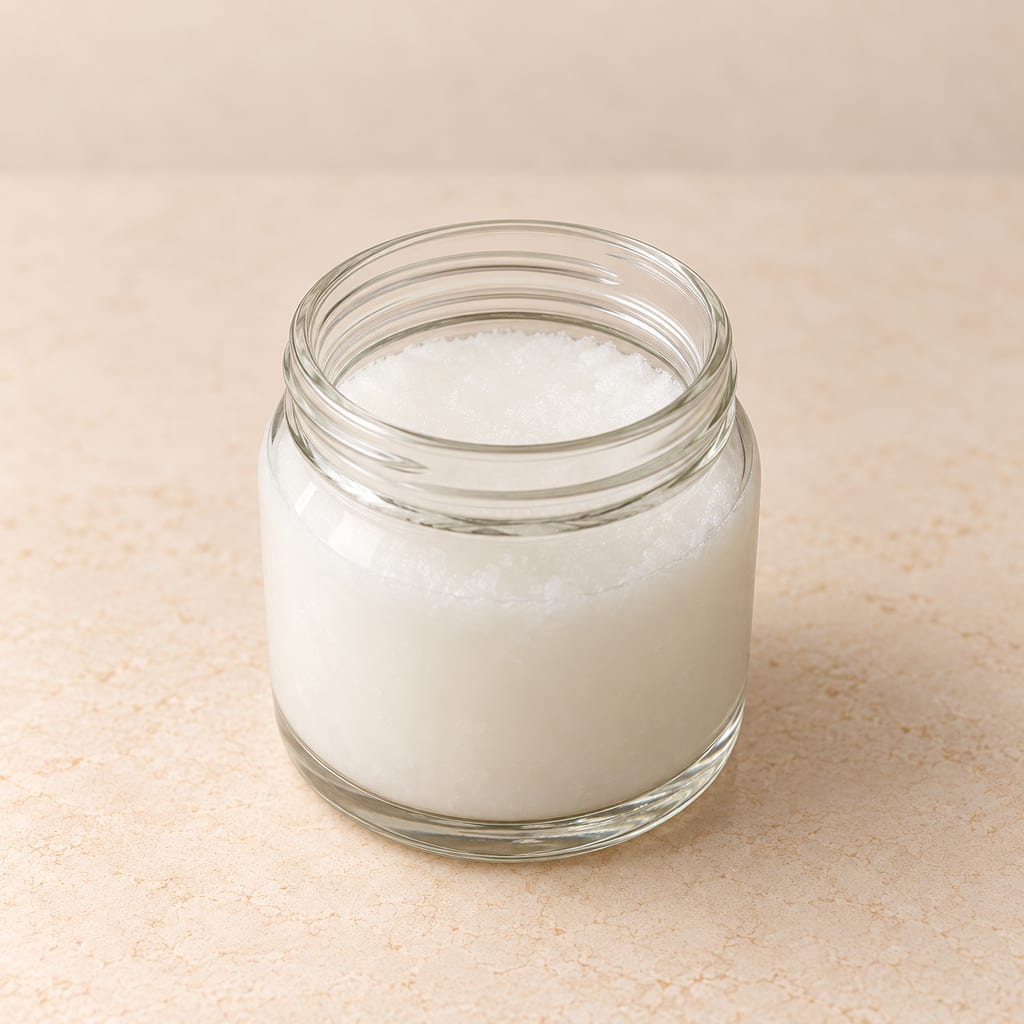
Fat pressed or separated from the kernel of a mature coconut: solid below about 25 °C, mostly saturated and half lauric acid, sold virgin, refined or hydrogenated.
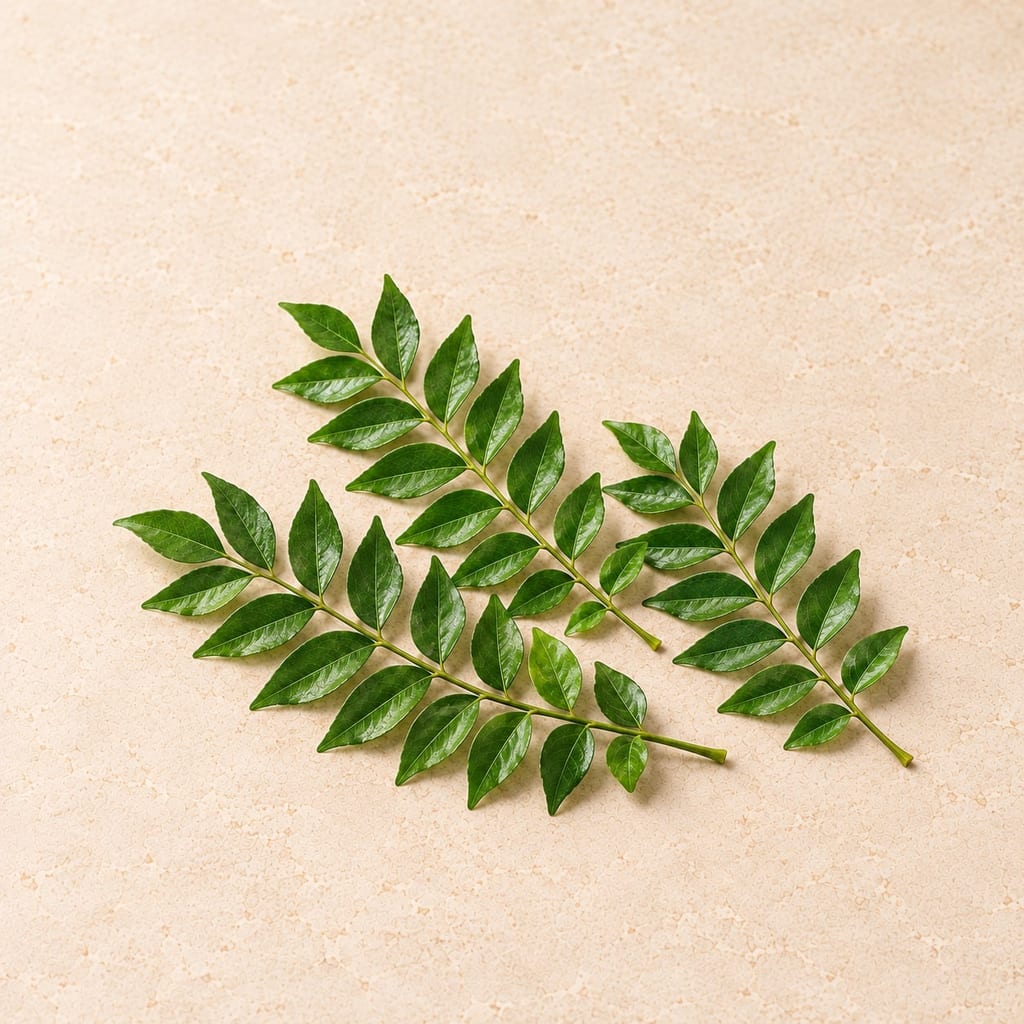
Curry leaves are the glossy compound leaves of the curry tree, Bergera koenigii, used fresh across southern India and Sri Lanka. Fried in hot oil they give a citrusy, nutty, faintly smoky note.
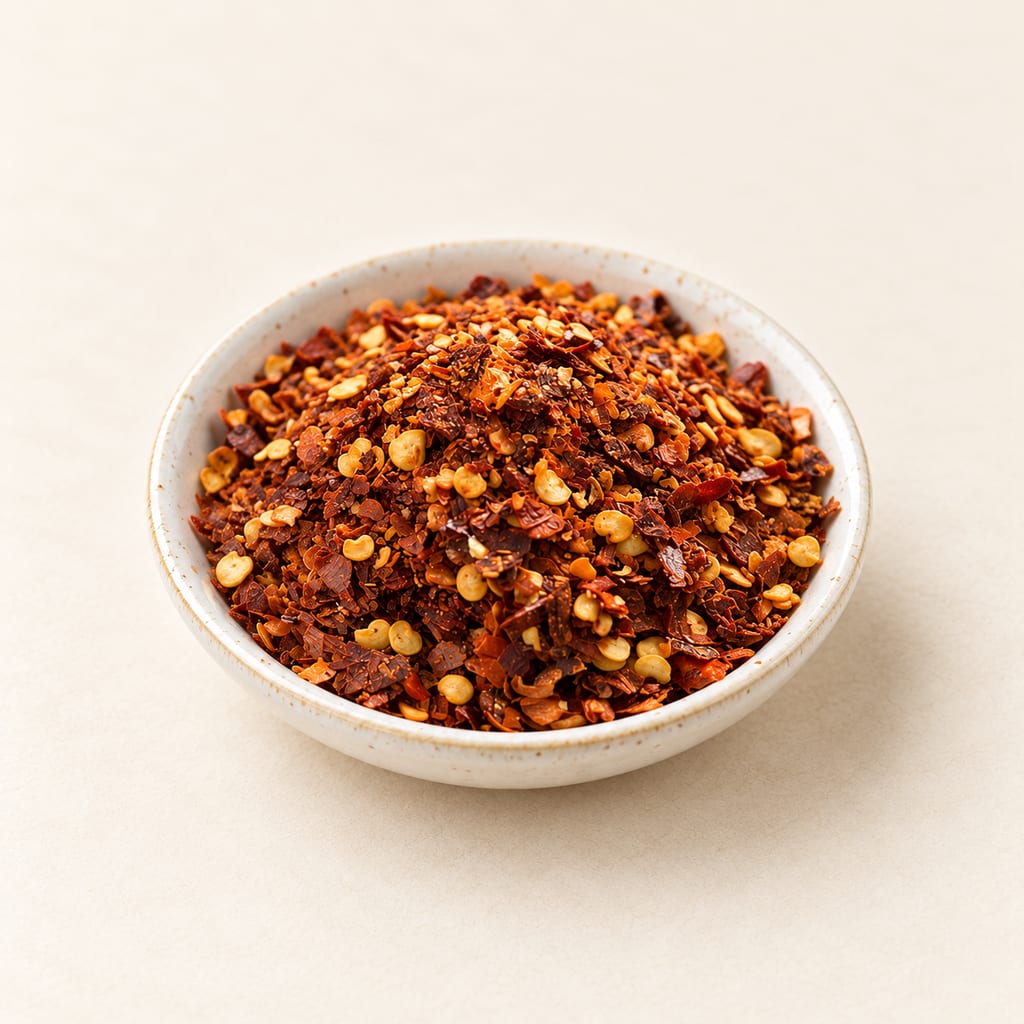
Dried chilli flakes are broken dried Capsicum fruit used for dispersed heat, colour and flavour; Peter Kuruvita's lime pickle includes one teaspoon.
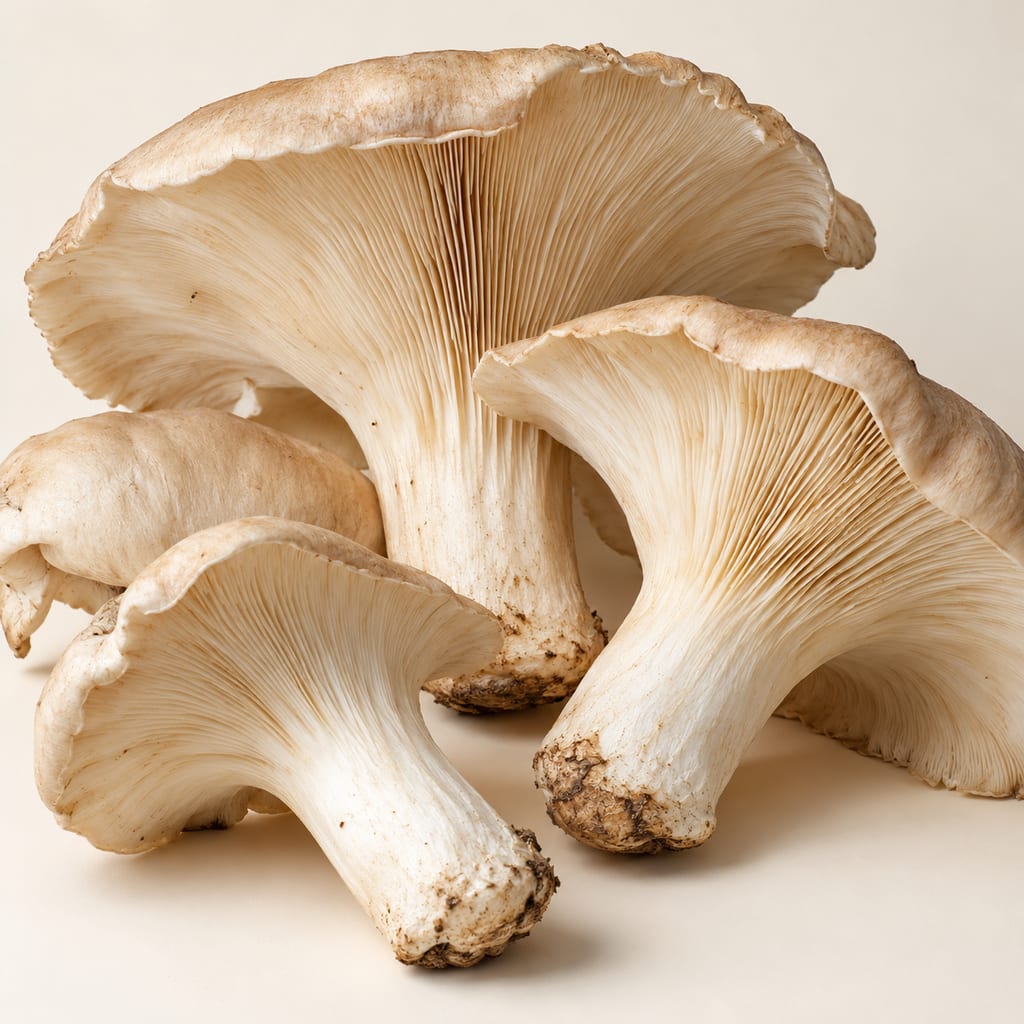
The giant oyster, Pleurotus giganteus, is a large tropical wild mushroom that was once named Lentinus giganteus and is now placed in the oyster genus, eaten in Thailand and Sri Lanka and only recently grown on purpose.
No community contributions have been published for this entry yet.
Sign in to contribute. Published comments and photos are free to read.
Explore Sri LankaInspiration · Culinary use
Lunu Dehi: a Friendly ZestThe Sri Lankan lunu dehi method uses five or six crushed peppercorns alongside separately named chilli powder and kochchi miris. Pepper colour, species, cultivar and growing origin are unspecified.
Cited in: The small fruits behind a broad kitchen name; A crushed seasoning among limes and salt; Reading the name without filling its gaps
Royal Botanic Gardens, KewIngredient context
Piper nigrum L. — Plants of the World OnlinePiper nigrum L. is an accepted species, a climbing shrub or tree of wet tropical environments. Its current native-range treatment lists Sri Lanka; this concerns the named botanical comparison.
Cited in: The small fruits behind a broad kitchen name; A climbing crop with a disputed origin story; Reading the name without filling its gaps
Kerala Agricultural UniversityIngredient context
Black Pepper — Climate and SoilWarmth, humidity, rainfall distribution and well-drained soil influence black-pepper cultivation, flowering and fruit development.
Cited in: A climbing crop with a disputed origin story
Kerala Agricultural UniversityIngredient context
Black Pepper — Harvesting and processingBlack, white and green true-pepper forms follow different harvest and processing routes. White-pepper fruit walls can be removed through retting, heat-assisted softening or mechanical decortication; dehydrated green pepper uses enzyme inactivation to retain colour.
Cited in: The small fruits behind a broad kitchen name; How black pepper keeps its outer layer; White pepper and the work of removing the fruit wall; Green pepper and the difference between colour and form; What the mortar releases; Dry spice, surviving microbes and kitchen handling; Reading the name without filling its gaps
PROSEA FoundationIngredient context
Piper nigrum L. — Plant Resources of South-East Asia No. 13: SpicesTrue-pepper plant structure, propagation by cuttings, support systems, harvest, commodity forms and oil extraction. The older Western Ghats native-range interpretation differs from Kew's current treatment.
Cited in: Pepper at an Indian Ocean port; A climbing crop with a disputed origin story; How black pepper keeps its outer layer; White pepper and the work of removing the fruit wall; Green pepper and the difference between colour and form; What the mortar releases
AntiquityHistory
Spice and rice: pepper, cloves and everyday cereal foods at the ancient port of Mantai, Sri LankaRecovered black pepper supports an inferred exotic-spice market at Mantai by the middle of the first millennium AD. Disturbance in later deposits limits parts of the archaeological sequence.
Cited in: Pepper at an Indian Ocean port
Clinical PhytoscienceIngredient context
Phytochemistry and therapeutic potential of black pepper [Piper nigrum (L.)] essential oil and piperine: a reviewPiperine contributes pungency and volatile oils contribute aroma; composition varies with material and extraction. The review distinguishes extracted products and the limitations of laboratory antimicrobial assays.
Cited in: What the mortar releases; A crushed seasoning among limes and salt; Dry spice, surviving microbes and kitchen handling
US Food and Drug AdministrationSafety
Risk Profile: Pathogens and Filth in Spices — 2017 UpdateLow-moisture spices can support pathogen survival even when growth is restricted. Black-pepper experiments illustrate how wetting and storage conditions change microbial behaviour.
Cited in: Dry spice, surviving microbes and kitchen handling