
Aniseed
Aniseed is the dried ripe fruit of Pimpinella anisum, an aromatic Apiaceae spice commonly called a seed. It adds a sweet, warm aroma to breads such as Moroccan krachel and South African mosbolletjies, and is distinct from star anise.
 FermenteaWhere food goes to change
Mushrooms
The sand desert truffle, Terfezia arenaria, is an underground fungus of sandy, arid soils around the Mediterranean Basin. It is widely harvested and traded, but the European Union does not list it as an edible truffle authorised for sale.
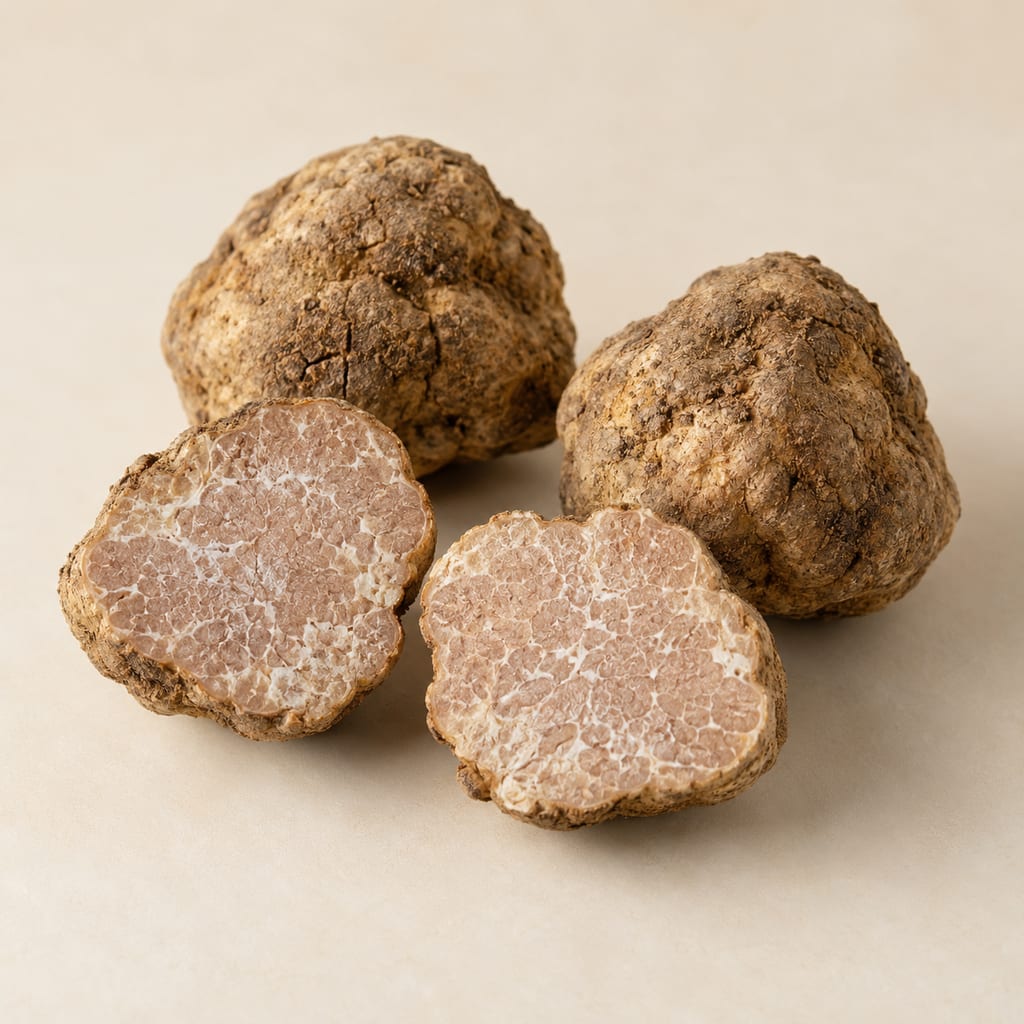
Terfezia arenaria is a desert truffle: its fruiting body develops underground in sandy soil in arid and semi-arid country. Ferreira and colleagues, writing in 2023, describe it as native to the Mediterranean Basin and prized for its nutritional and aromatic qualities. It forms a mycorrhizal partnership with plants of the genus Helianthemum.
The sources consulted do not describe its fruiting cycle or how harvesters locate the fruiting bodies, and this page does not supply that account.
In Morocco the fungus is known as the Pink Terfess of Mamora. The IUCN Red List entry gives Moroccan desert truffle as a common name.
The common name desert truffle is also used for Tirmania, a different genus. In oceanic countries the yam is sometimes called the common desert truffle as well. These overlapping names make it easy to confuse the product on sale with the species this page describes.
The IUCN Red List records that the species is widely harvested from the wild and traded internationally, much of it online. The harvest is therefore a commercial activity in several countries, and it is one reason the species is listed for conservation attention.
Harvest data, quantities and prices for the species are not given in the sources consulted for this page, and none is recorded here.
Ferreira and colleagues note that Terfezia arenaria is well documented as edible but is not listed by the European Union as an edible truffle authorised for trade. The position of a species on an approved list does not decide whether it is safe, and this page does not treat it as such. It records the regulatory status so that a buyer knows what the list does and does not say.
Trade rules differ between countries, and the sources consulted did not examine the rules in other markets. A reader buying or selling the fungus should check the rules that apply in the place of sale.
Published protein figures for Terfezia describe the genus in general. The sources consulted did not provide nutritional data specific to Terfezia arenaria, and this page does not give a figure for it.
The cultural record of the species, its place in North African and Middle Eastern cooking, and its preparation are not established by the sources consulted. This page does not supply a recipe or a method.
Desert truffles are underground fungi whose appearance can be confused with other tubers and with Tirmania. Identification should be confirmed by someone experienced with the group before the fungus is eaten, and any wild fungus should be treated with the same caution.
The sources consulted give no safe preparation, quantity or storage time for this species, and none is given here.
Native range and wild harvest as the sources describe them. No single origin is claimed.
Country-level. The local name Pink Terfess of Mamora is recorded; no further use is established here.
Aniseed is the dried ripe fruit of Pimpinella anisum, an aromatic Apiaceae spice commonly called a seed. It adds a sweet, warm aroma to breads such as Moroccan krachel and South African mosbolletjies, and is distinct from star anise.

Ripe avocado flesh is the soft, buttery, fat-rich pulp of Persea americana, eaten raw. It is low in acid, so it is a fresh ingredient that needs care in chilled dishes.
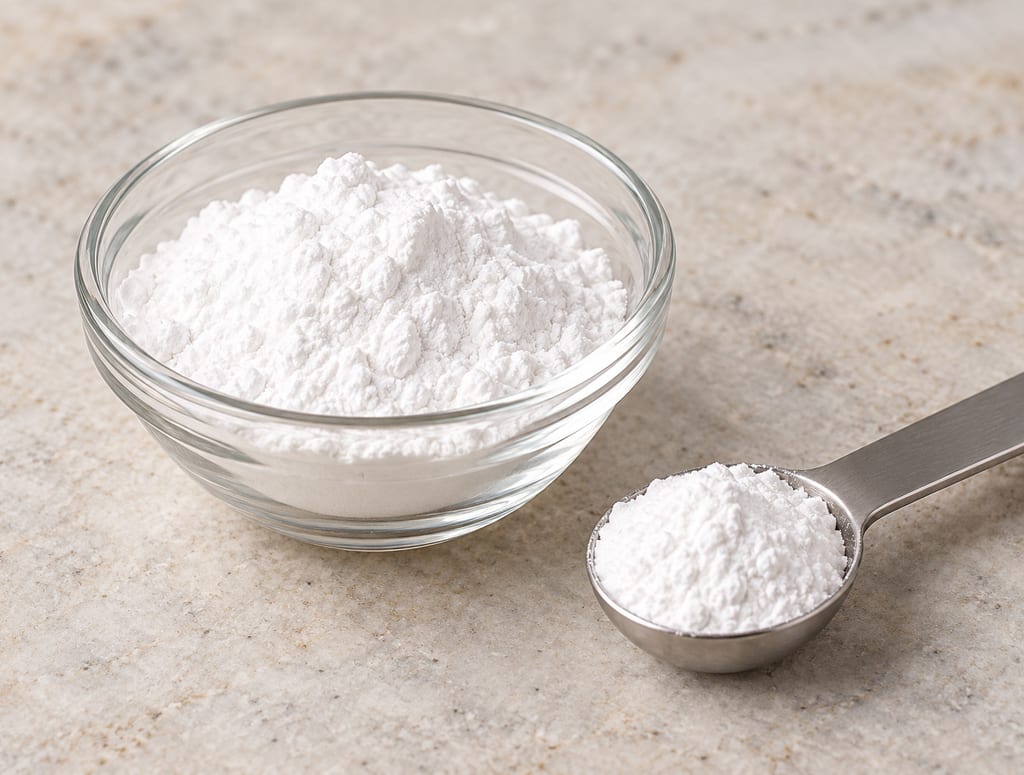
Baking powder is a dry chemical leavener that combines bicarbonate with acid-reacting ingredients and a carrier. Moisture and heat release carbon dioxide for quick breads, batters and griddle cakes.
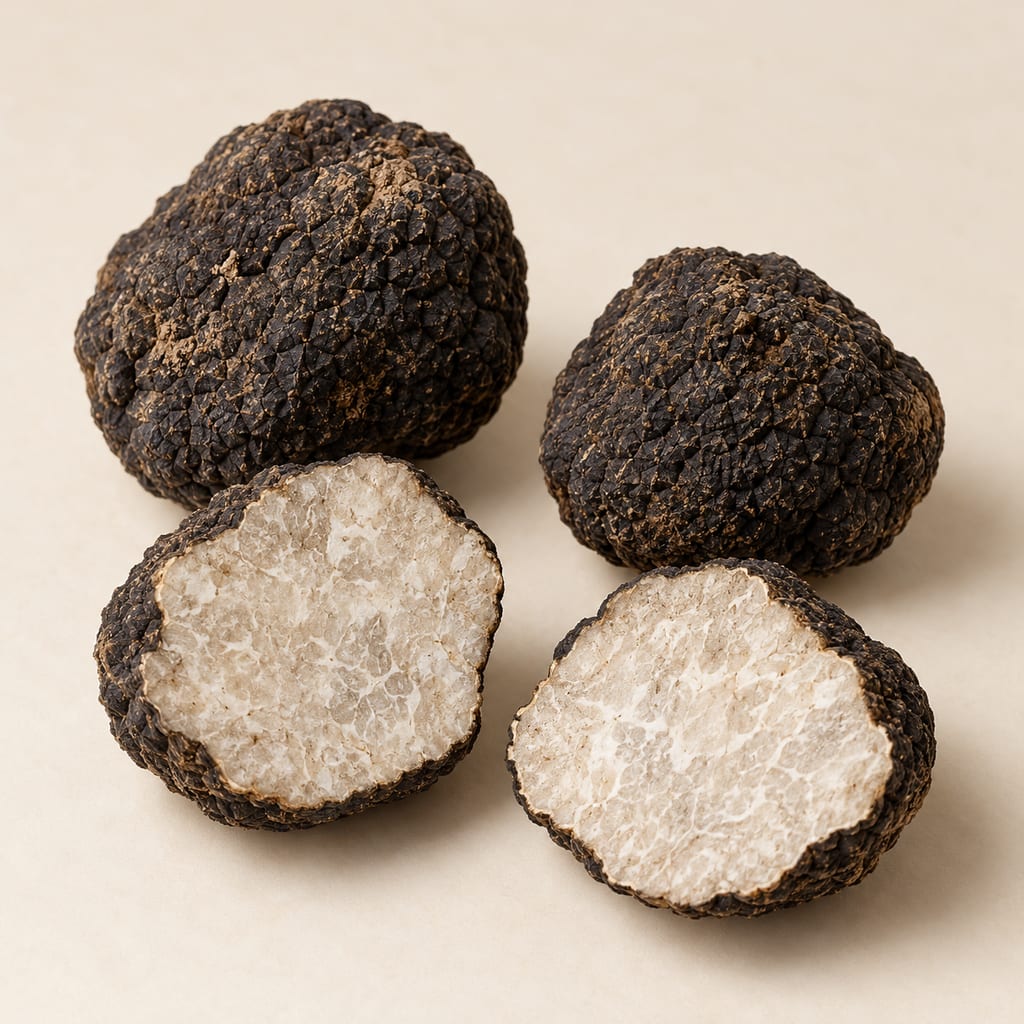
The black desert truffle, catalogued as Picoa juniperi, is a subterranean fungus gathered wild in arid and semi-arid lands. Eastern Anatolian households eat it, usually fried with eggs.

Chicken eggs supply proteins and yolk fats that set and emulsify. Atlas breads use them in enriched doughs, surface washes and a sourdough pancake batter mixed after fermentation.
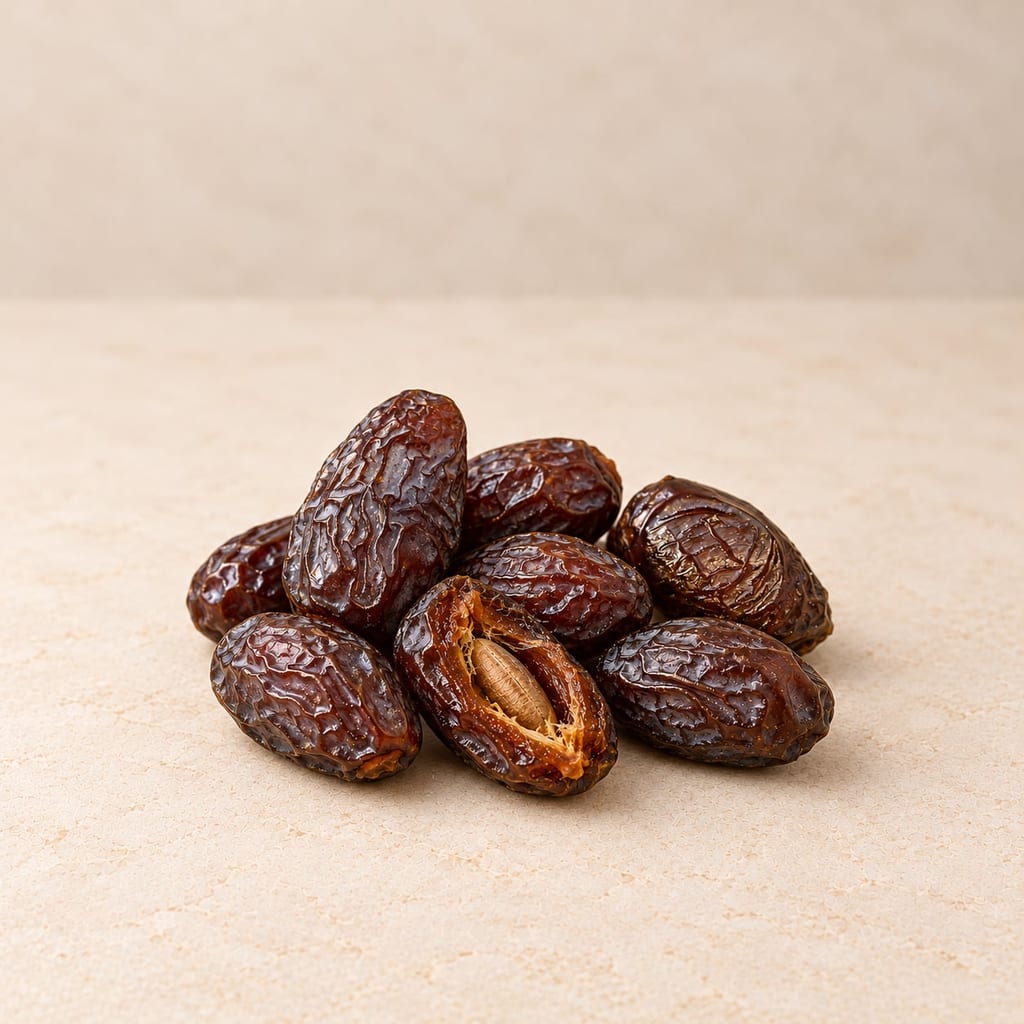
Dates are the sugar-rich fruit of the date palm, eaten soft or dried and used whole, pitted, as syrup or as paste. In sauces and chutneys they add sweetness and body.
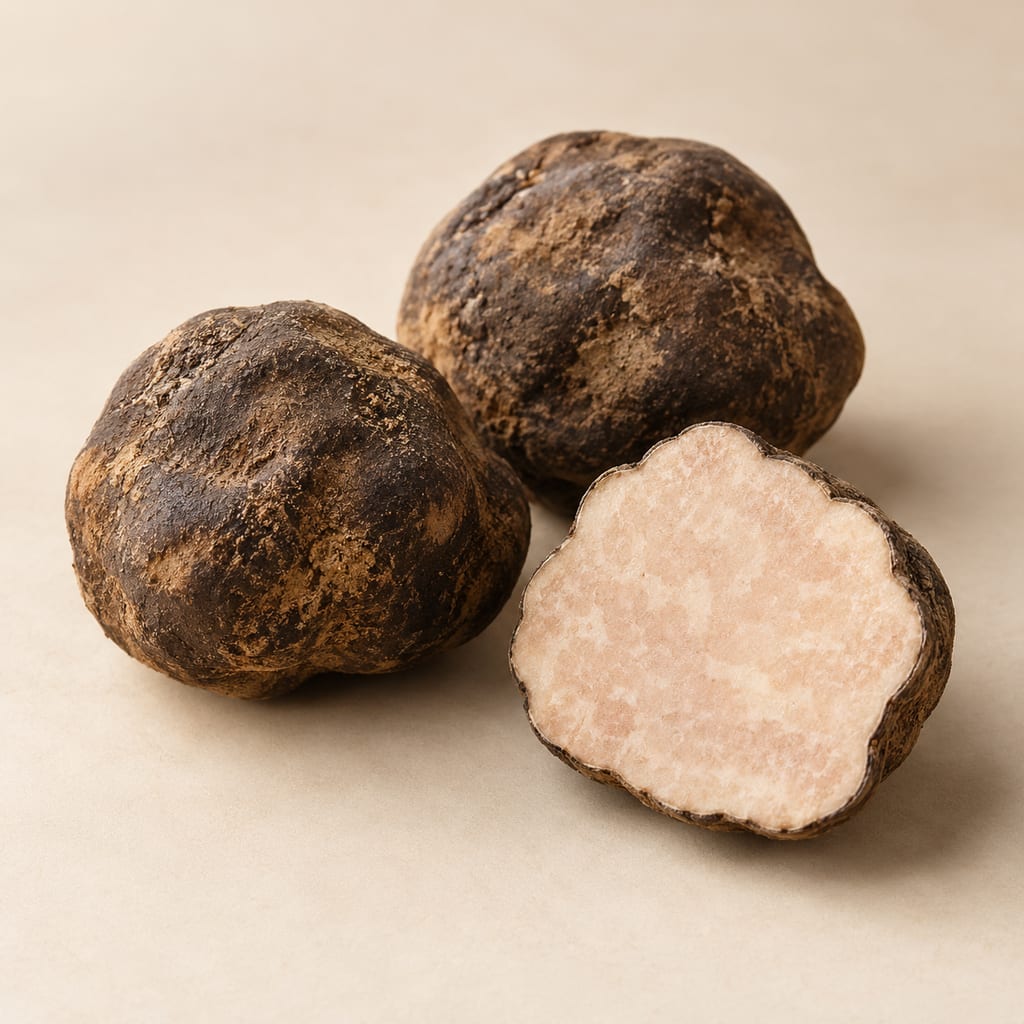
Desert truffle, Terfezia claveryi, is an underground fungus of dry Spanish and Moroccan ground that is gathered and sold seasonally, under names such as terfass, in local markets.
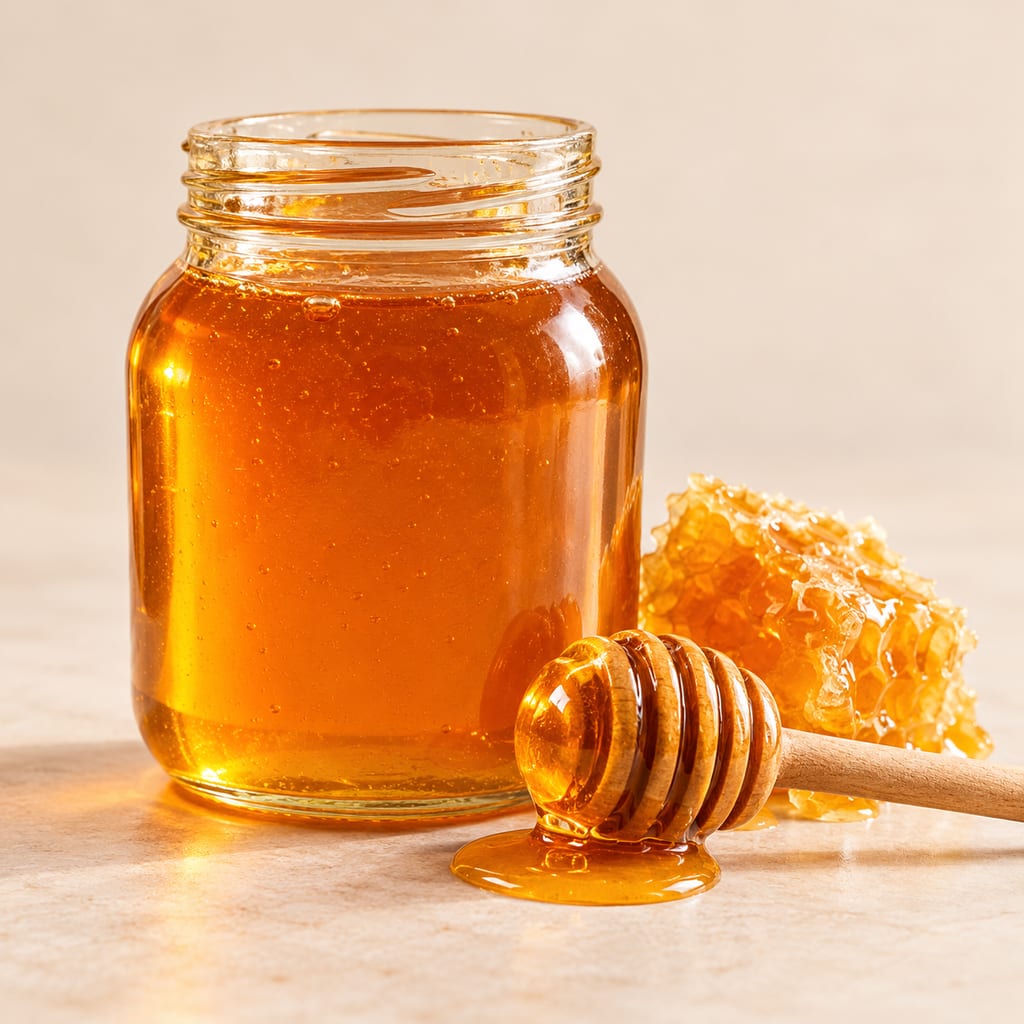
Honey is a bee-made food from floral nectar or honeydew; breads use it in dough or as a syrup served with cooked griddle breads.
No community contributions have been published for this entry yet.
Sign in to contribute. Published comments and photos are free to read.
Universidade de Lisboa repositoryHistory · Safety · Distribution
Ferreira et al. (2023), Terfezia arenaria recordNative to the Mediterranean Basin; prized for nutritional and aromatic qualities.
Well documented as edible but not listed by the EU as an edible truffle authorised for trade.
Cited in: An underground fungus of sandy ground; Regulatory status
MDPIMethod · Distribution
Terfezia arenaria, mycorrhizal association and common namesSandy arid to semi-arid soils; mycorrhizal partnership with Helianthemum.
Morocco: Pink Terfess of Mamora.
Cited in: An underground fungus of sandy ground; Names and confusion; Safety and identification
IUCN Red List of Threatened SpeciesHistory · Distribution
IUCN Red List: Terfezia arenariaCommon name Moroccan desert truffle.
Widely harvested from the wild and traded internationally, much online.
Cited in: Names and confusion; Harvest and trade
PhytojournalMethod
Phytojournal 2022, Terfezia protein dataProtein figures reported for Terfezia in general; not specific to T. arenaria.
Cited in: Nutrition and what is not known
WikipediaSafety
TirmaniaYam sometimes called common desert truffle in oceanic countries; confusion risk.
Cited in: Names and confusion; Safety and identification