Overview
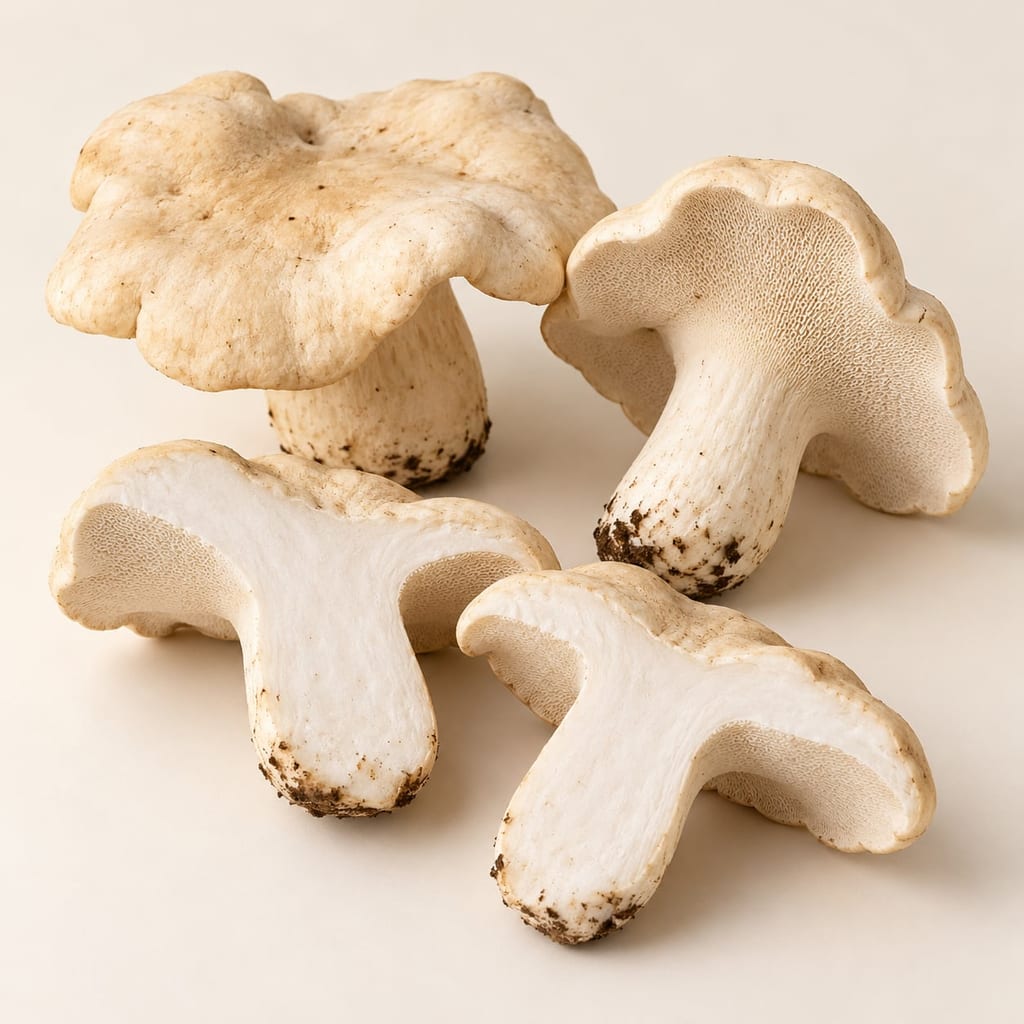
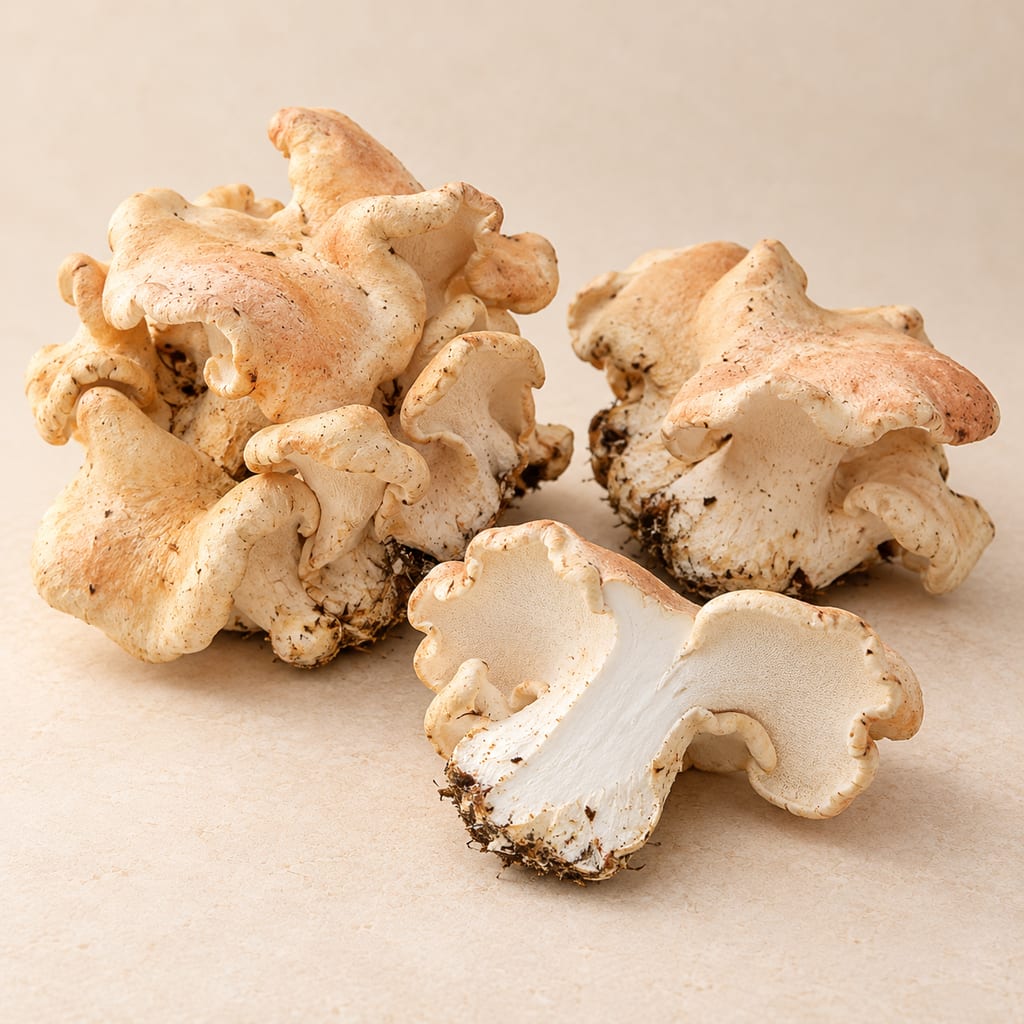
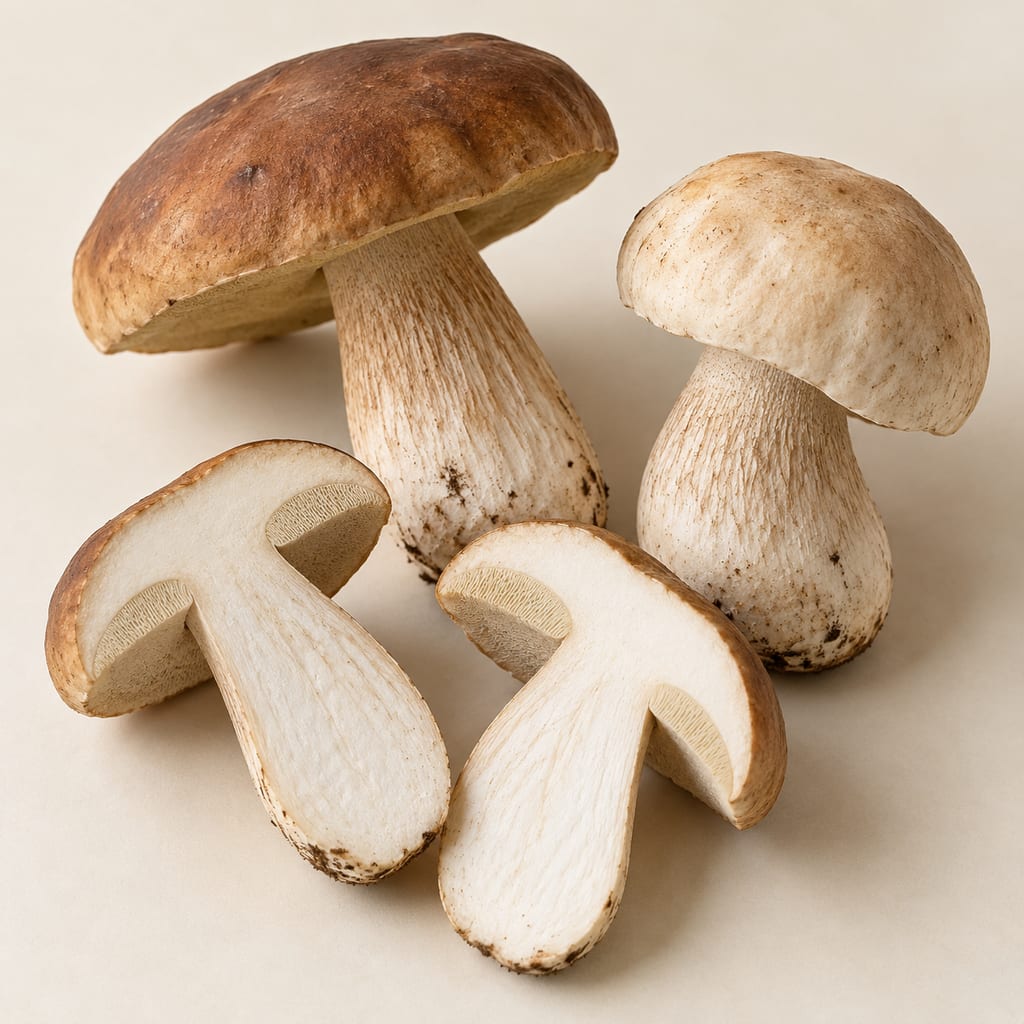
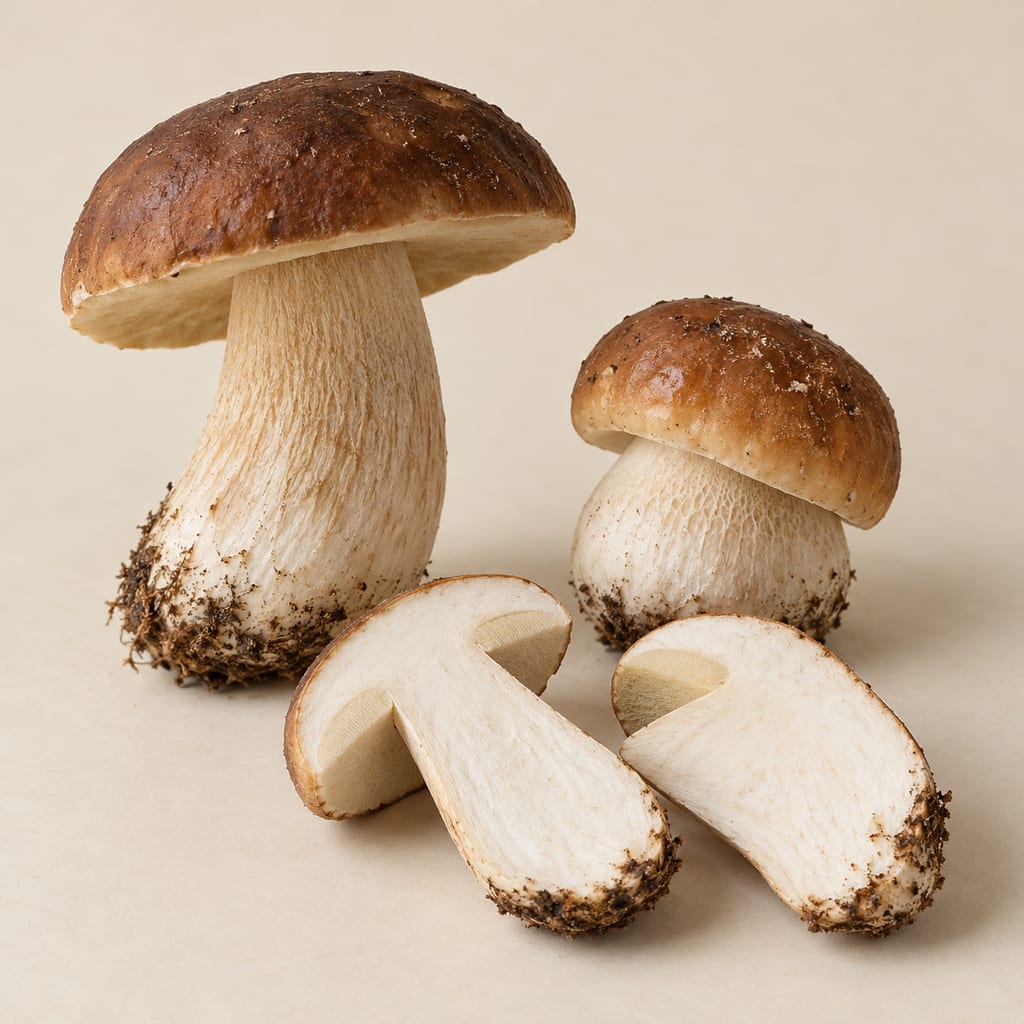
The sheep polypore, Albatrellus ovinus, is a terrestrial polypore associated with conifers. The Finnish guide and the Nordic databases describe it as firm when fresh and suitable for cooking. Its common Nordic names are Fåresopp in Norwegian, Fårticka in Swedish and Lampaankääpä in Finnish, and the English name forest lamb is also used.
Its culinary reputation is mixed: the sources reviewed describe it as edible and worth using, but also note that it is not widely recognised, and that older specimens turn bitter.
Sources for this section
Habitat and occurrence
A Finnish guide says the species is common up to Central Finland and rarer further north. The catalogue describes its ecology as conifer-associated mycorrhizal, and the occurrence statements on this page rest on the Finnish guide and the Nordic database entries.
A 2019 study of its cell-wall polysaccharides, cited in a University of Oslo repository record, describes the species as rich in cell-wall material. The study is noted as a research lead only, since its results do not bear on whether the mushroom is safe to eat.
Sources for this section
Cooking and preservation
The Finnish guide says the mushroom is best picked young and free of maggots. It recommends the caps for steaks and says the mushroom works well in soups, stews and pies. It can be dried, frozen after frying or pickled.
On cooking, a Finnish account notes that the flesh turns bright yellow when cooked, and a Scandinavian suggestion uses the mushroom as a truffle substitute in liver pâté. These are described as traditional or suggested uses in the sources, not as measured methods, and no times or temperatures are given in them.
Sources for this section
Look-alikes and safety
The fused polypore, Albatrellus confluens, looks similar and grows in groups, although some sources say the sheep polypore also grows in clusters. The fused polypore is also edible but has a bitter, acrid taste and is considered unsuitable for cooking. Distinguishing the two can require microscopy, which is a reason the Nordic guides advise checking identification with an expert.
One source explicitly warns against eating the mushroom if there is any doubt about its identity. The safe reading for this page is therefore the one the sources give: the species is reported as edible in Nordic guides, the look-alike is a bitter relative, and identification should be confirmed. Nothing here is advice for collecting or identifying wild polypores.
Sources for this section
Open questions
The sources reviewed do not give a regional food history, a measured toxin profile or a conservation status. The catalogue notes that conservation status and collection restrictions are regional, and those regional rules were not read for this page.
Sources for this section
Places
Finland
Documented use · Region evidenceFinnish guide: common up to Central Finland, rarer further north; the entry records the guide's statement, not a local cooking tradition.
Northern Europe
Documented use · Region evidenceCatalogue region for the food record; the Nordic databases list it as edible.