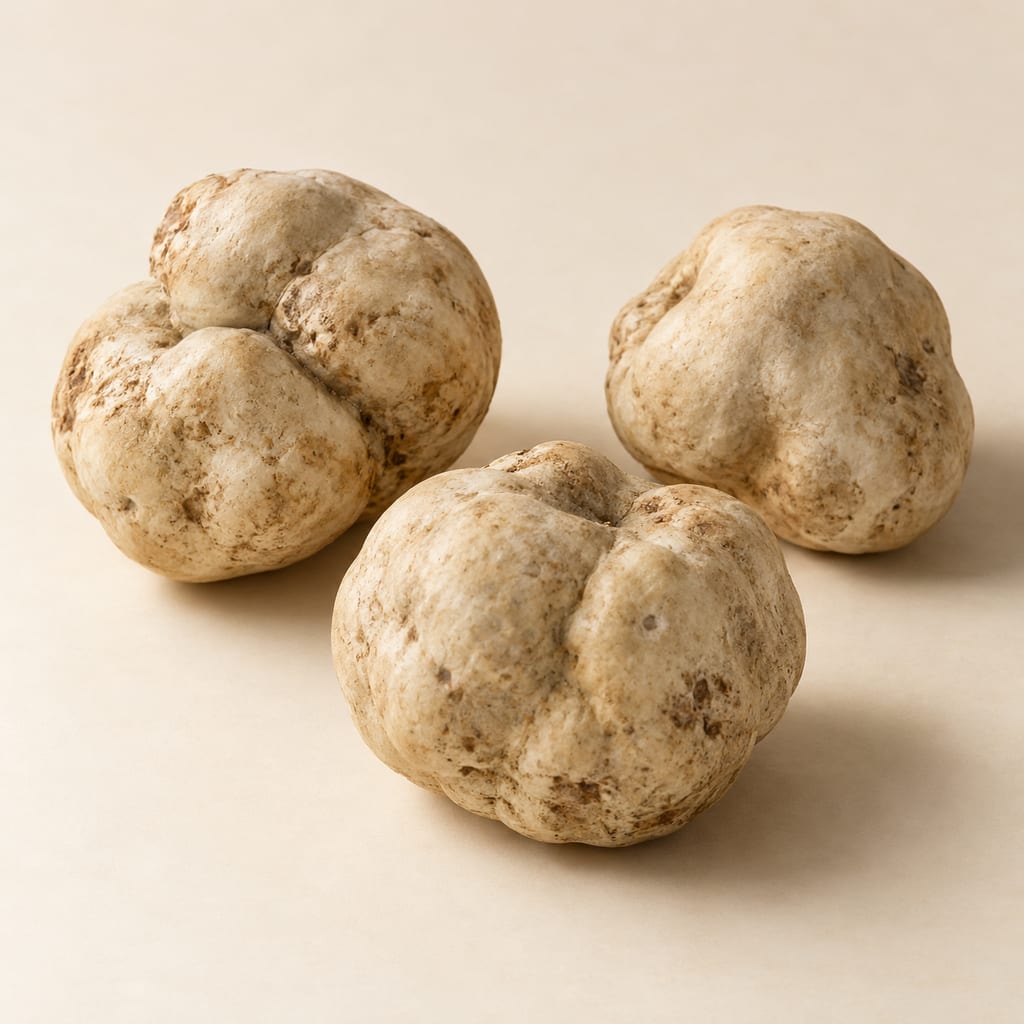
Afrocastellanoa ivoryana
Afrocastellanoa ivoryana is a truffle-like false truffle of African woodlands, ectomycorrhizal with woodland trees and recorded as a regional wild food in West and Central Africa.
 FermenteaWhere food goes to change
Mushrooms
Termitomyces titanicus is a very large wild termite mushroom of miombo woodland in southern Central and East Africa, valued for its size, weight and strong taste. Its preparation is not documented in the sources read.
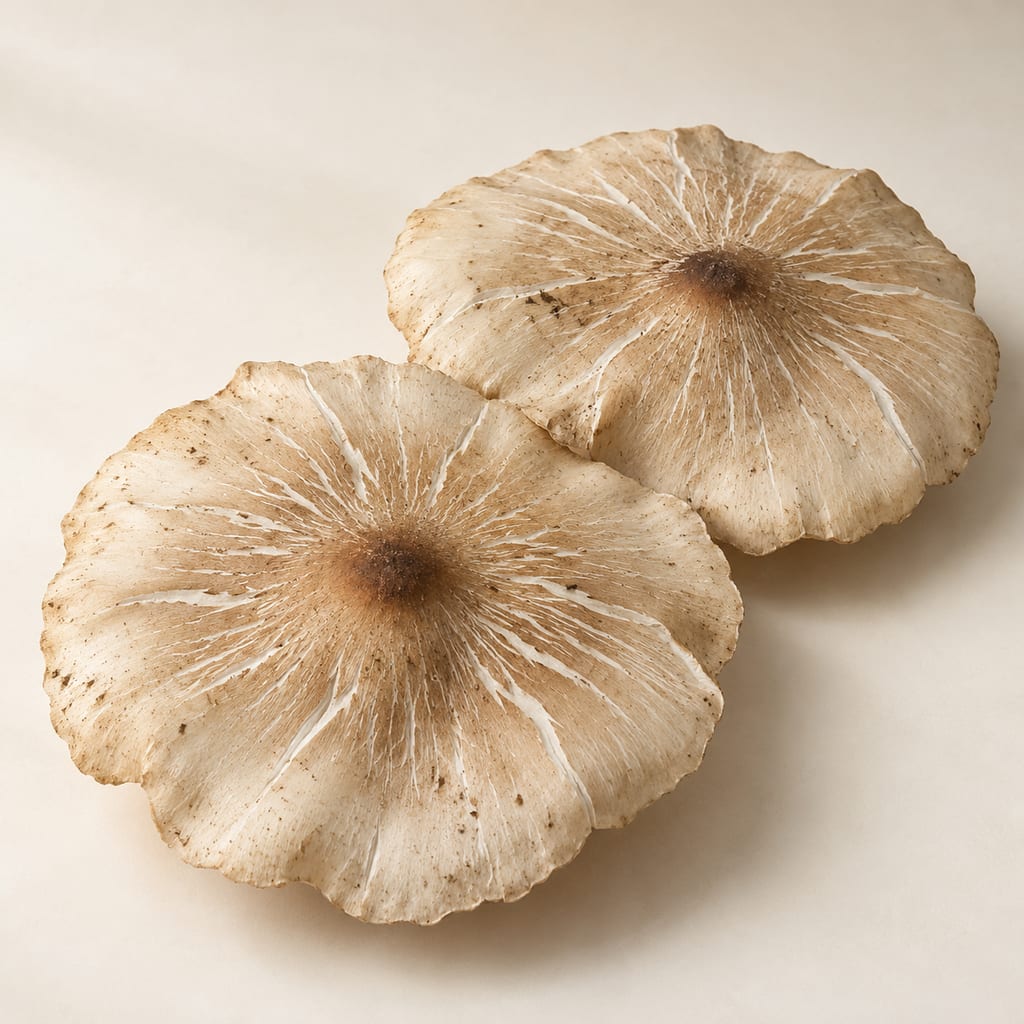
Termitomyces titanicus is a wild fungus that grows on termite mounds in miombo woodland. Institutional edible-species records describe it as a large, highly valued food mushroom. Its fruit bodies are among the largest recorded in the genus: the species description gives caps of 50 to 80 centimetres across, with some reaching 100 centimetres, and the EFTA species page notes a record sporophore of up to one metre in diameter.
The sources read give its size, appearance, ecology and value. They do not give a culinary method, a preservation method or a market description for the species.
The EFTA species description gives a cap of 50 to 80 centimetres (up to 100 centimetres) across, greyish-brown and paler toward the margin, which cracks radially with age. The stipe is 15 to 35 centimetres long and 4 to 6 to 7 centimetres thick, white and solid, and ends in a fibrous, brittle pseudorhiza. The flesh is white and does not change colour when cut. The description gives the odour and taste as strong, and the spore print as pinkish-white.
The description also records that the species is easy to recognise because of its size. The only comparison it gives is with Termitomyces letestui, which it calls much smaller.
The species is symbiotic with fungus-growing termites, Pseudacanthotermes spiniger and P. militaris, in miombo woodland. Its fruit bodies emerge from the termite mounds and their surrounding substrate. Because the fungus depends on its termite partners, it cannot be grown on its own, and the supply that reaches markets is wild. The catalogue records the supply as wild.
The catalogue describes the species as a large and highly valued wild food mushroom. The EFTA page says it is highly appreciated for its weight, which can reach 3 to 4 kilograms, its strong taste and its size. It does not describe how the mushroom is cooked, dried or sold.
Termitomyces in general are eaten across Africa and Asia, usually in soups and fried dishes. That general use is recorded for the genus, not for this species alone, and the sources read do not state how T. titanicus is prepared.
The EFTA page lists the species in Burundi, Cameroon, the Democratic Republic of the Congo, Malawi, Zambia and Zimbabwe. The catalogue lists the regions as DR Congo, Zambia, Tanzania and Burundi. The two lists differ, so both should be checked before a country-level claim is repeated.
The EFTA page gives no toxicity or safety information for T. titanicus and does not discuss edibility beyond its prized status. The catalogue states that preparation, identity and current safety need separate validation. Termitomyces identification depends on microscopic features, and the species name is itself under review in the catalogue.
Do not use this page to identify or eat wild fungi. Confirm any identification with a qualified mycologist or a reliable local authority.
Ecological region of the listed distribution; a habitat note, not an origin claim.
Distribution note from the EFTA page and the catalogue; not a claim about where the food tradition began.
Afrocastellanoa ivoryana is a truffle-like false truffle of African woodlands, ectomycorrhizal with woodland trees and recorded as a regional wild food in West and Central Africa.
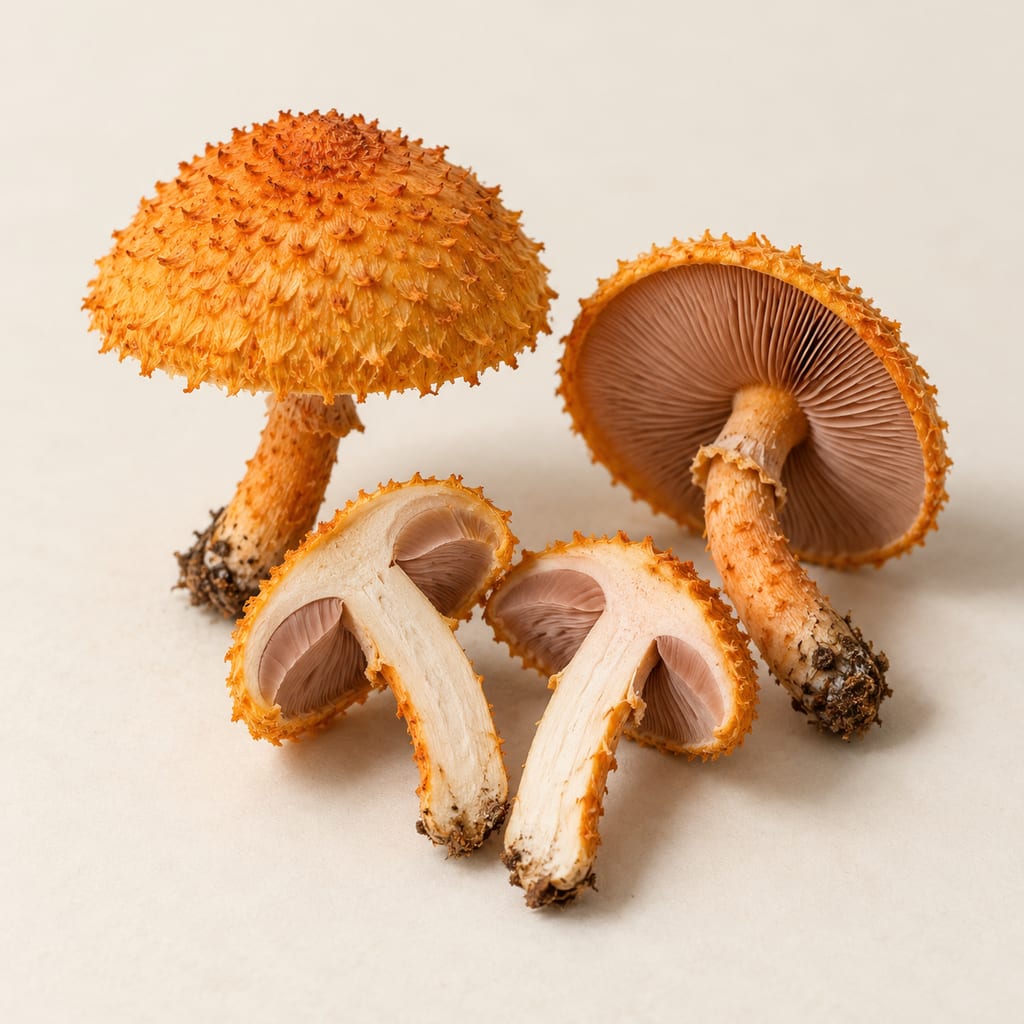
A forest mushroom of the genus Agaricus, recorded as a wild food in the Tshopo province of the Democratic Republic of the Congo in a voucher-backed ethnomycological survey.
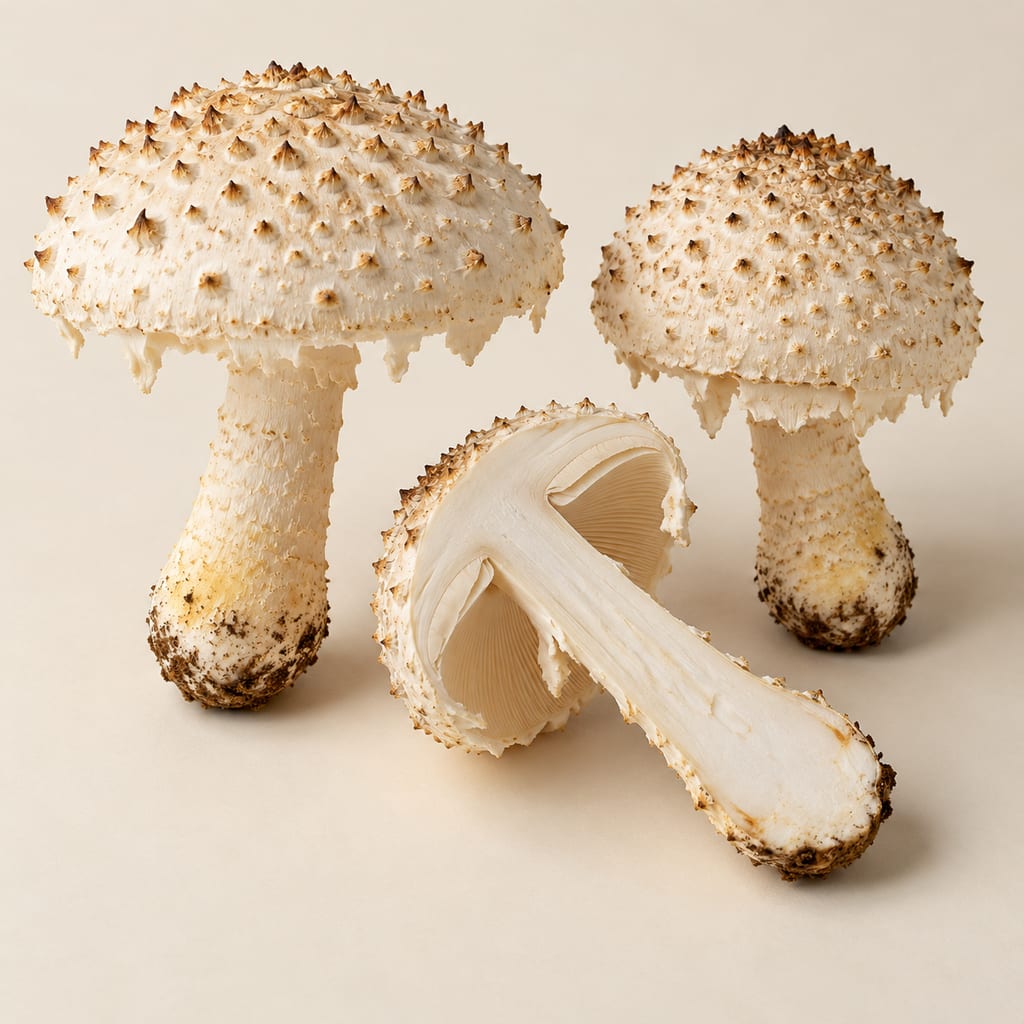
Amanita afrospinosa is a white, warted Amanita of miombo woodland in southern and central Africa. A regional food-use record exists, but the Amanita genus includes deadly species, so no safe use is established here.
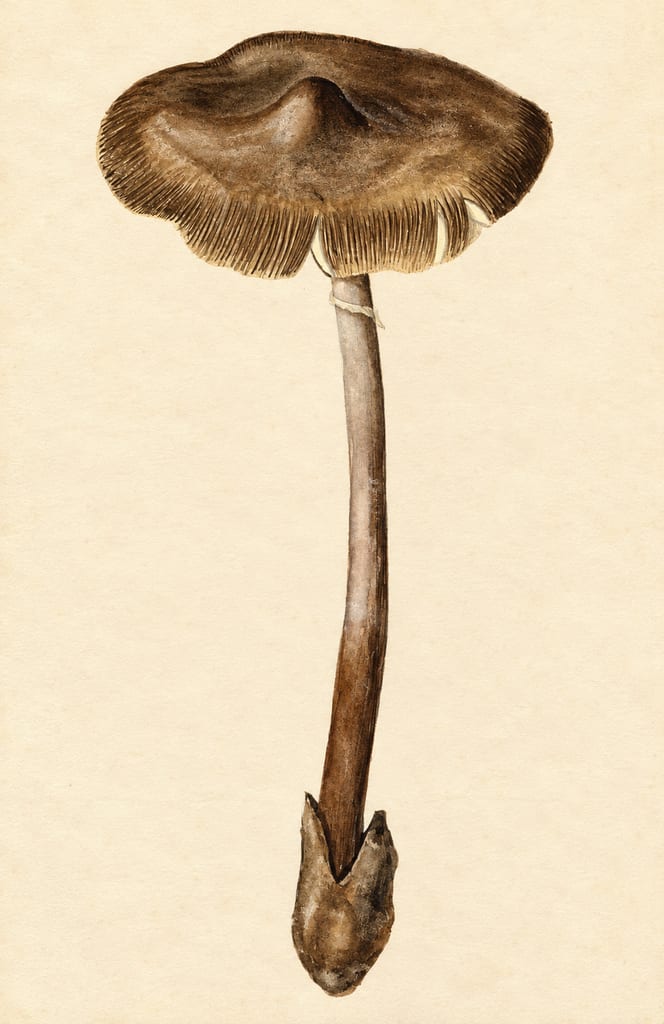
A wild ectomycorrhizal Amanita of the Congo rainforest, recorded as locally consumed in Tshopo province. Its preparation was not established, and the genus includes deadly species.
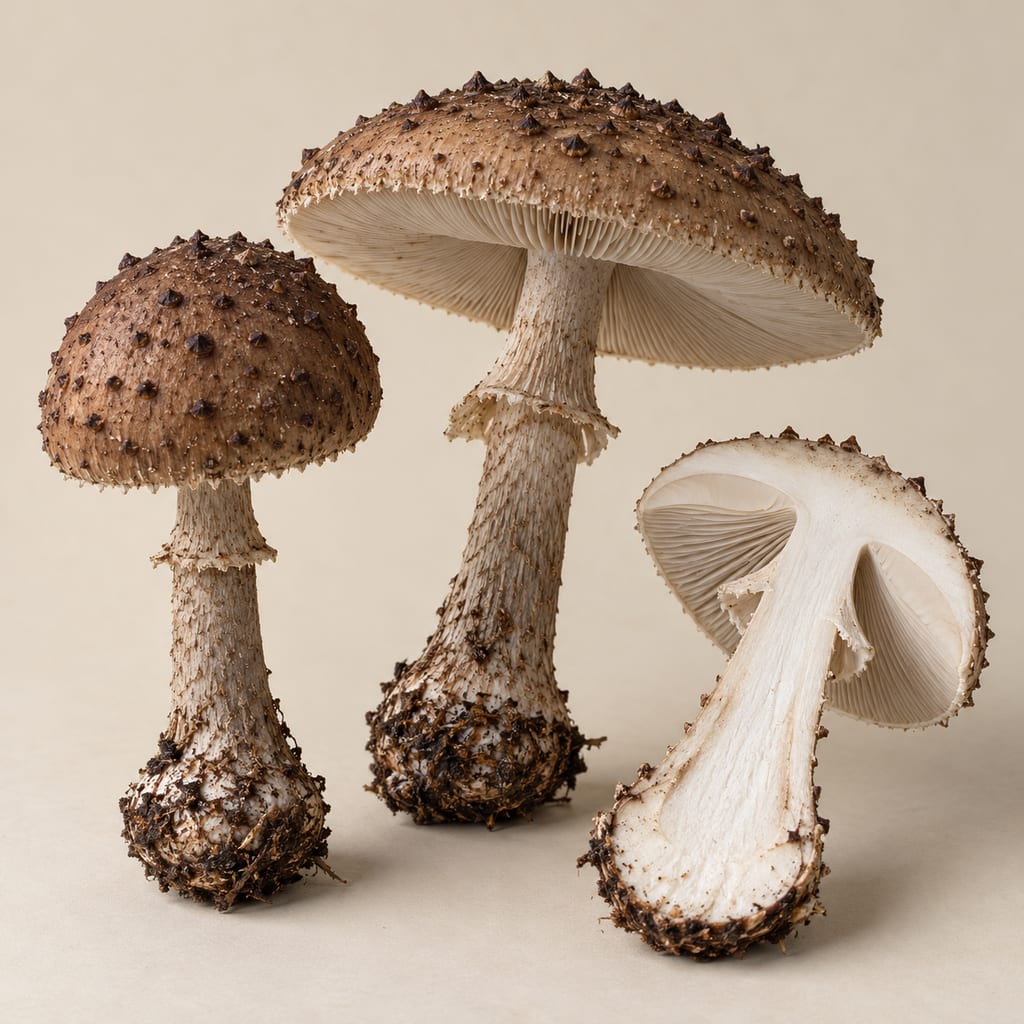
A wild ectomycorrhizal Amanita of the Congo rainforest, recorded as locally consumed in Tshopo province. Its preparation was not established, and the genus includes deadly species.
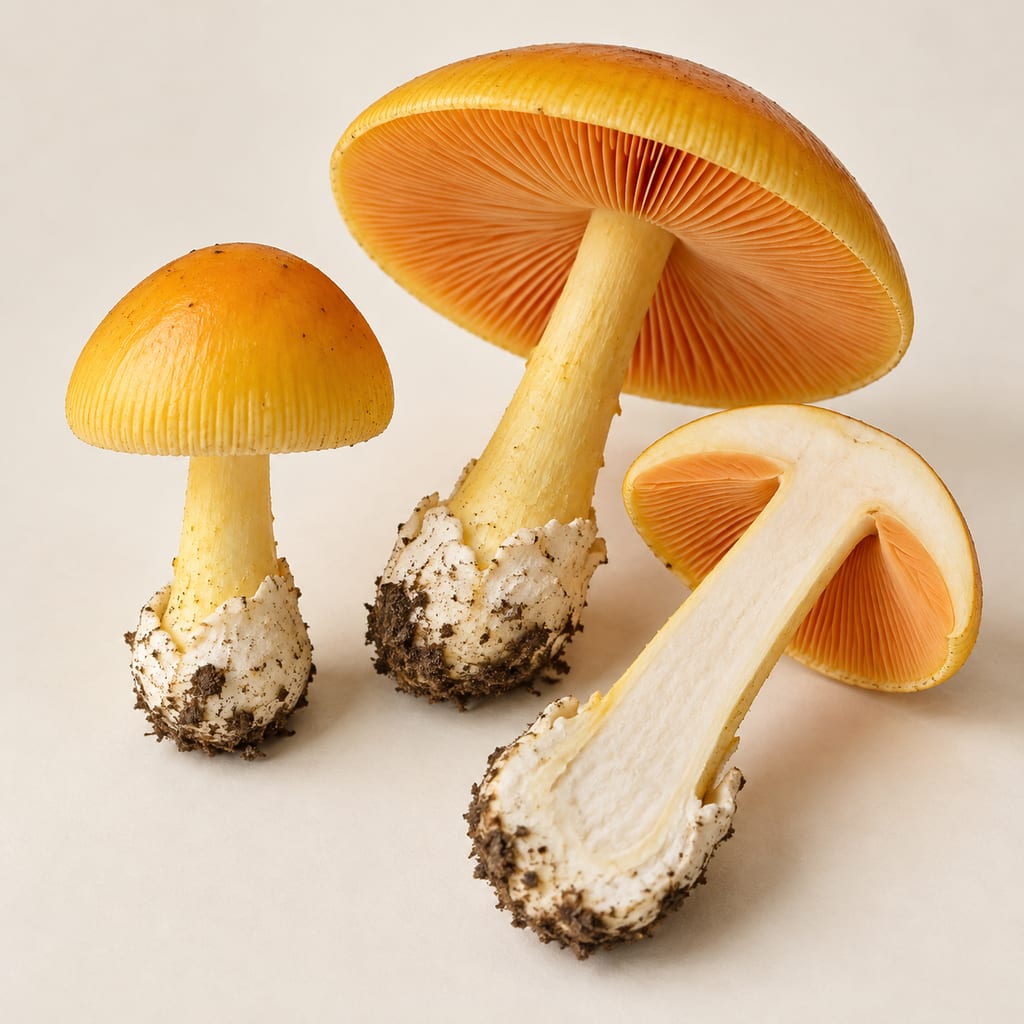
A wild miombo Amanita recorded as a local food in northern Zambia, with collections also documented in Haut-Katanga, DRC. The evidence is regional and does not make wild identification safe.
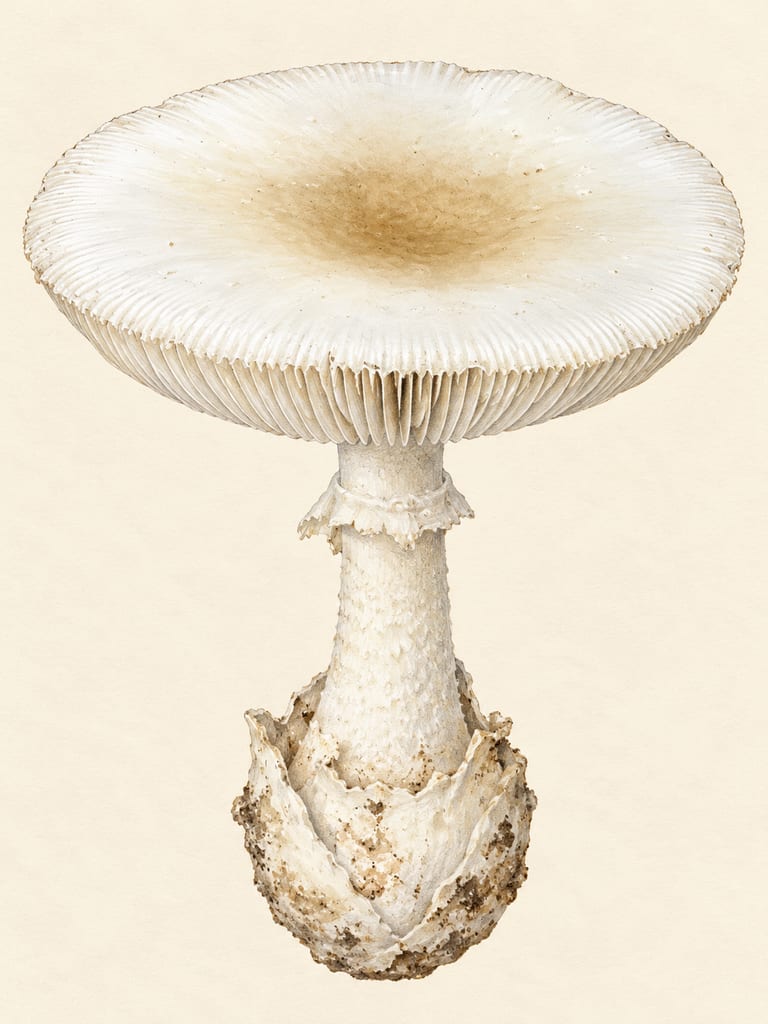
Amanita loosei is a large wild Amanita of tropical African miombo and open woodland, gathered and sold as a valued seasonal food. Regional food-use evidence is not a guide to identifying wild mushrooms.
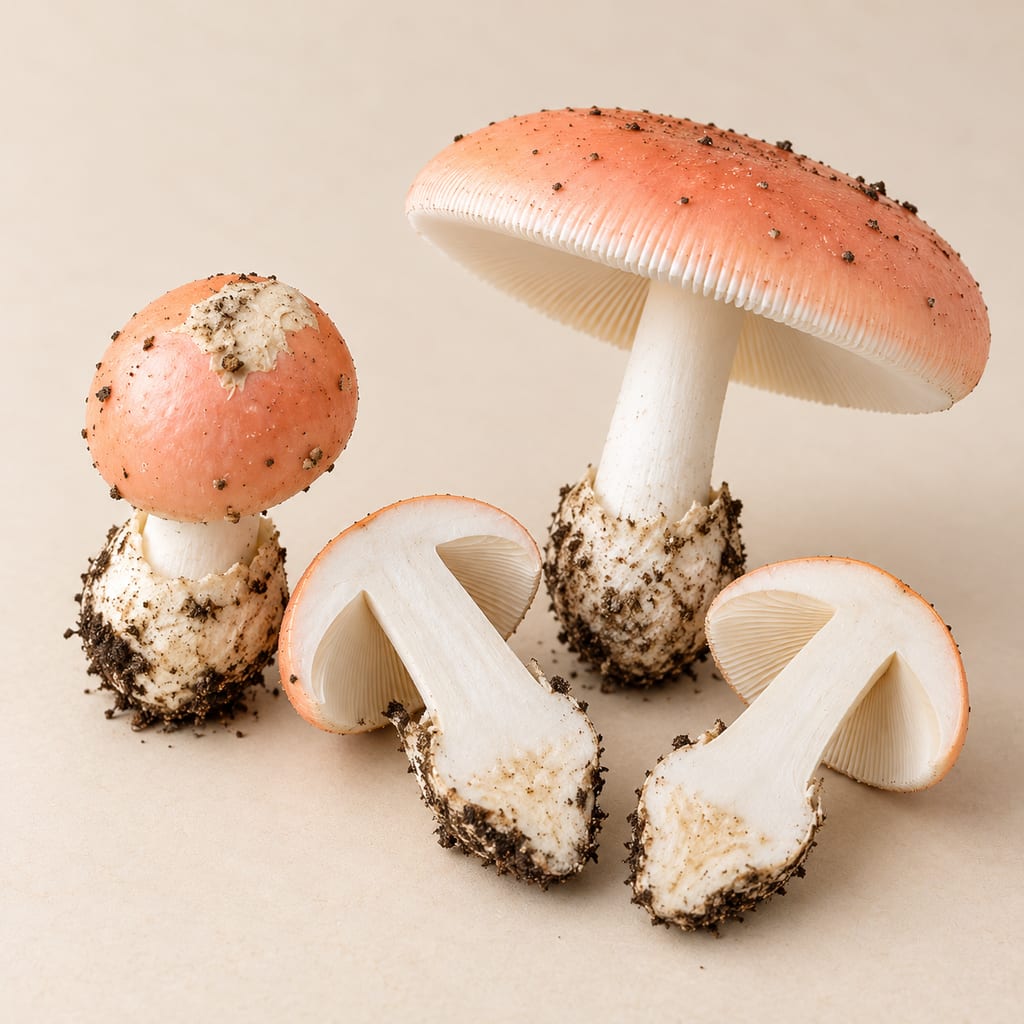
Amanita pudica is a wild rainforest fungus of Tshopo Province in the DR Congo, recorded as locally eaten in interviews. The genus contains deadly poisonous species, so identification by a specialist is essential.
No community contributions have been published for this entry yet.
Sign in to contribute. Published comments and photos are free to read.
EFTA, Edible Fungi of Tropical Africa (Meise Botanic Garden)Identity · Description · Ecology · Distribution · Food value
Termitomyces titanicusAccepted name Termitomyces titanicus Pegler & Piearce (1980); cap 50-80(-100) cm; stipe 15-35 cm; sporophore up to 1 m.
Symbiotic with Pseudacanthotermes spiniger and P. militaris in miombo.
Appreciated for weight up to 3-4 kg and strong taste; no preparation or safety information given.
Cited in: Overview; Description; Ecology; Food use and value; Range; Identification and safety
PubMed CentralFood use · Regional record
Supplied fungi catalogue entry S132 context (PMC7011311)Institutional edible-species record; preparation, identity and current safety require separate validation.
Cited in: Food use and value; Identification and safety