
Active sour-cream starter
A living dairy inoculum that starts controlled cream fermentation, developing acidity and aroma before sour cream or cultured butter is finished.
 FermenteaWhere food goes to change
Substrates
Lowbush or wild blueberry, Vaccinium angustifolium: a small subshrub of eastern North America whose berries are gathered wild and harvested from managed fields.
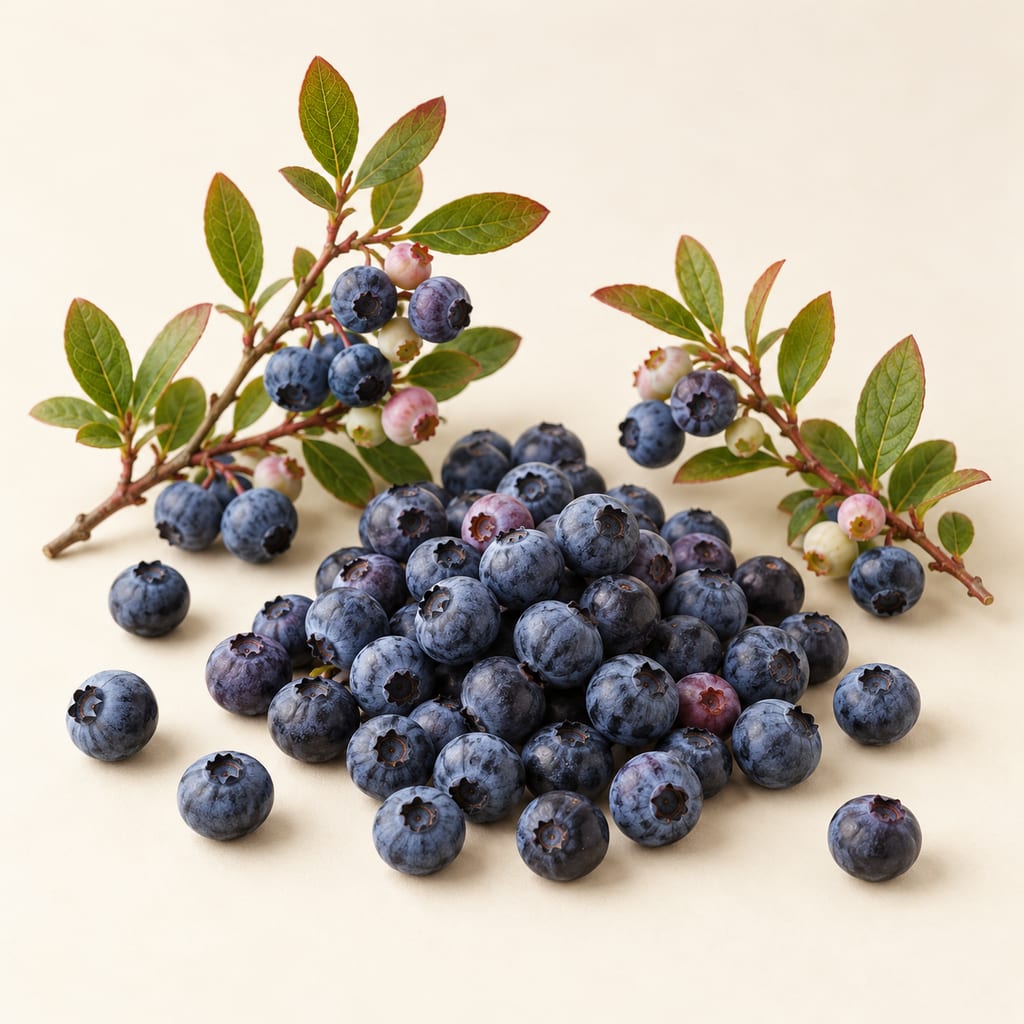
Kew accepts Vaccinium angustifolium Aiton and describes it as a subshrub native from central and eastern Canada to the north-central and eastern United States. In trade and in common speech it is the lowbush blueberry, often sold as wild blueberry.
The Office québécois de la langue française terminology entry for bleuet lists V. angustifolium, V. corymbosum and V. myrtilloides among its Latin terms, and distinguishes bleuet from the European V. myrtillus. An IREPI memory record uses the French name airelle à feuilles étroites for the gathered Saguenay-Lac-Saint-Jean berry. These vernacular mappings do not identify an individual berry or market sample.
Agriculture and Agri-Food Canada's sixth-edition crop profile describes lowbush blueberry as a crop harvested from managed wild stands, rather than orchard-style highbush plantings. The profile includes V. angustifolium and V. myrtilloides and says V. angustifolium makes up most of Canada's harvested lowbush crop. Its production figures and crop practices describe the commercial lowbush sector, not every wild patch or household plant. The profile's historical passage says Indigenous peoples harvested lowbush blueberries before European settlement, but does not name a particular Nation in that passage.
A Saguenay-Lac-Saint-Jean IREPI memory record identifies the gathered berry as V. angustifolium and recalls August family gathering after hay harvest. It describes berries boiled with sugar into jam, but gives no quantities, yield, sequence, endpoint or storage method. This is a regional recollection, not a complete recipe.
A collaborative study with the Atikamekw Nehirowisiw community of Wemotaci discusses raw minic and cooked osekwan minic paste. The authors explicitly use minic indistinctly for V. angustifolium, V. myrtilloides and V. corymbosum, so these collective food accounts cannot be assigned to V. angustifolium alone.
The Canadian Encyclopedia's blueberry entry says the Abenaki, Algonquin, Cree, Haudenosaunee, Anishinaabe and Mi'kmaq peoples of eastern Canada eat several blueberry species fresh and dried. The account covers several species, so it is not attributed to V. angustifolium alone.
The same entry describes burning every other year to manage lowbush patches. That is presented as a modern commercial practice, and this page does not treat it as a traditional Indigenous method.
The federal crop profile places production in eastern Canadian regions and describes commercial lowbush stands on sandy or gravelly, well-drained soils, with an acidity range of pH 4.3-5.0 given as optimal for that production system. It reports underground rhizome spread of up to 38 cm in one season in managed fields and says insect pollination is important for fruit set; growers commonly bring managed pollinators into fields. These are crop-profile observations and practices, not universal home-growing targets.
The same profile reports that frost or cold during bloom and before harvest can reduce crop yield; cold, drying winds and insufficient snow cover can desiccate upper plant parts; and dry, hot summer conditions can reduce fruit quality and yield. The profile does not give a plant survival cutoff or a household temperature control.
The sources do not supply a complete species-specific household recipe, fruit storage duration, or validated preservation endpoint. The Atikamekw food account remains multi-species, while the Québec memory account lacks recipe details. No current land-access or gathering-permission review, field-identification key, container trial, or greenhouse method is established.
Kew gives a native range from central and eastern Canada to the north-central and eastern United States; the crop profile places lowbush production in eastern Canadian regions.
A living dairy inoculum that starts controlled cream fermentation, developing acidity and aroma before sour cream or cultured butter is finished.
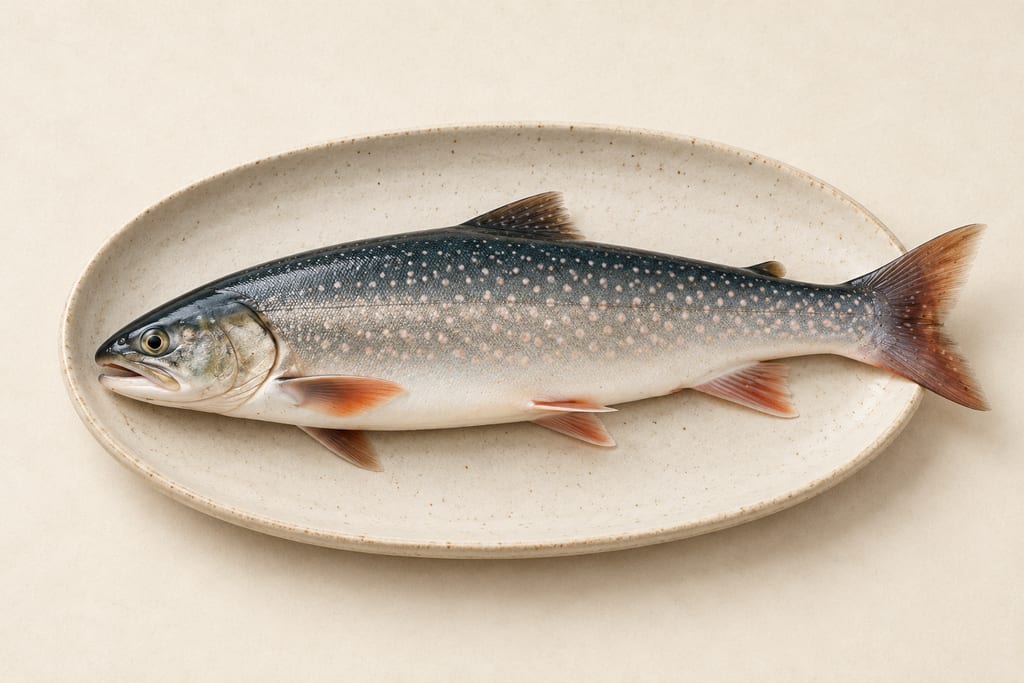
Arctic char (Salvelinus alpinus) is a circumpolar salmonid eaten fresh and preserved in northern communities. Its local forms and food traditions vary; dried or smoked fish and fermented char are distinct from the raw ingredient.

Beef is the meat of domestic cattle, Bos taurus and Bos indicus, sold as steaks, roasts, ground meat and cured products, and used in broths, salami and koji seasonings.
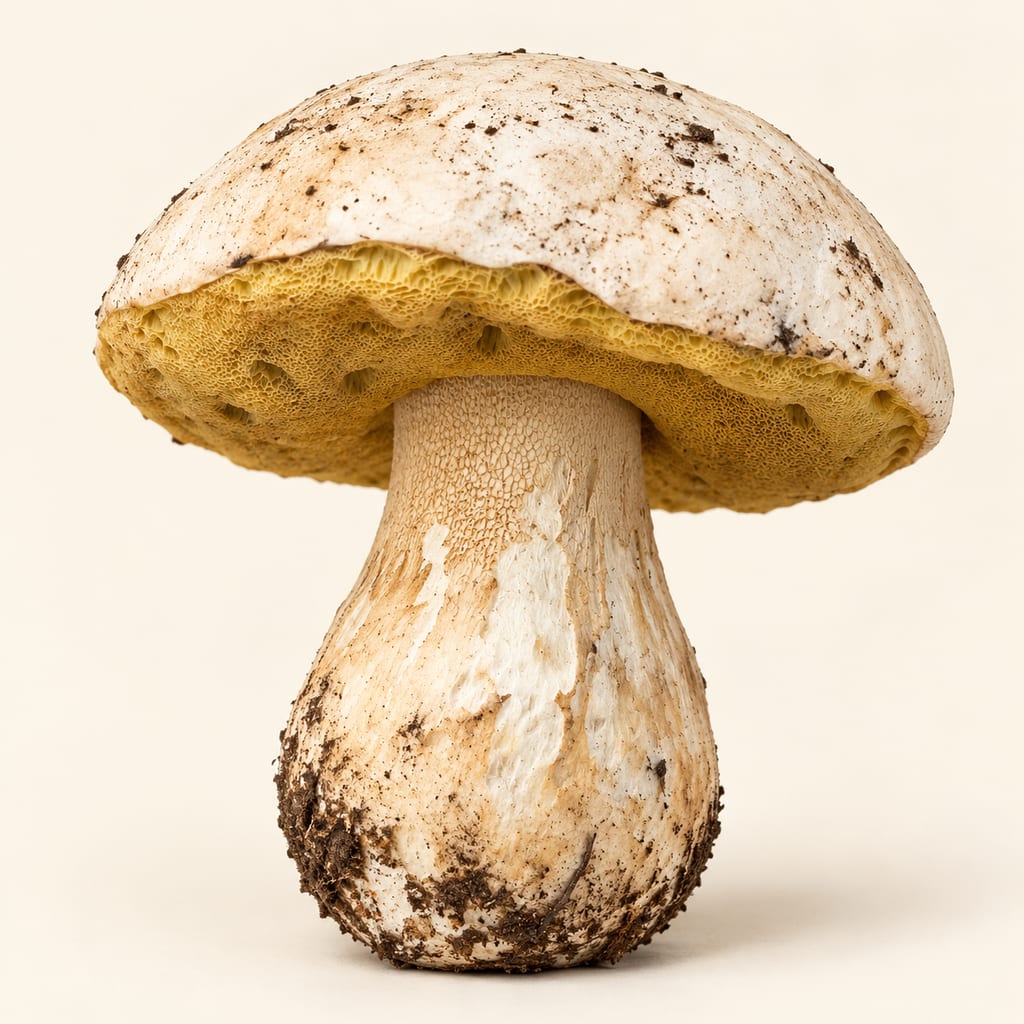
Boletus barrowsii, the white king bolete, is a western porcini relative with documented local food use in Mexico. Its pale cap and netted stem are not enough for field identification.
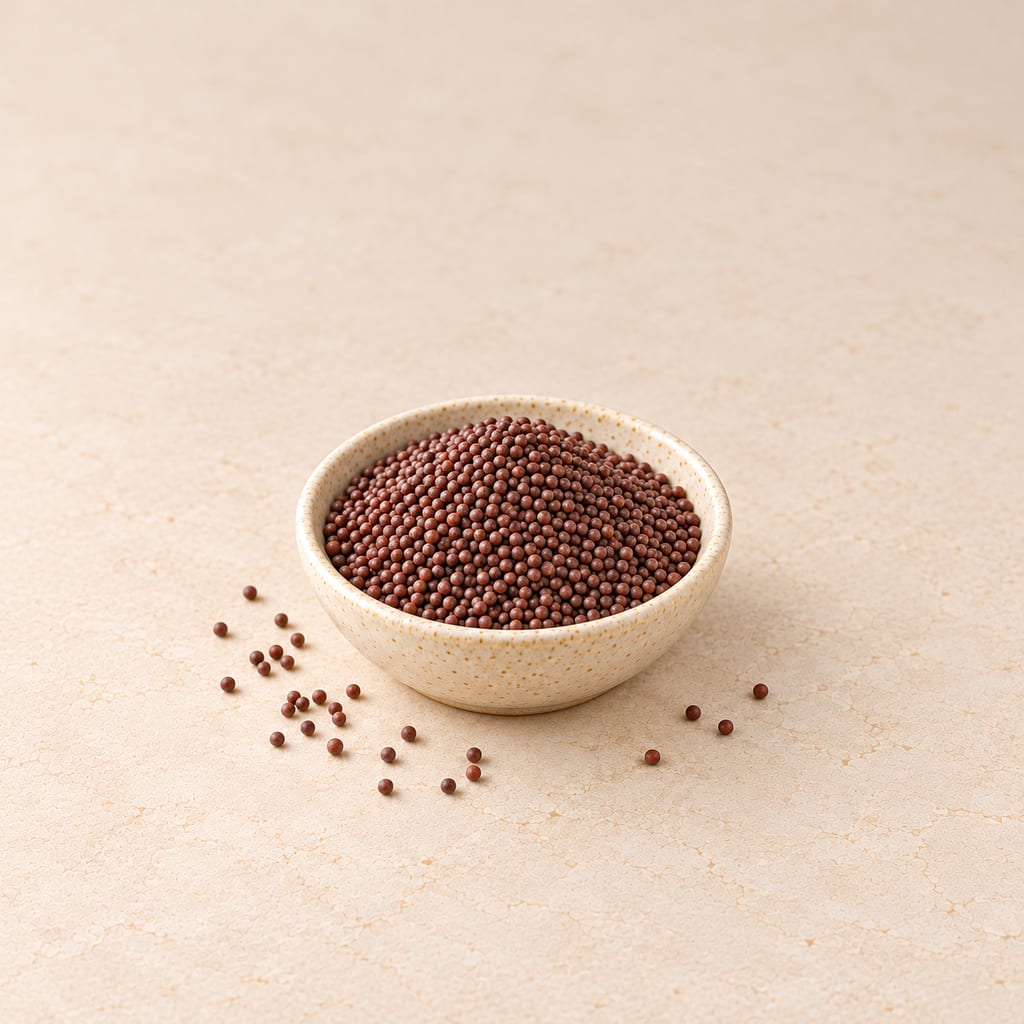
Brown or oriental mustard seed comes from Brassica juncea, a hybrid of black mustard and turnip rape. It is the hot, easily harvested seed behind Dijon, spicy brown mustards and much of the mustard oil of the Indian subcontinent.
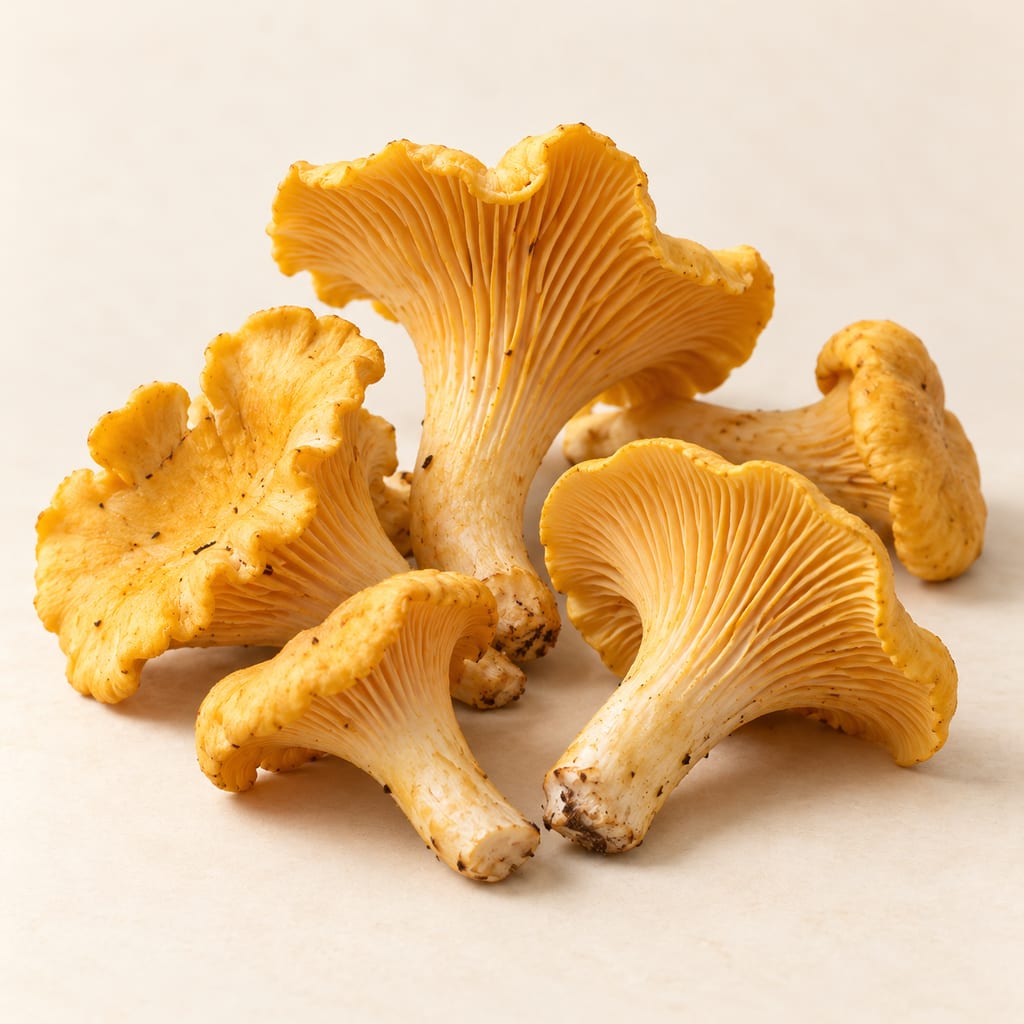
Chanterelles are wild, tree-associated edible mushrooms, particularly the European golden chanterelle Cantharellus cibarius, prized for their firm flesh, fruity aroma and use fresh, frozen, dried or pickled.
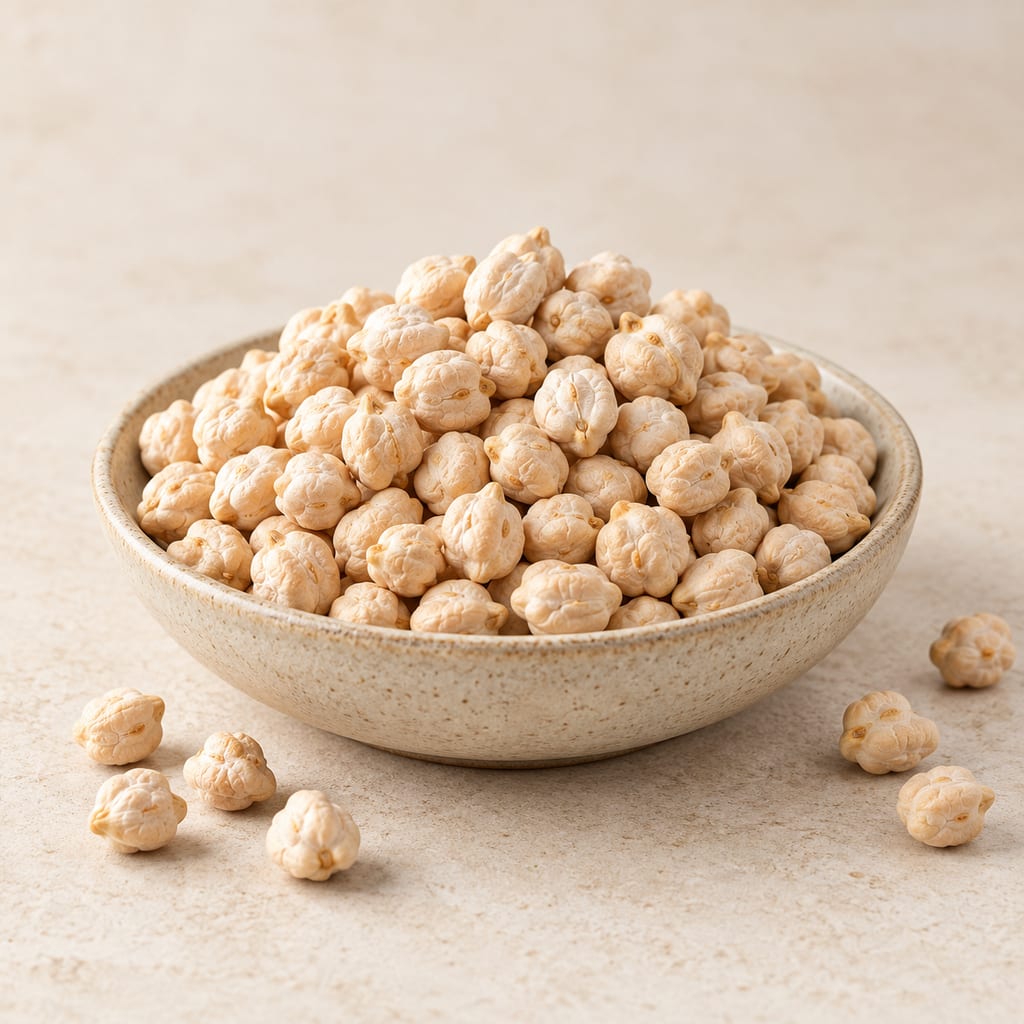
Chickpeas (Cicer arietinum) are dry pulses eaten whole or milled into flour, which gives socca, farinata and other breads a dense, nutty batter or dough.
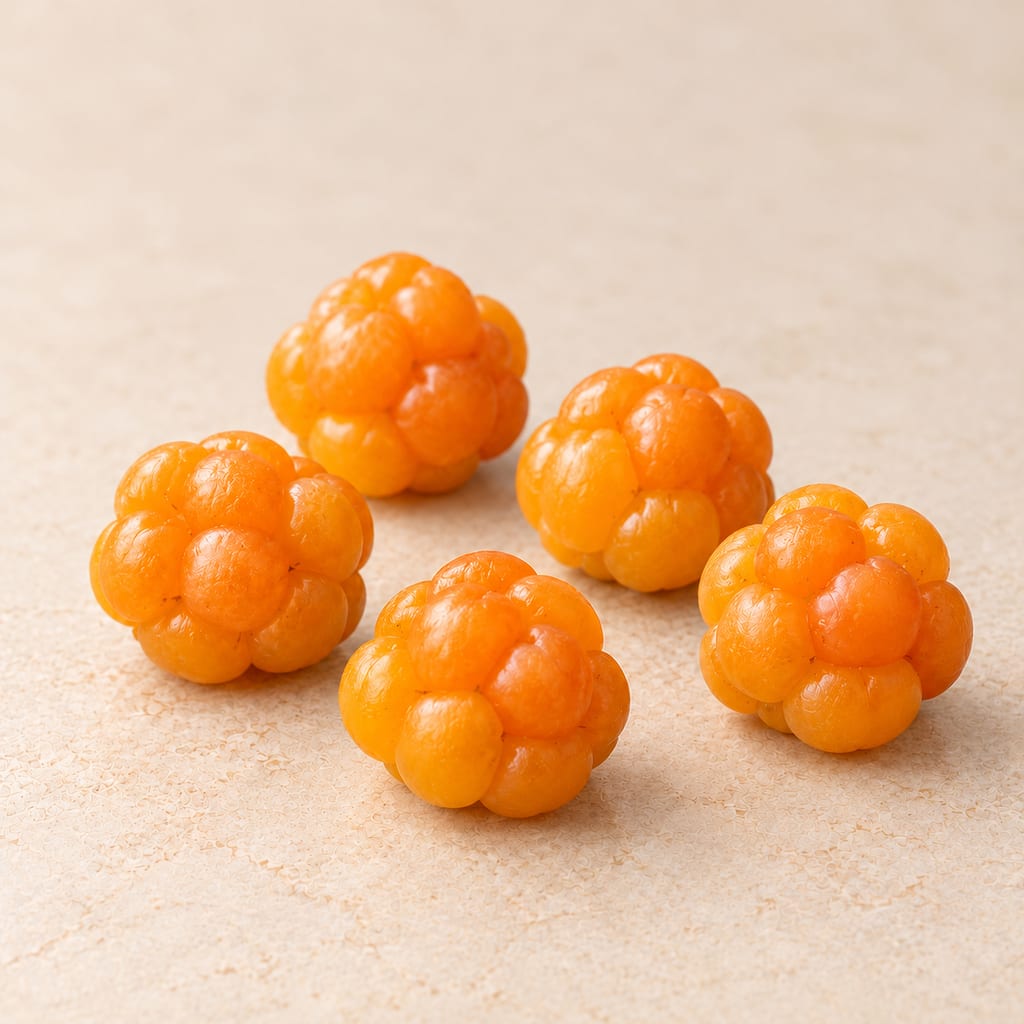
Cloudberry has distinct Gwich’in, Nunatsiavut, NunatuKavut-area and Québec records. A 2009 cutover-peatland trial reports site-specific rhizome establishment results, not a household pot or fruit-yield method.
No community contributions have been published for this entry yet.
Sign in to contribute. Published comments and photos are free to read.
Royal Botanic Gardens, Kew, Plants of the World OnlineIdentity · Geography
Vaccinium angustifolium AitonAccepted name; subshrub native from central and eastern Canada to the north-central and eastern United States
Cited in: The species and the names
Agriculture and Agri-Food Canada, Pest Management CentreProduction · Growing · History
Crop Profile for Lowbush Blueberry in Canada, 2023 (Sixth Edition, 2025)Harvested from managed wild stands
V. angustifolium is most of the harvested lowbush crop
Soil, pH 4.3-5.0, rhizome spread, pollination, frost and drought effects
Cited in: Lowbush blueberry in Canadian production; Growing evidence from managed fields; What the sources leave open
Office québécois de la langue françaiseNames
bleuet | Grand dictionnaire terminologiqueBleuet covers V. angustifolium, V. corymbosum and V. myrtilloides and is distinct from European V. myrtillus
Cited in: The species and the names
Inventaire des ressources ethnologiques du patrimoine immatériel (IREPI), Université LavalUse · Names
Marcel Villeneuve: cueillette de bleuets sauvagesSaguenay-Lac-Saint-Jean gathering in August after hay harvest; berries boiled with sugar into jam; name airelle à feuilles étroites
Cited in: The species and the names; Food and gathering accounts; What the sources leave open
Botany, Canadian Science PublishingUse · Names
Importance of the blueberry (minic) to the Atikamekw Nehirowisiw people: women's key role in knowledge transmission and cultural persistenceRaw minic and cooked osekwan minic paste at Wemotaci; minic used for several Vaccinium species
Cited in: Food and gathering accounts; What the sources leave open
The Canadian EncyclopediaUse · History
BlueberryEastern Canadian peoples eat several blueberry species fresh and dried
Burning every other year to manage lowbush patches as a modern commercial practice
Cited in: Eastern Canadian peoples and the blueberry