
Bazhe (walnut sauce base)
A Georgian walnut sauce of ground walnuts, garlic, vinegar and spices, thinned with water or broth. It is served with poultry, vegetables and bread, and is the sauce of the dish satsivi.
 FermenteaWhere food goes to change
Modern adaptation
shoti
A Georgian pointed flatbread adapted for a domestic oven, made with a simple yeast dough.

Shotis puri is a Georgian bread with tapered ends. Eurasianet documents a Georgian baker shaping loaves and attaching them to the inside wall of a clay tone. FoodLab's two-loaf recipe instead bakes on a horizontal tray in a domestic oven; the home method does not reproduce the wall contact.
Georgia Travel describes Kakhetian shoti as a pointed crescent, with one edge thicker than the other, and connects family baking with holidays. Its account places loaves at the centre of a supra table and describes bread served with cheese and wine after baking.
These are attributed descriptions of practice, rather than proof that every Georgian household follows the same ritual. The page's suggested pagan origins and word derivations do not establish an archaeological date for this modern dough. The sources do not establish a precise birthplace or first attestation.
Georgia Travel describes a terracotta tone with dough attached to its interior and bread removed using two iron tools. That process helps explain why a tray-baked adaptation needs to be named clearly. Its bread rests horizontally rather than adhering to a curved wall.
FoodLab supplies the measured domestic method on this page: four ingredients, two loaves and a 250°C bake. The traditional account does not authorise replacing that schedule with an assumed tone temperature or building an improvised oven. The pointed form is retained while the equipment difference remains explicit.
Shotis puri is documented as Georgian bread baked on a tone oven wall; its first attestation is not established.
Yield 2 loaves · Scaling: source batch only
Contains wheat.
Do not taste raw dough; raw flour can contain harmful germs. Wash hands and surfaces after handling it.
Use an oven and baking tray rated for 250°C and take care with the hot tray.
Sources identify Georgian shoti; a precise birthplace is not established.
A Georgian walnut sauce of ground walnuts, garlic, vinegar and spices, thinned with water or broth. It is served with poultry, vegetables and bread, and is the sauce of the dish satsivi.
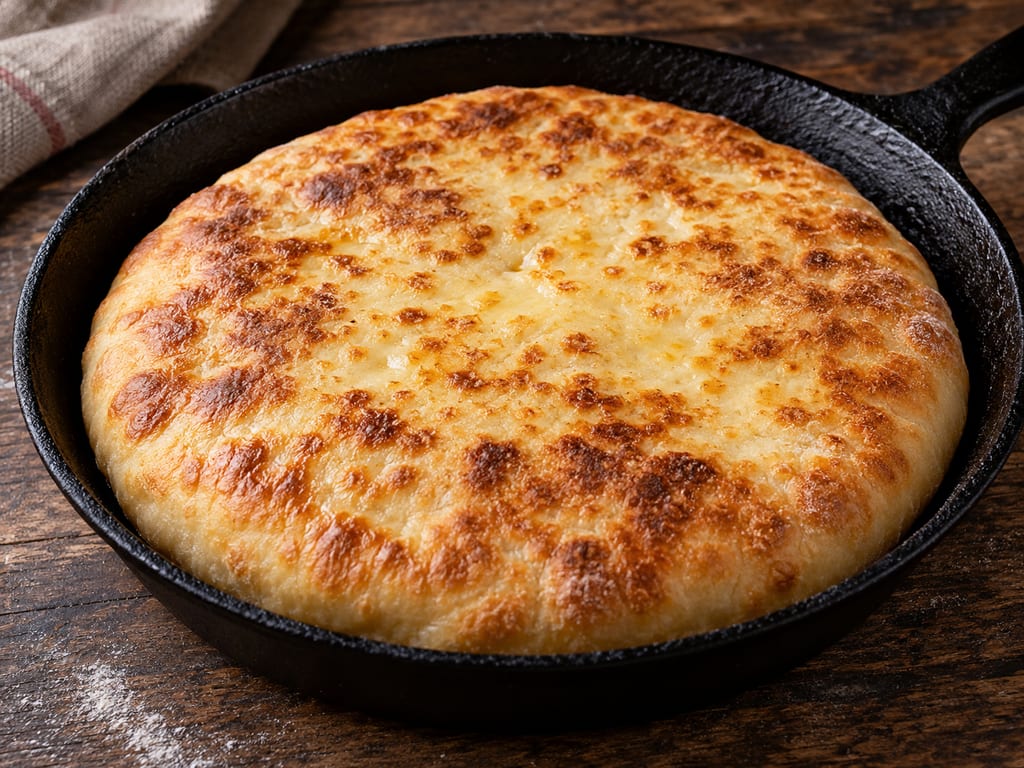
Closed round cheese breads made with sour-cream dough and cooked in a frying pan. This named Gunda version has no added yeast or proofing stage.

A commercial countertop-culture version of matsoni, a Georgian cultured milk. Its room-temperature method differs from the warmer Georgian production process.
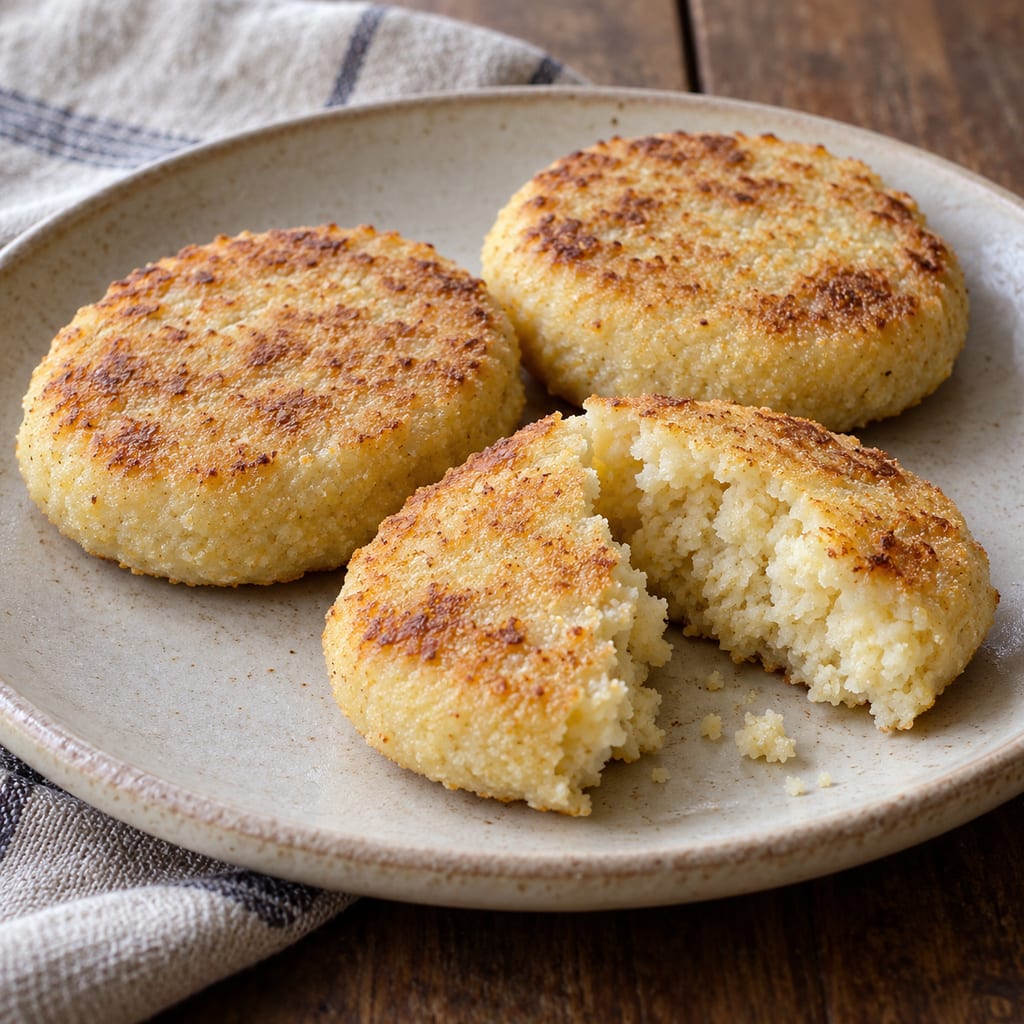
Unleavened cornmeal cakes mixed with cold water and cooked on both sides in a covered-then-uncovered pan. Cheese is served alongside rather than mixed into this dough.
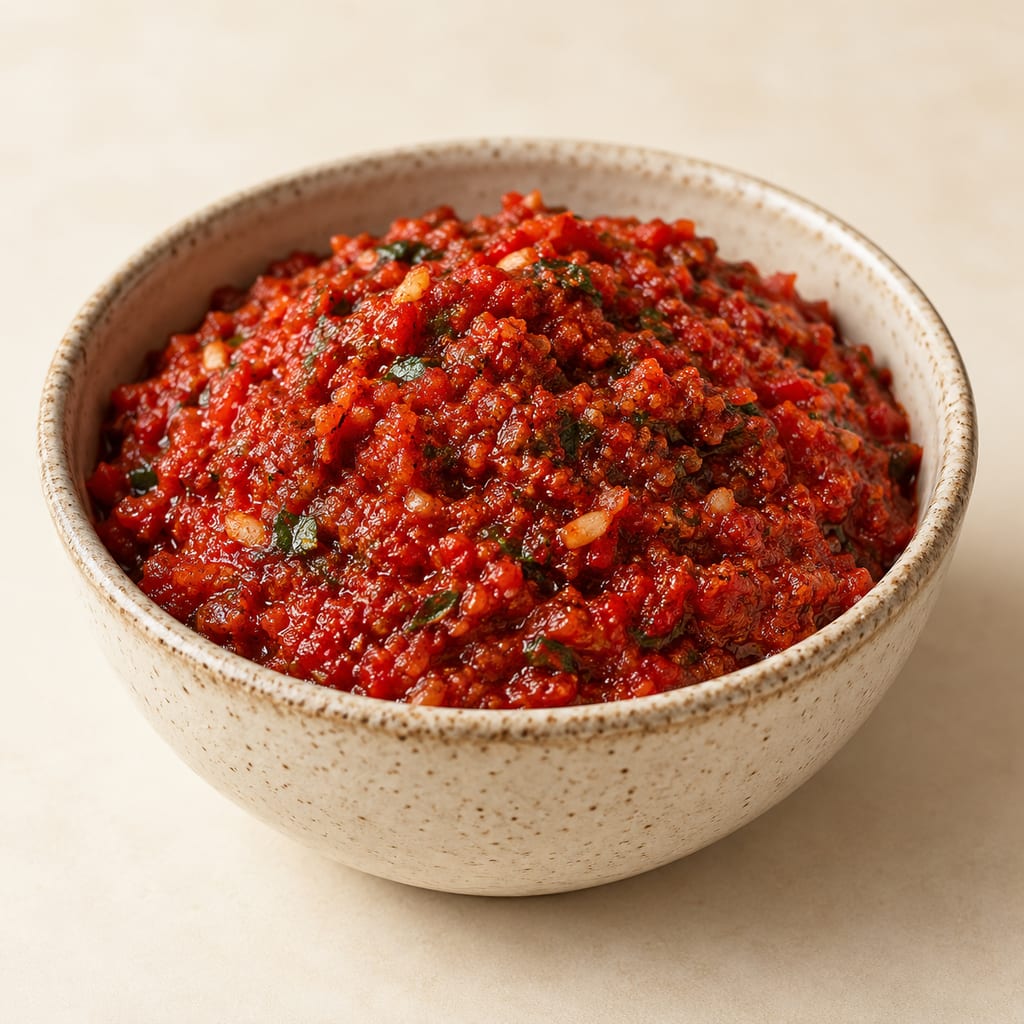
A documented Megrelian red pepper, garlic and herb paste with salt and ground spices. This preparation is mixed, not fermented; its source gives no validated preservation method or shelf life.
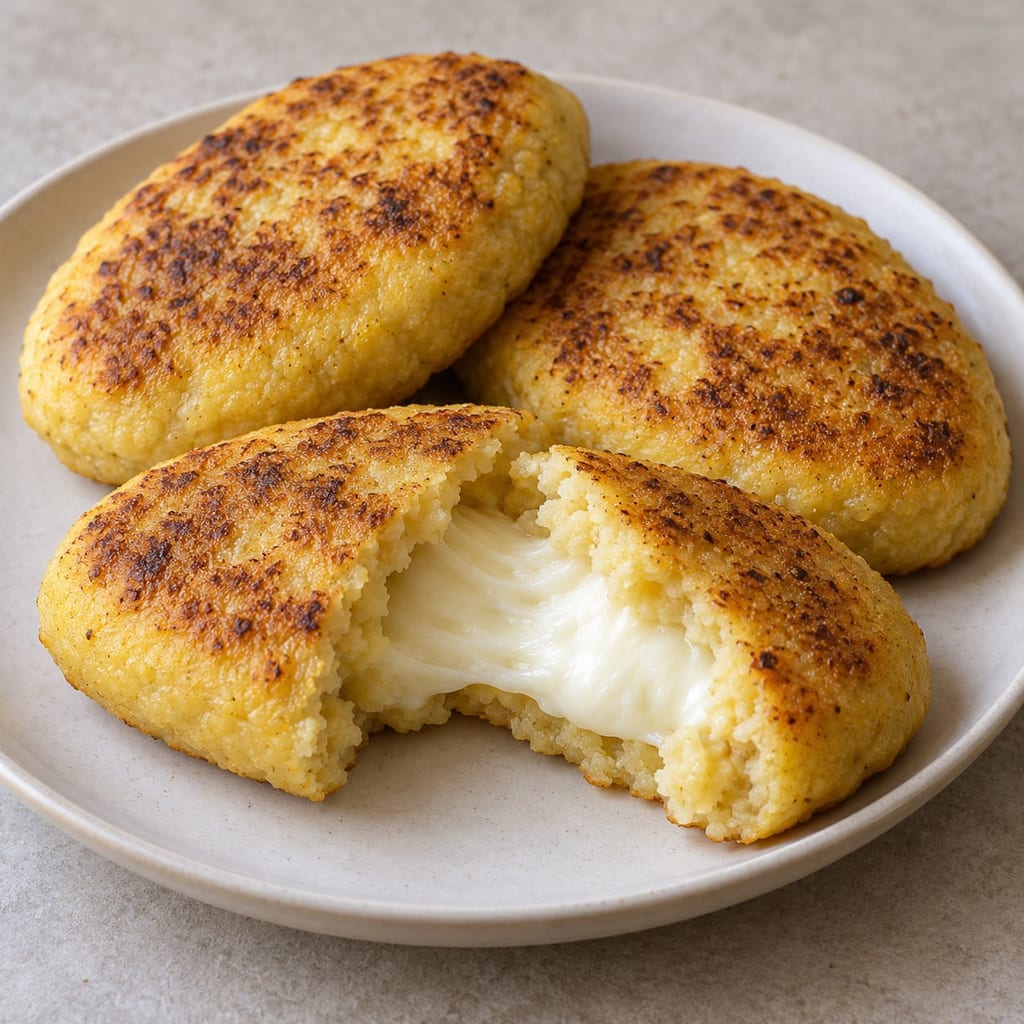
Megrelian chvishtari uses a maize dough with sulguni wrapped around a cheese piece, then cooks covered over low heat in a skillet.
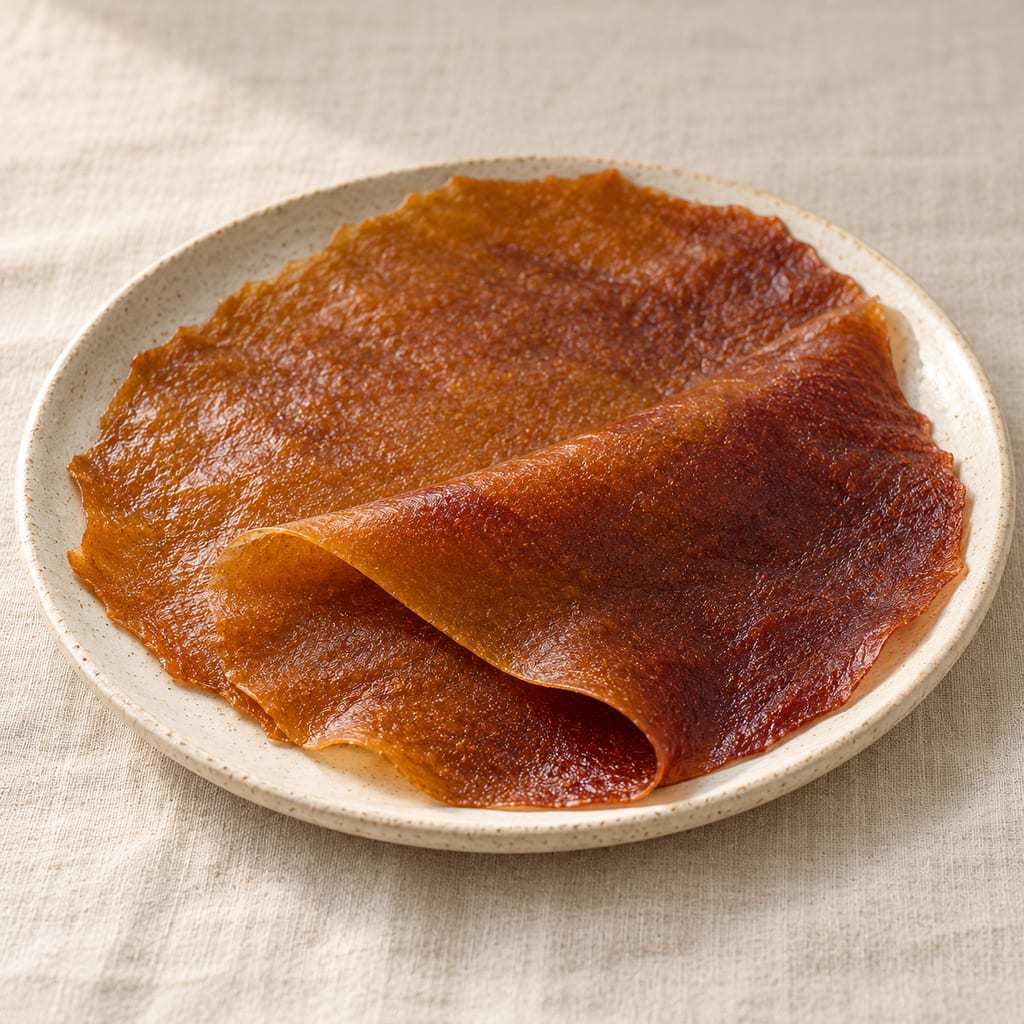
A reported Khizabavra household method cooks mulberry juice with wheat flour into a thin porridge before drying it on cloth; batch measures and a measured endpoint are absent.
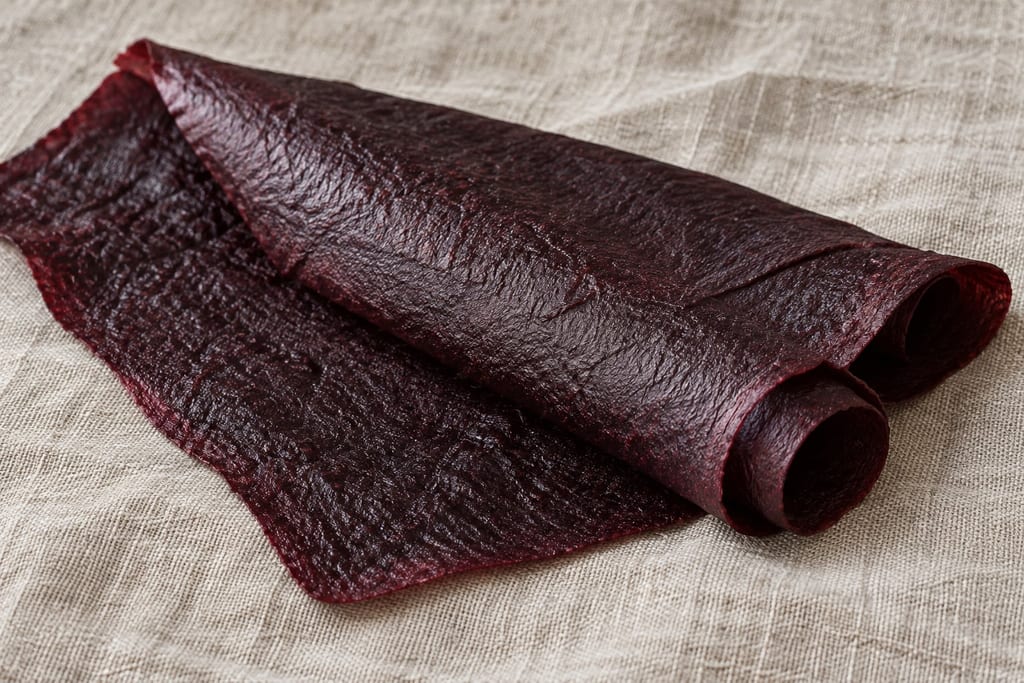
Georgian field notes describe mulberry tklapi with wheat flour but omit how the paste is cooked. FDA warns raw flour can carry harmful bacteria; this incomplete account is documentary, not a home recipe.
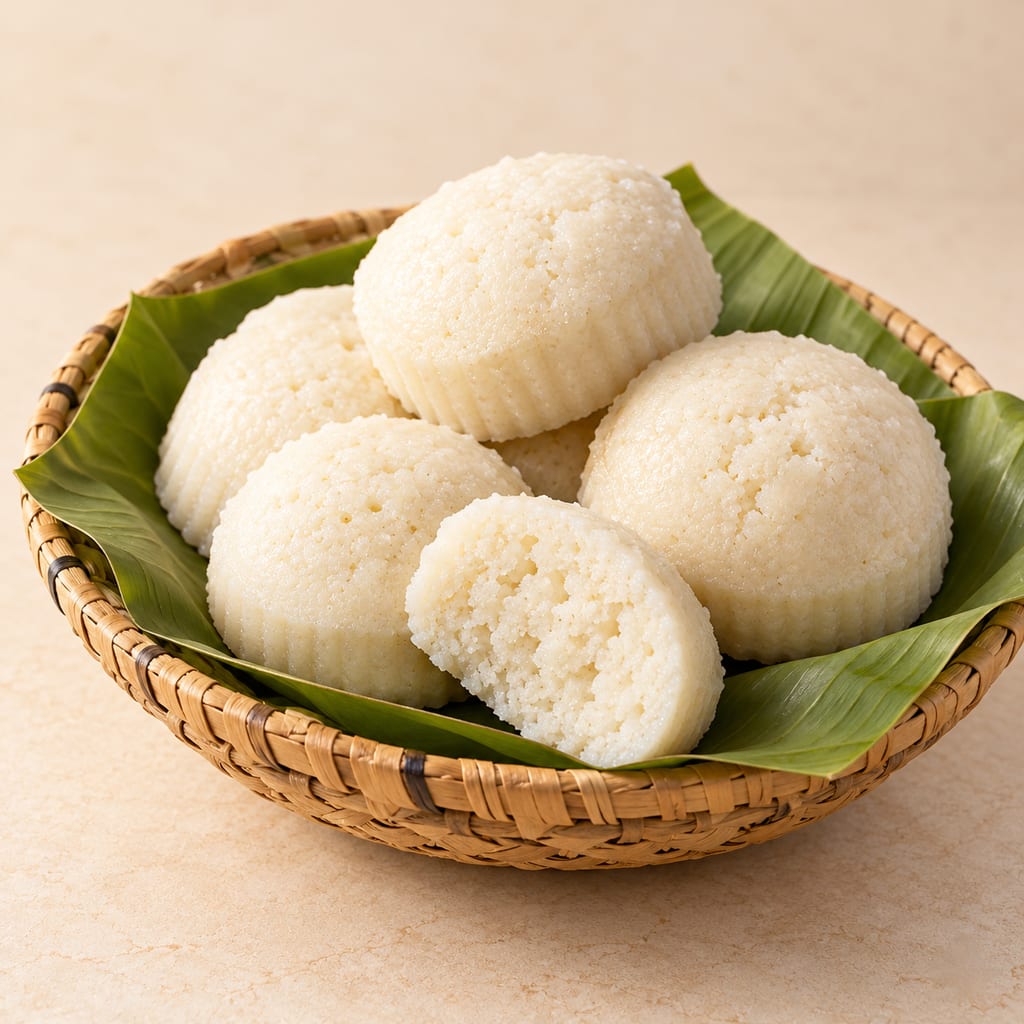
Soft, lightly tangy steamed cereal bread documented across Benin and Togo. This page gives one measured rice-flour research method; maize-based Ablo and mixed-grain versions remain distinct traditions.
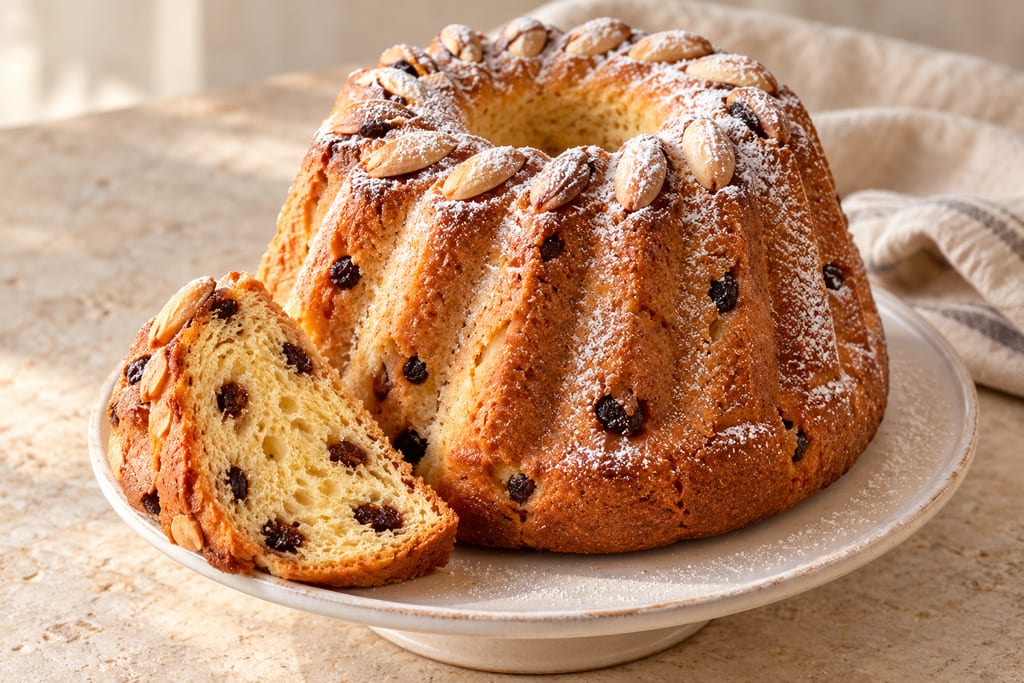
An enriched Alsatian yeast ring with raisins and almonds, kneaded with butter, proofed in a fluted mould and baked until browned.

Anpan is a soft wheat bun filled with sweet red-bean paste and finished with egg wash and black sesame. This dough rises with commercial instant yeast.
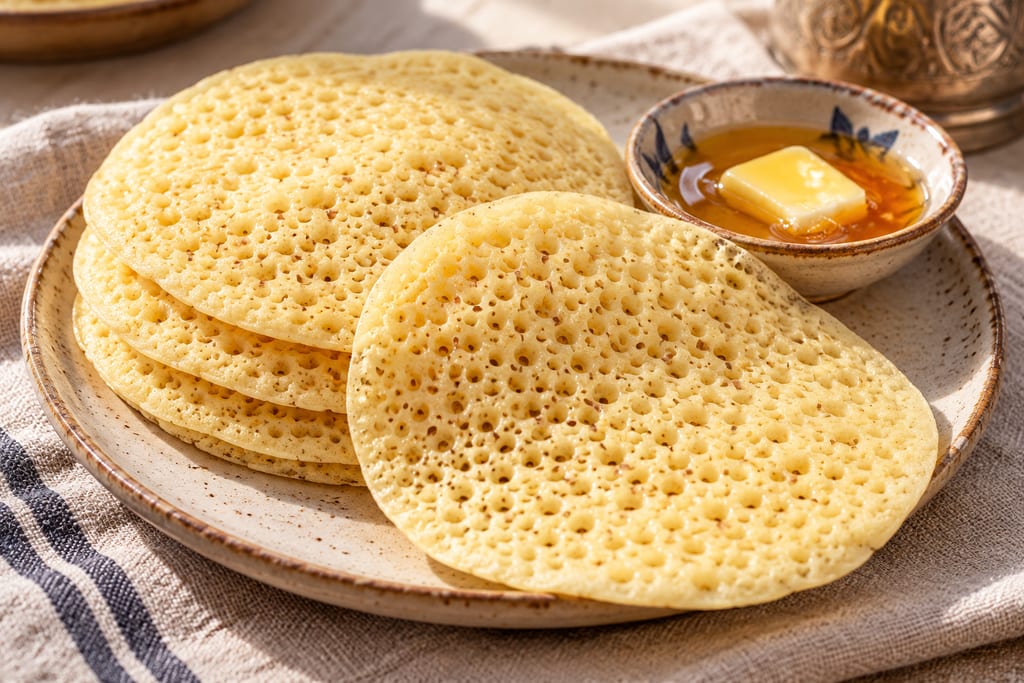
Moroccan semolina pancakes made from a thin yeast batter, rested until foamy and cooked on one side until the surface sets with a honeycomb of holes. This source-specific batch makes sixteen 5-inch pancakes.
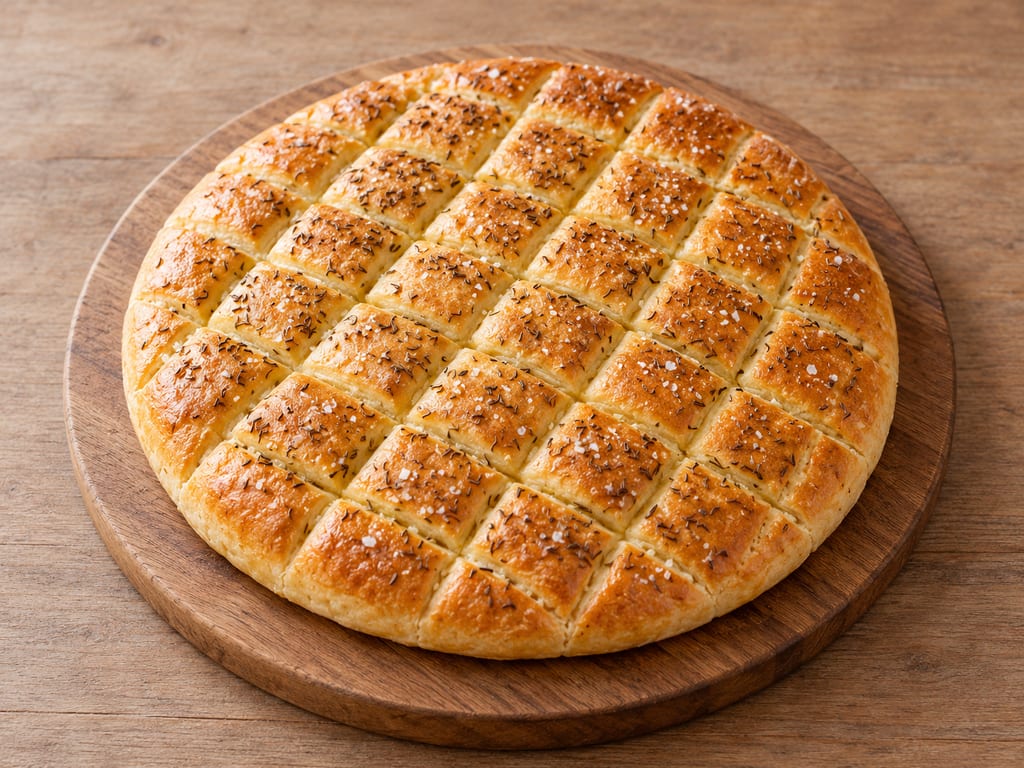
A round Slovenian flatbread scored in a grid and topped with caraway and coarse salt.
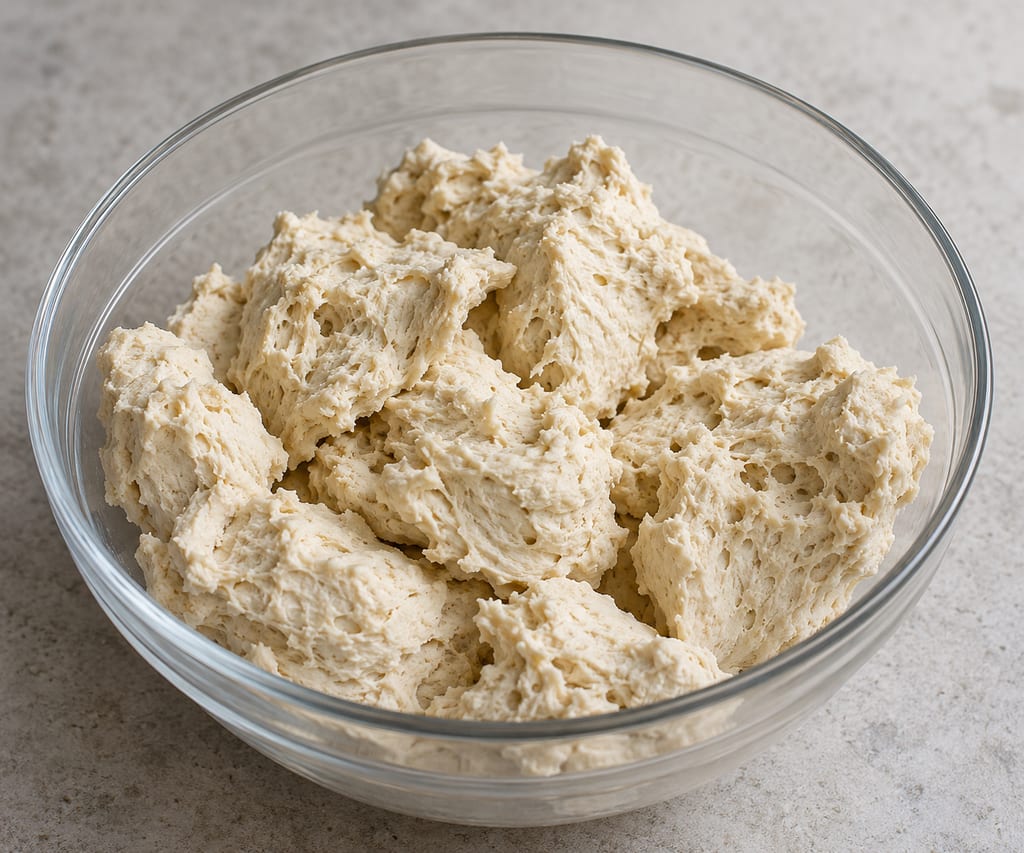
Biga is an Italian bread preferment of flour, water and a little yeast, usually a stiff unsalted mass of about 45 per cent water, fermented ahead and then mixed into the final dough.
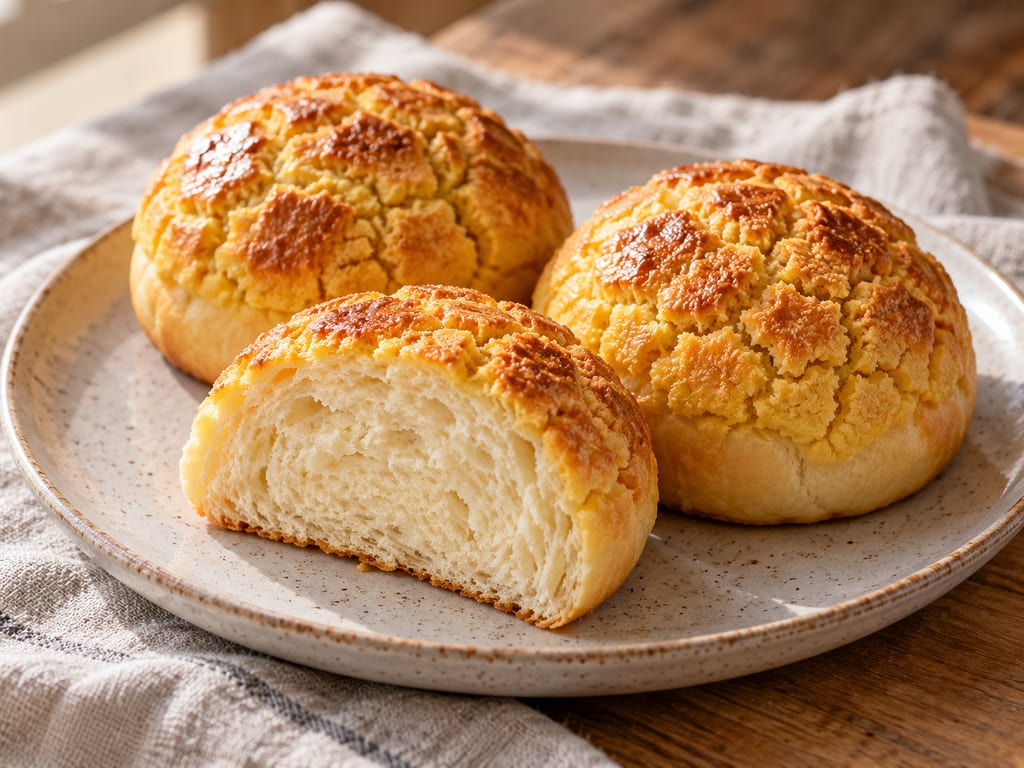
Hong Kong-style pineapple buns have soft yeast dough beneath a crisp, sweet pastry topping.
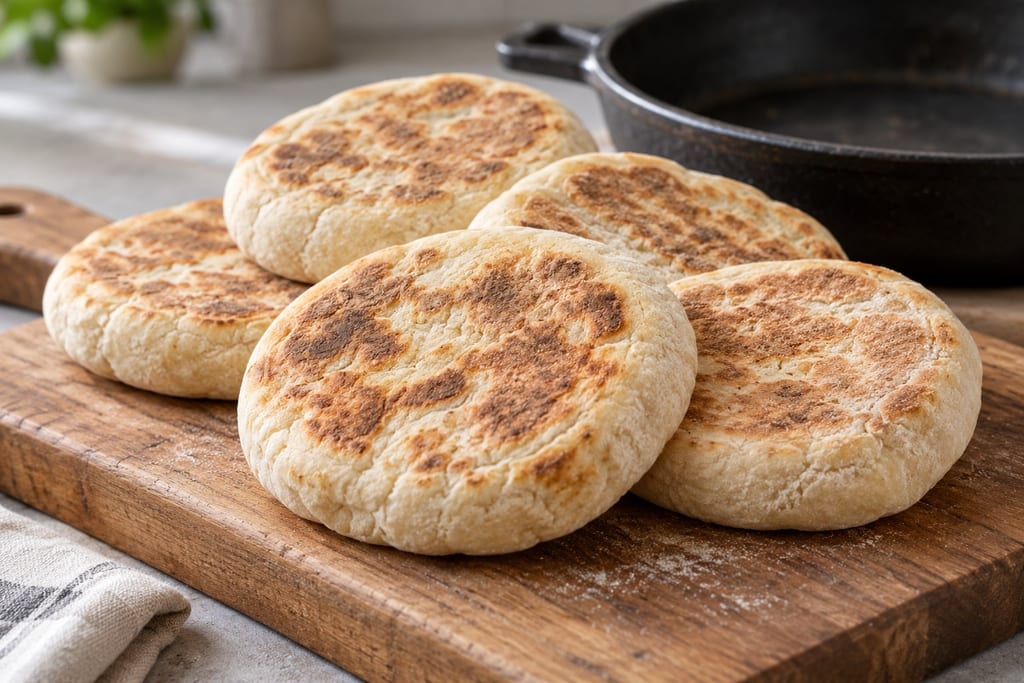
Sweet-potato wheat breads with fresh yeast, browned in a pan and finished in the oven. This is the bread component of Teleculinária's scrambled-egg dish.
No community contributions have been published for this entry yet.
Sign in to contribute. Published comments and photos are free to read.
FoodLabInspiration · Method · Geography
Shoti Bread in the OvenMeasured two-loaf home-oven formula, rise, shaping and baking.
Cited in: From tone to home oven; The oven changes the work
EurasianetContext · Geography
Skilled Georgian Puri Baker Plies His Craft in ArmeniaA Georgian baker's pointed bread and traditional clay tone wall baking.
Cited in: From tone to home oven
Georgia TravelContext
Shoti – Mother’s BreadKakhetian pointed crescent form, family holiday baking, tone equipment and supra presentation. Pagan-origin and etymological narratives are not treated as dated historical proof.
Cited in: A Kakhetian table association; The oven changes the work
Wikimedia Commons / Georgi1Image reference
Shotis puri.jpgFile-level CC BY-SA 3.0; excluded from PD/CC0 references.
Wikimedia Commons / Gaga.vaaImage reference
Shoti & Tone.jpgFile-level CC BY-SA 4.0; excluded from PD/CC0 references.