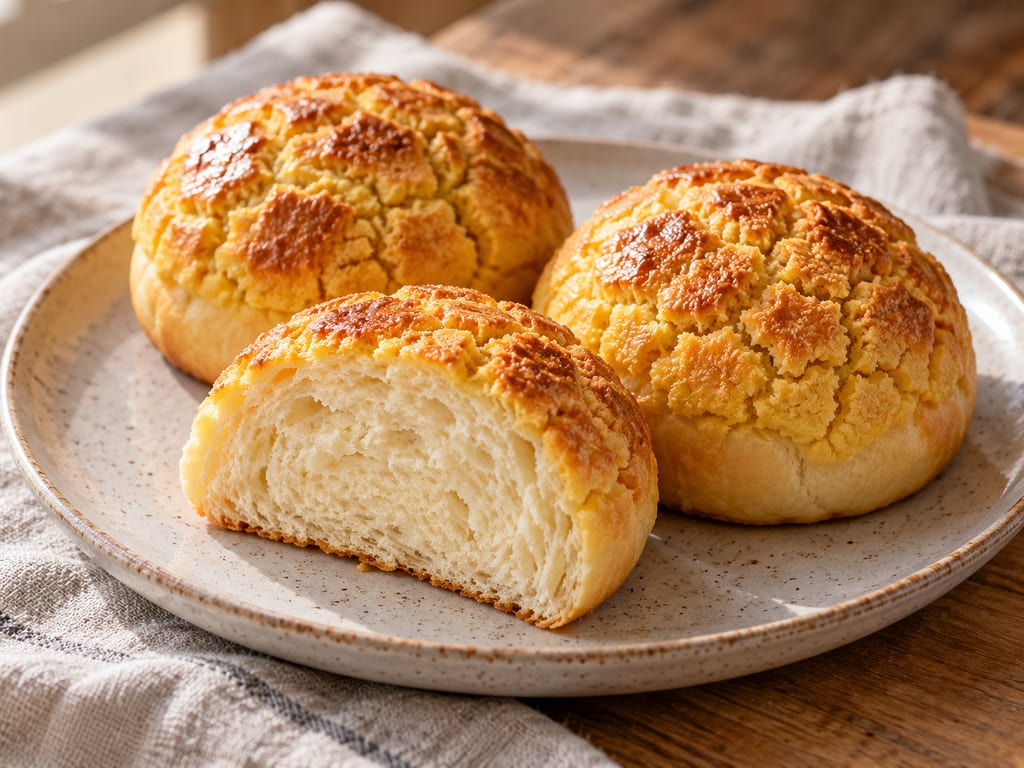
Bo lo bao
Hong Kong-style pineapple buns have soft yeast dough beneath a crisp, sweet pastry topping.
 FermenteaWhere food goes to change
XO醬 · Hong Kong XO sauce
XO sauce is a Hong Kong condiment of dried scallop and shrimp, chilli, aromatics and oil, cooked rather than fermented, whose restaurant and home versions differ widely.
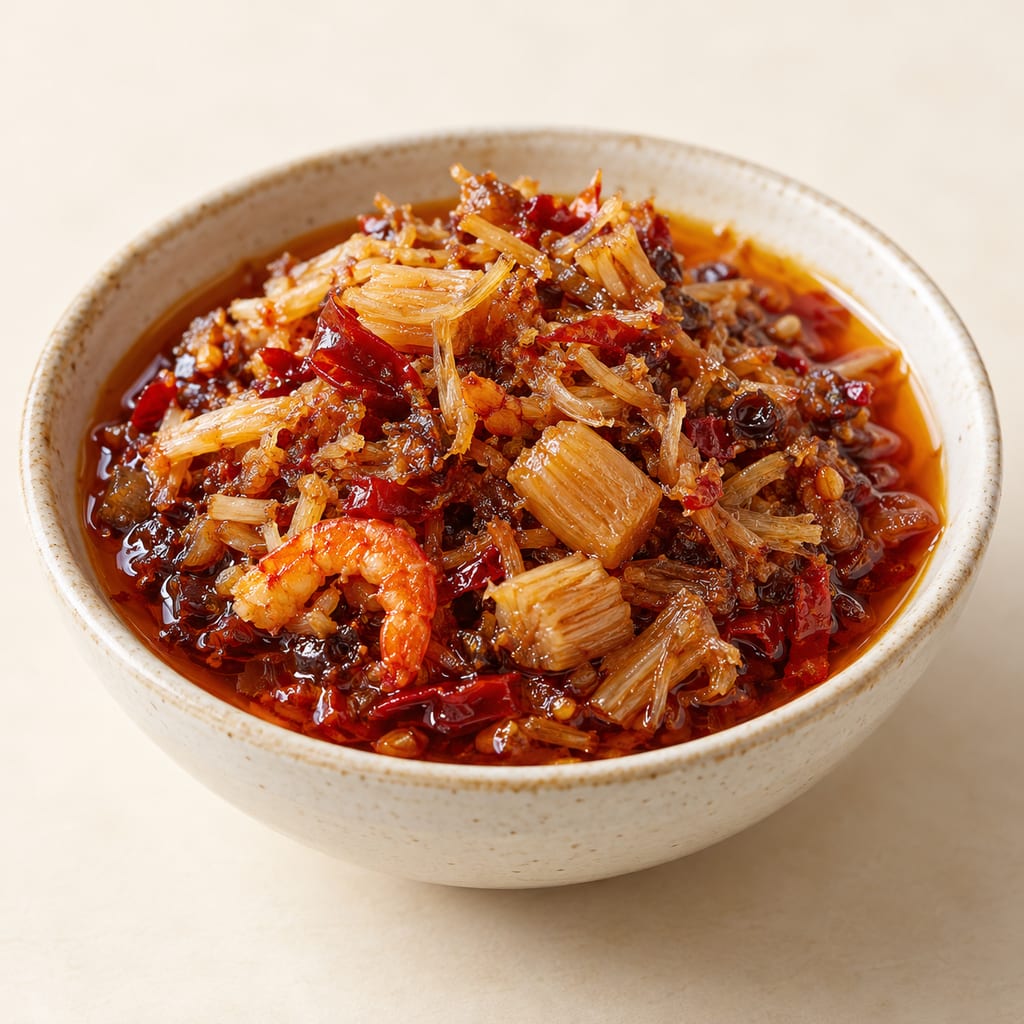
XO sauce (XO醬) is a Hong Kong condiment whose name borrows the prestige of XO cognac. The Michelin Guide accounts describe a savoury, oily mixture built around dried scallop and dried shrimp, with chilli, garlic and shallot, and sometimes Jinhua ham, salted fish or shrimp roe. The cognac reference explains the name; cognac is not a required ingredient.
The documented methods cook the aromatics and seafood in oil rather than fermenting the finished sauce. The condiment is served as a table relish or dip, and it seasons noodles and cooked dishes. Versions differ in their seafood, ham and oil, and no single standard formula exists. Any recipe built from these accounts is one example among several.
Accounts of who first made or named XO sauce remain disputed. Michelin reports that chefs are guarded about the origin, and its later feature links the name to the cognac grade and to the sauce’s spread from high-end Hong Kong restaurants into other eateries and shops. Ming Pao Weekly’s retrospective sets out several proposed episodes, including Han Peizhu in the 1970s, Lee Yuen in 1981 and the Peninsula hotel’s Spring Moon in 1986, and says the competing versions are difficult to verify.
These accounts document the growth of the sauce in Hong Kong dining culture. They do not establish a definitive inventor or first restaurant, so the dates here are reported claims, not settled chronology.
The batch recorded here is the Hang Heung home version, which yields about 250 to 300 g from 50 g of dried scallop, 20 g of dried shrimp, 25 g of Jinhua ham, 15 g each of garlic and shallot, 10 g of dried chilli and 150 mL of peanut oil. Huadiao wine (40 mL) and one to two tablespoons each of soy sauce and oyster sauce are listed as the seasoning, with no step saying when they go in. The scallop is soaked overnight in cold water until soft and then shredded, and the ham is diced coarsely enough to keep some chew.
The order of frying matters. The oil goes in hot, about 200 °C, and the shallot and garlic are fried for about eight minutes over high heat until golden and dry. Then the heat comes down, the shredded scallop and the dried shrimp go in until they smell fragrant, and the chilli and ham follow for about five minutes, until the oil bubbles. The ingredient list calls for dried chilli while the method step names bird's-eye chilli, so the two do not agree and the dried chilli is kept here. Everything is cooked in oil; nothing is fermented.
The sauce is packed hot into a pre-sterilised glass jar, solids first and oil on top, and pressed down so the oil covers them. The author's buying advice is to choose Japanese dried scallop for extra sweetness, small whole dried shrimp that stay visible in the finished sauce, and a three-year Zhejiang Jinhua ham.
Two Hong Kong food-company pages publish home versions that differ from each other. The Hang Heung batch above is the smaller. The second, from Koon Wah, lists about 150 g of scallop, 100 g of ham and 50 g of dried shrimp, with 500 mL of oil, onions, garlic, chilli powder, black pepper, yellow wine, oyster sauce, soy sauce and sugar. Its scallop and shrimp are soaked, the scallop and ham are steamed for 15 minutes, and the ingredients are fried in stages over medium-low heat before the seafood returns to the oil with the seasoning. It gives no finished yield, and one oil quantity in its method is written in shorthand that cannot be read as an amount. The two examples are not one formula, and neither is a validated production standard, so they should not be combined.
The Hang Heung page says an unopened jar keeps at room temperature for about two to three weeks and an opened jar, kept refrigerated, for about half a year, and asks for a clean, dry utensil each time. Koon Wah says to leave a sealed jar three to five days at room temperature before opening and to refrigerate it once opened. Neither claim is backed by a batch-specific preservation study, and the sources reviewed do not establish a shelf-stable process. The oil, seafood and aromatic content would need checking before any keeping period is adopted.
General home-preservation guidance from an extension service is not a validated XO process, and this page does not use it as one. Commercial XO sauces vary in their ingredients and allergen declarations. One manufacturer product in the Michelin-linked material is listed with crustacea, fish, soybean and wheat, so the label of any product should be checked before use.
The sources reviewed do not give a validated formula, a tested storage time or a safe shelf life, and they do not establish the inventor of the sauce. This page leaves those points open rather than filling them from one product or one home recipe.
Michelin describes XO sauce as a Hong Kong condiment associated with upscale Cantonese restaurants in the 1980s, while its 2019 account and a 2024 Ming Pao Weekly retrospective present competing stories involving Han Peizhu, Lei Garden and Spring Moon. These are reported claims rather than a settled first attestation; no definitive inventor or origin venue is established.
Yield 275 g · Scaling: source batch only
The method heats 150 mL of oil to about 200 °C and then adds wet aromatics.
Hazard sourceCommercial XO sauces vary. Check the exact ingredient list and allergen declaration; Lee Kum Kee's Seafood XO Sauce Hot and Savoury lists crustacea, fish, soybeans and wheat.
The home page suggests keeping an unopened jar at room temperature for about two to three weeks and an opened jar in the refrigerator for about six months. Neither figure is backed by a batch-specific preservation study, so keep a home batch refrigerated and use it promptly until a qualified review sets a limit.
Sources describe XO sauce as a Hong Kong condiment and report its development in Hong Kong restaurant culture; this does not verify a single inventor or restaurant of origin.
Hong Kong-style pineapple buns have soft yeast dough beneath a crisp, sweet pastry topping.
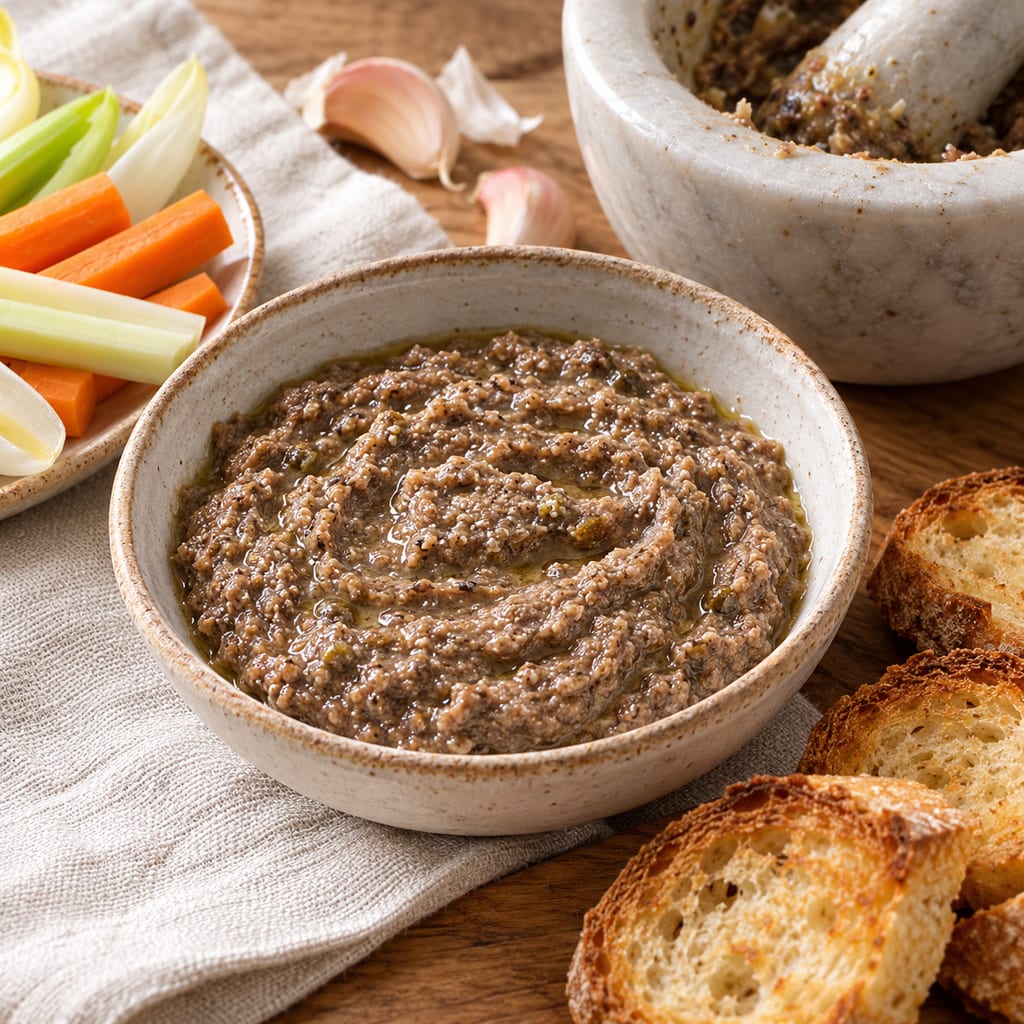
A Provencal dip of anchovies, garlic, capers and olive oil, pounded or blended to a creamy paste and served with raw vegetables, bread and eggs.
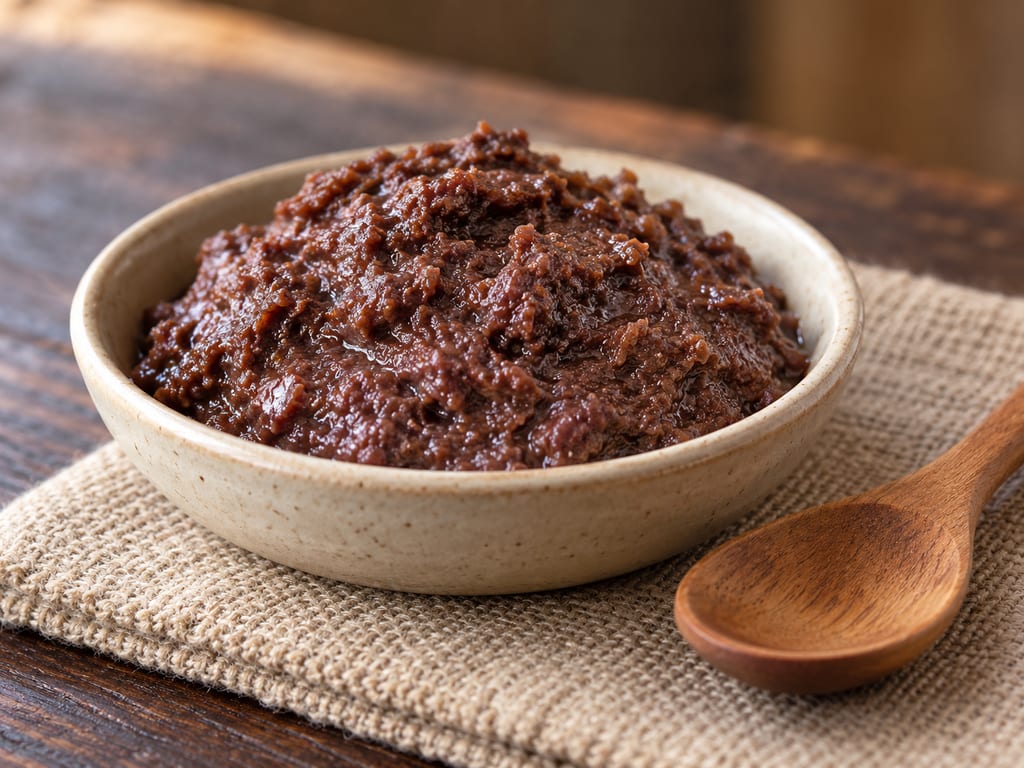
Bagoong isda is a Philippine fish paste: whole small fish salted and left to ferment for a month or more in earthen jars. It is the fish counterpart of bagoong alamang.
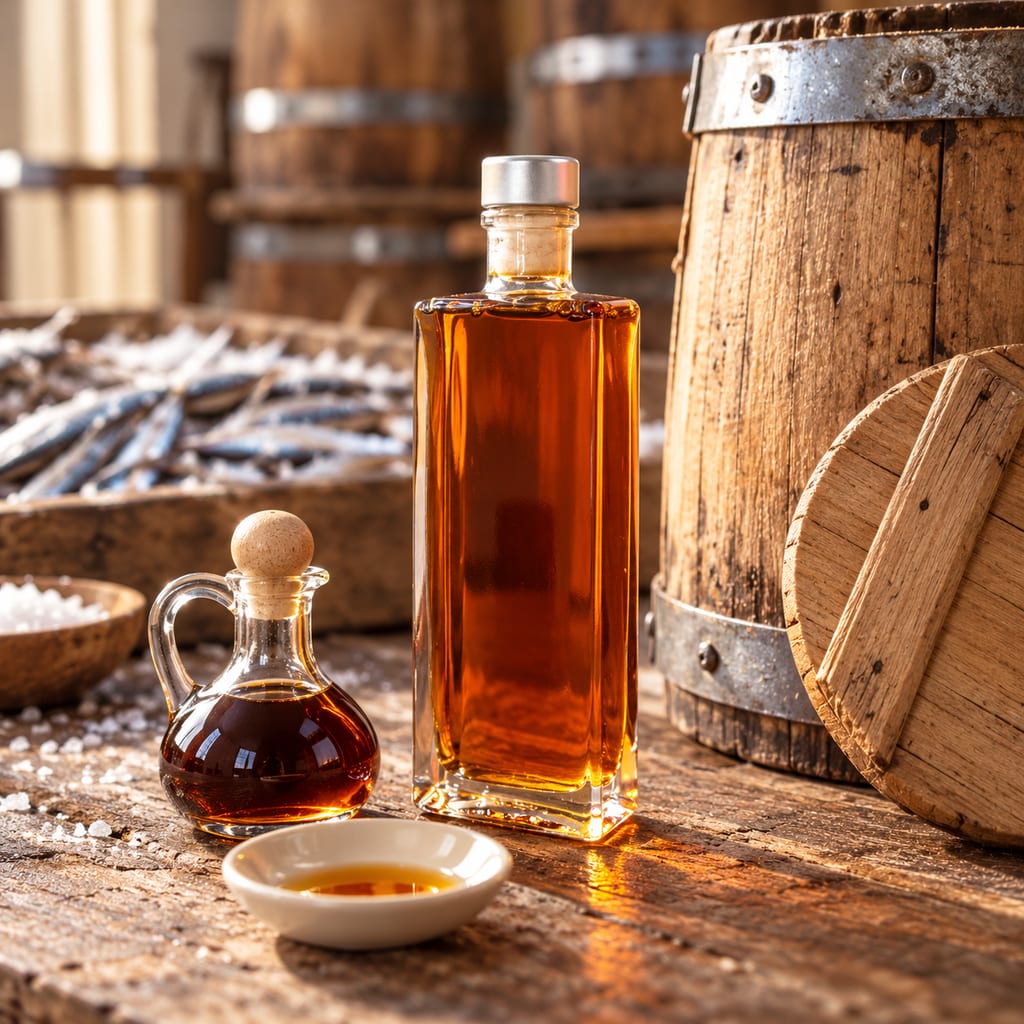
Colatura di alici is the amber liquid drained from salted anchovies matured in wooden containers in Cetara, on the Amalfi coast of Campania, and sold under a protected designation of origin.
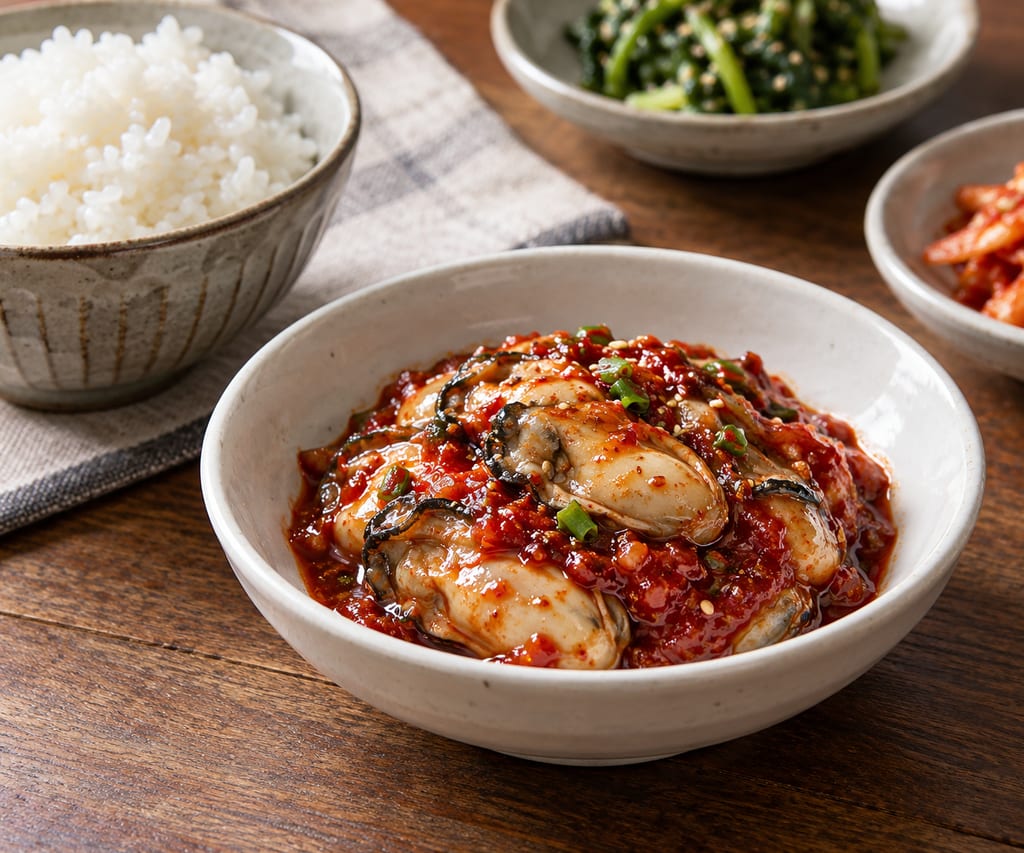
A Korean salted-oyster jeotgal seasoned with chili, associated especially with Seosan and Ganwoldo. This page records its food culture, not a household preparation method.
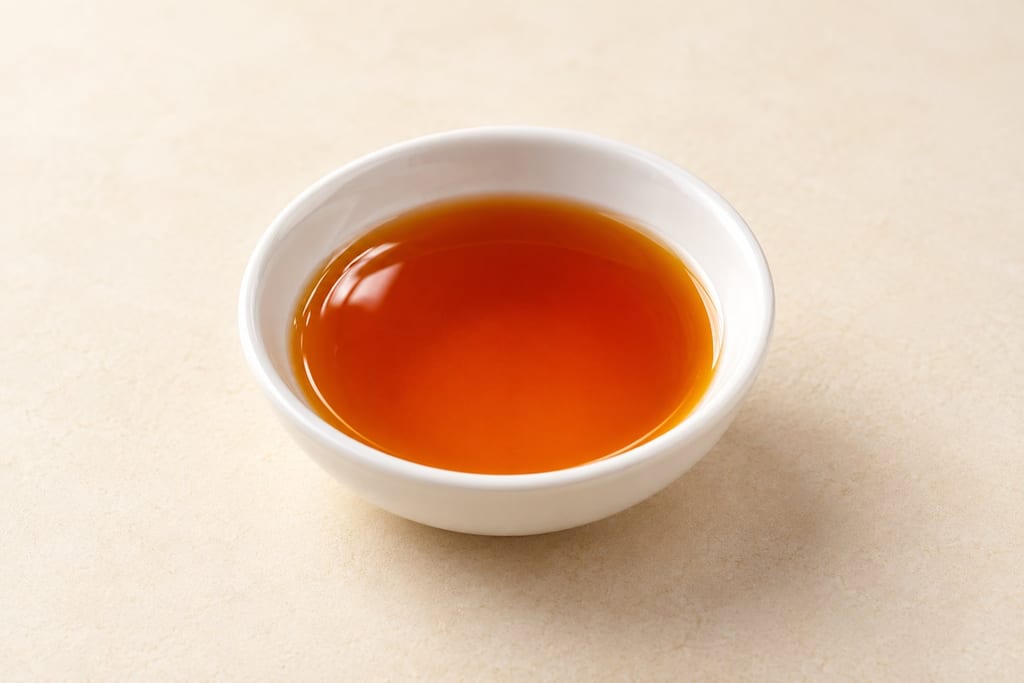
Fish sauce is a clear, salty seasoning made by maturing fish with salt and drawing off the liquid. The broad family includes distinct regional sauces rather than one interchangeable method.
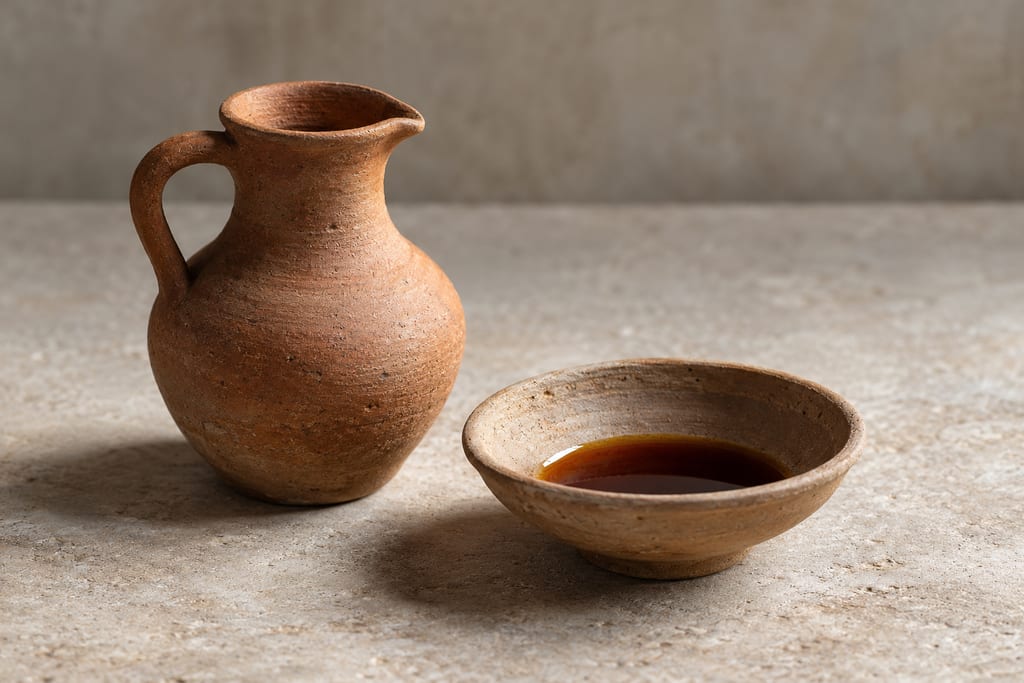
Garum, Greek garos and Latin liquamen, was the fish sauce of the ancient Mediterranean: fish and viscera salted and left in the sun, then drained off as a savoury liquid.
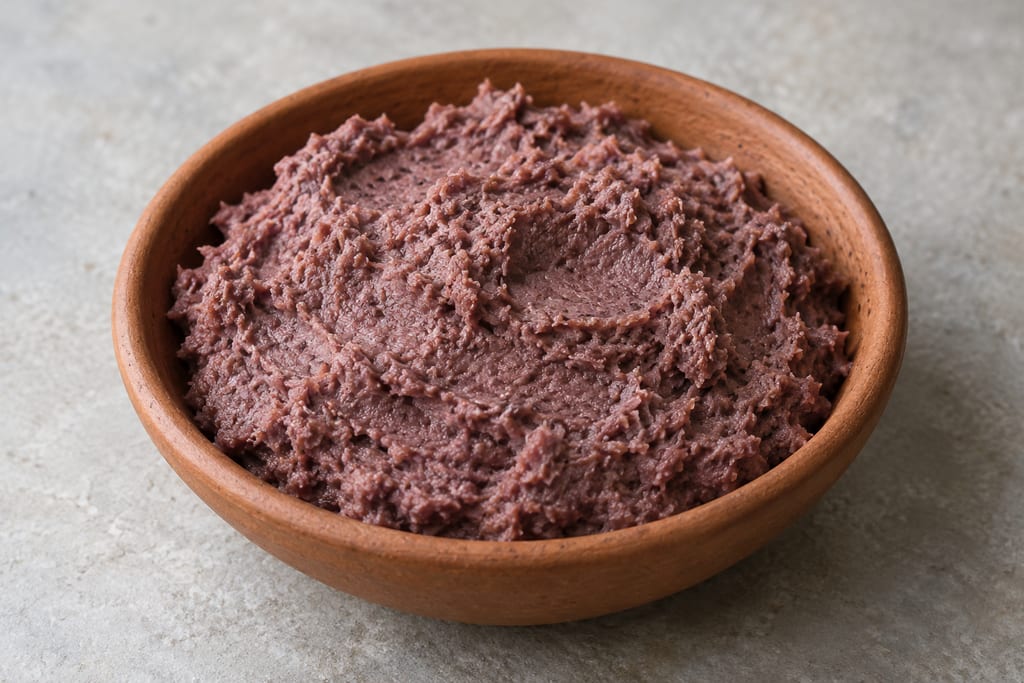
Guinamos is a shrimp paste made on Guimaras in the Philippines: small shrimp salted by hand, sun-dried and trodden by foot until it turns smooth.
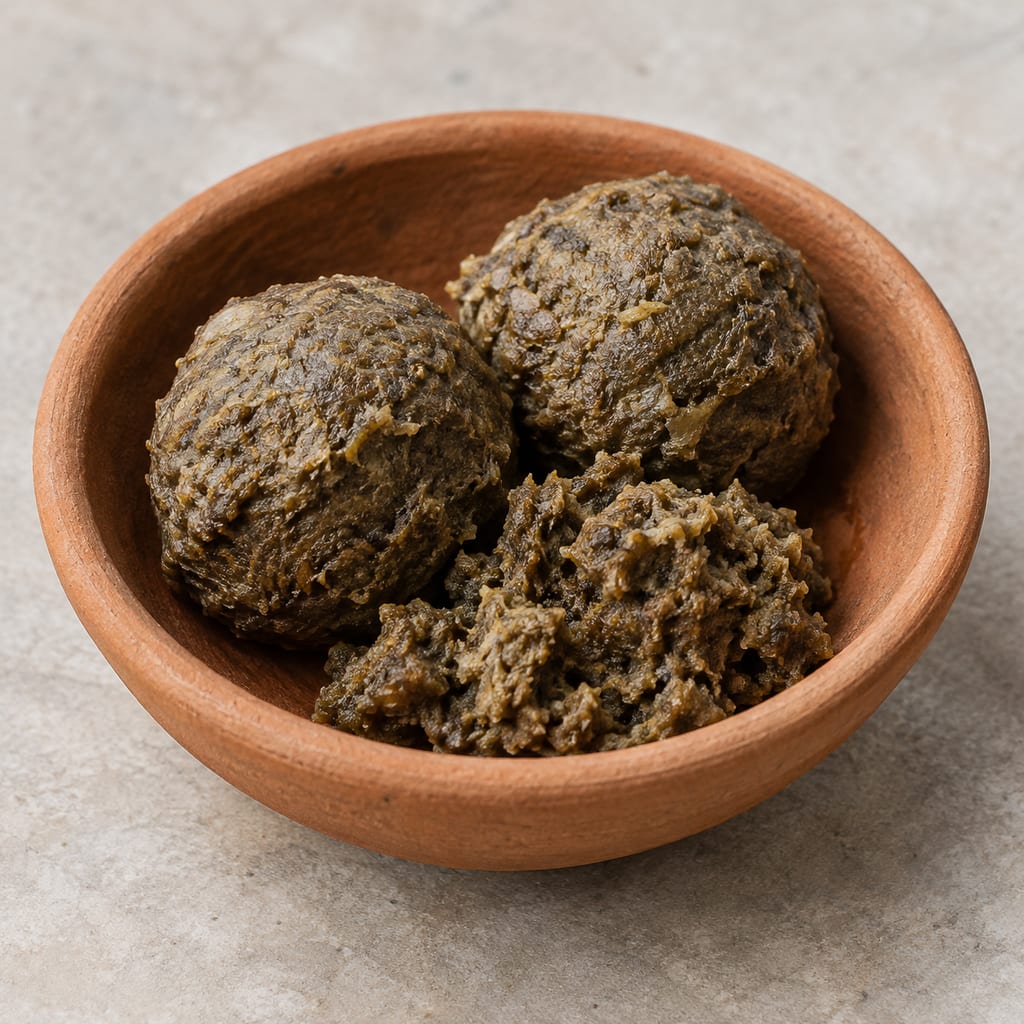
Manipuri fermented fish-and-aroid paste, formed into balls or kept in an earthen pot, used to season Manipuri dishes. Its method is documented in outline only.
No community contributions have been published for this entry yet.
Sign in to contribute. Published comments and photos are free to read.
Michelin Guide Hong Kong & MacauIdentity · Documented use · Flavour · History
XO 醬:港式粤菜醬料中的極品The page describes XO sauce as a Hong Kong high-end Cantonese restaurant condiment, with origins and naming disputed.
It identifies dried scallop, salted fish, dried shrimp, Jinhua ham, shrimp roe and chilli among reported versions, and says versions vary.
It describes use as a relish, dip and seasoning for noodles and cooked dishes.
Cited in: A modern condiment, not one formula; What the sources do not give
Michelin Guide Hong Kong & MacauIdentity · Flavour · History · Documented use
追本溯源:XO醬The page calls XO sauce a Hong Kong condiment and says it became prominent in Hong Kong upscale restaurants in the 1980s.
It says the XO name compares the costly condiment with XO cognac; the source does not make cognac a required ingredient.
It presents competing origin stories, including Han Peizhu, Lei Garden in 1981, and Spring Moon, rather than establishing a definitive inventor.
It describes versions using premium dried seafood, ham, chilli, shallot, garlic and oil, and use as a relish or sauce.
Cited in: A modern condiment, not one formula; Origins remain disputed
Ming Pao Weekly CultureHistory
眾說紛紜的起源!據傳XO醬早於1970年代就出現,但卻沒明確資料指出,誰是始創人?The 2024 retrospective lays out several competing origin stories and cautions that their reliability is difficult to establish.
It recounts claims involving a 1970s household sauce, Lei Yuen in 1981, and Spring Moon in 1986; these remain reported accounts, not a verified chronology.
Cited in: Origins remain disputed
Lee Kum Kee Home Hong KongFlavour · Ingredient example · Allergens · Use
Seafood XO Sauce Hot and SavouryThe manufacturer's product page describes this specific sauce as savory and tangy, with dried shrimp, dried scallop, ham, shrimp sauce and fish sauce; it recommends the product with meals and noodles.
The listed ingredients and allergen declaration are specific to this packaged product and do not establish a universal XO sauce formula.
The page declares soybeans, crustacea, wheat and fish for this product.
Cited in: Storage and safety
U.S. Food and Drug AdministrationAllergen context
Food Allergies: What You Need to KnowFDA identifies fish, crustacean shellfish, wheat and soybeans among major food allergens in the United States; this is general context and does not replace checking a product's local ingredient and allergen label.
Hang Heung Cake ShopMethod · Home example
Homemade XO sauce in six steps (Hang Heung Cake Shop)Quantities of 50 g dried scallop, 20 g dried shrimp, 25 g Jinhua ham, 15 g each of garlic and shallot, 10 g dried chilli, 150 mL peanut oil and 40 mL Huadiao wine, with 1 to 2 tablespoons each of soy and oyster sauce, and a stated yield of about 250 to 300 g.
Scallop soaked overnight in cold water and shredded; ham sliced thin and diced not too fine; oil heated to about 200 °C, shallot and garlic fried about 8 minutes over high heat to golden and dry; heat lowered, scallop and shrimp fried until fragrant; chilli and ham fried about 5 minutes until the oil bubbles; packed hot into a pre-sterilised glass jar, solids first then oil, pressed so the oil covers them.
Selection advice: Japanese dried scallop for extra sweetness, small whole dried shrimp, and a three-year Zhejiang Jinhua ham. Storage claims: unopened jar about 2 to 3 weeks at room temperature, opened jar refrigerated about half a year, clean dry utensils each time; not validated.
Cited in: The home method; Two published home versions; Storage and safety
Koon Wah FoodHome example
Homemade XO scallop sauce (Koon Wah Food)A different, larger ingredient list: 150 g scallop, 100 g Jinhua ham, 50 g dried shrimp, 500 mL oil, onions, garlic, chilli powder, black pepper, yellow wine, oyster sauce, soy sauce and sugar.
Scallop and shrimp soaked an hour or more in water with a spoon of yellow wine; scallop and ham steamed 15 minutes; staged frying over medium-low heat; sealed in sterilised bottles and left 3 to 5 days at room temperature before opening, refrigerated once opened; no finished yield given.
Cited in: Two published home versions; Storage and safety
Penn State ExtensionSafety context
Canning and Freezing Questions and Answers (Penn State Extension)General home-preservation guidance, not a validated XO sauce process
Cited in: Storage and safety