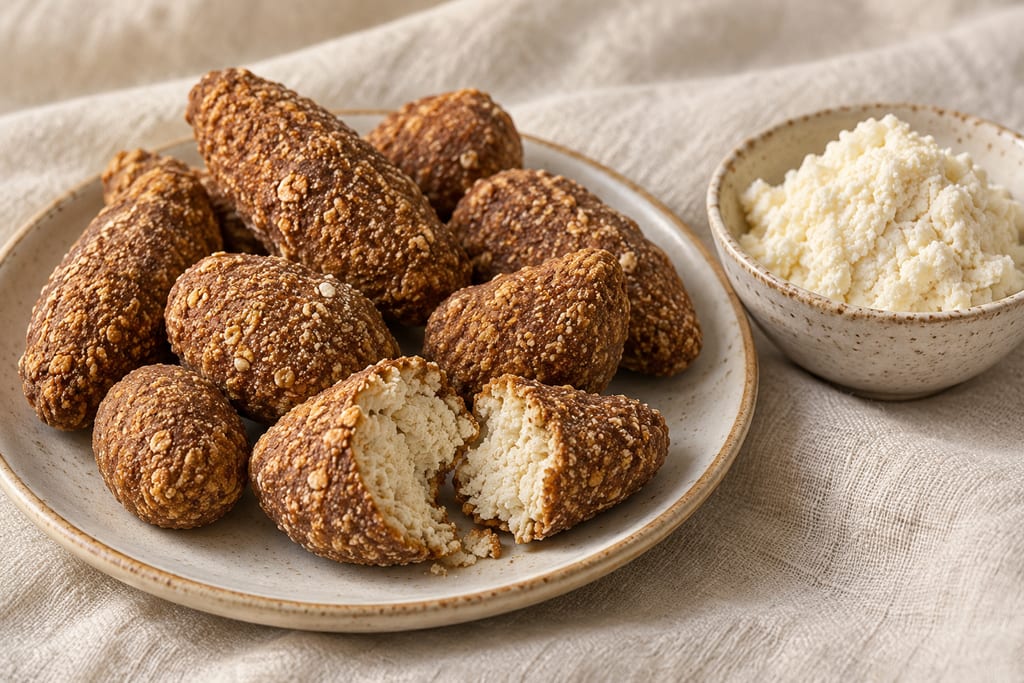
Aarchi and kurut (Altai dried curd)
A two-stage Altai dairy preparation: sour chegen is heated into soft aarchi, then portions are drained, pressed and traditionally smoked into firm kurut.
 FermenteaWhere food goes to change
Modern method
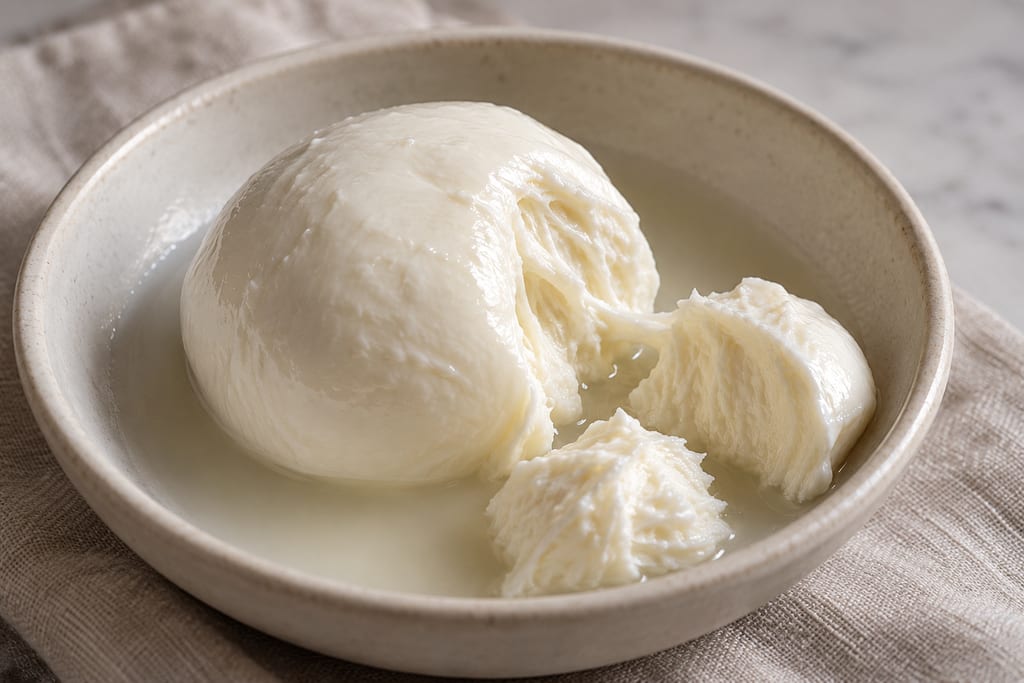
Homemade mozzarella cheese
A creator sets raw cow’s milk with vinegar, presses the hot curd, warms it in short microwave intervals, then stretches it and cools it in water and ice.
A creator demonstration documents a preparation, not the food’s origin or earliest attestation.
Scaling: source batch only
The filmed source batch uses unpasteurized milk; CDC recommends consumers choose pasteurized milk and dairy products.
Hazard sourceThis candidate preserves the creator’s raw-milk method and does not replace it with another formula. CDC recommends pasteurized dairy; the video’s heating and stretching stages do not validate this batch’s safety.
Control sourceThe source uses raw milk. Heating it to 115–120°F (46–49°C) and later warming curd to about 160°F (71°C) are creator steps, not a validated pasteurization or safety process.
The creator’s 1–2 week refrigerated storage claim is not a validated shelf life.
No maturation stage is described in this source batch.
The video does not establish origin.
A two-stage Altai dairy preparation: sour chegen is heated into soft aarchi, then portions are drained, pressed and traditionally smoked into firm kurut.
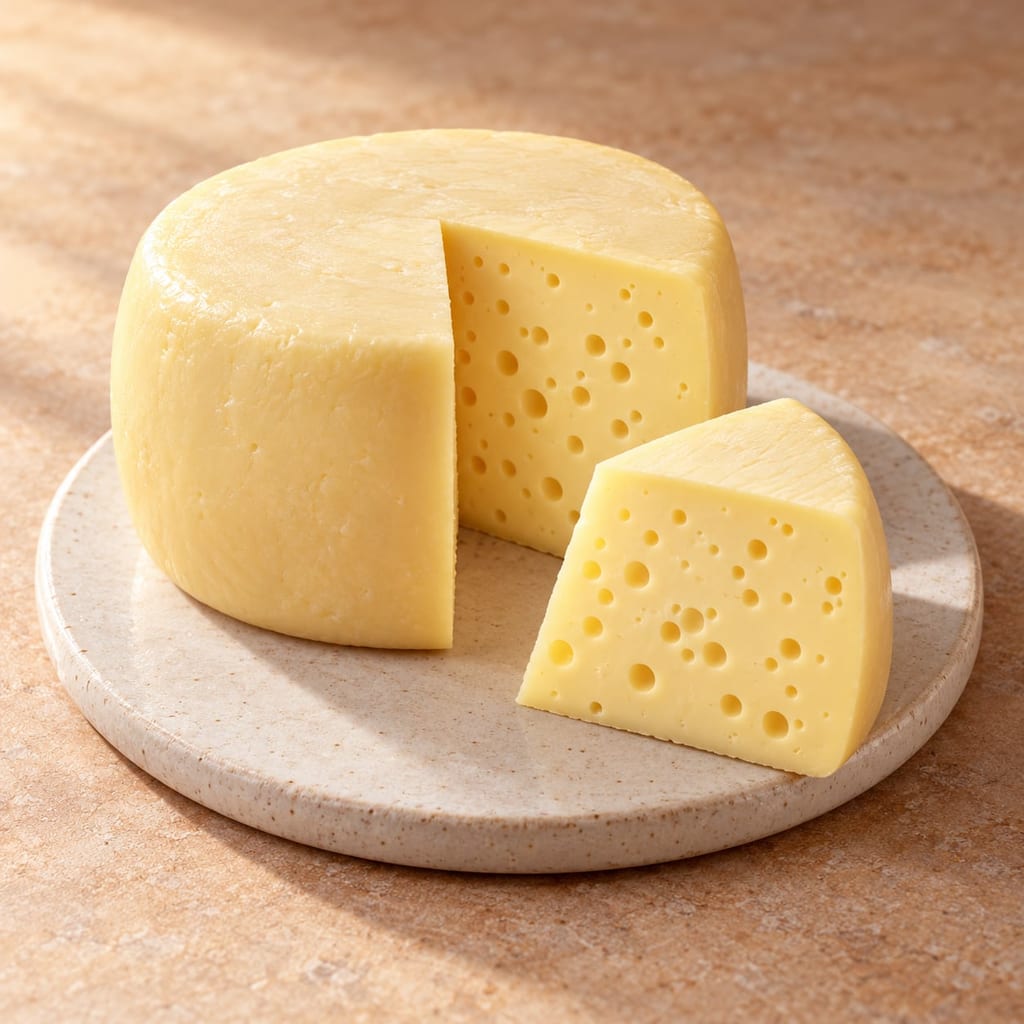
A washed-curd cheese with propionic bacteria, warmed by hot water in two steps and then held in a warm room for weeks so the bacteria can form its holes.
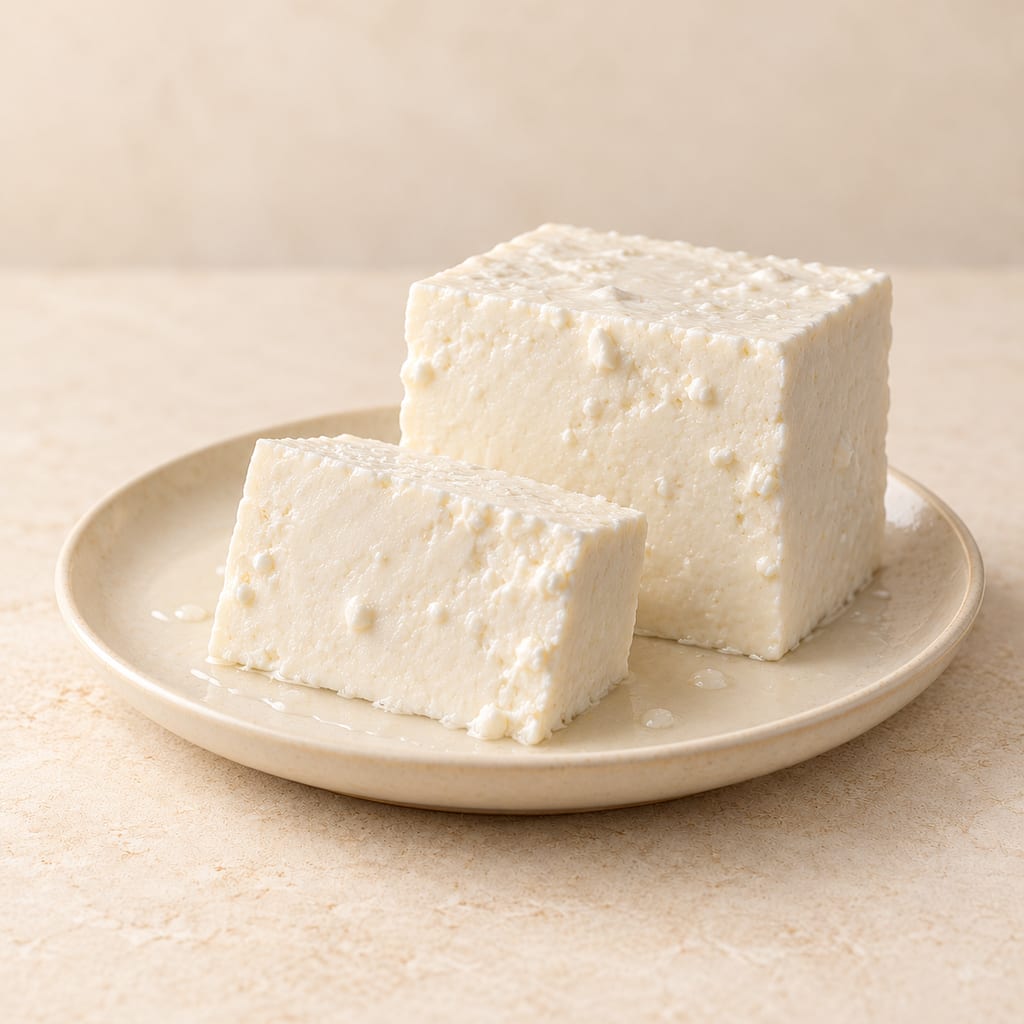
Beyaz peynir is a Turkish white cheese matured in brine. Sheep milk, alone or mixed with other milks, gives a close-textured cheese cut into blocks and packed in cans.
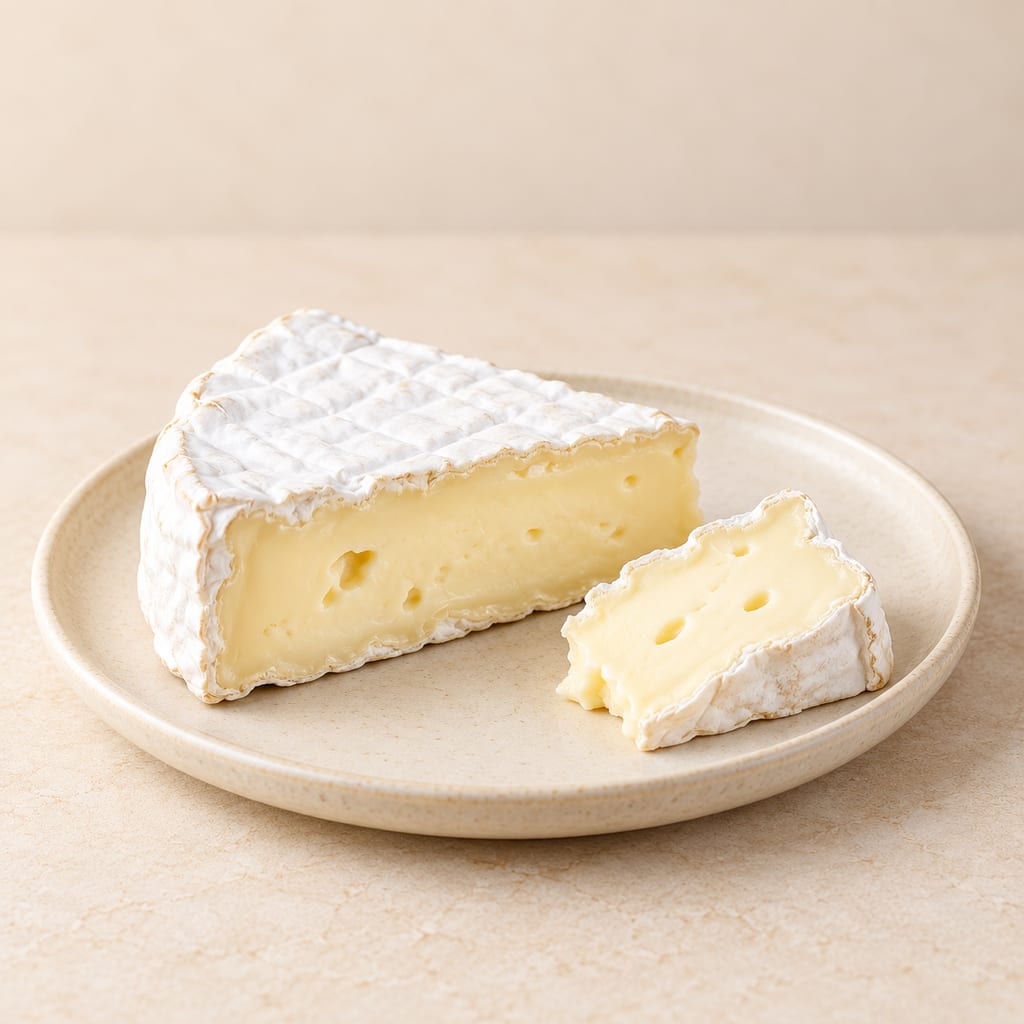
A cream-enriched Brie with a white bloomy rind and a softening center, made from pasteurized milk with lactic and surface cultures.
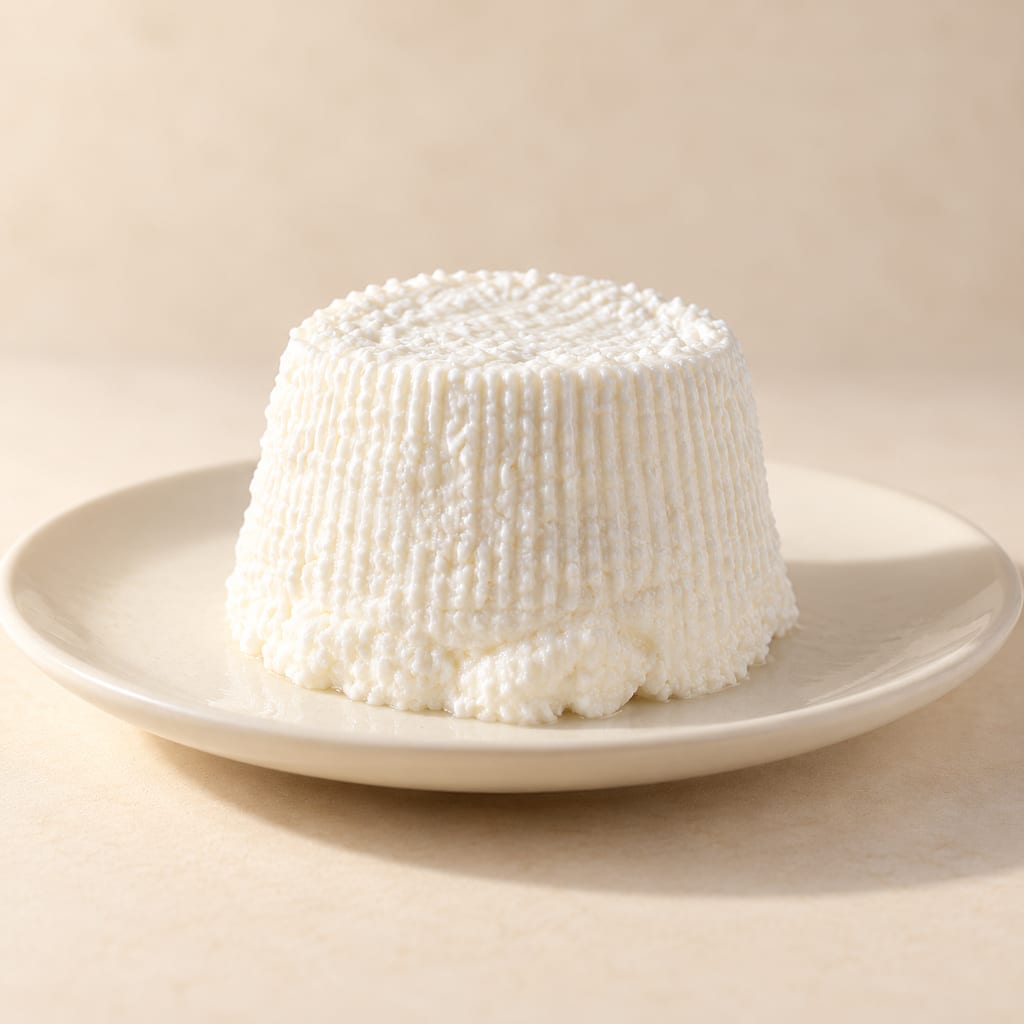
Corsican Brocciu is a whey cheese made by heating sheep's or goat's whey with whole milk and salt, then gently draining the flocculated curds. It is eaten fresh or salted and ripened as Brocciu passu.
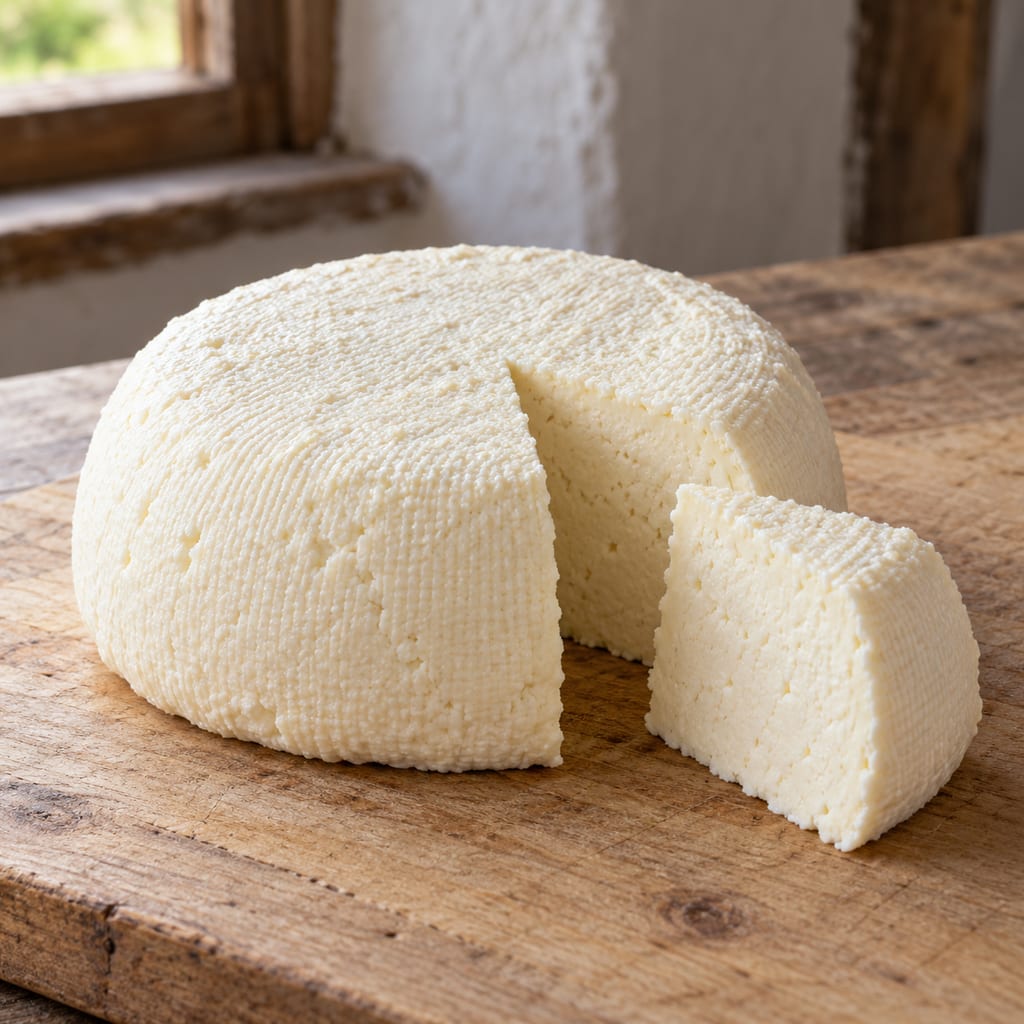
Budz is a traditional Hutsul rennet-set cheese made from sheep, cow or goat milk in the Ukrainian Carpathians, forming a fresh curd that can be eaten, smoked or processed into salted bryndza.
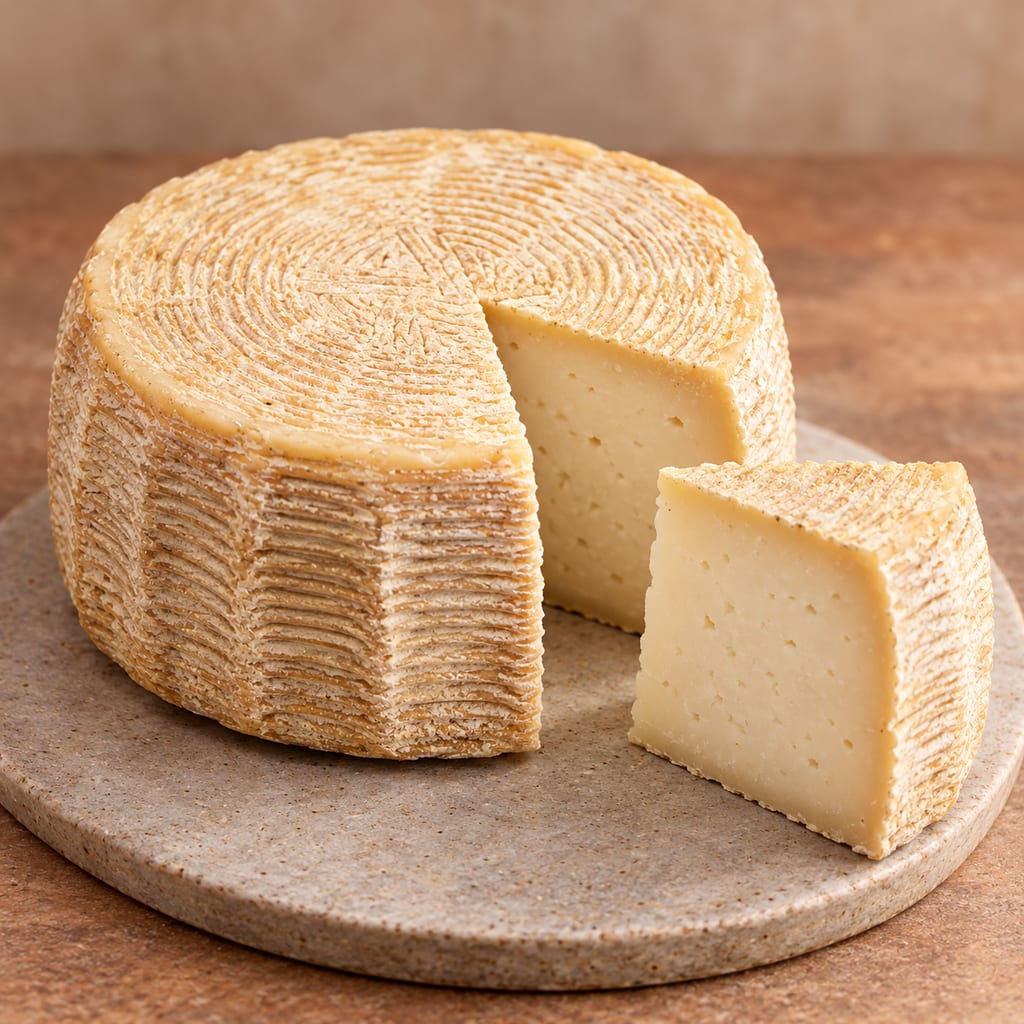
A scalded cheese moulded in baskets and re-cooked in its forms in hot whey, made alongside a ricotta from the same milk, then acidified, brined and aged for months.
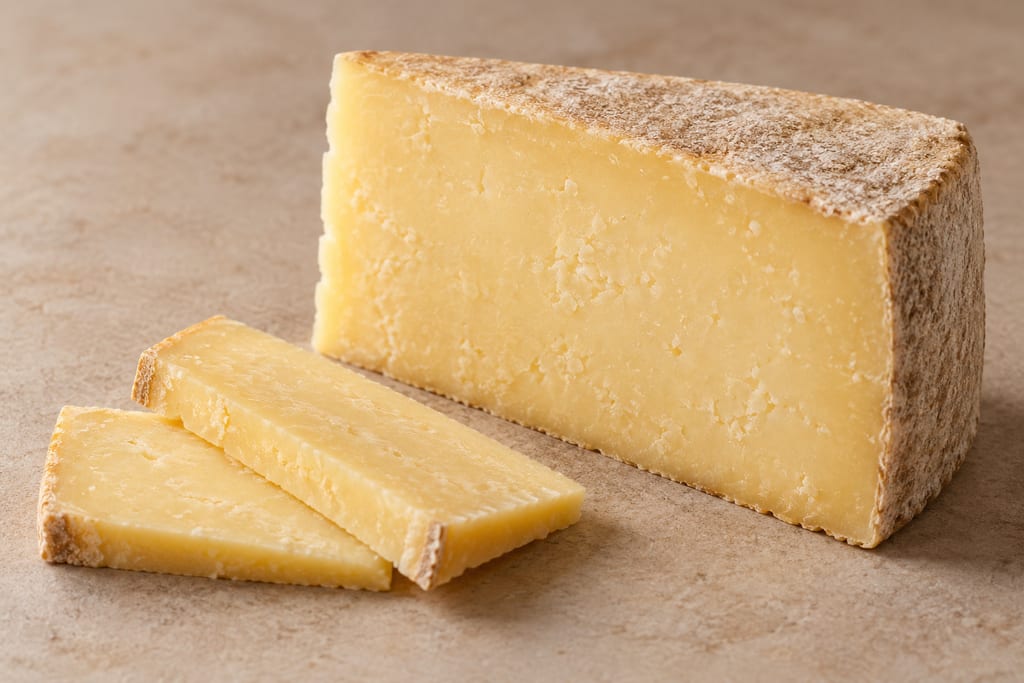
A pressed cheese whose curd is cooked slowly, then cheddared: kept warm in slabs that are turned and stacked for hours before milling, salting and pressing.
No community contributions have been published for this entry yet.
Sign in to contribute. Published comments and photos are free to read.
In The Kitchen With MattProcess · Ingredients · Identity
How to Make Mozzarella Cheese 2 Ingredients Without Rennet | Homemade Cheese RecipeThe filmed batch uses 1/2 gallon raw cow’s milk and 7 tbsp white distilled vinegar. The creator heats the milk to 115–120°F (46–49°C), rests the curd for 5 minutes, squeezes it, warms it in short microwave intervals to about 160°F (71°C), stretches and cools it in water then ice. No finished yield is reported.
U.S. Centers for Disease Control and PreventionSafety
How Listeria Spread: Soft Cheeses and Raw MilkCDC recommends pasteurized dairy; raw milk products can carry Listeria and other harmful germs. This does not validate the creator batch.