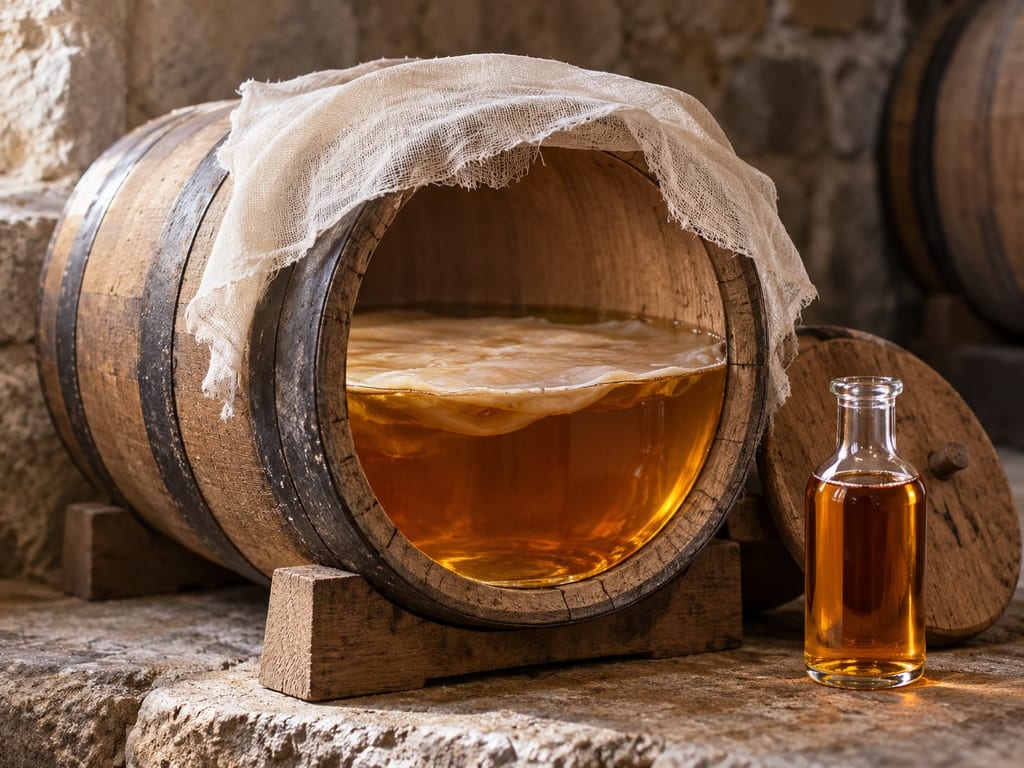
Fruit vinegar (Orleans method)
Fruit wine turned into vinegar by acetic acid bacteria at the surface of a half-filled, air-vented vessel. The Orleans method takes one to three months for a 9% wine.
 FermenteaWhere food goes to change
Equipment · Auxiliary fermentation heaters
A low-watt electric band warms a fermentation vessel from the outside. Belt position can influence heating, but these examples do not provide a built-in thermostat; electrical ratings and vessel compatibility vary by model.
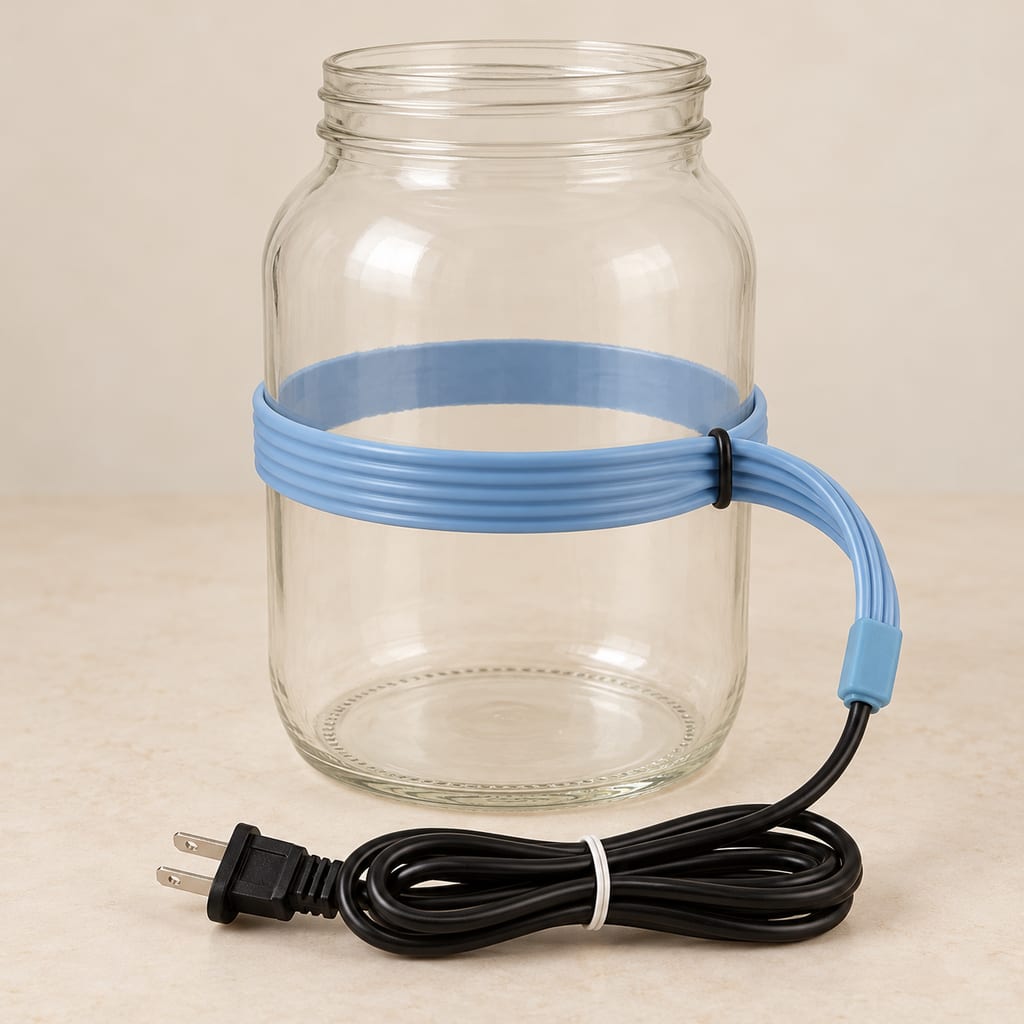
A fermentation heat belt is a portable electric heater fitted around the outside of a fermenter. The belt transfers heat through the vessel wall into the contents; it does not sit in the food and is not itself a fermentation vessel. Product examples have a flexible heated section, a retaining loop or fastening arrangement, and a power cord. The exact construction differs by maker.
Position matters. The CheeseMaker says its belt can be moved above, below or between the liquid level and adjusted around a jar; Mangrove Jack's likewise says lowering its belt increases heating and raising it reduces it. This is a coarse physical adjustment, not a measured setpoint: neither inspected listing describes a built-in temperature controller. Treat it as supplemental warmth and monitor the actual ferment according to the maker's directions.
The name covers products that should not be confused with one universal design. The CheeseMaker lists a 25–30-watt, 110–115-volt US belt, with a 35-inch blue band and 71-inch cord. Mangrove Jack's lists a separate 25-watt, 220–240-volt, 50/60-Hz product available in New Zealand and Australia. These ratings are not interchangeable; check the model label and local supply before use.
Compatibility is similarly model-specific. The CheeseMaker's product photograph shows its belt around a glass jar and its page says a glass vessel is not included. By contrast, the Winemaker Inc. BrewBelt instructions specify named plastic pails or fermenters and expressly prohibit fitting that unit to glass, metal or wood. Follow the instructions for the exact belt; a photograph of one product does not establish the safe use of another. The Winemaker manual also says not to cover its belt, to keep flammable materials away and to observe its stated operating-duration limits.
Vendors market particular belts for different ferments. The CheeseMaker lists kombucha, yogurt and kefir; Mangrove Jack's presents its belt for beer fermentation. Those are product-use descriptions, not evidence that every recipe needs added heat or that a belt has been validated for a specific starter, vessel size or room. The CheeseMaker reports that, in its test with a 3–5-gallon container, liquid did not rise above 89°F (31.6°C), while also telling users to monitor and adjust. That observation belongs to its product and test conditions; it is not a maximum for other belts or setups.
The sources document examples sold for different regional markets, but do not establish a single invention date or manufacturing origin for the equipment class. Use an appropriate thermometer to check the ferment itself rather than inferring liquid temperature from the belt's position or wattage. A heater band can provide warmth; it cannot by itself establish that a fermentation is at its required temperature or that the resulting food is safe.
The inspected product pages and instructions document current manufactured heating belts but do not establish an invention date or earliest use.
A different BrewBelt manual says its unit heats immediately, must not be covered, must be kept away from flammables, and must not be fitted to glass, metal or wood. These instructions apply to that named product, not every heating belt.
Hazard sourceFollow the exact belt's voltage, vessel-material, placement, duration and covering instructions; monitor the fermenting liquid with a suitable separate thermometer where the product maker directs monitoring.
Control sourceHeating performance and compatible vessel materials differ between products. Never transfer one model's specifications or instructions to another.
The CheeseMaker product's reported test with a 3–5 gallon container did not raise liquid above 89°F (31.6°C), but the seller says users must monitor and adjust; this result is not a universal temperature ceiling.
Source →The cited Winemaker BrewBelt manual limits that specific product to named plastic fermenters and prohibits glass, metal or wood; other products may have different compatibility.
Source →The listed electrical ratings differ by product and market: 110–115 V, 25–30 W for The CheeseMaker's US model versus 220–240 V, 25 W for Mangrove Jack's NZ/AU product.
Source →The inspected sources do not establish a specific place of origin or a representative place of use for this equipment category. Manufacturer-specific examples do not establish the geography of the broader type.
Fruit wine turned into vinegar by acetic acid bacteria at the surface of a half-filled, air-vented vessel. The Orleans method takes one to three months for a 9% wine.
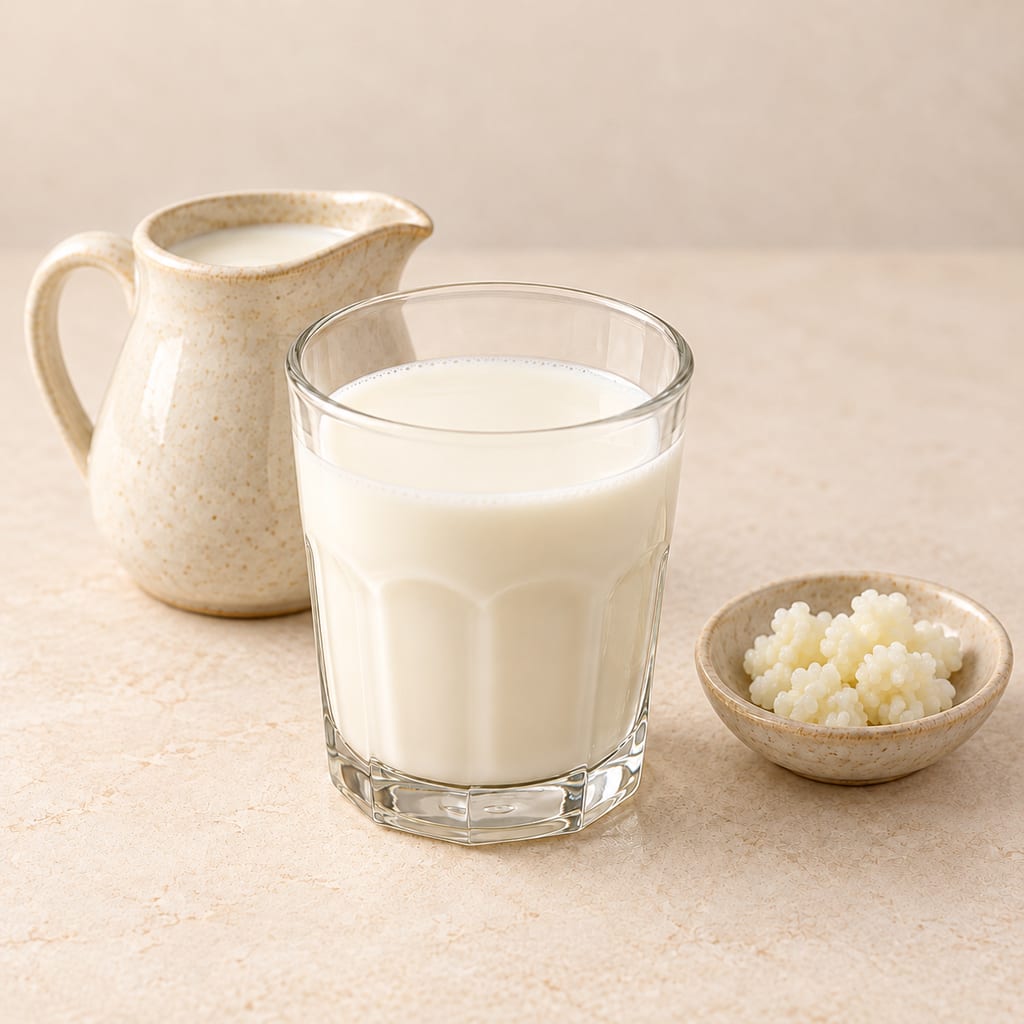
Milk kefir is a tangy fermented drink made with reusable grains of bacteria and yeasts. Grain fermentation can give the milk a light fizz and some alcohol.

Soft, spreadable Calabrian pork sausage made with a great deal of red chilli and fatty pork, stuffed into natural casings, sometimes smoked and matured while staying soft.

A way to add independent temperature logging to an existing food dehydrator without changing its built-in controls or protections. It is a monitoring method, not a rewiring plan.

Pleurotus cystidiosus is the abalone mushroom, a cultivated oyster-type fungus with dark brown caps that grows more slowly and is more demanding than other Pleurotus species.

A dark, balanced vinegar from Emilia-Romagna made by combining cooked or concentrated grape must with wine vinegar, then acetifying and refining it in wood under a protected specification.

A living dairy inoculum that starts controlled cream fermentation, developing acidity and aroma before sour cream or cultured butter is finished.

A small electric incubator holds jars at a selected temperature for yogurt and other documented warm food preparations. Controls, capacity and vessel arrangement vary by model.

Adygean salt is a seasoned table salt associated with Adygea and the wider North Caucasian culinary tradition. Salt is blended with garlic and a variable selection of herbs and spices; the exact mix depends on the named style and maker.

The African Caesar-group mushroom, Amanita masasiensis, is a wild ectomycorrhizal species of central and southern African woodlands, eaten locally. The genus contains deadly poisonous species, so identification needs care.
No community contributions have been published for this entry yet.
Sign in to contribute. Published comments and photos are free to read.
The CheeseMakerProduct description · Use · Specifications · Temperature monitoring
Fermentation Heater BeltThe belt wraps around jars or fermentation vessels and can be repositioned relative to the contents.
The seller markets it for kombucha, yogurt and kefir; this is a product-use claim, not independent process validation.
The US listing gives 25–30 W, 110–115 V, 35-inch belt and 71-inch cord.
The seller reports a 3–5 gallon test not exceeding 89°F/31.6°C and instructs users to monitor and adjust.
Cited in: A band that warms the vessel wall; Different products, different electrical and vessel rules; Uses and limits
Mangrove Jack'sProduct description · Regional model specifications
Heat BeltThe NZ/AU listing says the belt can help maintain beer fermentation temperature by adjusting its position.
The listing gives 220–240 V, 25 W and 50/60 Hz.
Cited in: A band that warms the vessel wall; Different products, different electrical and vessel rules; Uses and limits
Winemaker Inc.Model specific instructions · Compatibility · Safety
The BrewBelt Fermentation Heat Belt: Instructions for UseThe 2021 instructions describe this model around named plastic fermenter forms and prohibit glass, metal or wood.
They warn not to cover that belt, to keep flammable objects away, and to follow duration and room-temperature restrictions.
Cited in: Different products, different electrical and vessel rules