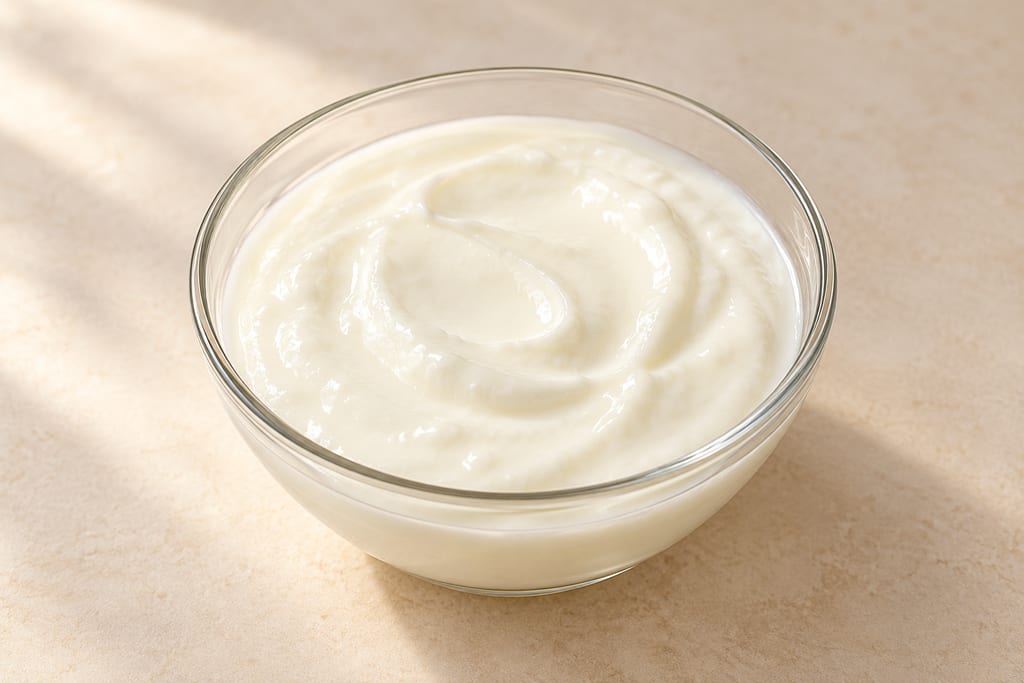
Plain yogurt
A mild, set yogurt made by inoculating warm pasteurized milk with live-culture yogurt and holding it until it gels. This US extension method uses a short ingredient list and controlled incubation.
 FermenteaWhere food goes to change
Built structures · All-in-one appliances
Milk heated directly in the removable crock with a probe in it; the cook stops the heating by lifting the crock out of the base or switching off.
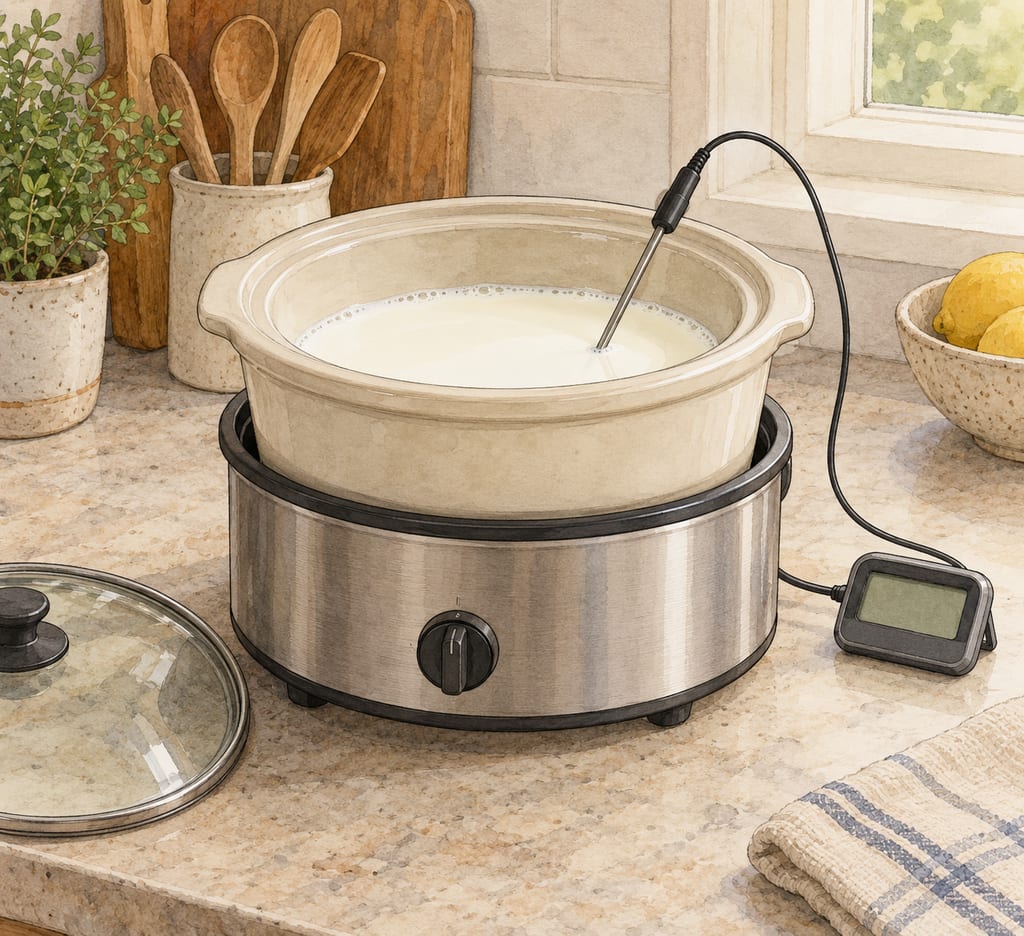
The slow cooker's crock becomes a small cheese vat or yogurt pot. The base heats, the cook watches the probe, and lifting the crock or switching off ends the heating.
A demonstration by Kathy Love uses the crock in this way to make mozzarella. A current yogurt method uses the same appliance: it heats to 82 °C, switches off, and lets the milk fall to 43 °C over 2 to 3 hours before inoculating.
The milk touches the hot ceramic wall directly, so it needs stirring while it heats and stillness during a rennet set. Lifting the crock removes the element but not the heat stored in the wall, which keeps warming the milk for a time. The yogurt method uses that stored heat on purpose.
Quick acidified mozzarella: High to 95 °F, lift for rennet, back on High to 105 °F, then lift. The demonstration records these targets only.
Yogurt: High to 82 °C, switched off, and wrapped in a towel while it incubates.
Paneer (proposed, an adaptation): direct heating to 85 to 90 °C with stirring, transferred from the stove method.
Measure the milk temperature against time, with the probe position noted, especially in the minutes after each lift or switch-off. Record the time to each target and any milk solids stuck to the crock.
The demonstration records only the targets reached (95 °F and 105 °F), not the overshoot after each lift. It is one cook, one cooker and one batch, with no quantities.
Unsuitable for holds that need a narrow culture range, such as quark's falling 68 to 71 °F set.
The mozzarella demonstration and the yogurt method are current home recipes. The manufacturer's booklet covers the crock's use with food. None dates the use of a slow cooker as a direct milk vessel.
A build is made where it stands: moving it means building it again.
The base is the heating unit, and food goes only in the removable bowl.
Hazard sourceUse only the removable bowl for food; never place food directly in the base.
Control sourcePenn State Extension advises against ultra-pasteurised or UHT milk for cheese, and does not recommend raw milk for home cheesemaking.
Documented for international use, with no single place of origin assigned.
A mild, set yogurt made by inoculating warm pasteurized milk with live-culture yogurt and holding it until it gels. This US extension method uses a short ingredient list and controlled incubation.
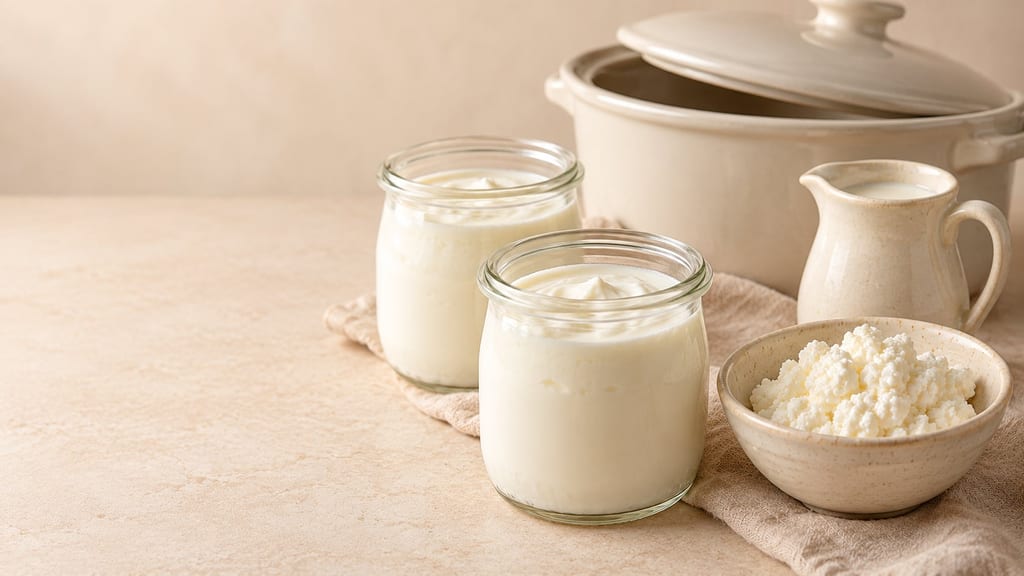
A slow cooker can heat milk for mozzarella, paneer, ricotta, mascarpone, quark and yogurt, but its heavy crock keeps heating after it is switched off. This is what each fresh cheese needs from it.

Soft, spreadable Calabrian pork sausage made with a great deal of red chilli and fatty pork, stuffed into natural casings, sometimes smoked and matured while staying soft.

A way to add independent temperature logging to an existing food dehydrator without changing its built-in controls or protections. It is a monitoring method, not a rewiring plan.

Pleurotus cystidiosus is the abalone mushroom, a cultivated oyster-type fungus with dark brown caps that grows more slowly and is more demanding than other Pleurotus species.

A dark, balanced vinegar from Emilia-Romagna made by combining cooked or concentrated grape must with wine vinegar, then acetifying and refining it in wood under a protected specification.

A living dairy inoculum that starts controlled cream fermentation, developing acidity and aroma before sour cream or cultured butter is finished.

A small electric incubator holds jars at a selected temperature for yogurt and other documented warm food preparations. Controls, capacity and vessel arrangement vary by model.

Adygean salt is a seasoned table salt associated with Adygea and the wider North Caucasian culinary tradition. Salt is blended with garlic and a variable selection of herbs and spices; the exact mix depends on the named style and maker.

The African Caesar-group mushroom, Amanita masasiensis, is a wild ectomycorrhizal species of central and southern African woodlands, eaten locally. The genus contains deadly poisonous species, so identification needs care.
No community contributions have been published for this entry yet.
Sign in to contribute. Published comments and photos are free to read.
New England Cheesemaking Supply CompanyMethod
Making Mozzarella in the Slow CookerCited in: Overview; Documented and proposed uses; Measuring; Limits
BBC Good Food Middle EastMethod
Slow cooker bio yogurtCited in: Overview; How it works; Documented and proposed uses
New England Cheesemaking Supply CompanyMethod
Paneer Cheese Making RecipeCited in: Documented and proposed uses
Crock-Pot (Newell Brands)Method
Crock-Pot SCV400RD 3.5L Slow Cooker instruction bookletPenn State ExtensionMethod
Home Cheesemaking (K. E. Kaylegian)