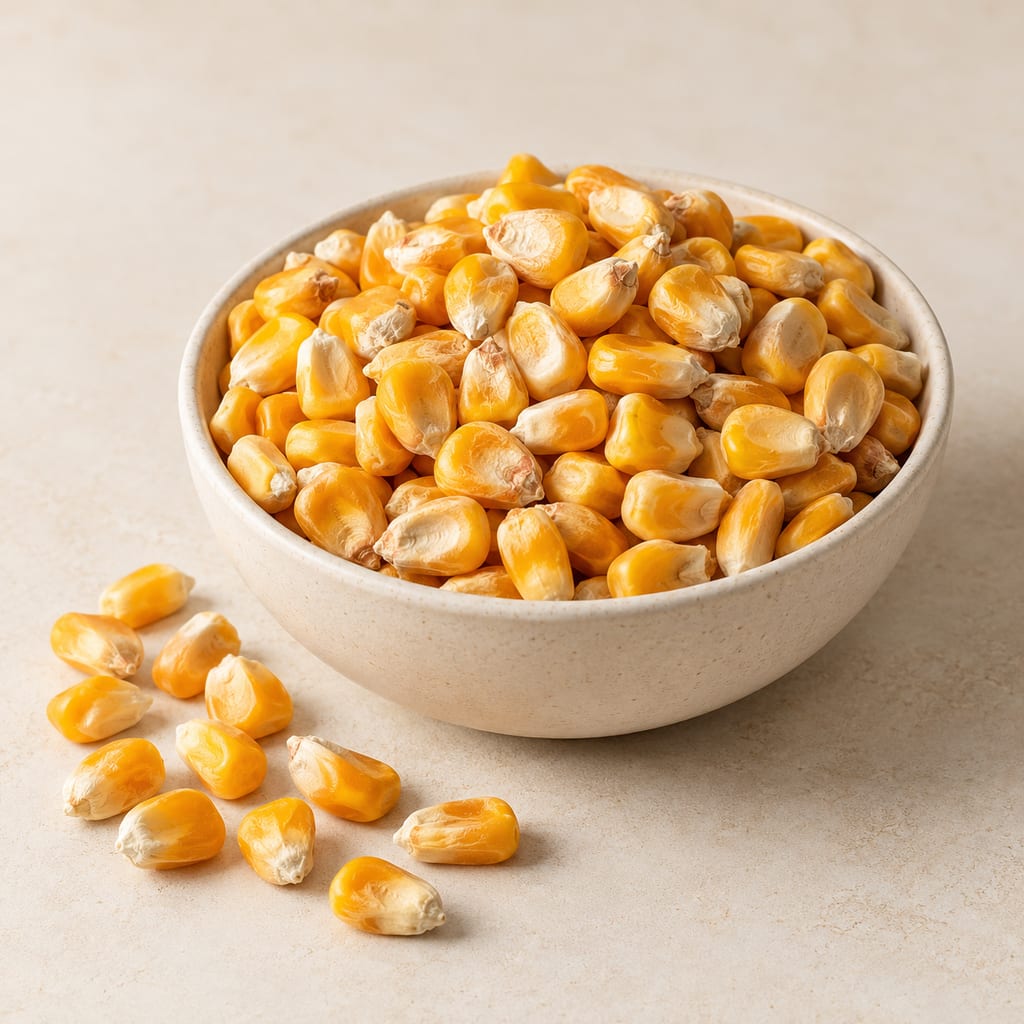
Maize
Maize is the foundational grain of Andean fermentation. Its role in brewing chicha de jora depends on germination into jora, a malted form generating enzymes and sugars necessary for alcoholic fermentation.
 FermenteaWhere food goes to change
Equipment · Tanks and vats
Metal grain silo · Family-sized metal silo · Smallholder hermetic grain silo
A locally fabricated galvanized-metal vessel for dry-grain storage. Household models sit on raised platforms and seal at inlet and outlet; they are movable containers, not granary buildings or fixed industrial installations.
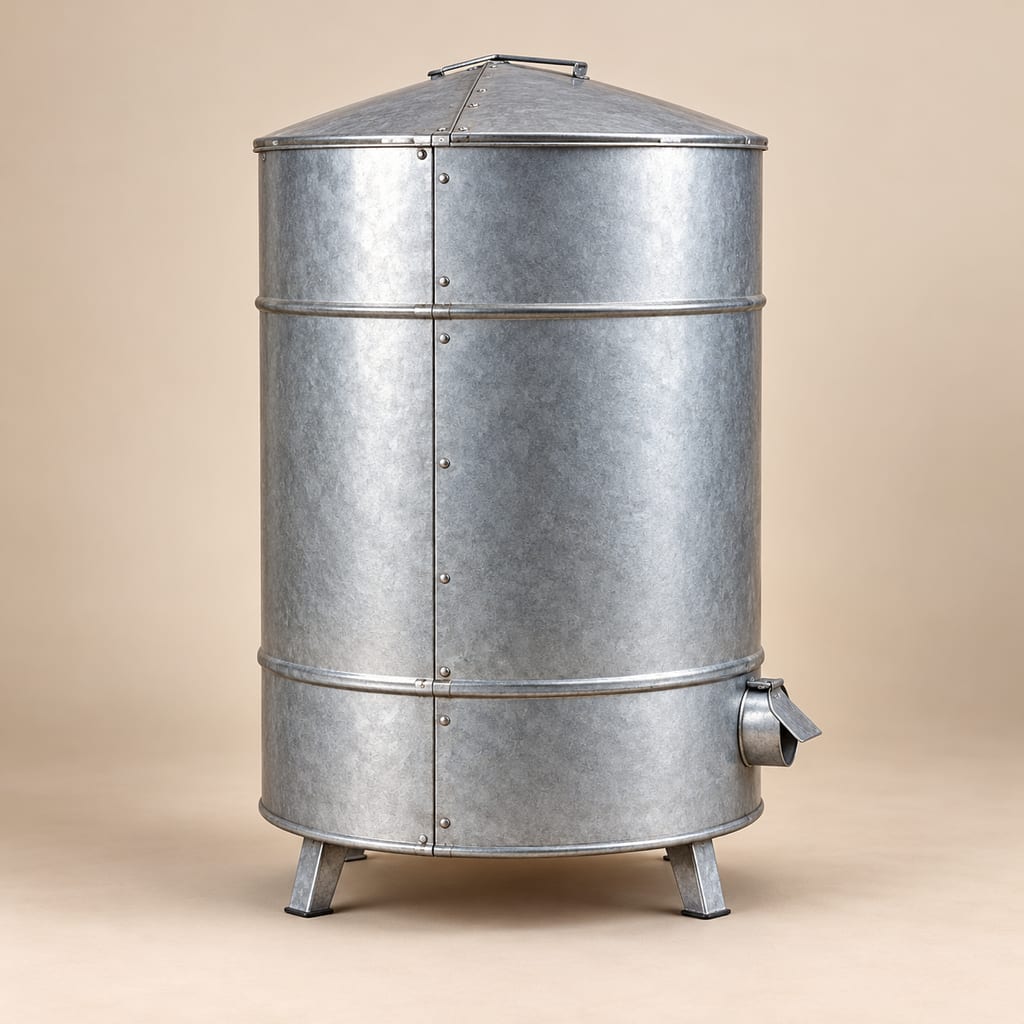
Household metal silos are freestanding containers for bulk grain. In the Zimbabwe sorghum trial, the metal silo was a cylindrical galvanized-iron vessel with an inlet and outlet for loading and emptying. The researchers set it on a wooden pallet and closed the openings with rubber strips. That is a movable piece of equipment, not a granary or a fixed concrete silo installation.
The precise household model varies. FAO's rural-storage manual describes galvanized sheets assembled into a cylinder, standing on a wooden platform under cover. Its one low-capacity example is about 0.98 m across and 2 m high, with a volume of 1.5 m³, roughly one tonne of maize. Those dimensions identify that manual's example only. Other family-sized models span a broad capacity range, and this record does not treat the much larger commercial silo complexes as the same object.
A household silo is made from sheet metal and can be fabricated by trained local craftspeople. FAO's family-sized manual presents construction methods intended to be accessible to craftsmen and farmers. This object can be carried or transported after fabrication and placed where it will be used; a shelter or purpose-built storage building around it would be a separate structure.
The small vessel's form is simple, but making a reliable airtight closure takes careful workmanship. The Zimbabwe study used a rubber strip around the inlet and outlet lids and placed the silo on a wooden pallet. FAO's older manual also calls for a raised wooden platform and a covered location, protecting the metal from rain and strong sun. The article does not supply one universal dimension or closure design for all household silos.
When the vessel is sealed, the limited gas exchange changes the atmosphere inside the stored grain. Respiration by the grain and organisms in the container consumes oxygen and raises carbon dioxide; the low-oxygen environment can suppress insect development. The vessel protects dry grain rather than fermenting it, and a metal wall alone does not make storage hermetic: the lids, seams and outlet closures have to remain sealed.
Mubayiwa and colleagues compared hermetic bags and metal silos with other treatments for threshed sorghum in Mbire District, northern Zimbabwe. Four storage blocks were set up in each of two wards during the 2014/15 and 2015/16 seasons, with sampling every eight weeks for 32 weeks. The metal silo was among the hermetic treatments that maintained low grain damage and weight loss relative to the non-hermetic pesticide treatments under those trial conditions.
The Zimbabwe findings were not that every silo eliminated every insect. Tribolium castaneum developed in some of the metal silos; the authors suggest that heat-related loosening or cracking of the rubber closure could have let the seal fail, while noting that the study did not measure oxygen and carbon-dioxide levels or test gas-tightness directly. The result makes closure integrity and the local storage environment part of the equipment's performance.
FAO reports that family-sized metal-silo programmes reached countries across three continents, while the Zimbabwe paper shows one specific trial use. These sources support a globally disseminated modern storage technology, not a single invention point or a claim that all designs share identical materials and capacities. The vessel belongs to grain-storage practice; it should not be presented as a fermenter or as interchangeable with hermetic bags.
A current Tanzanian engineering supplier also lists galvanized household silos in custom 250–2,000 kg sizes. That is one maker's present product range, not a universal standard; the family-scale form has also been disseminated in projects beyond one country.
FAO's 1993 rural postharvest manual documents a low-capacity galvanized-sheet silo; FAO later described international dissemination of family-sized metal silos, and a 2021 field study evaluated metal silos for threshed sorghum in Zimbabwe. These attestations do not establish an invention date.
Hermetic storage is not a guarantee that every insect dies: the Zimbabwe study found Tribolium castaneum developing in some metal silos and discussed possible loss of sealing under high temperatures.
Source →The 98 cm × 200 cm example and the 120–4,200 L family-model range describe particular manuals and models; neither is a universal specification for household or industrial silos.
Source →Documented for international use, with no single place of origin assigned.
Maize is the foundational grain of Andean fermentation. Its role in brewing chicha de jora depends on germination into jora, a malted form generating enzymes and sugars necessary for alcoholic fermentation.
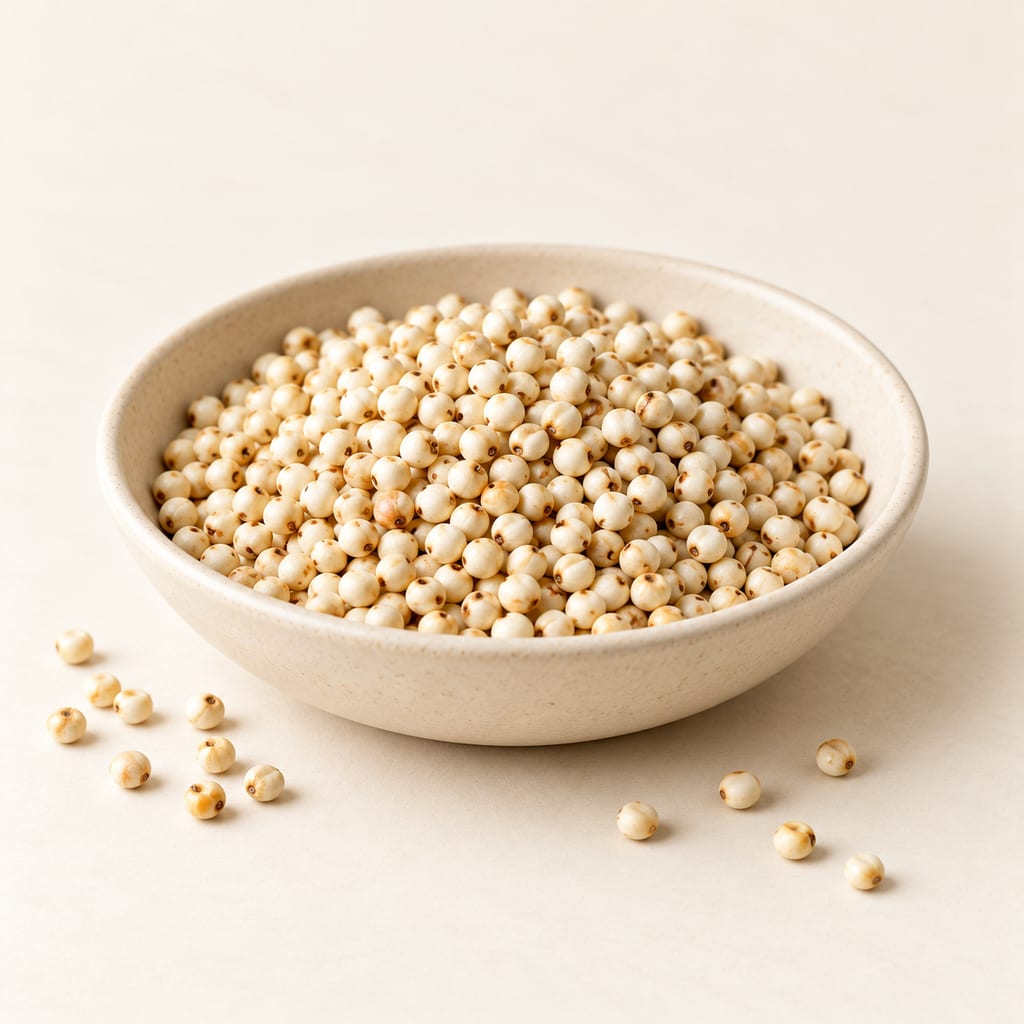
Sorghum is the grain of Sorghum bicolor, a variable African-origin cereal used whole, milled, malted and cooked in distinct fermented foods and drinks.

Soft, spreadable Calabrian pork sausage made with a great deal of red chilli and fatty pork, stuffed into natural casings, sometimes smoked and matured while staying soft.

A way to add independent temperature logging to an existing food dehydrator without changing its built-in controls or protections. It is a monitoring method, not a rewiring plan.

Pleurotus cystidiosus is the abalone mushroom, a cultivated oyster-type fungus with dark brown caps that grows more slowly and is more demanding than other Pleurotus species.

A dark, balanced vinegar from Emilia-Romagna made by combining cooked or concentrated grape must with wine vinegar, then acetifying and refining it in wood under a protected specification.

A living dairy inoculum that starts controlled cream fermentation, developing acidity and aroma before sour cream or cultured butter is finished.

A small electric incubator holds jars at a selected temperature for yogurt and other documented warm food preparations. Controls, capacity and vessel arrangement vary by model.

Adygean salt is a seasoned table salt associated with Adygea and the wider North Caucasian culinary tradition. Salt is blended with garlic and a variable selection of herbs and spices; the exact mix depends on the named style and maker.

The African Caesar-group mushroom, Amanita masasiensis, is a wild ectomycorrhizal species of central and southern African woodlands, eaten locally. The genus contains deadly poisonous species, so identification needs care.
No community contributions have been published for this entry yet.
Sign in to contribute. Published comments and photos are free to read.
Scientific ReportsField evaluation · Silo form and setup · Geography · Performance limits
Field evaluation of hermetic and synthetic pesticide-based technologies in smallholder sorghum grain storage in hot and arid climatesThe study compared metal silos and two hermetic bag types with pesticide treatments for threshed sorghum over two storage seasons at two wards in Mbire District, Zimbabwe.
The test silo was cylindrical, made of galvanized iron, placed on a wooden pallet, and sealed at inlet and outlet with rubber strips.
The hermetic treatments had lower grain damage and weight loss than the non-hermetic pesticide treatments during the tested 32 weeks, but Tribolium castaneum developed in some metal silos; the authors discuss possible loss of hermeticity under high temperatures.
Cited in: A vessel, not a silo building; Fabricated locally and placed under cover; How hermetic storage works—and where it can fail; A useful option, not a pest-proof guarantee
Food and Agriculture Organization of the United NationsModel range · Construction · Craft acquisition · International dissemination
Technical manual for the construction and use of family-sized metal silos to store cereals and grain legumesFAO describes family-sized metal silos with capacities from 0.12 to 4.2 m³, gives instructions for construction and use accessible to craftsmen and farmers, and reports field experience and projects in more than 22 countries.
Cited in: A vessel, not a silo building; Fabricated locally and placed under cover; A useful option, not a pest-proof guarantee
Food and Agriculture Organization of the United NationsSmall silo form · Dimensions · Materials · Care · Linked image
Manual de manejo poscosecha de granos a nivel rural: Almacenamiento de granos en propiedades ruralesThe manual describes a low-capacity galvanized-sheet silo formed as a cylinder, set on a wooden platform under cover, and gives one example measuring 0.98 m in diameter and 2.0 m high with 1.5 m³ capacity.
It describes checking that grain is clean and dry and protecting the silo from sun and rain; the numerical dimensions belong to one example.
Cited in: A vessel, not a silo building; Fabricated locally and placed under cover
Food and Agriculture Organization of the United NationsPublication date · Historical attestation
Manual de manejo poscosecha de granos a nivel rural: Índice, prólogo e introducciónThe manual was published by FAO's Regional Office for Latin America and the Caribbean in Santiago, Chile, in 1993; its silo chapter identifies author Ana Ligia Ribeiro Marques Pereira.
Intermech Engineering LimitedCurrent product range · Materials · Capacity
Metal SilosThe Tanzanian engineering firm lists household metal silos made from 0.5 mm galvanized sheet, with 250–2,000 kg capacities and custom sizes; the listing is one manufacturer's current range, not a universal specification.
Cited in: A useful option, not a pest-proof guarantee