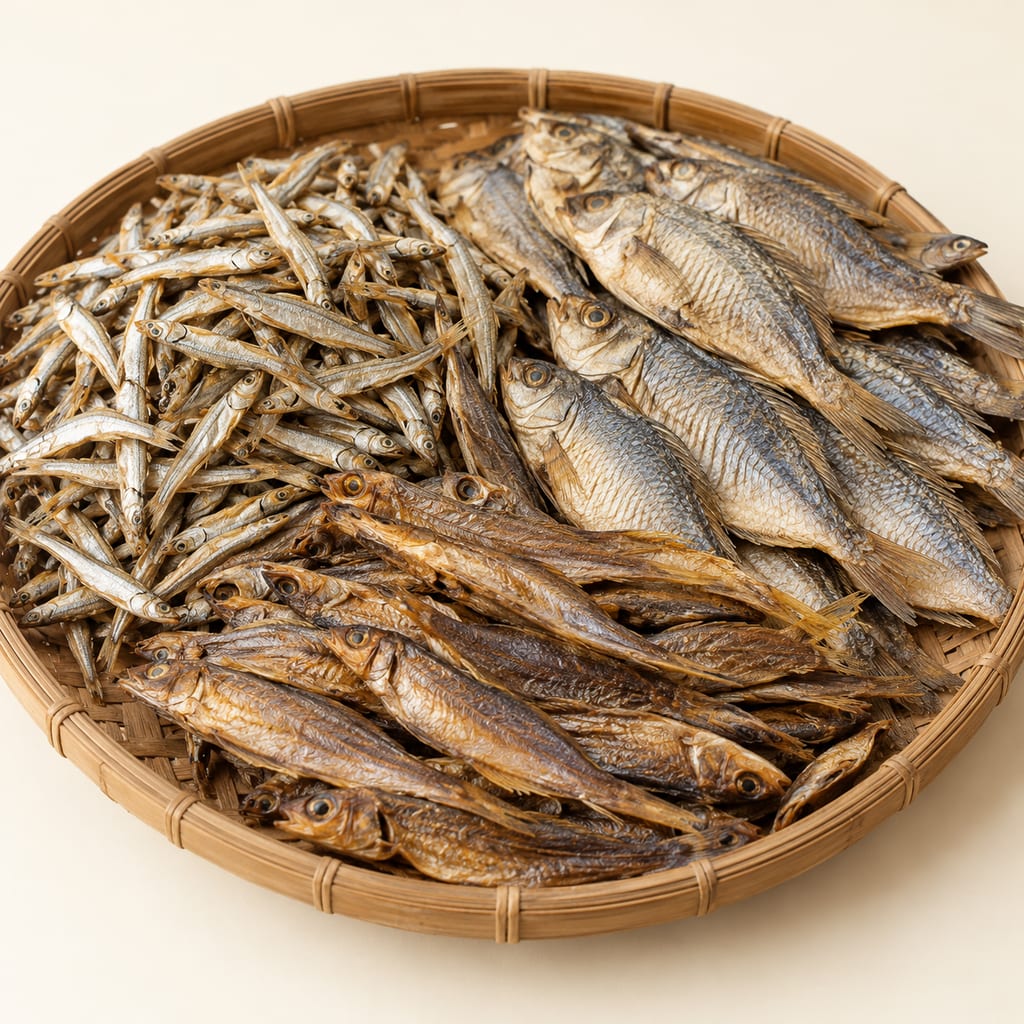
Solar-tent dried usipa, utaka and ndunduma
Small Lake Malawi fish, usipa, utaka and ndunduma, dried on racks inside UV-treated polythene solar tents. Tested in Malawi as a drier, less lossy alternative to open sun drying on racks.
 FermenteaWhere food goes to change
Built structures · solar-drying-tents
A UV-treated polythene sheet over a wooden frame shelters internal drying racks, with low inlets and high side vents for natural airflow during fish drying.
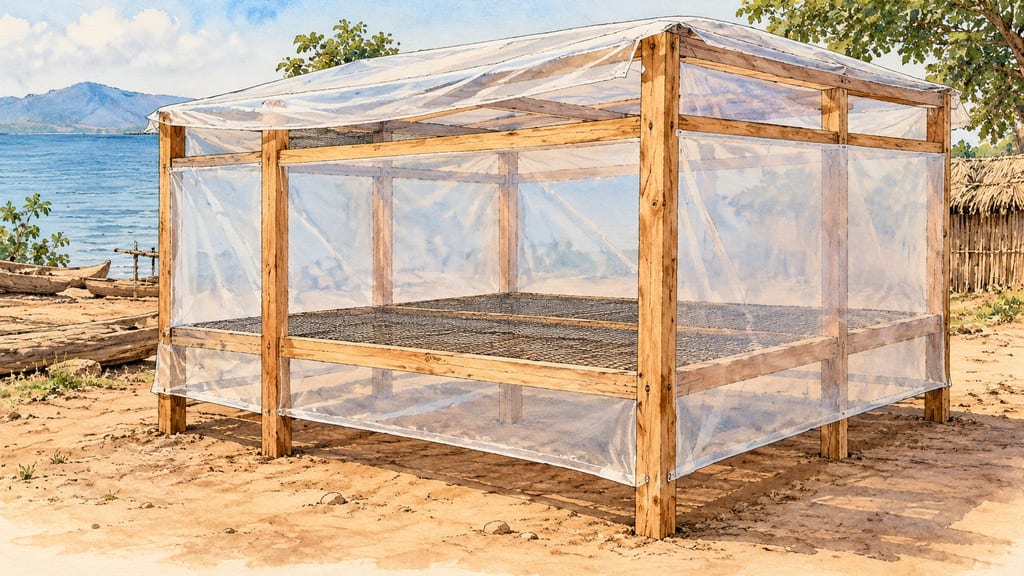
A solar tent dryer places fish racks inside a transparent enclosure rather than leaving fish exposed on open-air racks. In Malawi, peak catches coincide with seasonal rain and high humidity, conditions that can slow drying just when the catch is large. An IDRC-supported project adapted and tested solar tents for usipa (*Engraulicypris sardella*), utaka (*Copadichromis* spp.) and ndunduma (*Diplotaxodon* spp.) associated with Lake Malawi.
The documented design uses a UV-treated polythene sheet 200 micrometres thick fixed over a wooden frame. Low inlet vents and high outlet vents on both sides provide a natural airflow path; internal racks hold the fish. The cover keeps the racks enclosed while allowing sunlight into the tent. Air exchange matters because moisture needs a route out. A sealed sunny box would not reproduce the described ventilated design.
The project compared solar-tent drying with open-sun drying and trained local artisans to construct dryers. Its account says drying time was similar to open sun in the dry season and shorter during the rainy season. It also reports lower moisture and microbial load in the solar-dried fish it measured, alongside longer shelf life in that project. Those outcomes belong to the tested system, sampled products and study conditions; they are not a shelf-life promise for every tent or fish batch.
WorldFish's later account includes a photograph of a solar tent near Lake Malawi and describes the enclosure, racks and roof as part of the approach. The dryer was promoted as a practical post-harvest structure for local fish processors. A project-reported certification of solar-tent drying and solar-tent-dried fish in 2016 belongs to that historical account; it does not establish a current certification for an individual unit.
The project sources do not provide a complete dimensioned plan, foundation, timber sizes, sheet dimensions, vent areas, rack count or loading density. They also do not set a universal drying schedule or finished-product moisture endpoint. The material and airflow description is enough to identify the structure and explain its purpose, but not to reproduce a validated dryer or determine food safety.
An IDRC-supported Malawi project adapted and tested fish solar-tent dryers for Lake Malawi small fish and trained local artisans in construction. The 2019 account records a UV-treated polythene sheet on a wooden frame, low and high vents, and internal racks.
A build is made where it stands: moving it means building it again.
The design depends on inlet and outlet airflow; the source reports different drying-time results by season and gives no universal vent area, loading density or finished-product endpoint.
Hazard sourceThe project identifies Lake Malawi species and Malawi solar-tent drying, but does not name a precise construction site.
Small Lake Malawi fish, usipa, utaka and ndunduma, dried on racks inside UV-treated polythene solar tents. Tested in Malawi as a drier, less lossy alternative to open sun drying on racks.
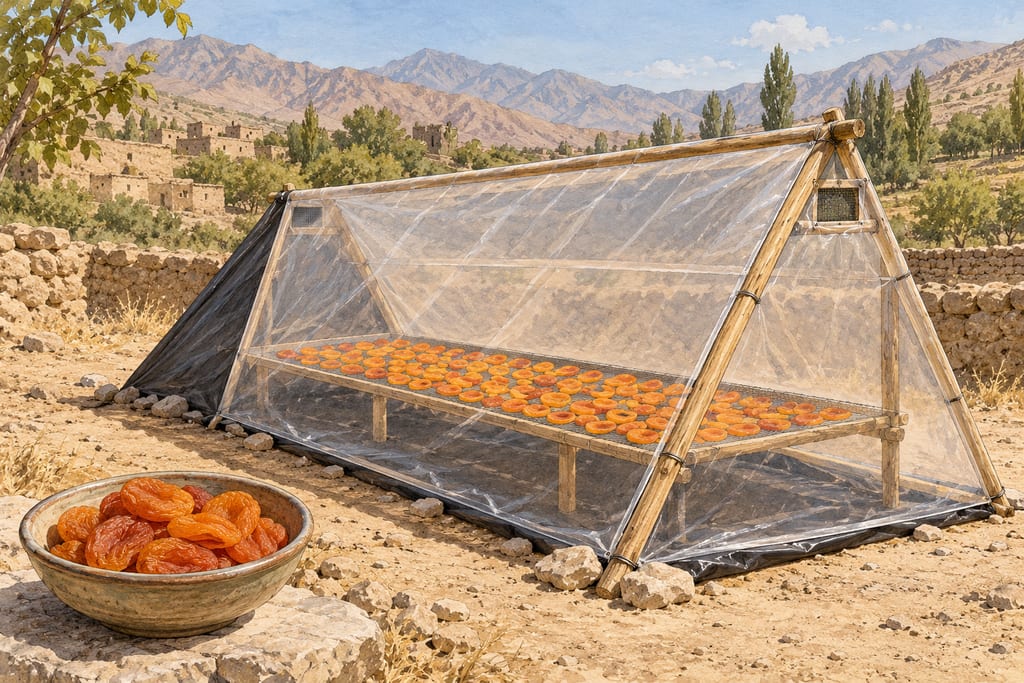
A low-cost, direct solar tent with a black back and ground, a clear front and roof, a raised mesh platform and high exhaust holes. The FAO manual for Afghanistan describes its construction.

Soft, spreadable Calabrian pork sausage made with a great deal of red chilli and fatty pork, stuffed into natural casings, sometimes smoked and matured while staying soft.

A way to add independent temperature logging to an existing food dehydrator without changing its built-in controls or protections. It is a monitoring method, not a rewiring plan.

Pleurotus cystidiosus is the abalone mushroom, a cultivated oyster-type fungus with dark brown caps that grows more slowly and is more demanding than other Pleurotus species.

A dark, balanced vinegar from Emilia-Romagna made by combining cooked or concentrated grape must with wine vinegar, then acetifying and refining it in wood under a protected specification.

A living dairy inoculum that starts controlled cream fermentation, developing acidity and aroma before sour cream or cultured butter is finished.

A small electric incubator holds jars at a selected temperature for yogurt and other documented warm food preparations. Controls, capacity and vessel arrangement vary by model.

Adygean salt is a seasoned table salt associated with Adygea and the wider North Caucasian culinary tradition. Salt is blended with garlic and a variable selection of herbs and spices; the exact mix depends on the named style and maker.

The African Caesar-group mushroom, Amanita masasiensis, is a wild ectomycorrhizal species of central and southern African woodlands, eaten locally. The genus contains deadly poisonous species, so identification needs care.
No community contributions have been published for this entry yet.
Sign in to contribute. Published comments and photos are free to read.
International Development Research CentreForm · Materials · Construction · Use · Geography · Comparison
Better processing and marketing of healthy fish products in MalawiThe project tested solar tent dryers for usipa (Engraulicypris sardella), utaka (Copadichromis spp.) and ndunduma (Diplotaxodon spp.) from Lake Malawi.
The described tent uses a UV-treated 200-micrometre polythene sheet fixed over a wooden frame, with low inlet vents, high outlet vents on both sides and internal drying racks.
The project trained local artisans and compared solar-tent drying with open-sun drying; the source reports shorter drying in the rainy season and similar drying time during the dry season.
The page reports project findings for processing losses, product measurements and shelf-life; these are results of that project and not a guarantee for every tent or batch.
The page says Malawi Bureau of Standards certified solar-tent drying and solar-tent-dried fish in July 2016; that is the historical claim in this project account, not a current certification determination for an individual dryer.
The source does not give a complete dimensioned construction plan, vent sizes, rack dimensions or universal loading schedule.
Cited in: A sheltered route for sun and moving air; A project technology shaped around small fish; Construction limits
WorldFishUse · Geography · Image
5 innovations reducing loss and waste in aquatic food systemsThe article includes a photograph captioned as a solar-tent dryer near Lake Malawi, photographed by Asafu Chijere.
It identifies rainy-season delays, pests and poor weather as challenges for open-air drying in Malawi and describes solar tents as roofed, aerated drying structures.
The article dates to 29 September 2021 and describes the technology as promoted by WorldFish and partners.
Cited in: A project technology shaped around small fish; Construction limits