A factory-specific Taiwanese example
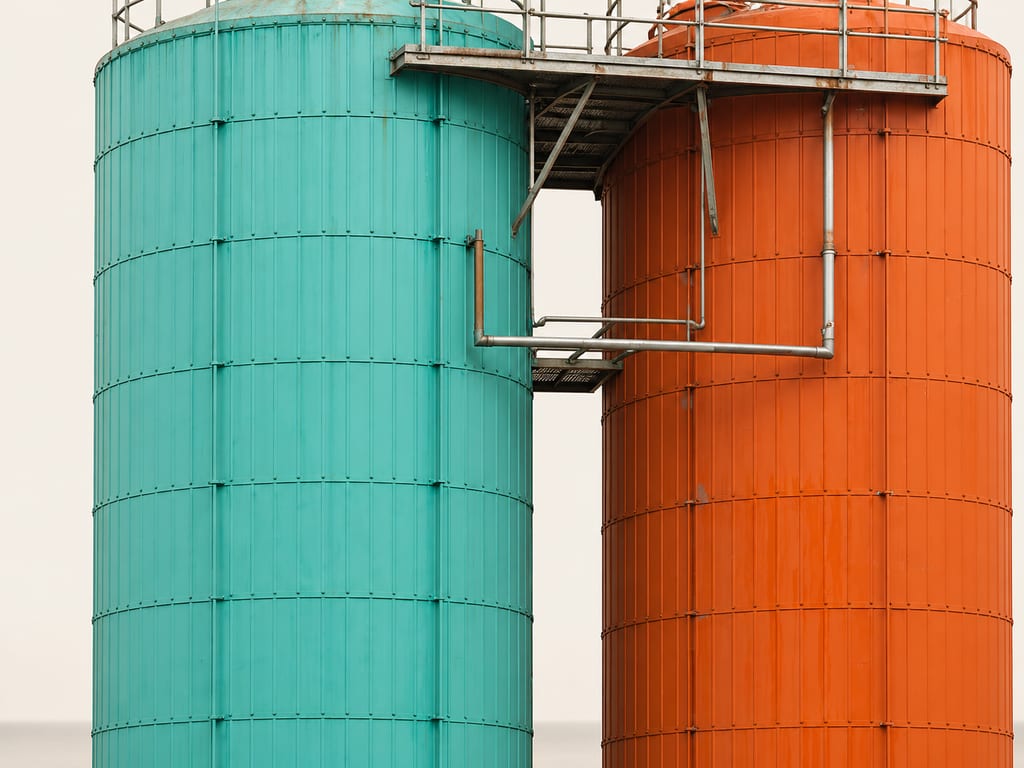
Kimlan's Daxi factory provides a specific modern example of Taiwanese soy-sauce equipment. A 2016 account records the move to Daxi in 1976 and the transition from jar fermentation to mechanized production. It reports 116 outdoor FRP fermentation tanks at the plant. That number describes the factory fleet, not the capacity of one vessel. The documented installation should not be read as a model for every Taiwanese maker or as evidence of a universal traditional jar field.
Sources for this section
A sequence, not a single vessel
At Kimlan, mixing, koji cultivation, brining, fermentation, pressing and finishing are separate stages with distinct equipment. In the koji room, shallow, bed-like equipment holds the mixed soybean and wheat after the maker's starter is added. The culture grows on that mixture and produces enzymes used to break down protein and convert starch. The developed koji is then combined with soybeans, wheat and salt water and transferred to fermentation tanks. Yeast is added for a long, temperature-controlled fermentation. The mature mash is pressed to separate raw soy sauce; settling and finishing follow.
Sources for this section
What this equipment record covers
The available photograph shows the exterior of large cylindrical tanks, painted turquoise and orange, with external pipework and access platforms. The 2016 report identifies the vessels as FRP but gives no individual dimensions or capacity. The material and exact form of the shallow koji-room equipment and the pressing gear are not specified. The room belongs to the built environment, but the available account documents only its production equipment; its walls, floor, airflow and construction are unreported. This item records movable equipment, not the room as a build. It records the maker-specific movable apparatus without reconstructing undocumented details or presenting modern tanks as a traditional Taiwanese form.
Sources for this section
History
A 2016 account places Kimlan's mechanized soy-sauce factory in Daxi and reports its FRP tank fleet. The maker's process material distinguishes koji-room equipment, fermentation tanks and presses. This is one producer's modern installation, not a date or design for Taiwanese soy sauce generally.
Equipment details
CapacityNo source inspected gives the capacity of an individual tank.
SizeNo source inspected reports dimensions for the individual tanks or koji-room equipment.
PowerNot established The producer describes temperature-controlled fermentation but does not identify the tank heating, cooling or power system.
How you get oneBought, manufactured These are factory-production equipment; the inspected sources do not identify a supplier or an individual purchase route.
CareThe inspected accounts do not document cleaning, repair or storage of this production equipment.
Made of
- fibre-reinforced plastic (FRP) — fermentation-tank shells
A 2016 report identifies Kimlan's Daxi tanks as FRP; tank construction details and resin type are not specified.
Places
Daxi District
Documented use · Locality evidenceThe article locates Kimlan's factory in Daxi; this is a use location, not a claim that the tanks were manufactured there.