A vat tied to a particular cheese
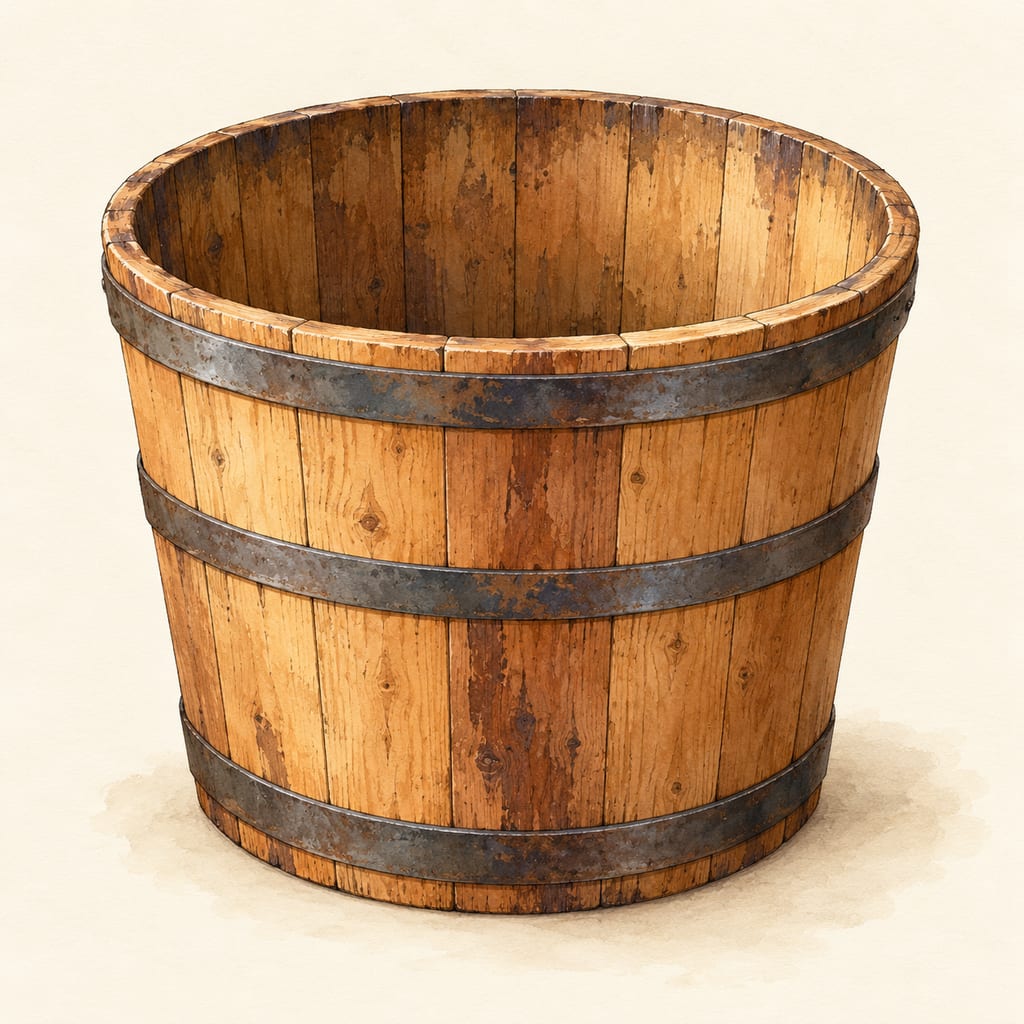
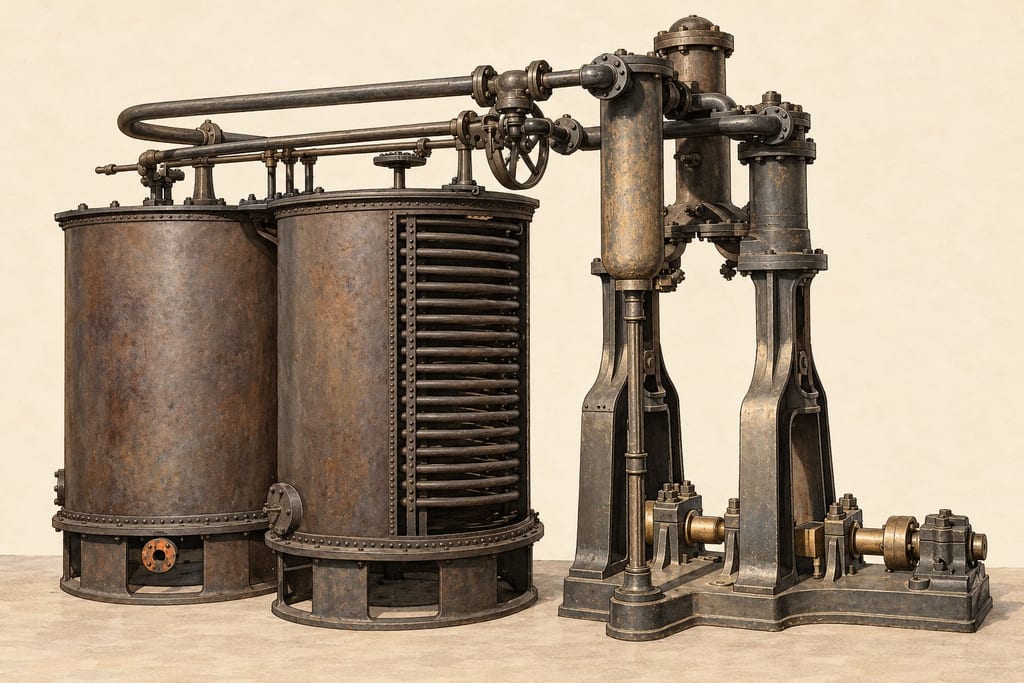
Tina is the name used for the wooden milk vat in Ragusano cheesemaking. It is an open, slightly conical, coopered tub: wooden staves form the wall and are held together as a working vessel. The word belongs here to a regional cheese system, not to every wooden dairy container. Ragusano is made in the Hyblean area of southeastern Sicily, where traditional equipment includes the tina alongside separate tools for breaking curd and vessels used later to shape and stretch it.
A 2009 study describes the tinas it examined as Douglas-fir (Pseudotsuga), with capacities of 130–320 litres, heights of 75–105 cm and diameters of 54–81 cm. Those ranges describe the studied vats, not a universal template. The paper calls the vessel slightly conical; it does not specify one stave count, hoop material or rim treatment for the whole class.
Sources for this section
The wood carries part of the cheesemaking culture
In Ragusano production, the tina does more than contain milk. Researchers found a biofilm on the inner wooden surface: microorganisms embedded in a matrix that includes polysaccharides. Its composition varied from vat to vat, but thermophilic lactic-acid bacteria were prominent, and Streptococcus thermophilus was commonly predominant. The biofilm is microscopic; it should not be imagined as a visible green or fuzzy coating.
The 2009 experiment studied 15 working vats and used four selected vats in a contact trial. Researchers poured 50 litres of microfiltered milk, initially containing fewer than 10 bacteria per millilitre, into each selected tina for ten minutes. Depending on the vat, the milk received 5 × 10⁴ to 10⁶ CFU/mL of S. thermophilus and 10⁴ to 10⁵ CFU/mL of thermophilic lactobacilli. The trial showed that the tina could inoculate milk; acidification results also depended on the vat and the milk.
A separate 2007 study compared vat biofilms on Hyblean farms and documented differences in their communities. That variation matters: the incoming milk’s microbial population and an established tina surface work together. The findings explain this specific natural-inoculation system; they do not show that any aged wooden vessel will reliably culture milk.
Sources for this section
Its role in Ragusano’s process
CoRFiLaC describes whole raw cow’s milk coagulating in a wooden tina at about 34°C. Natural microflora from the tina contributes bacteria involved in acidification and curd maturation. The vat is the receiving and coagulation vessel; other tools have different jobs. A rotula breaks curd, while later stages use other containers for draining, shaping and stretching. The tina is not the separate shorter stretching vat, nor an interchangeable name for a modern tank.
A contemporary dairy account shows a cheesemaker stirring milk in a wooden tina and describes that dairy’s practice of washing it with hot whey. This is one reported caseificio practice, not a universal care or sanitation procedure. The studies examine selected working vats and do not provide a general cleaning schedule, safe reuse rule or method for establishing a new tina.
Sources for this section
Place, evidence and limits
CoRFiLaC places Ragusano production in the Hyblean territory, and the 2007 study sampled farms in that region. A Sicilian traditional-food entry lists the wooden tina among equipment for Cosacavaddu Ibleo, or Ragusano. Together these sources support a regional use association; none dates the invention of the vat or identifies a single town of origin.
The 2009 study reported that several pathogens were not detected in the biofilm samples it tested. That finding is bounded by the study’s sample set and methods. It is not a general assurance about raw milk, old wood or a reused vat. Nor do these studies establish that wood improves every cheese. The useful distinction is specific: in documented Ragusano making, the tina is a coopered vessel whose established microbial community forms part of the traditional process.
Sources for this section
History
The tina is a traditional wooden vat used for Ragusano; studies document its microbial role in 2007 and 2009. Inspected sources do not establish an invention date or first attestation.
Equipment details
Capacity130–320 L The 2009 study reports this range for the slightly conical Douglas-fir tinas it describes; it is not a universal size.
SizeFor the sampled vats, the 2009 study reports heights of 75–105 cm and diameters of 54–81 cm. The model has no range field; these are ranges, not single measurements.
PowerNo power The tina itself has no powered element; other equipment supplies any process heat.
How you get oneNot established Sources document working farm vats but do not establish a standard contemporary purchase or commissioning route.
CareA contemporary account of one Ragusano dairy reports washing its tina with hot whey rather than sanitizing it. This describes that practice, not a general cleaning method or food-safety recommendation; research finds vat biofilms vary.
Made of
- Douglas-fir (Pseudotsuga) — vat body
Identified for the Ragusano tinas studied in 2009; not a claim about every wooden cheese vat.
Limits
Capacity and dimensions are ranges reported for the tinas studied in 2009, not specifications for all wooden cheese vats.
Source →Research on Ragusano tinas does not establish that every wooden vessel carries a useful culture or produces a safe ferment.
Source →Places
Hyblean region
Traditional use · Region evidenceScientific and CoRFiLaC sources identify the Hyblean area of Sicily as the Ragusano production region. This is a use association, not an origin claim for wooden vats generally.