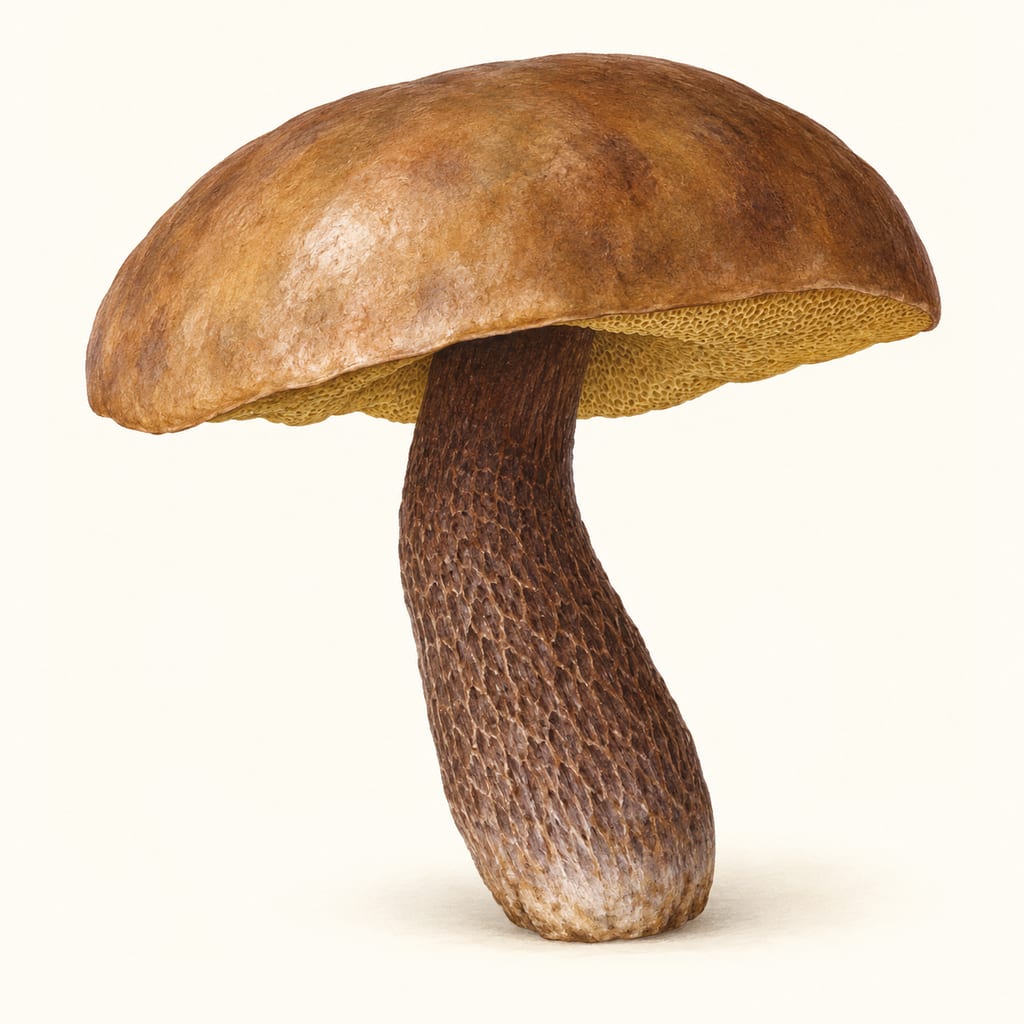
Boletus botryoides
Boletus botryoides, the grape-coloured bolete, is a porcini-like wild bolete of central and south-western China. It is listed as edible in Chinese catalogues, but no dish or preparation is documented for it.
 FermenteaWhere food goes to change
Mushrooms
Clavulina ruchengensis is a gray, branching coral fungus described from Hunan, China, where a 2024 study documents local collection and cooking.
Clavulina ruchengensis X.F. Liu & P. Zhang was described as a new species in 2024. Morphological examination and a combined ITS and nrLSU phylogeny supported its placement in Clavulina; the three studied specimens formed a supported lineage. MycoBank records the name as 851419. The genus belongs to Hydnaceae, Cantharellales. As a recent taxon, this name may be absent from older lists.
The epithet refers to Rucheng County, Hunan Province, where the type specimen was collected. Its reported range at publication was Hunan. A 2026 Chinese edible-fungi checklist also includes the species, but a compiled classification is not a new taxonomic study or toxicology assessment.
The fruit bodies are coral-like and clustered. Ash-gray branches reach about 3–6 cm tall and 1–3 cm wide, with sharply pointed, crested dark-brown tips and relatively long white to gray-white stipes. The recorded habitat is humus over soil under mixed forest. These are scientific-description characters rather than a lay field key. Similar Clavulina taxa are compared in the description, and dependable identification may require microscopic and molecular evidence.
Fruiting is recorded in summer, specifically June. The type and two additional vouchers were collected on 22 June 2020 in Rucheng County, Hunan. This evidence covers one county and one collection date, not a full seasonal calendar. Published coordinates appear geographically inconsistent with the named county; the record is therefore mapped at county level without a coordinate pin. No other confirmed locality was found in the reviewed sources.
The species is classified as edible, and local residents are reported to collect and cook it. A figure caption identifies collected and cooked specimens, but no recipe, preparation protocol, frequency of consumption, or clinical safety assessment is given. The 2026 Chinese checklist is further evidence of an edible classification, not proof that every specimen or population is safe.
No species-specific toxicology data or universal safe preparation method was located. The paper's photographs, checklist label and local-use report are not identification approval. Distinguishing this fungus from related Clavulina taxa uses a combination of macroscopic, microscopic and DNA evidence. Do not eat a wild coral fungus based on this page, a photograph, or a checklist entry. Poison-control guidance warns that cooking cannot be relied upon to neutralize poisonous mushrooms. This account is not a field key or food-safety guarantee.
The reviewed sources document collection and cooking as food but no fermentation, preservation, or commercial ingredient preparation using this species. No fermentation use is claimed.
Three vouchers are recorded from the county. Printed coordinates appear inconsistent with Rucheng County, so no coordinate is supplied. The known range at publication was Hunan only.
Boletus botryoides, the grape-coloured bolete, is a porcini-like wild bolete of central and south-western China. It is listed as edible in Chinese catalogues, but no dish or preparation is documented for it.
Cantharellus magnus is a large Chinese chanterelle recorded in five provinces. A national scientific catalogue lists it as edible, but evidence here does not establish preparation or local food traditions.

Soft, spreadable Calabrian pork sausage made with a great deal of red chilli and fatty pork, stuffed into natural casings, sometimes smoked and matured while staying soft.

A way to add independent temperature logging to an existing food dehydrator without changing its built-in controls or protections. It is a monitoring method, not a rewiring plan.

Pleurotus cystidiosus is the abalone mushroom, a cultivated oyster-type fungus with dark brown caps that grows more slowly and is more demanding than other Pleurotus species.

A dark, balanced vinegar from Emilia-Romagna made by combining cooked or concentrated grape must with wine vinegar, then acetifying and refining it in wood under a protected specification.

A living dairy inoculum that starts controlled cream fermentation, developing acidity and aroma before sour cream or cultured butter is finished.

A small electric incubator holds jars at a selected temperature for yogurt and other documented warm food preparations. Controls, capacity and vessel arrangement vary by model.

Adygean salt is a seasoned table salt associated with Adygea and the wider North Caucasian culinary tradition. Salt is blended with garlic and a variable selection of herbs and spices; the exact mix depends on the named style and maker.

The African Caesar-group mushroom, Amanita masasiensis, is a wild ectomycorrhizal species of central and southern African woodlands, eaten locally. The genus contains deadly poisonous species, so identification needs care.
No community contributions have been published for this entry yet.
Sign in to contribute. Published comments and photos are free to read.
Phytotaxa / Magnolia PressIdentity · Taxonomy · Description · Ecology · Season · Geography · Use
A new edible Clavulina species from Hunan Province, ChinaDescribed in 2024 using morphology and ITS/nrLSU evidence; type and additional specimens from Rucheng County, Hunan; summer (June) fruiting under mixed forest; local residents collect and cook it.
Cited in: A newly described coral fungus; Form and habitat; Season and documented place; Reported local food use; Safety and limits; Fermentation context
Mycosystema / Chinese Society of MycologyUse · Geography
Updated list of edible and medicinal fungi in ChinaChinese checklist includes the species as edible; this is not species-specific toxicology or an independent consumption survey.
Cited in: A newly described coral fungus; Reported local food use
Poison ControlSafety
Wild mushroom warningWild mushroom misidentification can be dangerous; cooking does not reliably remove mushroom toxins.
Cited in: Safety and limits